Why Your Dog Is Obsessed With Your Dirty Socks (And How To Stop The Theft)
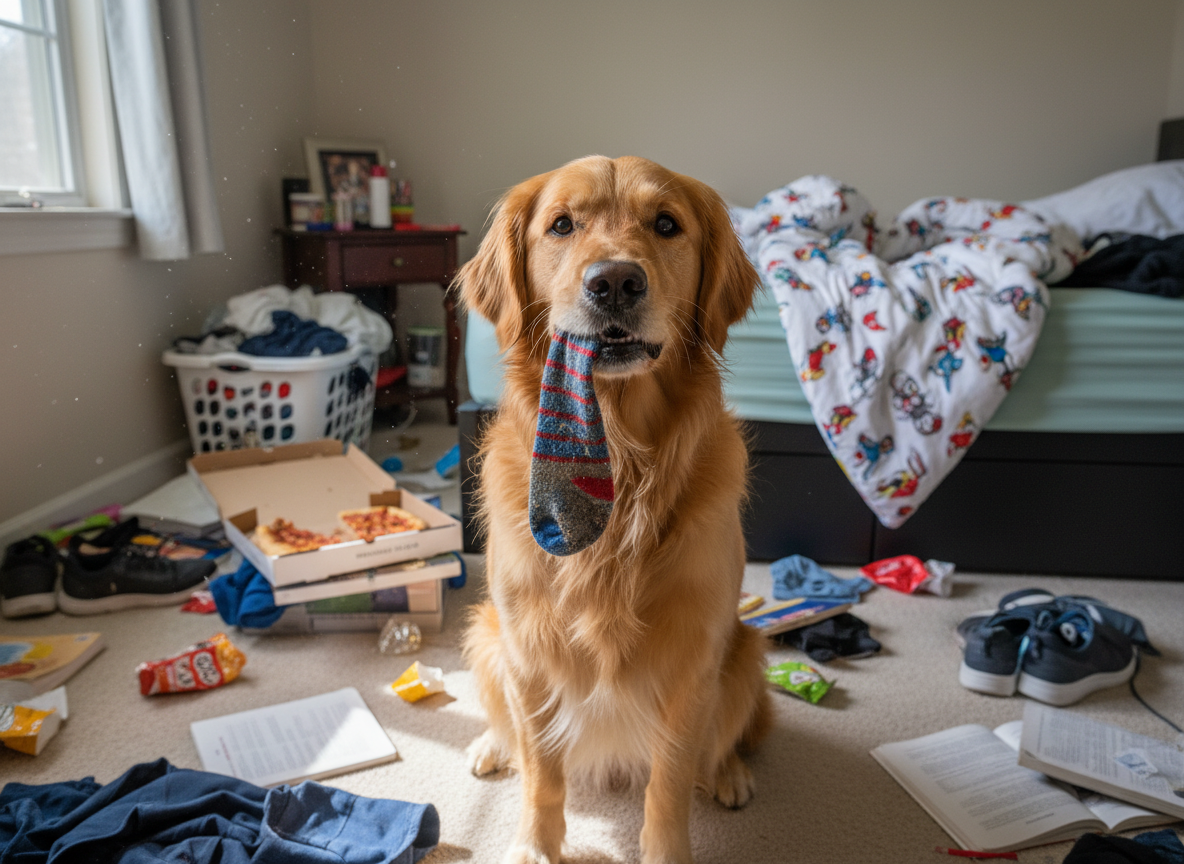
Finding a damp, well-chewed sock in your dog’s bed or, worse, presented to you as a treasured gift, is a near-universal experience for pet owners. While it can be amusing or mildly irritating, this common canine quirk is more than just a mischievous habit. It’s a behavior deeply rooted in your dog’s instincts, sensory perceptions, and the powerful bond you share. Understanding why your dog is so fascinated with your laundry is the first step toward managing and redirecting this behavior effectively.
This guide will delve into the complex reasons behind your dog’s sock obsession, from the irresistible allure of your scent to the fulfillment of ancient predatory drives. More importantly, we will outline the potential dangers of this habit and provide a clear, authoritative, step-by-step protocol using positive reinforcement techniques to stop the theft, protect your dog’s health, and restore peace to your laundry basket.
The Power of Scent: Decoding Your Dog’s Sock Obsession

To comprehend your dog’s sock fetish, we must first appreciate their most formidable sense: smell. A dog’s olfactory system is exponentially more powerful than a human’s, containing up to 300 million olfactory receptors compared to our meager six million. This allows them to perceive the world in a way we can only imagine, a world dominated by scent.
Your dirty socks are a potent source of one of your dog’s favorite smells: you. Every part of your body has a unique scent signature produced by sweat and oil glands, and your feet are particularly concentrated sources. When you wear socks, they act like sponges, absorbing this personal scent throughout the day. For your dog, a dirty sock is a ‘scent bomb’ of their favorite person.
Scent as a Comfort Object
When your dog picks up and carries your sock, they are surrounding themselves with your essence. This can be an incredibly comforting and self-soothing act, particularly for dogs prone to anxiety or separation-related stress. In your absence, having an object that smells intensely of you can feel like having a piece of you with them. It’s the canine equivalent of a child holding a parent’s sweater. This behavior isn’t about defiance; it’s often about connection and security.
Holding onto an object saturated with your scent provides a powerful sense of comfort and security, helping to alleviate feelings of loneliness or anxiety when you are away.
Beyond Scent: Instinctual Drivers and Learned Behaviors
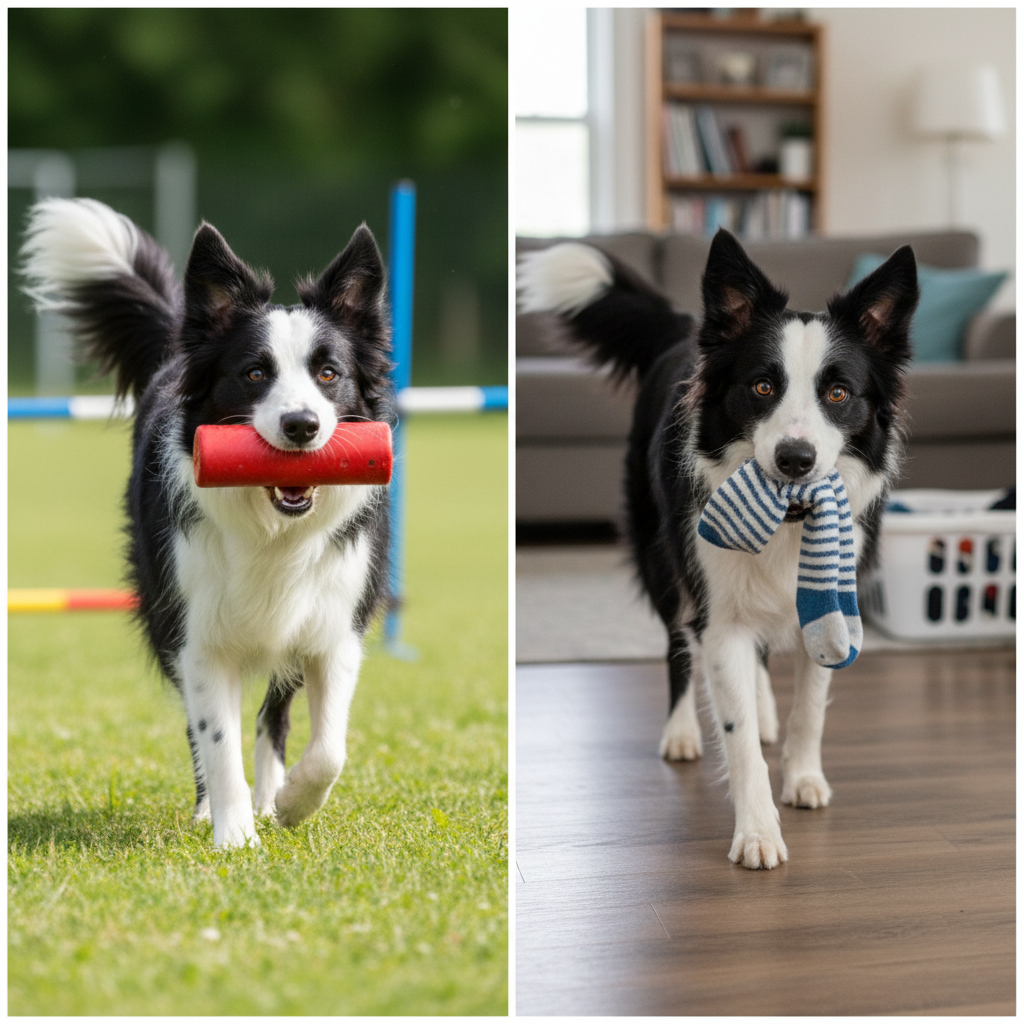
While your personal aroma is a primary motivator, other powerful factors contribute to the sock-stealing phenomenon. These drivers tap into both your dog’s ancient instincts and behaviors they have learned through interaction with you.
Teething, Texture, and Play
The soft, pliable texture of a sock is immensely satisfying for a dog to chew. For puppies, chewing on a soft object can provide gentle relief for sore gums during the teething process. For adult dogs, chewing is a natural, stress-relieving behavior that keeps their jaws strong and their minds occupied. A sock offers a perfect combination of chewability and the comforting scent of their owner, making it a far more appealing option than a standard rubber toy.
The Call of the Wild: Retrieving and Caching
Many breeds were developed to retrieve game, and the act of picking something up and carrying it is deeply ingrained. A small, soft sock can mimic the feel of prey, satisfying this instinctual drive to ‘hunt’ and ‘retrieve.’ Your dog might parade their prize around the house or take it to a safe place, like their bed, to ‘cache’ it for later. This isn’t malicious theft; it’s the fulfillment of a behavioral pattern hardwired into their DNA.
The Attention Game: Accidental Reinforcement
Perhaps the most significant factor in turning a one-time sock grab into a chronic obsession is our own reaction. When a dog steals a sock, what do most owners do? They chase, they shout, they try to barter. To a dog, this is fantastic fun. They learn a simple equation: Stealing a sock = A fun game of chase + Undivided attention from my human. Even negative attention is still attention. By reacting dramatically, we inadvertently teach our dogs that stealing socks is a highly effective way to initiate playtime and engagement.
A Dangerous Meal: The Medical Risks of Sock Ingestion

While the behavior itself may seem harmless, it carries a significant and potentially fatal risk: ingestion. A dog that chews on a sock can easily swallow it, either whole or in pieces. This can lead to a life-threatening medical emergency known as a gastrointestinal foreign body obstruction.
Once swallowed, a sock can become lodged anywhere along the digestive tract, from the stomach to the small intestine. This blockage prevents food and water from passing through and can cut off blood supply to the surrounding tissues, causing them to die. This is an excruciatingly painful condition that can lead to sepsis and death if not treated promptly.
Symptoms of an Intestinal Blockage
It is critical for every pet owner to recognize the signs of a potential obstruction. If your dog is a known sock-chewer and exhibits any of the following symptoms, seek veterinary care immediately:
- Vomiting or retching, especially after eating or drinking
- Loss of appetite or anorexia
- Lethargy and weakness
- Abdominal pain or sensitivity (your dog may yelp or snap if you touch their belly)
- Straining to defecate or producing little to no stool
- Diarrhea
- Behavioral changes, such as hiding or uncharacteristic aggression
If you suspect your dog has swallowed a sock or any other foreign object, it is a medical emergency. Do not attempt to induce vomiting at home. Contact your veterinarian or an emergency animal hospital immediately for professional guidance.
Treatment almost always requires major abdominal surgery to remove the object, which is invasive, expensive, and carries significant risks. Prevention is, without question, the best medicine.
Reclaiming Your Laundry: A 4-Step Training Protocol
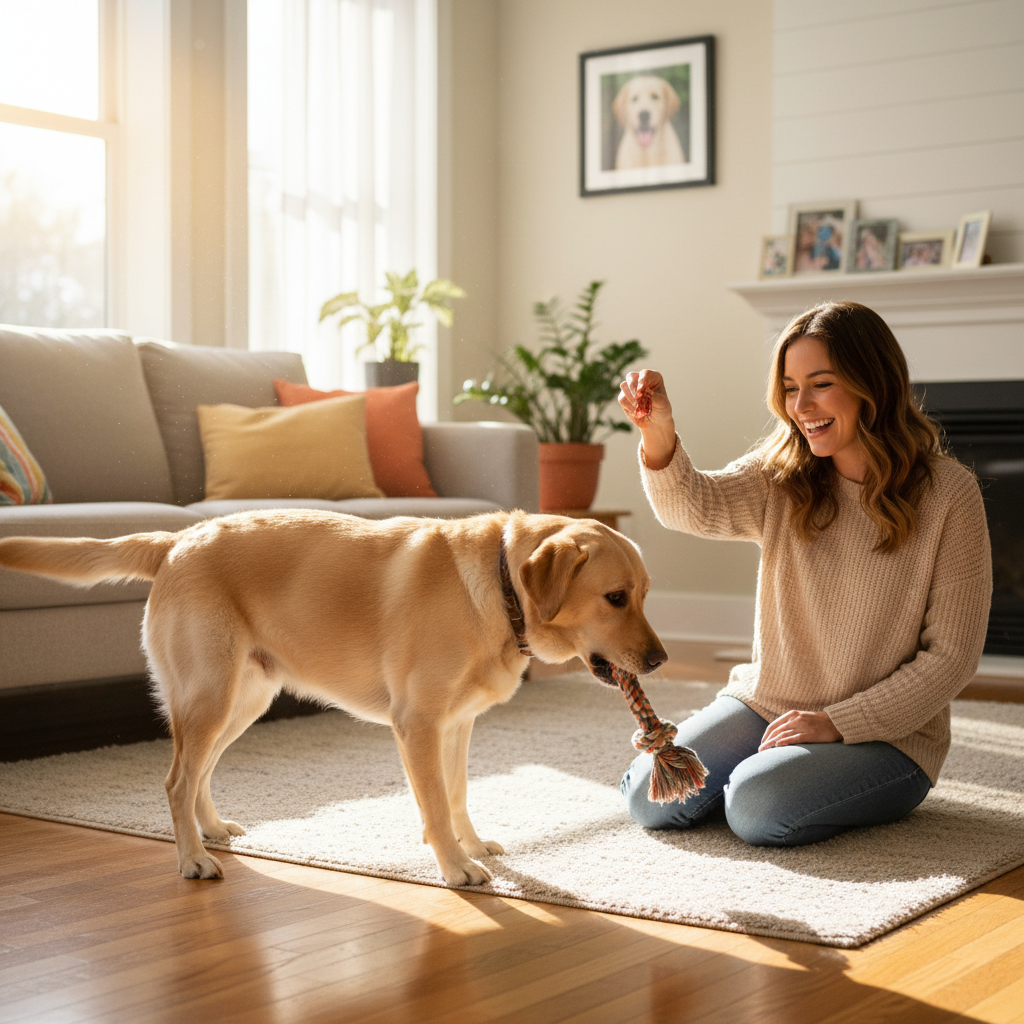
Stopping sock theft requires a multi-faceted approach that combines proactive management with consistent training. The goal is not to punish the dog, but to make the unwanted behavior impossible and teach them more appropriate actions. Follow this four-step protocol with patience and consistency.
Step 1: Proactive Management and Prevention
This is the most critical and effective step. You must make it impossible for your dog to practice the unwanted behavior. Every time your dog successfully steals a sock, the habit is reinforced. Remove the opportunity entirely.
- Implement a ‘no socks on the floor’ rule for the entire household.
- Use laundry hampers with secure, dog-proof lids.
- Keep bedroom and closet doors closed at all times.
- Ensure the path to the laundry room is blocked or the door is kept shut.
Step 2: Provide a Wealth of Appropriate Alternatives
Your dog’s need to chew and play is natural. It is your responsibility to provide safe and engaging outlets for these instincts. Rotate toys to keep them novel and interesting.
| Toy Type | Purpose | Examples |
|---|---|---|
| Puzzle Toys | Engages the mind and satisfies foraging instincts. | Food-stuffable toys (e.g., KONG), snuffle mats, treat-dispensing balls. |
| Durable Chew Toys | Provides a safe outlet for chewing, promotes dental health. | Hard nylon or rubber toys, natural root chews. |
| Interactive Toys | Fulfills the need for play and strengthens your bond. | Tug ropes, flirt poles, fetch balls (used under supervision). |
Step 3: Teach Incompatible Behaviors with Positive Reinforcement
Instead of chasing your dog, teach them commands that make sock-stealing less rewarding. Focus on two key cues: ‘Leave It’ and ‘Drop It’.
To teach ‘Leave It’:
- Place a low-value treat in your closed fist. Let your dog sniff. The moment they turn away, praise them and give them a high-value treat from your other hand.
- Once they master this, place the low-value treat on the floor and cover it with your hand. When they stop trying to get it, praise and reward.
- Gradually increase the difficulty, moving to an open hand, then dropping the treat. The goal is for your dog to look at you for the reward, not the dropped item.
- Eventually, you can practice with low-value objects, and finally, an old (clean) sock.
To teach ‘Drop It’:
- Give your dog a toy they like but are not overly possessive of.
- Hold a very high-value treat (like chicken or cheese) up to their nose. As they open their mouth to take the treat, the toy will drop. Say ‘Drop It!’ as it falls, then give them the treat.
- Practice this trade until your dog willingly drops the object in anticipation of the fantastic treat.
The key is to make giving up the object a positive experience. Never play tug-of-war with a stolen sock, as this can be perceived as a fun game or cause your dog to swallow it.
Step 4: Increase Overall Enrichment
A bored dog is a mischievous dog. Often, behaviors like sock stealing are simply a symptom of under-stimulation. Increase your dog’s daily mental and physical exercise to reduce their need to find their own ‘fun’.
- Physical Exercise: Ensure your dog gets enough breed-appropriate exercise, including brisk walks, runs, or games of fetch.
- Mental Stimulation: Incorporate short, fun training sessions throughout the day. Use puzzle feeders for meals instead of a bowl. Play scent games by hiding treats around the house.
Conclusion
Your dog’s obsession with your dirty socks is a complex tapestry woven from scent, instinct, learned behavior, and a deep-seated desire for connection and comfort. By understanding these underlying motivations, you can approach the issue with empathy rather than frustration. The solution lies not in punishment, but in a strategic combination of diligent management, consistent training, and robust enrichment.
By securing your laundry, providing better alternatives, and teaching your dog crucial commands like ‘Leave It’ and ‘Drop It,’ you are not just saving your socks; you are preventing a potentially life-threatening medical emergency. Be patient, be consistent, and focus on reinforcing the behaviors you want to see. In doing so, you will strengthen your bond, build a more trusting relationship, and create a safer, happier home for everyone involved—both two-legged and four-legged.