Why Your Dog Hates Men: 4 Steps to Fix the Fear Before It Turns Aggressive
It can be distressing and confusing when your loving, otherwise friendly canine companion shows signs of fear or distrust specifically towards men. You might notice trembling, hiding, barking, or even growling when a male friend or family member comes to visit. It’s a common scenario that leaves many pet owners asking, ‘Why does my dog hate men?’ and, more importantly, ‘What can I do about it?’
First, it’s crucial to understand that this behavior is rarely born from ‘hate’ but rather from deep-seated fear or anxiety. Dogs do not generalize as humans do; their reactions are often based on specific associations, sensory input, and past experiences. A fear of men can stem from a variety of factors, including inadequate socialization during their critical puppyhood, a single negative encounter, or even the inherent physical differences between men and women, such as deeper voices, larger statures, and the presence of facial hair.
Ignoring this fear can be detrimental. Left unaddressed, anxiety can intensify and potentially escalate into defensive aggression, creating a dangerous situation for both your dog and the people around them. The good news is that with patience, understanding, and a systematic approach, you can help your dog build new, positive associations and learn to feel safe and confident around men. This guide outlines a professional, four-step process rooted in modern, science-backed behavioral modification techniques to help you and your dog navigate this challenge successfully.
Understanding the Root Cause: Why Men Specifically?

Before embarking on a training plan, it is essential to understand the potential origins of your dog’s fear. Identifying the likely cause can foster empathy and help you tailor your approach more effectively. This is not about placing blame but about gathering information to create the best possible outcome. The fear is rarely arbitrary; there are distinct reasons why men can be more intimidating to some dogs.
Sensory and Physical Differences
Dogs perceive the world differently than we do, and the physical characteristics more commonly associated with men can be inherently more threatening to a sensitive or under-socialized dog.
- Size and Stature: Men are, on average, taller and have a larger physical presence. A person looming over a dog can be very intimidating.
- Voice Pitch: Deeper, louder, or more booming voices can be more startling to a dog’s sensitive hearing than higher-pitched voices.
- Direct Body Language: Behaviors that humans consider friendly, such as direct eye contact, reaching over a dog’s head to pet them, or approaching head-on, are often interpreted as confrontational in the canine world. These gestures may be perceived as more threatening when coming from a larger individual.
- Facial Hair and Hats: Beards, mustaches, and hats can obscure facial features, making it difficult for a dog to read human expressions and intentions, which can cause suspicion and fear.
Lack of Early and Positive Socialization
The most common reason for fear of a specific type of person is a lack of positive, neutral, and varied exposure during the critical socialization period, which occurs between 3 and 16 weeks of age. If a puppy was raised primarily by women and had limited, or no gentle, positive interactions with a wide variety of men (different ages, ethnicities, sizes, and appearances), they may naturally be wary of them as adults. They are simply afraid of the unfamiliar.
Past Negative Experiences
A single frightening event can be enough to create a lasting fear association. This doesn’t necessarily mean the dog was abused. The negative experience could be unintentional from the dog’s perspective.
- Accidental Fright: A man may have accidentally stepped on the dog’s tail, cornered them without realizing it, or made a loud noise that startled them.
- Traumatic Events: In some cases, especially with rescue dogs, there may be a history of neglect or abuse by a male figure. The dog’s fear is a learned survival response.
- Veterinary or Grooming Experiences: If a dog has had stressful experiences with a male veterinarian or groomer, they may generalize that fear to other men in similar or different contexts.
Expert Tip: Never force an interaction. Forcing your fearful dog to ‘face their fear’ by making them accept petting from a man will almost certainly backfire. This technique, known as ‘flooding,’ can intensify the fear and destroy the trust your dog has in you to keep them safe.
Step 1: Proactive Management and Creating a Safe Space
The absolute first step in any behavior modification plan is management. Management means proactively arranging the environment to prevent your dog from practicing the unwanted behavior. Every time your dog becomes fearful of a man, the underlying emotional response is reinforced, making it harder to change. The goal here is to prevent your dog from going ‘over threshold’—the point where fear takes over and learning becomes impossible.
Establish a Sanctuary
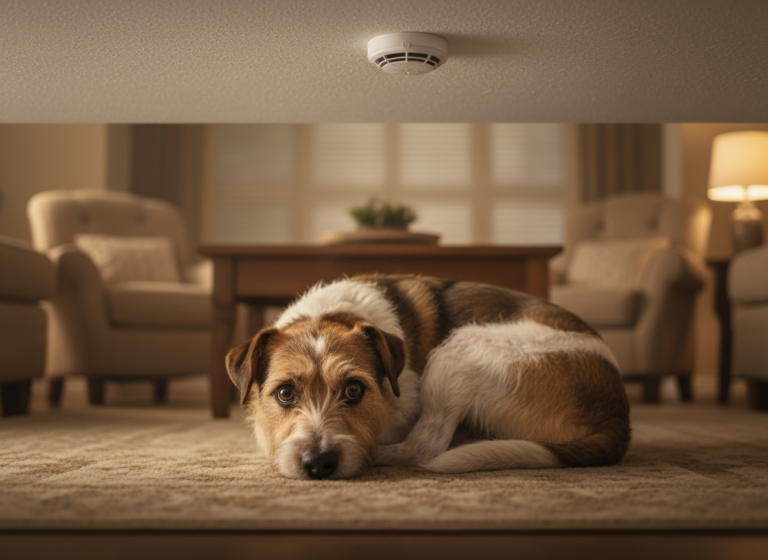
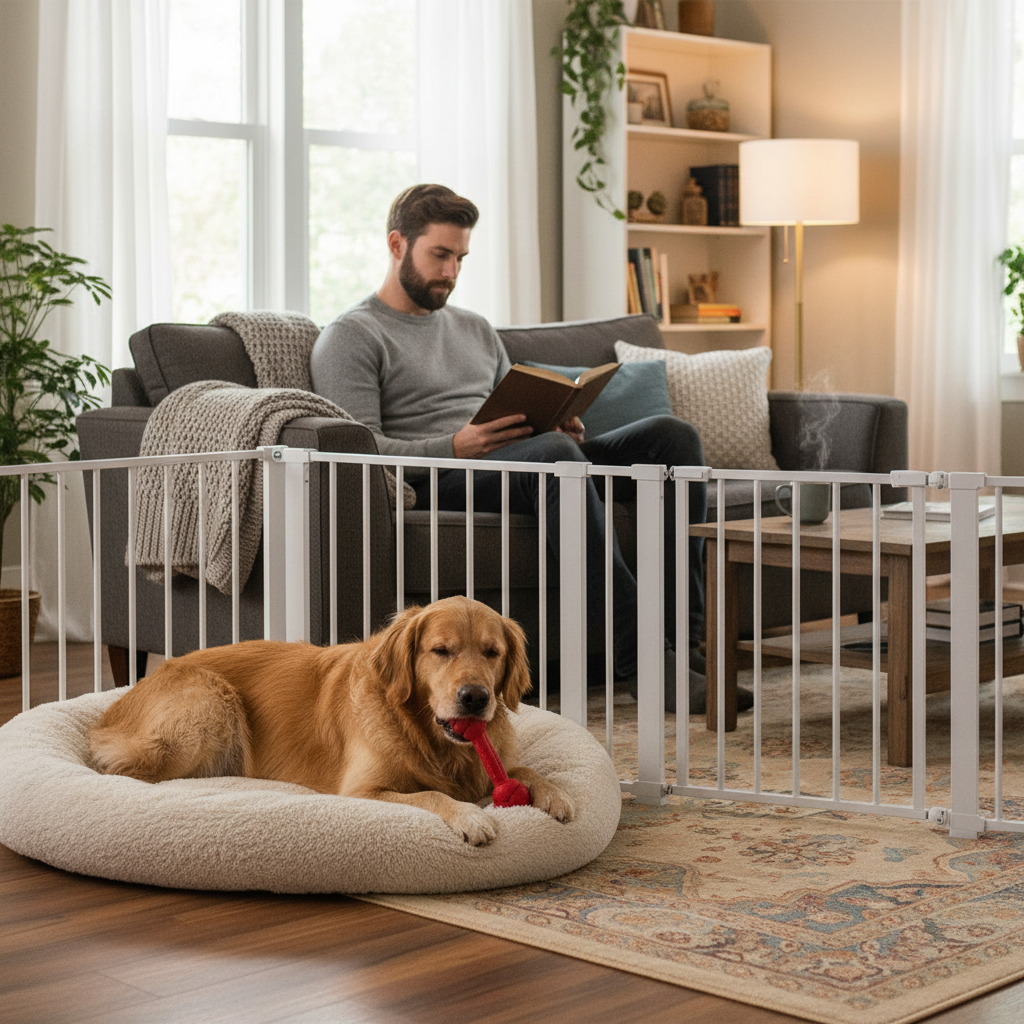
Your dog needs an untouchable safe space where they can retreat and know they will not be bothered. This could be a crate (with the door open), a specific room with a baby gate, or a comfortable dog bed in a quiet corner. Make this space highly reinforcing with special toys, a long-lasting chew, or a comfy blanket. When male guests are over, your dog should have the option to go to this space. Instruct guests to completely ignore the dog if they are in their sanctuary.
Control the Environment
When you know a man is coming to your home, or when you are out in public, you must take control of the situation to ensure your dog feels secure.
- Use Leashes and Gates: Keep your dog on a leash, even indoors, when a male guest arrives. This prevents the dog from rushing, barking, or potentially biting, and it also prevents the guest from approaching your dog. Baby gates are excellent tools to create distance while still allowing the dog to observe from afar.
- Advocate for Your Dog: You are your dog’s primary protector. It is your responsibility to politely but firmly instruct visitors on how to interact (or not interact) with your dog. Say things like, ‘Please ignore him for now, we’re working on his confidence,’ or ‘He’s a bit shy, it’s best if you let him approach you.’
- Increase Distance: In public spaces, distance is your best friend. If you see a man approaching, calmly cross the street or turn and walk in a different direction. The goal is not to avoid men forever but to avoid frightening encounters while you work on the underlying issue.
Management is not a cure, but it is a critical prerequisite for success. It stops the behavioral bleeding and sets the stage for the real work of changing your dog’s emotional response.
Step 2: The Foundation of Change: Desensitization and Counter-Conditioning (DSCC)

With a solid management plan in place, you can begin the process of changing your dog’s emotional response. The gold-standard technique for this is a combination of Desensitization (DS) and Counter-Conditioning (CC). This process must be done gradually and at the dog’s pace.
- Desensitization: This means gradually exposing your dog to the trigger (in this case, a man) at a distance or intensity that is so low your dog notices it but does not have a fearful reaction.
- Counter-Conditioning: This is the process of changing the association. We want to change the dog’s feeling from ‘Oh no, a man, something scary is happening!’ to ‘Oh wow, a man appears, and I get something amazing!’.
Implementing a DSCC Plan
You will need a patient male volunteer and a supply of extremely high-value treats—think small pieces of chicken, cheese, or freeze-dried liver, not their everyday kibble.
The process is simple in theory but requires immense patience in practice. Start with your volunteer at a significant distance where your dog is comfortable. This might be across a park, down the street, or on the other side of a room.
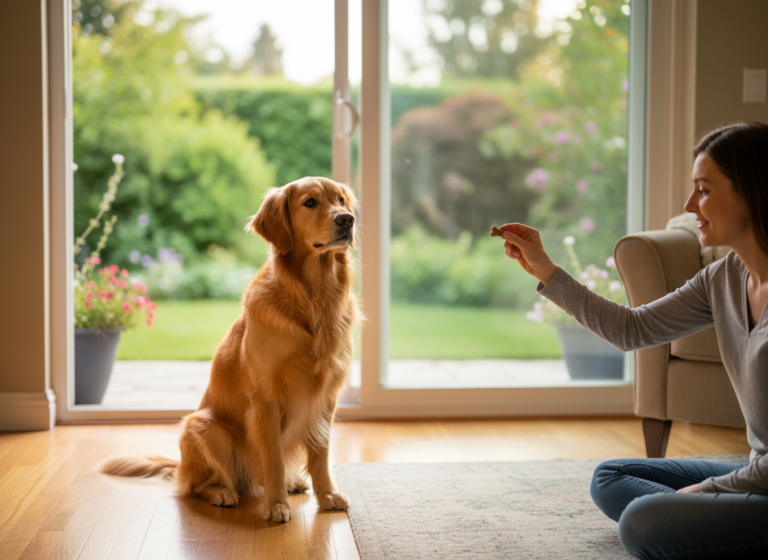
- Man Appears, Treat Appears: The moment your dog looks at the man, mark the moment with a happy ‘Yes!’ and give them a high-value treat.
- Man Disappears, Treat Disappears: The man should then turn and walk away or disappear from view. The moment he is gone, the treats stop.
The sequence is critical: Man appears -> Dog gets amazing treat. The man’s appearance must predict the treat. Repeat this process in short, positive sessions (1-5 minutes). The goal is for your dog to see a man and immediately look to you in happy anticipation of a reward.
Gradually Decreasing the Distance
Over many sessions, you can slowly decrease the distance between your dog and the male volunteer. The key is to always stay ‘sub-threshold’—if your dog shows any signs of fear (stiffening, whale eye, growling), you have moved too fast. Increase the distance again to where they were last successful and work from there.
| Distance | Dog’s Body Language | Your Action | Goal |
|---|---|---|---|
| 100 Feet | Relaxed, loose body, soft ears | Mark (‘Yes!’) and treat when dog looks at the man. | Establish positive association at a safe distance. |
| 75 Feet | Still relaxed, may show mild interest | Continue marking and treating for calm observation. | Reinforce that the man’s presence predicts good things. |
| 50 Feet | Becomes slightly more alert, but not tense | Keep sessions short. End on a positive note. | Build confidence at a closer proximity. |
| 50 Feet (Man moves slightly) | Dog freezes or stares intently | You’ve gone too far. Immediately increase distance back to 75 feet. | Recognize threshold and return to a point of success. |
Step 3: Building Positive Associations Through Controlled Interactions
Once your dog can comfortably see a man at a reasonable distance without reacting, you can move on to creating more direct positive associations. This step still requires a calm, patient male volunteer who understands they must follow your instructions precisely. The dog must always be in control of the interaction.
The Treat-and-Retreat Game
This is an excellent game for building confidence. It teaches the dog that men make good things happen and also respect their space by not applying social pressure.
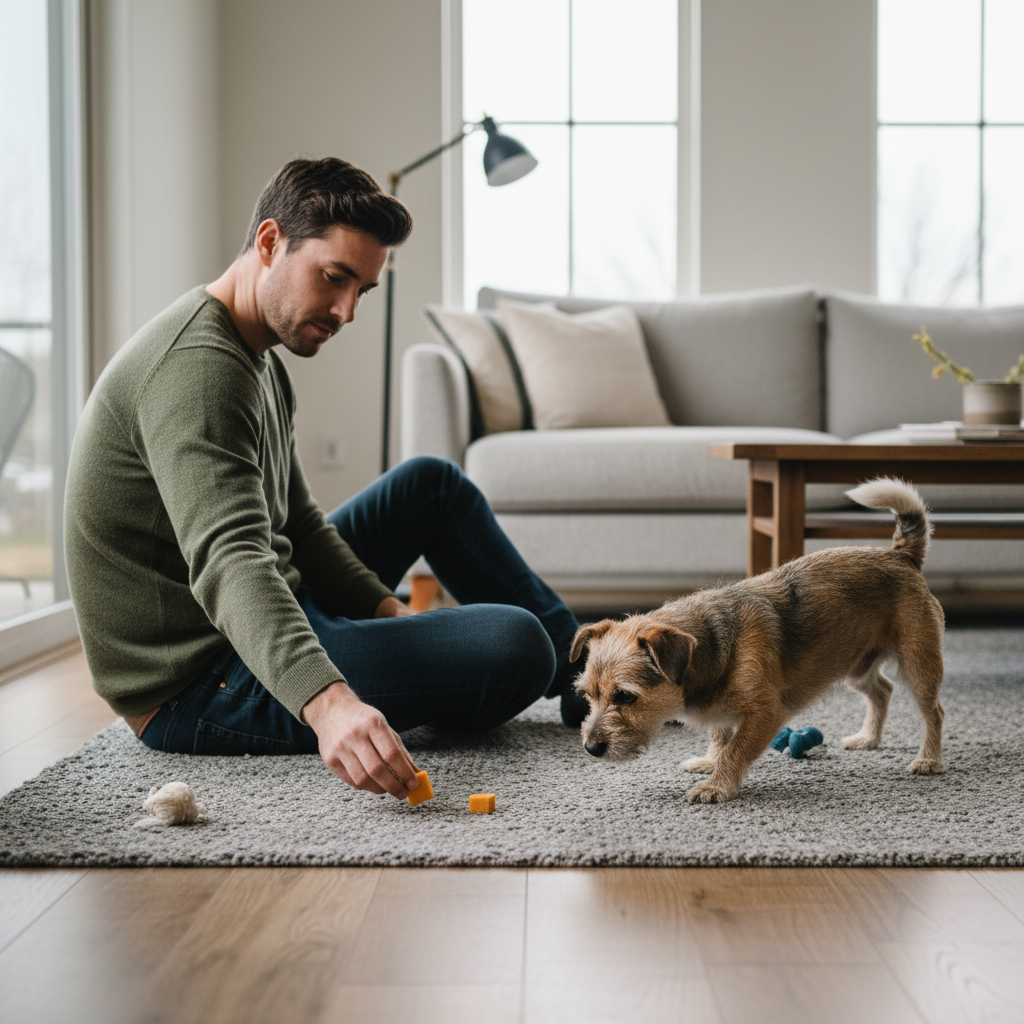
- Have your volunteer sit on the floor. Sitting is less intimidating than standing. They should be angled sideways, avoiding direct eye contact with the dog.
- Give the volunteer a handful of high-value treats.
- The volunteer should toss a treat past the dog, away from their own body. This encourages the dog to move away after getting the reward, releasing spatial pressure.
- As the dog becomes more comfortable, the volunteer can toss the treats closer to their own body.
- The ultimate goal is for the dog to be comfortable taking a treat from the volunteer’s outstretched hand. The volunteer should hold the treat out and remain still, allowing the dog to approach, take it, and retreat. They should not try to pet the dog.
Let the Dog Initiate
A core principle of this step is that the dog makes the choices. The male volunteer should largely ignore the dog. This removes social pressure and allows the dog’s natural curiosity to take over. If the dog chooses to approach and sniff, the volunteer should remain still and quiet. Any friendly overtures must come from the dog first. This empowers the dog and teaches them they have control over the social encounter, which is a massive confidence booster.
Important Note: Throughout this process, carefully observe your dog’s body language. Signs of stress include lip licking, yawning when not tired, ‘whale eye’ (seeing the whites of the eyes), a tucked tail, and body stiffness. If you see these signs, the session is too intense. End on a positive note and try again later with less intensity (e.g., more distance, a shorter duration).
Step 4: Generalization and Knowing When to Seek Professional Help
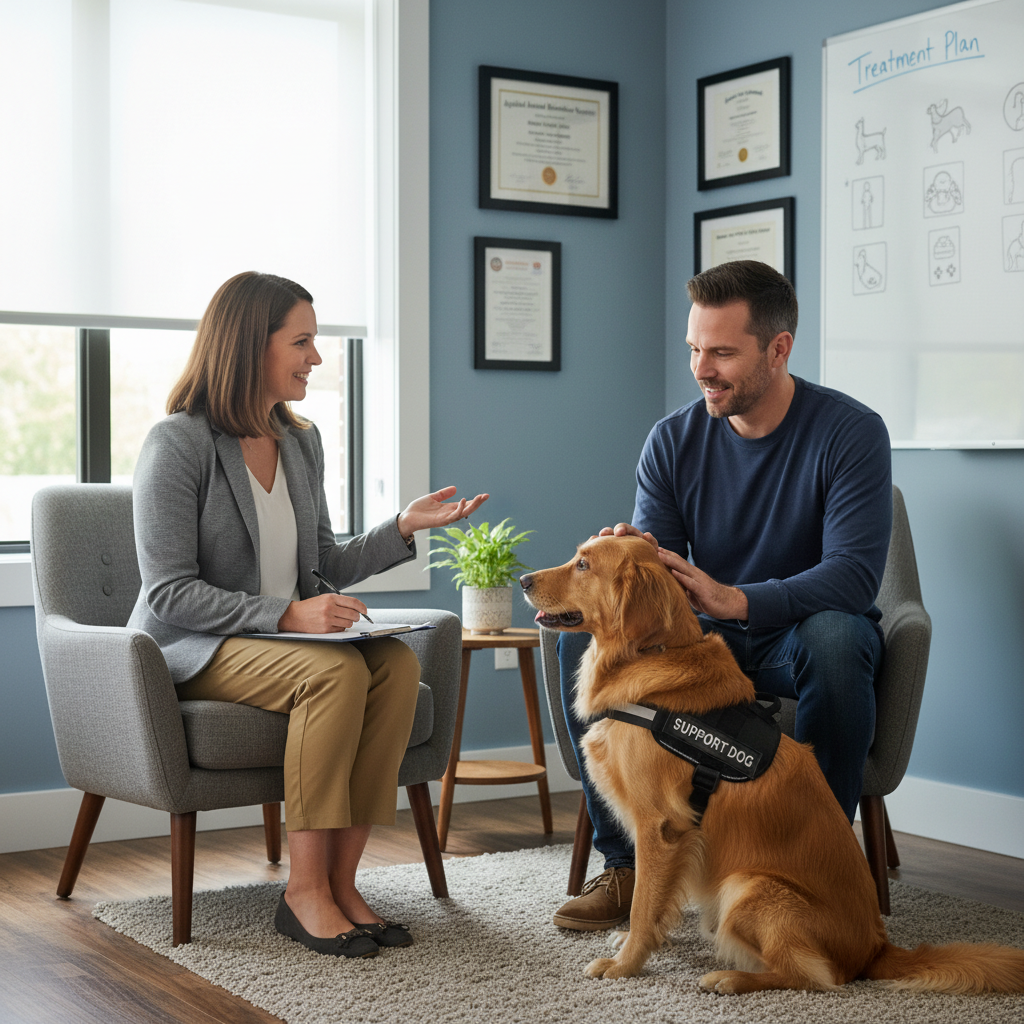
Your dog might become perfectly comfortable with your one male volunteer, but that doesn’t mean they will automatically be comfortable with all men. The final step in the process is generalization—helping your dog understand that the new positive association applies to many different men in many different situations.
Practicing with Variety
Once your dog is confident with your first volunteer, you need to repeat the process with other men. Enlist friends, family members, or neighbors of varying appearances:
- Men with and without beards.
- Men wearing hats or sunglasses.
- Men of different heights and builds.
- Men in different locations: inside your home, in the yard, on a walk.
Each time you introduce a new person, remember to start from the beginning: with plenty of distance and high-value rewards. The process will likely be much faster with each new person, but you should not assume your dog’s comfort. Let their body language be your guide.
When to Call a Professional
While this four-step plan can be highly effective, some cases of fear are severe and deeply ingrained, and may have an underlying aggressive component. It is crucial to know when to seek professional help for the safety of everyone involved.
You should consult a qualified professional if:
- Your dog’s behavior includes aggression. If your dog is lunging, snapping, or has bitten someone, you need hands-on professional guidance immediately.
- You are not seeing any progress. If you have been consistently working through these steps for several weeks with no improvement, a professional can help identify what’s going wrong.
- You feel overwhelmed or unsafe. Your own peace of mind is important. A professional can provide a structured plan and support to help you feel more confident.
Look for a Veterinary Behaviorist (DACVB), a Certified Applied Animal Behaviorist (CAAB), or a Certified Professional Dog Trainer (e.g., CPDT-KA) who has specific, verifiable experience with fear and aggression cases and who uses positive, force-free methods.
Conclusion
Helping a dog overcome a fear of men is a journey that requires commitment, empathy, and immense patience. It is not a quick fix, but a gradual process of rebuilding trust and changing deep-seated emotional responses. By following these four steps—implementing careful management, systematically applying desensitization and counter-conditioning, creating controlled positive experiences, and knowing when to seek professional help—you provide your dog with the tools they need to succeed.
Remember to celebrate the small victories along the way. A moment of calm observation, a curious sniff, or a relaxed body posture in the presence of a man are all signs of progress. Your role is that of a teacher and a protector, guiding your dog toward a world they perceive as safe and predictable. By investing this time and effort, you are not only resolving a challenging behavior but also deepening the bond of trust you share with your canine companion, helping them to live a happier, more confident life.