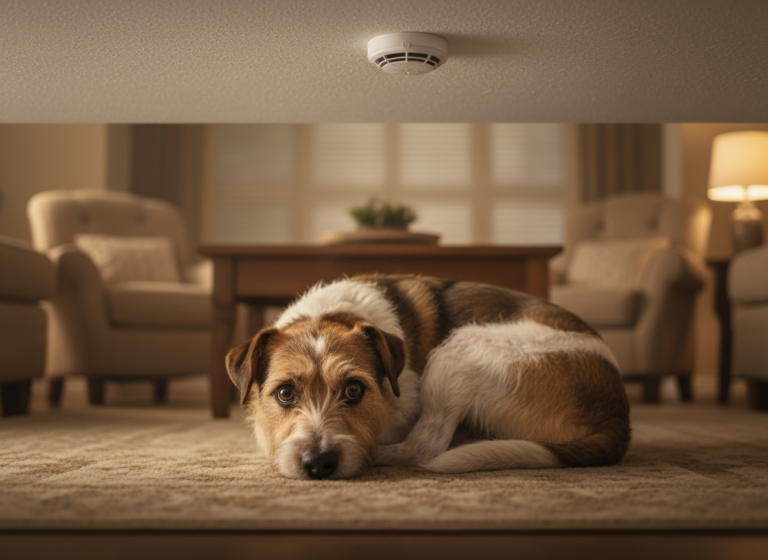
Why Is My Dog Terrified Of The Ceiling Fan? (Phobia Fixes)
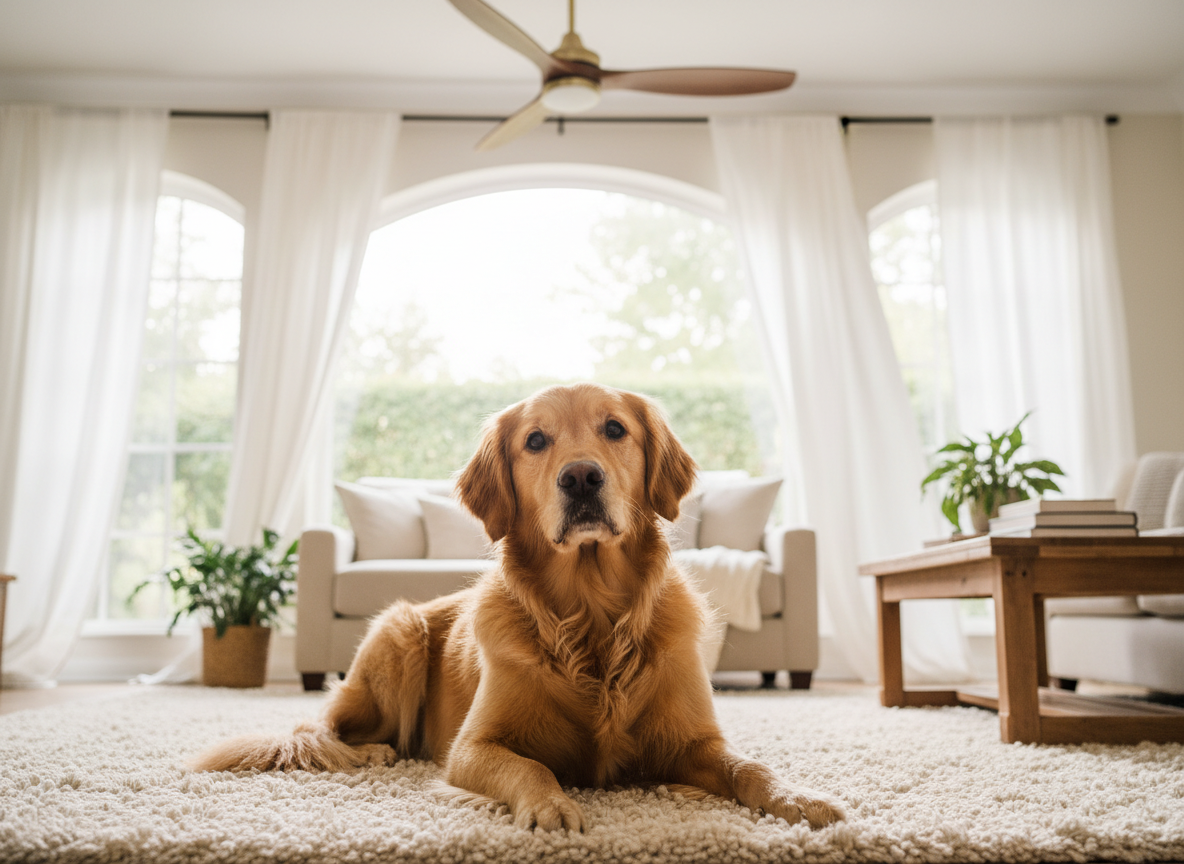
As a pet owner, it can be perplexing and concerning to see your canine companion exhibit intense fear towards an everyday household object. If you’ve ever asked, ‘Why is my dog terrified of the ceiling fan?’ you are not alone. This seemingly irrational fear is more common than many realize and stems from a dog’s unique sensory perception and instincts. The constant whirring, the unpredictable shadows, and the unnatural overhead movement can combine to create a perceived threat in your dog’s mind.
Understanding the root of this phobia is the first step toward resolving it. It is not a reflection of your dog being ‘silly’ or ‘dramatic’; it is a genuine stress response that requires your patience, empathy, and a structured plan. This guide will provide you with the professional knowledge and actionable steps needed to address this issue. We will delve into the canine perspective on ceiling fans, outline a safe and effective behavior modification plan, and offer solutions for when you encounter challenges. By following this systematic approach, you can help your dog reclaim their sense of security and restore peace to your home environment.
Decoding the ‘Monster on the Ceiling’: Why Fans Frighten Dogs
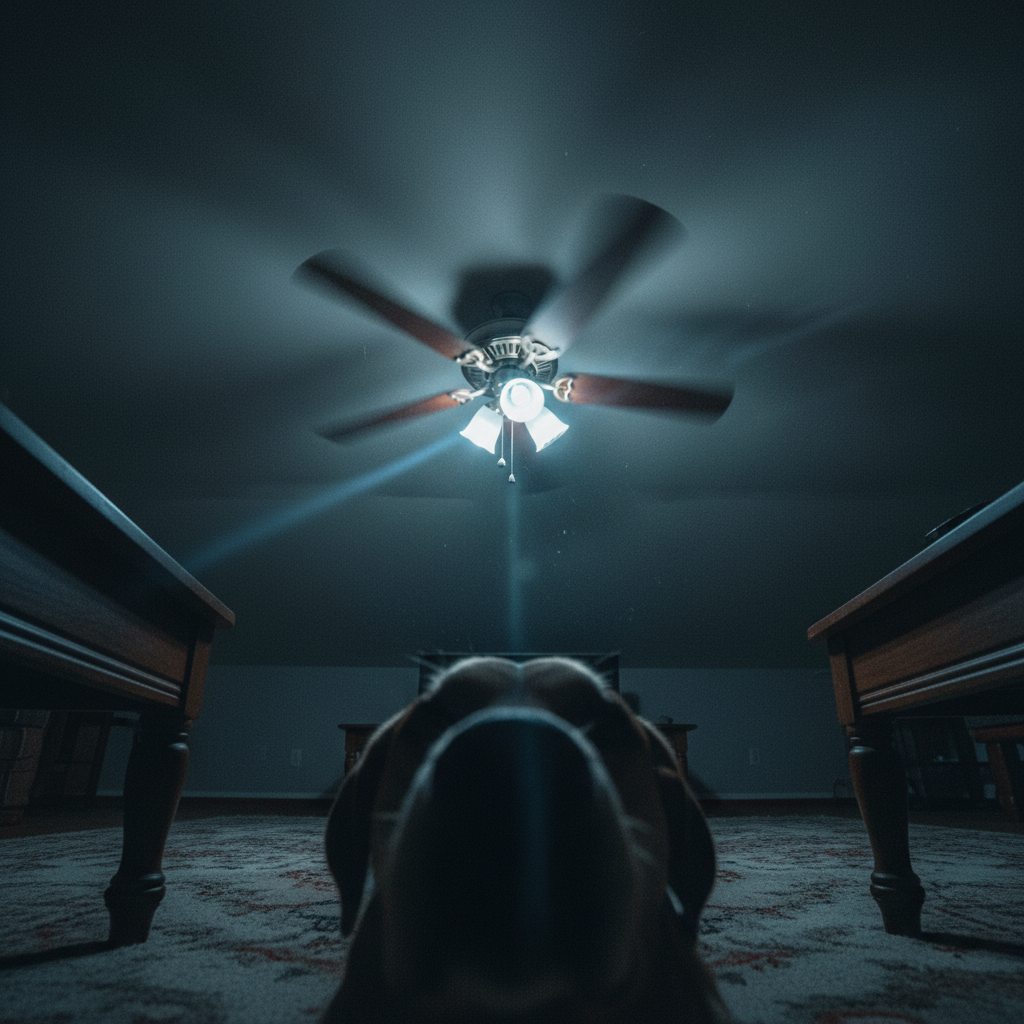
To effectively address your dog’s fear, we must first understand the world from their perspective. A dog’s sensory experience is vastly different from our own, and what we perceive as a harmless appliance can be interpreted as a significant threat. Several factors contribute to the development of this specific phobia.
Sensory Overload: An Assault on Sight and Sound
Dogs have highly acute senses that can make ceiling fans particularly unsettling. From a visual standpoint, the rotating blades create a constant, repetitive motion that can be difficult for a dog’s eyes to track, causing disorientation or anxiety. Furthermore, the shadows cast by the moving blades can appear as menacing, unpredictable shapes dancing across the walls and floor, potentially triggering a defensive or fearful response. Aurally, the persistent, low-frequency hum or whirring sound produced by the fan’s motor can be irritating or alarming to a dog’s sensitive hearing. Sounds that are mere background noise to us can be a source of chronic stress for them.
Primal Instincts: The ‘Predator Above’ Response
Evolution has hardwired dogs with certain survival instincts. Movement overhead can instinctively signal an aerial predator, like a large bird of prey. This deep-seated, primal response can cause a dog to feel exposed and vulnerable. Even though a dog in a modern home has never faced such a threat, the instinct to be wary of things moving above them can remain potent. The ceiling fan, a large, moving object directly overhead, perfectly fits this ancient trigger, prompting a fight-or-flight response.
The Power of Negative Association
Sometimes, a fear of ceiling fans is a learned behavior rooted in a negative experience. This is a classic example of classical conditioning. For instance, if the fan was turned on for the first time during a thunderstorm, the dog might associate the fan’s motion and sound with the terrifying noise of thunder. Similarly, if something fell and made a loud crash while the fan was on, or if the fan itself made a sudden, loud mechanical noise, the dog could form a lasting, fearful association. Once this connection is made, the mere presence or operation of the fan is enough to induce anxiety.
Lack of Early and Positive Exposure
Puppies go through a critical socialization period (typically between 3 and 16 weeks of age) where they learn about the world and what is safe. If a puppy was not exposed to various household sights and sounds, including ceiling fans, during this formative time, they are more likely to develop fears of unfamiliar objects later in life. Without an early, positive context for the fan, they may perceive it as a novel and frightening stimulus upon first encountering it as an adult.
Step 1: Management and Creating a Safe Environment
Before beginning any active training, the immediate priority is to manage the situation to prevent your dog’s fear from escalating. This foundational step is non-negotiable; you cannot train a dog that is already in a state of high anxiety. The goal is to remove the trigger and provide your dog with a profound sense of safety.
Cease All Fan Use (Temporarily)
The most crucial first step is to stop using the ceiling fan. Turn it off and leave it off. Continuing to expose your dog to the object of their fear—a practice known as ‘flooding’—is counterproductive and cruel. It will only intensify their anxiety, erode their trust in you and their environment, and make future training significantly more difficult. Your dog needs to understand that their home is a safe place where the ‘monster’ is no longer active.
Establish a ‘Safe Zone’
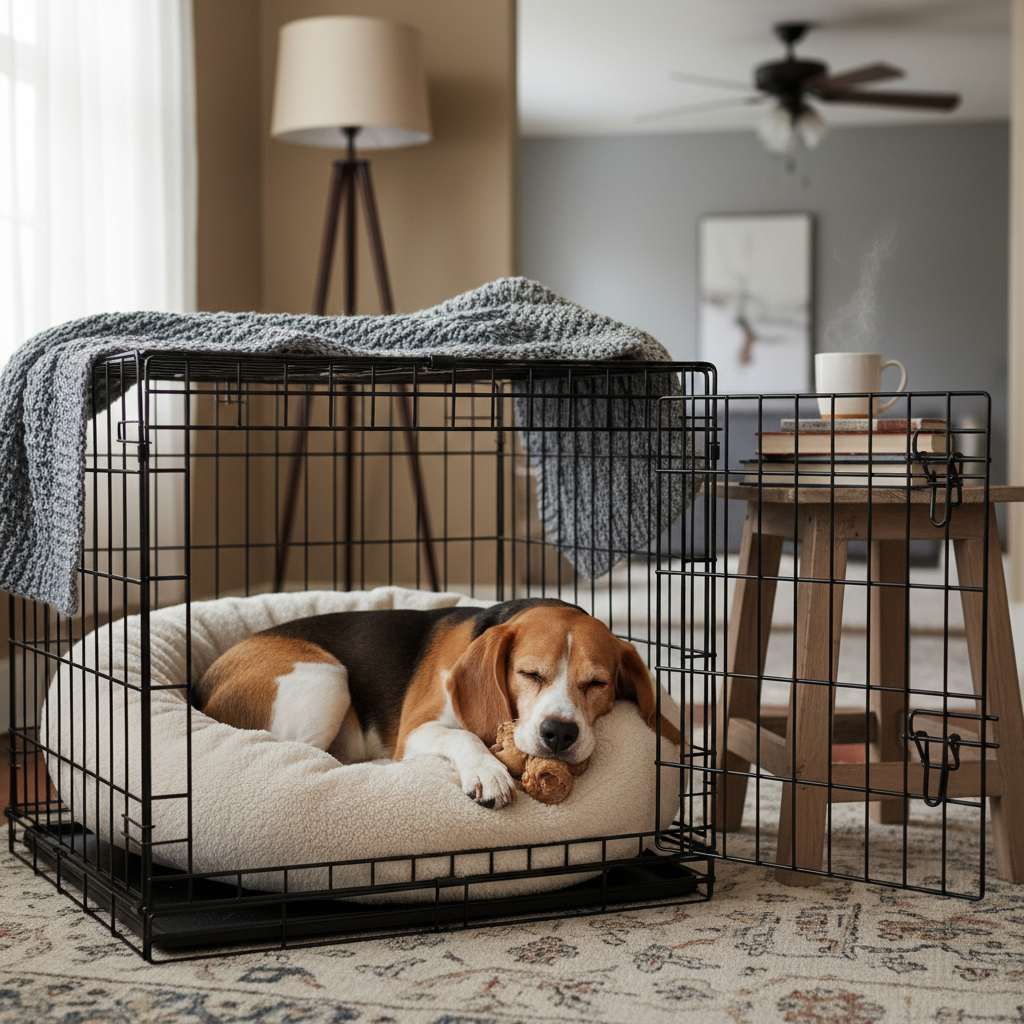
Designate an area in your home as your dog’s sanctuary. This should ideally be in a room without a ceiling fan. If that’s not possible, choose a corner of a room that is as far away from the fan as possible. Make this space incredibly positive and comfortable.
- Use a crate (with the door open) or a comfortable bed as the focal point.
- Fill it with your dog’s favorite blankets and toys.
- Feed your dog their meals in this safe zone.
- Provide high-value chews or food-dispensing puzzle toys exclusively in this area.
The objective is to create a powerful positive association with a space where your dog feels completely secure and in control, far from the source of their fear.
Rule Out Underlying Medical Conditions
It is essential to consult your veterinarian to rule out any medical issues that could be causing or contributing to your dog’s fearful behavior. Conditions affecting vision, such as cataracts or progressive retinal atrophy, can cause objects to appear as blurry, frightening shapes. Similarly, neurological issues or age-related cognitive dysfunction can lead to increased anxiety and new phobias. A thorough veterinary examination will ensure you are addressing a behavioral issue, not an undiagnosed health problem.
Step 2: A Systematic Approach to Phobia Modification
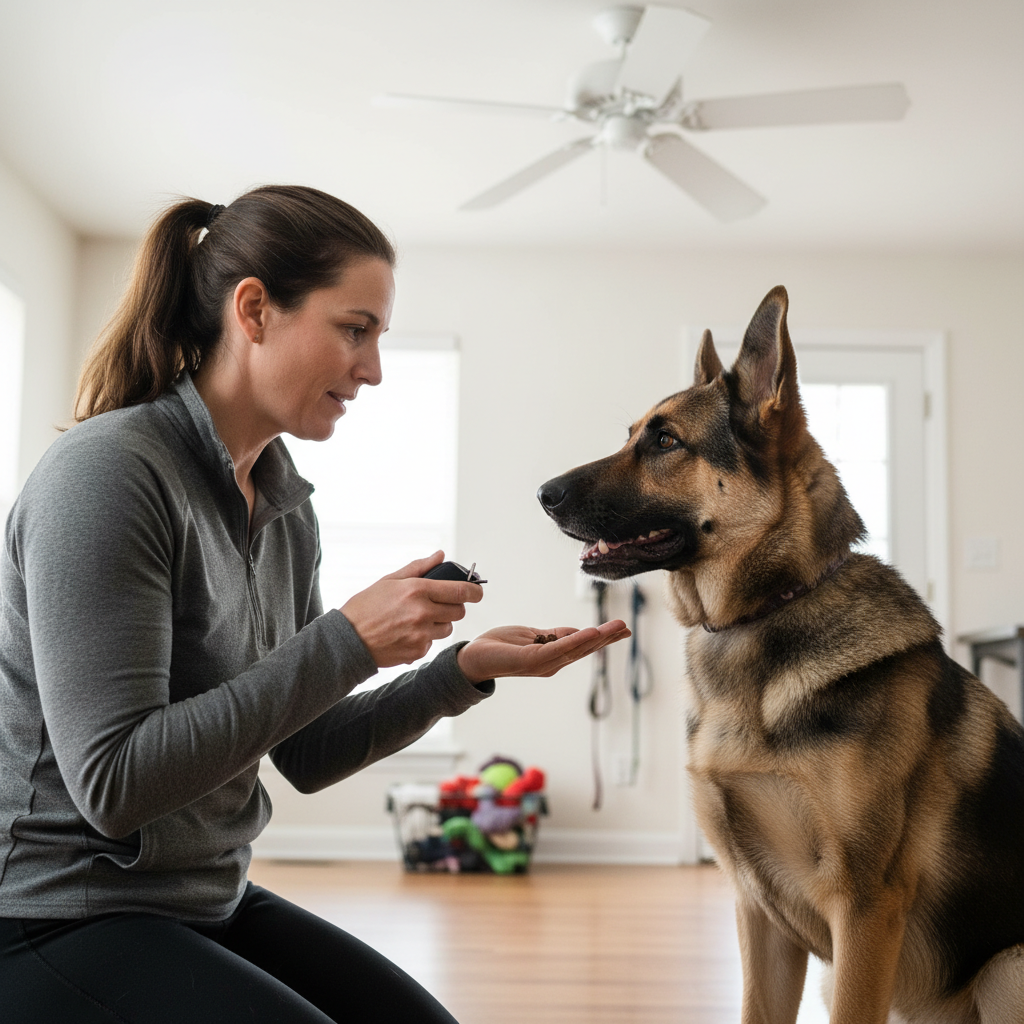
With a safe environment established, you can begin the active training process. The goal is to change your dog’s emotional response to the ceiling fan from fear to neutrality or even positivity. This is achieved through two powerful, scientifically-backed techniques: desensitization (gradual exposure to the trigger at a level that does not produce fear) and counter-conditioning (creating a new, positive association with the trigger).
Expert Tip: Keep all training sessions short, ideally just 2-5 minutes at a time. Always end on a positive note. Your dog’s comfort dictates the pace. If you see signs of stress (lip licking, yawning, whale eye), you have moved too fast. Revert to the previous step where your dog was successful.
Phase 1: The Stationary Fan
Begin with the fan completely off. The goal of this phase is for your dog to be comfortable simply existing in the same room as the motionless fan. Start at a distance where your dog notices the fan but is not anxious. Reward any calm behavior. If your dog looks at the fan and then looks back at you, reward them with a high-value treat (like small pieces of chicken or cheese). If they lie down calmly in the room, praise them and offer a treat. Slowly, over many sessions, decrease the distance between your dog and the fan, rewarding calm behavior at every step.
Phase 2: Introducing Minimal Movement
Once your dog is completely relaxed around the stationary fan, introduce the slightest hint of movement. Do not turn the fan on. Instead, manually and very slowly push one of the fan blades just an inch or two. The moment your dog calmly observes this tiny movement, reward them. The key is for the movement to be so small and slow that it doesn’t trigger a fear response. Repeat this over many sessions, gradually increasing how far you move the blade.
Phase 3: Introducing Low-Speed Operation
This is a critical transition. Start by turning the fan on its lowest possible setting for just one second, then immediately turn it off. As you do this, toss a handful of high-value treats on the floor for your dog to find. The goal is for the brief sound and movement to predict a wonderful ‘treat party.’ Repeat this many times. Once your dog shows happy anticipation when you approach the fan switch, you can slowly increase the duration, moving from one second to two, then three, and so on, always pairing it with something wonderful. During this phase, you can also engage your dog in a fun game or feed them their meal at a comfortable distance while the fan is on its lowest setting for a short period.
Phase 4: Increasing Speed and Duration
Only after your dog is demonstrably comfortable and relaxed with the fan on its lowest speed for extended periods should you consider increasing the speed. Treat the move to medium speed as a brand new training process. Start again with turning it on for just a second, pairing it with high-value rewards, and gradually increasing the duration. Patience is paramount. Rushing this final stage can undo all your hard work.
Enhancing the Process and Overcoming Plateaus
While the core of the behavior modification plan is desensitization and counter-conditioning, some dogs may benefit from additional support, and it’s common to encounter setbacks. Understanding how to manage these situations is key to long-term success.
Consider Calming Aids and Professional Tools
Several products on the market can help manage anxiety and support your training efforts. Always consult with your veterinarian before introducing any new supplements.
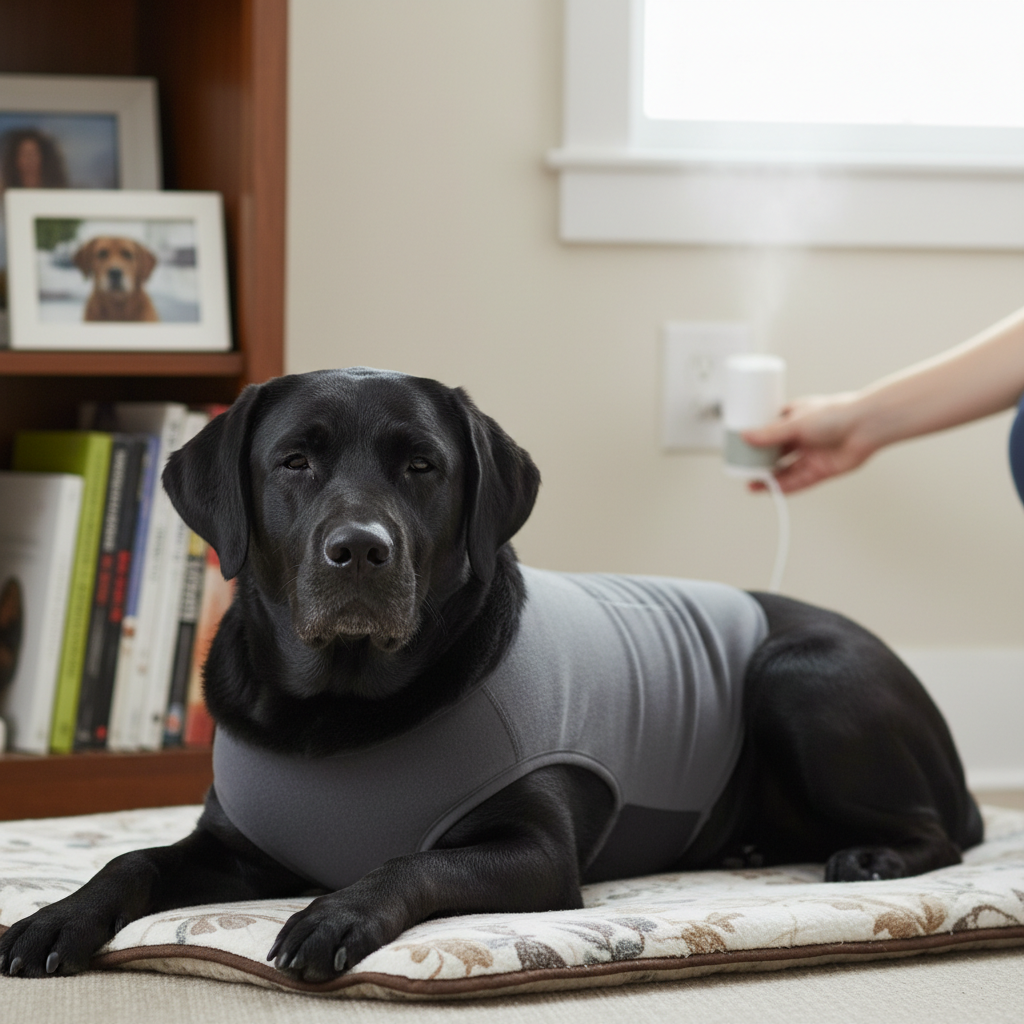
- Pheromone Diffusers: Products like Adaptil release a synthetic copy of the dog-appeasing pheromone, which can promote a sense of calm and security in the environment.
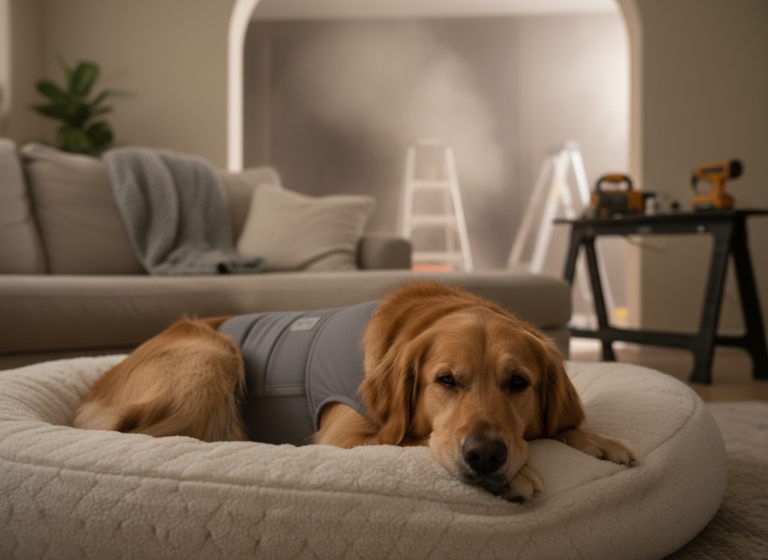
- Anxiety Wraps: Garments like the ThunderShirt apply gentle, constant pressure to the dog’s torso, which can have a calming effect for many dogs, similar to swaddling an infant.
- Veterinary-Approved Supplements: Certain supplements containing ingredients like L-theanine, L-tryptophan, or milk protein derivatives can help reduce anxiety. These should only be used under veterinary guidance.
These tools are not a replacement for training but can help lower your dog’s baseline anxiety, making them more receptive to the behavior modification protocol.
Troubleshooting Common Issues
It’s normal to hit a bump in the road. Here is how to navigate common challenges:
| Problem | Solution |
|---|---|
| My dog won’t take treats during training. | This is a clear sign your dog is over their stress threshold (‘over threshold’). The learning part of their brain has shut down. Immediately stop the session, increase the distance from the fan, or go back several steps in the training plan to a point where they were comfortable and successful. |
| My dog’s fear suddenly returned after a period of success. | This is known as ‘spontaneous recovery’ and is a normal part of phobia extinction. Don’t be discouraged. Simply return to an earlier phase of the training protocol where your dog was confident and work your way forward again. The process is often faster the second time. |
| The training isn’t working, or the fear is severe. | Severe phobias, where a dog is panicking, trembling, or trying to escape, often require professional intervention. Your dog’s quality of life is the top priority. |
When to Seek Professional Help
If you are not making progress, if the fear is severe, or if the dog’s anxiety is impacting their daily life, it is time to seek professional help. Look for a board-certified Veterinary Behaviorist (DACVB), a Certified Applied Animal Behaviorist (CAAB), or a Certified Professional Dog Trainer (CPDT-KA) with experience in fear and phobias. These experts can provide a customized training plan and may, in consultation with your veterinarian, recommend anti-anxiety medication to facilitate learning and improve your dog’s welfare.
Conclusion
Helping your dog overcome a deep-seated fear of ceiling fans is a journey that requires more than just training techniques; it requires a deep sense of empathy and a commitment to your dog’s well-being. By recapping our approach, we can solidify the path forward. First, you must understand the fear from a canine perspective—recognizing the sensory and instinctual triggers at play. Second, immediate management by ceasing fan use and creating a safe zone is non-negotiable for reducing stress. Finally, the patient and systematic application of desensitization and counter-conditioning is the key to changing your dog’s emotional response.
Remember that progress is not always linear. There will be good days and days where you may need to take a step back. Celebrate small victories and never push your dog beyond their comfort level. Your role is not just that of a trainer, but of a trusted guardian who can advocate for their emotional needs. By investing this time and effort, you are not just solving a specific problem; you are strengthening the bond of trust between you and your companion, reassuring them that their home is, and always will be, a safe and predictable place to be.