Why Frenchies Are Impossible To Train (And The Treat Hack That Changes Everything)
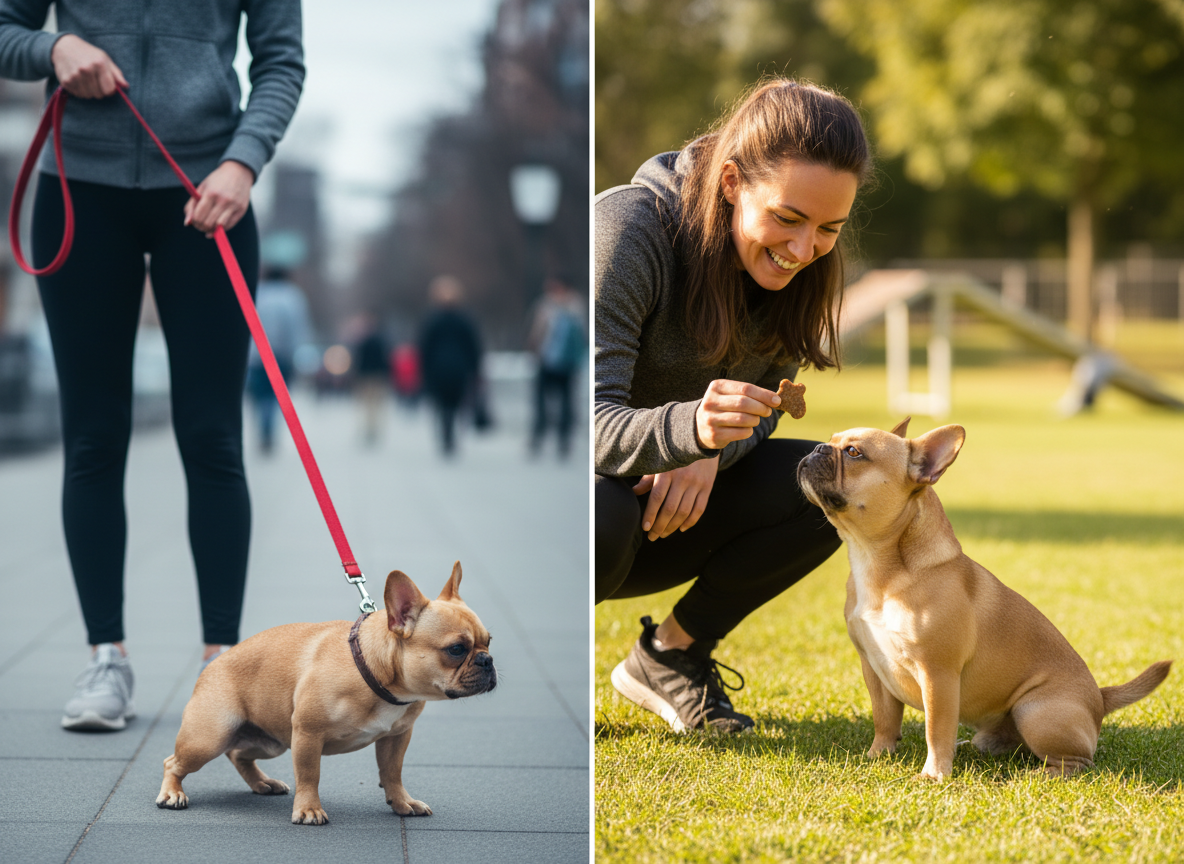
For many loving owners, the phrase ‘French Bulldog training’ can evoke a sigh of exasperation. These charming, bat-eared companions are adored for their affectionate nature and comical personalities, but they carry a notorious reputation for being stubborn, aloof, and, as many would say, nearly impossible to train. If you’ve ever found yourself pleading with your Frenchie to ‘sit’ while they offer you a blank stare, you are not alone. This common struggle has led many to believe that the breed is simply untrainable.
However, this perception is a fundamental misunderstanding of the breed’s unique cognitive and physical makeup. French Bulldogs are not impossible to train; they are simply different. Their intelligence is often masked by a strong-willed independence, and their physical limitations, stemming from their brachycephalic (flat-faced) nature, demand a specialized approach. Standard training methods that work for a Golden Retriever or a Border Collie will often fail spectacularly with a Frenchie.
This comprehensive guide will deconstruct the ‘impossible’ Frenchie myth, delving into the core reasons behind their training challenges. More importantly, we will reveal a powerful, science-backed ‘treat hack’ that leverages the concept of high-value reinforcement to unlock your dog’s motivation. Prepare to change your perspective and transform your training sessions from a battle of wills into a rewarding partnership.
Understanding the French Bulldog Brain: More Than Just Stubbornness
Before you can effectively train a French Bulldog, you must first understand what drives them. Their behavior is a complex interplay of their history, anatomy, and innate personality. Labeling them as merely ‘stubborn’ is an oversimplification that misses the key factors influencing their responsiveness.
Bred for Companionship, Not Compliance
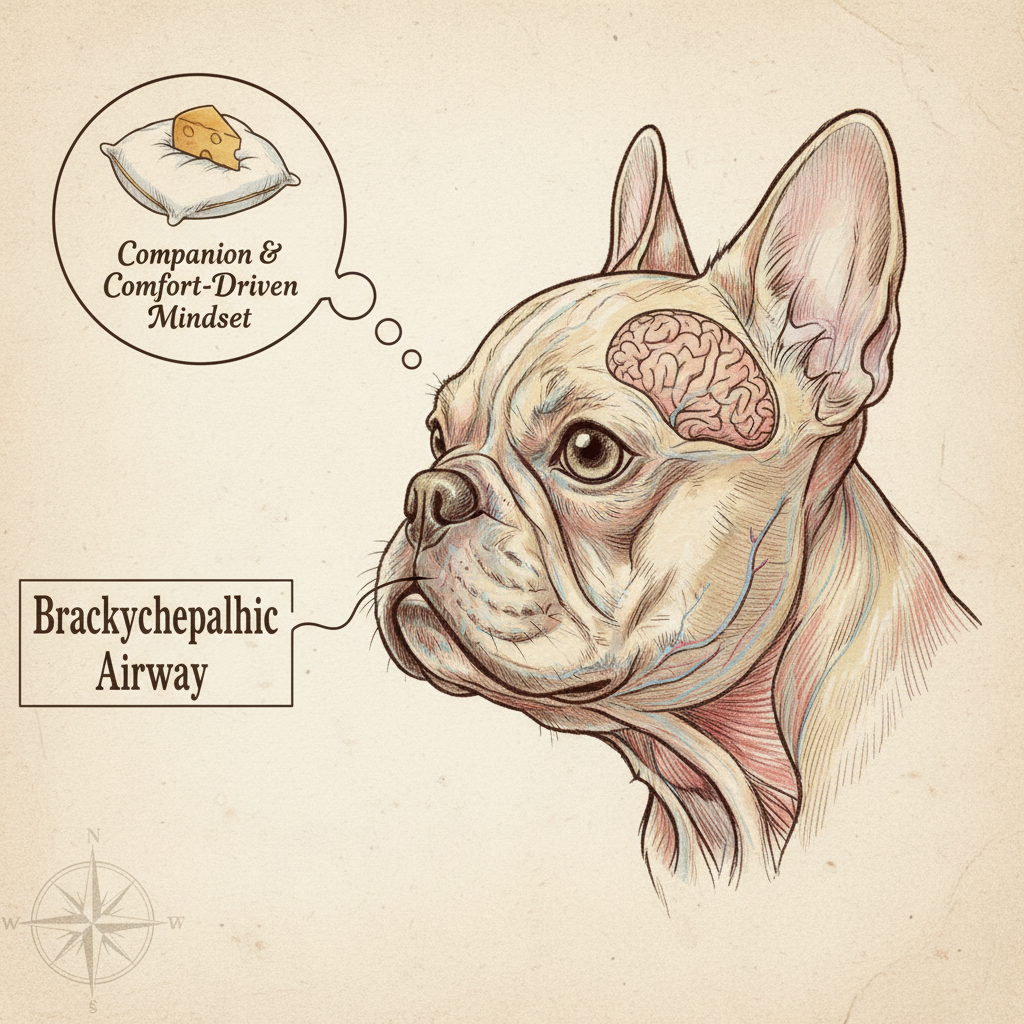
Unlike herding or retrieving breeds that were developed for centuries to follow human commands with precision, French Bulldogs were bred for one primary purpose: companionship. Their job was to be charming lap dogs for English lace makers and Parisian socialites. This history means they lack the innate desire to please that is so prevalent in working breeds. Their mindset is less ‘What do you want me to do?’ and more ‘What’s in it for me?’. This isn’t a sign of low intelligence; in fact, it’s a sign of a discerning mind that weighs the cost and benefit of every action.
The Impact of Brachycephalic Anatomy
A Frenchie’s most endearing feature—their flat face—is also a significant factor in their trainability. Brachycephalic Obstructive Airway Syndrome (BOAS) is common in the breed, causing varying degrees of breathing difficulty. Consequently, long or physically strenuous training sessions can be uncomfortable and even dangerous for them. They can overheat quickly and run out of breath, making them seem lazy or defiant when they are simply physically unable to keep up. A Frenchie who abruptly stops engaging in a training session may not be stubborn; they may be struggling to breathe.
Intelligence vs. Willingness
French Bulldogs are intelligent dogs, but their intelligence is more adaptive and social than obedient. They are excellent problem-solvers, especially when the problem is how to get a snack off the counter or find the most comfortable spot on the sofa. They quickly learn household routines and can manipulate their owners with expert precision. The challenge lies in convincing them that your agenda (like learning to ‘stay’) is more rewarding than their own. Their high intelligence combined with low willingness to please is the central paradox of training the breed.
Expert Tip: Shift your mindset from demanding obedience to creating motivation. Your role is not to be a drill sergeant but a master negotiator who makes cooperation the most appealing option for your Frenchie.
Common Training Pitfalls: Why Standard Methods Fail with French Bulldogs
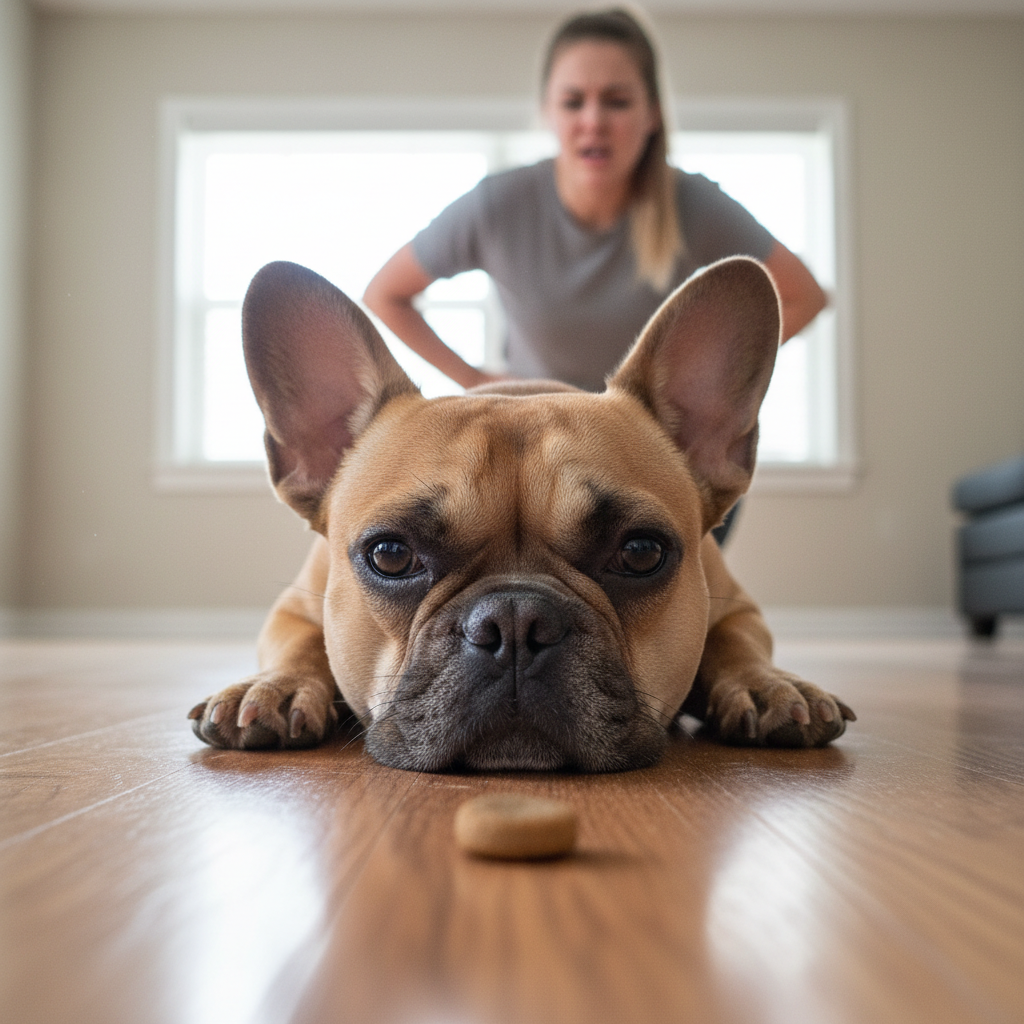
Many well-intentioned owners inadvertently sabotage their training efforts by using methods that are ill-suited for the French Bulldog’s unique temperament and physical structure. Recognizing these common mistakes is the first step toward building a more effective training strategy.
1. Using Low-Value Rewards
A Frenchie will rarely exert themselves for a boring piece of their everyday kibble. As discussed, they operate on a cost-benefit analysis. The reward must be sufficiently enticing to warrant the effort of, for example, getting up from a nap. Using low-value, unexciting treats is perhaps the single most common reason training fails.
2. Marathon Training Sessions
An owner might try to replicate a 30-minute training class they saw online, but for a Frenchie, this is a recipe for disaster. Their short attention spans and physical limitations mean they become mentally fatigued and physically uncomfortable after just a few minutes. A session that is too long will create a negative association with training, making them even more reluctant next time.
3. Inconsistency and Repetition
While repetition is key to learning, mindless repetition bores a Frenchie. If you ask for a ‘sit’ ten times in a row without variation, they will likely disengage. Furthermore, if rules are not applied consistently by everyone in the household, the intelligent Frenchie will quickly learn who they can ignore. If ‘off the couch’ only applies when one person is home, the rule becomes meaningless.
4. Employing Negative Reinforcement
French Bulldogs are remarkably sensitive. Yelling, leash corrections, or any form of punishment-based training is deeply counterproductive. It will not teach them the desired behavior; instead, it will damage your bond, create anxiety, and can lead to them shutting down completely or developing defensive behaviors. They do not respond to intimidation; they respond to positive engagement.
- Mistake: Relying on dry kibble as a training reward.
- Mistake: Conducting training sessions longer than 5-10 minutes.
- Mistake: Using harsh verbal or physical corrections.
- Mistake: Allowing inconsistent rules and commands from different family members.
The ‘Treat Hack’ Revealed: The Science of High-Value Reinforcement

This is where the entire dynamic of your training shifts. The ‘treat hack’ isn’t about a single magical snack; it’s about understanding the psychological principle of high-value reinforcement and building a system around it. The core idea is simple: to get extraordinary effort from your Frenchie, you need to offer an extraordinary reward.
Defining High-Value vs. Low-Value
A high-value reward is anything your dog finds nearly irresistible. It should be smelly, delicious, and something they receive only during training sessions. This exclusivity is crucial. If they get cheese as a random snack throughout the day, it loses its power as a training tool. The value of a reward is determined entirely by the dog, not the human.
We can categorize rewards into a simple hierarchy:
| Value Tier | Examples | Best Use Case |
|---|---|---|
| Low-Value | Dry kibble, hard biscuits, carrots | Food puzzles, general mealtime |
| Mid-Value | Store-bought soft training treats, pieces of apple | Reinforcing already known commands in a low-distraction area |
| High-Value | Freeze-dried liver, boiled chicken, small cubes of cheese, salmon | Teaching new commands, training in distracting environments, overcoming fear |
The Psychology of the Jackpot
The hack works by tapping into the same dopamine response that drives human motivation. When the Frenchie performs the correct action and receives a surprisingly wonderful reward, their brain forges a powerful positive connection with that action. They start to think, ‘Wow, doing that ‘sit’ thing resulted in chicken! I should do that again!’. This approach transforms training from a chore they must endure into an exciting game they want to win.
Key Principle: The treat must be more desirable than any competing distraction. If you’re practicing recall at the park, your treat has to be better than the squirrel, the other dog, and the interesting smell on the ground.
Preparing Your High-Value Arsenal
To implement this strategy, you need to prepare. Treats should be:
- Small: Pea-sized or smaller. You will be giving many, and you don’t want to cause weight gain or fill them up too quickly.
- Soft and Quick to Eat: The dog should be able to swallow it in a second without a lot of chewing, allowing the training session to maintain its pace.
- Aromatic: A strong, appealing smell gets their attention faster than sight alone.
By curating a special set of ‘training only’ rewards, you create a powerful currency that your Frenchie will be eager to earn.
Putting It Into Practice: Your Step-by-Step Frenchie Training Protocol
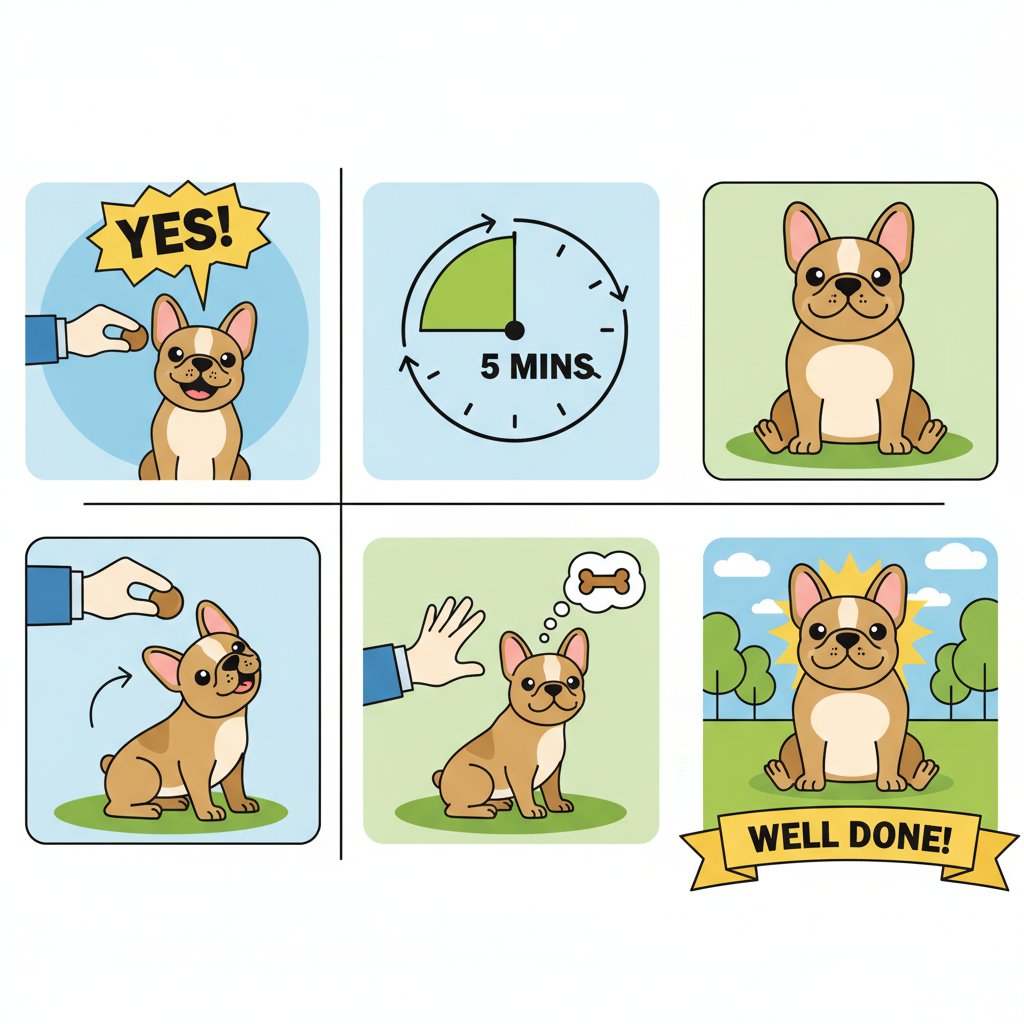
With an understanding of Frenchie psychology and your high-value rewards prepared, it’s time to implement a new training protocol. This structured approach is designed for maximum impact in minimum time, catering perfectly to the French Bulldog’s needs.
-
Step 1: Charge Your Marker
Before you even start training a command, you need to ‘charge’ a marker word or a clicker. A marker (like the word ‘Yes!’ or a click) tells your dog the exact moment they did something right. For a full minute, do nothing but say your word (or click) and immediately give a high-value treat. Repeat this 15-20 times. ‘Yes!’ -> Treat. ‘Yes!’ -> Treat. This builds a powerful association where the marker itself becomes a promise of a fantastic reward.
-
Step 2: Initiate the 5-Minute Power Session
Set a timer for no more than five minutes. Keeping sessions short prevents physical and mental fatigue. It’s far more effective to do two or three 5-minute sessions throughout the day than one grueling 20-minute session. End each session on a high note, with a successful repetition, so your dog finishes feeling confident and eager for more.
-
Step 3: Lure and Reward a Single Behavior
Choose one simple command to start, such as ‘Sit’. Hold a high-value treat near your Frenchie’s nose. Slowly move the treat upwards and back over their head. As their nose follows the treat up, their rear end will naturally lower into a sit. The instant their bottom touches the floor, say ‘Yes!’ (or click) and give them the treat. Do not force them into position. Let them figure out the ‘puzzle’ of how to get the treat.
-
Step 4: Fade the Lure and Add the Cue
After a few successful repetitions using the food lure, start making the same hand motion but without a treat in your hand. When they sit, mark the moment with ‘Yes!’ and then deliver the treat from your other hand. Once they are reliably sitting with the hand motion, you can start saying the verbal cue ‘Sit’ just before you make the hand motion. This pairs the word with the action.
-
Step 5: Practice in New Environments
Once your Frenchie has mastered a command in a quiet room, you need to ‘generalize’ it. Practice the same 5-minute session in the backyard, then on a quiet sidewalk, gradually increasing the level of distraction. You may need to increase the value of your treats for more distracting environments to keep their focus.
Beyond the Basics: Troubleshooting and Long-Term Success
Implementing the treat hack is a game-changer, but training is an ongoing process. Here’s how to troubleshoot common issues and ensure your success is sustainable for the long term.
What if my Frenchie is still not motivated by food?
While rare, some Frenchies are less food-motivated than others. First, ensure you have truly explored all high-value food options (different meats, cheeses, or fish-based treats). If food is still not working, identify what your dog truly loves. Is it a specific squeaky toy? A game of tug? You can use a few seconds of play as a high-value reward in the same way you would use a treat. The principle of powerful, exclusive reinforcement remains the same.
How do I prevent weight gain?
This is a critical consideration for a breed prone to obesity. The solution is simple mathematics. The calories from training treats must be subtracted from their daily meal allowance. Since you are using pea-sized treats, the volume is often less than owners think. However, it’s wise to measure your dog’s daily food ration and reduce it slightly on heavy training days. Always monitor your dog’s body condition to ensure they maintain a healthy weight.
The Path to Fading the Treat
The ultimate goal is not to have a dog that only works when a treat is visible. Once a command is well-learned in various environments, you can move to an intermittent reinforcement schedule. This means you don’t reward every single successful repetition. You might reward three sits in a row, then one, then two. This variability keeps the dog engaged, much like a slot machine keeps a gambler playing. Also, begin incorporating ‘life rewards’. For example, ask for a ‘sit’ before you put their food bowl down or open the door to the yard. The reward becomes the thing they wanted in the first place.
Long-Term Goal: The high-value treat is the tool you use to build the behavior and the positive association. Over time, your praise, affection, and the joy of the partnership itself become powerful secondary reinforcers.
Conclusion
The narrative that French Bulldogs are impossible to train is not only inaccurate but also unfair to this intelligent and affectionate breed. The challenges they present are not rooted in a lack of intelligence but in a unique combination of their companion-bred history, discerning motivational needs, and significant physical limitations. By discarding the one-size-fits-all training methods that cause so much frustration, you can begin a more productive and enjoyable journey.
The key to unlocking your Frenchie’s potential lies in empathy and strategy. Acknowledge their physical needs with short, positive sessions. Respect their intelligence by making training a fun and highly rewarding game. The ‘treat hack’—a systematic application of high-value, exclusive rewards—is the most effective tool for bridging the motivational gap. It transforms you from a source of frustrating demands into a provider of wonderful opportunities.
With patience, consistency, and a pocket full of chicken, you can build a line of communication and a bond of trust with your French Bulldog that goes far beyond basic commands. You can cultivate a well-behaved companion who is not just obedient, but genuinely happy to be your partner.