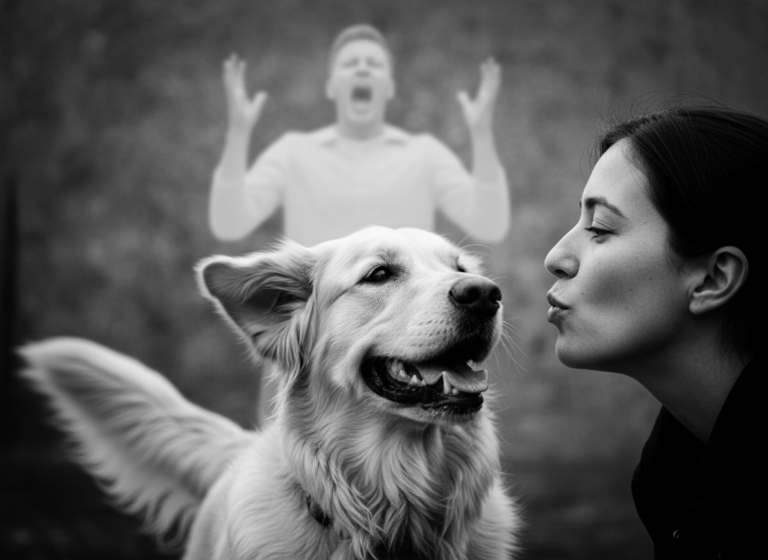
Why Every Friendly Dog Needs Muzzle Training (It’s Not What You Think!)
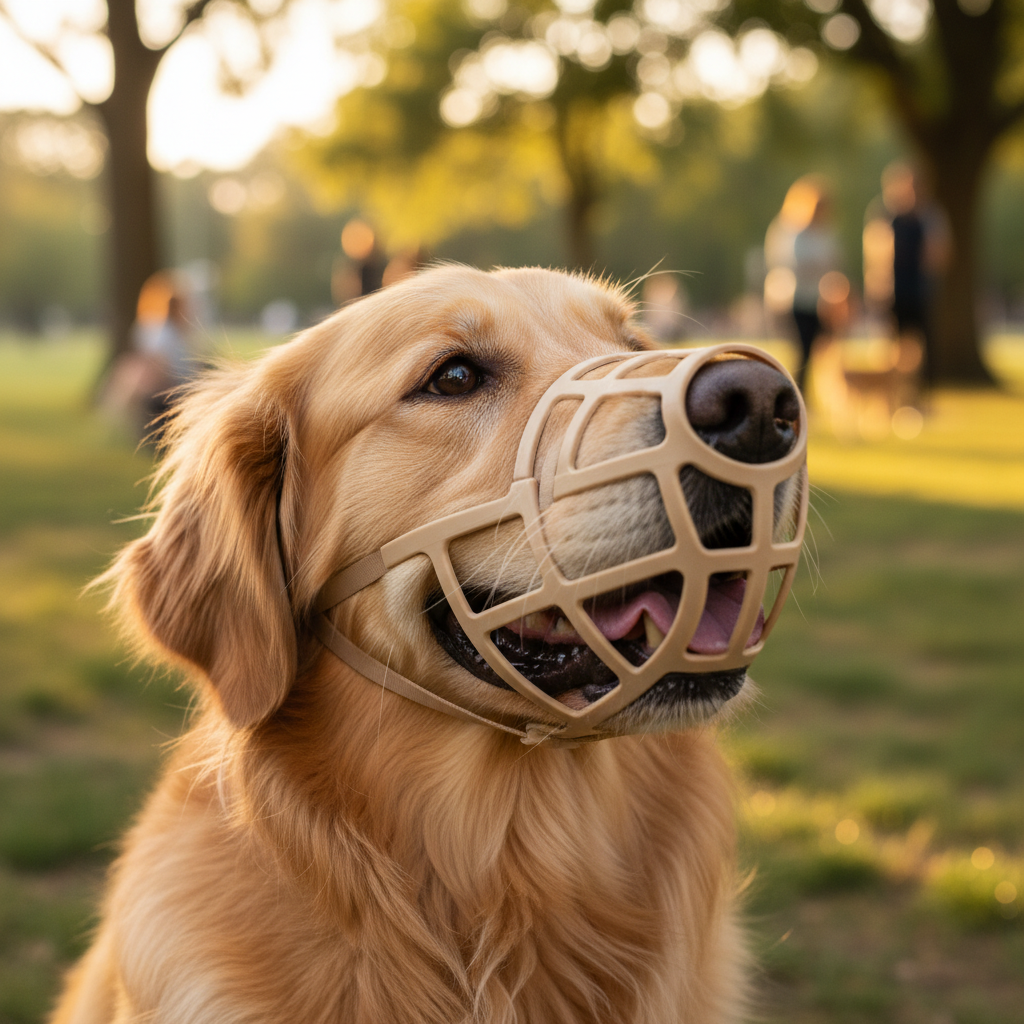
At MasterYourDog.com, we often encounter a pervasive myth that limits a handler’s ability to provide comprehensive care: the belief that muzzles are exclusively for ‘bad’ or ‘aggressive’ dogs. This stigma, fueled by pop culture depictions of snarling beasts, prevents responsible owners from adding a vital tool to their safety repertoire. If you view a muzzle as a punishment device, it is time to shift your perspective.
Consider the seatbelt in your vehicle. You do not wear it because you plan to crash; you wear it because you are prepared for the unpredictable. Similarly, a muzzle is a piece of safety equipment, not a badge of dishonor. Muzzle training is an act of love and foresight. It ensures that if your dog is ever in severe pain, requires emergency handling, or needs to navigate a high-stress environment, they can do so safely without the added trauma of being forced into unfamiliar gear.
In this guide, we will dismantle the stigma surrounding muzzles and provide you with a science-based, step-by-step mastery plan to condition your friendly dog to enjoy wearing one.
The Anatomy of a Bite: Why Friendly Dogs Need Protection
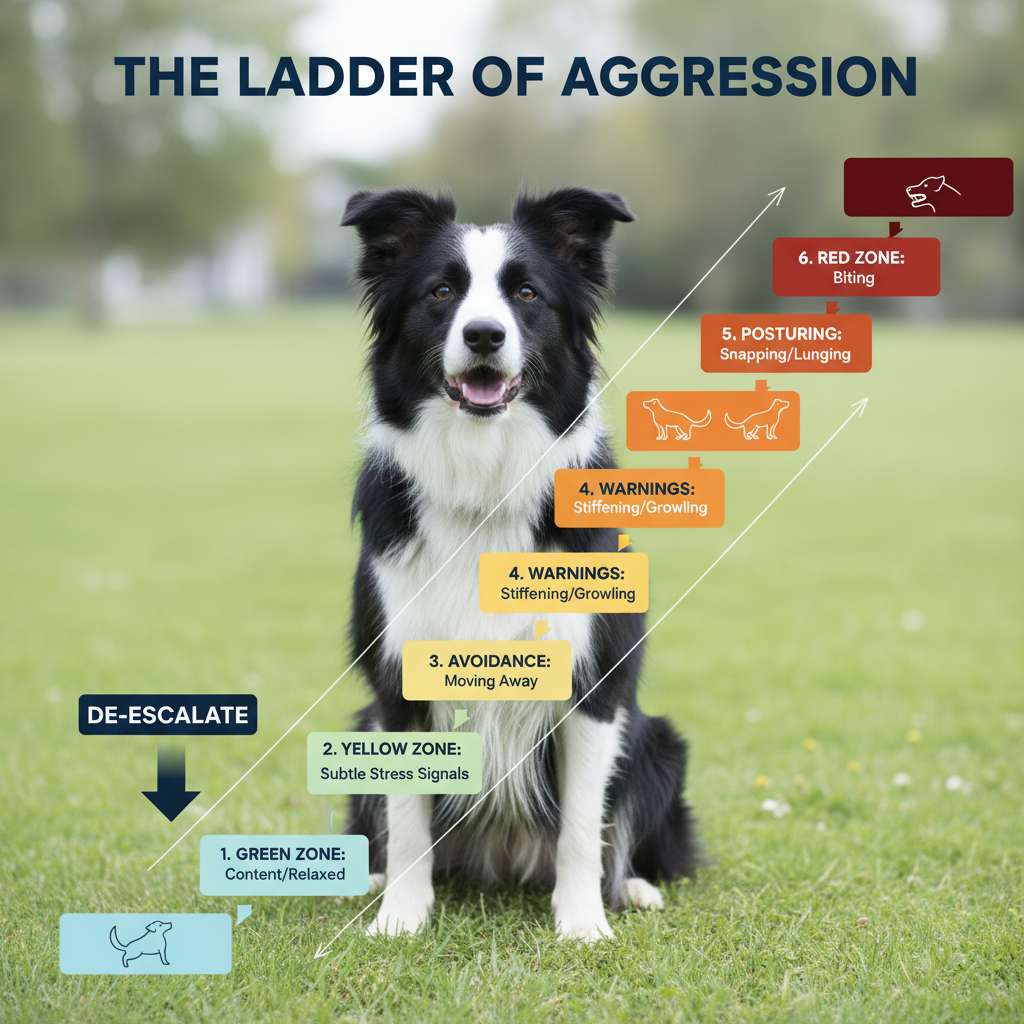
One of the hardest truths for a devoted owner to accept is that any dog can bite. This does not make the dog ‘mean’; it makes them an animal with biological thresholds. At MasterYourDog.com, we emphasize understanding the Ladder of Aggression. Even the most docile therapy dog has a breaking point, usually triggered by fear or pain.
The Pain Response Factor
Imagine your dog suffers a sudden injury, such as a broken leg or bloat. In this state of acute agony, their fight-or-flight instinct overrides their training and bond with you. A dog in shock may instinctively snap at the very hands trying to help them—yours or a veterinarian’s. If your dog is already comfortable wearing a muzzle, you can secure it quickly to allow safe transport and treatment. If they are not, the stress of the muzzle is compounded with the pain of the injury, elevating their cortisol levels dangerously high.
Mastery Takeaway: A muzzle does not change your dog’s personality; it manages a specific situation. Preparing for the worst-case scenario is the hallmark of a master handler.
Selecting the Right Gear: Basket vs. Mesh Muzzles
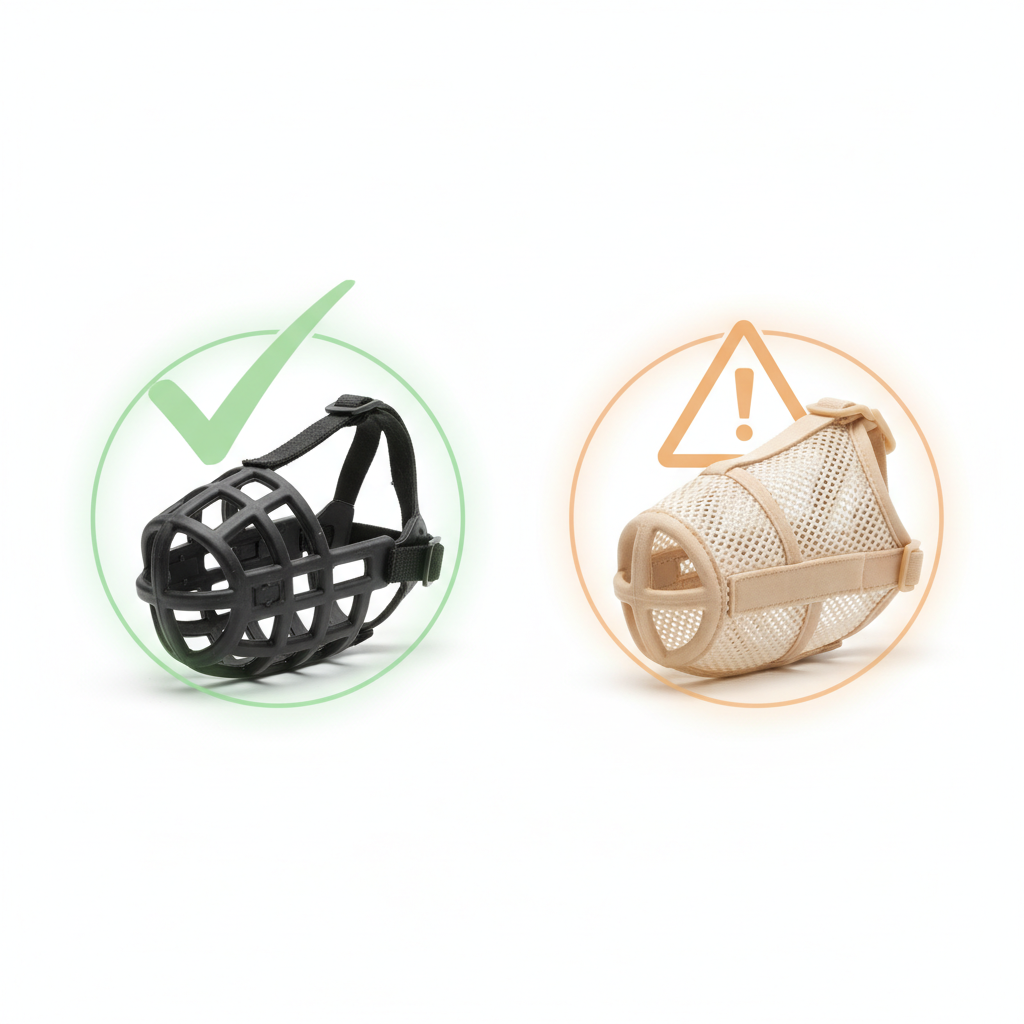
Not all muzzles are created equal. Choosing the wrong equipment can be dangerous and counterproductive to your training efforts. The two most common types are the Basket Muzzle and the Soft (Mesh/Cloth) Muzzle. For proactive training and safety, there is a clear winner.
| Feature | Basket Muzzle (Recommended) | Soft/Mesh Muzzle (Avoid for Long Wear) |
|---|---|---|
| Breathability | Excellent. Allows full panting to regulate body temperature. | Poor. Often holds the mouth shut, risking overheating. |
| Functionality | Dog can drink water and take treats. | Dog cannot drink or eat; strictly for very short procedures. |
| Comfort | Rigid structure sits off the nose, preventing chafing. | Tight fit presses against the snout, causing discomfort. |
| Bite Prevention | High security if fitted correctly. | Determined dogs can sometimes bite through soft fabric. |
We exclusively recommend a Basket Muzzle (such as the Baskerville Ultra) for training and general safety. It allows the dog to act naturally—panting, drinking, and eating treats—which is essential for positive reinforcement training.
The Mastery Method: Step-by-Step Desensitization
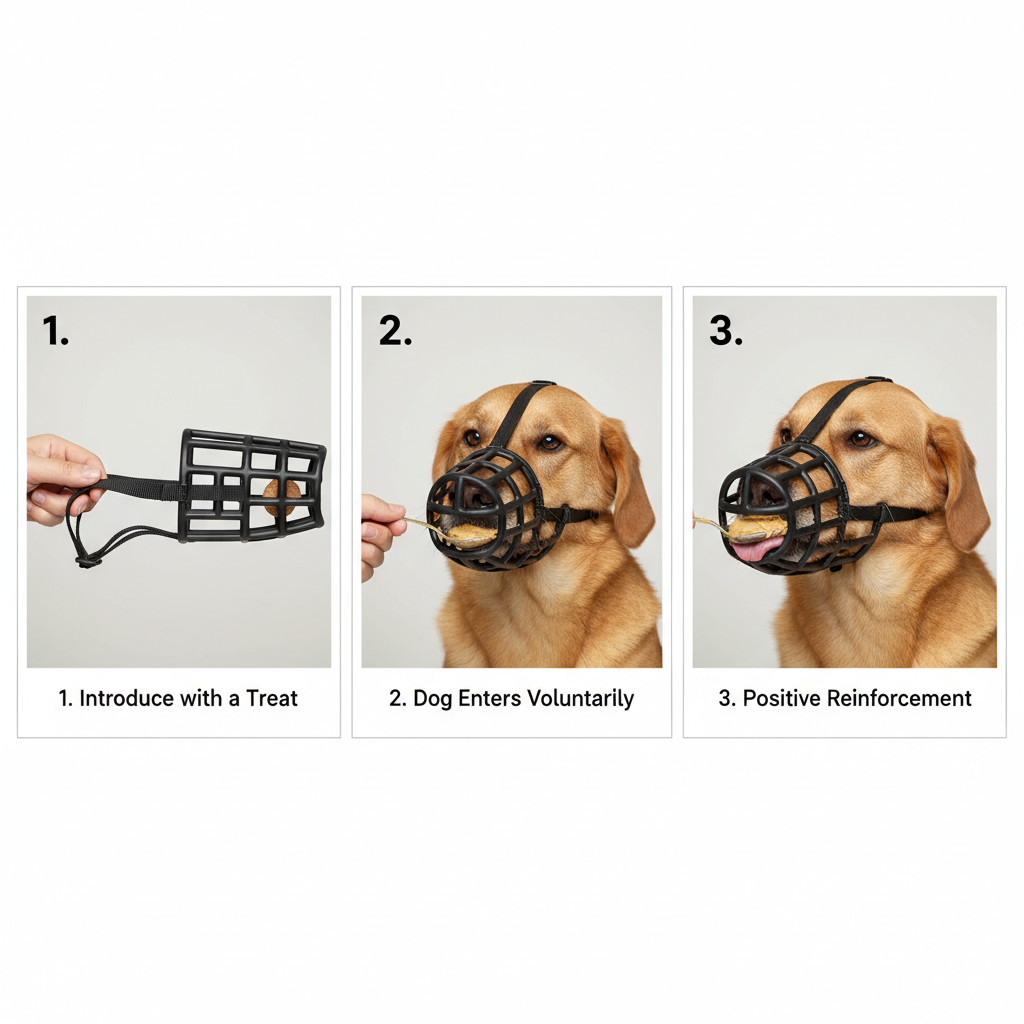
The goal of our training protocol is to create a ‘Conditioned Emotional Response’ (CER) where the sight of the muzzle predicts high-value rewards. We never force the muzzle onto the dog. We shape the behavior until the dog voluntarily places their snout inside.
Phase 1: The Treat Cup Game
- Hold the muzzle in one hand and a high-value treat (chicken, cheese, or liver) in the other.
- Let the dog sniff the muzzle. Mark with a verbal “Yes!” and feed the treat. Repeat 10 times.
- Place a treat inside the basket of the muzzle so the dog has to put their nose partially in to get it. Do not fasten the straps.
- Critical Rule: The dog moves toward the muzzle; the muzzle never moves toward the dog. If they back away, you have moved too fast.
Phase 2: Duration and Fastening
Once the dog is happily diving their nose into the muzzle for treats:
- Build Duration: Delay the treat delivery by 1, then 2, then 3 seconds while their nose is inside.
- Introduce Straps: While they are eating a steady stream of treats (peanut butter on a spoon works well here), lift the straps behind their ears without buckling.
- The Click: Buckle the muzzle, feed a jackpot of treats immediately, and unbuckle. The muzzle being on means the party starts; the muzzle coming off means the party ends.
Beyond Safety: Unexpected Benefits of Muzzle Training
Once you have mastered the training, the muzzle becomes a versatile tool for various scenarios beyond aggression or medical emergencies.
Scavenging Prevention
For dogs that treat the sidewalk like a buffet, consuming rocks, garbage, or toxic substances, a basket muzzle is a life-saver. It allows them to sniff and explore their environment freely without the risk of ingesting a foreign body that necessitates surgery.
Public Access and Travel
Many public transport systems and municipalities require dogs to be muzzled to board trains or buses. By having a muzzle-trained dog, you unlock the ability to travel with your companion without stress. Furthermore, in high-anxiety situations like a crowded vet waiting room, a muzzle signals to other owners to give you space, advocating for your dog’s comfort without you having to say a word.
Conclusion
Muzzle training is not an admission of failure; it is a declaration of responsibility. By desensitizing your friendly dog to this essential piece of gear, you are preparing them for a lifetime of safety and removing the terror from medical emergencies. At MasterYourDog.com, we believe that true mastery involves preparing for the ‘what ifs’ so that you and your companion can enjoy the ‘right nows’ with total peace of mind. Start your training today, keep it positive, and turn the muzzle into a symbol of safety.