Trigger Stacking: The Hidden Reason Your Dog “Snapped” Out Of Nowhere
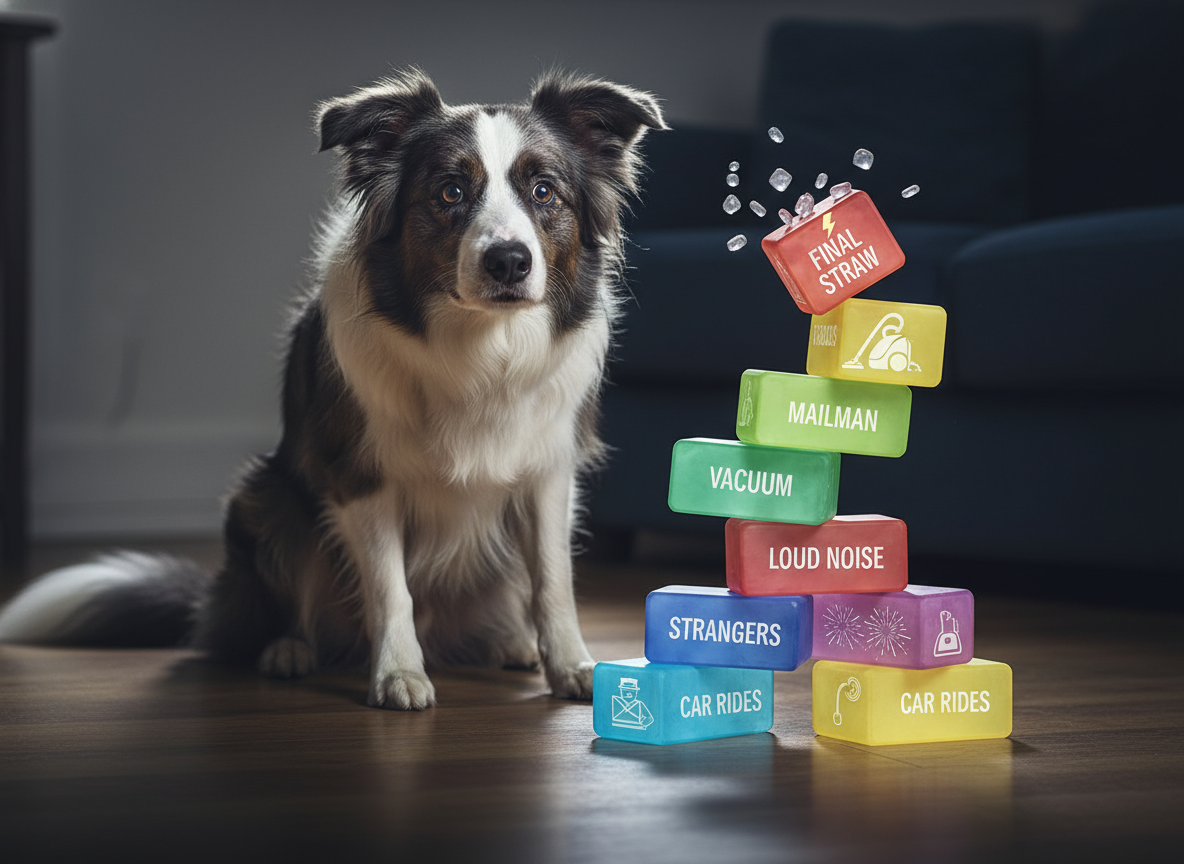
You see it happen in an instant. One moment, your dog is resting calmly; the next, they are growling, snapping, or biting, seemingly for no reason. The common refrain from a shocked owner is often, “It came out of nowhere!” But in the vast majority of cases, it didn’t. This sudden behavioral shift is frequently the result of a powerful, yet often invisible, process known as trigger stacking or stressor stacking.
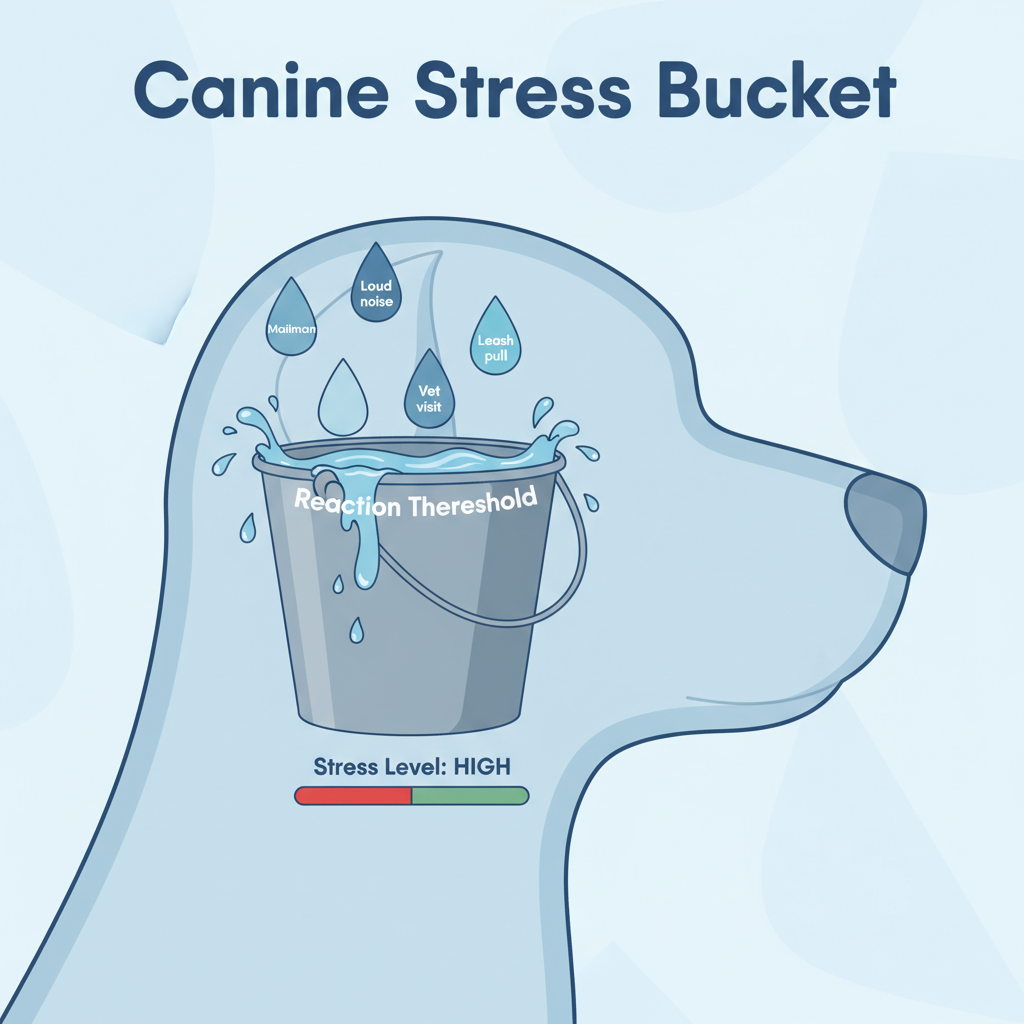
Imagine a bucket that slowly fills with water, drop by drop. Each drop is a minor stressor your dog experiences throughout the day. A single drop is manageable, as are a few dozen. But eventually, one final, seemingly insignificant drop causes the bucket to overflow. That overflow is the snap, the lunge, the bite. This is the essence of trigger stacking: a series of stressful events occurring too close together for the dog’s stress hormones to return to baseline, leading to a cumulative effect that pushes them over their reaction threshold.
Understanding this concept is one of the most critical steps any dog owner can take to ensure a safe and harmonious relationship with their canine companion. It shifts the perspective from blaming the dog for a “bad” behavior to understanding the environmental and physiological factors that led to it. In this comprehensive guide, we will deconstruct trigger stacking, teach you how to become an expert observer of your dog’s subtle stress signals, and provide you with proactive strategies to manage their stress and prevent the bucket from ever overflowing.
Understanding the Science of Trigger Stacking: The Stress Bucket Analogy
At its core, trigger stacking is a physiological process. When a dog encounters something it perceives as stressful or threatening, its body enters a state of arousal. The sympathetic nervous system kicks in, releasing hormones like adrenaline and cortisol. This is the classic “fight or flight” response, designed to prepare the body for immediate action. In a single, isolated event, the dog’s body can recover, and hormone levels can return to normal, a process that can take anywhere from several hours to several days.
The problem arises when the dog is exposed to multiple stressors in succession without adequate time to recover. Each new trigger adds more stress hormones to a system that is already flooded. This is where the stress bucket analogy becomes so useful.
Every dog has a metaphorical bucket. Daily life slowly adds water (stress) to it. For some dogs, the bucket is large; for others, it’s quite small. Here are some common stressors (drops of water) that can contribute to filling the bucket:
- Environmental Stressors: Loud noises (construction, thunderstorms, vacuums), unfamiliar people or places, slick floors, strong odors.
- Social Stressors: Being stared at by a person or another dog, being hugged or petted invasively, other dogs barking, children behaving unpredictably.
- Physical Stressors: Pain or discomfort from an underlying medical issue (arthritis, dental pain), feeling cold or hot, hunger or thirst, a tight leash or uncomfortable harness.
- Psychological Stressors: Boredom, lack of enrichment, confusing training signals from the owner, separation from their human.
It is crucial to recognize that a “trigger” is defined by the dog’s perception, not our own. Something as simple as a visitor wearing a hat or the beep of a microwave can be a significant stressor for a sensitive dog, adding another drop to their bucket.
When the bucket is full, the dog has reached its reaction threshold. At this point, it has exhausted its capacity to cope. The next event, no matter how minor—a person reaching over its head, a cat walking by—can be the final drop that causes the overflow, resulting in a dramatic and seemingly disproportionate reaction like a growl, snap, or bite.
Becoming a Canine Detective: How to Identify Your Dog’s Stressors

Preventing trigger stacking begins with learning to read your dog’s language. Dogs are constantly communicating their emotional state through subtle body language, often referred to as calming signals or stress signals. Recognizing these early whispers of discomfort allows you to intervene long before they feel the need to shout with a growl or a snap. To become a proficient canine detective, you must learn to watch for these signs and note the context in which they appear.
Common Canine Stress Signals
- Yawning: A yawn outside of the context of being tired is a very common sign of stress or anxiety.
- Lip/Nose Licking: Quick flicks of the tongue to the nose or lips when no food is present.
- Whale Eye: When a dog turns its head away but keeps its eyes fixed on something, showing the whites (sclera) of the eyes in a crescent shape.
- Tense Body and Face: A stiff, rigid posture, a tightly closed mouth, or tension around the eyes and brow.
- Panting: Panting when not hot or thirsty. The panting may be rapid and shallow.
- Pinned Ears: Ears held back flat against the head.
- Tucked Tail: A tail held low or tucked completely between the legs.
- Shaking Off: A full-body shake as if wet, but when the dog is dry. This is often done after a stressful encounter to literally “shake off” the stress.
- Avoidance: Actively turning the head or body away from something, sniffing the ground suddenly, or trying to move away.
Keeping a Stress Journal
One of the most effective tools for identifying triggers is a stress journal. For a week or two, document your dog’s daily activities and any instances where you observe the stress signals listed above. Be specific. Don’t just write “stressed on walk.” Instead, write: “10:15 AM walk: Saw a man in a large coat 50 feet away. Max stopped, his body went stiff, and he showed whale eye. I moved him across the street, and he shook off once we passed.”
This detailed record-keeping will help you identify patterns and recognize your dog’s specific triggers. You may discover it’s not “all strangers” but specifically tall men, or not “all dogs” but only loud, boisterous ones. This knowledge is power; it is the foundation upon which you will build your management plan.
A Day in the Life: A Real-World Example of Trigger Stacking
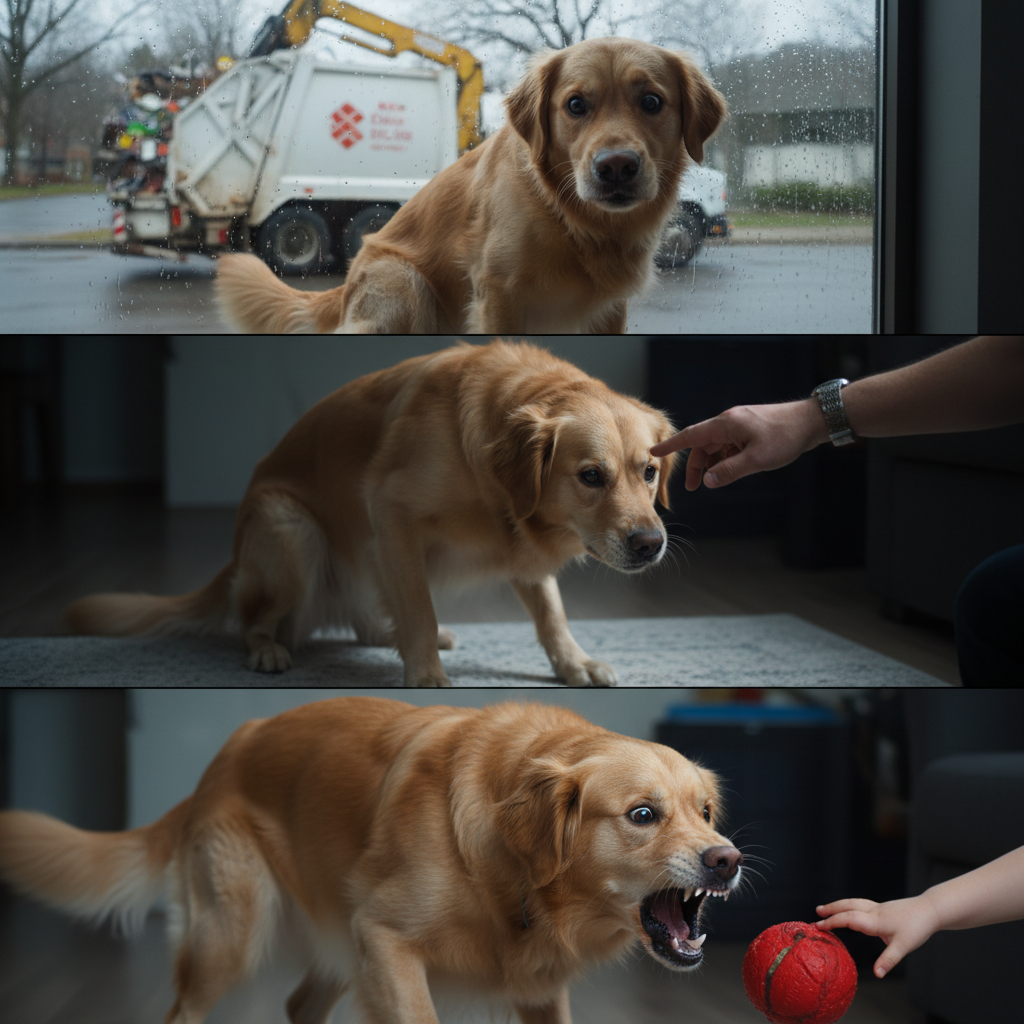
To truly grasp how quickly triggers can stack, let’s follow a hypothetical day for a dog named Buster, a generally good-natured but slightly anxious rescue dog.
7:00 AM: The Garbage Truck
Buster is woken abruptly by the loud noises of the weekly garbage collection. He barks, paces, and his ears are pinned back. (Bucket: 25% full)
8:30 AM: The Morning Walk
During his walk, a loose dog charges up to him, barking excitedly. Buster’s owner pulls him back tightly on the leash, creating tension. Buster stiffens and lip-licks repeatedly. The other dog is recalled, but Buster remains tense for the rest of the walk. (Bucket: 60% full)
12:00 PM: The Mail Carrier
The mail carrier comes to the door, and Buster erupts into frantic barking. He can’t get to the door, which increases his frustration. His owner yells at him to be quiet, which only adds more stress to the situation. (Bucket: 80% full)
4:00 PM: A Visit from a Child
A neighbor and their young child stop by. The child is loud and moves quickly. Buster tries to move away, yawning and showing whale eye, but the child follows him. (Bucket: 95% full)
4:05 PM: The Snap
Buster retreats to his bed with his favorite chew toy, trying to self-soothe. The child, meaning no harm, quickly reaches for the toy. This final, minor event is the last drop. Buster’s bucket overflows, and he whips his head around and snaps in the air near the child’s hand. (Bucket: 100% full – Overflow)
To the owner and the neighbor, it looks like Buster snapped unpredictably over a toy. But by tracking the day’s events, we can see a clear and predictable progression of stacked stressors that led to the inevitable outcome. Buster had been communicating his discomfort all day, but the signals were either missed or misunderstood.
Draining the Stress Bucket: Proactive Management and De-escalation Techniques

Once you understand trigger stacking and can identify your dog’s stressors, you can shift from being reactive to proactive. The goal is to prevent the bucket from filling up in the first place and to help drain it when it does. This involves both in-the-moment de-escalation and long-term lifestyle adjustments.
Immediate De-escalation
If you see your dog displaying stress signals, your immediate goal is to help them. Follow these steps:
- Increase Distance: The single most effective thing you can do is create space between your dog and the trigger. This might mean crossing the street, turning around and walking the other way, or asking a person to please step back.
- Remove the Dog (or the Trigger): If possible, calmly lead your dog away from the stressful situation into a quiet, safe space. If you’re at home, you can move the dog to another room or remove the trigger (e.g., close the blinds to block the view of the mail carrier).
- Do Not Punish: Yelling at or punishing a stressed dog will only add more water to the bucket and can damage your bond. Your dog is having a hard time, not giving you a hard time.
Long-Term Management Strategies
Proactive management is about creating a lifestyle that minimizes stress and builds resilience.
- Environmental Management: This is your first line of defense. If your dog is reactive to people outside the window, use window film or close the blinds. If they are stressed by visitors, use baby gates or a crate in a quiet room to give them a safe space. Management isn’t a failure to train; it’s a smart, compassionate way to set your dog up for success.
- Provide Decompression Opportunities: All dogs need time to de-stress. A “decompression walk” or “sniffari” on a long line in a quiet natural area allows a dog to just be a dog. Sniffing is scientifically proven to lower a dog’s heart rate and is a calming activity.
- Incorporate Enrichment: Combat boredom and build confidence with enrichment activities. Food puzzles, snuffle mats, and lickimats encourage natural behaviors and provide a healthy outlet for mental energy.
- Prioritize Sleep: Just like humans, dogs need adequate, quality sleep to regulate their mood and stress levels. Ensure they have a quiet, comfortable place to rest undisturbed.
For long-term behavior change with known triggers, techniques like counter-conditioning and desensitization (CC/DS) are invaluable. This process involves slowly and carefully changing your dog’s emotional response to a trigger from negative to positive. Due to the precise timing and skill required, it is highly recommended to undertake this with the guidance of a certified, force-free professional.
Knowing Your Limits: When to Consult a Professional

While understanding trigger stacking is a monumental step, some situations require professional guidance. It’s a sign of responsible ownership to know when to call for help. A qualified professional can help you create a safe and effective behavior modification plan tailored to your specific dog and your family’s needs.
Who to Call
The dog training industry is unregulated, so it’s vital to choose the right kind of professional:
- Certified Professional Dog Trainer (CPDT-KA/KSA): A trainer who has passed a rigorous exam and adheres to a code of ethics, often focusing on humane, science-based methods. They are excellent for general training and mild behavioral issues.
- Certified Dog Behavior Consultant (CDBC): These professionals have a higher level of expertise in dealing with complex behavior issues like aggression, fear, and anxiety.
- Veterinary Behaviorist (DACVB): This is a veterinarian who has undergone a multi-year residency to specialize in animal behavior. They can diagnose and treat underlying medical causes of behavior problems and can prescribe medication if necessary.
When to Make the Call
You should seek professional help immediately if:
- Your dog has bitten a person or another animal, especially if it broke skin.
- The aggression is severe, unpredictable, or escalating.
- You feel overwhelmed, afraid of your dog, or are unable to manage the environment safely.
- Your dog’s behavior changed suddenly, which could indicate an underlying medical problem. A full veterinary check-up is always the first step to rule out pain or illness.
Working with a professional is an investment in your dog’s well-being and your family’s safety. They can provide the objective perspective and expert guidance needed to navigate these challenging situations successfully.
Conclusion
The concept of trigger stacking transforms our understanding of canine behavior. It replaces the myth of the dog who “snapped out of nowhere” with the reality of a dog communicating its stress in the only ways it knows how. By learning to recognize the subtle whispers of anxiety, identifying your dog’s unique stressors, and proactively managing their environment, you can prevent their stress bucket from ever reaching its tipping point.
This journey requires patience, empathy, and a commitment to observation. It asks us to become our dog’s advocate, to protect them from situations they find overwhelming, and to provide them with the support they need to feel safe and secure. The reward is a deeper bond, a more profound trust, and a peaceful coexistence built not on commands and corrections, but on a foundation of mutual understanding and respect. Your dog isn’t trying to be difficult; they are trying to cope. By understanding trigger stacking, you give them the greatest gift of all: the gift of being understood.