The Viral ‘Shame’ Trick: Teach Your Dog to Hide Their Face on Command
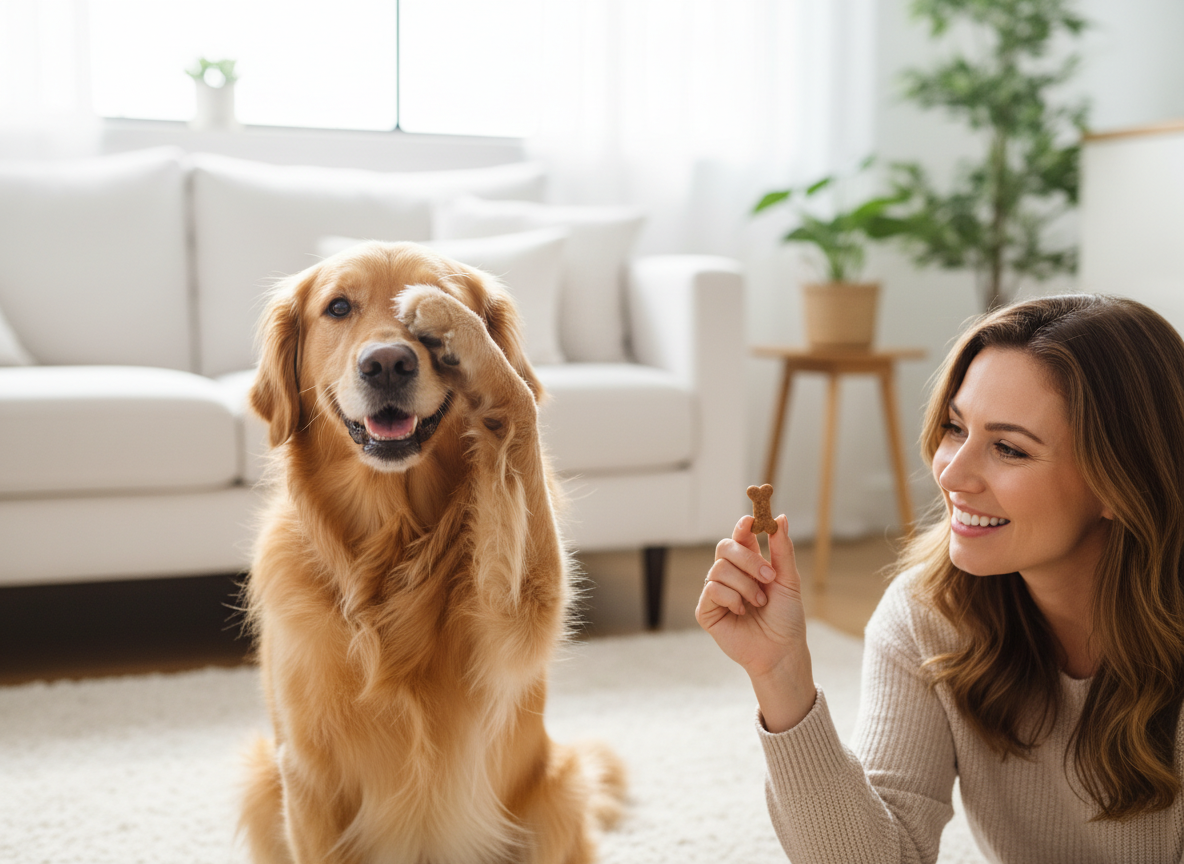
The ‘shame’ trick, where a dog adorably covers its face with a paw, has become a sensation across social media platforms. While the name is playful, the training process behind this charming behavior is a serious testament to the power of positive reinforcement and the strength of the human-animal bond. It is crucial to understand that this trick has nothing to do with shaming your pet. Instead, it is an advanced, multi-step behavior built on trust, clear communication, and mutual enjoyment. Teaching this command provides excellent mental stimulation for your dog, sharpens their ability to learn complex sequences, and offers a wonderful opportunity to deepen your connection.
This comprehensive guide will deconstruct the ‘shame’ trick into manageable, science-backed steps. We will move beyond simple luring and delve into the principles of shaping behavior, ensuring your dog understands and confidently performs the action on cue. We will cover everything from the foundational skills and necessary tools to a detailed, step-by-step training plan. Furthermore, we will address common stumbling blocks with expert troubleshooting advice and discuss how to ‘proof’ the behavior, making it reliable in various environments. Prepare to embark on a rewarding training journey that will leave you with not only an impressive new trick but also a more communicative and engaged canine partner.
Foundations for Success: Preparing for the ‘Shame’ Trick
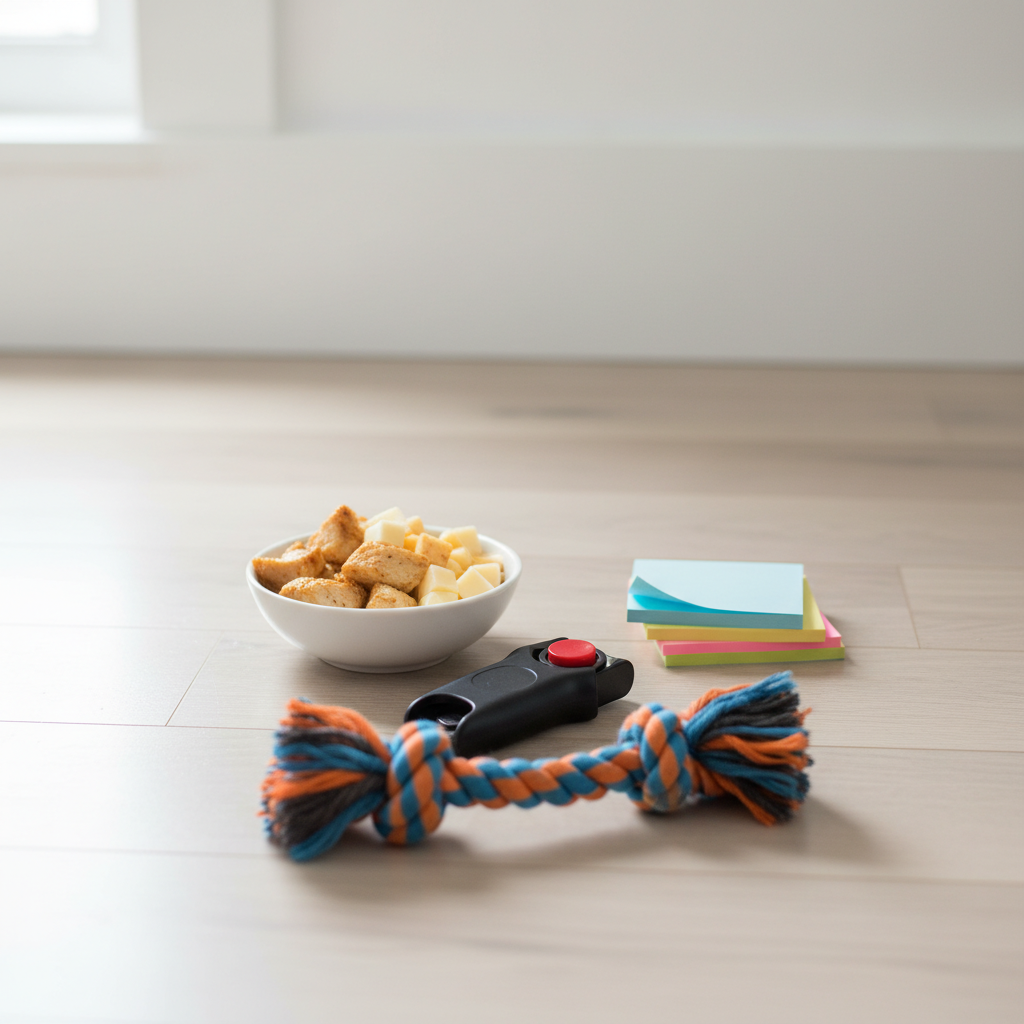
Gathering Your Training Toolkit
Before beginning any training session, preparation is paramount. Having the right tools on hand ensures a smooth, efficient, and positive experience for both you and your dog. The goal is to set up an environment where your dog is destined to succeed.
- High-Value Treats: This is not the time for dry kibble. You need small, soft, and highly aromatic treats that your dog finds irresistible. Think tiny pieces of cooked chicken, cheese, or commercial training treats. The high value of the reward will keep your dog motivated through the multi-step learning process.
- A Clicker (Optional but Recommended): A clicker is a powerful tool for marking the precise moment your dog performs the desired behavior. This clear communication helps your dog understand exactly what they are being rewarded for, accelerating the learning curve. If you are not using a clicker, choose a consistent verbal marker, such as the word ‘Yes!’.
- Post-it Notes or a Similar Target: A small, sticky note is an excellent initial target for teaching your dog to touch a specific spot with their paw. It’s a clear visual cue that can be easily transferred later in the process.
- A Comfortable Training Space: Choose a quiet, familiar area free from distractions. A living room or a quiet bedroom is ideal. A non-slip surface is important for your dog’s comfort and safety.
The Philosophy: Why Positive Reinforcement is Non-Negotiable
The ‘shame’ trick is a ‘shaped’ behavior, meaning we build it incrementally from smaller, simpler actions. This process requires the dog to be an active and willing participant, offering behaviors and making choices. Using any form of punishment or force is not only ineffective for this type of training but is also detrimental to your dog’s trust and confidence.
Expert Tip: Positive reinforcement training focuses on rewarding desired behaviors. This approach fosters a love of learning, strengthens the bond between you and your dog, and builds a confident, happy learner who is eager to participate in training sessions.
Keep training sessions short and upbeat, ideally 5-10 minutes once or twice a day. Always end on a positive note, perhaps with a behavior your dog knows well or a simple success. If you or your dog become frustrated, it is always better to end the session and try again later. The goal is progress, not perfection, and the journey of teaching this trick should be as enjoyable as the final result.
A Step-by-Step Guide to Teaching Your Dog to Hide Their Face
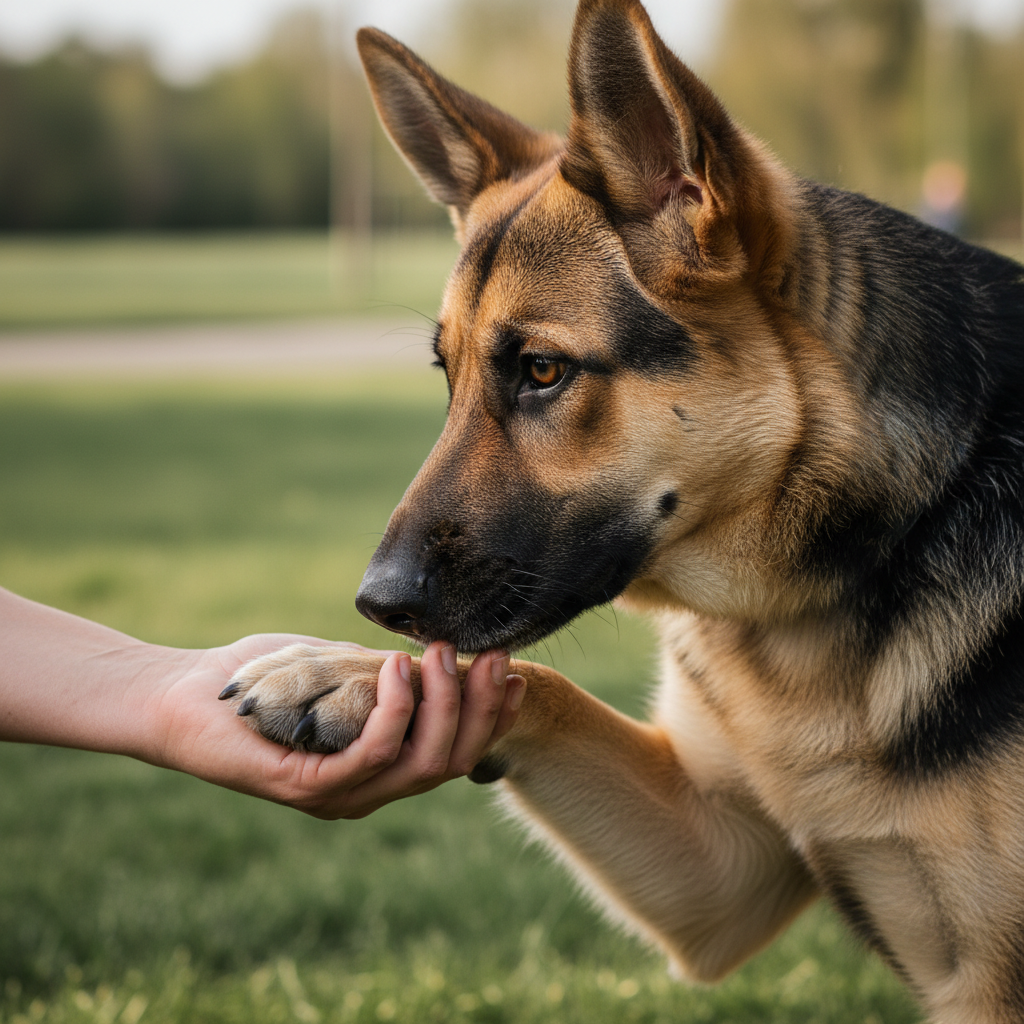
Teaching this trick involves a process called ‘behavior shaping,’ where we reward successive approximations of the final goal. Be patient and celebrate every small step of progress. We will break this down into four distinct phases.
Phase 1: Establishing a Paw Target
The first step is to teach your dog to consistently touch a target with their paw. This is the foundational motor skill for the entire trick.
- Introduce the Target: Sit on the floor with your dog. Hold a Post-it note in the palm of your hand. Show it to your dog. Out of curiosity, most dogs will sniff it. The moment their nose touches it, click (or say ‘Yes!’) and give them a treat. Repeat this several times.
- Encourage Paw Interaction: Now, wait for a different interaction. Hold the target out. Your dog will likely try sniffing it again. Since you are not clicking for a nose touch, they will likely try something else. The instant their paw touches or even brushes against the Post-it note, click and deliver a high-value treat. This is the ‘Aha!’ moment.
- Practice and Reinforce: Repeat this step until your dog is deliberately and confidently touching the Post-it note with their paw to earn the reward. Keep sessions short and fun.
Phase 2: Transferring the Target to the Muzzle
Once your dog reliably targets the Post-it in your hand, it’s time to move the target to the ultimate destination: their face.
- Place the Target: Gently stick the Post-it note onto the side of your dog’s muzzle or cheek area. Choose the side they naturally prefer to lift their paw on.
- Cue the Touch: Give your paw-targeting cue (you can simply present your hand as you did before, or add a verbal cue like ‘Touch’). Your dog, understanding the game, should lift their paw to touch the Post-it note, which is now on their face.
- Click and Reward: The moment their paw makes contact with the note on their face, click and reward enthusiastically. This is a major breakthrough. Practice this until the action becomes fluid and confident.
Phase 3: Fading the Target and Shaping the ‘Cover’
Now that your dog is touching the target on their face, we need to remove the target and shape the paw movement into the desired ‘hiding’ motion.
- Remove the Physical Target: In this step, you will pretend to place the Post-it on their face but don’t. Then, give your cue. Your dog will likely still perform the motion of touching that spot on their face with their paw. Click and reward this ‘phantom target’ touch.
- Shape for Position and Duration: Begin to be more selective about what you reward. Start rewarding only when their paw touches higher up on their nose or closer to their eyes. Gradually, you will shape the movement so their paw is actually covering their eye or resting on top of their nose. Once they have the position, start delaying the click by a split second to encourage them to hold the position for longer.
Phase 4: Adding the Verbal Cue and Finalizing the Trick
Your dog is now performing the physical action. The final step is to associate it with a clear verbal cue.
- Introduce the Cue: Just before your dog is about to perform the paw-to-face motion, say your chosen verbal cue clearly. Common cues include ‘Shame,’ ‘Hide,’ or ‘Shy.’ As they complete the action, click and reward.
- Build Association: Repeat this process multiple times. The goal is for your dog to associate the word with the action. Say the cue, wait for the action, then click and reward.
- Test the Cue: After several successful repetitions, try saying the cue without giving any physical gesture. If your dog performs the trick, reward them lavishly! You have successfully taught the command. If they struggle, go back a step and continue building the association.
Troubleshooting Common Training Hurdles
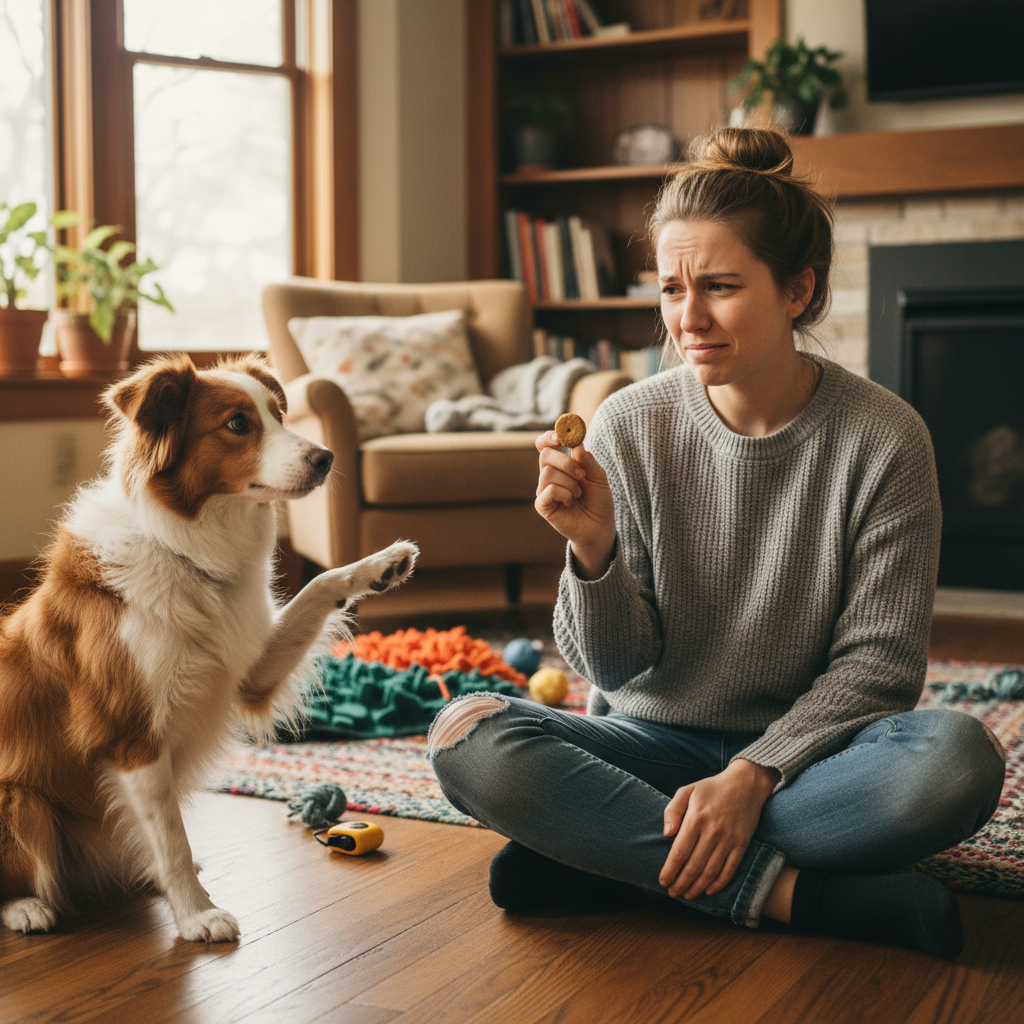
Even with a perfect plan, training rarely proceeds without a few bumps in the road. Understanding common challenges can help you navigate them with patience and skill, keeping the experience positive for your dog.
Challenge: My Dog Won’t Use Their Paw
Some dogs are more inclined to use their mouth to investigate things. If your dog consistently nudges the target with their nose instead of their paw, you may need to guide them more explicitly.
- Solution 1: Gently tap the back of their paw right after presenting the target. This can prompt them to lift it. Reward any lift, however small, in the direction of the target.
- Solution 2: If your dog already knows ‘shake’ or ‘paw,’ you can use that as a starting point. Ask for a ‘shake,’ but instead of your hand, present the target for them to place their paw on.
Challenge: My Dog Keeps Pawing at My Hand, Not Their Face
This often happens during the transition from Phase 2 to Phase 3. The dog has a strong history of being rewarded for touching your hand, not their own face.
- Solution: Ensure the Post-it note is securely on their muzzle. You can also use a bit of pet-safe tape if needed. When you cue the behavior, keep your own hands still and low, out of the immediate picture, so their only option is to target the note on their face. Reward even the slightest glance or movement toward their own face initially.
Challenge: The ‘Cover’ is Sloppy or Too Quick
Your dog might be tapping their face but not holding the position or doing it with a lack of precision.
- Solution 1 (Precision): Go back to shaping. Use your clicker to mark only the moments when the paw lands in the exact spot you want (e.g., directly over the eye or on the bridge of the nose). This is called differential reinforcement.
- Solution 2 (Duration): To build duration, delay your click. If your dog holds their paw to their face for one second, wait 1.5 seconds before clicking. Gradually increase the time. If they pull their paw away too soon, they don’t get a reward. The next time, ask for a slightly shorter duration you know they can achieve, and then build back up slowly.
Remember: Frustration is a sign that the training step is too large or the session has gone on too long. Always be prepared to take a step back to an easier version of the behavior where your dog can be successful. This builds confidence and keeps them engaged in the learning process.
Proofing the Behavior and Taking It to the Next Level
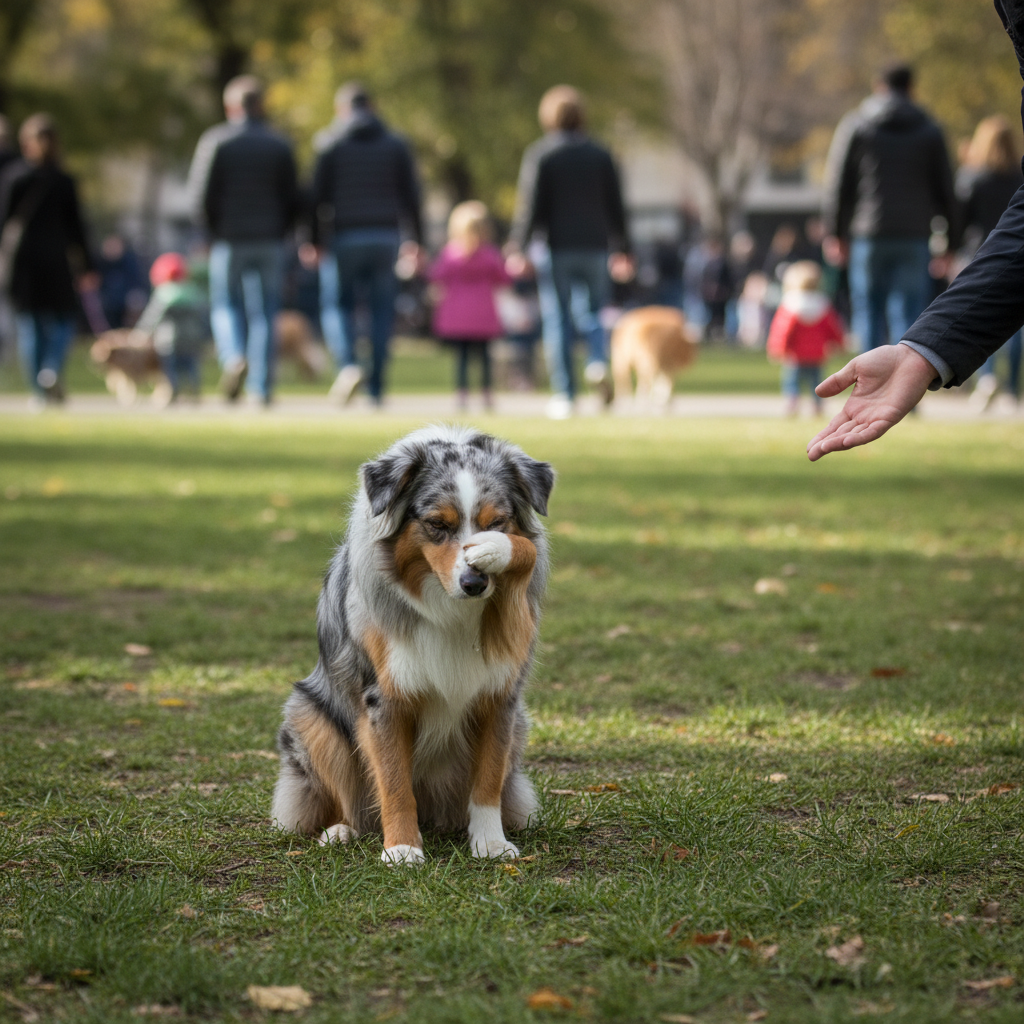
Teaching a trick in your quiet living room is one thing; having your dog perform it reliably in different environments is another. This process is known as ‘proofing’ or ‘generalization.’ It’s a critical step to ensure the trick is truly learned and not just associated with one specific location or context.
Generalizing the ‘Shame’ Command
Dogs do not generalize well automatically. They may think the ‘shame’ cue only works on the living room rug. You must teach them that the cue means the same thing everywhere.
- Change the Location: Start small. Practice the trick in different rooms of your house. Once it’s reliable indoors, move to a quiet backyard.
- Introduce Mild Distractions: Next, practice in your backyard while another family member walks by. Then, try it on a quiet street during a walk. The key is to increase the level of distraction gradually. If your dog fails, the distraction was too high. Retreat to an easier environment, find success, and then try again with a less intense distraction.
- Vary Your Position: Practice giving the cue while you are standing up, sitting in a different chair, or even lying on the floor. This teaches your dog that the command is not dependent on your specific posture.
Advanced Variations and Combinations
Once your dog has mastered the basic ‘shame’ trick and can perform it reliably, you can add layers of complexity to further challenge their mind and enhance the behavior.
- Adding Duration: Work on increasing the length of time your dog holds the pose. Use a release cue like ‘Okay!’ or ‘Free!’ to signal when they can stop. This builds impulse control. Start with a few seconds and slowly build up to 10-15 seconds or more.
- Combining with Other Tricks: Create a behavior chain. For example, ask your dog to ‘sit,’ then ‘shame,’ then ‘down.’ This requires a high level of focus and is excellent mental exercise.
- Distance Work: Gradually increase the distance between you and your dog when you give the cue. Start with a few feet and work your way up to asking for the behavior from across the room.
By proofing and advancing the trick, you are doing more than just showing off. You are building a more resilient, focused, and adaptable dog. This advanced level of training solidifies your communication and strengthens the cognitive abilities of your canine partner, providing enrichment that goes far beyond the basics.
Conclusion
Teaching your dog the ‘shame’ trick is a journey that beautifully illustrates the principles of modern, science-based dog training. It transforms a fleeting viral trend into a meaningful exercise in communication, patience, and partnership. Throughout this process, you have done more than teach a sequence of movements; you have sharpened your dog’s cognitive skills, built their confidence, and provided crucial mental enrichment that is vital to their overall well-being.
Remember that every dog learns at a different pace. Celebrate the small victories, be prepared to take steps backward to clarify a concept, and always prioritize your dog’s enjoyment of the process. The true reward is not the final, picture-perfect trick, but the countless moments of connection and understanding shared along the way. By investing this time and positive energy, you have reinforced a powerful bond of trust and communication that will benefit every aspect of your life together.