The Ultimate Guide To Tent Camping With A Reactive Dog (Stress-Free Tips)
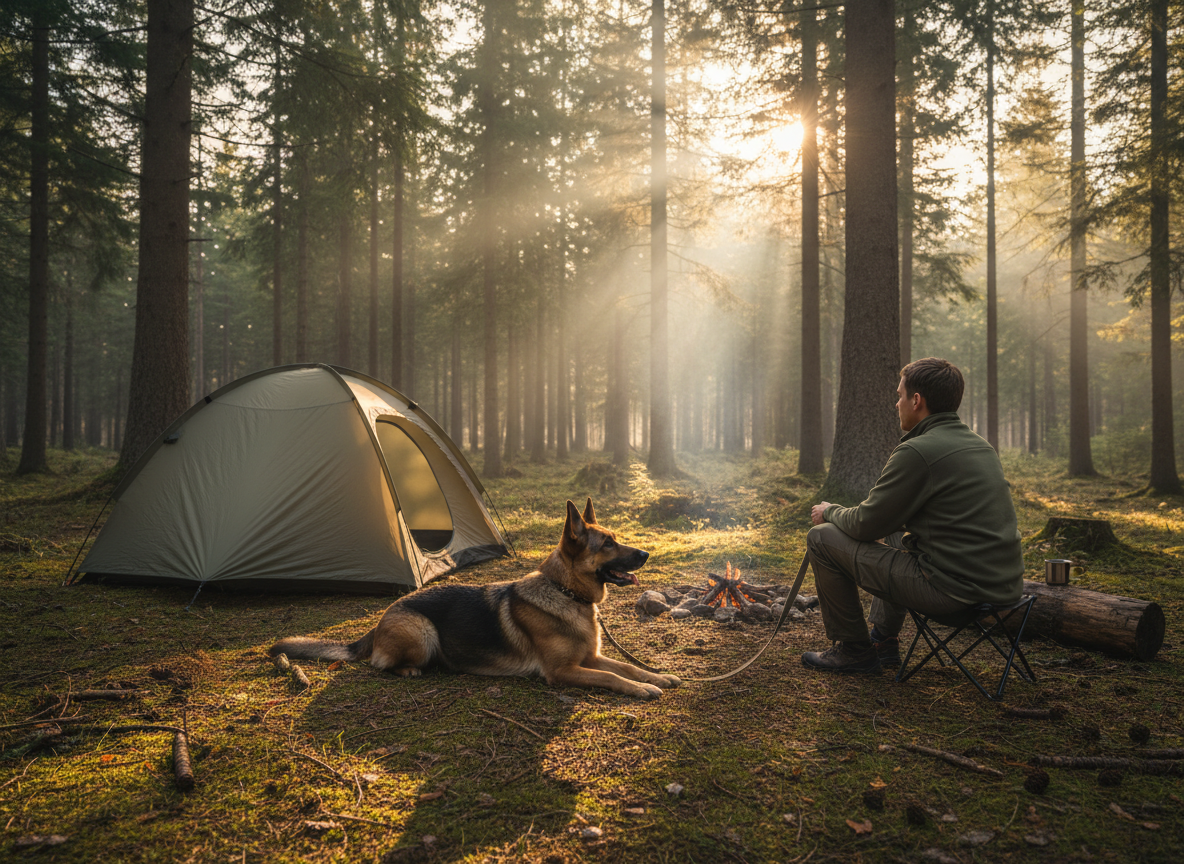
The idea of escaping into nature with a canine companion, sharing a tent under the stars, is a dream for many pet owners. However, when your dog is reactive, that dream can quickly feel like an impossible nightmare. The fear of unexpected encounters, uncontrollable barking, and the general stress of managing a sensitive dog in an unpredictable environment can be overwhelming. But it doesn’t have to be. Camping with a reactive dog is not only possible but can be an incredibly rewarding experience that strengthens your bond.
This guide is built on a foundation of proactive management, careful planning, and a deep understanding of canine behavior. We will move beyond simple tips and provide a comprehensive, step-by-step framework to set you and your dog up for success. By focusing on preparation, environmental control, and your dog’s well-being, you can transform a source of anxiety into a joyful adventure. This is your ultimate resource for creating positive, peaceful camping memories with the dog you love.
Foundational Preparations: Setting Your Reactive Dog Up for Camping Success
Foundational Preparations: Setting Your Reactive Dog Up for Camping Success
Success in camping with a reactive dog is determined long before you pack the car. The most critical phase is preparation. This involves not only gathering the right equipment but also carefully selecting your environment and conditioning your dog for the experience. Rushing this stage is the most common mistake owners make.
Essential Gear for a Reactive Dog
Standard camping gear is a given, but for a reactive dog, your equipment list needs to be specialized for safety and management:
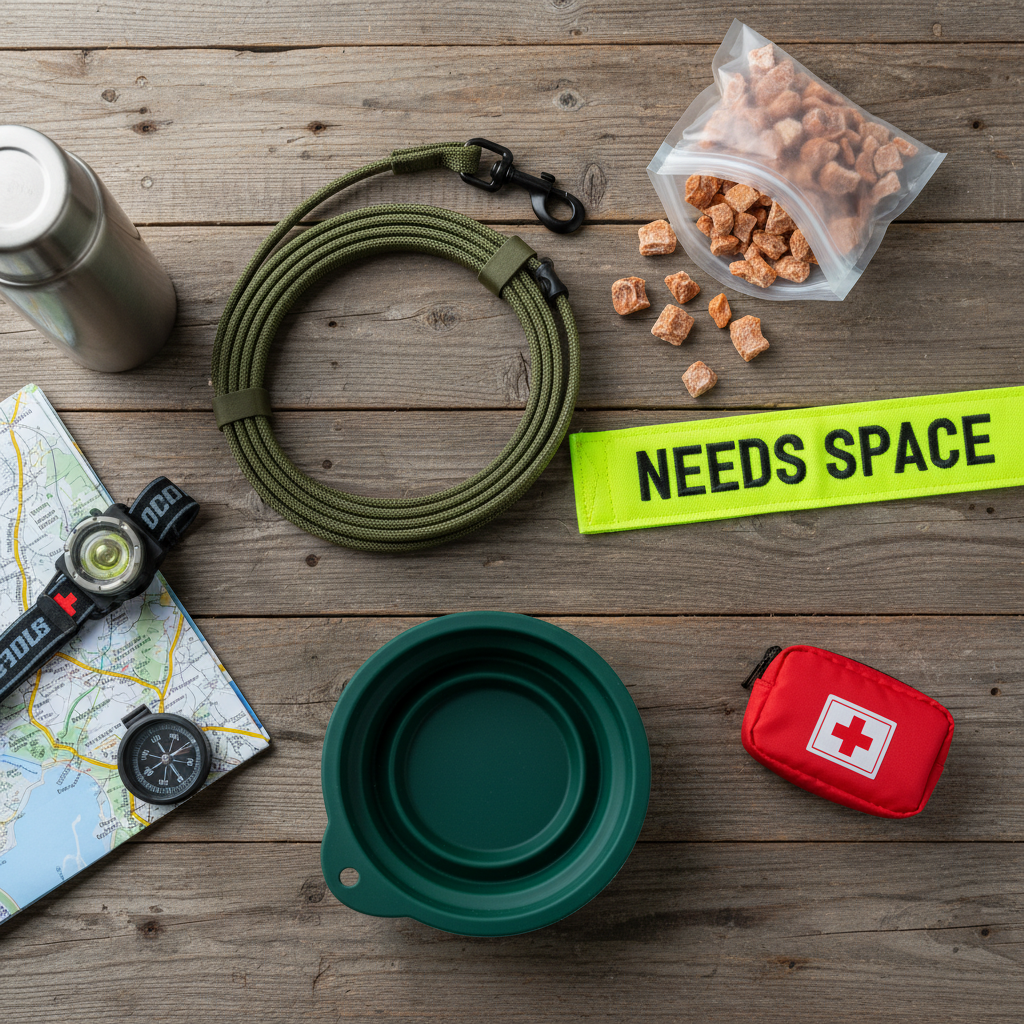
- Secure Leash System: A 6-foot, non-retractable leash made of leather or biothane is essential for control. Augment this with a 20-30 foot biothane long line for safe, supervised freedom at the campsite. Avoid retractable leashes, which offer little control and can snap.
- Well-Fitted Harness or Collar: Use a harness that doesn’t restrict shoulder movement and offers a secure fit to prevent escapes. A back-clip harness is good for hiking, while a front-clip option can provide better control if you encounter a trigger. Ensure the collar has up-to-date ID tags.
- A Safe Space: A familiar travel crate is non-negotiable. It provides a secure, den-like space inside the tent where your dog can decompress and feel safe. If your dog isn’t crate trained, a sturdy, travel-safe enclosure is an alternative. Practice with it extensively at home first.
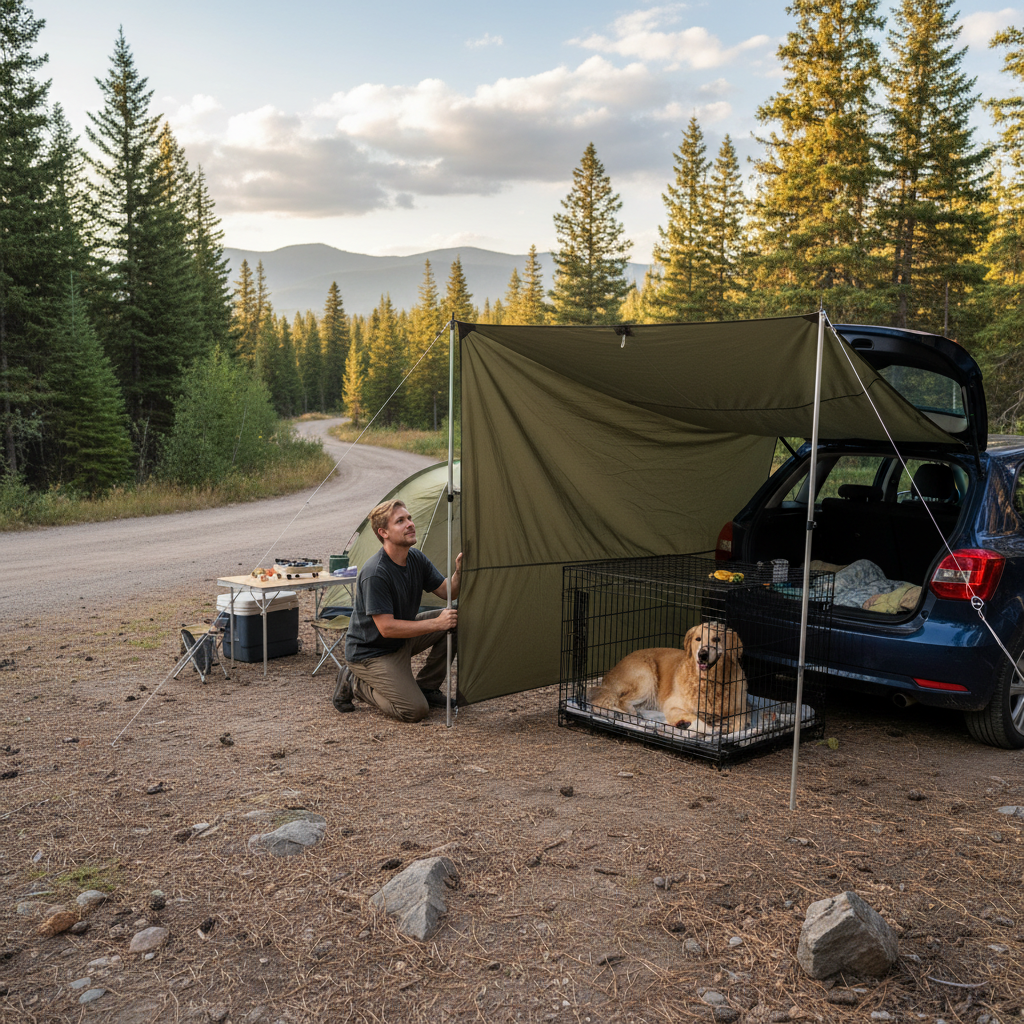
- Visual Barriers: Lightweight tarps, privacy screens, or even a spare tent rainfly can be used to block the line of sight from your campsite to trails or neighboring sites. This is one of the most effective management tools you can bring.
- High-Value Reinforcements: Pack treats that are far more enticing than what your dog gets at home. Think small pieces of cooked chicken, cheese, or freeze-dried liver. These are for counter-conditioning and rewarding calm behavior in a distracting environment.
- Communication Tools: A brightly colored vest or leash wrap that says “NEEDS SPACE” or “IN TRAINING” can be invaluable. It is a clear, non-confrontational way to communicate your dog’s needs to other campers.
The Art of Campsite Selection
Your choice of campsite is the single most important decision you will make. A poorly chosen site can set your dog up for failure before you even unpack.
| Campsite Type | Pros for Reactive Dogs | Cons for Reactive Dogs |
|---|---|---|
| Dispersed Camping (National Forest/BLM Land) | Maximum seclusion and privacy. Complete control over your immediate environment. Fewer unexpected people or dogs. | No amenities (water, restrooms). Requires more self-sufficiency. Can have more wildlife. |
| Established Campground (Walk-in Sites) | Often more spaced out than drive-up sites. Can offer a buffer from car doors slamming and vehicle traffic. | You must carry all your gear. Proximity to other campers is still a risk. |
| Established Campground (Drive-up Sites) | Convenient access to amenities and your vehicle. | Often very close to neighbors. High potential for off-leash dogs, children, and constant foot traffic. Generally the highest-risk option. |
When scouting, use Google Maps’ satellite view to look for campsites on the edge of a loop, at the end of a road, or with natural barriers like trees or boulders. Call the ranger station and be direct: “I am looking for the most private, low-traffic campsite available for training a sensitive dog.” They are often an excellent resource.
Desensitization at Home
Do not let the campsite be the first time your dog experiences the tent. Set it up in your backyard or living room for several days. Feed your dog their meals inside it, play games around it, and have them nap in it with the door open. The goal is to build a strong positive association, making the tent a familiar, safe place rather than a scary new object in an already overwhelming environment.
Managing Transitions: The Journey and Campsite Arrival
Managing Transitions: The Journey and Campsite Arrival
Transitions are often the most challenging part of any outing for a reactive dog. The car ride, the arrival at a new place, and the initial setup process are all points where stress can escalate rapidly. A calm, methodical approach is essential to keep your dog under their threshold.
The Journey
Ensure your dog travels safely and comfortably, ideally in a secured crate. If your dog has car anxiety, consult your veterinarian about options like calming supplements or prescription medications for travel. Plan for frequent breaks in quiet, low-traffic areas—avoid busy rest stops. These breaks should be for sniffing and stretching, not for high-energy play.
Campsite Arrival Protocol
Arrival is a critical moment that sets the tone for the entire trip. Do not just pull up, open the car door, and let your dog out. Follow a strict protocol:
- Arrive During Off-Peak Hours: Plan to get to your campsite on a weekday afternoon or another time when there is less activity from other campers setting up or leaving.
- Owner Scouts First: Leave your dog securely in the car with the windows cracked or AC on. Get out and do a 360-degree survey of the site and its immediate surroundings. Identify potential triggers, sightlines, and the best locations for your tent and visual barriers.
- Set Up Barriers Immediately: Before you do anything else, set up your visual barriers. Use tarps or screens to block the view of the camp road or any adjacent sites. You are creating a ‘bubble’ of safety for your dog.
- The Initial Decompression Walk: Once barriers are up, get your dog out on a short leash. Do not let them charge out of the car. Walk them calmly around the perimeter of your campsite, letting them sniff and acclimate. This is their new territory. Keep the walk brief and focused.
- Establish the Home Base: Set up your dog’s tethering system or crate in a central, shaded location within your visual bubble. Give them a long-lasting chew or a stuffed Kong to help them settle while you finish setting up the rest of your camp. Constant supervision is mandatory.
Expert Tip: The goal upon arrival is not to explore, but to establish calm. Your dog should understand that this specific, shielded area is a place of rest. The big adventures can come later, once they are settled.
Campsite Life: Proactive Management and Enrichment
Campsite Life: Proactive Management and Enrichment
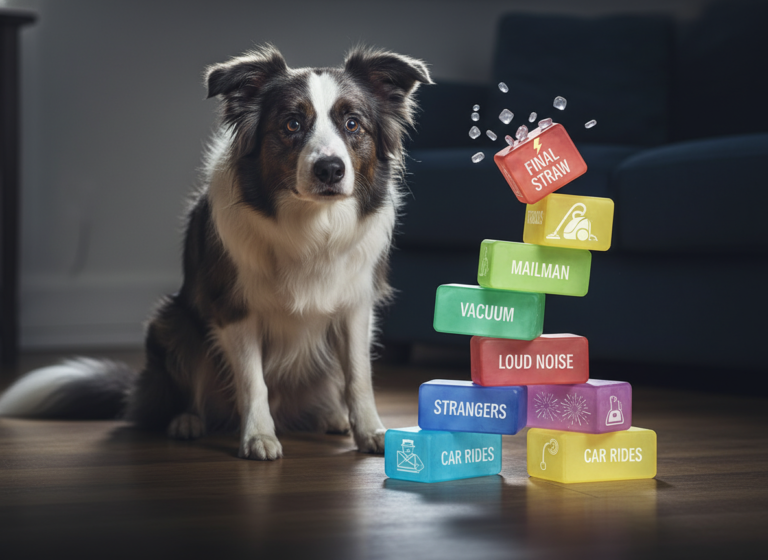
Once you are set up, the focus shifts from preparation to active, moment-to-moment management. The goal is to prevent trigger stacking—where multiple small stressors build up until the dog reacts—by controlling the environment and providing calming activities.
The Tethering System
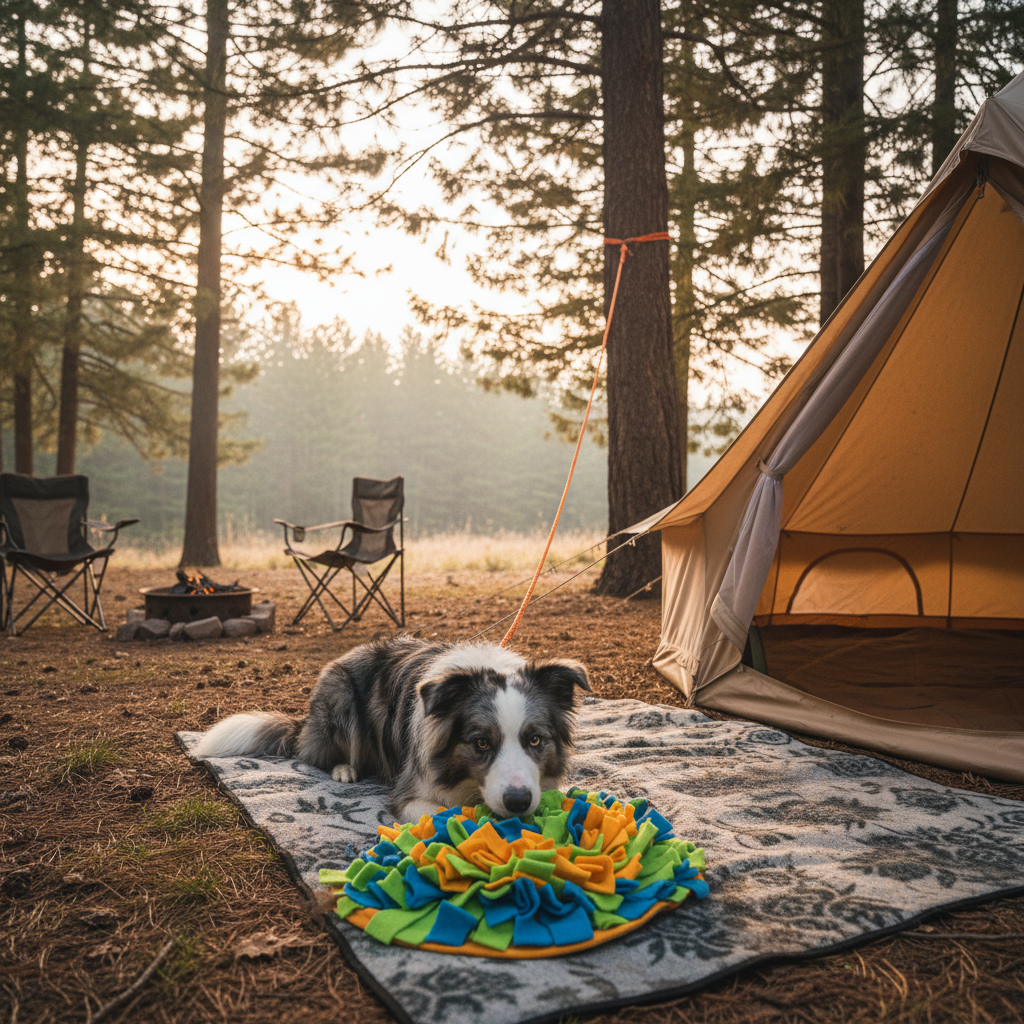
A long-line tether can give your dog a sense of freedom while ensuring they remain safe. However, it must be used correctly. Secure the line to a stationary object like a large tree or a specialized ground stake—never to a tent pole or camp chair. The line should be short enough that the dog cannot wander into a neighboring site or onto a path. Most importantly, a tethered dog must be supervised 100% of the time. Never leave your dog unattended on a tether, even for a minute. They can get tangled or have a negative encounter while you are gone.
Decompression Hikes and Activities
Exercise is important, but the type of exercise is key. Avoid popular, crowded trails. Instead, opt for activities that lower arousal levels.
- Timing is Everything: Plan your hikes for very early in the morning or near dusk when trails are least likely to be busy.
- Leash Handling Skills: Practice emergency maneuvers. The quick ‘U-turn’ is vital: if you spot a trigger ahead, cheerfully say “This way!” and immediately turn and walk in the opposite direction, rewarding your dog with treats as you go. Playing the “find it” game (tossing treats on the ground) can also redirect their focus downward and away from a distant trigger.
- Choose Appropriate Trails: Look for wide service roads or less-traveled paths where you have plenty of space to step off the trail if you need to create distance from others.
Enrichment at the Campsite
A bored dog is more likely to be a reactive dog. They will look for things to bark at. Prevent this by providing mental stimulation.
- Food Puzzles: Ditch the food bowl. Feed all of your dog’s meals in puzzle toys, snuffle mats, or a stuffed Kong. This is a calming activity that engages their brain.
- Scent Work: Hide high-value treats around your campsite (within your dog’s tethered area) and let them use their nose to find them. This is a naturally calming and confidence-building exercise.
- Chewing: Provide a safe, long-lasting chew, like a bully stick or rubber chew toy. Chewing is a natural stress-reliever for dogs.
Advocacy is Your Job: Be prepared to be your dog’s advocate. If someone approaches, use a clear, firm, but polite voice: “My dog is in training and needs space, please don’t approach.” Your primary responsibility is your dog’s safety and comfort, not a stranger’s desire to pet them.
Troubleshooting Common Issues: Barking, Anxiety, and Wildlife
Troubleshooting Common Issues: Barking, Anxiety, and Wildlife
Even with perfect preparation, challenges can arise. Knowing how to respond calmly and effectively is crucial for maintaining a low-stress environment for your dog.
Excessive Barking in the Tent
The tent can amplify every sound and shadow, turning a peaceful night into a stressful one. A dog that is quiet at home might become a persistent barker in this new environment.
- Causes: The primary causes are unfamiliar noises (rustling leaves, distant animals, other campers) and visual stimuli (shadows moving on the tent walls).
- Solutions: Bring a portable white noise machine or use an app on your phone to mask external sounds. Covering your dog’s crate with a blanket can help block visual stimuli and create a more secure den. If your dog starts barking, calmly interrupt the behavior and redirect them to a chew or a command they know, like ‘place’. Avoid yelling, as this can increase their arousal.
Nighttime Anxiety and Restlessness
Some dogs may have trouble settling down at night. Pacing, whining, or panting can indicate they are feeling anxious.
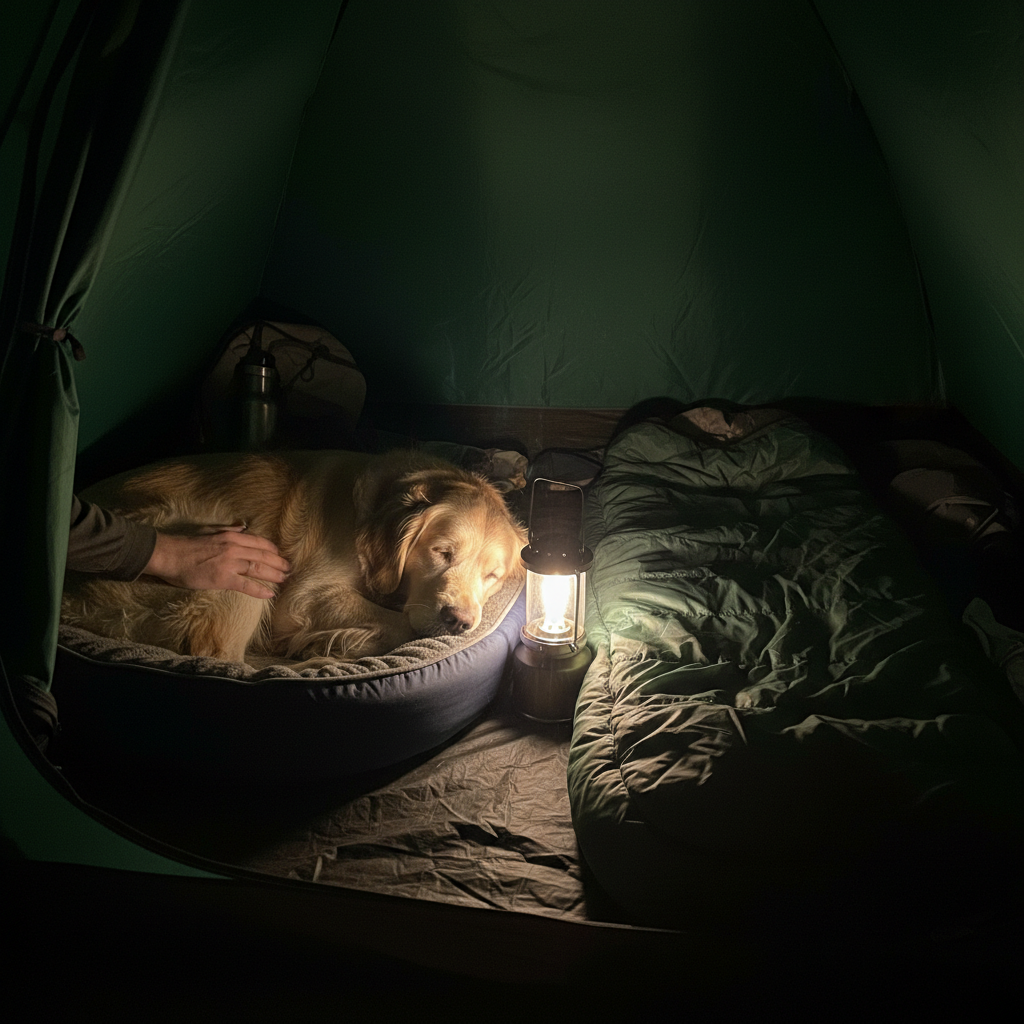
- Management: Keep your dog’s sleeping arrangement as close to their home setup as possible. If they sleep in a crate, use it. If they sleep on a dog bed, bring it. Position their bed or crate right next to your sleeping bag so they can feel your presence and you can easily offer reassurance. A consistent evening routine that mimics your one at home can also signal that it’s time to rest.
Wildlife Encounters
Wildlife is a part of camping, and it’s essential to manage these encounters safely.
- Prevention is Key: The best way to handle wildlife is to avoid attracting it. Keep your campsite meticulously clean. Store all food, trash, and scented items (like toothpaste) in a locked vehicle or a bear-proof container. Never feed your dog or leave their food bowl out unattended.
- During an Encounter: Keep your dog on a short leash at all times, especially during dawn and dusk when wildlife is most active. A bear bell on your dog’s collar can help alert animals to your presence on trails. A rock-solid “leave it” command is one of the most important safety skills for a camping dog. Practice this command to mastery before your trip. If you encounter a large animal, stay calm, keep your dog close and under control, and slowly back away.
Conclusion
Camping with a reactive dog is a journey of management, patience, and deep understanding. It requires shifting your focus from achieving a ‘perfect’ trip to creating a safe and positive experience for your dog. Success isn’t measured by how many miles you hike, but by the moments of calm you cultivate. Every time your dog looks at a distant trigger and then looks back at you, every quiet evening spent by the fire, and every peaceful night in the tent is a massive victory.
Remember to know your dog’s limits and be prepared to pack up and leave if they are too overwhelmed. The goal is to build confidence, not to push them past their threshold. With the right preparation and a proactive mindset, you can unlock a world of outdoor adventures and forge an even stronger, more trusting bond with your incredible canine companion.