
The Truth About E-Collars: Are They Cruel or A Lifesaver?

The electronic collar—often controversially referred to as a ‘shock collar’—is arguably one of the most polarizing tools in the world of dog training. For some, it represents an indispensable device for ensuring safety and achieving off-leash reliability. They view it as a ‘lifesaver,’ a tool that can prevent a dog from running into traffic or chasing wildlife to its doom. For others, it is an instrument of cruelty, an aversive method that relies on pain and fear, potentially damaging the human-animal bond and causing lasting psychological harm. This stark dichotomy leaves many well-intentioned pet owners caught in a web of conflicting information, anecdotal evidence, and passionate opinions.
The truth, as is often the case, is far more nuanced than a simple ‘good’ or ‘bad’ label. The effectiveness and ethics of an e-collar are critically dependent on the quality of the device, the context of its use, and, most importantly, the knowledge, skill, and intent of the handler. This article aims to cut through the noise and provide a comprehensive, authoritative examination of e-collars. We will deconstruct the technology, explore the valid arguments from both proponents and opponents, discuss the critical difference between proper use and abuse, and present modern, science-backed alternatives. Our goal is not to advocate for or against e-collars, but to equip you, the responsible pet owner, with the knowledge necessary to make an informed and ethical decision for your unique canine companion.
Deconstructing the Device: How Modern E-Collars Actually Work
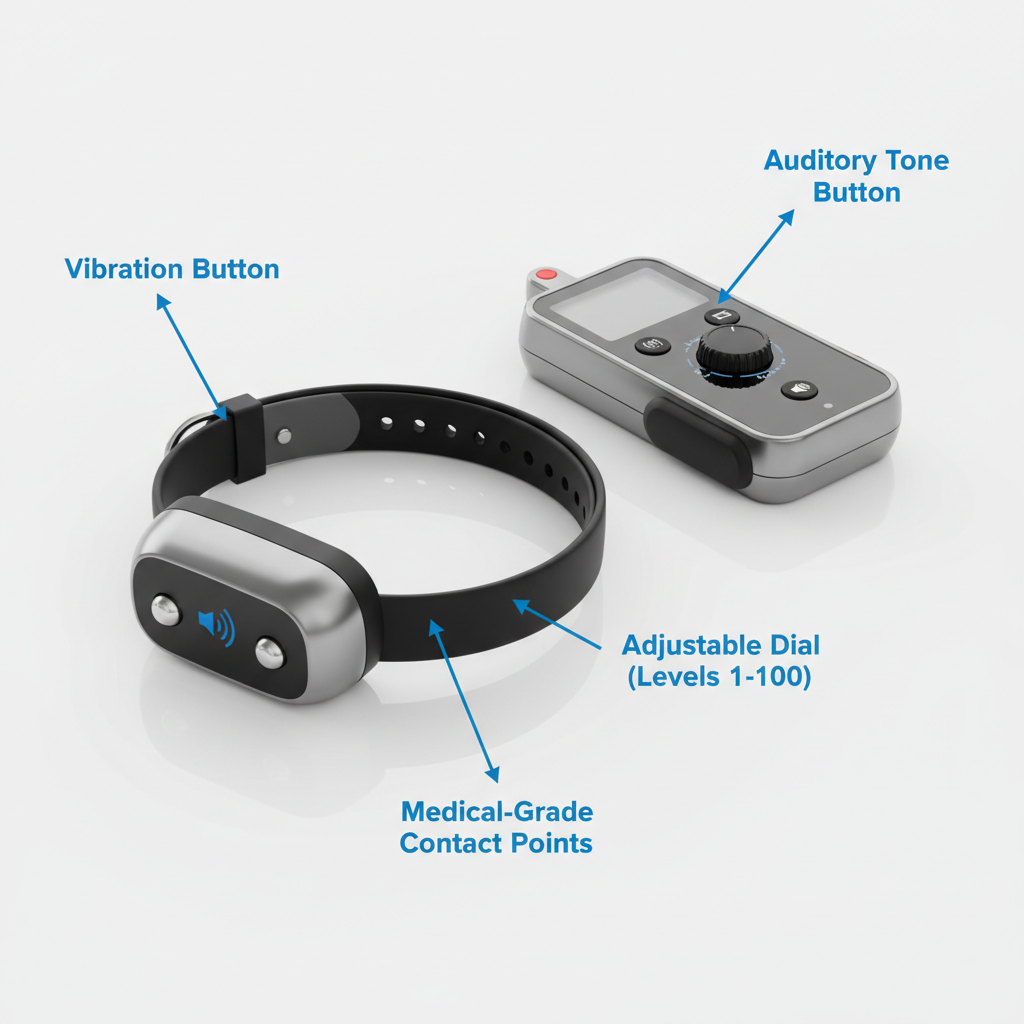
Before engaging in the debate, it is essential to understand the technology itself. The term ‘shock collar’ often conjures images of a primitive, punitive device delivering a painful jolt. While early iterations may have fit this description, modern electronic collars are sophisticated tools with a range of functionalities designed for communication, not just correction.
Components and Functionality
A typical e-collar system consists of two main parts: a handheld transmitter (the remote) and a receiver worn on the dog’s collar. The handler uses the transmitter to send a signal to the receiver, which then delivers a specific type of stimulation. Modern e-collars offer multiple forms of communication:
- Auditory Tone: A simple beep, similar to the sound from a digital watch. It is often used as a warning signal before another type of stimulation or as a positive marker, akin to a clicker, to signal a correct behavior (a technique known as ‘virtual clicker’).
- Vibration: A non-painful vibration, similar to a pager or a silent cell phone. This is often used as an attention-getter for deaf dogs or as a gentle interruption for an unwanted behavior.
- Static Stimulation: This is the most controversial feature. It is not an electric ‘shock’ in the sense of a mains current. Instead, it uses a principle similar to a TENS (Transcutaneous Electrical Nerve Stimulation) unit used in physical therapy. It causes an involuntary contraction of the neck muscles. Reputable e-collars feature a wide range of stimulation levels, often from 1 to 100, allowing the handler to find the lowest possible level the dog can perceive—often described as a ‘tap’ or a slight tingling sensation.
The distinction between older, rudimentary ‘shock collars’ with limited, high-level settings and modern e-collars with vast adjustability and multiple functions is a critical point often lost in the emotional debate.
| Stimulation Type | Description | Common Application |
|---|---|---|
| Auditory (Tone) | A non-physical, audible beep. | A warning cue, a ‘virtual clicker’ for marking behavior, or a recall signal. |
| Vibration (Pager) | A physical, non-painful buzzing sensation. | Getting the attention of deaf or hearing-impaired dogs; a gentle interrupter. |
| Static (Stim) | An adjustable electronic sensation, from a mild tickle to a strong muscle contraction. | Interrupting high-drive, dangerous behaviors; providing off-leash communication/correction at a distance. |
The Case for E-Collars: Applications in Safety and Off-Leash Reliability

Proponents of e-collars, including many professional trainers specializing in working dogs and off-leash behaviors, argue that when used correctly, the tool is a powerful and humane line of communication that can ultimately save a dog’s life. They frame its use not as punishment, but as a way to provide a clear consequence for dangerous actions, especially when the dog is at a distance.
Key Use-Cases
The primary argument for the e-collar centers on situations where positive reinforcement alone may not be sufficient to overcome a dog’s powerful instincts or in life-threatening scenarios.
- Off-Leash Recall: For many owners, the dream is to have a dog that can safely enjoy off-leash freedom. An e-collar can provide a reliable way to communicate with a dog that is hundreds of yards away, distracted by prey, or heading towards a road. The stimulation can cut through high-arousal states when a verbal command might be ignored.
- Aversion Training: This is a critical application for dogs living in rural areas. E-collars are used to teach dogs to avoid venomous snakes, porcupines, or toxic plants. A single, well-timed negative experience with a fake snake paired with stimulation can create a powerful aversion that prevents a fatal encounter in the future. Similarly, it can stop dogs from chasing livestock, a behavior that can result in the dog being legally shot by a farmer.
- Stopping Dangerous Self-Rewarding Behaviors: Certain behaviors, like chasing cars or eating feces (coprophagia), are inherently rewarding to the dog. An e-collar can be used to apply a timely aversive that makes the behavior less appealing than the consequence.
Expert Perspective: A balanced trainer might state, ‘I don’t use an e-collar to teach a dog to ‘come.’ I teach the recall with positive reinforcement first. The e-collar is the insurance policy. It’s the non-emotional, consistent consequence for ignoring a known command when safety is on the line. It’s a seatbelt—you hope you never need it, but it can be the difference between life and death.’
The core philosophy of ethical e-collar use is to pair the lowest perceptible level of stimulation with a command the dog already knows. The stimulation is removed the instant the dog complies, thereby reinforcing the desired action. In this model, the dog learns it has full control over the stimulation and can turn it off by making the right choice.
The Ethical Dilemma: Scientific and Behavioral Arguments Against E-Collar Use

Opponents of e-collars, including many veterinary associations, humane societies, and force-free training organizations, argue that the potential for psychological and physical harm far outweighs any perceived benefits. Their position is rooted in studies of animal behavior and the principles of learning theory.
The Risks of Aversive Training
The central argument against e-collars is that they are aversive tools—they work by creating an unpleasant sensation that the dog seeks to avoid. This, critics argue, can have significant negative fallout.
- Increased Fear and Anxiety: Instead of linking the stimulation to its specific action (e.g., chasing a deer), a dog might associate the pain or discomfort with something else in the environment—the owner, other dogs, or the location itself. This can lead to generalized anxiety, fear-based aggression, and a breakdown of the dog’s trust in its handler.
- Suppression of Behavior, Not a Change in Motivation: Critics contend that aversives don’t change the underlying emotional state that drives a behavior. They simply suppress the outward signs. A dog might stop growling because it fears a shock, but it is still feeling anxious or threatened. This can create a ‘ticking time bomb’ where a dog eventually bites without its usual warning signals.
- Potential for Abuse: In the hands of an inexperienced, frustrated, or angry owner, the e-collar can easily become an instrument of abuse. Using levels that are too high, applying stimulation with poor timing, or using it as a punishment for non-compliance can cause significant pain and psychological trauma.
- Physical Harm: If not fitted or used correctly, e-collars can cause physical damage. ‘Pressure necrosis’ or sores can develop if the contact points are too tight or left on for extended periods. In rare cases, malfunctions or improper use can lead to electrical burns.
| Potential Risk Area | Specific Negative Outcome |
|---|---|
| Psychological | Increased anxiety, generalized fear, fear aggression, learned helplessness, negative association with handler or environment. |
| Behavioral | Suppression of warning signals (e.g., growling), unpredictable behavior, shutdown or refusal to offer behaviors. |
| Relational | Erosion of trust between dog and owner; dog may view owner as a source of unpredictable pain. |
| Physical | Pressure sores from contact points, skin irritation, and in rare cases, burns from malfunction or misuse. |
Leading organizations like the American Veterinary Society of Animal Behavior (AVSAB) have issued position statements advising against the use of punishment-based training methods due to these documented risks to animal welfare.
Beyond Aversives: Effective, Science-Based Training Alternatives

The debate over e-collars often overlooks a crucial question: are they even necessary? Modern behavioral science has provided a deep well of effective, humane training techniques that do not require the use of physical aversives. Force-free and positive reinforcement-based training focuses on teaching the dog what to do, rather than punishing them for what not to do.
Building Reliability Without Force
For nearly every problem an e-collar is purported to solve, there is a positive reinforcement-based alternative. These methods may require more time, consistency, and skill from the handler, but proponents argue they build a stronger, more trusting relationship.
- For a Reliable Recall: Instead of relying on an aversive to enforce the ‘come’ command, trainers build a massive history of positive reinforcement. This involves using extremely high-value rewards (like chicken or steak), making the recall a fun game, never punishing the dog for coming back (even if it’s late), and using a long line to safely manage the dog during the training phase. The goal is to make returning to the owner the best possible choice for the dog.
- For ‘Leave It’ and Impulse Control: To prevent a dog from eating dangerous items or chasing wildlife, trainers engage in proactive impulse control games. They teach a rock-solid ‘leave it’ cue, rewarding the dog heavily for ignoring temptations. Management, such as using leashes or keeping the environment clean, is a key component during the training process.
- Addressing Reactivity and Aggression: For dogs with fear or reactivity, aversive tools are strongly discouraged as they can worsen the underlying emotion. Instead, behavior modification protocols like Desensitization and Counter-Conditioning (DSCC) are used. This involves gradually exposing the dog to its triggers at a distance where it feels safe, and pairing the trigger with something highly positive, thereby changing the dog’s emotional response from fear to anticipation.
These methods focus on building a dog’s confidence and creating a strong motivation to cooperate with the handler. They empower the dog to make good choices and view the handler as a trusted partner rather than an enforcer.
| Training Goal | E-Collar Approach | Positive Reinforcement Approach |
|---|---|---|
| Off-Leash Recall | Apply stimulation when dog ignores ‘come’ command; remove when dog complies. | Build a strong reinforcement history with high-value rewards; use a long line for management; make recall a fun, rewarding game. |
| Preventing Chasing | Apply stimulation the moment the dog begins to chase the unwanted object (e.g., a car or deer). | Teach strong ‘leave it’ and ‘watch me’ cues; manage the environment; reward heavily for disengaging from triggers. |
| Stopping Jumping | Apply low-level stimulation when the dog jumps on a person. | Teach an alternative behavior (e.g., ‘sit’ for greeting); ignore jumping and reward when four paws are on the floor. |
Conclusion
The question of whether e-collars are ‘cruel’ or a ‘lifesaver’ cannot be answered with a simple yes or no. The tool itself is neutral; it is the application that determines its ethical standing. In the hands of a highly skilled professional, used on the right canine candidate for a specific, high-stakes problem, and introduced with a foundation of positive training, an e-collar can function as a precise communication device. It can, in some specific scenarios like snake aversion, be a literal lifesaver.
However, the potential for misuse and harm is significant and well-documented. For the average pet owner dealing with common behavioral issues like pulling on the leash or jumping on guests, the risks associated with aversive tools far outweigh the benefits. Modern, positive reinforcement-based methods offer safer, equally effective, and more relationship-affirming solutions.
Ultimately, the decision to use an e-collar is a serious one. It should never be a first resort or a shortcut to bypass the hard work of patient, consistent training. Before considering such a tool, we urge every pet owner to exhaust the alternatives, consult with certified professionals from both sides of the debate, and honestly assess their own skill, temperament, and commitment. The welfare of our canine companions must always be the paramount consideration, and our training choices should reflect a deep respect for their physical and psychological well-being.