The Secret ‘Emergency Word’ That Will Make Your Dog Come Running Every Time

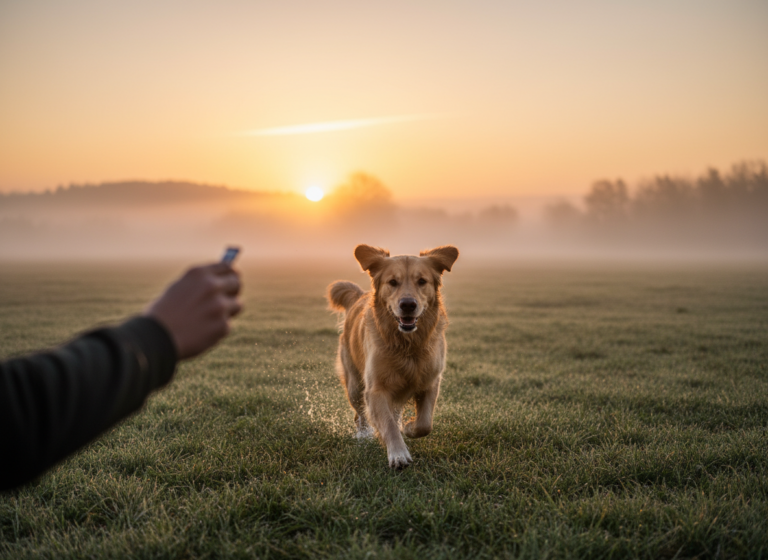
Imagine this scenario: you’re on a walk, and a moment of distraction—a dropped phone, a conversation with a neighbor—leads to a dropped leash. Your dog, spotting a squirrel across the street, bolts. Your regular ‘Come!’ is lost to the wind, drowned out by the excitement of the chase and the sound of approaching traffic. It’s a heart-stopping moment every pet owner dreads. While a standard recall command is a fundamental part of obedience, it often becomes diluted through everyday use. You use it to call your dog inside, to come for dinner, or to move away from the furniture. Its reliability can waver. This is where a separate, sacred, and infinitely more powerful tool comes into play: the emergency recall word.
This isn’t just another command. It’s your dog’s verbal lifeline, a panic button that cuts through any distraction and brings them sprinting back to you without hesitation. Training an emergency recall is one of the most critical safety measures you can implement for your canine companion. It requires dedication, consistency, and a clear understanding of canine psychology, but the peace of mind it provides is immeasurable. This comprehensive guide will walk you through the precise, expert-approved steps to forge an unbreakable recall, transforming a special word into a powerful guarantee of safety.
Understanding the Emergency Recall: Why It’s a Non-Negotiable Safety Tool
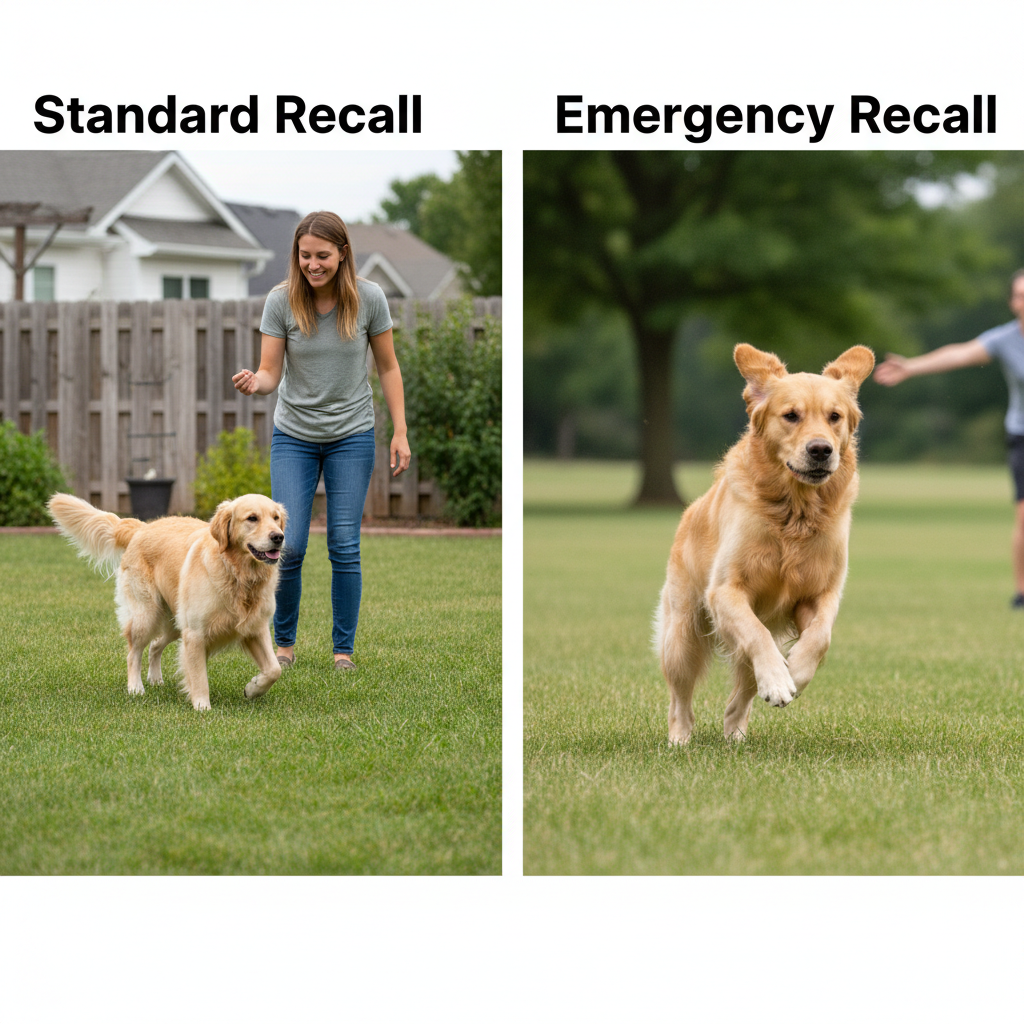
Before diving into the training process, it’s crucial to understand the fundamental difference between a standard recall and an emergency recall. They serve distinct purposes and are built on entirely different psychological foundations.
The Dilution of the Standard Recall
Your dog’s name and the word ‘Come’ are likely two of the most frequent words they hear. You say ‘Come’ when it’s time to go inside, ending their fun in the yard. You say ‘Come’ when it’s time for a bath or a nail trim—activities many dogs dislike. You say ‘Come’ when they’re sniffing something interesting and you need to move on. Over time, your dog learns that ‘Come’ can predict both wonderful things (like treats) and mundane or unpleasant things (like leaving the park). This inconsistency weakens the command’s power. The dog begins to perform a mental calculation: ‘Is what my owner is offering better than what I’m doing right now?’ In a high-stakes situation, this hesitation can be dangerous.
The Sanctity of the Emergency Word
The emergency recall, by contrast, is what trainers call a ‘poison-proofed’ cue. It is a word that is only ever associated with an immensely positive, high-value outcome. It is never used for routine tasks. It is never spoken in anger or frustration. Its sole purpose is to signal an event so wonderful that it overrides any competing distraction, whether that’s a fleeing rabbit, another dog, or a dropped piece of food. It works because it has a perfect history of reinforcement. Every single time the dog has heard this word, something amazing has happened. This creates an automatic, conditioned response, bypassing the dog’s decision-making process and tapping directly into their motivation. It is, in essence, a promise of the best thing imaginable, reserved only for when you need it most.
Phase 1: Choosing Your Word and Gathering Your Tools
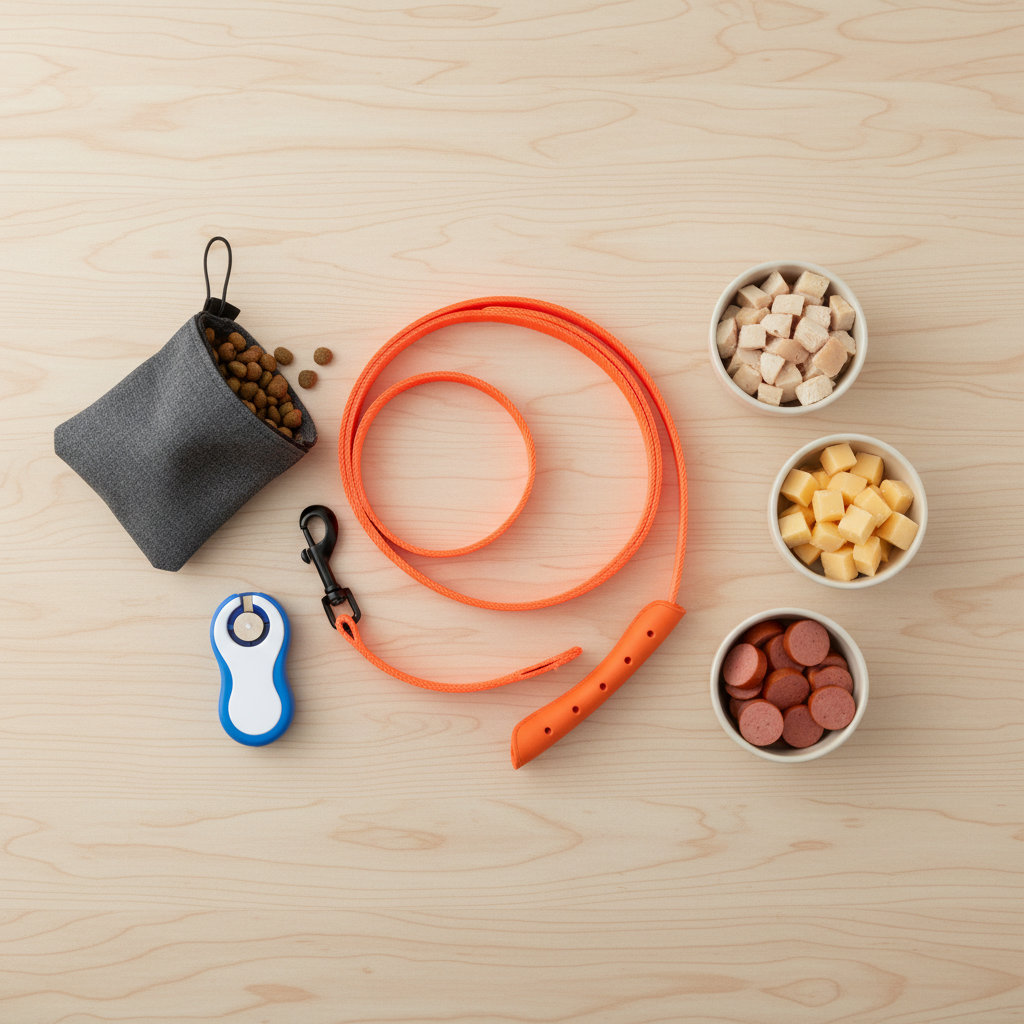
The foundation of a successful emergency recall is laid before the first training session even begins. Careful selection of your secret word and your reward arsenal is paramount to success.
Choosing the Perfect Word
The word you choose must be unique and memorable. It should meet several criteria:
- It must be novel: It cannot be a word your dog already knows or hears in daily conversation. Words like ‘Here’, ‘Treat’, or ‘Come’ are out.
- It must be sharp and clear: Choose a one or two-syllable word that you can say with an urgent, exciting tone. Examples include ‘Zing!’, ‘Nitro!’, ‘Jackpot!’, ‘Evac!’, or ‘Touchdown!’.
- It must be easy to say: In a panic, you won’t have time for a long or complicated word. Practice saying it aloud to ensure it rolls off the tongue easily and carries well over a distance.
Once you choose your word, it becomes sacred. Do not use it for anything else. Write it down and inform every member of your household of its specific purpose and the rules surrounding its use.
Assembling Your High-Value Arsenal
The currency of the emergency recall is the ‘jackpot’ reward. This cannot be the same kibble or dry biscuit you use for ‘Sit’ or ‘Stay’. The reward must be so overwhelmingly desirable that it eclipses all other environmental stimuli. This is a Tier 1, five-star-restaurant level of reward.
Examples of jackpot rewards include:
- Small pieces of real meat like boiled chicken, steak, or hot dogs.
- High-value dairy like cubes of cheddar cheese or string cheese.
- Smelly treats like tripe or small pieces of fish.
- A special, coveted toy that is only brought out for emergency recall practice.
Expert Tip: Discover your dog’s ultimate reward by offering a ‘buffet’ of different high-value treats. See which one they consistently choose first and with the most enthusiasm. That is your emergency recall jackpot.
Phase 2: The Step-by-Step Training Protocol
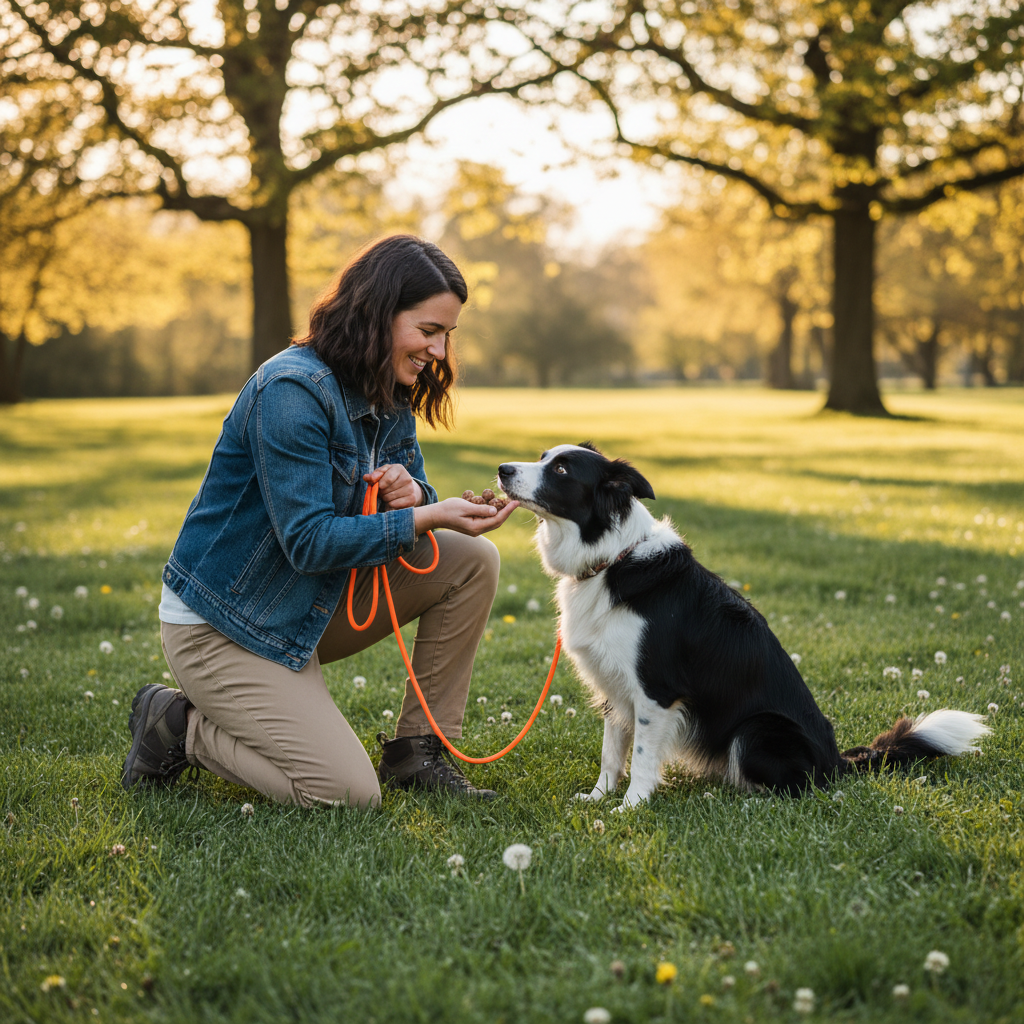
This phase is about building a strong, positive association with your chosen word. Patience and consistency are your greatest assets. Keep sessions short (2-5 minutes) and always end on a successful, positive note.
-
Step 1: Charge the Word (Indoors, No Distractions)
The initial goal is simple association, not performance. Start in a quiet room like your living room. With your dog near you, say your emergency word in an upbeat, excited tone. The instant the word leaves your mouth, deliver a handful of your jackpot treats directly to your dog. Do not ask for a sit or any other behavior. The sequence is simply: Word -> Instant Jackpot. Repeat this 5-7 times in a session. Do this for a few days until you notice your dog’s head whipping around in happy anticipation the moment they hear the word.
-
Step 2: Introduce Minimal Distance (Indoors)
Have a family member gently hold your dog or wait for them to be across the room. Say the emergency word with the same excitement. The moment your dog turns and moves toward you, praise them enthusiastically (‘Yes! Good dog!’). When they reach you, deliver the jackpot reward. You are now reinforcing both the word and the movement towards you.
-
Step 3: Move to a Secure Outdoor Area
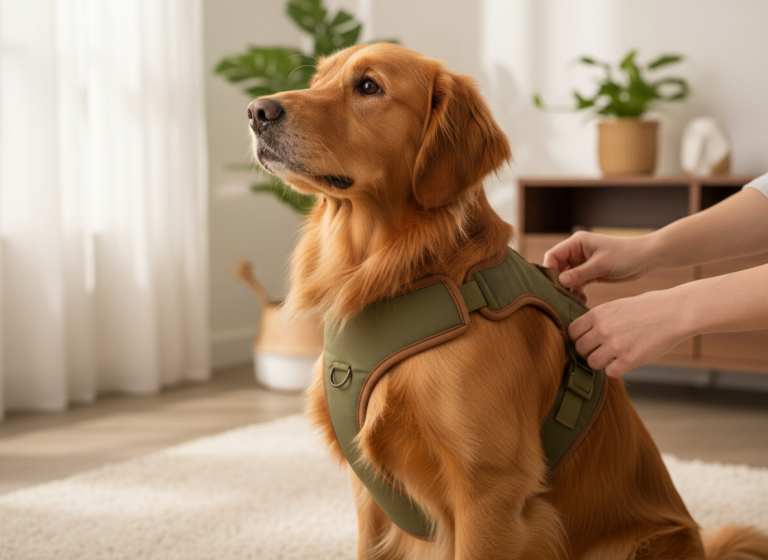
Now it’s time to take the training outside, but with safety measures. Go to a securely fenced yard or a quiet, enclosed space. Attach a long line (15-30 feet) to your dog’s harness. Let them wander a short distance away. When they are mildly distracted, say the word. The moment they commit to coming to you, praise and reel them in with gentle pressure on the line if needed. When they arrive, throw a party—jackpot treats, praise, and petting.
-
Step 4: Gradually Increase Distractions
This is where the long line is your best friend. Continue practicing in your secure area, but start adding low-level distractions. Have another person walk by at a distance. Roll a ball in the opposite direction. Your goal is to ‘proof’ the command against real-world scenarios. Always keep the long line on so you can guarantee success. If the dog hesitates, use the line to gently guide them in and reward them. This prevents them from learning that ignoring the cue is an option.
-
Step 5: Maintaining the Skill
Once your dog’s response is lightning-fast and reliable in various controlled situations, the initial heavy training is done. However, the command must be maintained. Conduct a surprise practice drill once or twice a month. Never drill it multiple times in one day, as this can devalue the word. The goal now is to keep it sharp, special, and always associated with a massive reward.
Maintaining the Power: The Golden Rules of the Emergency Word
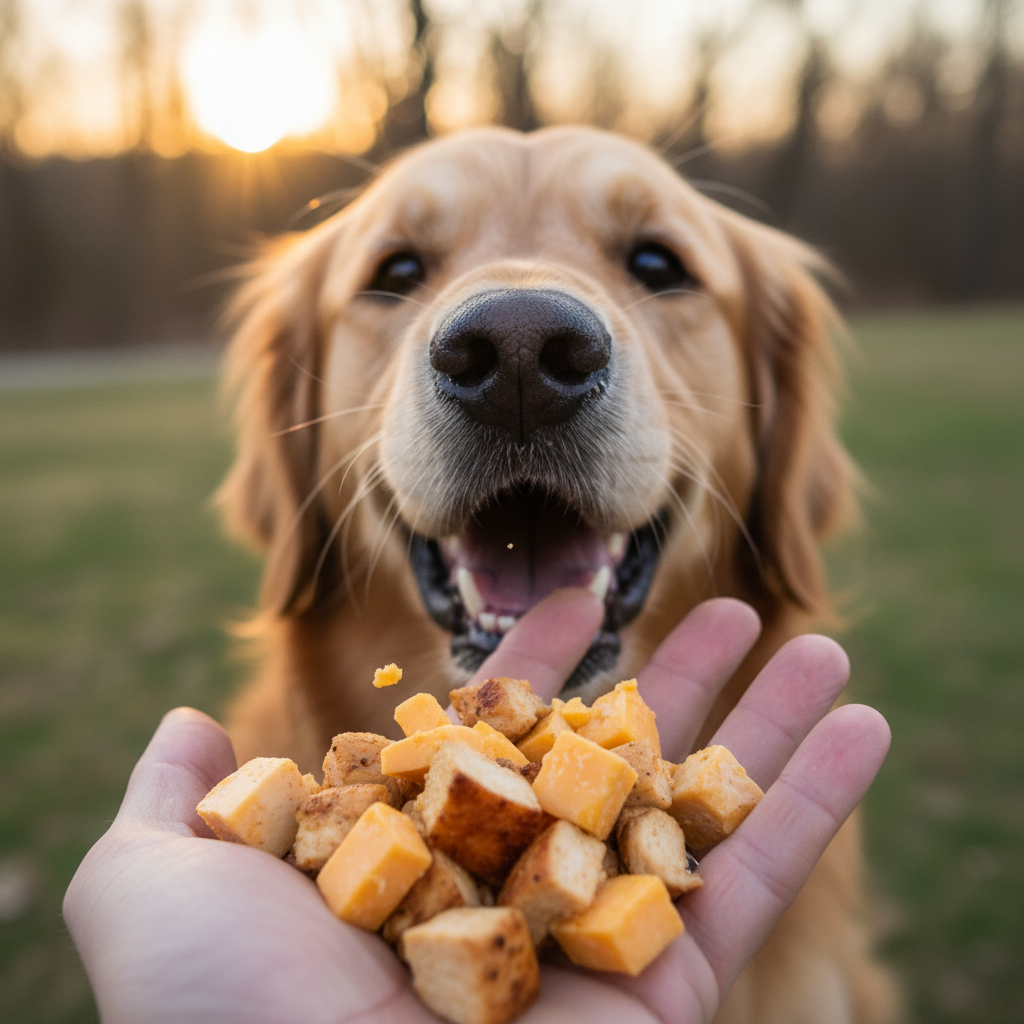
Training the command is only half the battle; protecting its integrity is an ongoing commitment. Adhering to these rules is non-negotiable to ensure the word retains its life-saving power.
- Rule 1: Never Pair It with a Negative. This is the cardinal sin. You must never, under any circumstances, use the emergency word to call your dog for something they dislike. This includes baths, nail trims, leaving the park, or being put in their crate. Doing so will ‘poison’ the cue, creating uncertainty and hesitation when you can least afford it.
- Rule 2: Always Deliver the Jackpot. There are no exceptions. Every single time the word is used, whether in practice or a real emergency, it must be followed by the highest-value reward you have. If you find yourself in a real emergency and don’t have the treat, the praise and relief should be overwhelming, and you must provide the promised jackpot as soon as possible afterward.
- Rule 3: Never Use It in Anger. Your tone of voice is critical. The emergency word must always sound like an invitation to the best party ever. If you say it with a frustrated or angry tone, your dog may hesitate or avoid coming to you.
- Rule 4: Don’t Repeat It. Saying ‘Nitro! Nitro! NITRO!’ teaches your dog that the first two cues are optional. Say it once, clearly and excitedly. If the dog doesn’t respond (which shouldn’t happen if you’ve followed the training steps), you must use your long line or go get them to manage the situation. Then, reassess your training and go back a step.
- Rule 5: Ensure Everyone is On Board. Every person who interacts with your dog—family members, pet sitters, dog walkers—must understand these rules. One person misusing the word can undo months of careful training.
Troubleshooting Common Recall Challenges
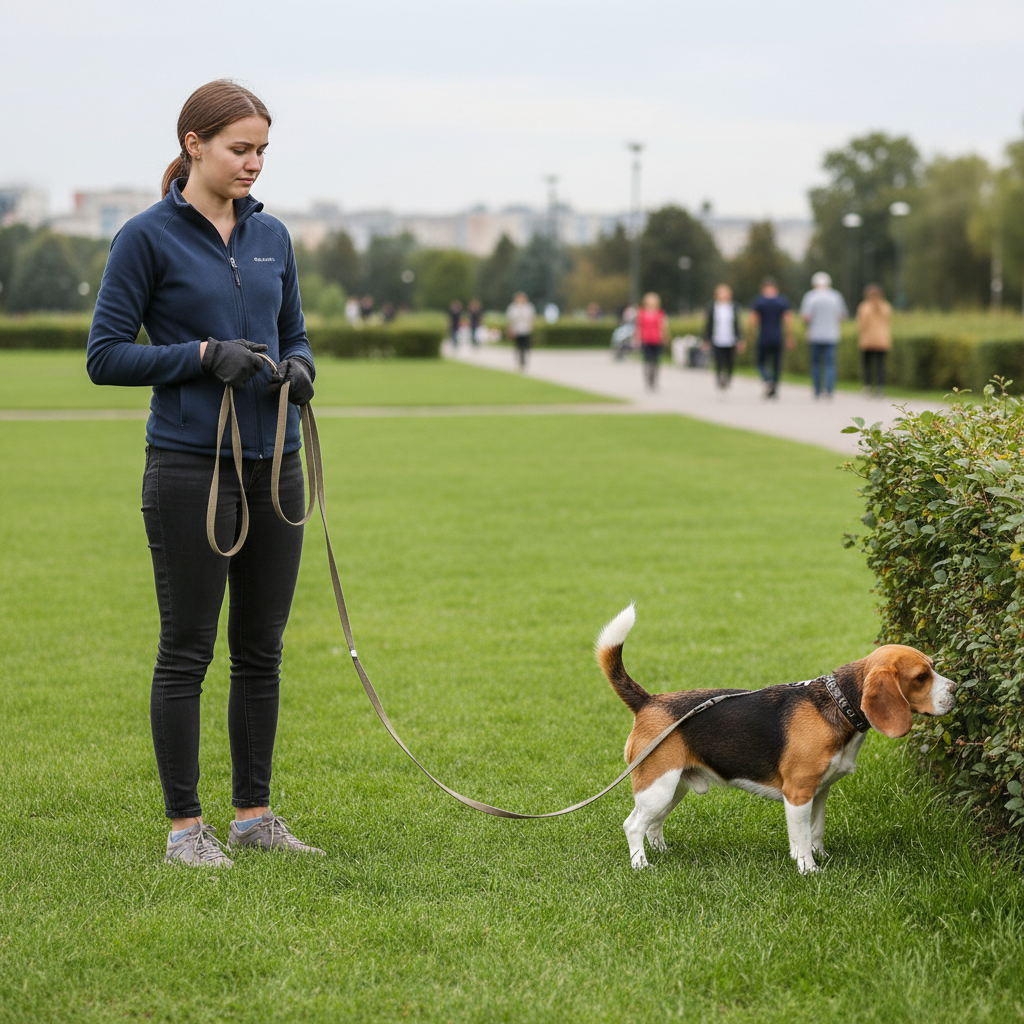
Even with the best training plan, you might encounter bumps in the road. Understanding how to address them is key to building a truly reliable recall.
What If My Dog Doesn’t Come?
If you use the word and your dog ignores it, do not repeat the command. This is a critical training moment. Your dog has just communicated that the distraction is more valuable than their perceived reward. Immediately and calmly, use the long line to reel them in. Do not scold them. When they get to you, give them a lower-value reward for the act of coming in, but not the jackpot. This event signals that you have progressed too quickly. In your next session, reduce the level of distraction significantly and work on reinforcing the command in an easier environment.
My Dog Starts to Come, Then Gets Distracted Again.
This is a common issue known as ‘fly-by’, where the dog checks in but then veers off to another distraction. This indicates that the competing distraction is still very high value. Use your long line to prevent the dog from leaving, and use enthusiastic praise and body language (crouching down, moving backward) to encourage them to complete the recall. When they arrive, provide the jackpot. This reinforces that coming all the way to you is the most rewarding choice.
Comparing Recall Commands
It can be helpful to visualize the distinct roles of your daily and emergency commands. Use this table as a reference for your entire family.
| Feature | Regular Recall (‘Come’) | Emergency Recall (‘Jackpot!’) |
|---|---|---|
| Usage Frequency | Daily, for various routine situations | Exclusively for true emergencies or rare practice drills |
| Reward Level | Standard treat, kibble, or praise | Highest value ‘jackpot’ reward only |
| Tone of Voice | Pleasant but can be firm | Always urgent, happy, and exciting |
| Consequence if Ignored | Low to moderate (e.g., playtime ends) | Potentially life-threatening |
| Training Goal | General management and day-to-day obedience | Absolute, immediate, life-saving safety |
Conclusion
Training an emergency recall word is an investment in your dog’s safety and your own peace of mind. It transforms you from a worried observer into a proactive protector, armed with a tool that can pull your beloved companion out of harm’s way in an instant. The process demands precision, patience, and an unwavering commitment to protecting the value of your chosen word. By following this structured protocol—choosing a unique word, utilizing jackpot rewards, and adhering strictly to the rules of its use—you build an unbreakable bond of trust and a recall that is as close to guaranteed as possible. The day may never come when you need to use it, but if it does, the diligent training you undertake today will be the most valuable gift you ever give your dog.