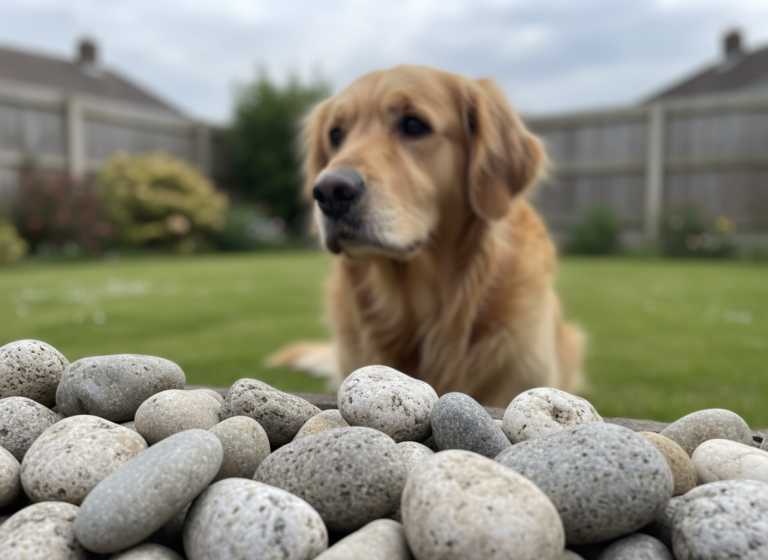
The Science Behind Why Dogs Spin 5 Times Before Pooping

Every dog owner has witnessed the ritual. The urgent walk, the sniffing, the sudden stop, and then… the spinning. A dog may turn in a circle once, twice, or even five or more times before finally assuming the position to eliminate. This seemingly quirky behavior is not random; it is a complex act rooted in a blend of ancient instincts, sophisticated communication, and even a surprising connection to the Earth’s planetary forces. As a canine behaviorist, I often explain to clients that this ritual is a window into their dog’s primal brain. Understanding the science behind the spin transforms a mundane potty break into an appreciation for the intricate, multi-layered world of canine cognition. This guide will deconstruct the primary scientific theories explaining this universal behavior, providing clarity on why your dog performs this pre-elimination dance.
The Echo of the Wild: Stomping Down a Nest

The Echo of the Wild: Stomping Down a Nest
One of the most widely accepted theories for the pre-potty spin is that it is a vestigial behavior, an echo from their wild ancestors. Before dogs were domesticated, canids like wolves lived in environments where safety was a constant concern. Tall grass, dense underbrush, and uneven terrain could conceal threats such as snakes, sharp rocks, or biting insects. The act of circling served a critical, practical purpose: to trample down the vegetation. By patting down the grass, a wild dog created a clearer, cleaner, and safer spot to eliminate. This ‘nest-making’ ensured they had stable footing and could detect any hidden dangers before entering the vulnerable squatting posture required for defecation.
This stomping action also provided a final sensory check of the area. The paws, rich with nerve endings, could feel for anything sharp or unstable underfoot. Furthermore, the commotion could scare away any small creatures lurking in the immediate vicinity. While your modern dog’s manicured lawn presents few of these ancient threats, the hardwired neurological blueprint remains. The instinct to secure and prepare a ‘lavatory’ is so deeply ingrained that it persists thousands of generations later. When you see your dog spinning on the carpet or the sidewalk, you are witnessing a powerful ancestral memory playing out in a modern context. It is a testament to the survival instincts that have defined canids for millennia.
A Message in a Circle: The Role of Scent Glands
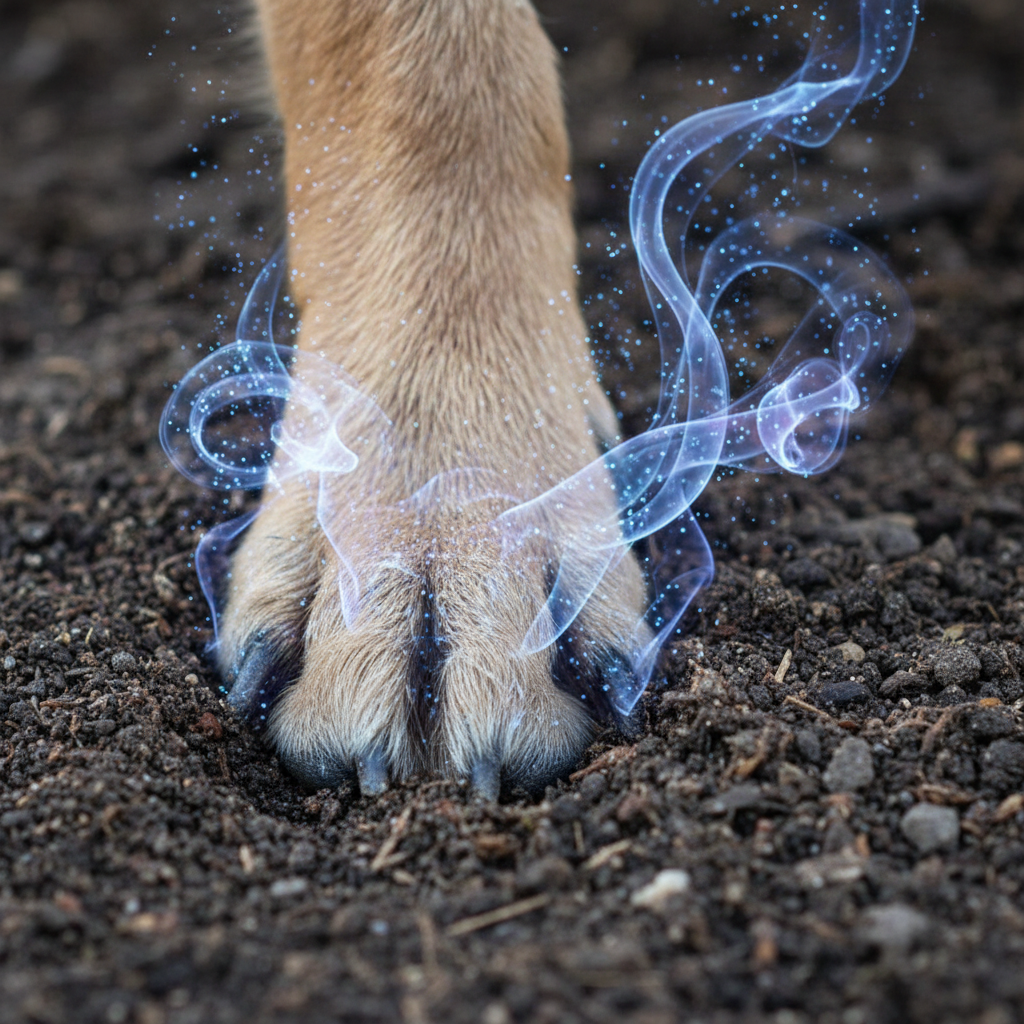
A Message in a Circle: The Role of Scent Glands
Elimination is not merely a biological necessity for dogs; it is a fundamental form of communication. Urine and feces contain a wealth of chemical information about a dog’s identity, sex, health, and social status. The spinning ritual significantly amplifies this message. Dogs possess apocrine sweat glands, known as interdigital glands, located in the webbing between their paw pads. When a dog spins and scrapes at the ground, these glands release a unique pheromonal signature into the soil. This action essentially creates a scented billboard that accompanies the visual and olfactory cues of their waste.
This behavior is a deliberate act of scent marking. The dog is not just saying, ‘I was here,’ but is broadcasting a much more complex message. The combination of the paw scent and the waste serves as a powerful territorial claim. It leaves a lasting signal for other dogs, far more potent than urine or feces alone, which degrade over time. The physical disturbance of the ground—the scuffed-up dirt or flattened grass—also provides a visual marker that draws attention to the spot. So, the spin is part of a multi-modal communication strategy, ensuring their message is seen, smelled, and understood by any other canine passing through the area. It is a deliberate and instinctual enhancement of their social signaling.
Navigating by Nature: Aligning with the Earth’s Magnetic Field
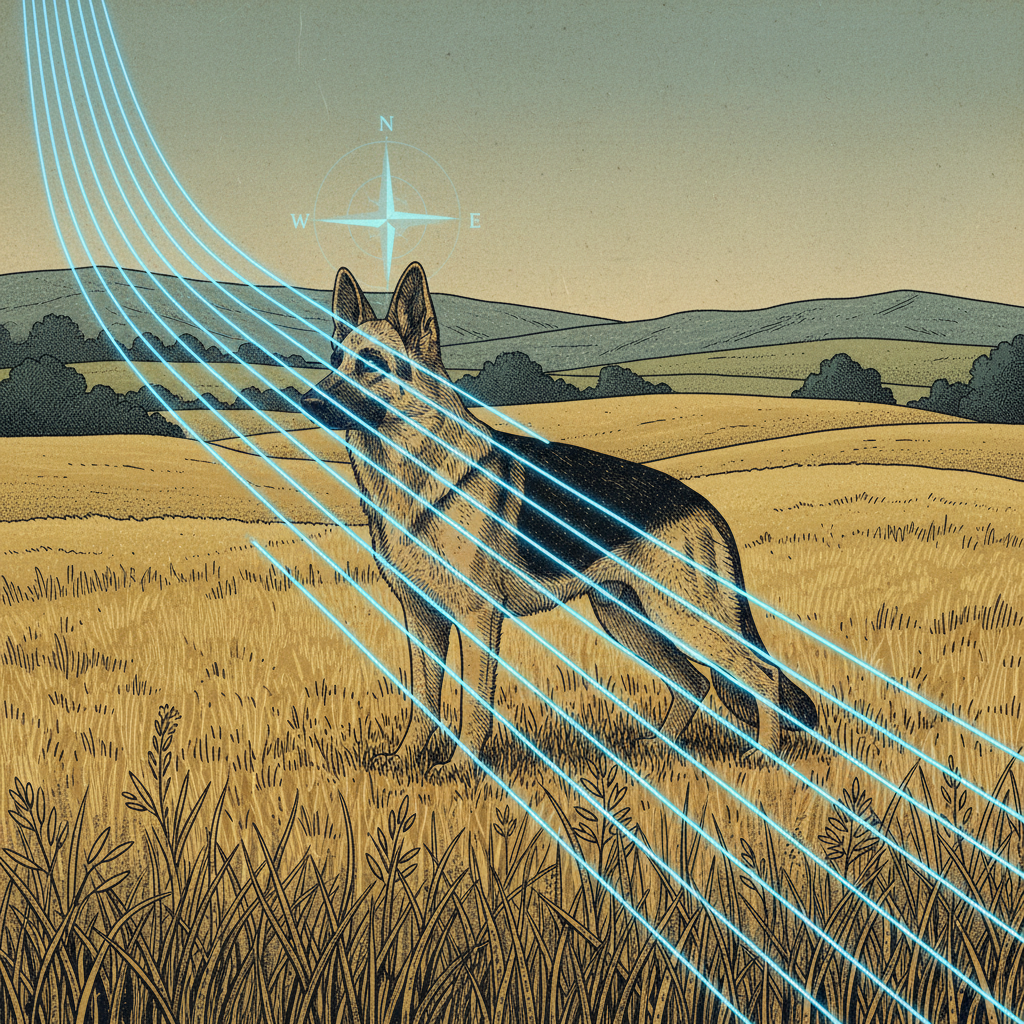
Navigating by Nature: Aligning with the Earth’s Magnetic Field
Perhaps the most compelling and scientifically rigorous explanation for the spinning behavior involves magnetoreception—the ability to perceive the Earth’s magnetic field. A landmark study published in the journal Frontiers in Zoology in 2013 provided fascinating evidence for this theory. Researchers meticulously observed 70 dogs of various breeds over a two-year period, documenting thousands of instances of urination and defecation. They discovered a clear and significant pattern: dogs overwhelmingly prefer to align their body’s axis along the North-South magnetic line when they eliminate.
However, this preference was only observed during periods when the Earth’s geomagnetic field was calm and stable. During periods of magnetic field instability, such as during a solar flare, this directional preference disappeared, and the dogs’ alignment became random. This suggests that dogs are actively sensing the magnetic field and the spinning is part of the process of calibrating their internal compass. They turn to ‘find’ the North-South axis before settling into position. This innate ability is seen in other animals, such as birds and sea turtles, for navigation, but its application in canine elimination was a groundbreaking discovery. The spinning may be the physical manifestation of the dog processing geomagnetic information to find the correct alignment.
| Geomagnetic Field Condition | Observed Canine Elimination Behavior |
|---|---|
| Stable / Calm | Dogs consistently align their bodies along the North-South axis. |
| Unstable / Fluctuating | Alignment becomes random and the North-South preference disappears. |
When to Watch Closely: Differentiating Ritual from Medical Issue

When to Watch Closely: Differentiating Ritual from Medical Issue
While the pre-potty spin is a perfectly normal and healthy behavior, it is critical for owners to be able to distinguish this ritual from circling that may indicate a medical problem. The context and accompanying signs are key. A normal pre-elimination spin is purposeful and typically concludes with the dog successfully relieving itself. Compulsive or pathological circling looks different and should be a red flag for a veterinary consultation.
You should be concerned if you observe any of the following signs:
- Prolonged, Fruitless Spinning: The dog spins excessively for a long period but seems unable to posture or eliminate, perhaps showing signs of distress or confusion.
- Circling at Inappropriate Times: The dog begins circling aimlessly inside the house, not associated with a potty break. This can be a sign of a neurological issue.
- Signs of Pain or Discomfort: The spinning is accompanied by yelping, whining, or repeatedly looking at its rear end. This can indicate issues like impacted anal glands, urinary tract infections, or gastrointestinal pain.
- Loss of Coordination: The circling is wobbly or uncontrolled, or the dog seems to lose its balance. This is a significant neurological sign that could point to vestibular disease, a brain tumor, or Canine Cognitive Dysfunction (CCD) in older dogs.
- Sudden Change in Habit: Your dog, who normally spins twice, suddenly begins spinning ten or more times and seems agitated. Any abrupt and dramatic change in a baseline behavior warrants investigation.
If your dog’s spinning ritual is paired with any of these symptoms, do not dismiss it. Schedule an appointment with your veterinarian to rule out underlying medical conditions. Early diagnosis and intervention are crucial for conditions ranging from painful anal glands to serious neurological disorders.
Conclusion
The simple act of a dog spinning before it poops is a remarkable display of deeply ingrained behaviors. It is a symphony of ancestral memory, ensuring a safe ‘nest’; a sophisticated act of communication, leaving a lasting pheromonal message; and potentially, a stunning display of sensitivity to the planet’s own magnetic forces. This ritual is a powerful reminder that our domestic dogs are still connected to their wild origins and possess senses that extend beyond our own. By understanding the ‘why’ behind the spin, we move from being mere owners to more informed and appreciative guardians. We learn to see not just a peculiar habit, but a complex and meaningful behavior that tells a story of survival, communication, and the unseen forces of nature.