The “Middle” Command: The #1 Trick to Calm An Anxious Dog Instantly
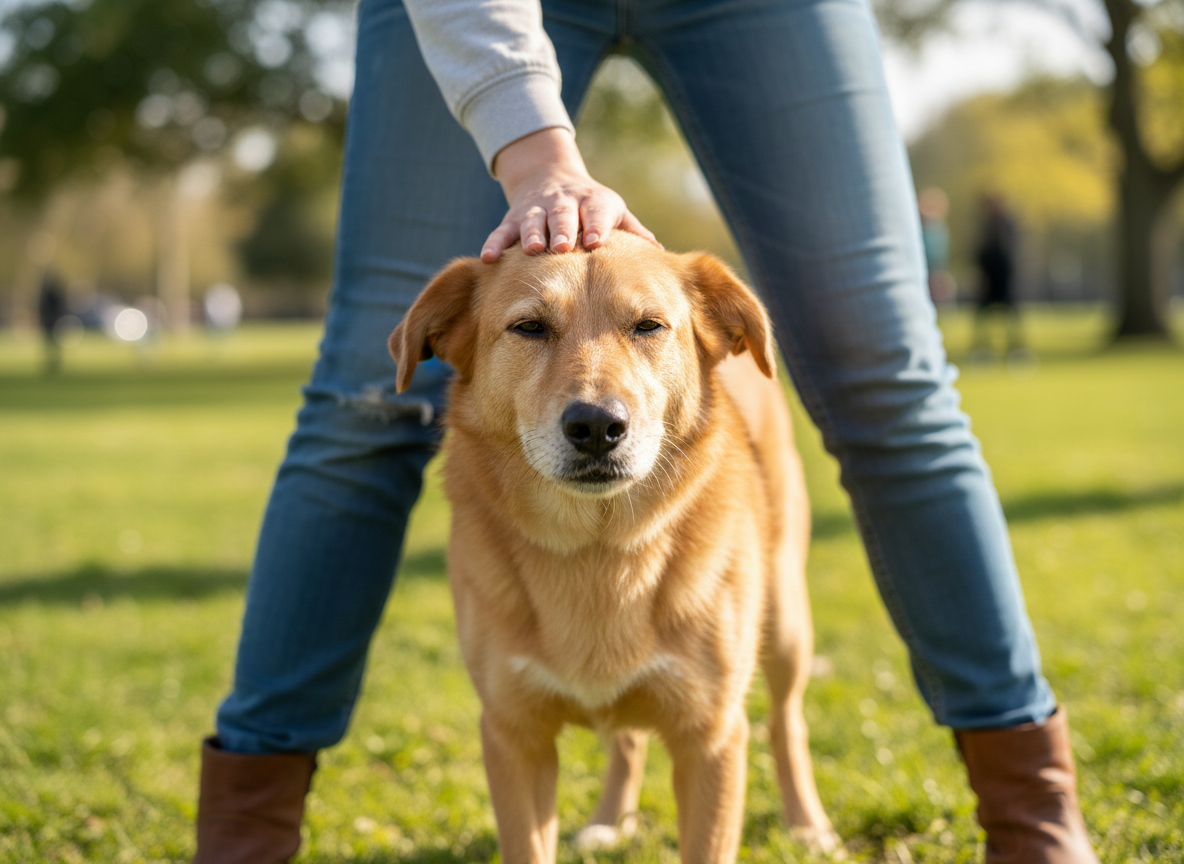
Living with an anxious dog can be a heartbreaking and challenging experience. The constant vigilance, the fear of triggers, and the feeling of helplessness when your companion is in distress are burdens many dedicated pet owners carry. From thunderstorms and fireworks to strangers at the door or overwhelming situations on a walk, anxiety can significantly diminish a dog’s quality of life. While management strategies and veterinary consultations are crucial, what if you had a tool you could use in the moment—a simple command that tells your dog, ‘I am here, and you are safe’?
Enter the ‘Middle’ command. More than just an impressive trick, this command is a behavioral tool that creates a portable safe haven for your dog. By teaching your dog to position itself between your legs, you provide immediate physical comfort and a psychological shield from overwhelming stimuli. This action leverages deep pressure therapy principles and redirects your dog’s focus from the source of its fear to you, its trusted leader. This guide will provide a comprehensive, step-by-step approach to teaching the ‘Middle’ command, empowering you to offer your dog instant comfort and build a deeper, more resilient bond.
Why ‘Middle’ Works: The Psychology Behind the Safe Space Command
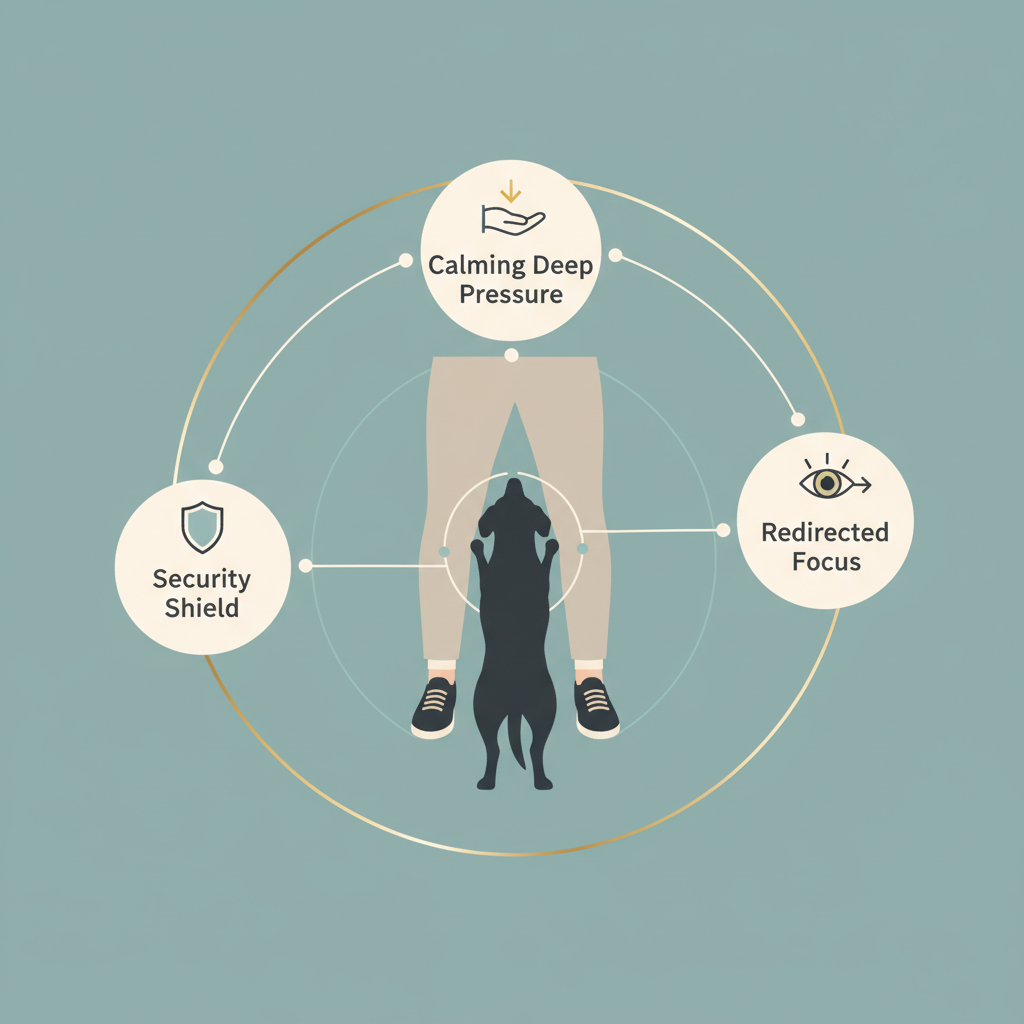
To effectively teach the ‘Middle’ command, it’s essential to understand why it is so profoundly effective for anxious dogs. The command’s power isn’t magic; it’s rooted in canine psychology and physiology. When a dog performs this command, it taps into several calming mechanisms simultaneously, making it a multi-faceted tool for anxiety management.
The Power of Deep Pressure Therapy (DPT)
One of the primary mechanisms at play is similar to Deep Pressure Therapy (DPT), a concept well-documented in humans and increasingly recognized in animals. Gentle, consistent pressure on the body can stimulate the parasympathetic nervous system, which is responsible for the ‘rest and digest’ response. This helps lower heart rate, reduce stress hormones like cortisol, and promote a sense of calm. When your dog is in the ‘Middle’ position, the contact with your legs provides this reassuring pressure, much like a weighted blanket or a comforting hug. It’s a physiological signal to the dog’s body that it can begin to relax.
Creating a Physical Shield
For a dog experiencing fear or anxiety, the world can feel vast and threatening. The ‘Middle’ position creates a physical barrier, effectively shielding the dog from triggers in its environment. By placing you between them and the scary thing—be it another dog, a loud vehicle, or a crowd of people—you become their protector. This physical placement reinforces their perception of you as a source of security and safety, strengthening your bond. They are no longer facing the threat alone; they are in their safe den, protected by their pack leader.
Focus Redirection and Task Orientation
Anxiety often sends a dog’s mind into a spiral of reactivity. They become hyper-focused on the trigger, and their ability to process information or listen to cues diminishes. Giving your dog a specific, familiar task to perform, like ‘Middle’, interrupts this cycle. It requires them to shift their cognitive focus from the external threat to the internal task of following a command. This redirection is a powerful circuit breaker for anxiety, allowing their brain to move from a state of panic to a state of purpose. The simple act of moving into position and waiting for the next cue provides a constructive outlet for their nervous energy.
Expert Tip: The ‘Middle’ command transforms the owner from a simple bystander into an active participant in their dog’s emotional regulation. You become the anchor in their emotional storm.
Setting the Stage: Essential Tools and the Ideal Training Environment
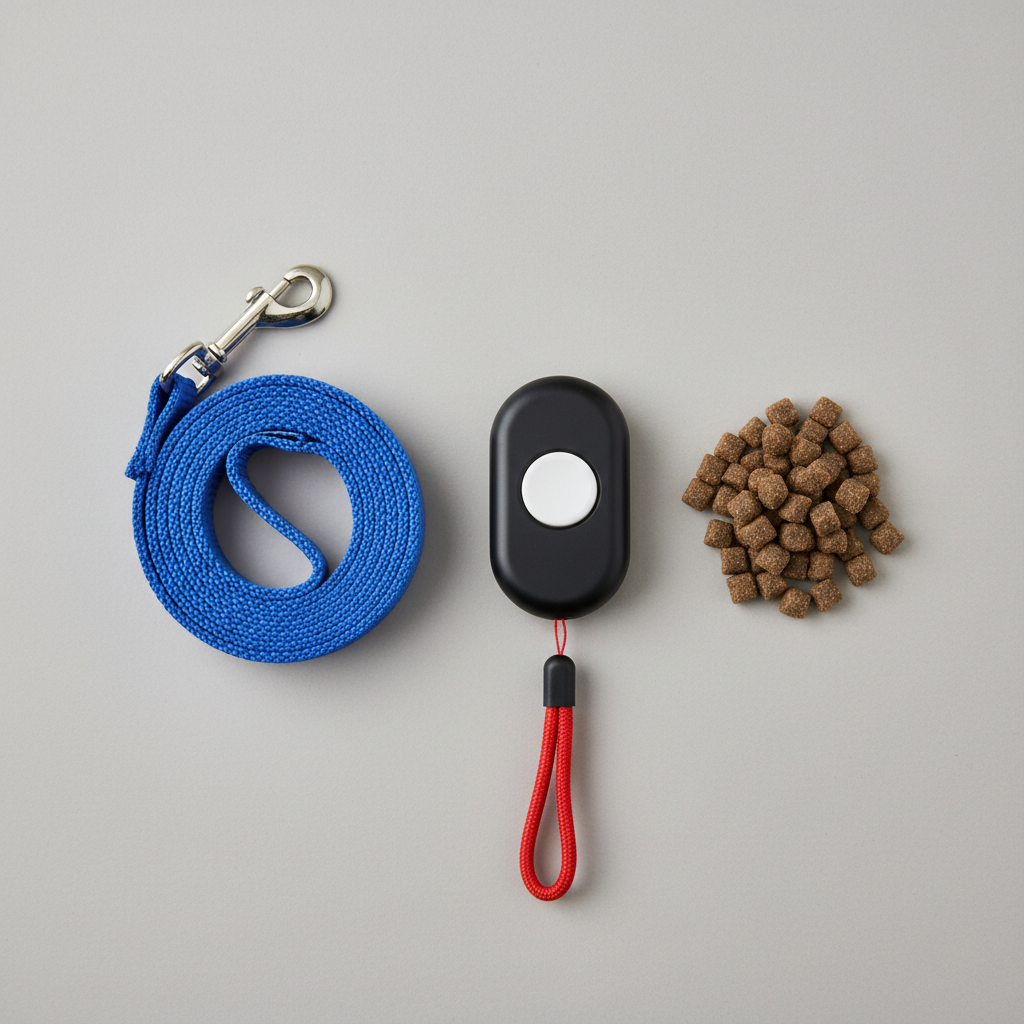
Successful training is built on a foundation of proper preparation. Before you begin teaching the ‘Middle’ command, gathering the right tools and establishing a conducive environment will dramatically increase your chances of success and make the process more enjoyable for both you and your dog. The goal is to create a positive association with the command from the very first session.
Essential Supplies for Success
You don’t need an arsenal of expensive equipment to teach this command. Simplicity is key. Here is what you will need:
- High-Value Treats: These are treats your dog absolutely loves and doesn’t get every day. Think small, soft, and smelly morsels like boiled chicken, cheese, or commercial training treats. The high value of the reward will motivate your dog to work through the initial learning phase.
- A Clicker (Optional): A clicker is a valuable tool for marking the exact moment your dog performs the desired behavior. This precise communication can speed up the learning process. If you’re not using a clicker, a consistent verbal marker like a sharp ‘Yes!’ works just as well.
- Patience and a Positive Attitude: This is the most crucial tool. Your dog is highly attuned to your emotional state. If you are frustrated or tense, your dog will be too. Keep training sessions upbeat, short, and end on a positive note.
Creating the Right Atmosphere
The environment where you first introduce a new command plays a pivotal role in how your dog perceives the exercise. For a command designed to alleviate anxiety, it is paramount to start in a setting that is inherently calm and free of stressors.
Begin in a quiet room in your home where distractions are minimal. Turn off the television, put your phone away, and ensure other pets or family members won’t interrupt. The initial goal is for your dog to learn the mechanics of the behavior without any added environmental pressure. By starting in a ‘safe zone,’ you are linking the ‘Middle’ command with feelings of peace and security from the very beginning. Remember to keep initial sessions brief—no more than 5 to 10 minutes once or twice a day—to maintain your dog’s enthusiasm and prevent mental fatigue.
Teaching ‘Middle’: A Complete Step-by-Step Guide
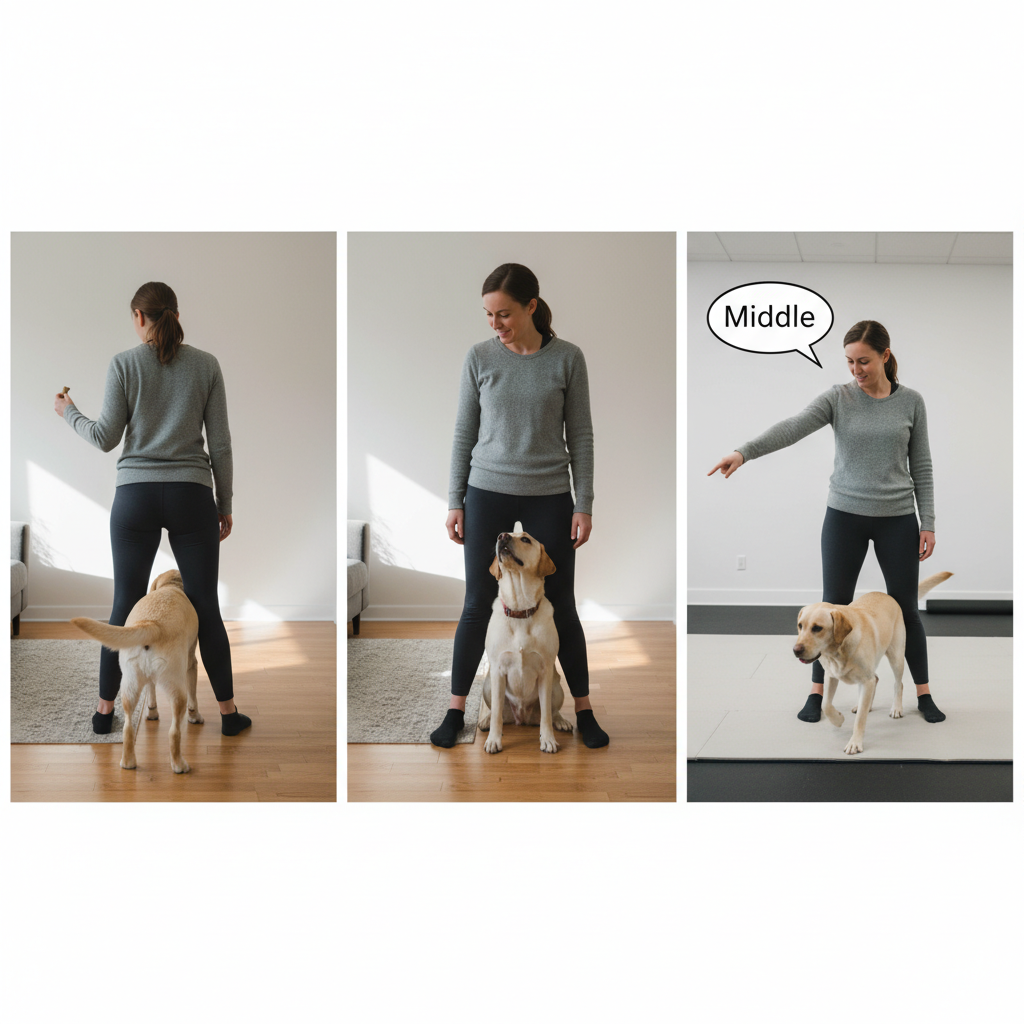
Teaching the ‘Middle’ command is a straightforward process that relies on luring and positive reinforcement. We will break it down into three distinct phases: introducing the physical movement, adding duration and the verbal cue, and finally, generalizing the command to different environments. Follow these steps patiently, and only move to the next one when your dog is comfortable and confident.
-
Phase 1: Luring the Basic Behavior
The initial goal is simply to teach your dog the physical action of moving between your legs. Stand with your feet about shoulder-width apart, creating an inviting tunnel. Take a high-value treat in your hand and show it to your dog. Lure your dog from behind you by passing the treat through your legs to the front. As soon as your dog’s head and shoulders pass through, mark the moment with your clicker or a ‘Yes!’ and give them the treat. Repeat this step 5-10 times. The motion should become fluid and fun, like a game.
-
Phase 2: Building Duration and Adding the Cue
Once your dog eagerly moves through your legs, it’s time to teach them to stay there. Lure your dog into the ‘Middle’ position as before, but this time, close your legs slightly once they are in place and withhold the treat for a single second. Mark and reward them for this brief pause. Gradually increase the duration they must wait before receiving the reward, starting with one second and slowly building up to 5, 10, and then 30 seconds. Once your dog is reliably pausing between your legs, you can add the verbal cue. Just as you begin to lure them, say the word ‘Middle’ in a clear, positive tone. After several repetitions, your dog will associate the word with the action.
-
Phase 3: Fading the Lure and Generalization
The final phase is to transition from the physical lure to just the verbal cue and to practice the command in new places. Start by using the hand motion without a treat in it, rewarding from your other hand after the behavior is complete. Then, reduce the hand motion to a simple point between your legs. The ultimate goal is for your dog to respond to the verbal cue ‘Middle’ alone. Once the command is strong in your quiet training area, begin practicing in other rooms of the house. Then, move to your secure backyard. The key to generalization is to introduce new environments with very low distraction levels first, ensuring your dog can still succeed before you ask them to perform the command in more challenging situations.
Real-World Scenarios for the ‘Middle’ Command
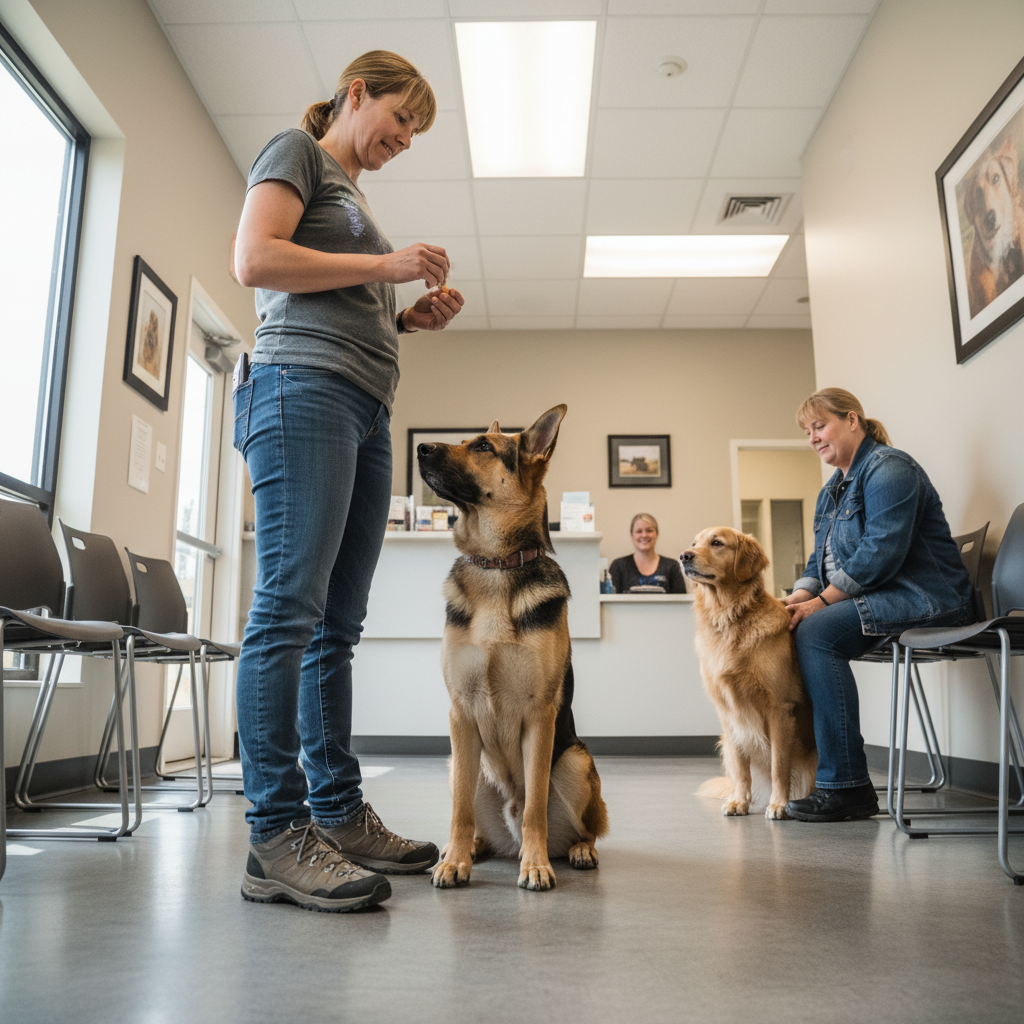
Mastering the ‘Middle’ command in your living room is a fantastic achievement, but its true value is realized when applied to real-world, anxiety-inducing situations. The command is a proactive tool that allows you to manage your dog’s environment and emotional state. Knowing when and how to deploy it is key to its effectiveness. The goal is always to cue the behavior before your dog’s anxiety escalates to a point where they can no longer respond.
Here are some common scenarios where the ‘Middle’ command can be a game-changer:
| Scenario | Common Triggers | How ‘Middle’ Provides a Solution |
|---|---|---|
| On a Walk | An approaching dog, loud traffic, skateboarders, unfamiliar people. | Cues the dog to check in with you, creating a physical barrier and preventing a reactive lunge. It allows the trigger to pass while your dog is in a secure, focused state. |
| Veterinary Clinic | The presence of other stressed animals, unfamiliar smells, the waiting room environment. | Provides a safe ‘home base’ amidst the chaos. It keeps your dog close and calm, making the wait less stressful for everyone and easier for the vet staff to handle your dog. |
| Visitors at Home | The doorbell ringing, new people entering the dog’s territory. | Gives your dog a specific job to do instead of rushing the door, jumping, or barking. It allows guests to enter calmly while your dog remains in a controlled, secure position. |
| Loud Noises | Thunderstorms, fireworks, construction sounds. | Offers immediate physical comfort and security during unpredictable and frightening events. The deep pressure can help soothe the dog’s physiological stress response. |
Proactive Application: The most skilled handlers learn to read their dog’s subtle body language—a stiff posture, a tucked tail, whale eyes—and cue ‘Middle’ at the first sign of discomfort. This prevents the emotional escalation and reinforces to your dog that you are aware of their needs and will protect them.
Troubleshooting Common ‘Middle’ Command Hurdles
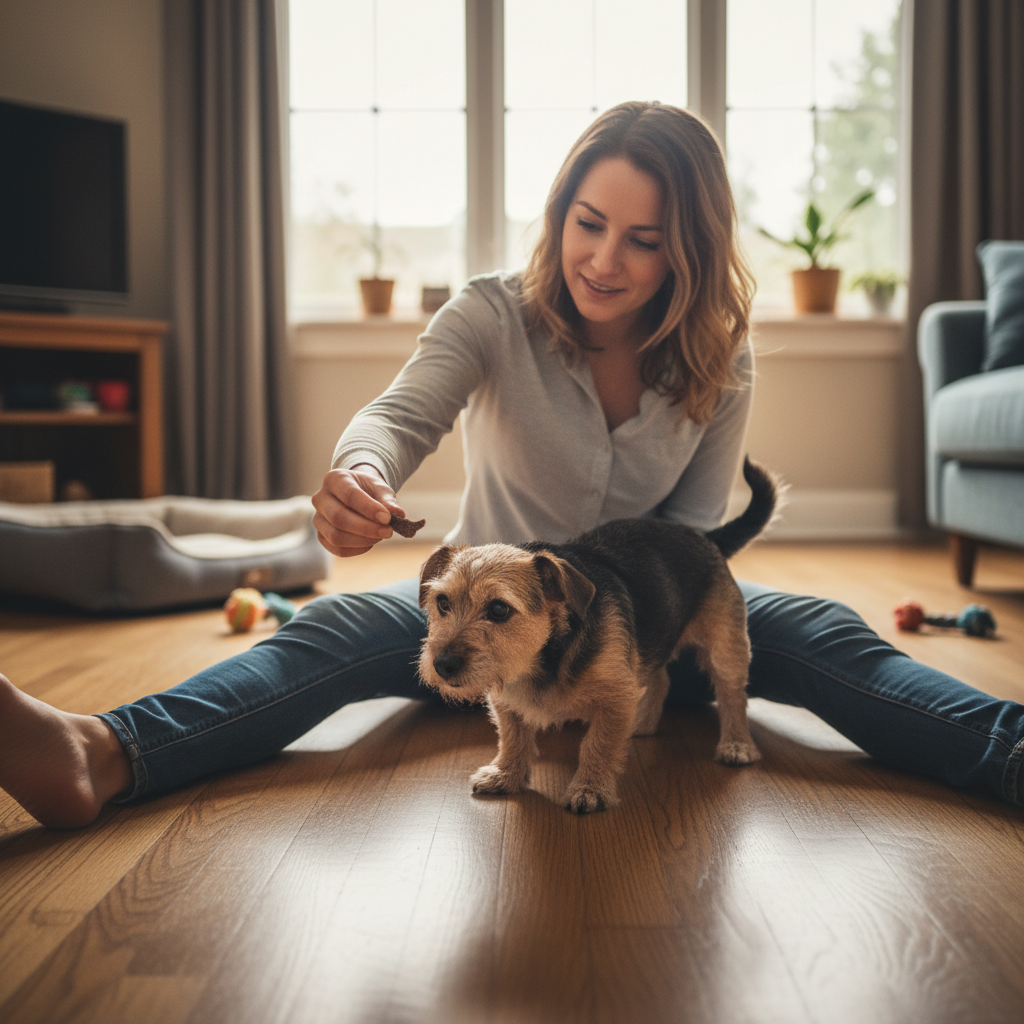
Even with the best preparation, training rarely proceeds without a few bumps in the road. It’s important to view these challenges not as failures, but as opportunities to better understand your dog’s perspective. Here are solutions to some of the most common issues trainers encounter when teaching the ‘Middle’ command.
Challenge: ‘My dog is too big/small to fit comfortably.’
Solution: The command is adaptable to any size of dog. For very large breeds like Great Danes or Mastiffs, you will need to adopt a much wider stance to create a comfortable space. For toy breeds like Chihuahuas or Yorkies, standing can be intimidating. Try practicing while sitting on a sturdy chair or stool, having them go between your legs there. The principle of security remains the same, regardless of the owner’s posture.
Challenge: ‘My dog just runs through my legs and doesn’t stop.’
Solution: This is a common issue in Phase 2. It means the dog has learned the ‘through’ part but not the ‘stay’ part. Go back to luring them into position, but as they arrive, use your other hand to place a treat directly on their nose and slowly guide their head down into a sit. Mark and reward the instant their rear touches the floor. You are adding a second behavior (sit) to encourage them to stop. You can also physically block them from moving forward with your hand or a toy after they enter the ‘Middle’ position.
Challenge: ‘The command doesn’t work when my dog is already scared.’
Solution: This is an issue of timing and proofing, not a failure of the command itself. When a dog is ‘over threshold’—meaning their anxiety has peaked—their cognitive functions shut down, and they are unable to respond to cues. The ‘Middle’ command is a preventative measure, not a reactive cure. This feedback means you need to practice more in calm or mildly distracting environments to build a stronger, more automatic response. It also means you need to get better at recognizing your dog’s early anxiety signals and cueing ‘Middle’ much sooner.
Challenge: ‘My dog is hesitant or afraid to go between my legs.’
Solution: Never force the dog. This indicates a lack of confidence. Make the space wider and more inviting. Start by just rewarding them for approaching your legs. Then, toss a treat just behind your legs for them to get. Then, toss it just between your legs. Make it a fun, low-pressure game of ‘find the treat.’ Build a positive association with the space between your legs before you ever ask them to pass through it or stay there.
Conclusion
The ‘Middle’ command is far more than a simple party trick; it is a profound act of communication and a cornerstone of a trust-based relationship with your anxious dog. By patiently teaching this behavior, you are giving your companion a predictable, reliable method for seeking comfort and safety in moments of distress. You are equipping them with a coping mechanism that travels with them everywhere you go. This command transforms you from a passive observer of their anxiety into their active, trusted protector.
Remember that consistency and patience are your greatest allies. Celebrate small victories, keep your training sessions positive, and never forget that your ultimate goal is to build your dog’s confidence. As your dog masters the ‘Middle’ command, you will likely see a remarkable change not just in their ability to handle stressful situations, but in the depth and resilience of the bond you share. You are not just training a command; you are building a sanctuary.