The “It’s Yer Choice” Game: Teach Your Dog Self-Control In 5 Minutes
Impulse control is one of the most valuable, yet challenging, skills to teach a canine companion. From lunging at dropped food to bolting out open doors, a lack of self-control can lead to frustrating and even dangerous situations. Many traditional training methods focus on commands like ‘Leave It,’ which are certainly useful but often teach compliance rather than true decision-making. The ‘It’s Yer Choice’ (IYC) game, popularized by renowned trainer Susan Garrett, flips the script. It’s a foundational exercise that empowers your dog to make the right choice on their own, building a robust internal filter for their impulses. This is not about forcing obedience; it’s about developing a thinking partner. In this comprehensive guide, we will explore the science behind this simple game and provide a clear, step-by-step plan to introduce it to your dog, transforming their behavior in just a few minutes each day.
Understanding the Core Principles: Why This Game Works
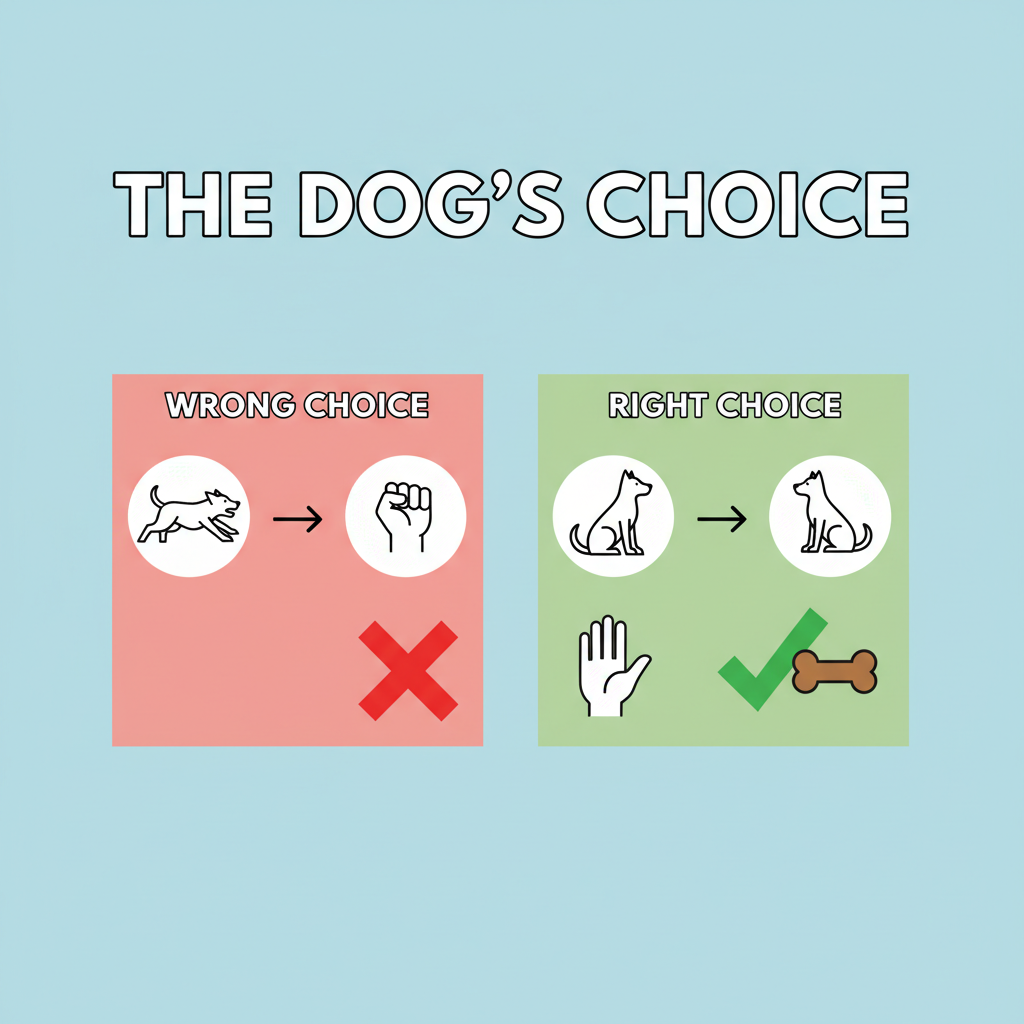
Before diving into the mechanics of the game, it’s crucial to understand the behavioral science that makes ‘It’s Yer Choice’ so effective. Unlike methods that rely on correction or verbal commands, IYC is rooted in operant conditioning, specifically using negative punishment (removing the reward) and positive reinforcement (adding a reward) to shape behavior. The dog learns a simple contingency: ‘lunging for the treat makes it disappear,’ while ‘backing away from the treat makes it available.’ This is profoundly different from a command-based ‘Leave It.’ With ‘Leave It,’ the dog refrains because you told them to. With IYC, the dog refrains because they have learned through their own actions that patience and calmness are what produce the desired outcome. This shifts the locus of control from the handler to the dog, fostering a deeper level of understanding and reliability.
Empowering Your Dog to Think
The beauty of this game lies in its simplicity and the powerful cognitive shift it creates. Your dog is not just a passive recipient of instructions but an active participant in a problem-solving exercise. The ‘problem’ is how to get the treat from your hand. Through trial and error in a controlled, low-stakes environment, they discover the solution is not force, but finesse. This process of discovery builds confidence and strengthens the neural pathways associated with self-regulation. It teaches the dog that good things come to those who wait, a lesson that has far-reaching implications for their overall behavior, from polite greetings to steady leash walking.
Expert Tip: The goal is for the dog to learn that their own choice to disengage is what earns the reward. Resist the urge to use verbal cues like ‘No’ or ‘Ah-ah.’ Let the closing of your hand be the only communication that their strategy was incorrect.
Setting Up for Success: What You’ll Need
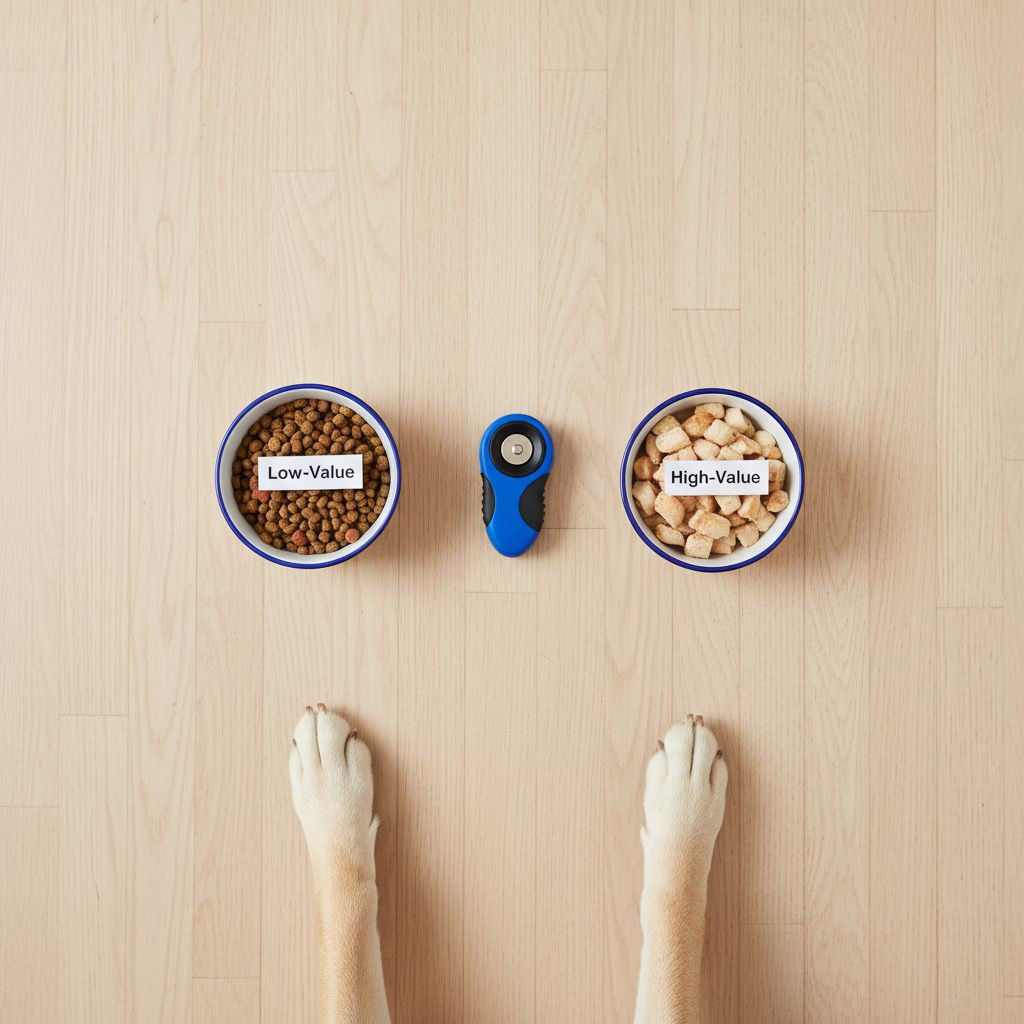
Proper preparation is key to a successful training session. The ‘It’s Yer Choice’ game requires very little equipment, but selecting the right tools and environment will significantly impact your dog’s ability to learn. Your primary goal is to create a calm, distraction-free space where your dog can focus entirely on the task at hand.
Essential Materials:
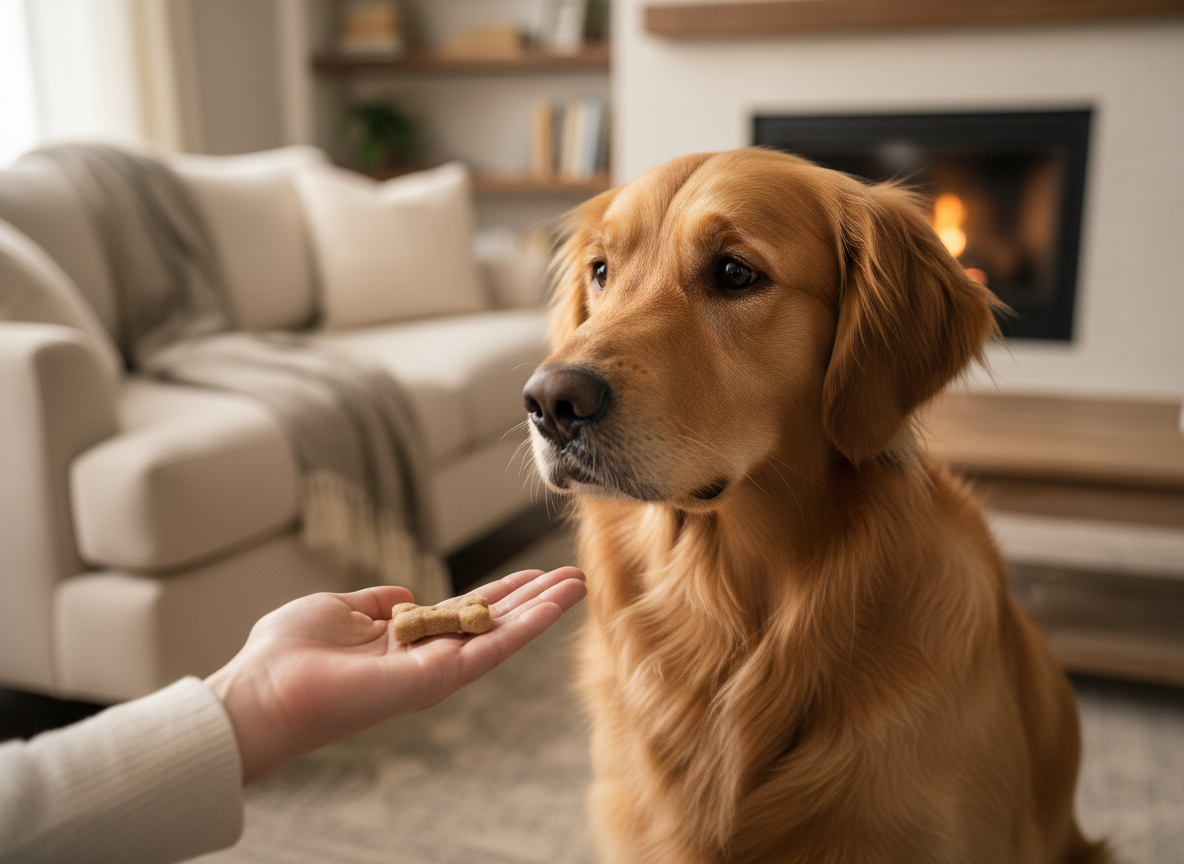
- Low-Value Treats: Start with something your dog likes but won’t go crazy for, such as their regular kibble. This keeps initial excitement levels manageable, making it easier for them to succeed.
- High-Value Treats: Have a separate stash of highly desirable treats, like small pieces of cooked chicken, cheese, or commercial training treats. These will be used later as you increase the difficulty.
- A Quiet Environment: Choose a room in your house with minimal distractions. Turn off the television, put other pets in another room, and ask family members not to interrupt.
- A Clicker (Optional): If you are a clicker-training enthusiast, a clicker can be used to mark the precise moment your dog makes the correct choice (i.e., backs away from your hand). However, a verbal marker like a calm ‘Yes’ works just as well.
Ensure your training sessions are short, especially in the beginning. One to two minutes is plenty. The goal is to end on a high note, leaving your dog feeling successful and eager for the next session, not frustrated or mentally exhausted.
Playing the Game: A Step-by-Step Guide
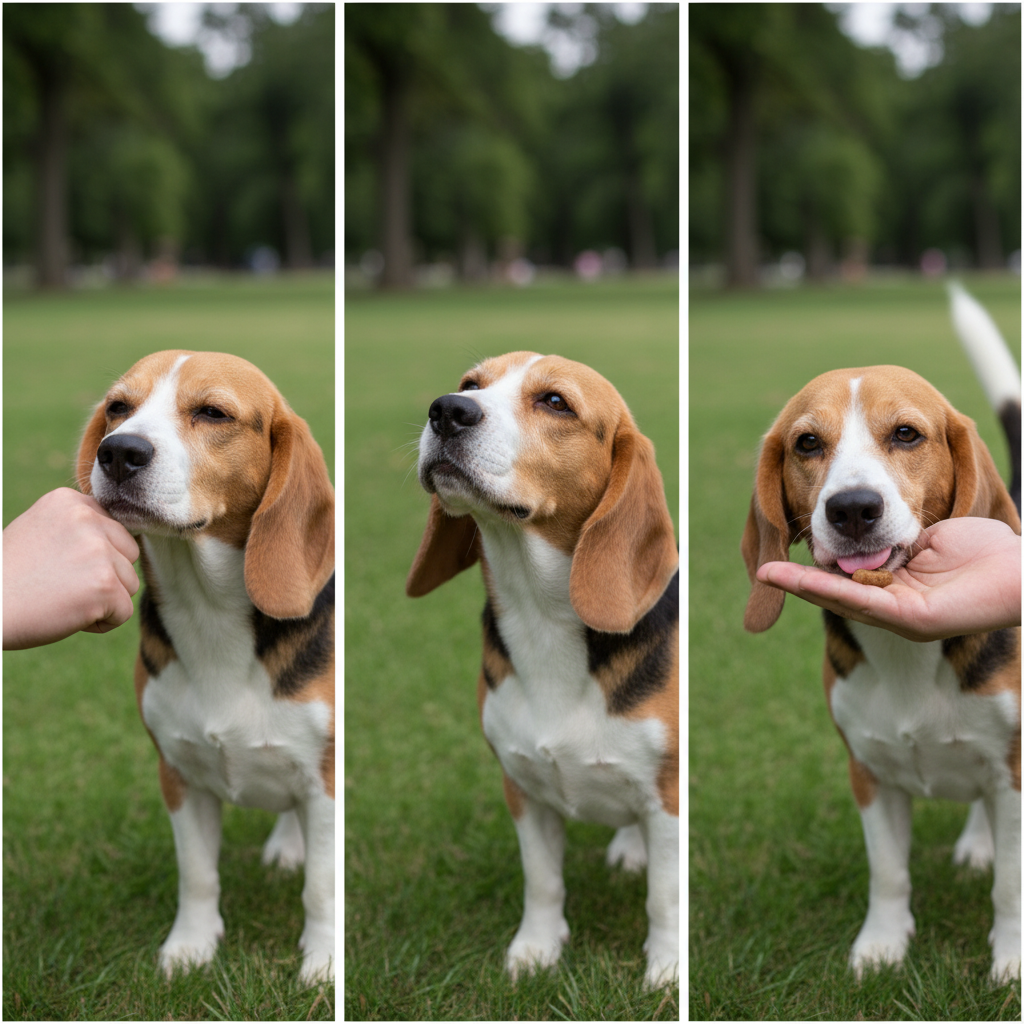
This is where the learning happens. Follow these steps precisely, paying close attention to your dog’s body language. Remember, timing is everything. Your goal is to mark and reward the moment your dog chooses to disengage.
- Load Your Hand: Take one low-value treat (kibble) and place it in your hand. Close your hand into a fist.
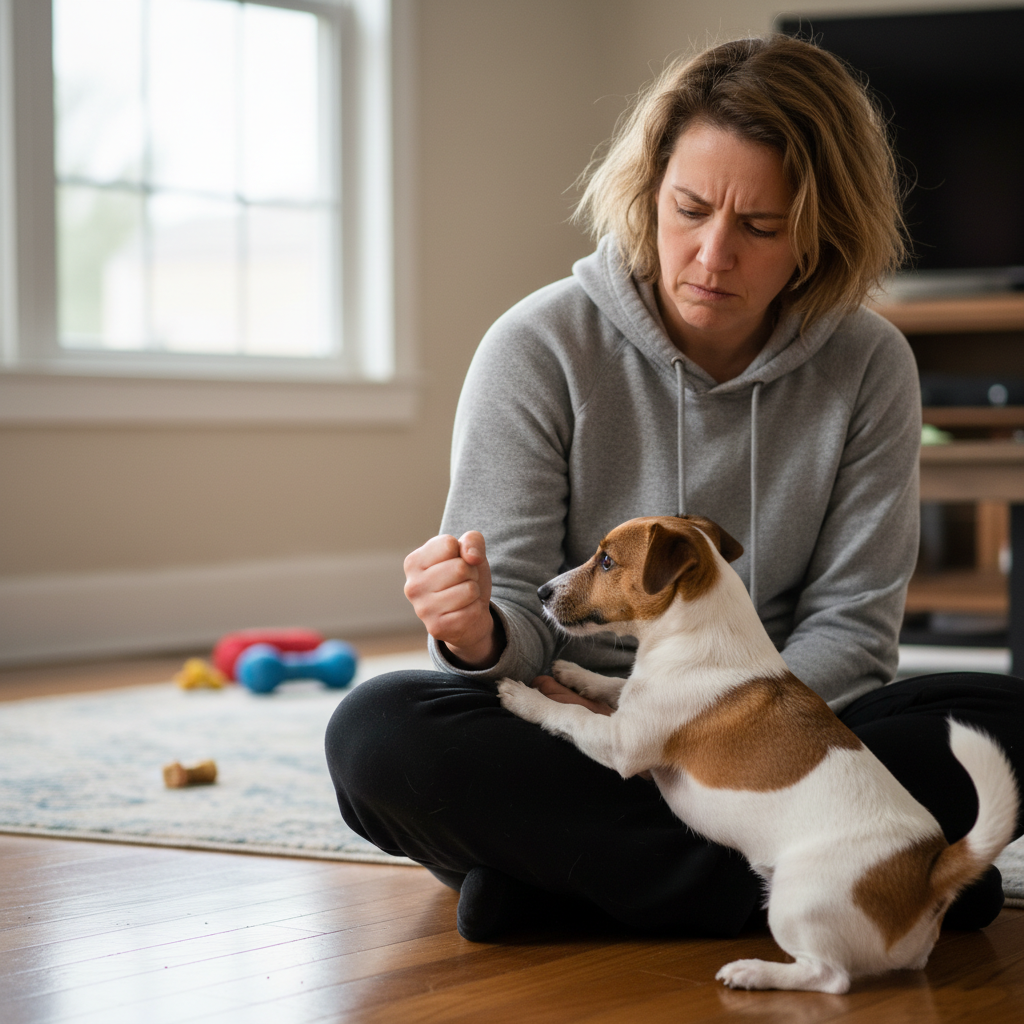
- Present Your Fist: Kneel or sit down to your dog’s level and present your closed fist, holding it about six inches from their nose.
- Wait for the Investigation: Your dog will likely begin to investigate your hand. They may sniff, lick, nudge, or even paw at it. Your job is to remain perfectly still and silent, keeping your fist closed. Do not pull your hand away. Let them try to solve the puzzle.
- Capture the Moment of Choice: The instant your dog stops interacting with your hand—even if they just pull their head back a fraction of an inch to think—is the moment you act. This is the ‘choice’ you are looking for.
- Mark and Reward: The second they disengage, mark the behavior with your verbal ‘Yes!’ or a click. Immediately open your fist and let them eat the treat from your palm.
- Reset and Repeat: Pick up another treat and repeat the process. Your dog will quickly learn that mugging your hand gets them nowhere, while backing off makes the hand open.
- Progress to an Open Hand: After several successful repetitions with a closed fist, try the next step. Place a treat in your open palm and present it to your dog. If they lunge for it, simply close your fist quickly and calmly. Wait for them to disengage again before re-opening your hand. This step directly teaches them that the treat is only available when they are calm.
Your initial sessions may only last for 5-10 repetitions. The goal is quality over quantity. End each session on a successful repetition, give your dog some praise, and finish with a fun activity.
Leveling Up: Increasing the Difficulty
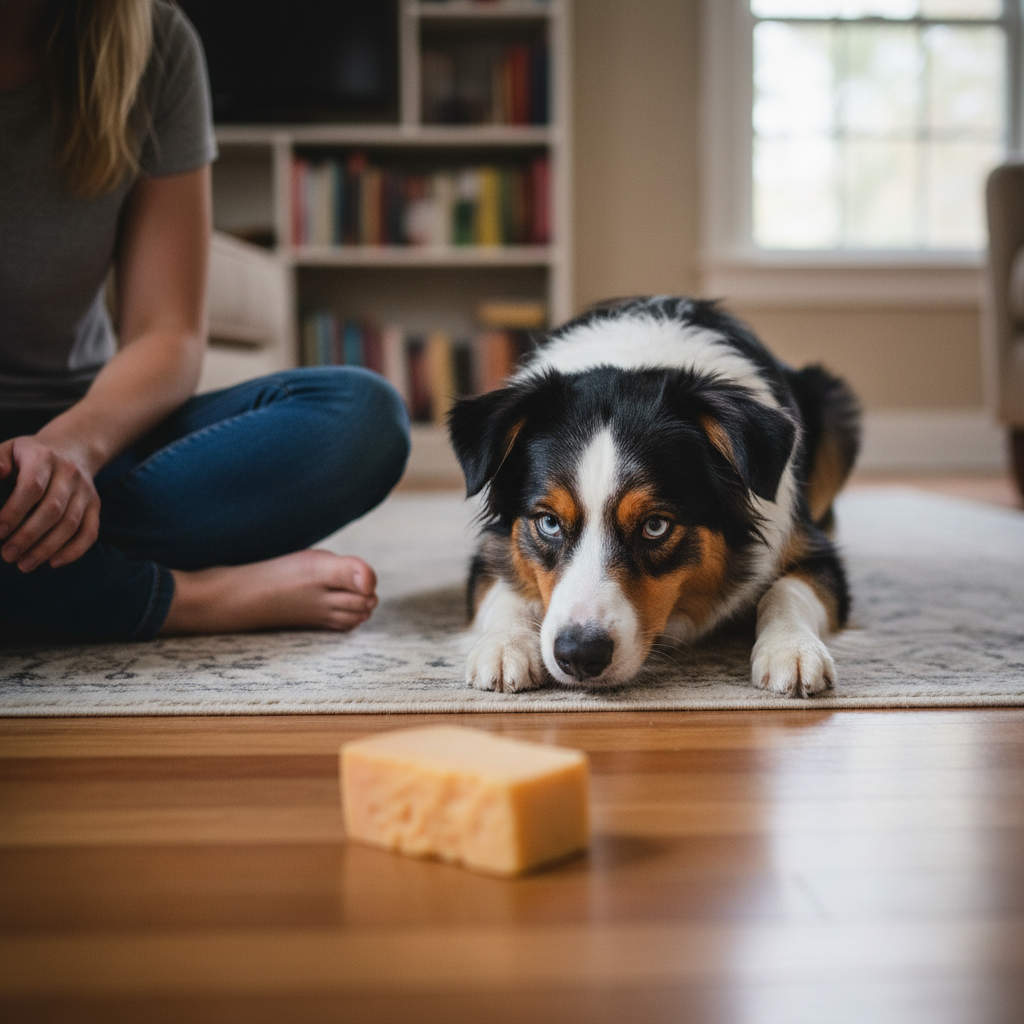
Once your dog has mastered the basic game with a low-value treat in your hand, it’s time to ‘raise the criteria’ to build the reliability of their self-control. It is essential to increase the difficulty in small, manageable increments to avoid causing frustration. Progress only when your dog is succeeding at the current level at least 80% of the time.
Methods for Advancing the Game:
- Increase Treat Value: The ultimate test of self-control is in the face of high temptation. Gradually switch from kibble to higher-value treats. If your dog starts failing, go back to a slightly less exciting treat and work your way up more slowly.
- Move the Treat to the Floor: Place a treat on the floor and cover it with your hand. Use the same principle: if the dog nudges or paws your hand, keep it there. The moment they back away, say ‘Yes!’ and lift your hand to let them have the treat.
- Remove the Hand Cover: The next stage is to place the treat on the floor uncovered. If your dog moves toward it, quickly cover it with your hand. This teaches them the same rule applies even when the treat is seemingly ‘free.’ Your goal is to get them to look at the treat, then look back at you, as if asking for permission.
- Add Duration: Once they can leave an uncovered treat on the floor, start building duration. After they look at you, wait one second before saying ‘Yes!’ and releasing them to get it. Gradually increase this wait time.
- Introduce Movement and Distractions: Practice the game while you are standing up. Try placing the treat on the floor and taking one step back. Add mild distractions in the environment, like another person walking through the room.
Each of these steps solidifies the concept of impulse control, generalizing the skill from your hand to other contexts. This is how a simple game translates into real-world manners.
Troubleshooting Common Challenges
While the ‘It’s Yer Choice’ game is straightforward, trainers can sometimes run into roadblocks. Understanding how to navigate these challenges is key to keeping the training positive and productive. Most issues arise from progressing too quickly or from the dog’s frustration levels getting too high. Below are common problems and their professional solutions.
| Common Problem | Underlying Cause & Solution |
|---|---|
| My dog keeps biting or nibbling my hand. | This is often a sign of over-arousal or frustration. Solution: Use much lower-value treats (boring kibble). Ensure sessions are extremely short (30-60 seconds). You can also wear a thin glove initially to protect your hand, but focus on lowering the excitement. |
| My dog gives up and walks away. | The task is likely too difficult, and the dog has become frustrated. Solution: Go back to an easier step where they were successful. If you were trying an open hand, go back to the closed fist. Reward even the slightest hesitation or backward head movement. End the session on a very easy win to rebuild confidence. |
| My dog is great at the game but still steals food off the counter. | This is a failure to generalize the skill. The dog has learned the ‘game’ but doesn’t understand the ‘concept’ applies everywhere. Solution: You must practice variations of the game in different contexts. Play IYC on a chair, then on the counter (with low-value items), and in different rooms. Actively manage the environment to prevent counter-surfing while you are building this skill. |
| My dog waits but then snatches the treat aggressively from my open hand. | The self-control ends the moment the hand opens. Solution: Work on the release. If the dog lunges as you open your hand, close it again. They only get the treat for a calm, gentle approach to the open hand. You can also practice hand-feeding meals to promote a softer mouth. |
Conclusion
The ‘It’s Yer Choice’ game is far more than a simple party trick; it is a profound communication tool that reshapes your dog’s decision-making process. By consistently investing just a few minutes each day, you are not merely teaching your dog to ‘leave it.’ You are providing them with the cognitive tools to manage their own impulses, a skill that will permeate every aspect of their life. From waiting patiently at the door to ignoring distractions on walks, the foundational self-control learned through IYC builds a calmer, more thoughtful, and more reliable companion. This game fosters a partnership based on mutual understanding and trust, strengthening the bond you share. Be patient, stay consistent, and celebrate the small successes. You are giving your dog the invaluable gift of self-control, leading to a more harmonious life together.