
The Indestructible Chew List: Safe Options for Extreme Power Chewers
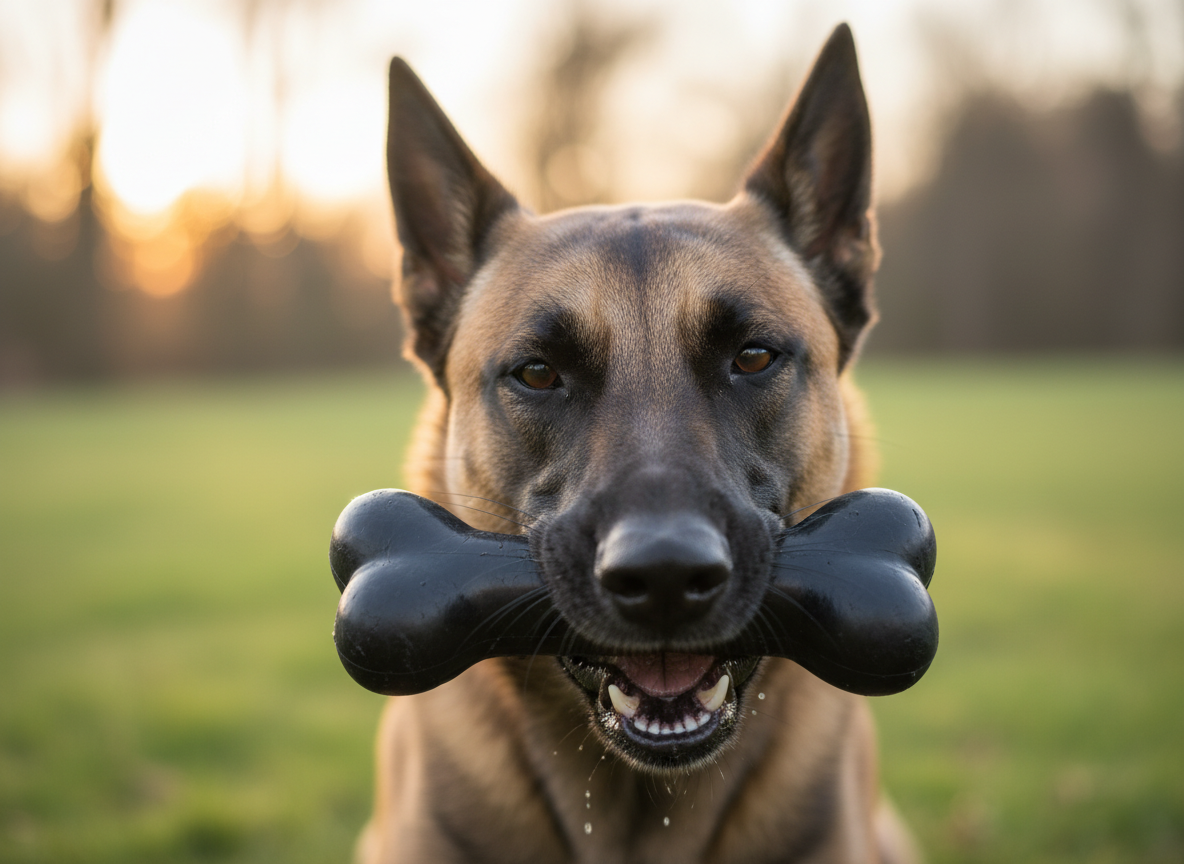
Welcoming a dog with a powerful jaw into your home brings immense joy, but it also presents a unique and often expensive challenge: the relentless destruction of nearly every toy in their path. For owners of these “super chewers,” the cycle of purchasing a new toy only to find it in pieces hours later is a familiar frustration. This isn’t just a blow to the wallet; it’s a significant safety concern. Swallowed fragments can lead to catastrophic internal blockages, while overly hard materials can result in painful and costly tooth fractures.
Understanding the deep-seated instinct behind this behavior is the first step. Chewing is not a malicious act; it’s a fundamental canine need. It serves to clean teeth, relieve anxiety, combat boredom, and explore the world. For a power chewer, this instinct is simply amplified. The goal, therefore, is not to stop the chewing but to channel it safely and productively. This comprehensive guide will serve as your ultimate resource, moving beyond marketing claims of “indestructibility” to provide a veterinarian-approved framework for selecting toys that are genuinely safe, durable, and satisfying for your extreme power chewer.
The Hidden Dangers: Why the Wrong Chew Toy is a Health Hazard

Before we explore the best options, it is critical to understand the severe risks associated with inadequate or inappropriate chew toys. The emergency veterinary clinic is unfortunately familiar with the consequences of a toy that failed under pressure. Recognizing these hazards will empower you to make informed decisions that prioritize your dog’s well-being above all else.
Common Risks Associated with Unsafe Chews
- Intestinal Blockages: When a dog breaks off and swallows pieces of a toy, these fragments can become lodged in the gastrointestinal tract. This is a life-threatening emergency often requiring complex and expensive surgery to resolve. Soft plastics, fabrics, and brittle materials are common culprits.
- Dental Fractures: Many well-intentioned owners provide extremely hard items like antlers, hooves, or cooked bones, believing they are durable natural options. However, these materials are often harder than tooth enamel. The ‘thumbnail test’ is a good general guideline: if you cannot make an indentation in the toy with your thumbnail, it may be too hard and pose a risk of causing slab fractures or broken teeth.
- Choking and Oral Injury: Toys that are too small for the dog’s mouth can be accidentally swallowed whole, obstructing the airway. Toys with sharp or brittle components can splinter, causing lacerations to the gums, tongue, and esophagus.
- Material Toxicity: Cheaply manufactured plastic or vinyl toys may contain harmful chemicals like BPA, phthalates, or heavy metals. As a dog chews, these toxins can leach out and be ingested, posing long-term health risks.
Expert Tip: Always supervise your dog with any new chew toy. Observe their chewing style—are they a gnawer, a ripper, or a full-force chomper? Understanding this will help you select the most appropriate type of toy and know when to intervene. No toy is 100% indestructible; supervision is the most crucial safety layer.
Decoding Durability: A Guide to Power-Chewer-Proof Materials

The term “indestructible” is a marketing buzzword, not a scientific guarantee. Durability is a function of material science. Understanding the properties of different materials is the key to selecting a toy that can withstand the formidable pressure exerted by a power chewer’s jaws. Let’s break down the most common materials found in top-tier chew toys.
Each material offers a different combination of hardness, flexibility, and texture. The ideal choice often depends on your specific dog’s chewing style and preferences. Below is a comparison of the leading materials engineered for aggressive chewers.
| Material Type | Key Characteristics | Best For | Potential Concerns |
|---|---|---|---|
| Natural Rubber Compounds | Extremely durable yet flexible, offering a satisfying ‘give’ that is gentle on teeth. Often non-toxic and can be infused with scents. | Dogs that enjoy a slight bounce and flex in their toys. Ideal for prolonged gnawing sessions. | Lower-quality rubber can be torn. Always choose reputable brands known for their proprietary, high-grade formulas. |
| Engineered Nylon | A very hard, durable synthetic polymer designed for extreme longevity. It flakes into tiny, rice-sized pieces that are generally safe to pass if ingested in small amounts. | Intense gnawers who can destroy other materials quickly. Great for dental cleaning as the rough surface scrapes away plaque. | Can be too hard for some dogs, posing a minor risk to teeth. Must be discarded when ends are worn down. |
| Thermoplastic Elastomer (TPE) | A blend of plastic and rubber, offering a unique combination of rubber-like softness and plastic-like durability. Often used in floating or uniquely shaped toys. | Chewers who need something tougher than rubber but softer than nylon. Good for water-loving dogs. | Durability can vary significantly between brands. Inspect regularly for signs of breaking down. |
| Solid Wood (Specially Treated) | Coffee wood or Java wood is a safe, natural option that is very dense and doesn’t splinter like typical wood. It flakes off in soft, digestible fibers. | Dogs who are drawn to sticks and wood. A much safer alternative to outdoor branches. | Not as long-lasting as rubber or nylon for the most extreme chewers. Must be sourced from pet-safe wood types. |
The Indestructible List: Top-Tier Chew Toys for Extreme Chewers
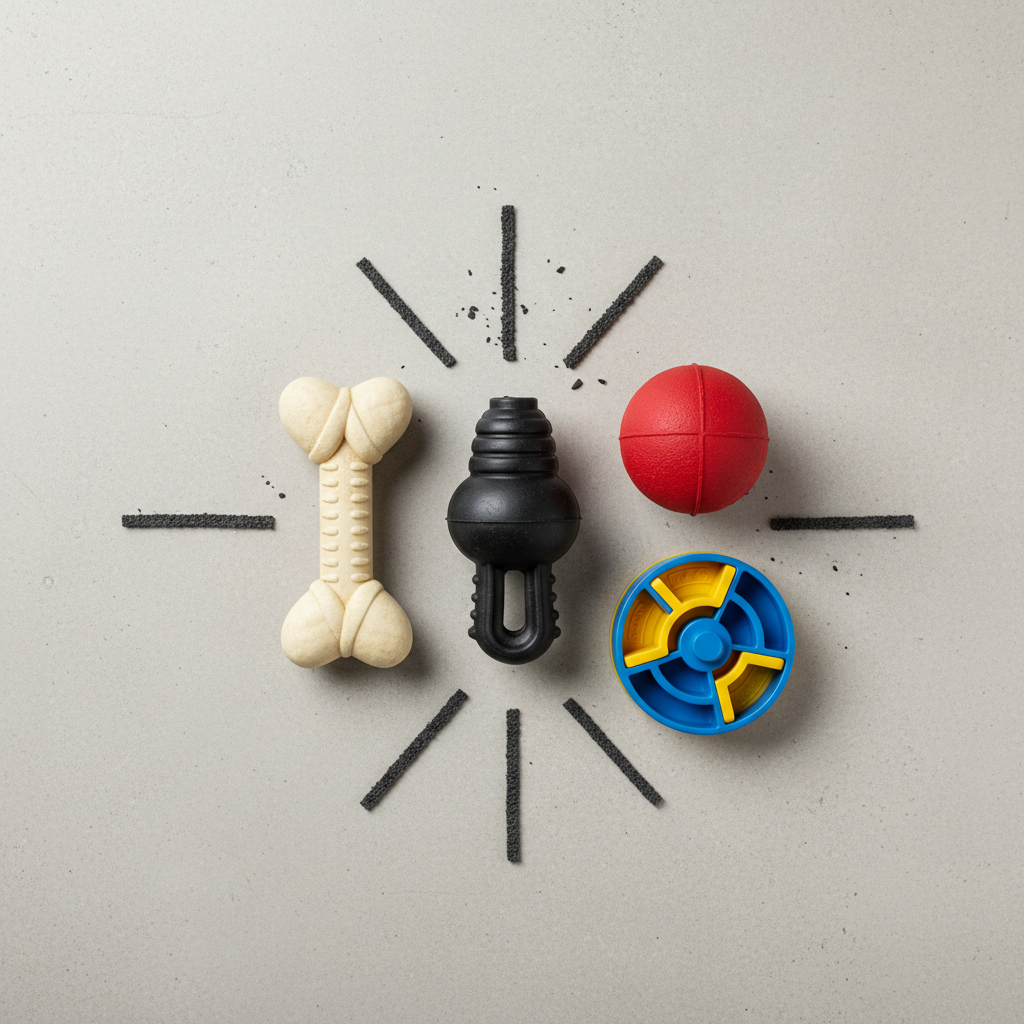
Armed with knowledge of safe materials, we can now identify the best-in-class chew toys. This list is categorized by type to help you find the perfect match for your dog’s preferences and enrichment needs. Remember to always choose a size appropriate for your dog—when in doubt, size up.
Category 1: Solid Rubber & Composite Toys
These are the gold standard for most power chewers. Their weight, durability, and satisfying texture provide a safe outlet for intense chewing. Look for products made from a single mold of solid, natural rubber to avoid weak points.
- Classic Kong-Style Toys: The iconic snowman shape is designed for durability. Its hollow center is perfect for stuffing with treats, adding a layer of mental stimulation. Always opt for the ‘extreme’ or black-colored versions, which are made from the strongest rubber formula.
- Solid Rubber Balls: A far cry from standard tennis balls (which are abrasive and easily destroyed), solid rubber balls are heavy, bouncy, and nearly impossible to puncture. They are excellent for both chewing and intense games of fetch.
- Durable Rings and Discs: Ring shapes allow for a good grip and are often used in games of tug-of-war. Look for thick, solid rubber construction. Durable discs made from flexible material are safer for teeth and gums than hard plastic frisbees.
Category 2: Engineered Nylon & Synthetic Bones
For the dog that can demolish anything, engineered nylon offers unmatched longevity. These toys are designed to be slowly scraped and gnawed away, satisfying a dog’s need to grind and work at something over time.
- Ergonomic Chew Bones: Many nylon bones feature curved shapes or nubs that are easy for dogs to hold with their paws. These often come in appealing flavors like bacon or chicken, which are infused into the material and last the lifetime of the toy.
- Textured Dental Chews: These nylon toys are covered in various textures, ridges, and bristles designed to help clean teeth and massage gums as the dog chews. They combine dental health benefits with extreme durability.
Category 3: Interactive & Treat-Dispensing Power Toys
Enrichment is a key component of a dog’s well-being. Interactive toys challenge a dog’s mind while providing a durable chewing outlet. They force a dog to slow down and problem-solve, making them an excellent tool for preventing boredom-related destructive behavior.
- Durable Food Puzzles: Made from hard, pet-safe plastic or rubber, these toys require dogs to roll, nudge, or manipulate the toy to release kibble or treats. They engage the brain and extend mealtime.
- Heavy-Duty Treat Dispensers: Similar to the Kong-style toy, these are designed from ultra-durable materials but come in various shapes like cubes, balls, or ‘wobblers’. They create a rewarding challenge that satisfies both the mind and the jaw.
The Veto List: Common Items to Avoid for Power Chewers
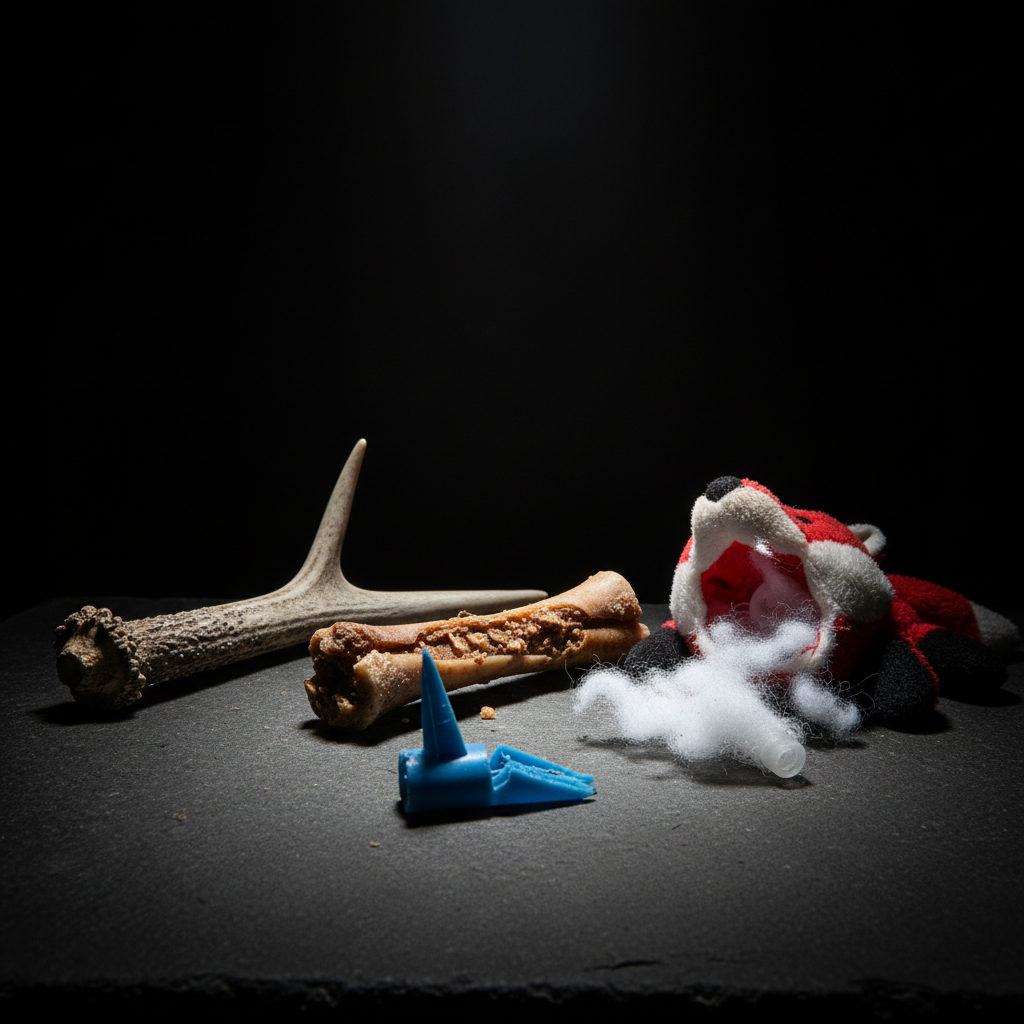
Just as important as knowing what to buy is knowing what to avoid. Many products marketed to dogs are unsuitable and dangerous for aggressive chewers. Steer clear of these items to prevent emergencies and protect your dog’s health.
The following table outlines popular but risky items and the specific dangers they pose to a dog with powerful jaws.
| Item to Avoid | Primary Risks |
|---|---|
| Cooked Bones | Become brittle during the cooking process. They can easily splinter into sharp shards, causing choking or severe internal perforation. |
| Rawhide | Can break off in large, gummy pieces that, when swallowed, can swell and cause choking or intestinal blockage. Chemical processing is also a concern. |
| Antlers & Hooves | Extremely hard and unyielding. They are a leading cause of painful tooth fractures, often requiring root canals or extractions. |
| Ice Cubes | Similar to antlers, their hardness and inflexibility can easily lead to cracked or broken teeth. |
| Standard Plush or Vinyl Toys | Easily shredded by a power chewer. The stuffing (squeakers, polyester fill) can be ingested, leading to a dangerous intestinal blockage. |
| Tennis Balls | The fuzzy exterior is highly abrasive and can wear down tooth enamel over time (blunting). They can also be split and the rubber pieces swallowed. |
Best Practices for Safe Chewing Supervision

Providing the right toy is only half the battle. Active supervision and regular maintenance are non-negotiable components of a safe chewing strategy. A power chewer can damage even the most durable toy over time, creating new hazards.
Your Role as the Safety Supervisor
- Inspect Toys Daily: Before and after each chew session, thoroughly inspect the toy. Look for cracks, deep gouges, missing pieces, or parts that have been worn down to a size that could be swallowed.
- Know When to Discard: Do not be sentimental about a beloved toy. If it shows signs of significant damage, throw it away immediately. A good rule of thumb for nylon bones is to discard them when the knuckle ends are worn down or when the toy becomes small enough to be swallowed. For rubber toys, discard them if pieces are tearing off.
- Teach a ‘Drop It’ Command: A reliable ‘drop it’ or ‘trade’ command is an invaluable safety tool. It allows you to quickly remove a compromised toy or a non-toy item your dog has picked up. Practice this regularly using high-value treats as a reward for trading.
- Rotate Toys to Maintain Interest: Keep a rotation of 3-5 high-quality chew toys. By rotating them every couple of days, you keep the toys novel and exciting, which can prevent boredom and the subsequent desire to seek out inappropriate items to chew on, like furniture or shoes.
- Understand Your Dog’s Limits: Limit intense chew sessions to 20-30 minutes at a time. This can help prevent obsessive chewing behavior and reduce the strain on their jaw and teeth. Always ensure fresh water is available.
Conclusion
For the dedicated owner of a power-chewing dog, the quest for a truly durable toy is a journey of safety, not just of saving money. By understanding the profound behavioral need that drives your dog to chew, you can transform a potentially destructive habit into a positive and enriching activity. The key lies in rejecting brittle, hazardous materials and embracing the scientifically engineered durability of high-grade natural rubber and premium nylon.
Remember that supervision is your most powerful tool. A vigilant eye and daily inspections will always be the ultimate guarantee of safety. By investing in the appropriate, size-specific toys from the approved list and avoiding the common pitfalls on the veto list, you are not just buying a product; you are investing in your dog’s health, happiness, and well-being. You are providing a safe outlet for their natural instincts, ensuring a peaceful home and a thriving, contented canine companion.