The “Grandma’s Rule” Hack That Makes Stubborn Dogs Want To Obey
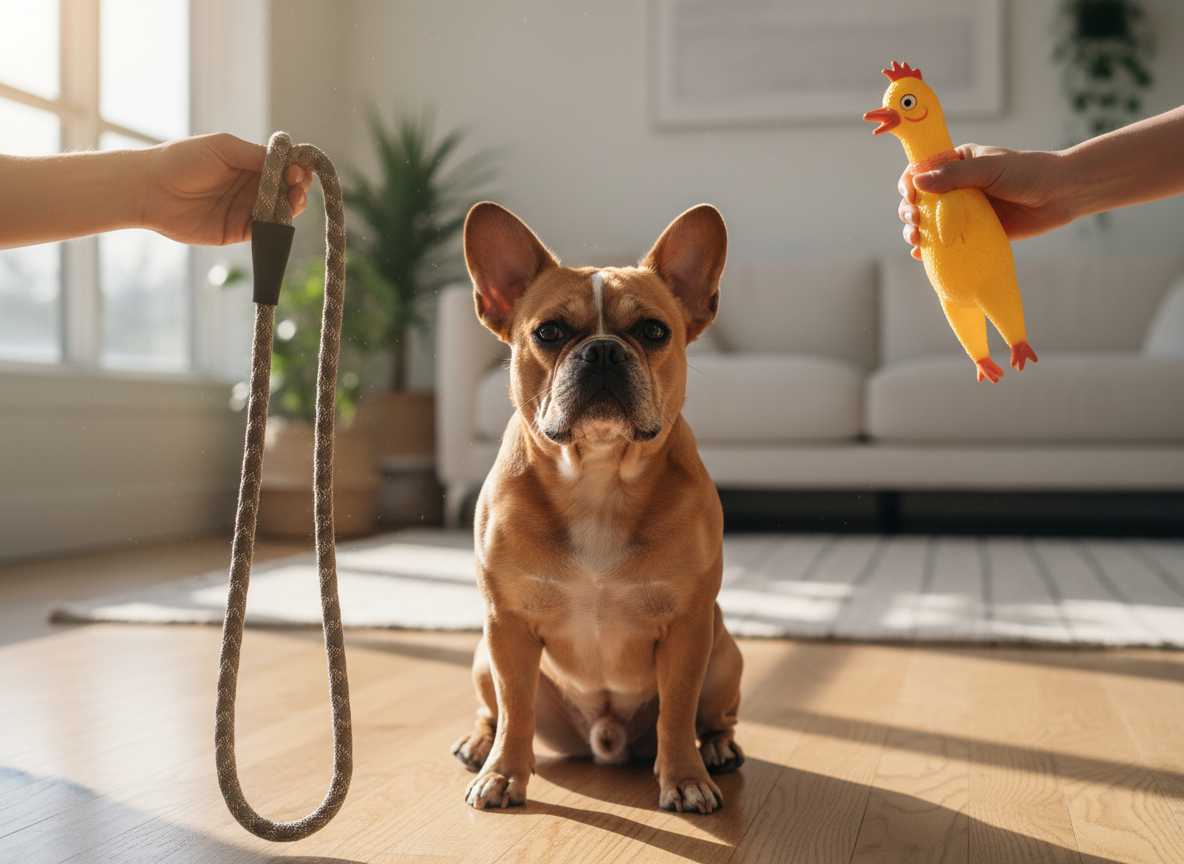
Living with a dog often described as ‘stubborn’ can be a uniquely challenging experience. You issue a command you know they understand, only to be met with a blank stare, a deliberate turn of the head, or an outright refusal. It’s a frustrating cycle that can strain the bond between you and your canine companion, leaving you feeling more like a warden than a partner. But what if the issue isn’t stubbornness at all? What if it’s simply a matter of mismatched motivation? Enter one of the most powerful, yet elegantly simple, concepts in all of behavioral science: The Premack Principle, more colloquially known as ‘Grandma’s Rule.’
You’re already intimately familiar with this rule from childhood: ‘First, you eat your vegetables, then you can have dessert.’ It’s a straightforward contract that governs much of human behavior, and it’s a game-changer for dog training. This principle moves beyond simple treat-luring and taps into what your dog truly desires in any given moment, transforming everyday activities into high-value rewards. This guide will provide a comprehensive, step-by-step approach to implementing Grandma’s Rule, turning frustrating standoffs into opportunities for cooperation and building a deeper, more responsive relationship with your dog.
What Exactly Is ‘Grandma’s Rule’ in Dog Training?
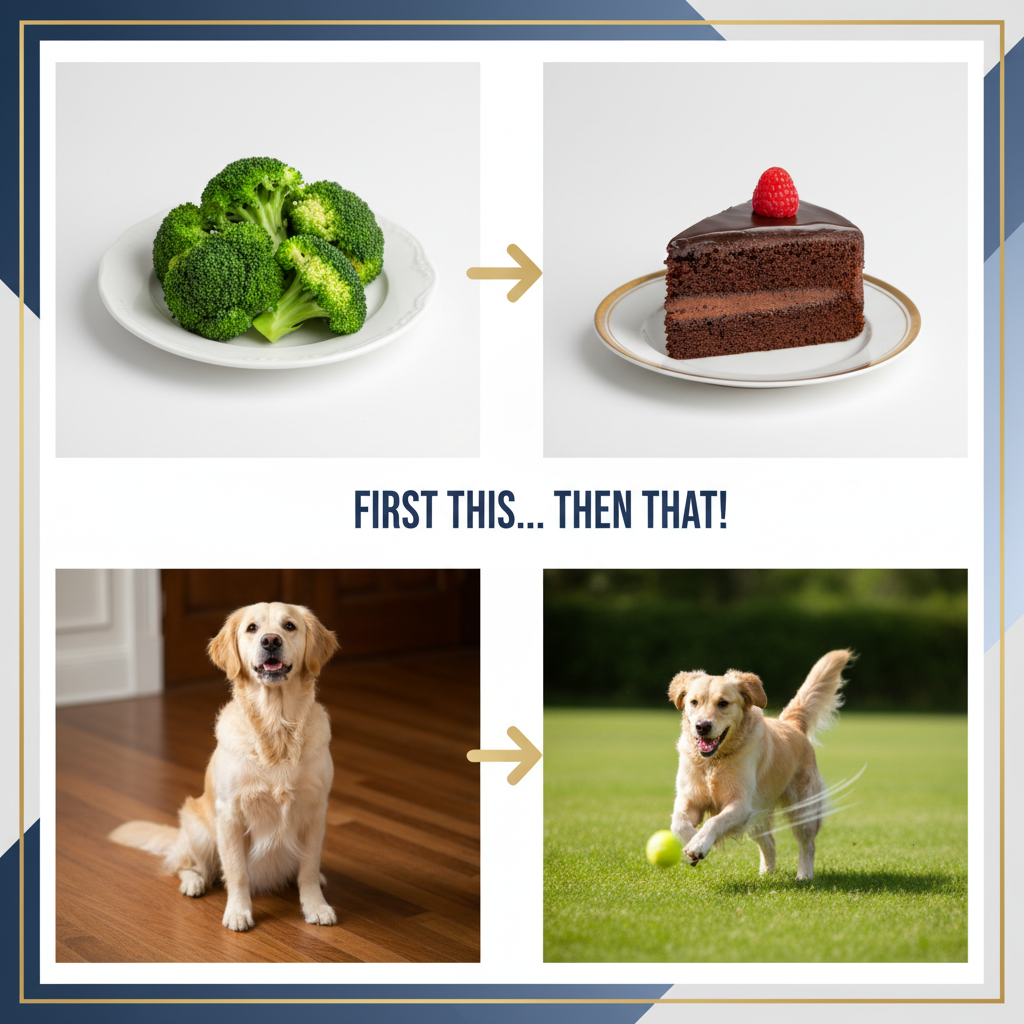
At its core, the Premack Principle is a theory of reinforcement which states that a more probable behavior can be used to reinforce a less probable behavior. In simpler terms, you can use an activity your dog loves and is highly likely to perform on their own (like sniffing a tree or chasing a ball) as a reward for performing a behavior they are less enthusiastic about (like sitting patiently or walking on a loose leash). The ‘dessert’ is the fun activity the dog wants to do, and the ‘vegetables’ are the commands or behaviors you want them to perform.
This is a fundamental shift from traditional training that relies solely on external rewards like food. While treats are effective, their value can fluctuate. A dog who has just eaten may not be motivated by a biscuit, but they might be incredibly motivated by the opportunity to greet an approaching dog. ‘Stubborn’ dogs, in particular, are often driven by powerful environmental motivators that far outweigh the appeal of a standard treat. Grandma’s Rule empowers you to identify and leverage these powerful, context-specific desires.
Key Differences from Bribery
It is crucial to distinguish this principle from bribery. A bribe is offered before the fact to coax a behavior (‘Look at this toy! Will you please sit?’). This can create a dog who only complies when a reward is visible. Grandma’s Rule is about reinforcement—the reward comes after the desired behavior is completed. The sequence is non-negotiable: first the work, then the reward. This builds reliability and teaches the dog that cooperation is the key that unlocks the things they want most.
By using the environment and your dog’s own motivations as the reward, you become the gateway to everything fun, dramatically increasing your value in your dog’s eyes.
A Step-by-Step Guide to Applying the Premack Principle

Implementing Grandma’s Rule requires you to become a keen observer of your dog’s behavior and desires. It’s a systematic process that, once mastered, becomes second nature. Follow these steps to integrate this powerful tool into your daily interactions.
Step 1: Identify Your Dog’s High-Value ‘Desserts’
Your first task is to create a mental inventory of your dog’s high-probability behaviors. What does your dog consistently try to do? Pay close attention in different environments—the list will change depending on whether you’re at home, on a walk, or at the park. These are your most powerful, context-dependent reinforcers.
- Sniffing a particular spot on the ground
- Greeting another person or dog
- Jumping on the couch for a cuddle
- Being let out the back door
- Chasing a squirrel or bird
- Playing tug-of-war with a specific toy
- Getting their leash or harness put on for a walk
Step 2: Define the ‘Vegetables’ (The Desired Behaviors)
Next, clearly define the low-probability behaviors you want to see more of. These are the actions your dog is less inclined to perform voluntarily, especially when distracted. Be specific and start with simple, achievable goals.
- Making eye contact with you for three seconds
- Sitting patiently at the front door instead of bolting
- Walking on a loose leash for five paces
- Coming when called away from a distraction
- Dropping a toy on command
Step 3: Create the ‘First/Then’ Contingency
This is where the magic happens. You will now link the ‘vegetable’ to the ‘dessert.’ The structure is always the same: you ask for the less-desired behavior first, and the moment your dog complies, you grant them access to the high-value reward.
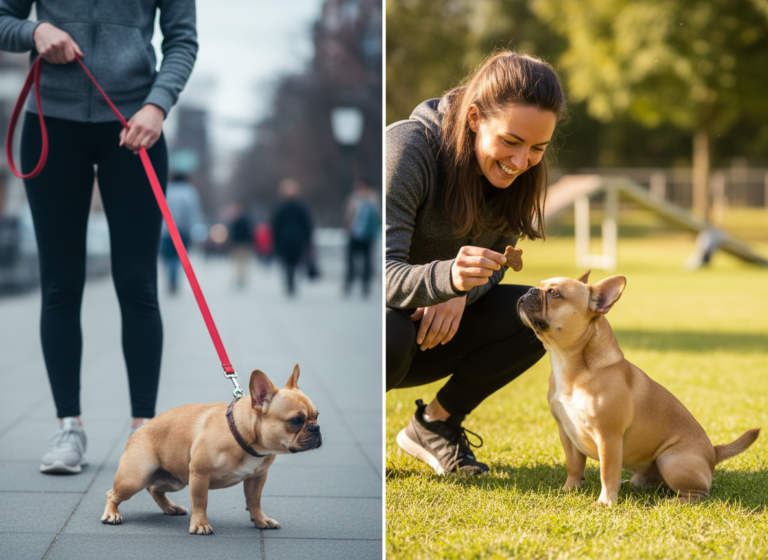
For example, your dog is pulling frantically on the leash, desperate to sniff a fire hydrant. Instead of pulling back, you stop walking. You wait for a moment of calm—perhaps a slackening of the leash or a glance back at you (the ‘vegetable’). The instant you get it, you say ‘Okay, go sniff!’ and walk with them to the hydrant (the ‘dessert’). The dog learns that a moment of polite leash behavior is the key to getting what they want.
Step 4: Practice, Proof, and Perfect
Begin practicing in a low-distraction environment, like your living room or backyard, to build a strong foundation. As your dog becomes more successful, gradually introduce more distractions. Consistency and timing are paramount. The reward must immediately follow the desired behavior for your dog to make the connection. If there is a delay, the learning is lost.
Putting Grandma’s Rule into Practice: Real-World Scenarios
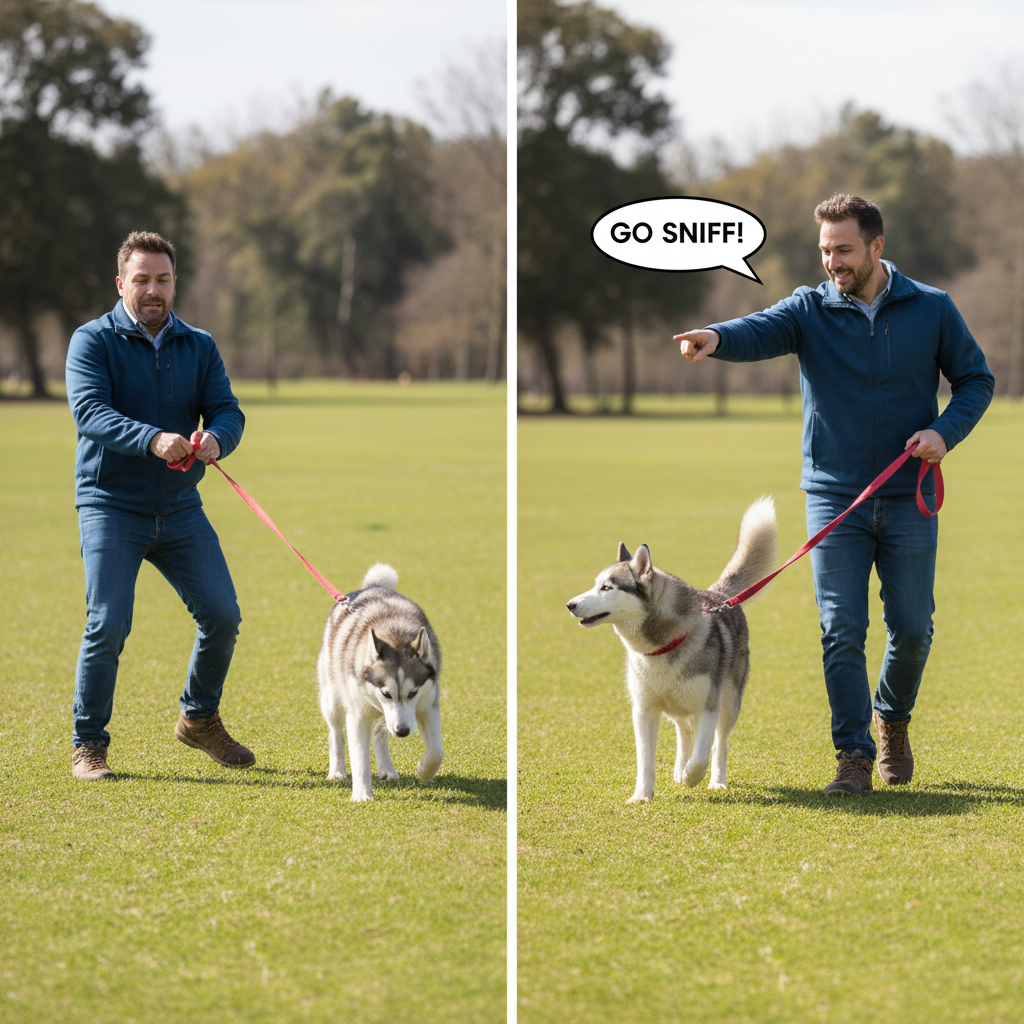
The true power of the Premack Principle is its versatility. It can be applied to countless everyday situations where you might otherwise find yourself in a battle of wills with your dog. By reframing these challenges as training opportunities, you can systematically improve your dog’s behavior. The key is to anticipate what your dog wants and ask for a simple, desirable behavior as the ‘price of admission.’ Below are common scenarios and how to apply Grandma’s Rule effectively.
| The Challenge (Stubborn Behavior) | The ‘Vegetables’ (Desired Action) | The ‘Dessert’ (High-Value Reward) |
|---|---|---|
| Dog frantically pulls on the leash to greet another dog. | Ask the dog to ‘Sit’ or give you a moment of ‘Loose Leash Walking.’ | Release the dog with a cue like ‘Go Say Hi!’ to politely greet the other dog. |
| Dog refuses to come inside from the backyard. | Call the dog. When they take a few steps toward you, mark with ‘Yes!’ | Toss a high-value treat or their favorite toy in the direction of the house, rewarding movement toward your goal. |
| Dog jumps on guests as they walk in the door. | Require the dog to hold a ‘Sit’ or ‘Down’ position while the guest enters. | The guest is instructed to give the calm dog attention and petting. (The attention is the reward). |
| Dog won’t ‘Drop It’ during a game of fetch. | Cue ‘Drop It.’ The moment the dog releases the toy, mark the behavior. | Immediately pick up the toy and throw it again for another exciting round of fetch. The game itself is the reward. |
| Dog begs at the dinner table. | Instruct the dog to go to their ‘Place’ or lie down on a mat. | After the meal is over, release the dog and reward them with a special, dog-appropriate chew or treat on their mat. |
Troubleshooting: Avoiding Common Pitfalls

While Grandma’s Rule is a powerful concept, improper application can hinder progress or be ineffective. Understanding the common mistakes is key to successfully implementing the strategy and avoiding frustration for both you and your dog.
Mistake 1: Bribing Instead of Reinforcing
As mentioned, this is the most common error. A bribe is dangled to get compliance (‘If I shake the treat bag, will you come?’). Reinforcement happens after the behavior. Always ask for the behavior first. The dog should not know what the specific reward is until after they have performed the action. They simply learn that cooperation with you leads to good things.
Mistake 2: Poor Timing and Delayed Reinforcement
The canine brain makes associations in seconds. If you ask for a ‘Sit’ and your dog complies, but you fumble for the door handle for five seconds before opening it, the connection between the ‘Sit’ and the reward is weakened. Be prepared to deliver the reward the instant the desired behavior occurs. A verbal marker like ‘Yes!’ or ‘Good!’ can be used to pinpoint the exact moment of success and bridge the gap until the reward is delivered.
Mistake 3: Being Inconsistent
If sometimes pulling on the leash gets your dog to the sniffing spot, and other times they are required to walk politely, you are creating a ‘slot machine’ effect. The dog will keep pulling because it occasionally pays off. Everyone in the household must apply the same rules consistently for the dog to learn the new contingencies reliably.
Mistake 4: Misreading Your Dog’s Desires
The effectiveness of the Premack Principle hinges entirely on the reward being genuinely desirable to the dog in that moment. Offering a game of tug when your dog is fixated on a squirrel is unlikely to work. You must become a student of your dog’s body language to accurately assess what they want. If your chosen ‘dessert’ isn’t working, it’s not because your dog is being stubborn; it’s because you’ve offered them ice cream when they really wanted pizza.
Expert Tip: Think of yourself as the leader of the expedition, not a drill sergeant. You are guiding your dog through the world, teaching them how to politely ask for the things they want by offering polite behaviors in return. This collaborative mindset is the foundation of the Premack Principle.
Conclusion
The concept of the ‘stubborn dog’ often dissolves when we learn to see the world through their eyes and understand their unique motivations. Grandma’s Rule, or the Premack Principle, is more than a training ‘hack’—it is a profound shift in communication and partnership. It teaches us to stop battling against our dogs’ desires and instead use them as the very currency for cooperation. By consistently demonstrating that polite behavior is the key that unlocks access to sniffing, playing, and exploring, you transform yourself from a source of commands into the source of all opportunity.
This approach builds a dog who doesn’t just obey, but one who eagerly offers desired behaviors because they understand it’s part of a collaborative game. They learn that you are not an obstacle to their fun, but the facilitator of it. Embrace the role of the observant, consistent, and benevolent leader. Start identifying those ‘vegetables’ and ‘desserts’ in your daily life, and you will unlock a level of willing compliance and mutual respect you may have thought was impossible to achieve.