The Emergency Whistle Trick That Will Save Your Dog’s Life
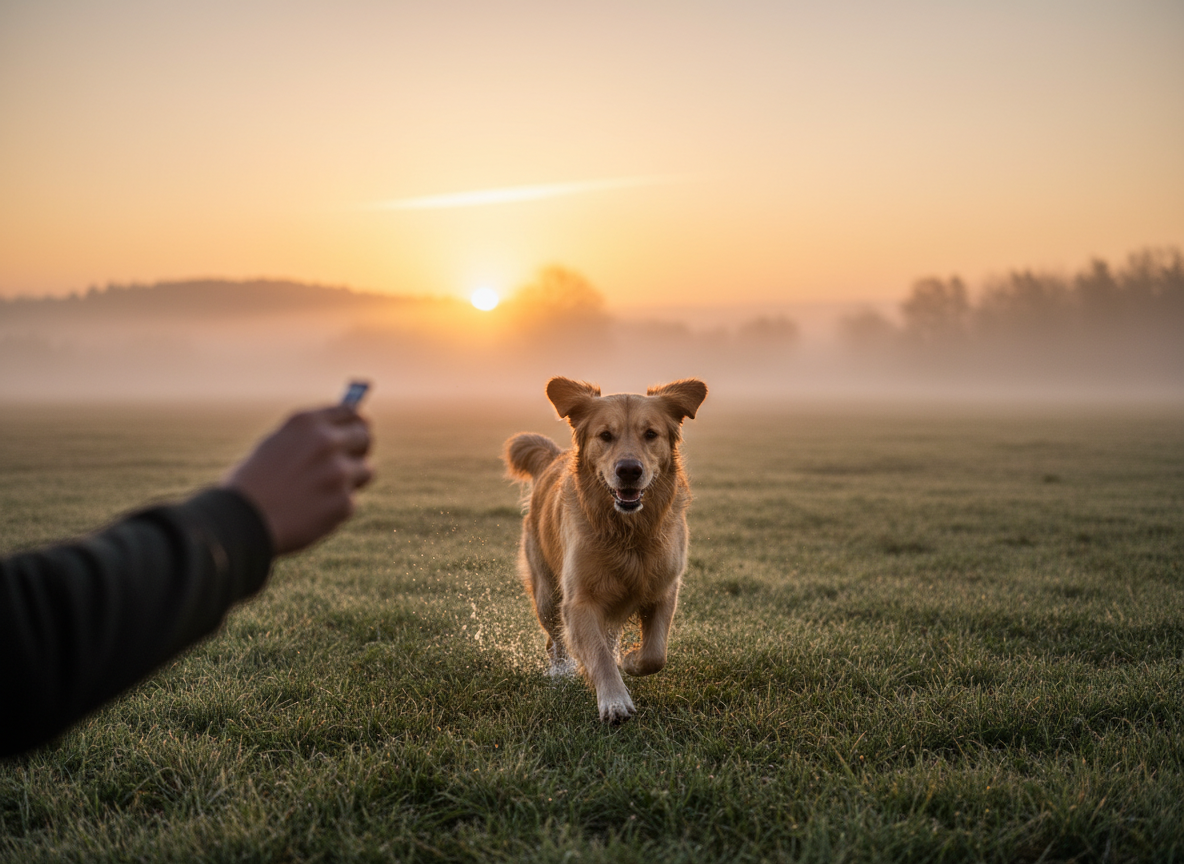
Every dog owner’s worst nightmare is the moment their beloved companion slips their leash, bolts through an open door, or becomes fixated on something across a busy street. In that heart-stopping second, your voice can feel useless, lost in the noise of the world or drowned out by your own panic. A standard recall command, even one that works well in the backyard, can fail when it matters most. This is where the emergency whistle recall comes in—a powerful, reliable, and potentially life-saving tool that functions on a different level than a verbal cue.
This guide is not about teaching a simple party trick. It’s about forging an unbreakable bond of safety between you and your dog. We will delve into the science of why a whistle is superior for emergency situations and provide a comprehensive, step-by-step protocol used by professional trainers. By dedicating time to this training, you are investing in an insurance policy for your dog’s safety, ensuring that you have a reliable method to bring them back to you, no matter the distraction.
Understanding the Power of the Whistle: Beyond a Verbal Command
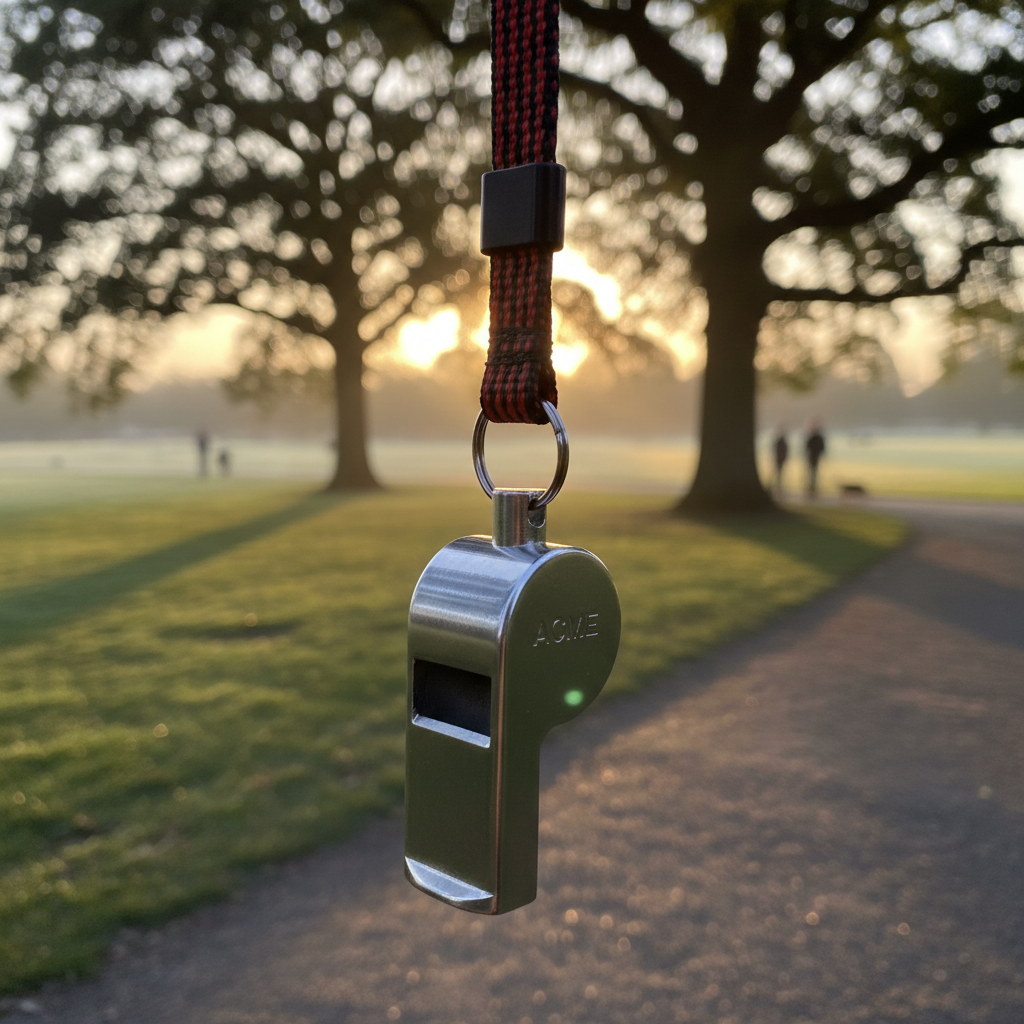
Before beginning the training, it’s crucial to understand why a whistle is a more effective tool for an emergency recall than your voice. While a dog may love the sound of your voice, it is inherently variable and loaded with emotion. When you are scared or panicked, the pitch and tone of your voice change, which can confuse or even frighten your dog, making them less likely to return. A high-quality dog whistle, however, offers distinct acoustic advantages that make it the gold standard for professional trainers and handlers.
Key Advantages of Whistle Training
- Consistent Acoustic Signal: A whistle produces the exact same frequency and tone every single time it is blown. This consistency creates a clear and unambiguous signal for your dog. There is no emotional inflection, no panic, and no variation. It simply means one thing: ‘Come back to me immediately for the best reward imaginable.’
- Long-Range Effectiveness: Sound from a whistle, particularly specific frequencies designed for canine hearing, travels much farther and more clearly than the human voice. It can cut through dense woods, high winds, and the ambient noise of a busy park, ensuring your signal reaches your dog even when they are a significant distance away.
- Cuts Through Distractions: The unique, sharp sound of a whistle is distinct from everyday noises. It’s a novel sound that is less likely to be ignored than a spoken name, which your dog hears constantly in various contexts. This helps it slice through the ‘sensory soup’ of a highly distracting environment.
- Avoids ‘Cue Poisoning’: Often, owners unintentionally ‘poison’ their verbal recall cue. They might call their dog’s name to end playtime, for a bath, or when they are frustrated. This creates a mixed association. The emergency whistle, when used correctly, is only ever associated with extremely positive outcomes, keeping the cue powerful and pure.
Expert Tip: The goal of the emergency whistle is not to replace your day-to-day recall command. Reserve the whistle exclusively for training sessions and true emergencies. Its power lies in its novelty and the incredibly strong positive association you are about to build.
Foundation for Success: Selecting the Right Whistle and Rewards
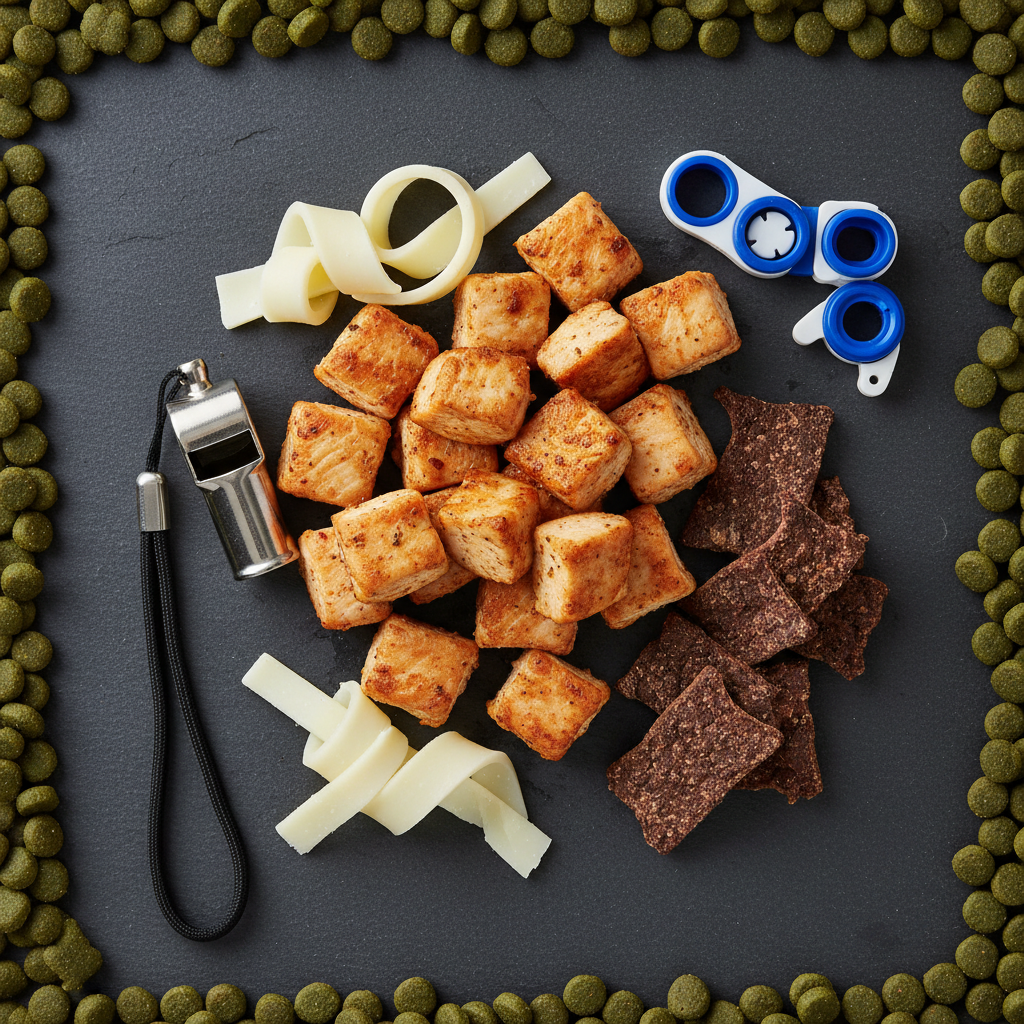
The success of this training protocol hinges on two critical components: the consistency of your tool and the value of your reinforcement. Cutting corners here will significantly undermine your efforts.
Choosing the Right Whistle
Not all whistles are created equal. Avoid cheap, plastic party whistles or those with a ‘pea’ inside, as their sound can vary and they can fail in cold or wet conditions. Your investment should be in a professional-grade, ‘pealess’ dog whistle. Brands like Acme are trusted by trainers worldwide for their consistency and durability. Popular models include the Acme 210.5 (a higher pitch, good for most breeds) and the 211.5 (a lower pitch, excellent for spaniels and retrievers). The most important rule is to choose one specific whistle and stick with it. Buy two or three of the exact same model so you have backups for your car, home, and bag. The sound must remain identical.
Defining ‘High-Value’ Rewards
For the emergency recall, your dog’s regular kibble or a standard biscuit will not be effective. You must use what trainers call ‘high-value’ rewards—treats that are so enticing they eclipse almost any environmental distraction. The reward must be worthy of the immediate, drop-everything-and-run response you are trying to build.
| Reward Category | Examples | Why It Works |
|---|---|---|
| Moist & Meaty | Small pieces of boiled chicken, lean steak, hot dogs (nitrate-free), or meatballs. | The strong aroma and soft texture are highly palatable and feel like a special ‘human food’ jackpot. |
| Cheese | Small cubes of low-fat cheddar, string cheese, or mozzarella. | Most dogs find cheese irresistible, but use it in moderation due to its fat content. |
| Commercial Treats | Freeze-dried liver, salmon, or minnows. Soft, chewy training treats with a high meat content. | These are convenient, potent in smell, and specifically designed to be highly motivating. |
| Novelty Items | A lick of peanut butter (xylitol-free) from a spoon, or a small amount of dog-safe baby food. | The unique experience can be a powerful reward for some dogs. |
Prepare these rewards by cutting them into tiny, pea-sized pieces. You will be delivering them in rapid succession (a ‘jackpot’), so small pieces are essential to avoid your dog getting full too quickly. This special treat should only be used for emergency recall training to maintain its high-value status.
The Step-by-Step Guide to Training the Emergency Whistle Recall
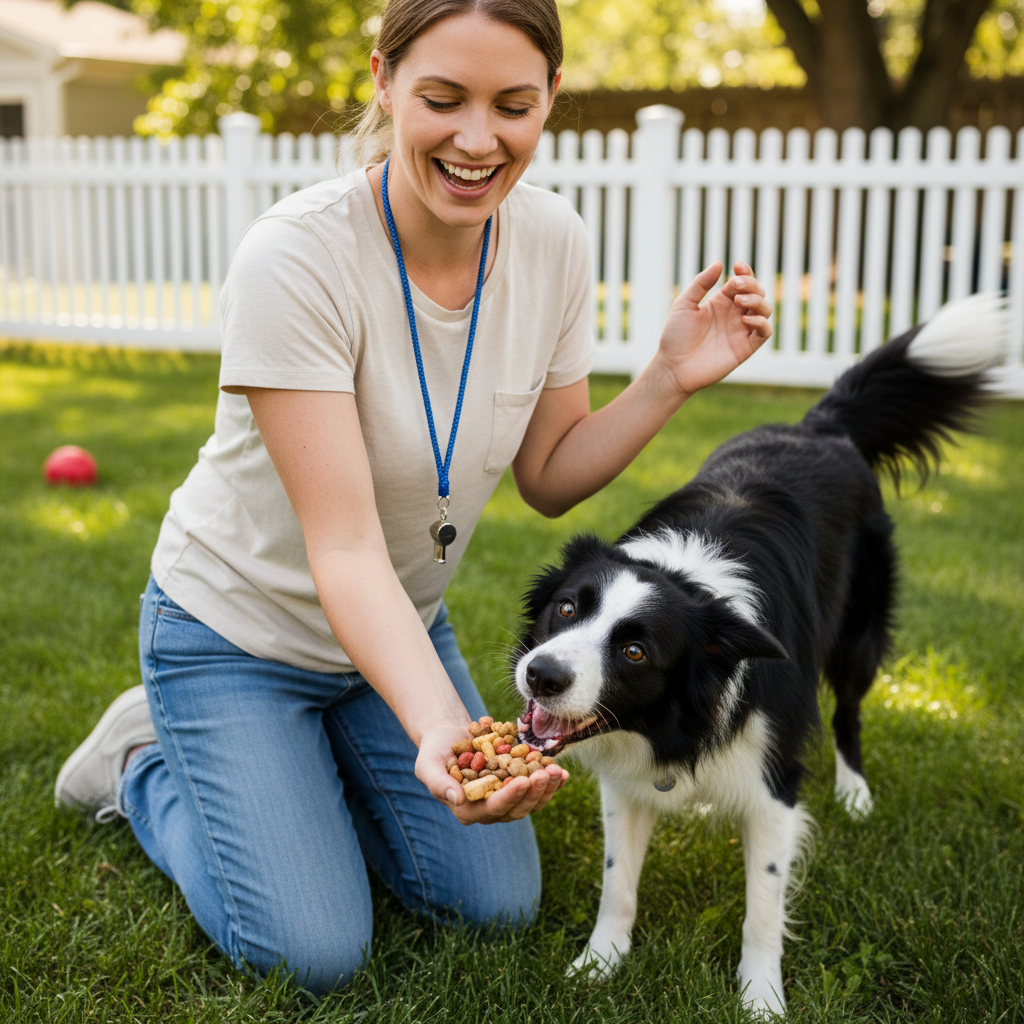
This training is built in layers, starting with a simple association and gradually adding distance, duration, and distractions. Patience and consistency are paramount. Keep training sessions short (5-10 minutes) and always end on a positive, successful note.
Phase 1: Charging the Whistle (Indoors, No Distractions)
The initial goal is to teach your dog that the whistle sound predicts an amazing reward. This is pure classical conditioning.
- Find a quiet room in your house with no distractions. Have your dog in front of you and your high-value treats ready in your hand.
- Blow a single, sharp blast on the whistle (e.g., three short pips: pip-pip-pip). The pattern doesn’t matter as much as your consistency in using the same pattern every time.
- The instant you finish blowing the whistle, deliver a ‘jackpot’ of treats—rapidly feed 5-10 small pieces one after another. Do not ask for a sit or any other behavior. The whistle itself is the cue.
- Repeat this 5-6 times in a single session. Do this once or twice a day for 2-3 days. You’ll know it’s working when your dog’s head whips around in eager anticipation the moment they hear the whistle.
Phase 2: Introducing Distance (Indoors, Low Distractions)
Now, we add a small amount of movement.
- Start in a quiet room. Toss a low-value treat a few feet away from you.
- As your dog walks over to get the treat, blow your emergency whistle cue.
- The moment they turn back towards you, praise them enthusiastically. When they arrive, deliver a massive jackpot of your high-value rewards.
- Practice this across different rooms in the house. Start with short distances and gradually increase as your dog becomes more successful.
Phase 3: Moving Outdoors (Fenced Area, Low Distractions)
It’s time to take the training outside into a controlled environment.
- Go to a securely fenced backyard or a quiet, fenced-in park during an off-peak time.
- Let your dog sniff around on a long line (a 20-30 foot training leash).
- Wait for a moment when they are mildly distracted. Blow your whistle cue.
- If they hesitate, give a little bit of encouragement with your voice. The moment they start running towards you, begin praising. When they reach you, deliver the jackpot and have a mini-party with praise and affection.
- Practice this from different distances and angles within the enclosed area.
Phase 4: Proofing with Distractions
This is the advanced stage where you systematically introduce distractions to make the recall ‘bulletproof’.
- Start with low-level distractions. Have a family member walk calmly across the yard. Practice the whistle recall.
- Gradually increase the difficulty. Have someone bounce a ball, or practice in a park where other dogs are visible but far away.
- Never set your dog up to fail. If a distraction is too intense, increase your distance from it or use a higher-value reward. The goal is for the dog to always choose to come back to you.
- If your dog ignores the whistle, do not repeat it. Calmly walk over, get your dog, and move to a less distracting area to try an easier version. Ignoring the whistle means the training has progressed too quickly.
Troubleshooting Common Pitfalls and Maintaining the Behavior

Even with the best plan, you may encounter challenges. Understanding common mistakes is key to troubleshooting them effectively. The most critical rule for long-term success is to protect the sanctity of the cue. Do not overuse it, and ensure the reward is always exceptionally high.
Common Problems and Solutions
| Problem | Likely Cause | Solution |
|---|---|---|
| Dog ignores the whistle. | The reward isn’t high-value enough, the distractions are too high, or the initial association wasn’t strong enough. | Go back to Phase 1 and ‘re-charge’ the whistle with an even better reward (e.g., switch from chicken to steak). Reduce the level of distraction significantly and rebuild success slowly. |
| Dog runs towards me but then gets distracted. | The reinforcement history isn’t strong enough to overcome the competing motivator. | Use a long line to prevent the dog from being self-rewarded by the distraction. When you blow the whistle, use the line to gently guide them back, and deliver a massive reward upon arrival. Make returning to you the best possible outcome. |
| The recall works in the yard but not at the park. | The behavior has not been generalized to new environments. | You need to actively practice in many different locations. Start at a new location on a long line with very low distractions and build up your success history there before attempting it off-leash or with high distractions. |
| My dog hesitates before coming back. | The association isn’t as immediate as it should be. The dog is weighing its options. | Shorten the distance and go back to rewarding the instant your dog turns towards you. Ensure your reward delivery is fast and exciting. Make it a reflex, not a choice. |
Long-Term Maintenance
Once your dog has a reliable whistle recall, you must maintain it. Once a week, perform a ‘fire drill’ in a safe area. Blow your whistle and deliver a huge jackpot for a fantastic response. This keeps the association sharp and powerful. Remember, this is your emergency lifeline. By protecting its value and practicing occasionally, you ensure it will be there for you when you need it most.
Conclusion
Training an emergency whistle recall is one of the most profound gifts of safety you can give your canine companion. It transcends standard obedience; it is a direct line of communication that remains clear and compelling even in moments of fear and chaos. By following the steps outlined—choosing the right tools, building a powerful positive association, and systematically proofing the behavior against distractions—you create an almost reflexive response in your dog. The sound of the whistle will not be just a suggestion, but a deeply conditioned signal that returning to you is the single most wonderful thing they can do in that moment.
This process requires patience, consistency, and a commitment to positive reinforcement. But the peace of mind you will gain is immeasurable. Knowing that you have a reliable, effective tool to call your dog away from danger—a busy road, a wildlife encounter, or an aggressive animal—is the ultimate safety net. Begin this journey today. Your effort will forge a stronger, safer bond with your dog for a lifetime of adventures together.