The ‘Drag Line’ Secret to Perfect Puppy Behavior Inside the House
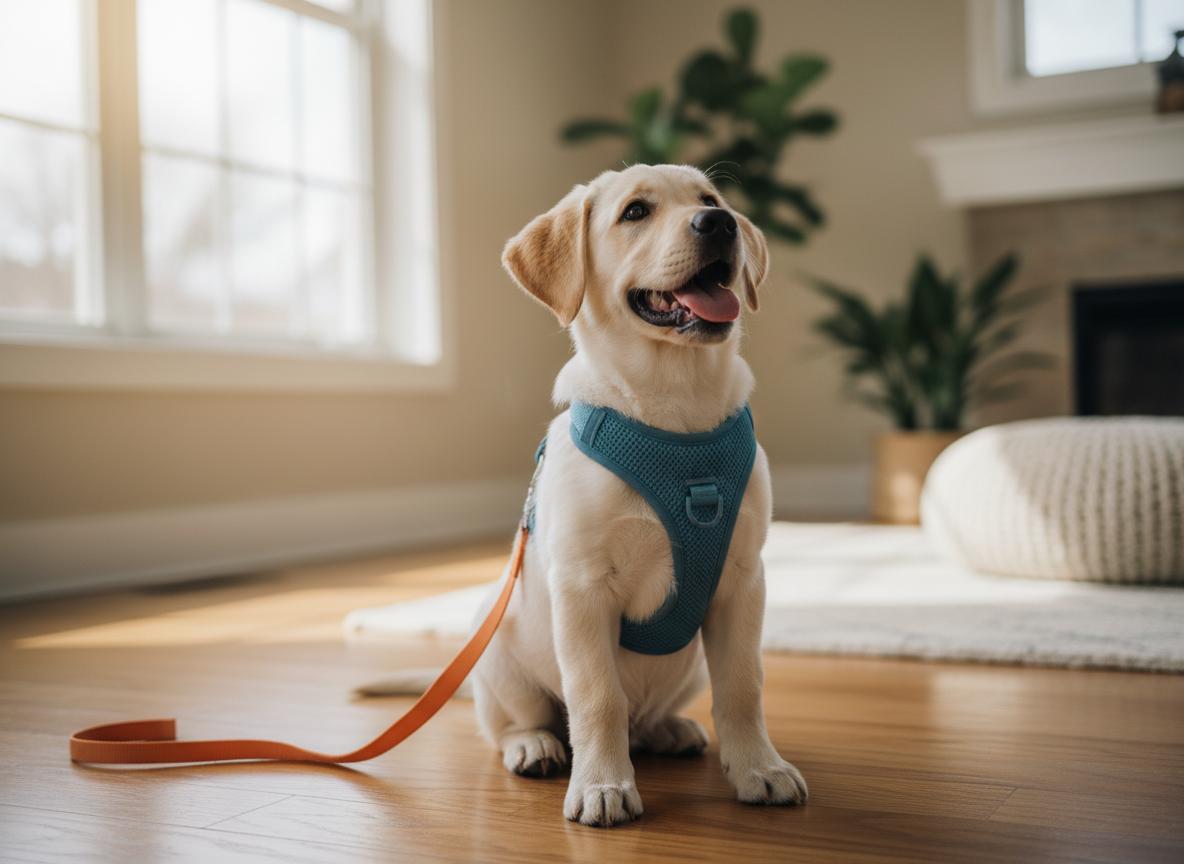
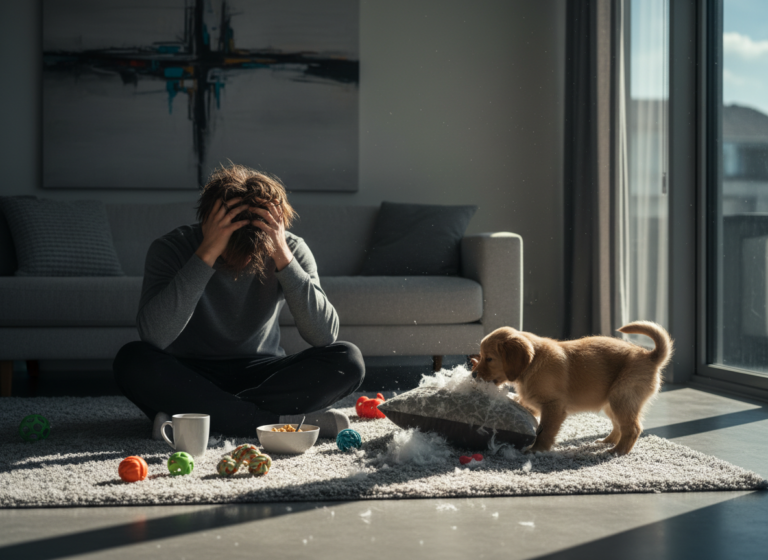
The arrival of a new puppy infuses a home with unparalleled joy, but it often comes with a dose of chaos. Chewed furniture, stolen socks, persistent jumping, and mysterious puddles can test the patience of even the most dedicated owner. The core challenge is the impossibility of 24/7 supervision. In the split second you turn to answer the phone, your puppy can engage in an undesirable behavior, reinforcing a habit you will later have to spend weeks undoing. This is where professional trainers and behaviorists employ a simple, yet profoundly effective, management tool: the indoor drag line.
A drag line is not a tool for punishment or a substitute for training. It is a proactive management device, an extension of your reach that allows you to provide immediate, gentle, and consistent guidance. It empowers you to prevent behavioral mistakes before they happen, setting your puppy up for a lifetime of success. This guide will provide a comprehensive framework for selecting the right equipment, implementing the drag line method safely, and ultimately fading its use as your puppy matures into a well-behaved member of your family.
What is a Drag Line and Why Does It Work?
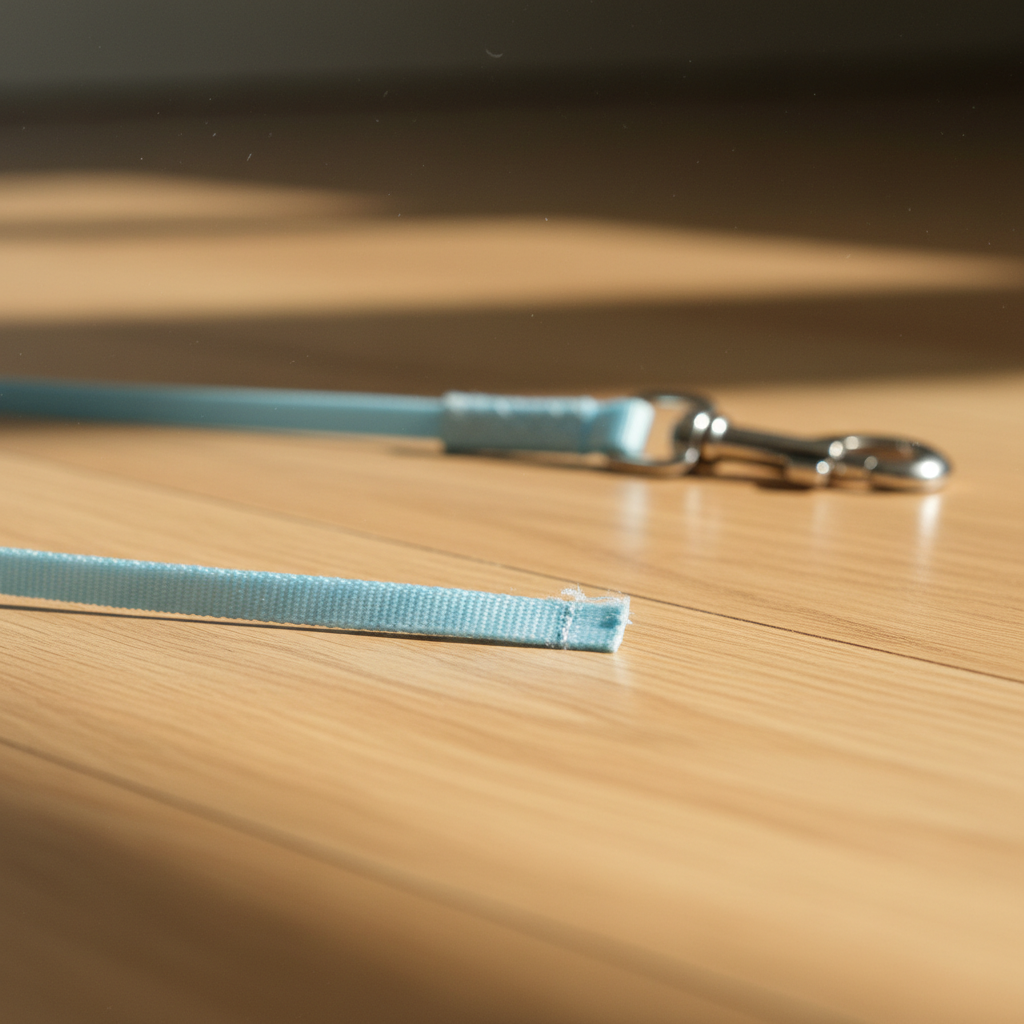
At its core, a drag line is a lightweight leash, typically made of nylon or biothane, with the handle loop removed. It is intended for indoor use under strict supervision. The puppy wears a harness, and the drag line is attached, allowing it to trail behind them as they move about the house. Its purpose is not to tie the dog up or to deliver harsh physical corrections. Instead, its brilliance lies in its simplicity: it provides you with the ability to calmly and immediately interrupt an unwanted behavior from a distance.
The fundamental principle behind the drag line is proactive management. Puppies learn through repetition. If a puppy successfully jumps on the counter and grabs a piece of food, the behavior is instantly self-rewarded and will be repeated. If they chew on a chair leg for five minutes without interruption, they are learning that chewing chair legs is an acceptable activity. The drag line allows you to intervene the moment the thought enters their mind. By simply picking up the end of the line, you can gently redirect them away from the chair leg and toward an appropriate chew toy. You can stop a jump before their paws leave the ground. This constant, low-stress guidance prevents the puppy from ‘practicing’ undesirable habits, making it significantly easier to teach them what you do want them to do.
It is a communication tool that bridges the physical gap between you and your puppy, ensuring your guidance is timely and effective without resorting to yelling, chasing, or physical intimidation, all of which can damage your relationship and create anxiety.
Selecting the Perfect Drag Line and Harness
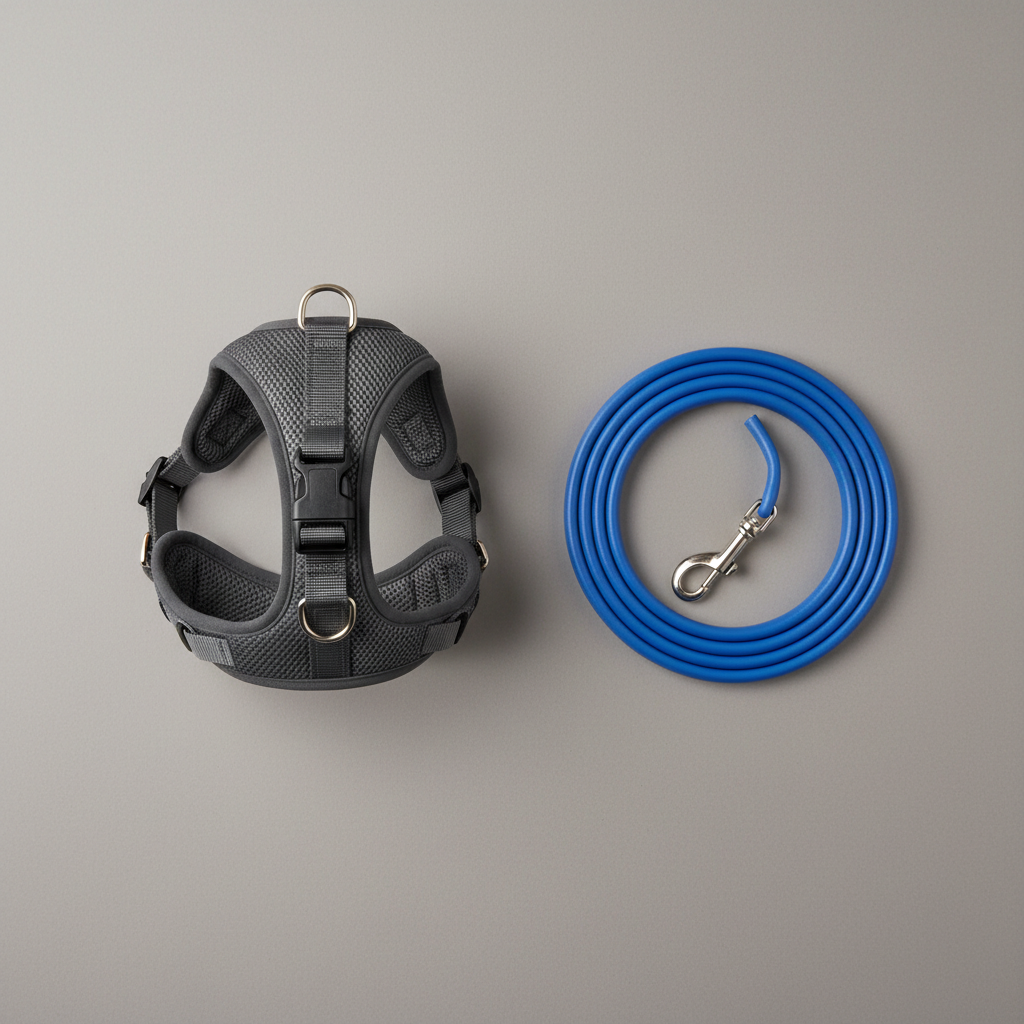
The safety and effectiveness of this method hinge entirely on using the correct equipment. Choosing the wrong type of line or attaching it improperly can create significant risks for your puppy. A methodical approach to selecting your tools is non-negotiable.
The Drag Line Itself
The ideal indoor drag line is exceptionally lightweight. The puppy should barely notice its presence. Heavy ropes or standard outdoor leashes will snag easily and can be cumbersome. The length should be just long enough for you to easily reach or step on it, typically between four and six feet. Any longer, and it becomes a serious tripping and entanglement hazard. The width of the line and the size of the metal clasp must be appropriate for your puppy’s size. A Great Dane puppy requires a more substantial clasp than a Chihuahua puppy, but the line itself should remain as light as possible.
The Importance of a Harness
Under no circumstances should a drag line ever be attached to a puppy’s collar. If the line were to snag on a piece of furniture as the puppy runs, the resulting force on their neck could cause severe tracheal, esophageal, or spinal injury. A well-fitting, comfortable harness is mandatory. A back-clip harness is generally preferred for this application as it is less likely to get tangled in the puppy’s legs. Ensure the harness fits snugly; you should be able to fit two fingers between the harness and your puppy’s body, but no more. This prevents them from slipping out of it while ensuring it is not uncomfortably tight.
| Material | Pros | Cons | Best For |
|---|---|---|---|
| Lightweight Nylon | Inexpensive, light, readily available. | Can absorb water/saliva, may fray over time. | General indoor use for most puppies. |
| Biothane | Waterproof, easy to clean, durable, slides easily over surfaces. | More expensive than nylon. | Puppies who are messy drinkers or in the midst of house-training. |
Step-by-Step Guide to Using the Drag Line Effectively
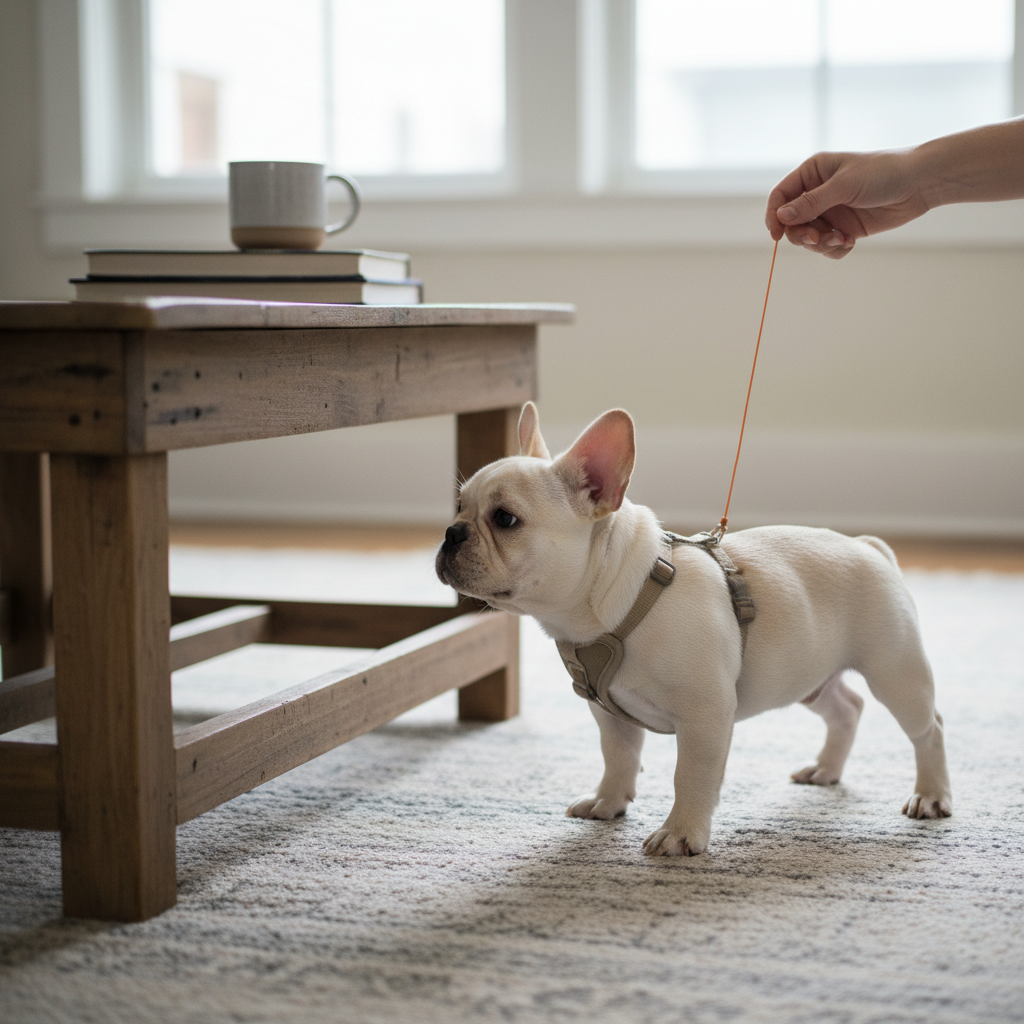
Proper implementation is key to success. The drag line should always be associated with positive guidance, not punishment. This step-by-step process ensures your puppy builds the right association from the very beginning.
-
Introduce the Equipment Positively
Before you even begin using the line for management, your puppy needs to be comfortable wearing it. Attach the drag line to the harness and let your puppy simply walk around the house with it for short, five-minute sessions. During this time, offer high-value treats, play a fun game of fetch, or give them a food-stuffed toy. You want them to associate the presence of the harness and line with wonderful things. Do not grab or use the line at all during this initial phase. Repeat these short sessions throughout the day for one or two days.
-
Address Counter-Surfing and Stealing Objects
The moment you see your puppy approach a counter or table with the intent to jump up, or if they grab a forbidden object like a shoe, calmly walk over and pick up or step on the end of the drag line. Do not yank it. Simply apply gentle, steady pressure. Use a calm, neutral verbal cue like “Off” or “Leave it.” The light pressure will prevent them from succeeding, and you can then guide them away from the area. Immediately redirect their attention to a more appropriate activity, like chewing on a designated toy, and praise them warmly for making the right choice.
-
Manage Inappropriate Chewing
Puppies explore the world with their mouths. When you see your puppy begin to chew on a table leg, a rug, or the couch, use the drag line to interrupt the behavior. Pick up the line, say your “Leave it” cue, and gently guide them a few feet away. Have a high-value, desirable chew toy ready. Offer it to them enthusiastically. The goal is not just to stop the bad behavior, but to teach them the correct alternative. The drag line makes this interruption seamless and immediate.
-
Prevent Jumping on People
Jumping is a common and frustrating habit. The drag line is a remarkably effective tool for preventing it. When a guest comes to the door, or when you come home, anticipate the jump. Before the puppy has a chance to launch themselves, calmly place your foot on the drag line, leaving just enough slack for them to stand or sit, but not enough to jump. This physically prevents the rehearsal of the behavior without any need for yelling or pushing the puppy down. You can then ask for a ‘Sit’ and reward the calm, four-paws-on-the-floor greeting.
-
Aid in Potty Training
A drag line is invaluable for house-training. Puppies often give subtle signals before they are about to eliminate, such as circling or sniffing a specific spot intently. These signals can happen quickly. The drag line allows you to instantly gain control and guide the puppy towards the door and outside without a frantic chase. This rapid response can be the difference between another accident on the rug and a successful trip outdoors, which you can then heavily reward.
Critical Safety Rules and Mistakes to Avoid
While the drag line is an exceptional tool, its misuse can be dangerous. Adhering to strict safety protocols is not optional; it is a requirement for responsible dog ownership. Understanding common mistakes will also help you avoid developing bad habits that undermine your training efforts.
The Golden Rules of Drag Line Safety
- Supervision is 100% Mandatory. This is the most important rule. A puppy should never be left unattended while wearing a drag line, not even for a minute. They could easily become entangled on furniture, which can lead to panic, injury, or worse.
- Crate and Pen Safety. Always remove the drag line and the harness before your puppy goes into their crate, pen, or is left alone in a puppy-proofed room.
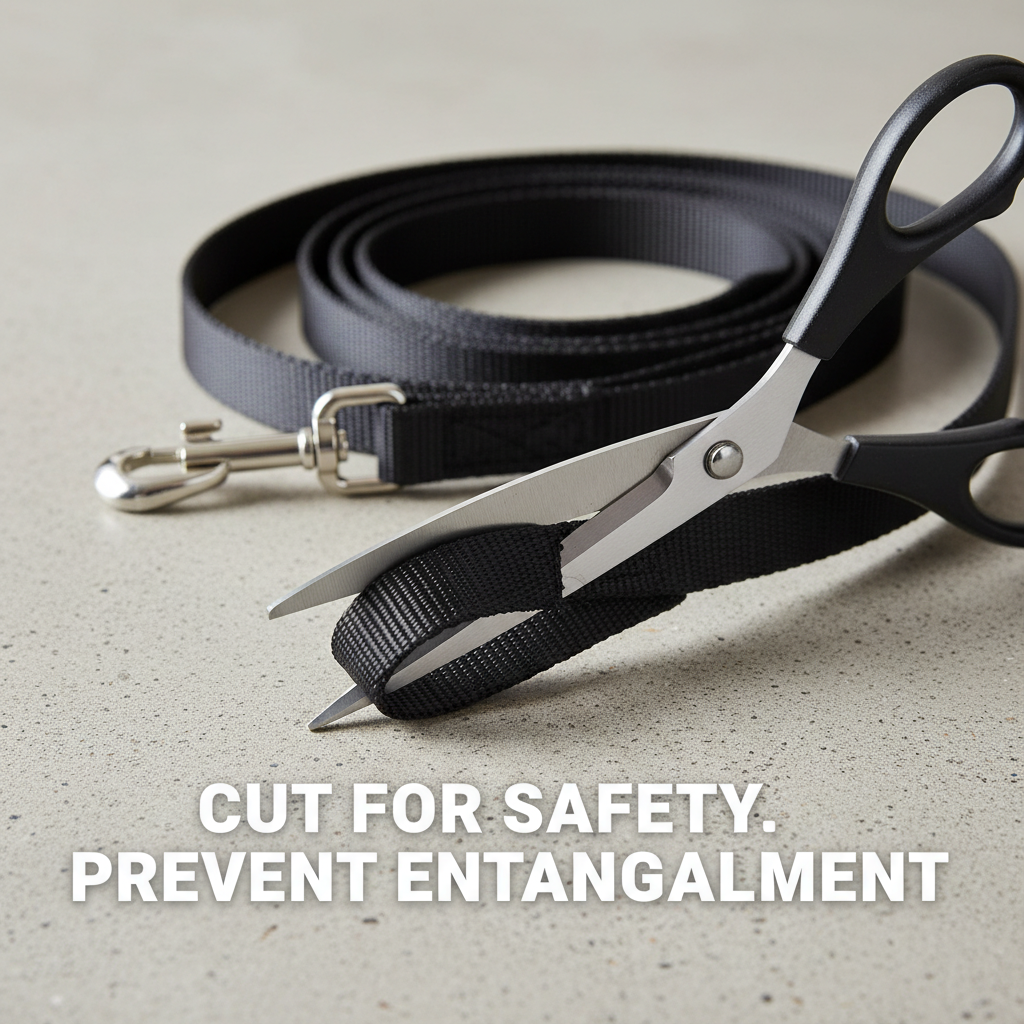
- Remove the Handle. Before its first use, take a sharp pair of scissors and cut the handle loop off the end of the leash. This single action dramatically reduces the risk of the line getting snagged on a cabinet handle, table leg, or other household object.
- Harness Only. It bears repeating: only attach the drag line to a secure, back-clip harness. Never attach it to a flat collar, martingale collar, slip lead, or head halter.
Common Mistakes Pet Owners Make
- Yanking or Jerking the Line. The drag line is for gentle guidance. It is not a tool for delivering physical corrections. A sharp jerk can frighten your puppy, damage their trust in you, and potentially cause injury.
- Leaving It On 24/7. Your puppy needs downtime. The drag line should only be used during active training or management periods when you are present and engaged. Give them plenty of ‘naked time’ in a completely puppy-proofed space.
- Using It as a Punishment. The goal is interruption and redirection, not to create a negative association. The line should predict gentle guidance and a chance to earn a reward for a better choice, not an impending punishment.
- Choosing the Wrong Equipment. Using a line that is too heavy or too long compromises both safety and effectiveness. It should be light enough for the puppy to ignore and short enough to not be a constant hazard.
Transitioning Away from the Drag Line

The drag line is a temporary scaffold, not a permanent fixture. The ultimate goal is to have a puppy who makes good choices on their own, without the need for constant physical management. Knowing when and how to fade the drag line is the final step in this training process.
You can begin to consider transitioning away from the line when your puppy shows consistent reliability in their behavior. Are they responding well to verbal cues like “Leave it”? Have they largely stopped attempting to counter-surf or chew on furniture? Is their potty training becoming more predictable? These are all signs of progress. The transition should be gradual. Start by allowing the puppy to be ‘naked’ (without the harness and line) for short periods in a single, fully puppy-proofed room while you are still closely supervising. Begin with 15-20 minute sessions and slowly increase the duration as they continue to be successful.
As they prove their reliability in one room, you can gradually expand their access to other puppy-proofed areas of the house. This process may take several weeks or even months. It is important not to rush it. If you find your puppy’s old habits start to resurface, it is not a failure. Simply reintroduce the drag line for a few days to help them get back on track. Many owners find it helpful to bring the drag line back out during challenging periods, such as canine adolescence (typically between 6-18 months), when puppies often test boundaries again.
Conclusion
The drag line is more than just a piece of equipment; it is a strategy. It is a commitment to proactive, positive-reinforcement-based training that prevents bad habits from ever taking root. By using this tool correctly, you are not just managing your puppy’s behavior—you are actively teaching them the rules of your home in a way that is clear, fair, and builds a strong, trusting bond between you. It transforms the chaotic puppy phase from a period of stressful reaction to one of calm, confident guidance. By implementing these techniques, you are laying the foundation for a lifetime of companionship with a well-mannered, reliable, and happy dog.