The “1-2-3 Game”: A Magic Trick To Snap Your Dog Out Of Reactivity

Navigating the world with a reactive dog can feel isolating and stressful. Every walk is fraught with tension, scanning the horizon for potential triggers—other dogs, people, skateboards, or bicycles—that could send your canine companion into a frenzy of barking, lunging, and pulling. It’s a challenging situation that can strain the human-animal bond and make daily exercise a dreaded chore. However, it’s crucial to understand that reactivity is not aggression. It is an overreaction to a stimulus, typically rooted in fear, anxiety, or frustration. Your dog isn’t being ‘bad’; they are having a difficult time coping with their environment.
Fortunately, there are modern, science-backed methods to help your dog build confidence and change their emotional response to these triggers. One of the most effective and accessible techniques is known as the “1-2-3 Game.” This simple pattern game is more than just a distraction; it’s a powerful form of counter-conditioning that rewires your dog’s brain. It teaches them that the appearance of a once-scary trigger now predicts something wonderful is about to happen. This guide will provide a comprehensive, step-by-step protocol for implementing the 1-2-3 Game, transforming your walks from a source of stress into a productive and positive training experience for both you and your beloved pet.
What is Dog Reactivity and Why Does it Happen?
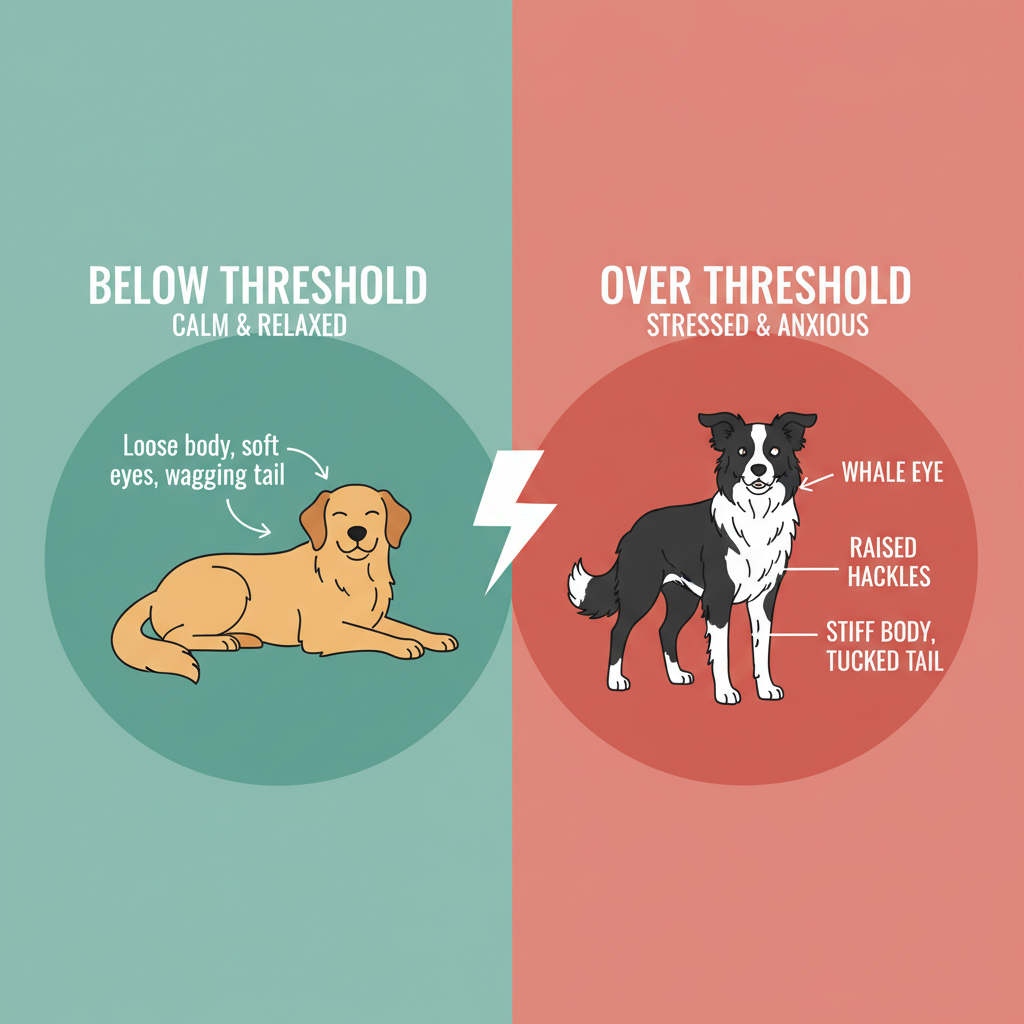
Before diving into the solution, it is essential to have a clear understanding of the problem. Dog reactivity is one of the most common behavioral issues reported by pet owners, yet it is widely misunderstood. At its core, reactivity is an intense, disproportionate emotional response to a specific stimulus, or ‘trigger.’ It’s not a sign of a dominant or malicious dog, but rather a public display of private turmoil.
Reactivity vs. Aggression
The first critical distinction to make is between reactivity and aggression. While a reactive display can look aggressive—and can certainly escalate to aggression if the dog feels it has no other choice—the underlying motivation is different. Aggression is often characterized by the intent to cause harm. Reactivity, on the other hand, is typically a fear-based response designed to create distance. The dog is essentially shouting, “Go away! You make me uncomfortable!” The goal of the barking and lunging is to make the scary thing retreat, which, from the dog’s perspective, often works.
The Roots of Reactivity
Reactivity can stem from various sources, and understanding the ‘why’ can help you approach training with more empathy and effectiveness. Common causes include:
- Fear or Anxiety: This is the most common driver. A lack of proper socialization during the critical puppy period (3-16 weeks), a past traumatic experience (like being attacked by another dog), or a genetic predisposition can all lead to fear-based reactivity.
- Frustration: Sometimes called ‘frustrated greeting,’ this occurs when a dog is highly social and desperately wants to interact with another dog or person but is held back by the leash. This barrier frustration can build up and spill over into lunging and barking.
- Learned Behavior: If a dog learns that barking and lunging makes the scary thing go away, the behavior is reinforced. They will repeat what works.
- Trigger Stacking: Reactivity isn’t always caused by a single event. Imagine each minor stressor—a loud truck, a stranger approaching too quickly, a tight leash—as a block being stacked. Eventually, one final block (the trigger dog) is added, and the entire tower comes crashing down in a reactive episode. The dog wasn’t reacting just to the other dog, but to the cumulative stress of the entire walk.
Understanding that your dog is not giving you a hard time, but rather having a hard time, is the first step toward effective and compassionate training. Their behavior is a form of communication, telling you they are over their emotional threshold.
The “1-2-3 Game”: How It Rewires Your Dog’s Brain
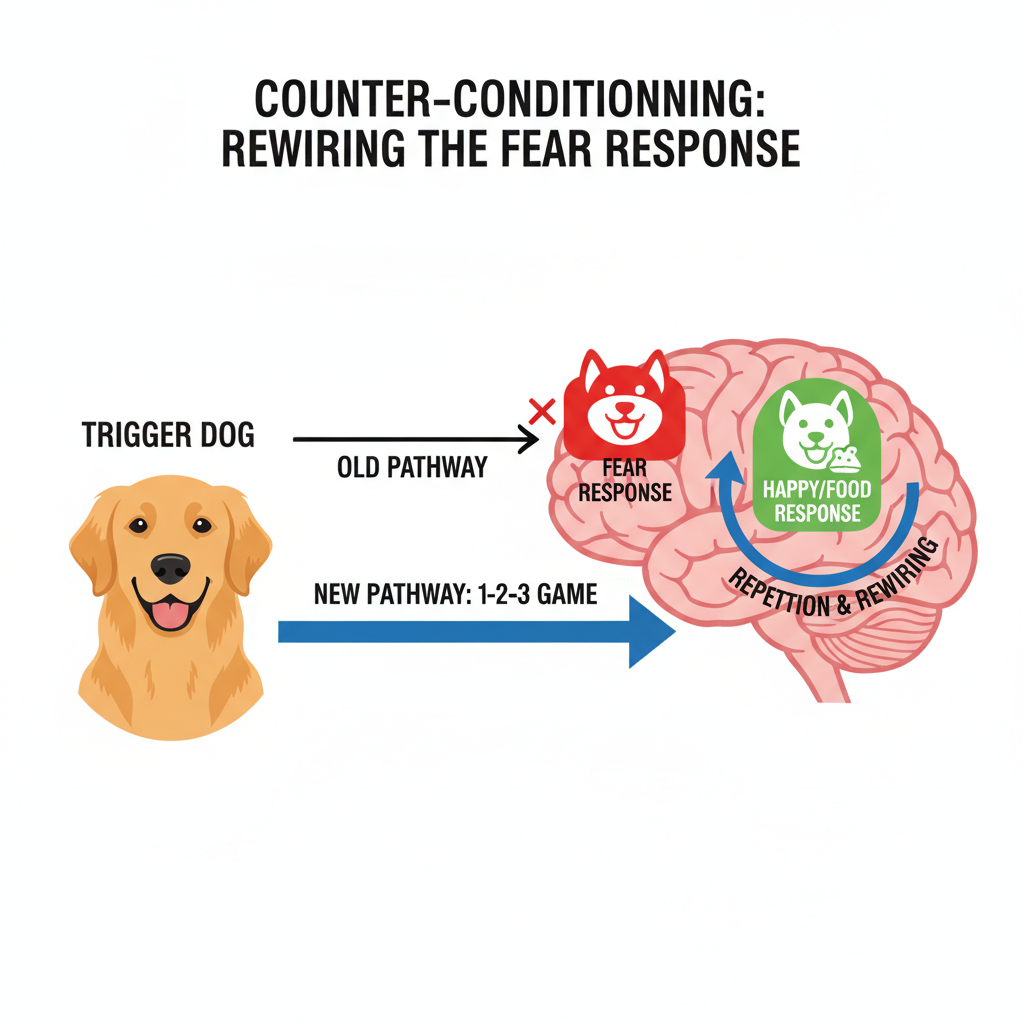
The “1-2-3 Game” is a brilliant application of learning theory, specifically classical and operant conditioning. Its primary function is to change a dog’s conditioned emotional response (CER) from negative to positive. When your dog sees another dog (the trigger), their current CER might be fear, which leads to the outward behavior of barking and lunging. Our goal is to replace that feeling of fear with a feeling of happy anticipation.
The Science Behind the Magic
At its heart, the game works through counter-conditioning and desensitization.
- Counter-Conditioning: This means changing the association. We are pairing the scary thing (the trigger) with something the dog finds amazing (a high-value food reward). Over many repetitions, the trigger starts to predict the reward. The dog’s internal monologue shifts from “Oh no, another dog! I need to panic!” to “Oh, look, another dog! That means chicken is coming!”
- Desensitization: This is the process of gradually exposing the dog to the trigger at an intensity that does not provoke the reactive response. In practice, this means working at a distance where your dog can see the trigger but is not yet reacting. This is known as their ‘sub-threshold’ distance. If your dog is reacting, you are too close for learning to occur.
The “1-2-3” count serves as a clear, predictable pattern. The pattern is: Trigger appears -> Human says “One” -> Human says “Two” -> Human says “Three” -> Dog gets a super tasty treat. The count bridges the moment the dog sees the trigger to the moment they get the reward. This predictability helps reduce anxiety and builds a reliable new association. The trigger becomes the cue for the game to start, which is precisely the mental shift we want to achieve.
Getting Started: Essential Tools and High-Value Rewards
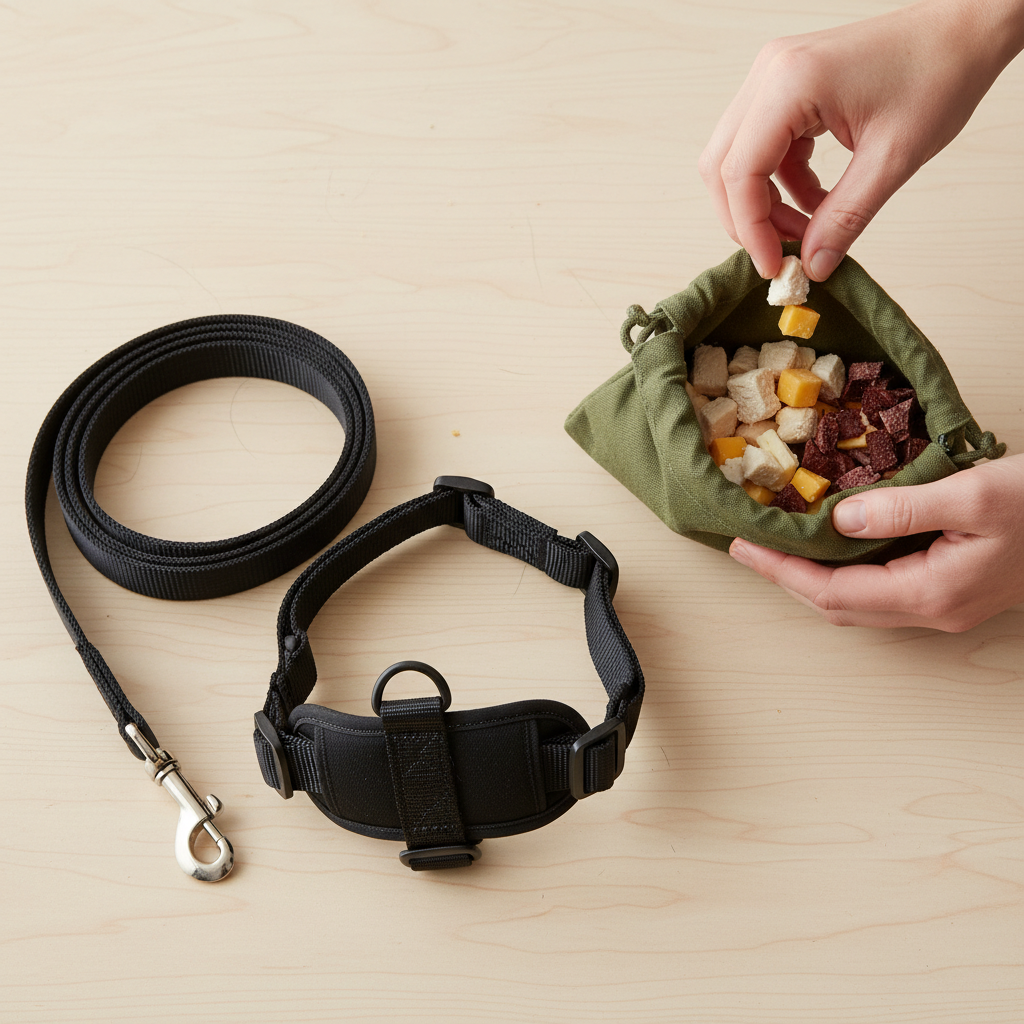
Proper preparation is key to the success of any training plan. Before you begin playing the “1-2-3 Game,” you must ensure you have the right equipment and, most importantly, the right motivation for your dog. Setting yourself up for success makes the process smoother and more effective.
Essential Management Equipment
The right gear is not about punishment or control; it’s about safety and clear communication. Your equipment should prevent your dog from practicing the unwanted behavior (like lunging to the end of the leash) and allow you to manage them safely.
- A Fixed-Length Leash: A standard 6-foot leather or nylon leash is ideal. Avoid retractable leashes, as they offer little control and can teach dogs to pull.
- A Well-Fitted Harness or Head Halter: A front-clip harness can reduce pulling without causing discomfort. For very strong pullers, a head halter (like a Gentle Leader) can offer more control, but it must be properly introduced to the dog to ensure a positive association. Avoid choke chains, prong collars, and shock collars, as these aversive tools can increase fear and anxiety, worsening reactivity.
- A Treat Pouch: You need quick, easy access to your rewards. A treat pouch worn on your belt or waistband is a non-negotiable tool for this game.
Identifying High-Value Reinforcers
This is arguably the most critical component. The reward you use must be more valuable to your dog than their desire to react to the trigger. Their everyday kibble will not be sufficient. You need to find what your dog considers a five-star treat.
To determine what is high-value for your dog, you can conduct a ‘taste test’ at home. Offer a few different options and see which one they choose most enthusiastically.
| Reward Level | Examples | When to Use |
|---|---|---|
| Low Value | Dry kibble, standard dog biscuits | Basic obedience in a low-distraction environment. |
| Medium Value | Store-bought training treats, pieces of carrot or apple | Practicing known cues in a slightly more distracting setting. |
| High Value | Boiled chicken, small cubes of cheese, hot dogs, freeze-dried liver, salmon | ONLY for reactivity training (like the 1-2-3 Game). |
Remember to cut these treats into tiny, pea-sized pieces. You will be delivering many rewards during a session, and you want to avoid overfeeding. The key is that these special treats are reserved only for playing this game, which keeps their value exceptionally high.
How to Play the “1-2-3 Game”: A Step-by-Step Protocol
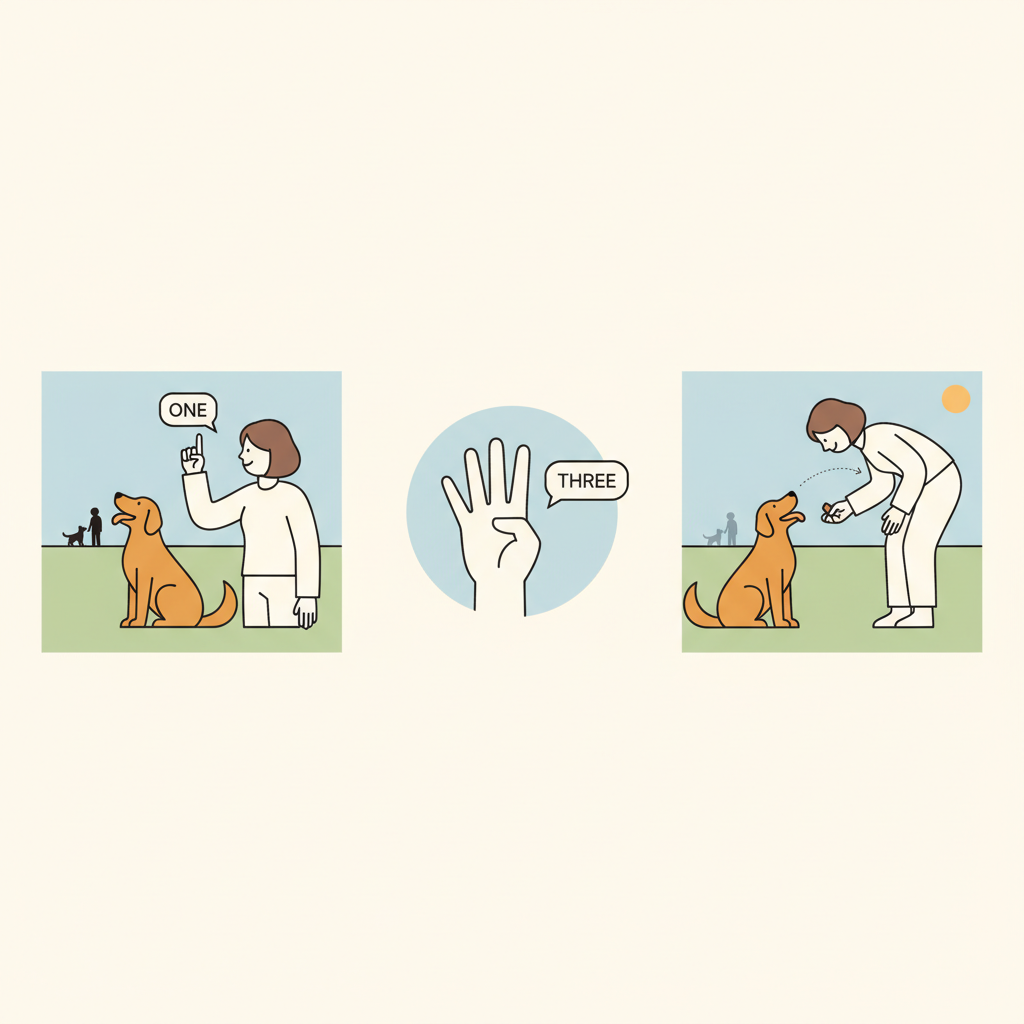
With your tools and treats ready, you can begin teaching the game. The process is broken down into distinct phases to ensure your dog understands the pattern before applying it to real-world scenarios. Patience and consistency are your greatest assets here.
Phase 1: Charging the Pattern (No Triggers Present)
The first step is to teach your dog what “1-2-3” means in a completely calm and neutral environment, like your living room.
- Stand in front of your dog. Say “One” in a calm, neutral tone. Pause for one second.
- Say “Two.” Pause for one second.
- Say “Three.” Immediately deliver a high-value treat to your dog’s mouth.
- Repeat this sequence 5-10 times in a row, then take a break. Practice in short sessions throughout the day for a couple of days. Your dog should quickly learn that the number three predicts a fantastic treat.
Phase 2: Introducing a Trigger at a Distance
This is where the real work begins. You must find a location where you can observe triggers from a safe distance—far enough away that your dog sees the trigger but does not react. This is their ‘sub-threshold’ distance. It might be 50 feet, 100 feet, or the length of a football field. Parks with walking paths or quiet street corners are often good starting points.
- Position yourself at your dog’s sub-threshold distance from where triggers are likely to appear.
- The moment your dog’s eyes lock onto a trigger (e.g., another dog), begin the count. Mark the seeing of the trigger, not the reaction.
- Say “One… Two… Three…” at a steady, one-second pace.
- After you say “Three,” deliver the high-value treat. Ideally, your dog will turn their head away from the trigger to take the treat from you. This act of disengaging is a huge victory.
- If the trigger is still present, repeat the sequence. Dog looks at trigger -> “One, Two, Three” -> Treat. Continue this pattern until the trigger is gone.
Critical Timing and Management
Your timing is crucial. The count must begin the instant your dog perceives the trigger. If you wait until they are stiff, staring, or growling, it’s too late. You are now over threshold, and learning cannot happen.
If a trigger suddenly appears too close, do not try to play the game. Your only job is to manage the situation and create distance. Cheerfully say “Let’s go!” and quickly U-turn, jogging away while scattering a few treats on the ground for your dog to find. This ‘Emergency Escape’ maneuver prevents a reaction and keeps the experience as positive as possible.
Remember the golden rule: Always work under threshold. The goal is not to test your dog’s limits, but to build a new, positive association in a controlled, successful manner. Every successful repetition strengthens this new neural pathway.
Common Pitfalls and How to Avoid Them

Even with a solid plan, training rarely proceeds in a perfectly straight line. You will likely encounter setbacks. Understanding common mistakes can help you troubleshoot your sessions and get back on track quickly. The goal is progress, not perfection.
Here are some of the most frequent challenges owners face when implementing the “1-2-3 Game” and how to address them.
| Problem | Likely Cause | Solution |
|---|---|---|
| My dog won’t take the treats. | The dog is over their emotional threshold. Their anxiety is too high to think about food. Alternatively, the treats are not valuable enough to compete with the trigger. | Immediately increase your distance from the trigger until your dog can eat. If that’s not possible, use your emergency U-turn. Re-evaluate your treats; use something even more desirable next time. |
| My dog reacts before I can even start counting. | You are starting too close to the trigger. Your sub-threshold distance is further than you think. | Be more proactive. Find training spots with better visibility so you can see triggers coming from far away. Work on your own observation skills to spot triggers before your dog does. |
| The game works for dogs, but not for people/bicycles. | Dogs have different triggers with varying levels of intensity. The dog’s association is specific to what you’ve been practicing with. | You must generalize the game. Start the process from scratch for each different type of trigger, finding the unique sub-threshold distance for that specific stimulus. |
| We’ve been doing this for weeks and aren’t making progress. | Sessions may be too long, leading to fatigue. The dog might be experiencing trigger stacking outside of training sessions. The training may be inconsistent. | Keep training sessions short and positive (5-10 minutes is plenty). Ensure your dog’s overall stress is managed. Are they getting enough decompression walks in quiet areas? Is everyone in the household following the protocol consistently? |
Advancing the Game
Once your dog is reliably looking back at you in anticipation of the treat when a trigger appears, you can start to decrease the distance very gradually. If your starting distance was 100 feet, try working at 90 feet. If your dog remains calm, you’ve succeeded. If they show signs of stress, you’ve moved too quickly and need to go back to the distance where they were last successful. This gradual reduction in distance is the desensitization process in action and it must be done at the dog’s pace.
Conclusion
The “1-2-3 Game” is a transformative tool for owners of reactive dogs. It shifts the training focus from suppressing behavior to changing underlying emotions, fostering a more positive and trusting relationship between you and your canine companion. By turning a scary stimulus into a predictor of wonderful things, you empower your dog to make better choices because they feel better. Remember that consistency, patience, and a deep understanding of your dog’s emotional state are the cornerstones of this process. Every successful repetition is a deposit in your dog’s bank of confidence.
While this game is incredibly powerful, it is not a cure-all. Severe cases of reactivity may require a more comprehensive behavior modification plan. If you feel overwhelmed or are not seeing progress, do not hesitate to seek the guidance of a certified professional dog trainer or a veterinary behaviorist who specializes in force-free, positive reinforcement methods. With the right tools and support, you can help your reactive dog navigate the world with greater calm and confidence, making your shared life more peaceful and enjoyable.