Terrified of Beeps? How to Help a Dog Who Panics at the Microwave
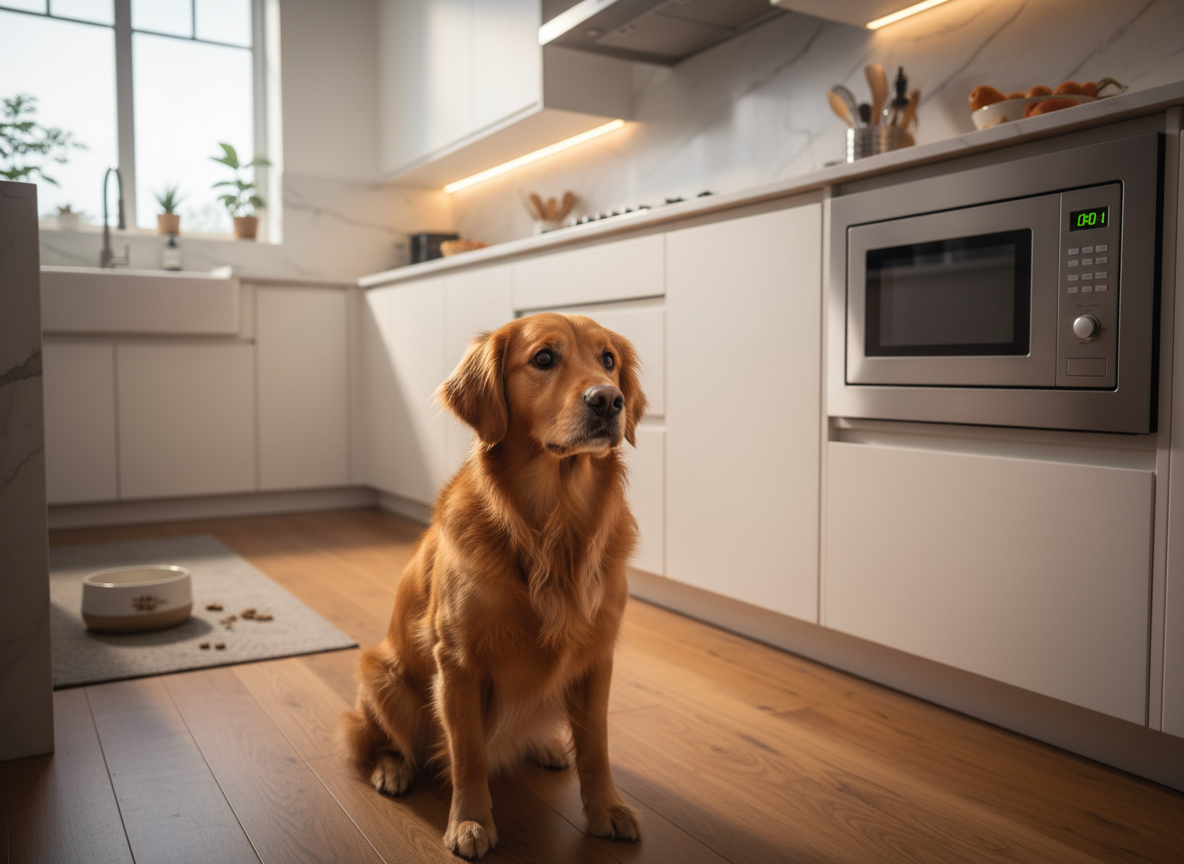
The sudden, high-pitched beep of a microwave can be an innocuous sound to us, signaling that our meal is ready. To a sensitive dog, however, that same sound can be a source of intense fear and anxiety, triggering a panic response that can be distressing for both pet and owner. If you’ve witnessed your canine companion tremble, hide, or bark frantically at the sound of the microwave, you are not alone. This phenomenon, a form of noise phobia, is a common behavioral issue that can significantly impact a dog’s quality of life.
Understanding the root of this fear is the first step toward resolving it. Dogs experience the world through their senses far more acutely than humans, and their hearing is exceptionally sensitive. A sudden, piercing electronic tone can be perceived as a threat, startling them and activating their fight-or-flight response. Fortunately, with a systematic and compassionate approach, you can help your dog overcome this fear. This guide will provide a comprehensive, step-by-step protocol rooted in the proven behavioral science techniques of desensitization and counter-conditioning. By following these methods, you can change your dog’s emotional response from one of terror to one of calm anticipation, effectively ‘rewiring’ their brain to associate the once-scary beep with positive experiences.
Understanding the Fear: Why Do Beeps Trigger Panic?
To effectively address your dog’s fear, it is essential to first understand why it occurs. A dog’s panic at a microwave beep is not a sign of defiance or misbehavior; it is a genuine, involuntary fear response. Several factors contribute to the development of noise phobias in canines.
Superior Auditory Acuity
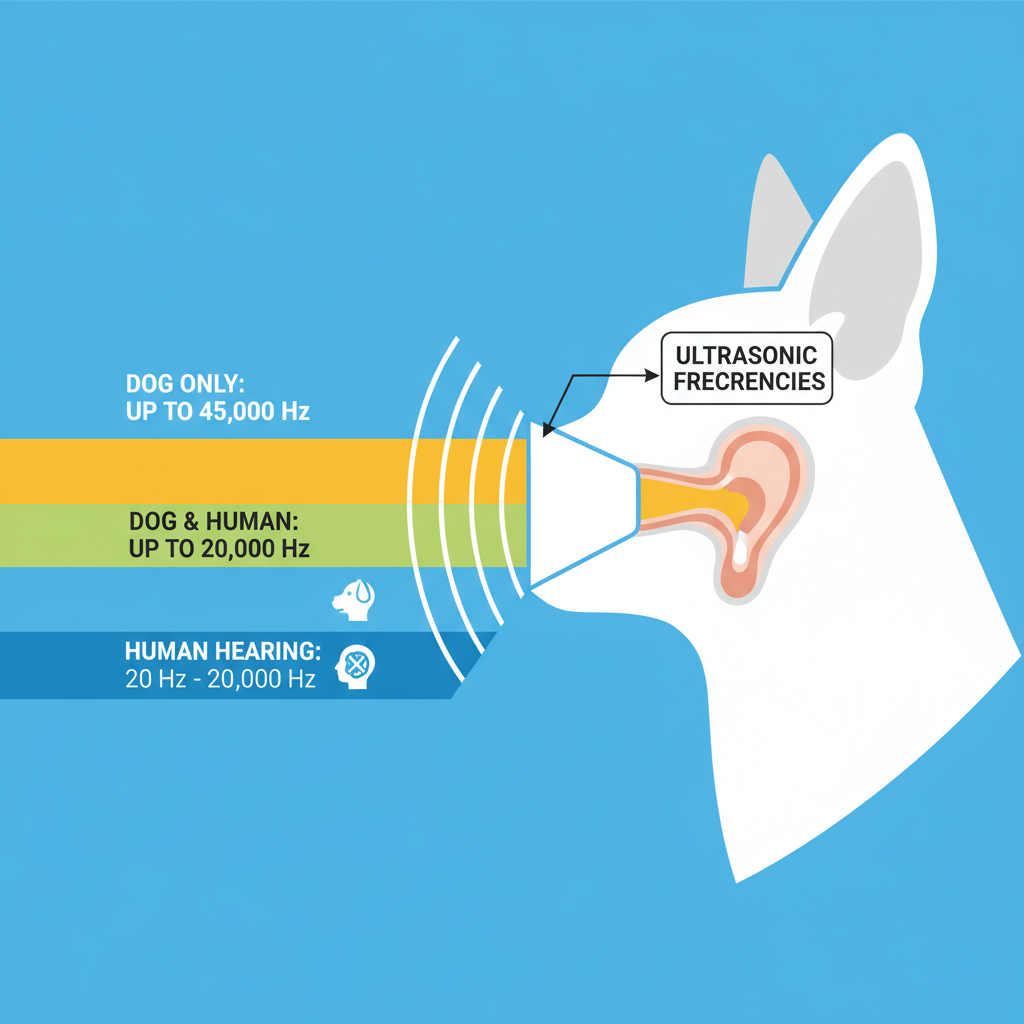
Dogs possess a remarkable sense of hearing. They can detect a wider range of frequencies than humans, particularly in the higher-pitched spectrum where many electronic beeps fall. They can also hear sounds from four times the distance as the average person. What sounds moderately loud to us can be piercing and uncomfortable for a dog. The abrupt, artificial nature of a microwave beep, with its sharp start and stop, lacks the natural, ambient qualities of sounds they are more accustomed to, making it inherently startling.
Negative Associations and Lack of Socialization
A fear can develop through a single negative experience. If the microwave beep once coincided with another frightening event—such as a loud crash, a thunderstorm, or even just being startled from a deep sleep—the dog may have formed a powerful negative association. This is a classic example of Pavlovian conditioning. Furthermore, puppies that are not exposed to a wide variety of household sounds during their critical socialization period (3 to 16 weeks of age) are more likely to develop fears of unfamiliar noises later in life. Without early, positive exposure, a microwave beep is simply a strange, unpredictable, and potentially threatening sound.
Temperament and Genetics
Just like people, some dogs are naturally more anxious or sound-sensitive than others. Genetics can play a significant role in a dog’s predisposition to anxiety and fear-based behaviors. Breeds that were developed for herding or guarding roles, for example, are often highly alert and reactive to environmental stimuli. A dog with an inherently cautious or nervous temperament is a prime candidate for developing a specific phobia, such as a fear of beeps.
Expert Insight: It is crucial to distinguish between a mild fear and a true phobia. A dog with a mild fear might startle but will recover quickly. A dog with a phobia will exhibit intense, persistent, and irrational panic that may include trembling, hiding, panting, drooling, or attempts to escape. This guide is designed to address the full spectrum, but severe phobias may require consultation with a professional.
The Core Principles: Desensitization and Counter-Conditioning (DSCC)
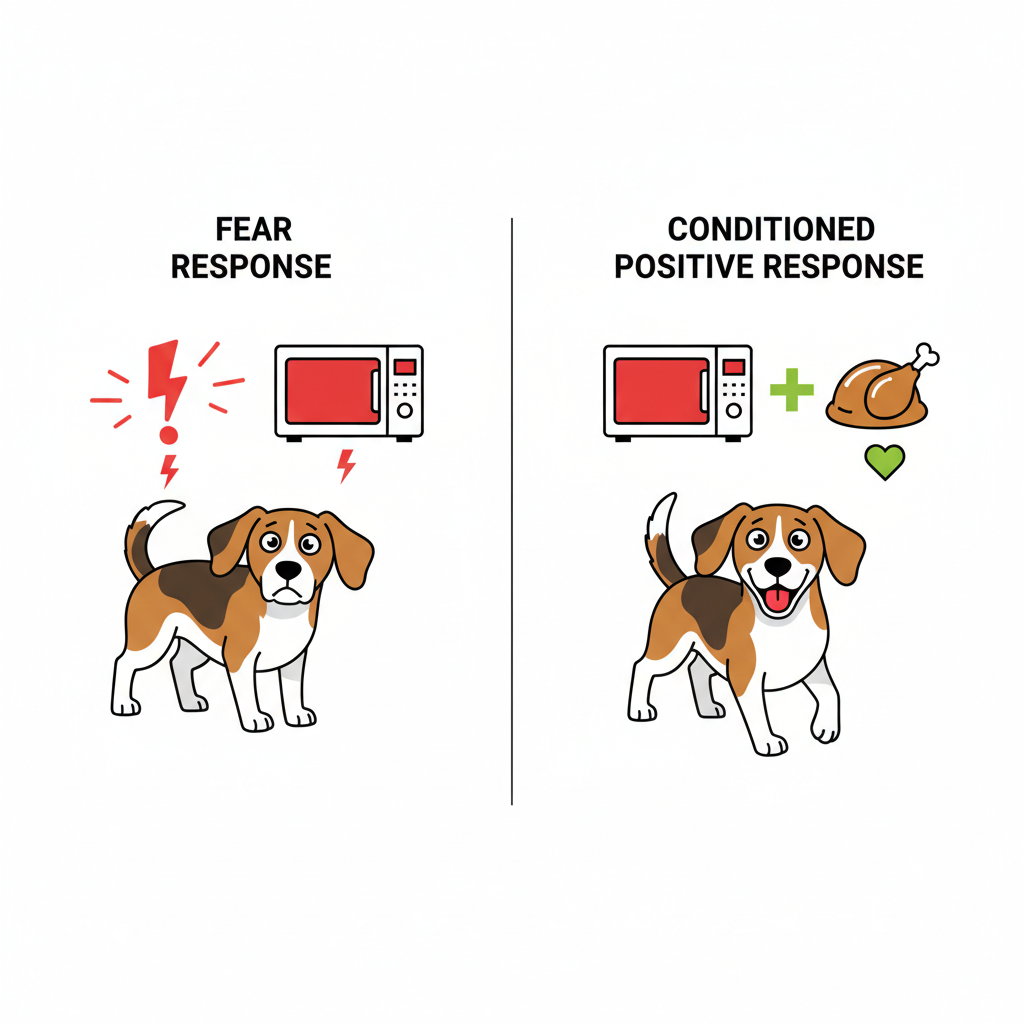
The gold standard for treating fear and phobias in dogs is a two-pronged approach known as Desensitization and Counter-Conditioning (DSCC). These two processes work together to systematically reduce the fear response and replace it with a positive one. Understanding how they function is key to implementing the training protocol correctly.
What is Desensitization?
Desensitization is the process of gradually exposing a dog to a stimulus—in this case, the microwave beep—at a level so low that it does not trigger a fear response. The core idea is to introduce the sound ‘under the radar’ of their fear threshold. The fear threshold is the point at which a stimulus becomes intense enough to provoke anxiety. By starting well below this threshold and increasing the intensity (e.g., volume) in minuscule, controlled increments over time, the dog habituates to the sound. They learn that the sound itself is not a predictor of anything bad happening.
What is Counter-Conditioning?
Counter-conditioning is the process of changing the dog’s emotional response to a stimulus. We aim to replace the fear and anxiety with a pleasant, happy emotion. This is achieved by pairing the scary stimulus (the beep) with something the dog absolutely loves and finds highly rewarding. This ‘unconditional positive stimulus’ is typically a very high-value food treat, such as cooked chicken, small pieces of cheese, or freeze-dried liver. The timing is critical: the beep must be presented, and then immediately followed by the fantastic treat. Over many repetitions, the dog’s brain begins to form a new association. The beep no longer predicts something scary; it predicts the arrival of something wonderful.
When combined, DSCC is a powerful tool. Desensitization ensures the dog is never pushed into a state of fear during training, while counter-conditioning actively builds a new, positive association. This is not about ‘toughening up’ the dog; it’s about methodically and compassionately changing their perception and emotional state.
Preparing for Success: Tools and Environment Setup
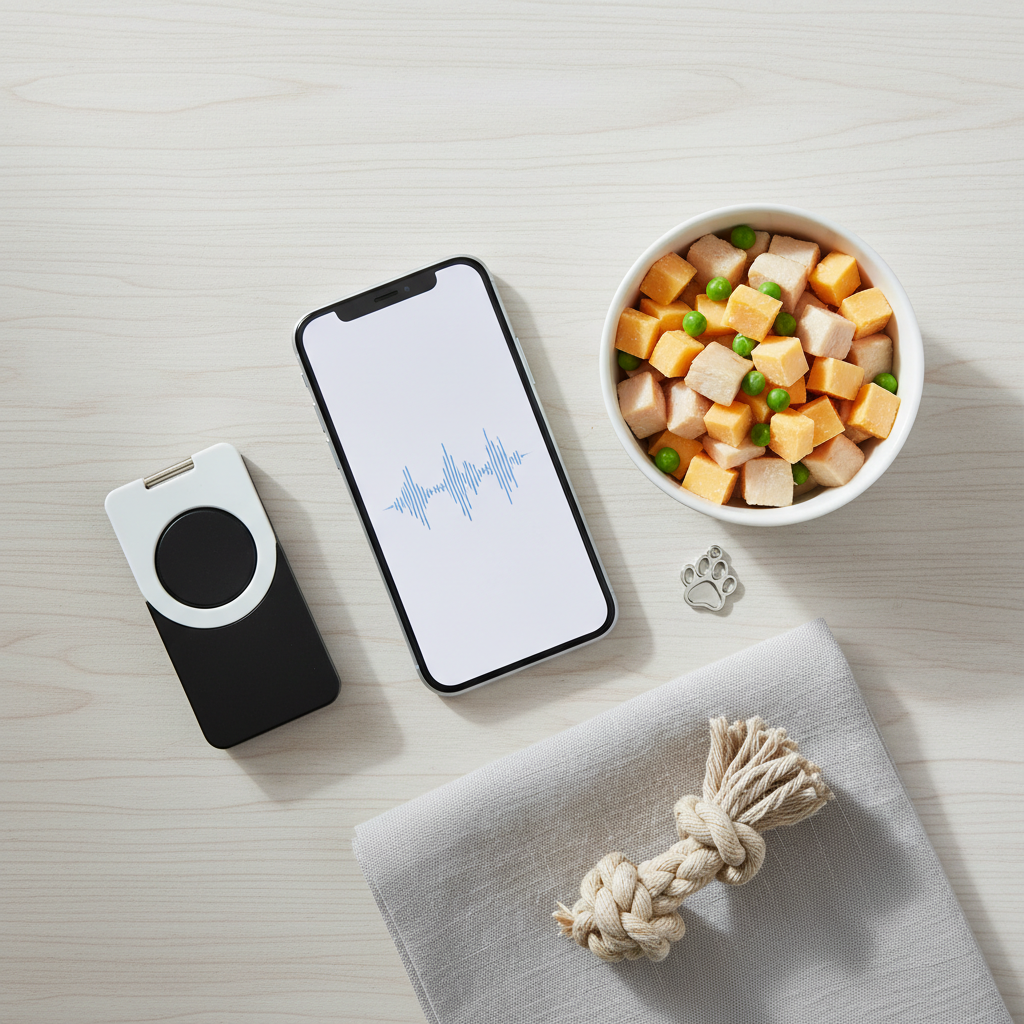
Proper preparation is crucial for the success of your DSCC program. Rushing into training without the right tools and a controlled environment can be counterproductive. Your goal is to create short, positive, and highly controlled training sessions.
Essential Tools
Before you begin, gather the following items:
- A Sound Source: You will need a way to play the beep sound at a precisely controlled volume. A smartphone, tablet, or laptop is ideal. Do not start with the actual microwave, as you cannot control its volume.
- The Beep Recording: Use your phone to record the exact sound of your microwave beep. Alternatively, you can search online for ‘microwave beep sound effect.’ Using the specific sound your dog fears is most effective.
- High-Value Treats: This is not the time for dry kibble. The treats must be exceptionally desirable to your dog to create a strong positive association. Think small, soft, and smelly. Examples include tiny pieces of boiled chicken, hot dog, cheese, or commercial training treats that your dog adores. Prepare them in advance by cutting them into pea-sized pieces.
- A Comfortable Training Space: Choose a quiet room where your dog feels relaxed and there are minimal distractions. This should not be the kitchen initially.
- A ‘Safe Zone’: Ensure your dog has access to a designated safe space, such as their crate (with the door open), a bed, or a specific room they can retreat to if they feel overwhelmed. Training should never feel forced.
Setting Up the Environment
Your initial sessions should be conducted when the house is calm. Avoid times when there is a lot of foot traffic or other noises. The training sessions themselves should be very short, especially at the beginning—aim for just 2-5 minutes once or twice a day. Ending on a positive note is far more important than pushing for duration. Inform other members of the household about the training so they do not use the actual microwave or create loud noises that could disrupt the session.
The Step-by-Step Training Protocol to Banish the Beep Fear
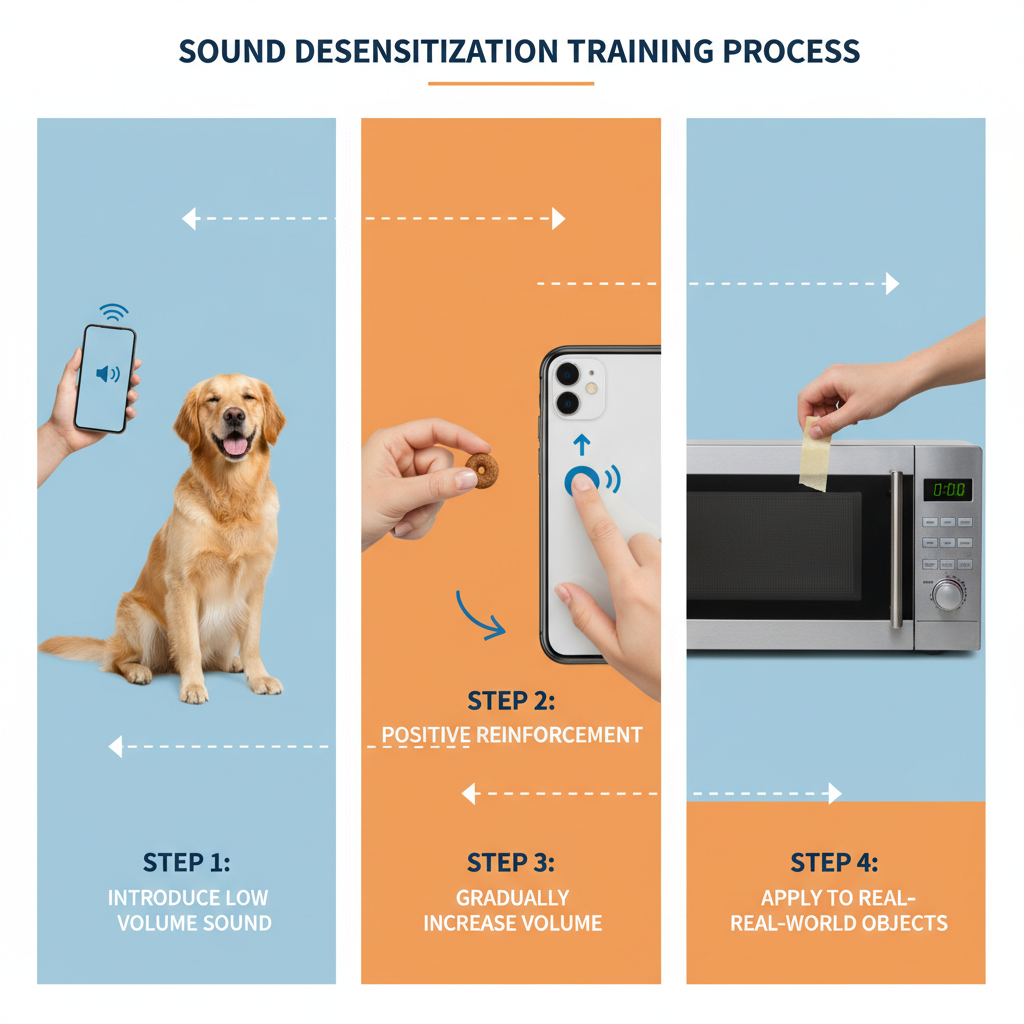
With your preparations complete, you can begin the systematic training process. Remember that patience and consistency are your greatest assets. Progress may be slow, and that is perfectly acceptable. Never proceed to the next step until your dog is completely comfortable with the current one.
-
Step 1: Identify the Fear Threshold
In your chosen training space, with your dog relaxed, play the recorded beep on your phone at the absolute lowest possible volume. Watch your dog’s body language very closely. Look for subtle signs of stress: a slight head turn, ears twitching back, a lip lick, a yawn, or a stiffening of the body. The volume at which you first see any of these subtle signs is the threshold. Your training must begin below this point.
-
Step 2: Begin Counter-Conditioning Below Threshold
Set the volume to a level just below the threshold you identified—a volume so low your dog shows zero signs of concern. Play the beep for just a second. The instant the beep ends, give your dog a high-value treat. Wait a few seconds, then repeat. The sequence is paramount: Beep, then Treat. The beep must predict the treat. Do this 5-10 times and end the session with praise.
-
Step 3: Gradual Volume Increase (Desensitization)
Over many sessions and days, once your dog is visibly happy and excited upon hearing the low-volume beep (anticipating the treat), you can begin to increase the volume. The increase should be almost imperceptible. Increase it by a single notch on your phone’s volume control. Repeat the ‘Beep, then Treat’ sequence multiple times at this new level. If at any point you see signs of fear, you have moved too quickly. Immediately lower the volume back to the last level where the dog was successful and work there for a few more sessions before trying to increase it again.
-
Step 4: Vary the Context
As your dog becomes comfortable with the sound at a moderate volume in one room, start practicing in other rooms of the house. This helps the dog generalize their newfound positive association with the beep, learning that it is safe no matter where they are.
-
Step 5: Transition to the Real Microwave
This is a significant step. Once your dog is comfortable with the recorded beep at a realistic volume, you can begin to work with the actual microwave. To start, you can try to muffle the sound by placing several layers of tape over the speaker grill. Have one person stand by the dog with treats ready, while another person presses a button to make a single, muffled beep. The instant the beep sounds, the dog gets a jackpot of treats. As the dog gets comfortable, you can slowly remove one layer of tape at a time over many sessions, gradually increasing the volume back to its normal level.
-
Step 6: Real-World Application
Finally, incorporate the beep into everyday life. Before you use the microwave to heat your food, toss a handful of treats on the floor for your dog. Then, use the microwave as normal. The beeps will occur while the dog is happily engaged in finding treats. This solidifies the association that the microwave sound predicts good things.
Management Strategies and Common Mistakes to Avoid
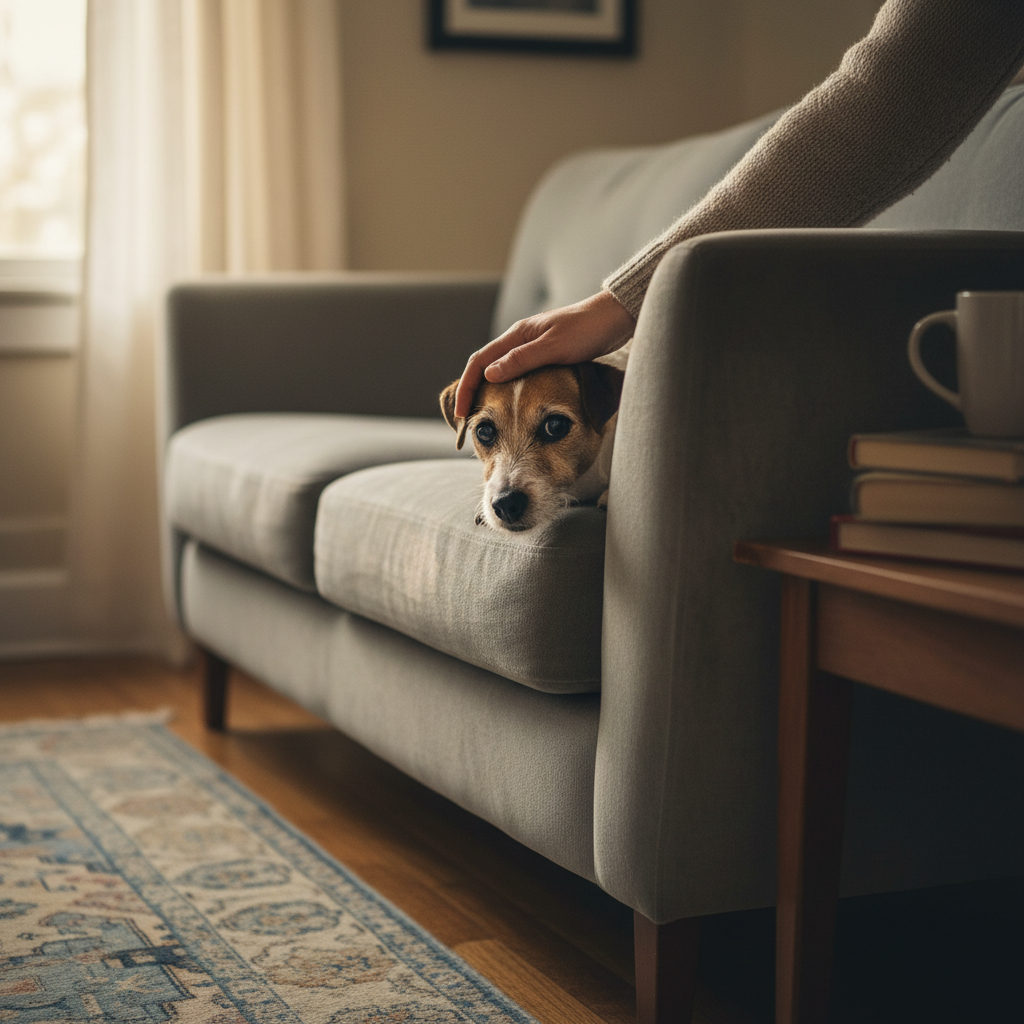
While you are actively working on the DSCC protocol, it’s important to manage the situation to prevent your dog from experiencing the full-blown fear response. Each time your dog panics, it reinforces the phobia. Management is not a long-term solution, but a crucial temporary measure to support your training.
Immediate Management Techniques
- Use Silent Mode: Many modern microwaves have an option to silence the beeps. Check your user manual for instructions. This is the easiest and most effective management tool.
- Prevent Exposure: If you cannot silence the beep, ensure your dog is in another room with a closed door, perhaps with a chew toy or a radio playing, before you use the microwave.
- Create Positive Distractions: Just before you use the appliance, engage your dog in a fun activity they enjoy, like a quick game of tug or a food puzzle, in a different part of the house.
Avoiding common training mistakes is just as important as following the steps correctly. A misstep can set your progress back and increase your dog’s anxiety.
| Common Mistakes to Avoid (DON’T) | Best Practices (DO) |
|---|---|
| Flood the dog by playing the beep repeatedly at a loud volume, hoping they’ll ‘get used to it.’ This only intensifies the fear. | Go slow and steady. Always work below the dog’s fear threshold, ensuring they remain calm and comfortable throughout the process. |
| Punish or scold the dog for being scared. This will damage your bond and associate you, not just the beep, with a negative experience. | Offer reassurance and support. Use a calm voice and remove them from the situation if they become frightened. Be their safe space. |
| Force interaction. Never drag a dog closer to the microwave or force them to stay in the room when they are afraid. | Allow the dog to choose. Give them the freedom to retreat to their safe zone whenever they feel the need. |
| Rush the process. Trying to progress too quickly is the most common reason for failure. | Be patient and observant. Watch your dog’s body language carefully and let their comfort level dictate the pace of training. |
When to Seek Professional Help
While this guide provides a robust framework, some dogs with severe phobias may require professional intervention. If you are not seeing any progress after several weeks of consistent training, or if your dog’s fear is so intense that it impacts their daily well-being, it is time to consult a professional. Look for a Certified Applied Animal Behaviorist (CAAB), a board-certified veterinary behaviorist (DACVB), or a certified professional dog trainer (CPDT-KA) with experience in treating anxiety and phobias.
Conclusion
Helping a dog overcome a fear of microwave beeps is a journey that requires patience, empathy, and consistency. By understanding the root of their fear and diligently applying the principles of desensitization and counter-conditioning, you can fundamentally change your dog’s emotional response. The goal is not just to stop the panicked behavior but to replace it with a sense of safety and even happy anticipation. Every short, successful training session is a step toward building a more confident and resilient companion.
Remember to celebrate small victories and never punish fear. Your role is to be your dog’s trusted guide through this process, reassuring them that the world, including your kitchen, is a safe place. If the challenge feels overwhelming, do not hesitate to reach out to a qualified professional. With the right approach, you can restore peace to your home and help your best friend feel secure in the face of once-terrifying sounds.