Stop Yelling! Why Scolding Your Peeing Dog Makes It 10x Worse
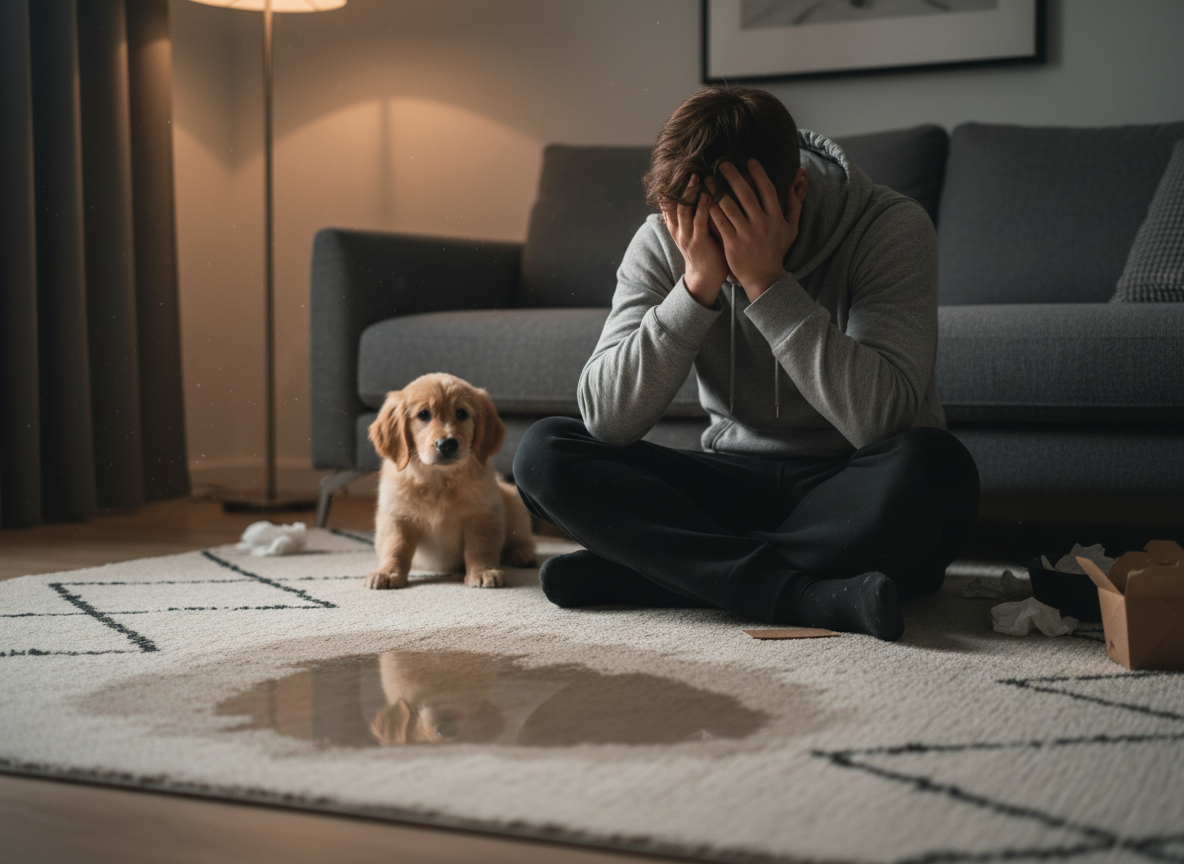
The discovery of a wet spot on your favorite rug can trigger an immediate, visceral reaction. For many dog owners, that reaction is a sharp, loud, “No!” or “Bad dog!” It feels instinctual, a way to communicate displeasure and teach a lesson. But what if this common reaction is not only ineffective but is actively damaging your relationship with your dog and sabotaging your house-training efforts? The science of canine behavior is clear: yelling at a dog for peeing indoors makes the problem significantly worse.
This approach is rooted in a fundamental misunderstanding of how dogs learn and perceive the world. They do not process guilt or connect a past action with a present punishment in the way humans do. Instead, your anger becomes a source of fear and confusion, eroding the trust that is the bedrock of any successful training. This article will deconstruct the psychological impact of scolding from a dog’s perspective and provide a comprehensive, authoritative guide to a better way. We will explore a proven, science-backed methodology built on positive reinforcement, patience, and management—a strategy that not only solves the problem of indoor accidents but also strengthens the bond between you and your canine companion.
The Canine Perspective: Why Your Dog Doesn’t Understand Your Anger

The Canine Perspective: Why Your Dog Doesn’t Understand Your Anger
To effectively train a dog, we must first attempt to see the world through their eyes. When you discover an accident that happened five minutes ago and proceed to scold your dog, you believe you are connecting the punishment to the act of urination. Your dog, however, makes a very different connection. Dogs live in the immediate moment. Their ability to link cause and effect is incredibly strong, but only within a window of one to two seconds.
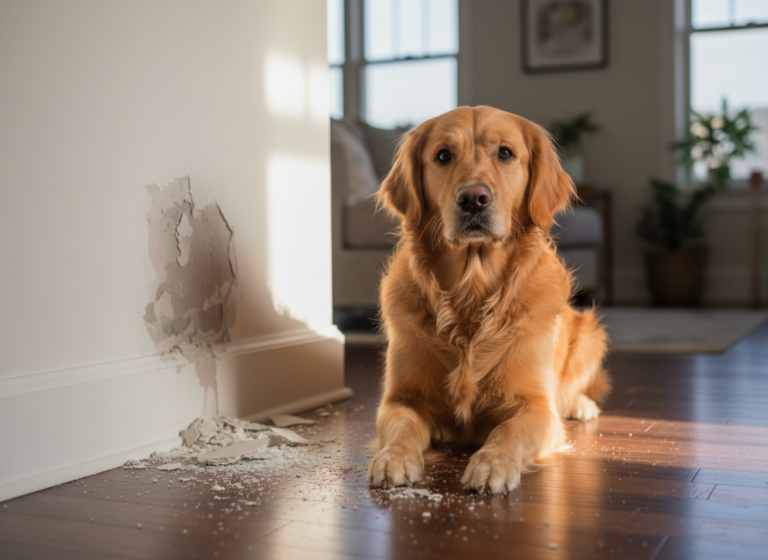
When you yell, point at the puddle, or—in a particularly outdated and harmful practice—rub their nose in it, your dog doesn’t think, “Oh, I am being punished for eliminating on this carpet.” Instead, they think, “My human has returned and is now terrifying and unpredictable.” The punishment becomes associated with your presence, not their past action. That look of ‘guilt’ you perceive—the lowered head, the tucked tail, the averted eyes—is not an admission of wrongdoing. It is a classic canine appeasement gesture, a desperate attempt to de-escalate a perceived threat. Your dog is essentially saying, “I don’t know why you are angry, but I can see that you are, and I will do whatever I can to make you stop being scary.”
Expert Takeaway: Punishment administered even seconds after the fact is ineffective. The dog will associate the penalty with the punisher (you) or the environment at the time of punishment, leading to fear and anxiety, not learning.
This fear-based association is the primary reason scolding is so detrimental. It teaches your dog that you are a source of stress. Over time, this can lead to a host of other behavioral issues, including a particularly difficult one to solve: submissive urination. This is an involuntary response where a dog urinates when feeling threatened or overly excited. Scolding a dog for an accident can directly cause or exacerbate submissive urination, creating a frustrating feedback loop where the punishment intended to stop the behavior actually triggers it.
The Vicious Cycle: How Scolding Creates ‘Sneaky’ Urinators
The Vicious Cycle: How Scolding Creates ‘Sneaky’ Urinators
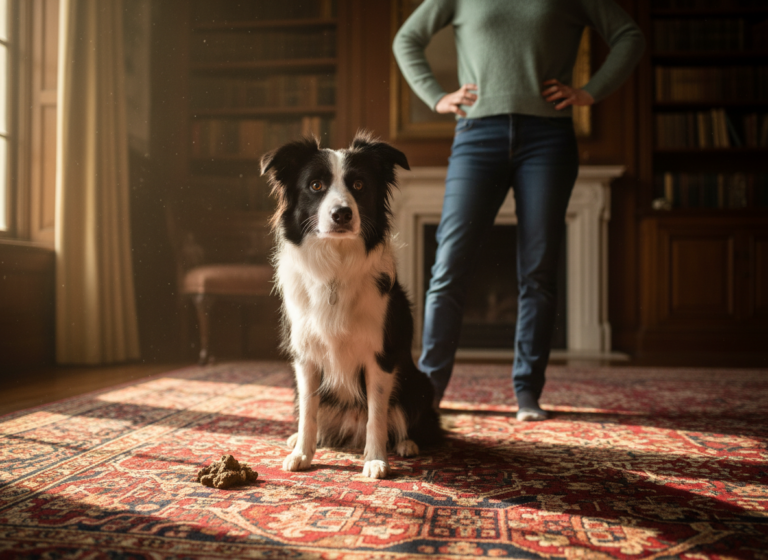
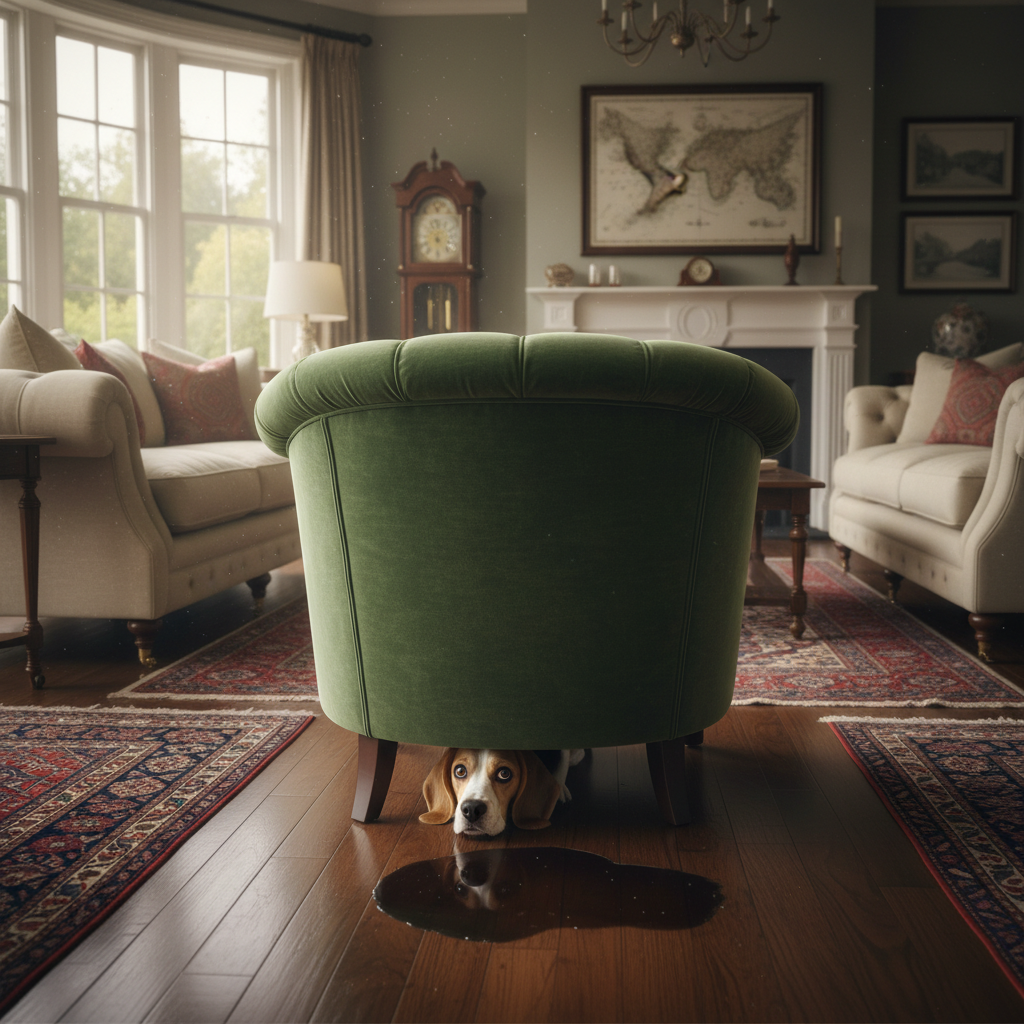
The long-term consequence of consistently scolding your dog for indoor accidents is the creation of a ‘sneaky’ or ‘closet’ urinator. The dog does learn a lesson, but it’s not the one you intended. The lesson learned is not “I should only pee outside.” The lesson learned is “It is dangerous to pee in the presence of my human.”
This is a critical distinction that explains why so many owners who use punishment-based methods find themselves at a loss. Their dog may seem to understand, yet the accidents continue. They happen in hidden places: behind the sofa, in a spare bedroom, or under a desk. The dog is not being spiteful or defiant; it is being logical based on the information it has received. It knows it needs to relieve itself, but it also knows that doing so within your line of sight results in a terrifying outburst. The only logical solution, from the dog’s perspective, is to find a safe, hidden place to go.
This behavior presents a massive setback for house-training for several reasons:
- Lost Training Opportunities: When your dog eliminates in secret, you lose the chance to witness the act, interrupt it, and redirect them to the appropriate spot outside. You also lose the crucial opportunity to reward the correct behavior.
- Increased Cleaning Burden: Hidden puddles can go undiscovered for hours or days, soaking into flooring and subflooring, making odor removal nearly impossible and permanently marking the area as an acceptable toilet spot for your dog.
- Erosion of Trust: Every scolding session chips away at your dog’s trust in you. A dog that trusts its owner is eager to please and easier to train. A dog that fears its owner is anxious, stressed, and focused on self-preservation, not on learning new rules.
Ultimately, scolding creates a communication breakdown. You are shouting in a language your dog doesn’t understand, and their resulting behavior—hiding to pee—is a clear signal that your message is not being received as intended. To fix the problem, you must change the method of communication entirely.
The Positive Reinforcement Blueprint: A Step-by-Step Guide to Effective House-Training
The Positive Reinforcement Blueprint: A Step-by-Step Guide to Effective House-Training
Abandoning punishment does not mean abandoning discipline. It means embracing a smarter, more effective strategy that motivates your dog to choose the correct behavior. This blueprint is built on three pillars: prevention, management, and positive reinforcement.
Step 1: Establish a Rock-Solid Routine
Dogs are creatures of habit. A predictable schedule is the foundation of successful house-training. Your dog’s bladder and bowels will adapt to a consistent routine. Your goal is to take them out frequently enough to prevent accidents from ever happening.
| Time/Event | Action | Rationale |
|---|---|---|
| Immediately Upon Waking | Take dog outside to potty spot. | Bladder is full after sleeping. |
| 15-20 Minutes After Meals | Take dog outside to potty spot. | Eating stimulates the digestive system. |
| After Naps or Crate Time | Take dog outside to potty spot. | Similar to waking in the morning. |
| After a Play Session | Take dog outside to potty spot. | Excitement can stimulate the need to urinate. |
| Before Bedtime | Take dog outside for a final potty break. | Empties the bladder for the night. |
| Every 2-3 Hours (for puppies) | Take dog outside proactively. | Puppies have small bladders and limited control. |
Step 2: Master Management and Supervision
When you cannot actively watch your dog, you must manage their environment to prevent mistakes. This is not a punishment; it is a tool for setting your dog up for success.
- Crate Training: Use a properly sized crate as a safe den. Most dogs will not soil their sleeping area. Use it for short periods when you cannot supervise.
- Tethering (Umbilical Method): Keep your puppy on a leash and tethered to you inside the house. You will be immediately aware of their sniffing and circling, which are pre-potty signals.
- Gated Areas: Use baby gates to restrict access to a smaller, easy-to-clean area of the house, like the kitchen.
Step 3: The Art of the Potty Break
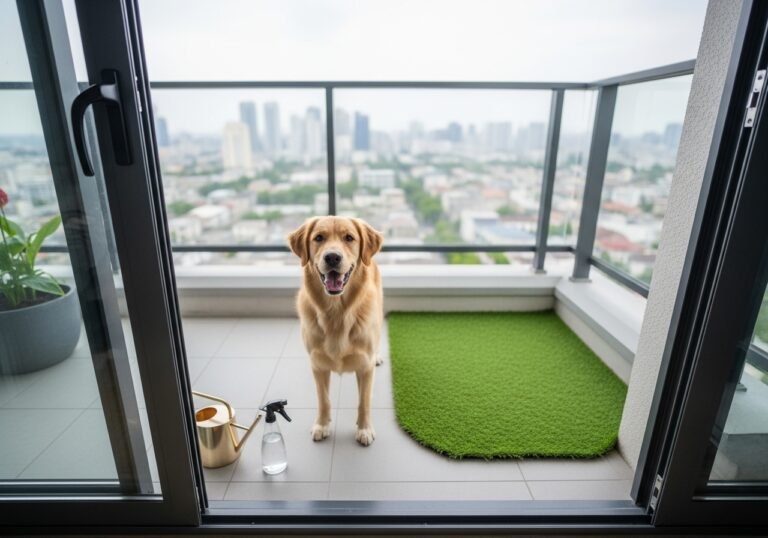
Potty breaks should be purposeful. Take your dog on a leash directly to their designated potty spot. Stand still and be ‘boring.’ Use a consistent verbal cue, such as “Go potty” or “Hurry up,” in a calm, neutral tone. This is not a time for play; it is a business trip. By minimizing distractions, you encourage them to focus on the task at hand.
Step 4: Reward, Reward, Reward!
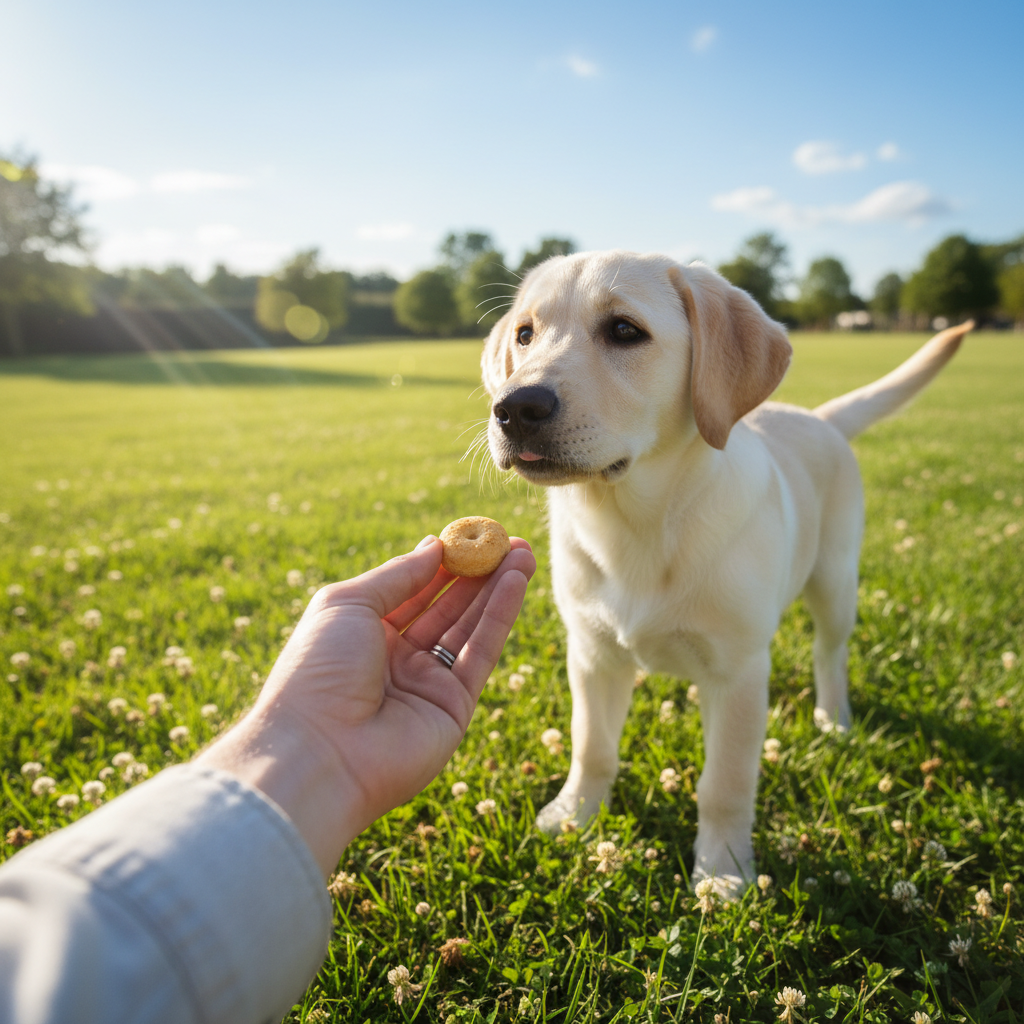
This is the most critical step. The moment your dog finishes urinating or defecating in the correct spot, you must reward them. The reward needs to be immediate and high-value.
- Enthusiastic Praise: Use a happy, excited tone of voice. “Yes! Good potty! Good dog!”
- High-Value Treats: Use a special treat that is reserved only for successful potty breaks. This could be a small piece of chicken, cheese, or a high-quality commercial treat.
- Immediate Delivery: The treat must be delivered within one second of them finishing. This forges a powerful positive association: “Peeing on this grass makes amazing things happen!”
After the reward, you can then enjoy a short play session outside as an additional bonus before heading back inside.
Accident Management: What to Do When Mistakes Happen
Accident Management: What to Do When Mistakes Happen
Even with the best management plan, accidents will happen. Your reaction in this moment is pivotal. Panicking or getting angry will undo your hard work. The correct response is calm, swift, and emotionless.
If You Find an Old Accident:
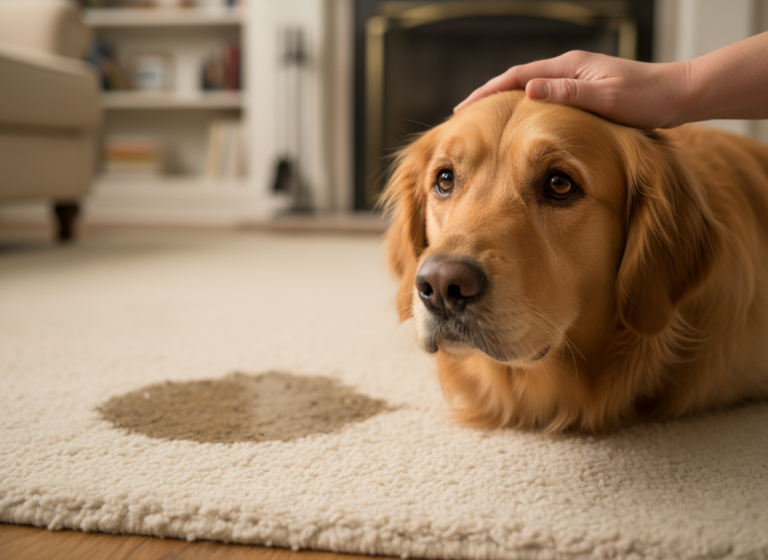
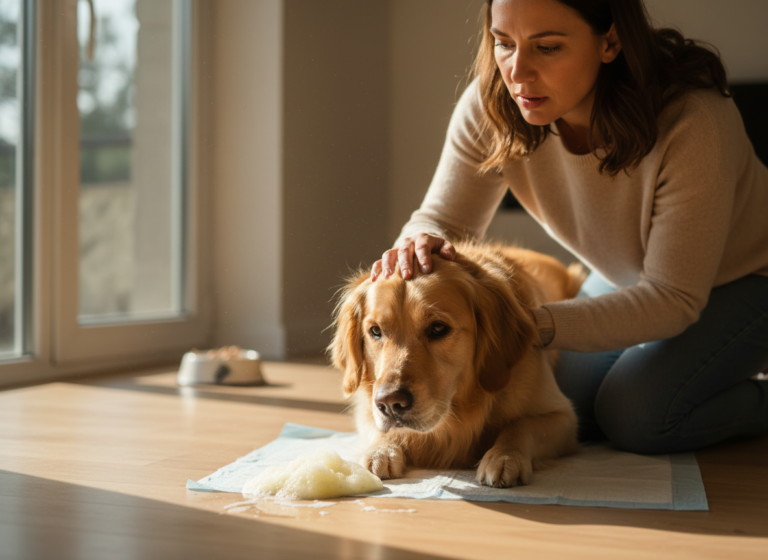
If you discover a puddle or pile that you did not witness, understand that the teachable moment is gone. There is absolutely nothing you can do to teach your dog about it after the fact. Do not say a word to your dog. Do not drag them over to it. Quietly put your dog in their crate or another room while you clean up the mess. Your focus is 100% on the cleanup, not the dog.
If You Catch Your Dog in the Act:
This is your only chance to provide a real-time correction. The goal is to interrupt, not to terrify.
- Interrupt Calmly: Make a sound that is abrupt enough to startle them into stopping mid-stream, but not so loud that it frightens them. A sharp, single clap or a quick “Oops!” is often sufficient.
- Rush Them Outside: Immediately scoop up your dog (if small enough) or quickly lead them on a leash to their designated potty spot outside.
- Encourage Them to Finish: Once outside, use your potty cue. If they finish eliminating in the correct spot, praise them calmly (not overly enthusiastically, as they may still be a bit startled from the interruption).
The Critical Importance of Enzymatic Cleaners
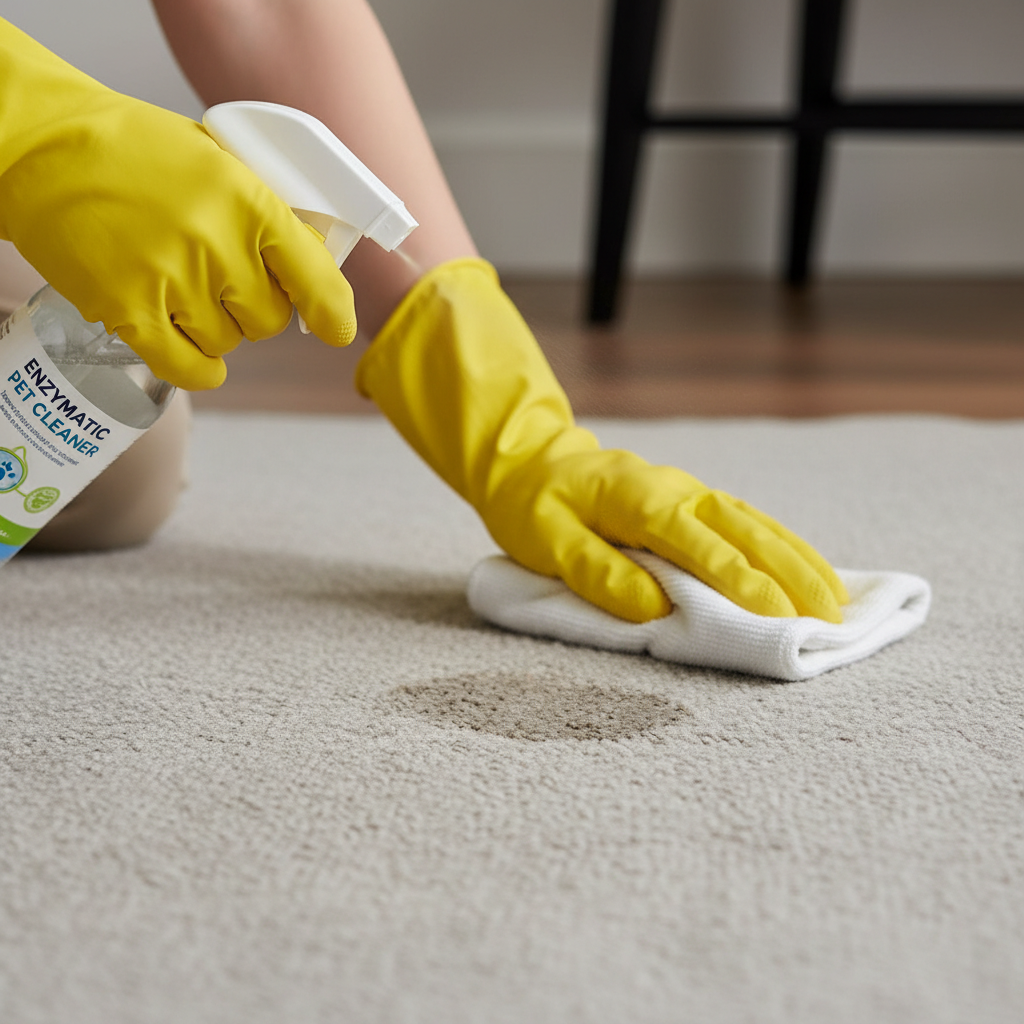
Do not underestimate the power of your dog’s nose. Standard household cleaners, even those with ammonia or vinegar, do not eliminate the microscopic protein and uric acid crystals left behind by urine. While the spot may seem clean to you, your dog can still smell it clearly, and that lingering odor acts as a powerful signpost that says, “This is an acceptable place to pee.”
You must use an enzymatic cleaner specifically designed for pet stains. These products contain beneficial bacteria and enzymes that literally break down and ‘eat’ the organic matter in the urine, permanently eliminating the odor at a molecular level. Saturate the area thoroughly, following the product’s instructions, to ensure it reaches the carpet padding or subfloor.
Pro Tip: Use a blacklight in a dark room to find old, hidden urine stains that you may have missed. They will often glow under the UV light, allowing you to treat them properly with an enzymatic cleaner.
Troubleshooting: When to Dig Deeper and When to See a Vet
Troubleshooting: When to Dig Deeper and When to See a Vet
If you are following the positive reinforcement plan with perfect consistency and your dog is still having frequent accidents, it may be time to consider underlying issues beyond basic house-training.
Submissive or Excitement Urination
This is an involuntary behavior, not a house-training issue. It’s common in puppies and timid dogs.
- Submissive Urination: Occurs when a dog feels intimidated, such as when being scolded, approached too directly, or loomed over. The solution is confidence-building, avoiding confrontational body language, and keeping greetings very low-key.
- Excitement Urination: Happens during moments of high arousal, like when you return home or when visitors arrive. To manage this, keep greetings calm and ignore the dog for the first few minutes until they have settled down. Take them out to potty before guests are scheduled to arrive.
Territorial Marking
Marking is different from a full-bladder accident. It usually involves small amounts of urine deposited on vertical surfaces. It’s a communication behavior, not a potty problem. It can be triggered by new people or pets in the home, or by neighborhood animals outside. Spaying or neutering can dramatically reduce or eliminate marking behavior. If the behavior persists, focus on managing your dog’s anxiety and restricting their access to windows and doors where they may see triggers.
When to Consult a Veterinarian
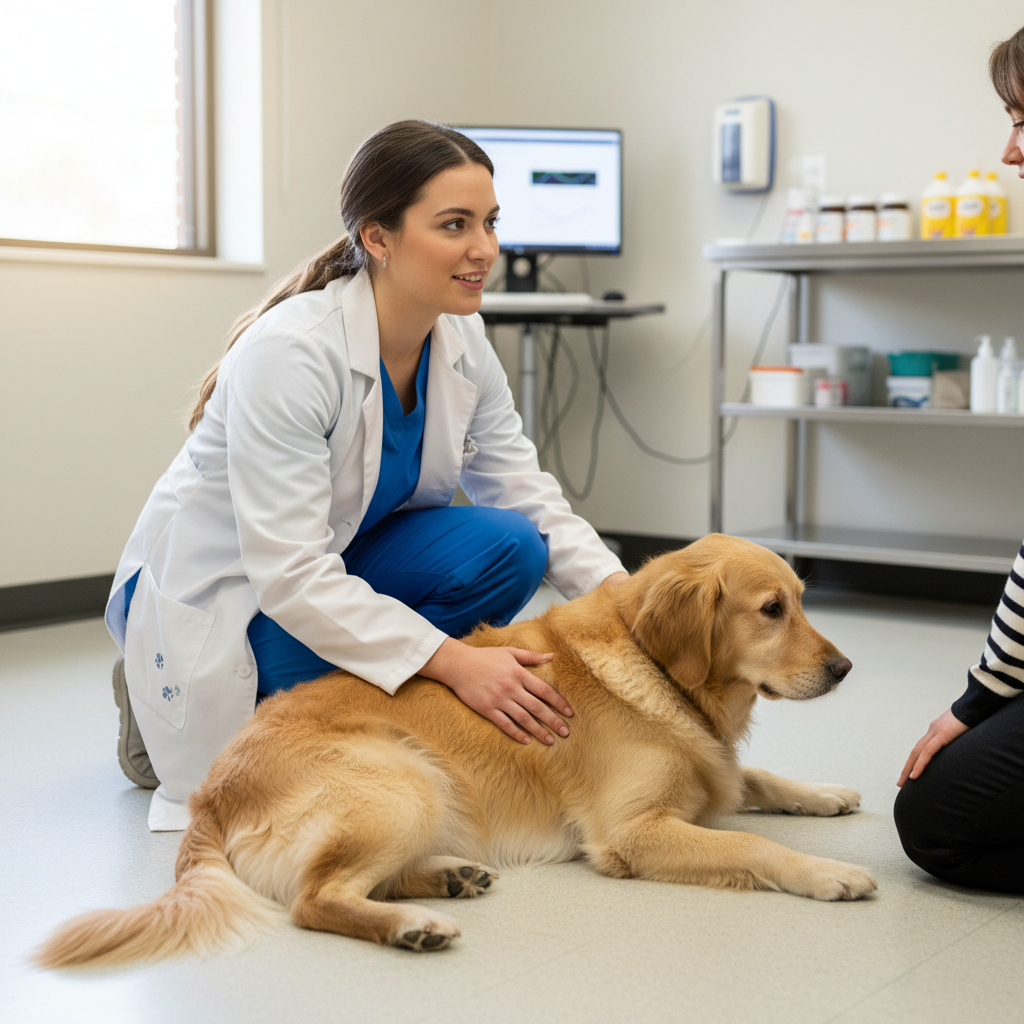
It is absolutely critical to rule out medical causes for inappropriate urination. If house-training seems to be regressing, or if a previously well-trained adult dog suddenly starts having accidents, a vet visit is your first priority. Punishing a dog for a behavior caused by a medical condition is not only ineffective but also cruel.
Potential medical causes include:
- Urinary Tract Infection (UTI): A common cause of frequent, painful urination and accidents.
- Bladder Stones or Crystals: Can cause blockages, pain, and an inability to hold urine.
- Kidney Disease: Affects the body’s ability to concentrate urine, leading to increased thirst and urination.
- Diabetes: Similar to kidney disease, it often presents with excessive drinking and urination.
- Canine Cognitive Dysfunction (in senior dogs): Similar to dementia in humans, it can lead to a loss of house-training habits.
- Spay Incontinence: A hormonal issue that can affect some spayed female dogs, causing them to leak urine, often while resting.
Your veterinarian can perform a urinalysis and other diagnostic tests to identify or rule out these conditions, ensuring your training plan is built on a foundation of good health.
Conclusion
Moving away from scolding is not about being permissive; it’s about being a more intelligent and effective trainer. The frustration of discovering an accident is real, but channeling that frustration into anger only serves to frighten your dog and complicate the training process. By understanding that your dog is not acting out of spite but out of a lack of clear instruction, you can shift your entire approach.
House-training is a partnership built on trust, consistency, and clear communication in a language your dog understands—the language of positive reinforcement. Every successful trip outside is a victory to be celebrated. Every accident is simply a data point, an indication that the schedule needs adjustment or management needs to be tightened. Be patient with your dog, but also be patient with yourself. By replacing yelling with a predictable routine, diligent management, and joyful rewards, you will not only achieve a clean house but also cultivate a deeper, more trusting, and more resilient bond with your canine companion for years to come.