Stop The Pulling! How to Master Loose Leash Walking in 10 Minutes a Day
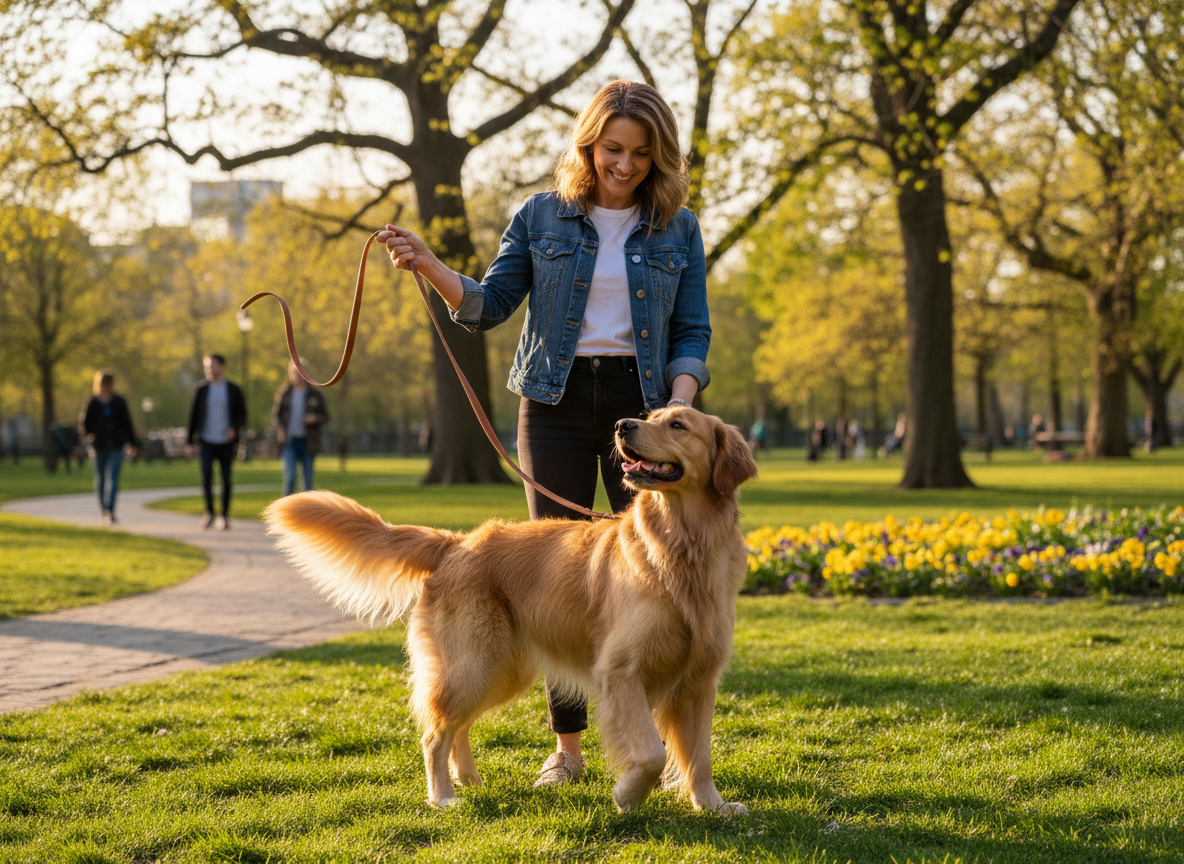
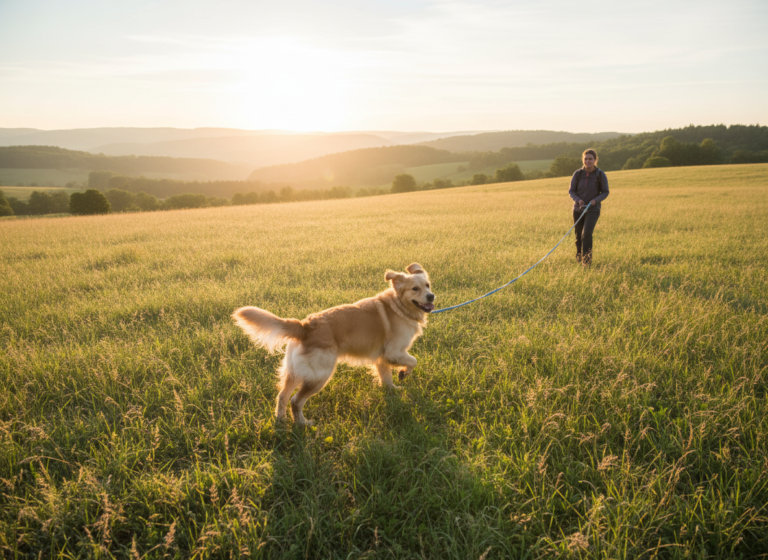
The daily walk should be a highlight for both you and your canine companion—a time for bonding, exercise, and exploring the world together. Yet for many pet owners, it’s a dreaded chore characterized by a constantly tight leash, a sore arm, and a feeling of being dragged from one point to another. If this sounds familiar, you are not alone. Leash pulling is one of the most common behavioral challenges dog owners face. It’s not a sign of dominance or stubbornness; it’s often a simple case of a dog’s natural enthusiasm and a communication gap between species.
The good news is that you can bridge this gap and transform your walks. It doesn’t require hours of grueling training or harsh, punitive equipment. With the right knowledge, the correct tools, and a commitment of just 10 minutes a day, you can teach your dog that walking politely by your side is the most rewarding way to move. This comprehensive guide will provide you with a step-by-step protocol rooted in modern, positive reinforcement science. We will deconstruct the behavior, equip you for success, and provide a clear plan to master loose leash walking, turning your daily drag into a daily delight.
Why Dogs Pull: Deconstructing the Behavior
Understanding the Root Cause of Leash Pulling
Before we can correct a behavior, we must first understand its origin. Dogs don’t pull on the leash to annoy you or to assert dominance. Their motivations are far more straightforward and instinctual. By understanding the ‘why,’ we can address the problem with empathy and more effective techniques.
The World is an Exciting Place
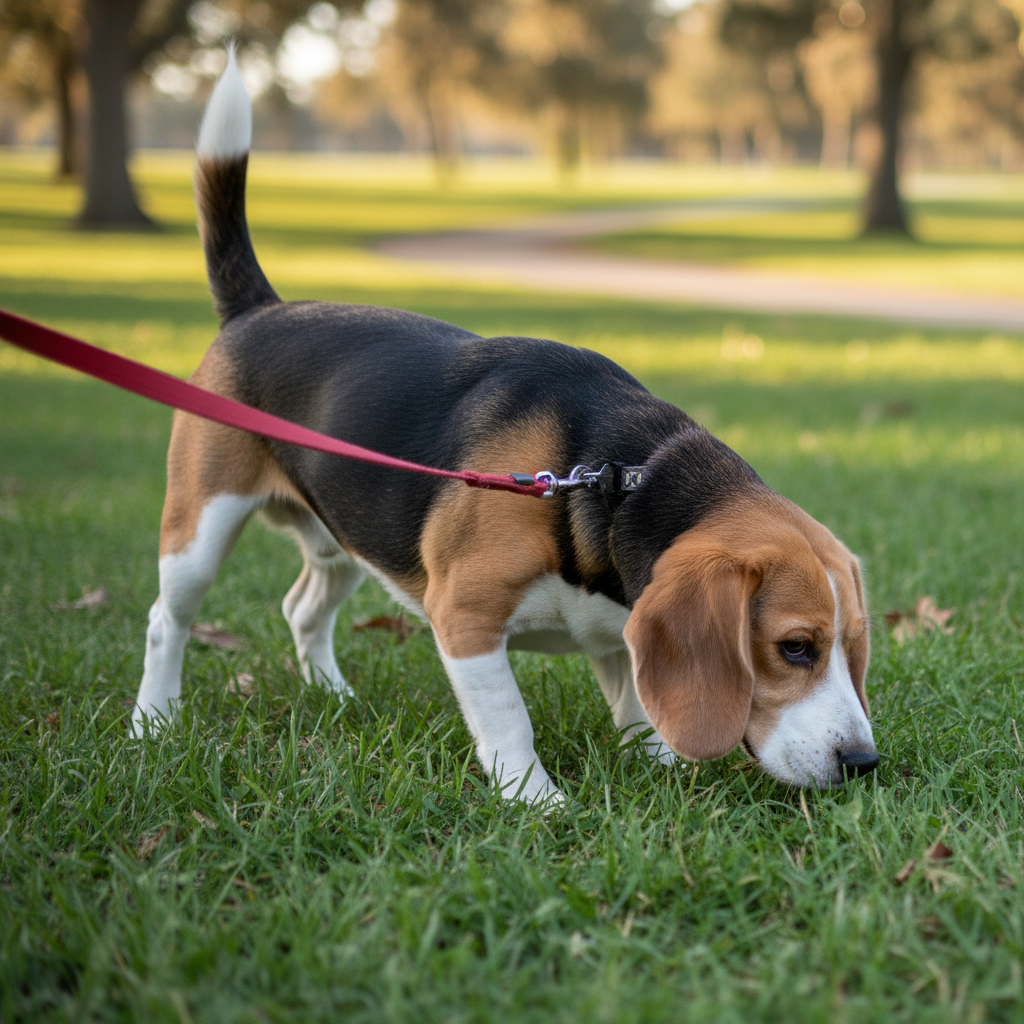
A dog’s primary sense for interpreting the world is its nose. The outdoors is a symphony of fascinating smells—messages from other dogs, traces of squirrels, the scent of a discarded food wrapper. Dogs naturally walk faster than humans, and their desire to get to the next interesting scent is a powerful motivator. In essence, they are pulling toward something they find highly rewarding.
The Opposition Reflex
This is a key concept in leash training. The opposition reflex is an animal’s natural instinct to push against pressure. When you pull back on the leash, your dog’s automatic physical response is to pull forward with equal or greater force. This creates a frustrating cycle: the dog pulls, you pull back, the dog pulls harder. Many traditional training methods that rely on leash ‘corrections’ or yanks inadvertently trigger and strengthen this very reflex, making the problem worse over time.
Unintentional Reinforcement
Think about what happens when your dog pulls. Eventually, they get where they wanted to go—that interesting patch of grass, that fire hydrant, that other dog across the street. When pulling results in reaching the desired object or location, the behavior is successfully reinforced. The dog learns a simple equation: Pulling = Forward Motion = Reward. Our goal is to change this equation to Loose Leash = Forward Motion = Reward.
Expert Tip: Shift your mindset from ‘stopping bad behavior’ to ‘teaching a new skill.’ Your dog isn’t being bad; they simply haven’t been taught the human rules for a pleasant walk. Your job is to be a patient and clear teacher.
The Right Tools for the Job: Choosing Your Walking Equipment
Gearing Up for Success
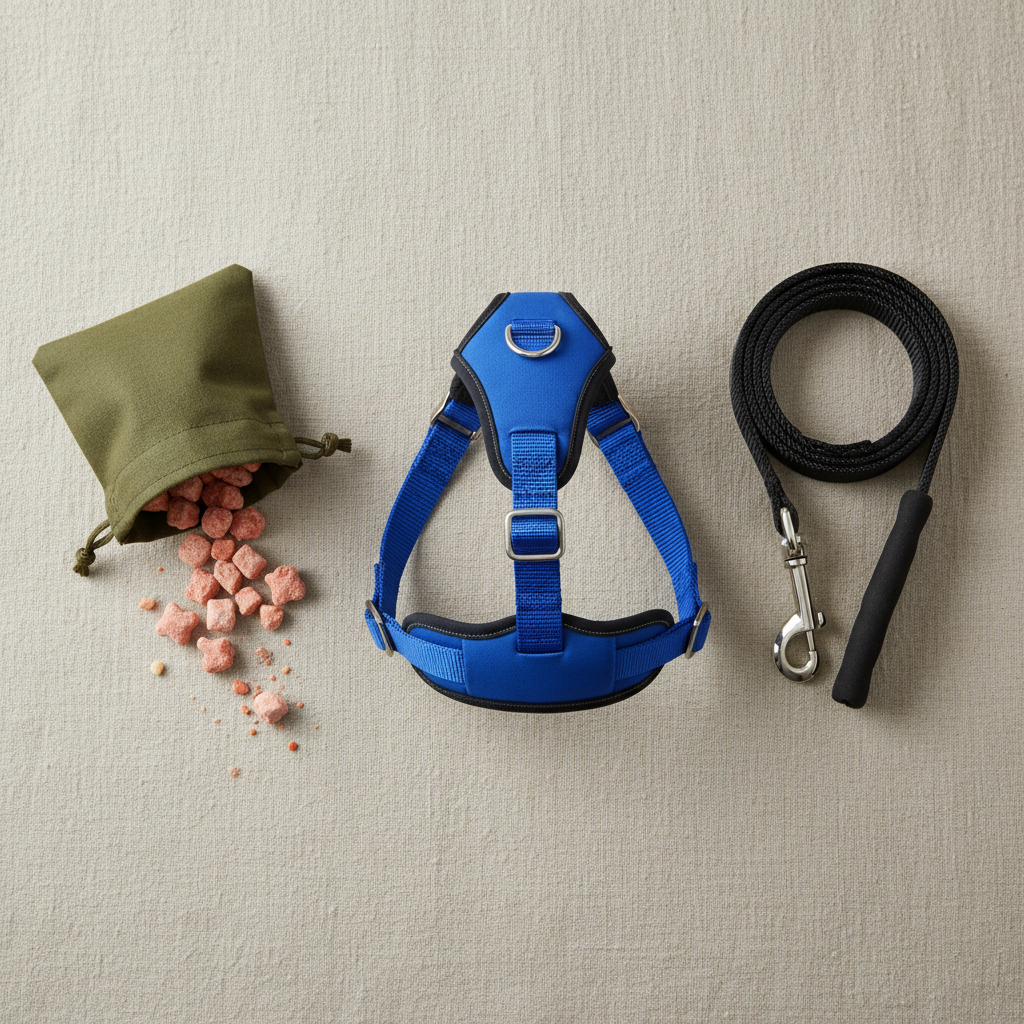
Effective training begins with the right equipment. The goal is not to control the dog through force, but to manage them safely and communicate clearly while you teach new skills. The wrong tools can cause discomfort, pain, and even hinder your training progress. Here’s what you need to create a positive learning environment.
Harnesses vs. Collars
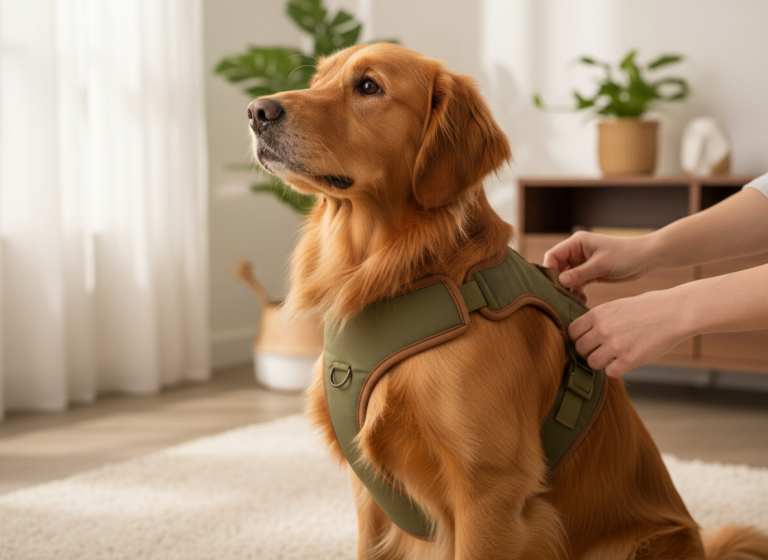
While standard flat collars are fine for holding ID tags, they are not ideal for training a dog that pulls. Pressure on a collar is concentrated on the dog’s trachea, which can lead to choking, coughing, and long-term damage to the neck and thyroid. For training, a well-fitted harness is a superior and safer choice.
Specifically, a front-clip harness is the most recommended tool for managing pulling. These harnesses have a leash attachment point on the chest strap. When the dog pulls, the pressure gently redirects their momentum, turning them back toward you instead of allowing them to surge forward. This disrupts the pulling cycle without causing pain.
The Leash
Simplicity is best. A standard 6-foot leash made of nylon or leather is the ideal tool. This length provides enough room for the dog to move comfortably but keeps them close enough for you to communicate and reward them effectively. Avoid retractable leashes for training. They teach dogs that pulling extends the leash, rewarding the very behavior you’re trying to eliminate, and they offer very little control in unexpected situations.
High-Value Rewards
Positive reinforcement is the core of this training plan. To make it work, your rewards must be more appealing than the environmental distractions. This is where high-value treats come in. Kibble might work in your living room, but it won’t compete with a squirrel on a walk. High-value treats are small, soft, smelly, and something your dog absolutely loves but doesn’t get all the time. Think small pieces of cooked chicken, cheese, or commercial training treats.
| Equipment Type | Recommended for Training | Reasoning |
|---|---|---|
| Front-Clip Harness | Highly Recommended | Redirects forward momentum without choking, making pulling less effective and non-rewarding. |
| Back-Clip Harness | Acceptable | Safer than a collar, but can still encourage pulling by leveraging the dog’s powerful chest (sled dog effect). |
| Standard 6-Foot Leash | Highly Recommended | Provides optimal control and space for training exercises. Predictable length helps the dog learn boundaries. |
| Retractable Leash | Not Recommended | Teaches dogs to pull to gain freedom, offers poor control, and can be dangerous. |
| Flat Collar / Martingale Collar | Use with Caution | Can put pressure on the trachea. Martingales are designed to prevent slipping, not to stop pulling. |
| Prong/Choke/Shock Collars | Strongly Discouraged | These tools rely on pain and fear, which can create anxiety, aggression, and a negative association with walks and with you. |
The 10-Minute Daily Training Protocol: A Step-by-Step Guide
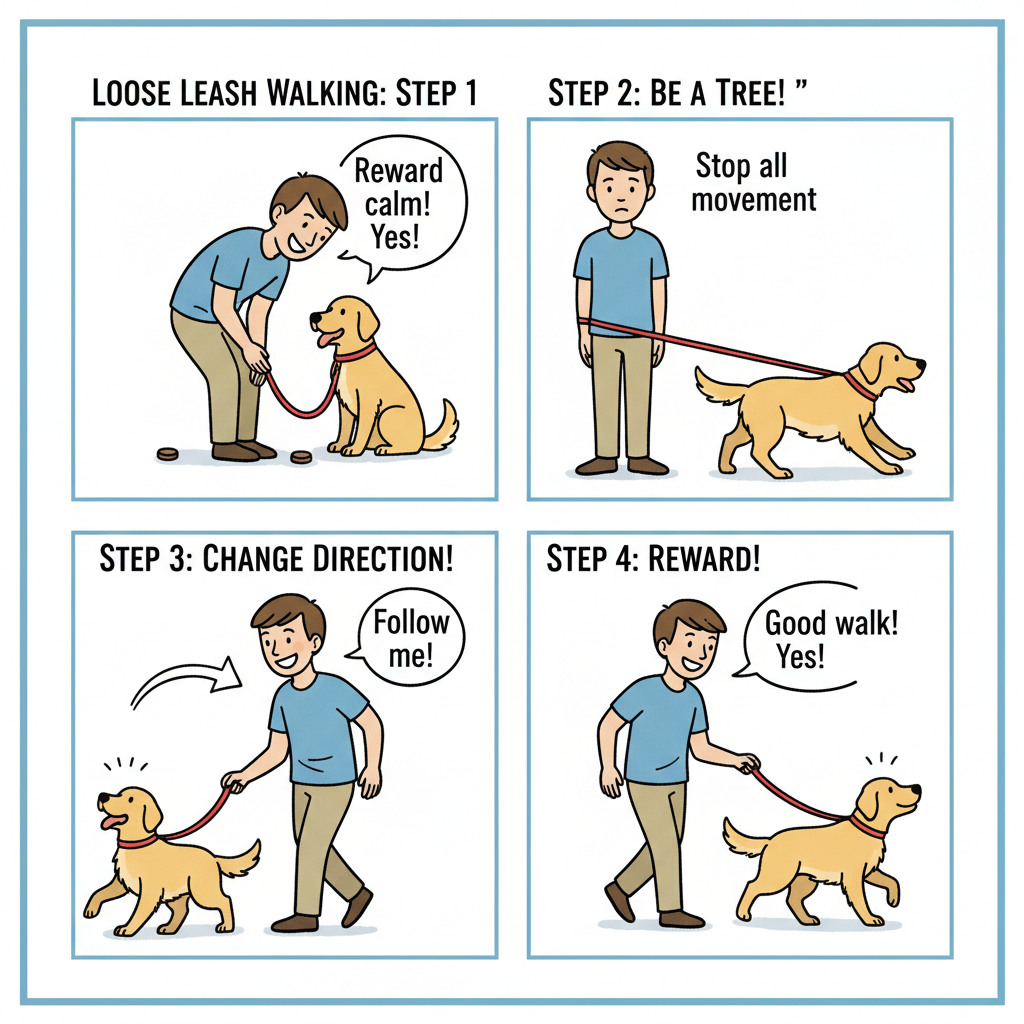
Your Daily 10-Minute Loose Leash Session
Consistency is more important than duration. A focused 10-minute session every day will build skills more effectively than one long, frustrating session on the weekend. Find a low-distraction environment to start, like your hallway, backyard, or a quiet garage.
Step 1: Charge the Reward Zone (Minutes 1-2)
The goal is to teach your dog that the area right by your side (your left or right, be consistent) is a fantastic place to be. Stand still. Whenever your dog is in that ‘reward zone’ next to your leg, calmly drop a treat on the ground for them. Don’t use any commands. Let them discover that proximity to you predicts rewards. Do this for two minutes to build a strong positive association with being near you.
Step 2: The ‘Be a Tree’ Method (Minutes 3-5)
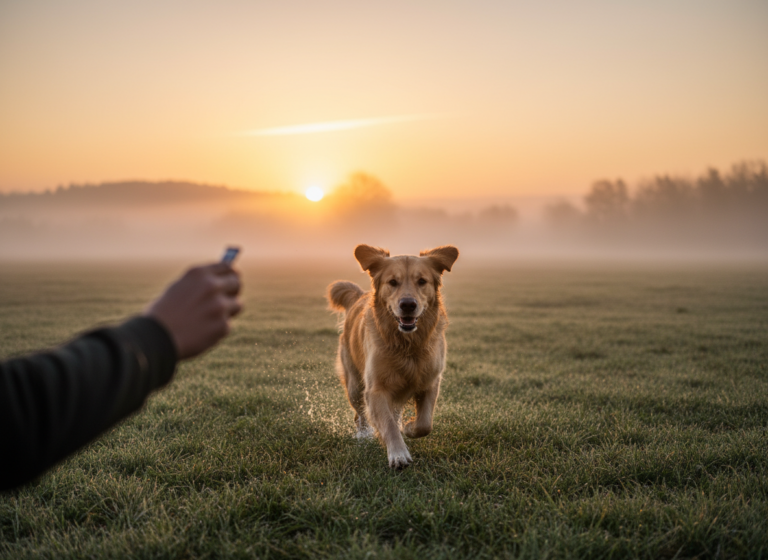
Now, begin to walk slowly. The very instant you feel tension on the leash, stop moving completely. Stand still and silent like a tree. Do not pull back or yank the leash. Simply hold your ground. Wait. The moment your dog releases the tension on the leash—even if they just take one step back or turn to look at you—mark the behavior with a verbal ‘Yes!’ and reward them in the reward zone by your side. Then, begin walking again. They will quickly learn that a tight leash stops all movement, while a loose leash allows the walk to continue.
Step 3: The ‘U-Turn’ Game (Minutes 6-8)
This step teaches your dog to pay attention to you. As you walk, just before your dog is about to hit the end of the leash, cheerfully say ‘This way!’ and pivot 180 degrees, walking in the opposite direction. The goal is to turn before the leash gets tight. When your dog turns and catches up to you, reward them enthusiastically as they enter the reward zone. This game makes you unpredictable and fun to follow, encouraging your dog to keep an eye on where you’re going.
Step 4: Rewarding the Choice (Minutes 9-10)
For the final two minutes, focus on actively rewarding your dog for making the right choice. As you walk, any time the leash is loose and your dog is in the reward zone, give them a treat. You are not luring them; you are capturing a behavior they are offering. This reinforces their decision to walk politely. Start with a high rate of reinforcement (a treat every few steps) and gradually increase the number of steps between rewards as they become more proficient.
Troubleshooting Common Hurdles and Mistakes
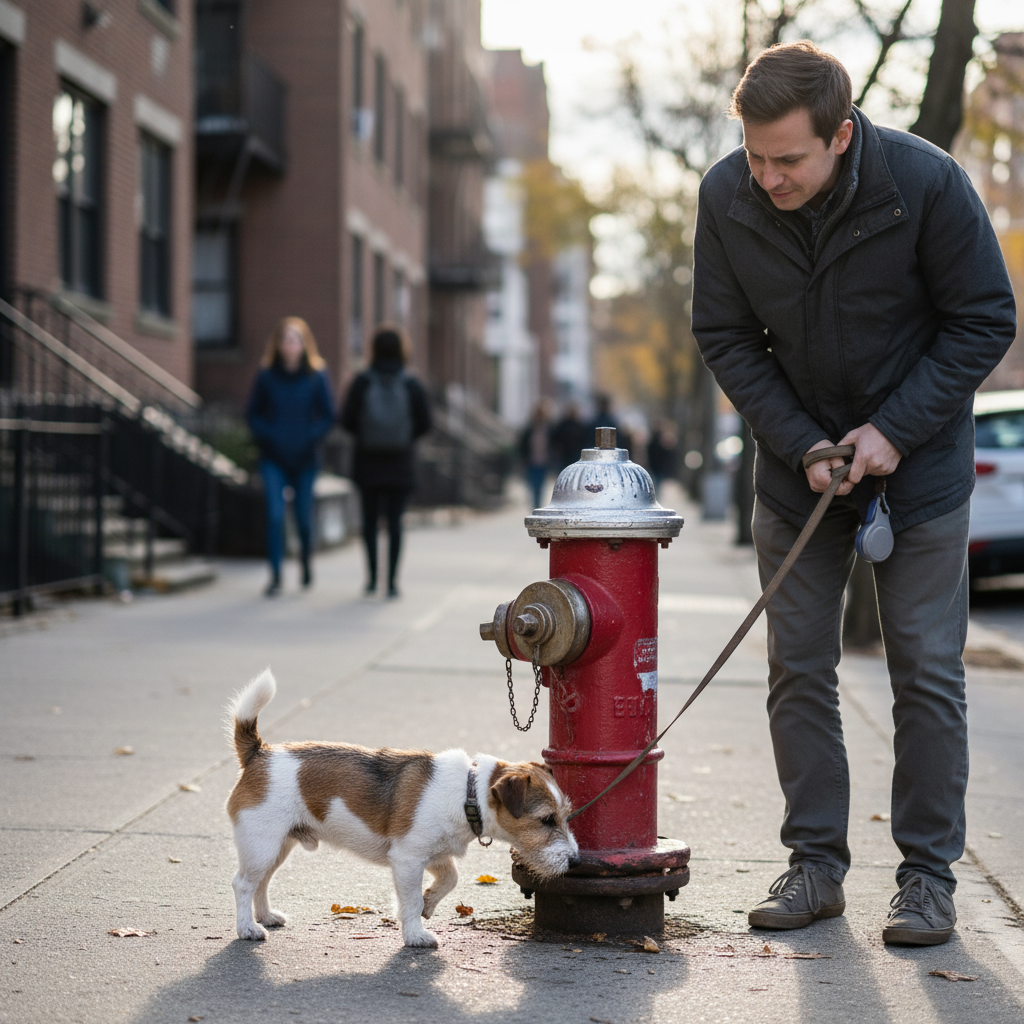
Navigating Common Loose Leash Challenges
Training is rarely a perfectly linear process. You will encounter setbacks and specific challenges. Anticipating these hurdles and knowing how to respond will keep you on the path to success.
‘My Dog is Too Distracted by Smells!’
This is the most common challenge. If your dog is more interested in the ground than your treats, it means the environment is too stimulating for their current skill level.
- Increase Treat Value: Your rewards must be better than the distraction. If you’re using dry biscuits, upgrade to something more enticing like freeze-dried liver or small bits of cheese.
- Decrease Distractions: Go back to practicing in a less distracting environment. Master the skills indoors or in your yard before moving to the sidewalk.
- Allow ‘Sniff Breaks’: A walk is for your dog’s enrichment. On your actual walks (outside of the 10-minute training session), build in planned ‘sniff breaks.’ Use a cue like ‘Go sniff!’ and let them explore for a minute as a reward for a period of good walking.
‘What About Lunging at Dogs or People?’
Lunging, barking, and over-excitement on leash toward specific triggers is often a sign of reactivity, which is different from general pulling. While the loose leash techniques form a good foundation, reactivity is a more complex issue rooted in fear, anxiety, or frustration. If your dog is reactive, it is highly recommended that you consult a certified professional dog trainer or veterinary behaviorist for a specialized behavior modification plan.
Common Mistakes to Avoid
- Tension is the Enemy: Avoid keeping a constantly tight leash out of habit. If there’s no slack, your dog can’t learn the difference between a tight and a loose leash. Try to keep your arm relaxed.
- Nagging or Repeating Cues: Don’t pull, jerk, or ‘pop’ the leash. Let the equipment and your lack of movement do the teaching. Similarly, avoid repeating commands like ‘Heel!’ or ‘With me!’. This is about teaching a default behavior, not a formal command.
- Impatience: This is a skill that takes time to build. Every dog learns at a different pace. Celebrate small successes and don’t get discouraged by off-days. Keep your training sessions short, positive, and fun.
From Training Session to Real-World Walks
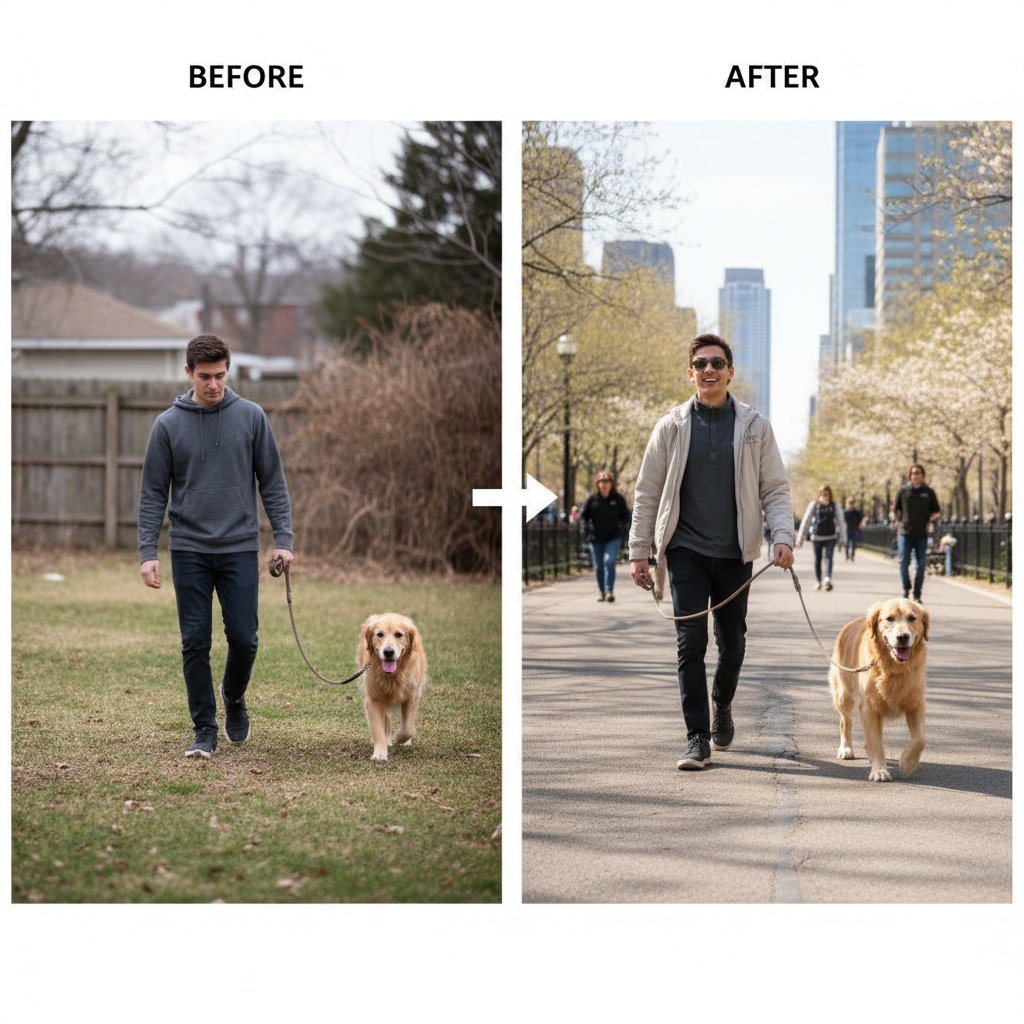
Integrating Your Skills into Everyday Life
The 10-minute training session is your laboratory. The daily walk is where you apply the experiment. The key to long-term success is gradually bridging the gap between the controlled training environment and the unpredictable real world.
The 80/20 Rule
It’s unrealistic to expect a perfect loose leash walk from start to finish, especially in the beginning. Apply the 80/20 rule. For 80% of the walk, use your training tools (front-clip harness) and focus on reinforcing the loose leash skills you’ve practiced. For the other 20%—perhaps a stretch in a park or a field—you can switch to a long line (with supervision) or allow for a ‘sniff break’ where the rules are more relaxed. This prevents both you and your dog from becoming frustrated or burnt out.
Gradually Increase the Difficulty
Once your dog has mastered loose leash walking in your backyard, don’t immediately head to the busiest street in town. Increase the level of distraction methodically.
- Level 1: Indoors / Quiet Backyard
- Level 2: Front driveway / Quiet sidewalk with no one around
- Level 3: Your neighborhood block during a quiet time of day
- Level 4: A quiet park or trail
- Level 5: A busier street with more foot traffic
If your dog starts to struggle at a new level, simply take a step back to the previous level for a few more sessions to build their confidence before trying again.
Final Thought: Remember that every step your dog takes on a loose leash is a success. The goal isn’t perfection; it’s progress. By investing this time, you are not just teaching a behavior—you are building a stronger line of communication and a more harmonious partnership with your dog.
Conclusion
Leash pulling is a solvable problem. It’s a behavior born from instinct and enthusiasm, not defiance. By abandoning the outdated notion of forceful corrections and embracing a modern, communication-based approach, you can fundamentally change your walking experience. The 10-minute daily protocol outlined in this guide is more than just a set of exercises; it’s a new way of interacting with your dog. It teaches them to pay attention to you, to see you as the source of all good things, and to understand that cooperation is far more rewarding than pulling.
Stay patient, be consistent, and celebrate every small victory. The journey to mastering loose leash walking is an investment in your relationship. Soon, the dread of being pulled down the street will be replaced by the simple joy of a peaceful stroll with your best friend by your side.