Stop The Embarrassment! How To Stop Your Dog Sniffing Crotches Instantly
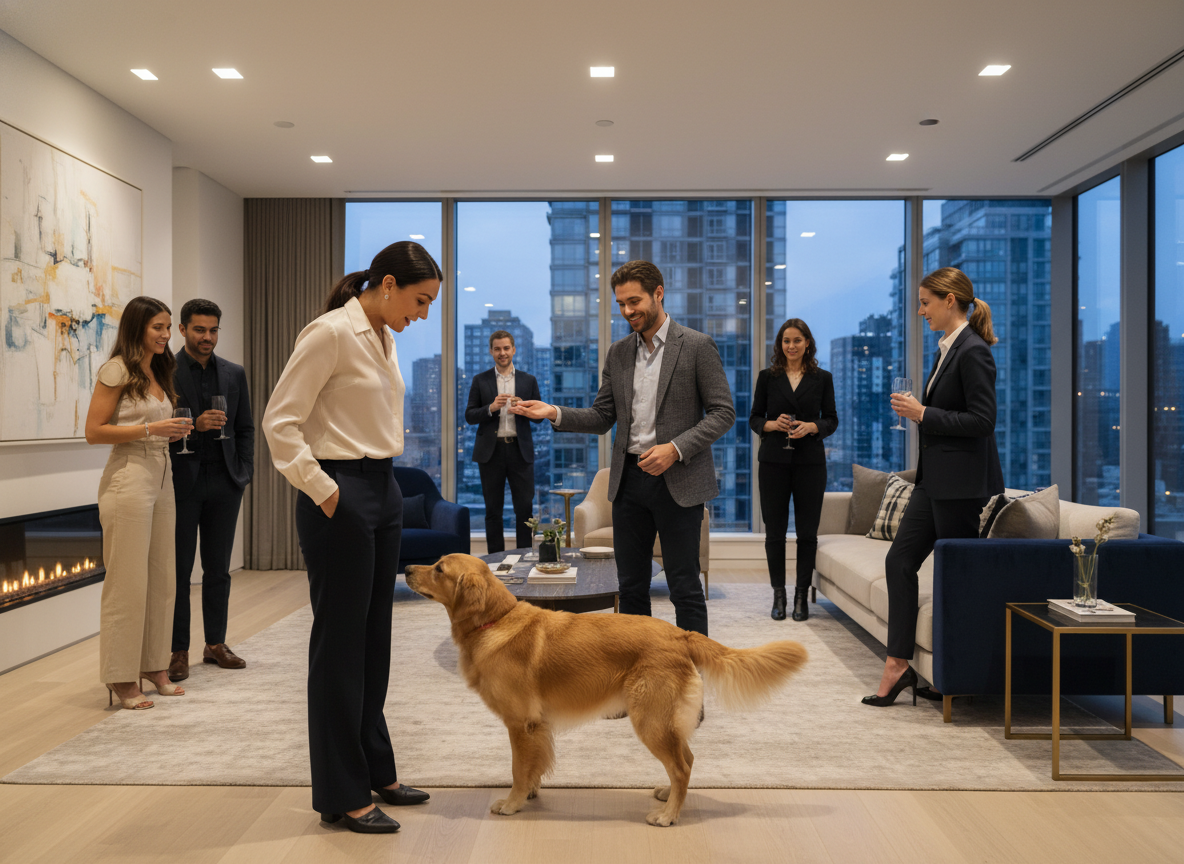
Few moments can disrupt a pleasant social gathering quite like a dog making a direct, enthusiastic beeline for a guest’s crotch. It’s a behavior that can leave owners feeling mortified and guests feeling uncomfortable. If you’ve found yourself apologizing profusely while trying to pull your dog away, you are not alone. This behavior, while socially awkward for humans, is a perfectly natural and fundamental part of canine communication. It’s not a sign of dominance, perversion, or bad manners in their world; it’s how they gather vital information.
Understanding this distinction is the first step toward resolving the issue. Your dog isn’t trying to embarrass you. They are simply using their most powerful sense—smell—to understand the world and the people in it. The goal, therefore, is not to punish this instinct but to channel it appropriately. This comprehensive guide will delve into the science behind why dogs perform this intimate form of greeting. More importantly, it will provide a clear, humane, and highly effective step-by-step training protocol to manage and redirect the behavior. By the end of this article, you will be equipped with the knowledge and techniques to teach your dog more polite ways to say hello, transforming awkward encounters into positive social interactions.
Why Your Dog is Obsessed with Crotch Sniffing: A Scientific Explanation
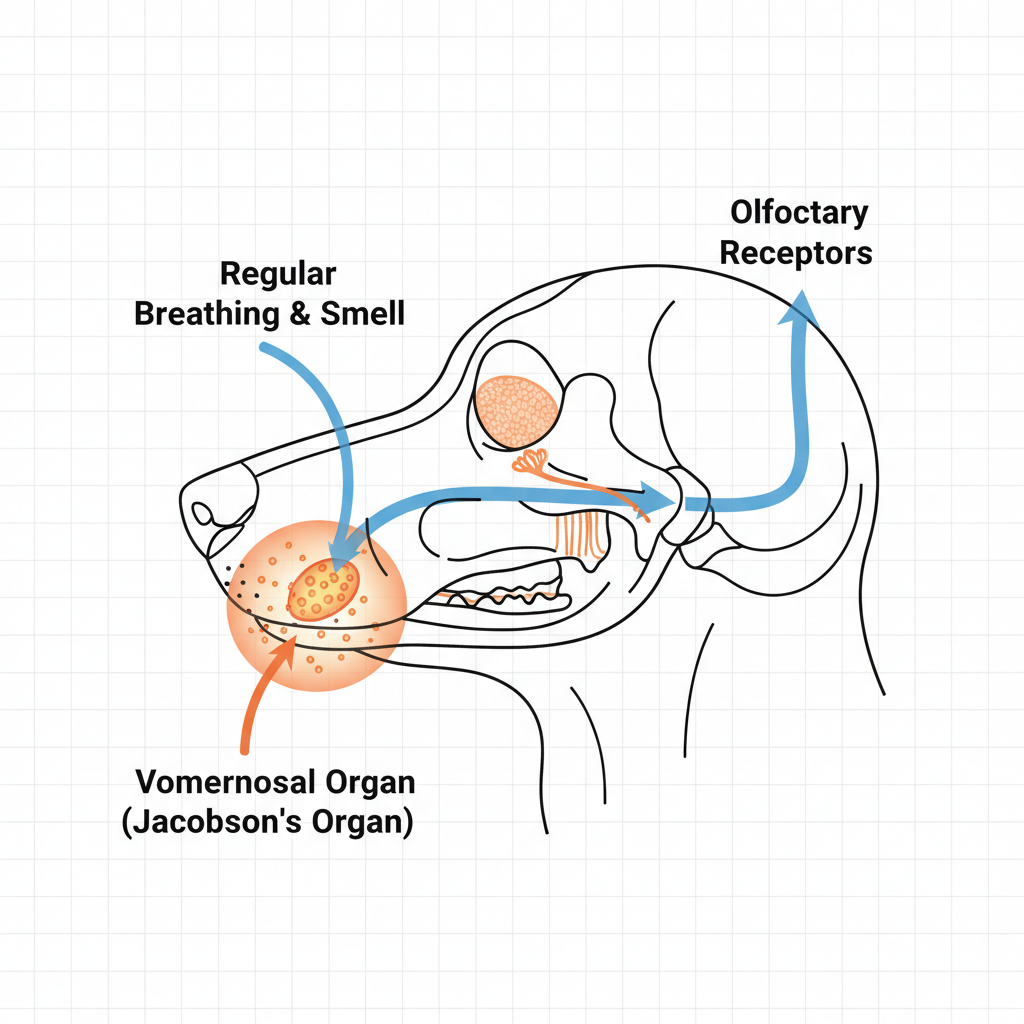
To effectively modify a behavior, we must first understand its root cause. A dog’s desire to sniff a person’s crotch is not random; it’s a deeply ingrained instinct driven by sophisticated biology. The canine olfactory system is a marvel of nature, estimated to be between 10,000 to 100,000 times more sensitive than a human’s. They possess up to 300 million olfactory receptors in their noses, compared to our mere six million. This gives them a window into a world of information that is entirely inaccessible to us.
The Vomeronasal Organ: A Second Nose
Beyond their primary nasal cavity, dogs have a specialized olfactory organ called the vomeronasal organ, or Jacobson’s organ. Located in the roof of the mouth with ducts opening behind the incisors, this organ is specifically designed to detect pheromones—chemical signals that convey complex social information. When a dog sniffs intently, you might see them chatter their teeth or flare their nostrils; this action helps to push scent molecules up into the vomeronasal organ for detailed analysis.
A Concentration of Information
So, why the crotch? The human groin and armpits have a high concentration of apocrine glands, also known as sweat glands. These glands produce pheromones that communicate a wealth of information to a dog’s sensitive nose. Through a single sniff, your dog can potentially determine a person’s:
- Gender: Hormonal differences create unique scent profiles.
- Health Status: Illnesses and metabolic changes can alter a person’s scent.
- Mood: Hormones like adrenaline and cortisol, released during stress or fear, are detectable.
- Reproductive Status: A dog can easily tell if a woman is ovulating, pregnant, or has recently given birth.
In essence, when your dog sniffs a person’s groin, they are doing the equivalent of a human handshake, reading a detailed biography, and checking their social media profile all at once. It is their primary method of data collection.
Recognizing this behavior as a form of communication, rather than a malicious act, is critical. It allows us to approach training with empathy and understanding. We are not trying to ‘break’ a bad habit; we are teaching a ‘bilingual’ dog a more appropriate way to communicate in a human-centric world.
Assembling Your Training Toolkit: What You’ll Need for Success
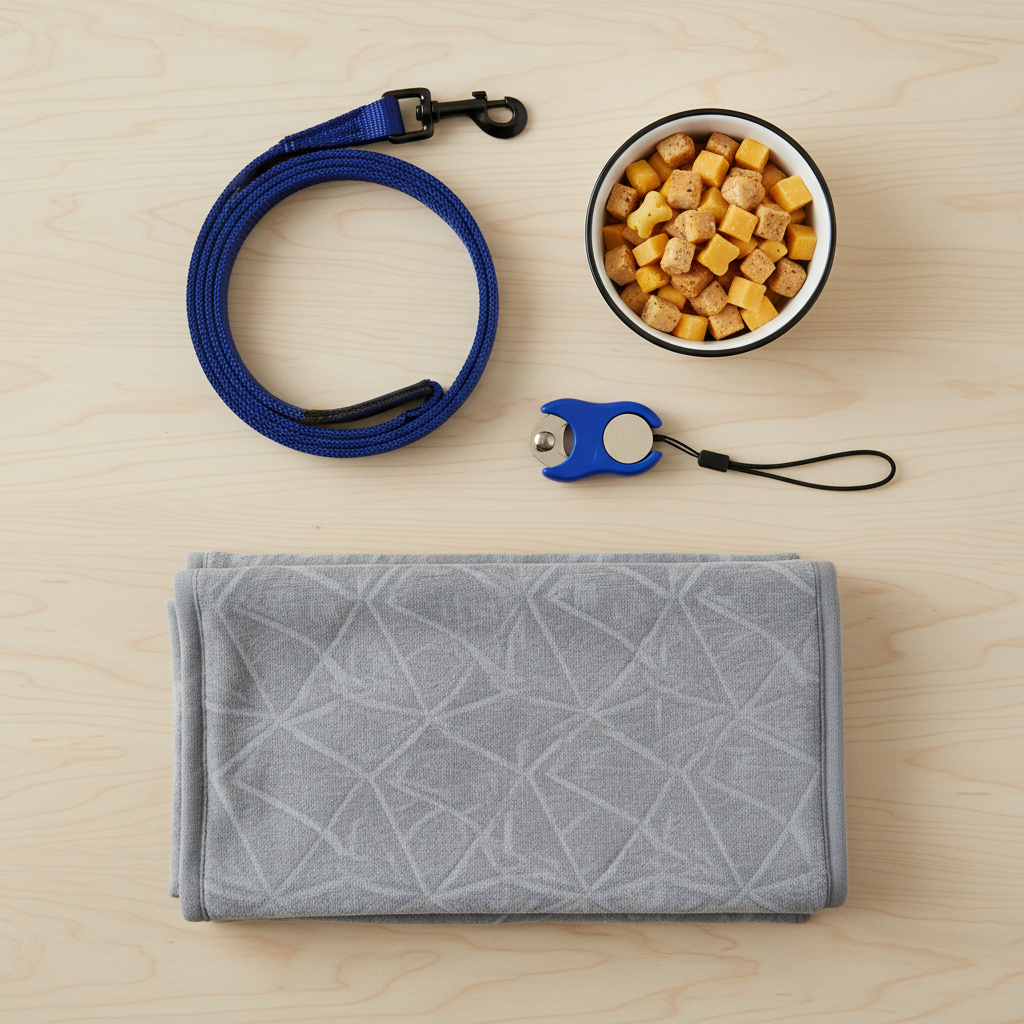
Effective training requires preparation. Before you begin teaching your dog an alternative to crotch-sniffing, gathering the right tools will set you both up for success. The goal is to make the desired behavior more rewarding than the instinctual one. This requires consistency, patience, and the right equipment.
Essential Training Equipment
Here are the key items you will need to implement the training protocol:
- High-Value Treats: Standard kibble or dry biscuits may not be enough to compete with the allure of a new person’s scent. High-value treats are exceptionally desirable to your dog. These should be small, soft, and smelly. Think tiny pieces of cooked chicken, cheese, hot dogs, or commercial training treats designed to be extra palatable. The key is that they are special and used primarily for this training.
- A Standard 6-Foot Leash: Control is paramount, especially in the initial stages of training. A standard, non-retractable 6-foot leash provides clear communication and prevents the dog from rushing up to guests before you can intervene. Retractable leashes offer very little control and can be dangerous, so they should be avoided for this type of close-quarters training.
- A Clicker (Optional but Recommended): A clicker is a small plastic device that makes a distinct ‘click’ sound. In training, it’s used as a marker signal to pinpoint the exact moment a dog performs the correct behavior. The click is immediately followed by a treat. This creates a clear and powerful association, accelerating learning. If you choose not to use a clicker, a consistent verbal marker like a sharp “Yes!” can serve the same purpose.
- A Designated ‘Place’ or Mat: This can be a specific dog bed, a bath mat, or a raised cot. It will serve as a designated station where your dog learns to go and settle when guests arrive. The ‘place’ should be in a comfortable area where the dog can still observe the room’s activity without being in the middle of it.
Remember, the most important tools are not physical items. Patience and consistency from every member of the household are the true keys to changing this behavior long-term. Every interaction is a training opportunity.
The Crotch-Sniffing Solution: A Step-by-Step Training Protocol
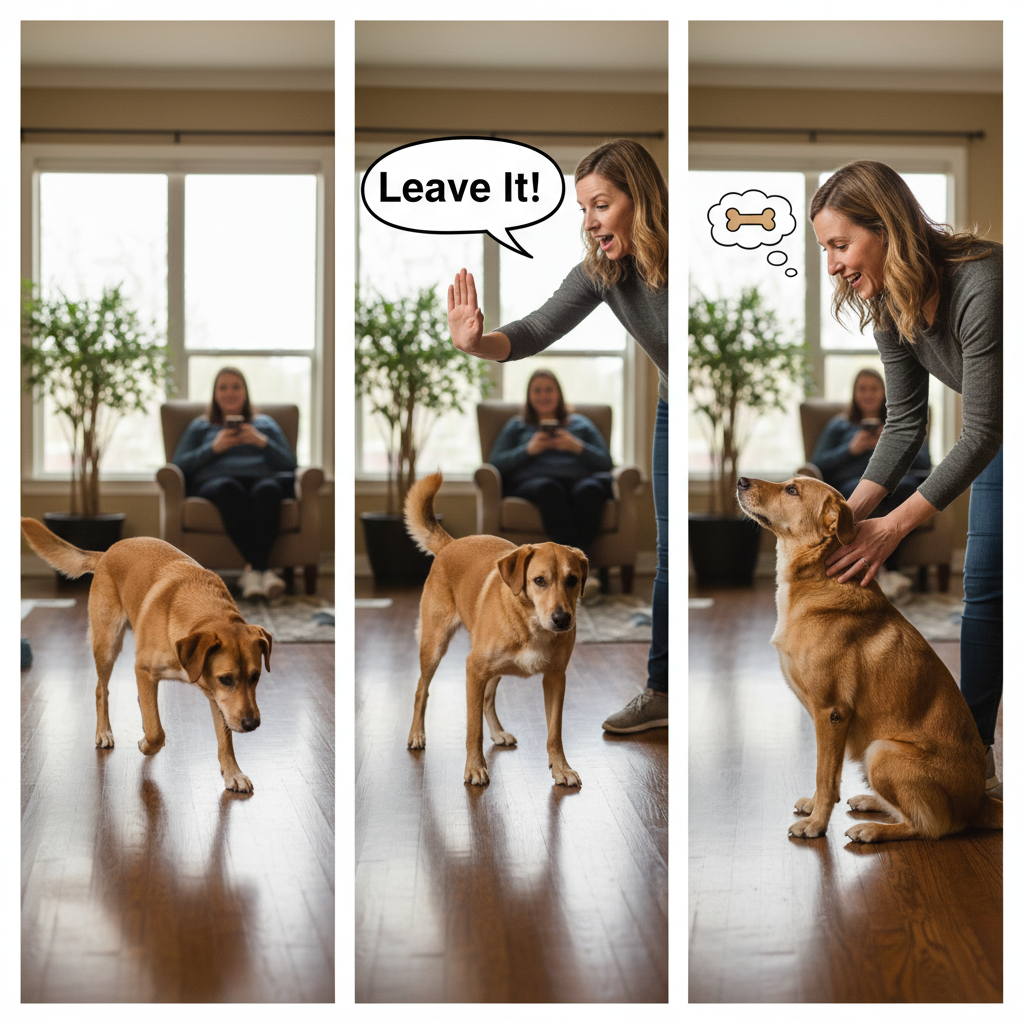
This training protocol is built on the principles of positive reinforcement. We will not be punishing the dog for sniffing. Instead, we will proactively manage the situation and teach them more desirable behaviors that are incompatible with running up to and sniffing a person. We will make it more rewarding for them to listen to you than to follow their instinct.
Step 1: Management and Prevention
The first and most critical step is management. Every time your dog successfully practices the unwanted behavior, it becomes more ingrained. Therefore, your initial priority is to prevent it from happening. Use a leash to keep your dog with you when you know guests are coming over. Use baby gates or crates to create a safe space for your dog during chaotic arrivals. Prevention is not a long-term solution, but it is a crucial first step that stops the reinforcement of the habit while you teach new skills.
Step 2: Teaching an Incompatible Behavior – The ‘Leave It’ Command
The ‘Leave It’ command teaches your dog self-control and to disengage from something you don’t want them to interact with. Start easy and build up.
- Place a low-value treat (like kibble) in one hand and close your fist. Let your dog sniff your fist. They will likely lick and paw at it. The moment they pull their head away, even for a second, say “Yes!” or click, and give them a high-value treat from your other hand.
- Repeat until your dog is moving away from your fist as soon as you present it. Now, add the cue “Leave It” as you present your closed fist.
- Progress to placing the low-value treat on the floor and covering it with your hand. Use the “Leave It” cue. When they back away, reward them.
- The final step is to place the treat on the floor uncovered. Say “Leave It.” If they move for it, cover it with your foot. If they hesitate and look at you, reward them lavishly.
Once mastered, ‘Leave It’ can be used as a person approaches, cueing your dog to disengage before they even start to sniff.
Step 3: Mastering the ‘Find It’ Game (Scent Redirection)
This technique redirects your dog’s natural desire to sniff towards an appropriate outlet. It’s a fun and engaging game that channels their olfactory drive.
- Start in a quiet room. Say “Find It!” in an excited tone and toss a high-value treat a few feet away from you. Praise your dog when they find it.
- Repeat this process, gradually tossing the treats farther away.
- Once your dog understands the game, use it as a redirection tool. When a guest is about to enter, get your dog’s attention, say “Find It!” and scatter a few treats on the floor away from the door. This directs their nose to the floor instead of your guest’s crotch.
Step 4: The ‘Go to Your Place’ Command
Teaching your dog to go to a specific mat or bed provides a default ‘safe’ and calm behavior during greetings.
- Lure your dog onto their mat with a treat. When all four paws are on it, say “Yes!” and give them the treat.
- Repeat this several times. Then, add the cue “Go to Your Place” just as they are about to step onto the mat.
- Gradually increase the distance from which you send them to their place.
- Once they are reliably going to their place on cue, start building duration. Reward them for staying on the mat for a few seconds, then gradually extend the time.
This command is invaluable for managing arrivals. You can send your dog to their place as you open the door, asking them to remain there until the initial excitement has passed.
Handling Real-World Scenarios: Guests at Home and Strangers on Walks
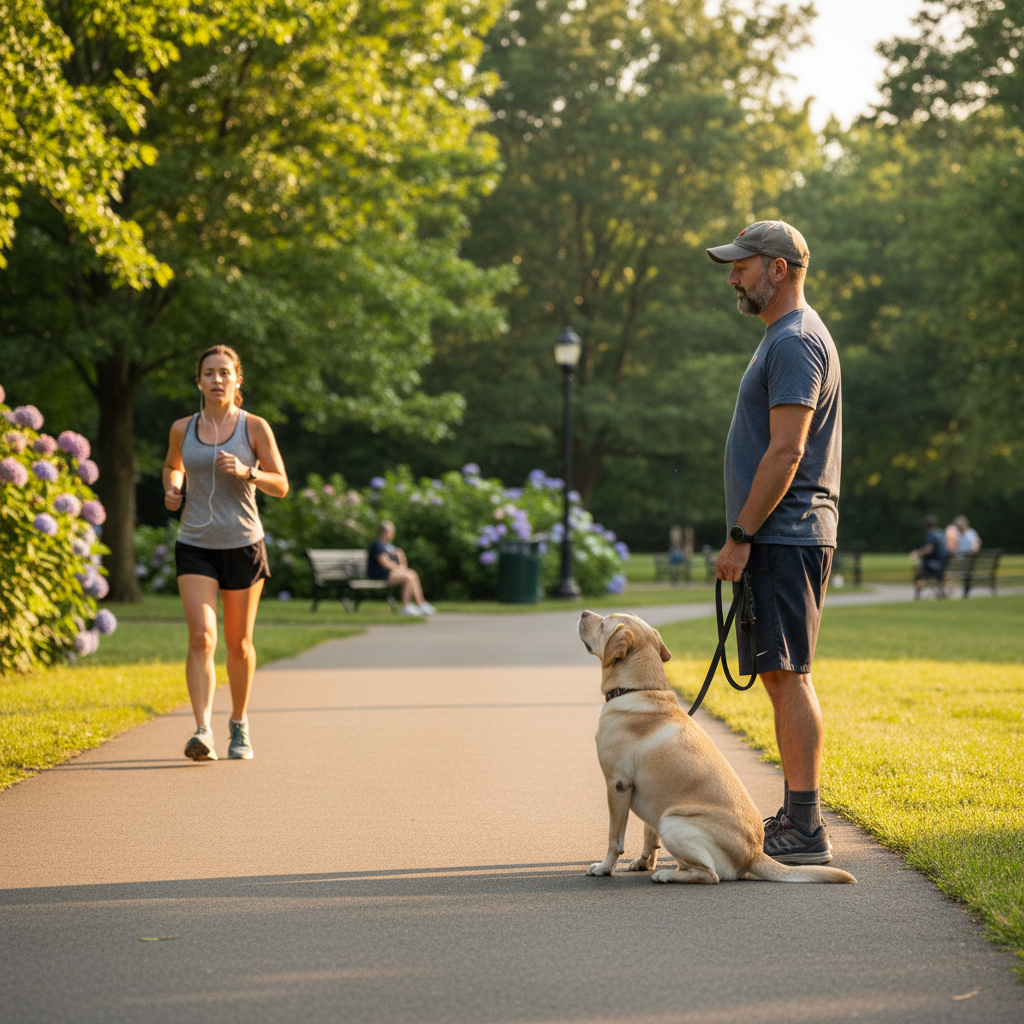
Mastering commands in a quiet living room is one thing; applying them in the dynamic, distracting real world is another. Success lies in preparing for these scenarios and having a clear plan of action.
Scenario 1: Guests Arriving at Your Home
The arrival of guests is often a high-excitement event for a dog. Your goal is to manage this excitement and provide clear instructions.
- Preparation is Key: Before your guests arrive, have your high-value treats ready in a pouch or pocket. Put your dog on their 6-foot leash and keep it with you.
- The Arrival: As you hear your guests approach, cue your dog to “Go to Your Place.” If they are still learning, lead them to their mat with the leash. Reward them for staying there.
- Instruct Your Guests: This is a crucial step. Politely ask your guests to ignore the dog completely when they first walk in. No talking, no touching, no eye contact. This removes the social pressure and excitement for the dog. Explain that you are in the middle of training for polite greetings.
- The Greeting: Once your guests are settled and your dog is calm on its place, you can proceed. You can either keep the dog on its place and reward for calm behavior, or you can use the ‘Find It’ game, tossing treats away from your guests to keep the dog occupied. If you allow a greeting, keep the dog on a loose leash, walk them over, and ask for a ‘Sit.’ Reward the calm sit. If at any point the dog’s nose starts to drift towards the crotch, use your ‘Leave It’ cue and calmly lead them away. The greeting ends.
Scenario 2: Passing Strangers on a Walk
Walks present unpredictable encounters. Your goal is to maintain your dog’s focus on you and create distance.
- Situational Awareness: Be aware of your surroundings. When you see someone approaching from a distance, assess the situation. Is the path wide or narrow? Is the person hesitant or confident?
- Create Distance: If the path is narrow, be proactive. Step off to the side with your dog, putting yourself between your dog and the approaching person. This body block prevents a direct line to the stranger.
- Engage Your Dog’s Brain: Before your dog has a chance to fixate on the person, get their attention. Use a ‘Watch Me’ or ‘Look’ command. Hold a high-value treat near your eye to encourage focus. Reward them for holding eye contact with you as the person passes.
- Use Redirection: If your dog is struggling to disengage, use the ‘Find It’ cue and scatter a few treats in the grass away from the path. This turns a potentially stressful encounter into a fun sniffing game.
- Keep the Leash Loose: A tight leash signals tension and anxiety to your dog, which can increase their reactivity. Practice keeping the leash in a ‘J’ shape. If you need to shorten it, gather the slack rather than pulling it taut.
Troubleshooting Common Pitfalls: What to Do When Training Stalls
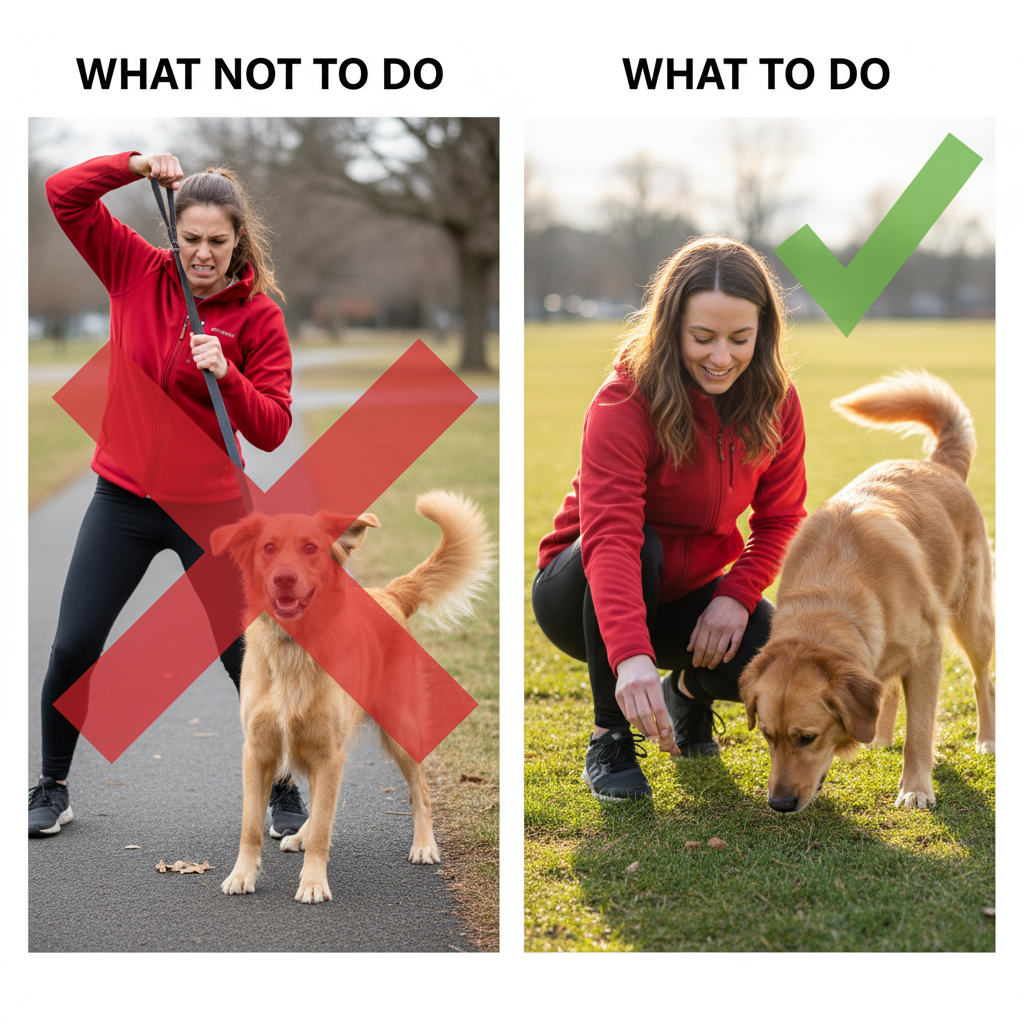
Changing an instinctual behavior takes time, and it’s common to encounter bumps along the road. Recognizing common mistakes can help you adjust your approach and get back on track. If you feel your progress has stalled, review these common pitfalls.
| Common Mistake | Why It’s Counterproductive & What to Do Instead |
|---|---|
| Using Punishment | Yelling, scolding, or using leash jerks when your dog sniffs creates fear and anxiety. It damages your bond and teaches the dog that people approaching is a scary event, which can lead to other reactivity issues. It doesn’t teach them what you want them to do. Instead: Focus entirely on positive reinforcement. Manage the environment to prevent the mistake, and heavily reward the behaviors you want to see, like sitting politely or going to their mat. |
| Inconsistency Among Handlers | If one person in the house allows the sniffing while another tries to train against it, the dog receives mixed messages and will not learn. The rules must be the same for everyone. Instead: Hold a household meeting. Ensure every family member and regular visitor understands the training plan (e.g., ignore the dog on arrival, use the ‘Find It’ cue, etc.) and agrees to follow it consistently. |
| Expecting Instant Results | This is an instinct that has been reinforced for your dog’s entire life. Expecting it to disappear after a few training sessions is unrealistic and leads to frustration. Instead: Reframe your expectations. Celebrate small victories, like your dog hesitating for a second before sniffing or choosing to look at you instead. Track progress week by week, not minute by minute. Patience is non-negotiable. |
| Low-Value Rewards | You are asking your dog to ignore a treasure trove of fascinating information. A piece of their regular kibble is not going to be a compelling enough trade-off. Instead: Up your treat game! Use ‘jackpot’ rewards that your dog truly loves and only gets during these specific training scenarios. The reward must outweigh the temptation of the sniff. |
When to Seek Professional Help
While most cases of crotch-sniffing can be managed with consistent training, there are times when professional guidance is warranted. If the behavior is extremely persistent, is causing significant stress in your household, or is accompanied by other concerning behaviors like jumping, nipping, or excessive arousal, it may be time to consult a professional. Look for a Certified Professional Dog Trainer (CPDT-KA) or a Veterinary Behaviorist who uses humane, science-based methods. They can provide a personalized training plan and help you address the root cause of the behavior more effectively.
Conclusion
Addressing your dog’s crotch-sniffing habit is not about shaming them for a natural instinct, but about teaching them social etiquette for the human world. By understanding the powerful ‘why’ behind the behavior—their incredible sense of smell and desire to gather information—you can approach training with empathy and patience. The key to success lies in a two-pronged approach: diligent management to prevent the behavior from being practiced, and consistent, positive reinforcement training to build desirable alternatives.
Commands like ‘Leave It,’ ‘Find It,’ and ‘Go to Your Place’ are not just tricks; they are communication tools that empower your dog to make better choices. By implementing these strategies consistently, you transform moments of potential embarrassment into opportunities for connection and training. You are building a stronger bond based on mutual understanding and clear communication. Be patient with your dog and with yourself, and soon you’ll be able to welcome guests into your home with confidence, knowing your canine companion has the skills to greet them politely and calmly.