Stop Being the “Alpha”: Why Dominance Theory is Ruining Your Bond

For decades, the concept of the ‘alpha’ has dominated dog training literature and popular culture. Pet owners have been advised to ‘show their dog who’s boss,’ to eat before their dog, to walk through doorways first, and to use physical force to assert their position as the ‘pack leader.’ This approach, known as dominance theory, is built on a foundation of asserting control through intimidation. However, modern canine science and behavioral research have unequivocally demonstrated that this paradigm is not only profoundly flawed but is actively detrimental to the human-canine bond. It fosters fear, anxiety, and aggression, replacing a relationship of trust with one of conflict.
This article will dismantle the alpha myth, exploring its faulty origins and the scientific evidence that refutes it. We will delve into the psychological damage that dominance-based training techniques can inflict upon your dog. Most importantly, we will provide a comprehensive, authoritative guide to a better way forward—a methodology rooted in positive reinforcement, clear communication, and mutual respect. It’s time to stop trying to be an ‘alpha’ and start becoming the benevolent, trustworthy leader your dog truly needs and deserves.
Deconstructing the Alpha Myth: The Flawed Science of Dominance Theory
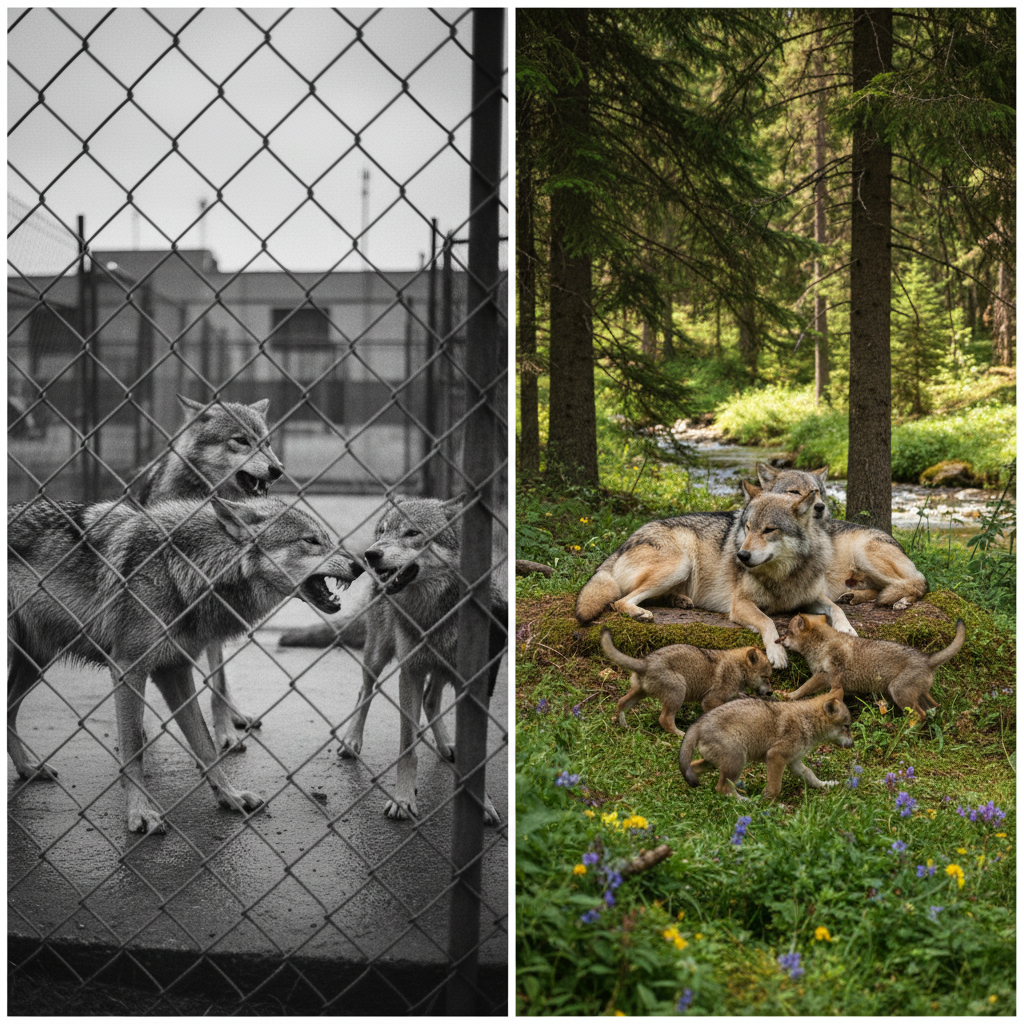
The entire concept of the ‘alpha’ in relation to domestic dogs is based on a significant scientific misinterpretation. To understand why it’s wrong, we must go back to its source: studies of captive wolves in the 1940s. These initial studies observed that groups of unrelated wolves, forced to live together in an enclosure, formed rigid, competitive hierarchies, with an ‘alpha’ pair monopolizing resources through aggression.
This model was then erroneously applied to domestic dogs, with trainers advocating that humans must assume the ‘alpha’ role in their household ‘pack.’ However, this conclusion suffers from several critical flaws:
- Flawed Study Subjects: The original research observed an artificial, high-stress environment. It was the equivalent of studying human prison dynamics and concluding this is how all human families function.
- Modern Wolf Ethology: Subsequent, more sophisticated studies of wolves in their natural habitat revealed a completely different social structure. Wild wolf packs are not warring gangs but family units, typically consisting of a breeding pair (the parents) and their offspring of various ages. Leadership is not established through violence but through experience and natural parental guidance.
- Dogs Are Not Wolves: While dogs are descended from wolves, tens of thousands of years of domestication have fundamentally altered their behavior, social structure, and relationship with humans. Dogs are masterful at reading human social cues in a way wolves are not. Applying wolf behavior directly to dogs ignores the entire process of domestication.
The very scientist whose research was used to popularize the ‘alpha’ theory, Dr. L. David Mech, has spent years trying to correct this public misunderstanding. He no longer uses the term ‘alpha’ to describe the parent wolves in a pack, preferring ‘breeding male’ and ‘breeding female.’ The idea of a human needing to physically dominate their dog to become the ‘alpha’ is based on outdated, incomplete, and misapplied science.
In modern wolf science, the term ‘alpha’ is largely obsolete. It does not accurately describe the family-based social structure of wild wolves, and it certainly does not provide a useful model for our relationship with domestic dogs.
The Unseen Damage: How ‘Alpha’ Techniques Erode Trust and Create Fear

When pet owners adopt dominance theory, they are often encouraged to use aversive techniques intended to ‘correct’ the dog and assert leadership. These methods are not only unpleasant for the animal but can cause significant and lasting psychological harm, ultimately worsening the very behaviors they are meant to solve.
Common Aversive Techniques and Their Fallout:
- The ‘Alpha Roll’: Forcibly pinning a dog on its back. In canine communication, a dog willingly showing its belly is a sign of appeasement. Forcing this position is terrifying and confrontational, often leading to a defensive-aggressive response from the dog, either immediately or in the future.
- Scruff Shakes and Jabs: Physically shaking a dog by the scruff of its neck or jabbing it in the side. These actions are intimidating and painful. They teach the dog that human hands are unpredictable and something to be feared, which can lead to hand-shyness, fear-biting, and a general avoidance of physical contact.
- Staring Down: Holding intense, prolonged eye contact to ‘challenge’ a dog. While humans see this as a sign of confidence, in the canine world, it is a direct threat. This can escalate a dog’s anxiety and may provoke an aggressive reaction as the dog feels it has no other way to escape the perceived threat.
These methods operate on the principle of suppression through fear. A dog may stop jumping on the counter after being jabbed, not because it has learned the ‘rule,’ but because it is now afraid of what will happen when you are near the counter. This creates a state of chronic stress and anxiety, which can manifest in numerous other problem behaviors.
| Dominance-Based Action | Dog’s Interpretation | Long-Term Consequence |
|---|---|---|
| Forcing an ‘alpha roll’ | “I am being attacked and must defend myself.” | Increased fear-aggression, breakdown of trust, avoidance of owner. |
| Scruff shake or physical punishment | “My owner’s hands are painful and unpredictable.” | Hand-shyness, defensive biting, anxiety during handling/grooming. |
| Staring down or yelling | “My owner is threatening me and is unstable.” | Heightened anxiety, suppression of warning signals (growling), potential for ‘unpredictable’ biting. |
A New Paradigm: Benevolent Leadership Through Positive Reinforcement

The alternative to the dominance model is not a permissive free-for-all. It is a structured, science-backed approach centered on positive reinforcement. This method positions the owner as a benevolent leader—a trusted guide and teacher, not a dictator. The core principle is simple yet powerful: reward the behaviors you want to see, and manage the environment to prevent the behaviors you don’t.
Foundational Principles of Positive Leadership:
- Motivation Over Intimidation: Instead of punishing your dog for getting something wrong, you motivate them to get it right. This is achieved by using high-value rewards—such as treats, praise, or toys—to mark and reinforce desired actions. This makes learning a positive and engaging experience.
- Clear Communication: Dogs don’t understand abstract human concepts of ‘right’ and ‘wrong.’ They understand consequences. Using a marker word (like ‘Yes!’) or a clicker the exact moment a dog performs the correct action provides crystal-clear communication, telling them precisely what earned them the reward.
- Management and Prevention: A good leader sets their team up for success. Instead of waiting for your dog to chew on your shoes and then punishing them, manage the environment by putting your shoes away. Instead of yelling at your dog for jumping on guests, use a leash or baby gate to prevent the behavior while you train an alternative, like sitting politely.
- Building a ‘Reinforcement Bank Account’: Every positive interaction—every treat for a ‘sit,’ every game of fetch, every calm petting session—is a deposit into your relationship bank account. Aversive actions are massive withdrawals. A relationship built on positive deposits is resilient, trusting, and joyful.
By adopting this mindset, you teach your dog that good things happen when they cooperate with you. They learn to offer desired behaviors willingly because it is rewarding to do so. This creates a confident, enthusiastic learner and a deep, unshakable bond built on mutual respect.
Reinterpreting Common ‘Dominance’ Challenges with Modern Methods

Many behaviors that are commonly mislabeled as ‘dominant’ are, in fact, normal canine behaviors stemming from excitement, anxiety, boredom, or a lack of training. By reframing our understanding of these actions, we can address them effectively and humanely without resorting to force.
Let’s examine some common scenarios through the old dominance lens versus a modern, behavior-focused lens.
| Behavior | Outdated ‘Dominance’ Interpretation & Response | Modern Behavioral Interpretation & Solution |
|---|---|---|
| Jumping on Guests | The dog is trying to assert dominance over the guest. Response: Knee the dog in the chest or yank its collar. | The dog is excited and lacks impulse control. Solution: Manage with a leash. Teach an alternative behavior like ‘go to your mat’ and reward heavily for calm greetings. |
| Pulling on Leash | The dog is trying to be the ‘pack leader’ by walking in front. Response: Use a prong or choke collar to give harsh ‘corrections.’ | The dog’s natural walking pace is faster than ours, and the outside world is exciting. Solution: Use a front-clip harness to manage pulling. Reward the dog for walking on a loose leash with high-value treats. |
| Resource Guarding (Food/Toys) | The dog is challenging your authority as the alpha. Response: Forcibly take the item away; stick your hand in the food bowl. | The dog is insecure and afraid of losing a valuable resource. Solution: Build trust. Trade up by offering something of higher value. Never forcibly take items. Teach a reliable ‘drop it’ cue using positive reinforcement. |
| Getting on Furniture | The dog is claiming a higher-status position. Response: Physically push the dog off the couch; forbid them from all furniture. | The furniture is comfortable and smells like their favorite person. Solution: Manage access when you’re not home. Teach an ‘off’ cue. Provide an equally comfortable dog bed and reward the dog for using it. |
As the table illustrates, the modern approach seeks to understand the motivation behind the behavior and then teach the dog a more appropriate way to fulfill its needs. This is the essence of effective training and fair leadership.
Conclusion
Moving away from dominance theory is not about relinquishing leadership; it is about redefining it. True leadership is not achieved through force, fear, or intimidation. It is earned through consistency, clear communication, and the cultivation of a trusting partnership. By providing for your dog’s needs, managing their environment for success, and reinforcing the behaviors you desire, you become a source of security and joy in their life—a figure they look to for guidance, not one they fear.
The bond between a human and a dog is a remarkable interspecies relationship. Don’t let it be tarnished by outdated, harmful myths. Discard the notion of the ‘alpha.’ Instead, embrace your role as a teacher, a guardian, and a trusted friend. The deep, resilient, and joy-filled bond you build as a result will be the ultimate reward.