
Spicy Sky Raisins: What To Do Immediately When Your Dog Eats A Bee

The internet has affectionately dubbed them ‘spicy sky raisins,’ but when your dog catches and eats a bee or wasp, the situation is anything but humorous. Panic can set in quickly for any pet owner. Your dog, driven by instinct or curiosity, has just ingested a stinging insect, and you need clear, immediate guidance. This article serves as your authoritative veterinary-approved action plan. We will move beyond the playful nickname to provide a step-by-step guide on how to assess the situation, administer proper first aid, identify the critical signs of a severe allergic reaction, and know precisely when to seek emergency veterinary care. Your calm, informed response is the most important tool you have, and our goal is to empower you with the knowledge to act swiftly and effectively to protect your canine companion.
Immediate Triage: Your First Actions in the First Five Minutes

When you witness your dog eat a bee or wasp, your immediate actions are critical. The primary goals are to ensure your dog’s airway is clear, remove any remaining stinger, and closely monitor for an allergic reaction. Responding with a clear head is paramount.
Step 1: Secure Your Dog and Stay Calm
First, calmly guide your dog away from the area where the incident occurred. There may be other insects nearby, and preventing further stings is essential. Leash your dog if you are outdoors. Your calm demeanor will help keep your dog from becoming more agitated or stressed, which can elevate their heart rate and potentially speed up the absorption of venom.
Step 2: Inspect the Mouth and Face
The most common places for a sting in this scenario are the tongue, gums, inner cheeks, or throat. Carefully and gently open your dog’s mouth to look for the insect or a stinger. Be cautious, as your dog may be in pain and could react defensively. Look for signs of immediate swelling, redness, or a visible stinger embedded in the tissue. Check their muzzle, nose, and the area around their eyes as well. If you see a stinger, it is crucial to remove it correctly.
Step 3: Remove the Stinger (If Present)
Only honeybees leave their barbed stingers behind. Wasps, hornets, and other bees do not. If you see a small, dark barb in your dog’s skin, you must remove it. Do not use tweezers or your fingers to pinch the stinger. Squeezing it can inject more venom from the attached venom sac into your dog. Instead, use a flat, rigid object like a credit card, a driver’s license, or even your fingernail to scrape the stinger out. Place the edge of the card against the skin and scrape firmly and evenly across the surface to dislodge the stinger. This technique pushes it out without compressing the venom sac.
Expert Tip: Prepare a small pet first-aid kit that includes a laminated card specifically for stinger removal. Having the right tool on hand can save precious seconds and prevent you from defaulting to using tweezers.
Understanding the Threat: Bee Stings vs. Wasp Stings
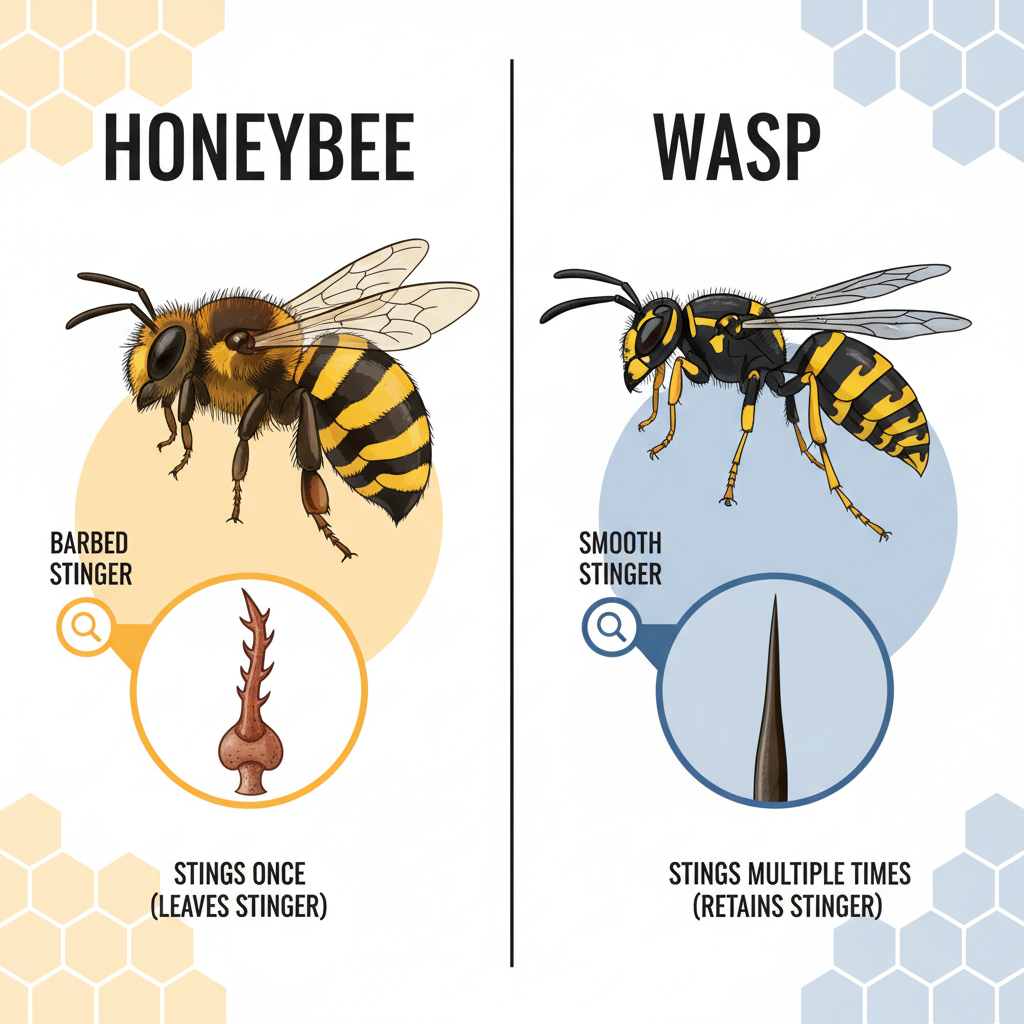
While the immediate treatment is similar, knowing whether your dog was stung by a bee or a wasp can be helpful for veterinary assessment. The primary difference lies in the stinger and the potential for multiple stings.
Honeybees have barbed stingers that detach from their bodies upon stinging, causing the bee to die. This means one sting per bee, but the stinger remains, continuously pumping venom until it is removed. Wasps, hornets, and yellow jackets have smooth stingers and can sting multiple times. Their venom composition is also different, sometimes causing more pain and a more significant local reaction. If your dog disturbed a nest, they could have sustained multiple stings, which is a much more serious situation.
| Insect Type | Stinger Characteristic | Number of Stings | Key Action |
|---|---|---|---|
| Honeybee | Barbed, detaches and remains in the skin. | Single sting per bee. | Immediate and proper removal of the stinger is critical. |
| Wasp / Hornet | Smooth, does not detach. | Capable of stinging multiple times. | Remove the dog from the area immediately to prevent more stings. |
If you did not see the insect, the presence of an embedded stinger is the definitive sign of a honeybee sting. The absence of a stinger does not rule out a sting; it simply means the culprit was likely a wasp or another type of bee.
Monitoring for Allergic Reactions: Mild, Moderate, and Severe Symptoms

For most dogs, a single sting results in a minor local reaction. However, a significant percentage of dogs can experience a severe, life-threatening allergic reaction known as anaphylaxis. It is absolutely essential to monitor your dog closely for at least 24 hours after a sting, as severe reactions can sometimes be delayed.
Mild to Moderate Symptoms
These symptoms are typically localized to the sting area and while uncomfortable, are not immediately life-threatening. They usually appear within the first hour.
- Minor swelling or a raised welt (wheal) at the sting site.
- Redness and tenderness.
- Pawing at the mouth or face.
- Excessive drooling or whining.
- Slight facial swelling or puffiness around the eyes.
- Holding the mouth open or reluctance to eat.
Severe Symptoms (Anaphylaxis) – A Veterinary Emergency
Anaphylactic shock is a rapid, systemic, and life-threatening allergic reaction. If you observe any of the following signs, you must seek emergency veterinary care immediately. These symptoms can progress rapidly, often within minutes of the sting.
- Difficulty Breathing: Wheezing, rapid breathing, or gasping for air. Swelling in the throat can quickly close the airway.
- Widespread Swelling: Significant swelling of the face, muzzle, neck, or throat that spreads rapidly.
- Vomiting or Diarrhea: Sudden and severe gastrointestinal upset.
- Weakness or Collapse: Dizziness, stumbling, inability to stand, or sudden loss of consciousness.
- Pale Gums: Gums that appear white, blue, or very pale instead of a healthy pink are a sign of shock.
- Hives (Urticaria): Raised welts or bumps appearing across the dog’s body, especially on the belly and back.
Veterinary Warning: Anaphylaxis is a medical emergency. Do not ‘wait and see’ if your dog exhibits difficulty breathing or weakness. The time it takes to drive to the nearest emergency clinic can be life-saving.
Safe Home Care for Uncomplicated Stings

If your dog is showing only mild local symptoms and you have already removed the stinger, there are a few steps you can take at home to provide comfort. However, it is always best practice to call your veterinarian or an animal poison control center for guidance before administering any treatment.
Applying a Cold Compress
To reduce swelling and soothe the pain, you can apply a cold compress to the affected area. Wrap a bag of frozen peas or an ice pack in a thin towel and hold it against the swollen area for 10-minute intervals. Do not apply ice directly to the skin. This can help constrict blood vessels and slow the spread of venom, providing significant relief.
Baking Soda Paste
A paste made from baking soda and a small amount of water can help soothe the sting site. Mix three parts baking soda with one part water to create a thick paste. Gently apply it to the external sting area. This is only suitable for stings on the outside of the muzzle or body, not for stings inside the mouth.
A Note on Antihistamines (Benadryl)
Many pet owners have heard that they can give their dogs diphenhydramine (the active ingredient in Benadryl) for allergic reactions. While veterinarians do sometimes recommend this, you should never administer any medication to your dog without explicit instructions from a veterinary professional. The correct dosage is critical and depends on your dog’s weight and health status. Furthermore, some formulations of Benadryl contain other ingredients like xylitol, which is highly toxic to dogs. Always call your vet first to get the correct product recommendation and dosage for your specific dog.
When to Go to the Vet: Non-Negotiable Emergency Signs

It is crucial to understand which situations automatically warrant an emergency trip to the veterinarian, regardless of initial symptoms. Hesitation can have severe consequences. Go to the nearest veterinary emergency clinic immediately if any of the following apply:
- Any Sign of Anaphylaxis: As detailed in the previous section, difficulty breathing, widespread swelling, collapse, pale gums, or severe vomiting are red alerts. This is the number one reason for an emergency visit.
- Multiple Stings: If you suspect or know your dog was stung multiple times, do not wait for symptoms to appear. The cumulative dose of venom can be enough to cause a toxic reaction or severe anaphylaxis, even in a dog that is not typically allergic.
- Stings Inside the Mouth or Throat: Stings in these locations are particularly dangerous. Swelling, even if minor, can obstruct the airway and compromise breathing. A veterinarian needs to assess the situation and may administer fast-acting medications to control the swelling.
- Your Dog is a High-Risk Breed or Individual: Brachycephalic (flat-faced) breeds like Pugs, Bulldogs, and Boxers already have compromised airways, and any swelling is more dangerous for them. Likewise, very young, very old, or dogs with pre-existing health conditions (like heart disease) are at higher risk for complications.
- Symptoms Worsen or Do Not Improve: If the initial mild swelling continues to grow, or your dog seems increasingly distressed or lethargic, it’s time to see the vet.
Trust your intuition. As a pet owner, you know your dog’s normal behavior better than anyone. If you feel something is seriously wrong, it is always better to err on the side of caution and seek professional medical help.
Conclusion
A dog eating a ‘spicy sky raisin’ can be a frightening experience, but being prepared makes all the difference. The core principles are to remain calm, remove your dog from danger, address any visible stinger correctly, and immediately begin monitoring for the signs of an allergic reaction. While home care like a cold compress can manage minor discomfort, recognizing the severe symptoms of anaphylaxis—such as difficulty breathing, collapse, or widespread swelling—is the most critical skill a pet owner can have in this situation. These signs necessitate an immediate trip to the emergency veterinarian. Always remember that your veterinarian is your most valuable resource. When in doubt, a quick phone call can provide life-saving advice. By understanding these protocols, you are well-equipped to protect your beloved companion from the potential dangers of a simple insect encounter.