Saving Your Trim: Stop Your Dog from Destroying Baseboards for Good

Discovering your home’s pristine baseboards have become your dog’s personal chew toy is a frustrating experience for any pet owner. This destructive behavior is not only damaging to your property but can also be a symptom of underlying issues your canine companion is facing. Chewing is a natural canine instinct, but when it’s directed at your home, it signals a need for intervention. This isn’t a sign of a ‘bad dog’; it’s a cry for help, guidance, or stimulation.
This comprehensive guide will move beyond simple reprimands and quick fixes. As a canine specialist, I will walk you through the process of understanding the root cause of this behavior, from puppy teething and boredom to more complex issues like anxiety. We will then build a robust, step-by-step plan that combines environmental management, behavioral modification, and proper enrichment. By following these professional strategies, you can not only save your trim but also build a stronger, healthier relationship with your dog, ensuring they have appropriate outlets for their natural instincts. Let’s restore peace to your home and redirect your dog’s chewing habits for good.
Identifying the Root Cause: Why Baseboards?

Identifying the Root Cause: Why Baseboards?
Before you can effectively stop a behavior, you must understand the motivation behind it. Dogs don’t chew on baseboards out of spite or a desire to redecorate. Their actions are driven by instinct, physical needs, or emotional states. Pinpointing the specific trigger is the first and most critical step in creating a successful training plan.
Puppy Teething and Exploration
For puppies between three weeks and six months of age, the world is a giant chew toy. The discomfort of adult teeth erupting through their gums creates an intense urge to gnaw. Baseboards are ideal from a puppy’s perspective: they are stationary, offer a satisfyingly firm texture, and are always available at mouth level. This is a normal developmental stage, but one that requires immediate and consistent management to prevent it from becoming a lifelong habit.
Boredom and Lack of Stimulation
A leading cause of destructive behavior in adult dogs is a lack of mental and physical exercise. Dogs are intelligent animals that were bred for specific jobs. When left under-stimulated, they will create their own ‘work,’ which often involves re-landscaping your living room or deconstructing your trim. A dog left alone for long hours without sufficient enrichment will seek out activities to relieve boredom, and the texture and resistance of wood can be highly engaging.
Anxiety and Stress-Related Chewing
Chewing can be a self-soothing mechanism for dogs experiencing stress or anxiety. The repetitive motion of gnawing can release endorphins, helping to calm a worried mind. This is particularly common in dogs with separation anxiety, who may focus their chewing on exit points like doors and surrounding walls. Other triggers can include loud noises (thunderstorms, fireworks), changes in the household (a new baby, a move), or even the presence of unfamiliar people or animals. This type of chewing is a coping mechanism, and addressing it requires focusing on the underlying anxiety, not just the symptom.
Medical and Nutritional Deficiencies
While less common, certain medical issues can lead to pica—the act of eating non-food items. Gastrointestinal problems, hormonal imbalances, or other underlying conditions could be at play. Additionally, though rare with commercially available dog foods, a nutritional deficiency might compel a dog to chew on unusual objects. If the behavior starts suddenly in a well-behaved adult dog, or is accompanied by other symptoms like weight loss, lethargy, or changes in appetite, a veterinary consultation is essential to rule out medical causes.
Essential Tools and Environmental Preparation
Essential Tools and Environmental Preparation
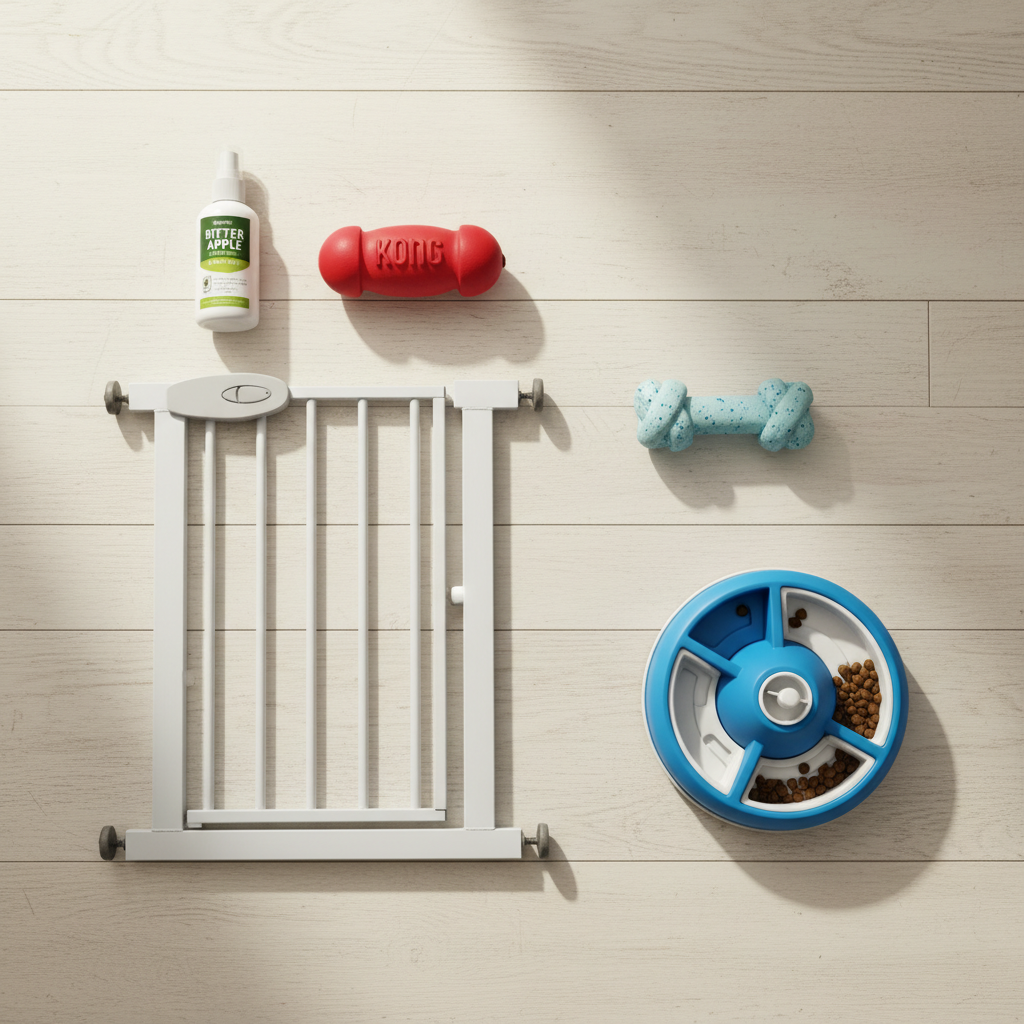
Effective management is the cornerstone of preventing unwanted behaviors. Before you begin active training, you must set up your dog’s environment for success. This involves removing the opportunity to chew on baseboards while simultaneously providing a wealth of appropriate alternatives. Think of this as ‘puppy-proofing’ for a specific problem.
Management Tools
Management is not a substitute for training, but it is a critical component that prevents the dog from rehearsing the unwanted behavior. The more a dog chews on a baseboard, the more ingrained the habit becomes.
- Crates and Playpens: When you cannot actively supervise your dog, a comfortable, appropriately sized crate or playpen is their safest space. It prevents destructive behavior and can be a calming den when introduced properly.
- Pet Gates: Use gates to restrict access to rooms where the chewing is most prevalent, especially when you are home but occupied.
Chew-Deterrent Sprays
Taste deterrents can make baseboards less appealing. These products have a bitter or spicy taste that most dogs find unpleasant. It’s important to use them correctly for them to be effective.
When applying a deterrent spray, first spray a small amount on a cotton ball and offer it to your dog. Their reaction (turning away, shaking their head) will confirm they dislike the taste. If they lick it up, the product won’t work for them. Reapply the spray to the baseboards every 24-48 hours, as the taste fades over time.
A Library of Appropriate Chew Toys
Simply saying ‘no’ is not enough. You must provide a resounding ‘yes’ by offering a variety of enticing and safe alternatives. Rotate toys to keep them novel and interesting.
| Toy Type | Purpose | Examples |
|---|---|---|
| Durable Rubber Toys | For power chewers; can be stuffed with food to increase engagement. | KONG Extreme, West Paw Zogoflex |
| Dental Chews | Help clean teeth and satisfy the need to gnaw. | Greenies, Whimzees |
| Edible Chews | Long-lasting and highly rewarding. Always supervise your dog with these. | Bully sticks, beef tendons, collagen chews |
| Puzzle Toys | Provide mental stimulation and relieve boredom by making the dog work for food. | Nina Ottosson puzzles, snuffle mats, lick mats |
The 4-Step Training Protocol to Stop Baseboard Chewing
The 4-Step Training Protocol to Stop Baseboard Chewing
With your management plan in place, you can now begin the active training process. This protocol is built on positive reinforcement and redirection, teaching your dog what you want them to do, rather than simply punishing what you don’t. Consistency from all household members is paramount.
Step 1: Master the Art of Redirection
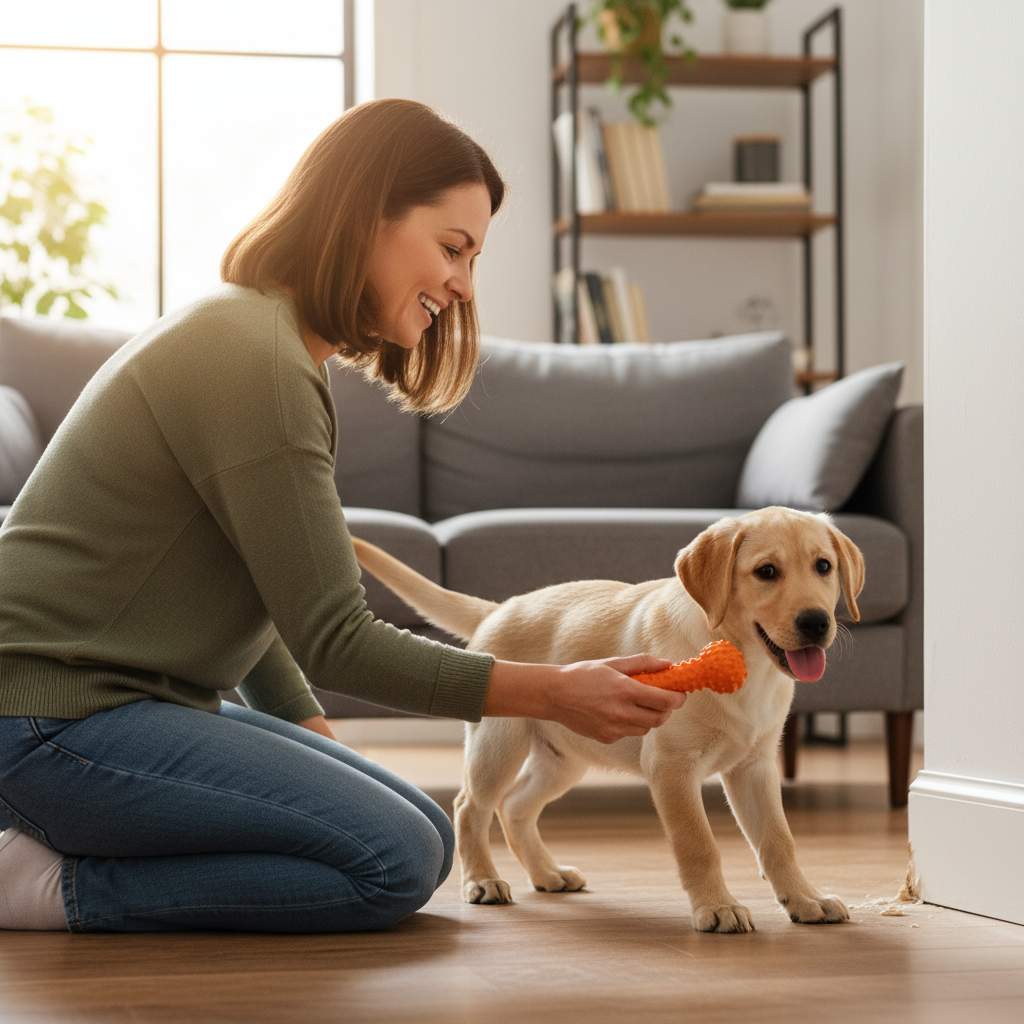
Redirection is the act of interrupting the unwanted behavior and immediately guiding your dog toward an acceptable one. The key is to intervene before the chewing starts or the moment it begins. If you see your dog approach a baseboard with intent, or if they start to lick or mouth it, calmly and cheerfully interrupt them. Call their name, make an interesting sound, or clap your hands. As soon as you have their attention, present them with an exciting chew toy. When they take the toy, praise them enthusiastically. This teaches the simple rule: ‘Chew this, not that.’
Step 2: Increase Physical Exercise
A tired dog is a well-behaved dog. Ensure your dog is receiving adequate physical activity for their age, breed, and health level. This goes beyond a simple walk around the block. Incorporate activities that are physically demanding and engaging.
- Structured Walks: Walks should include periods of sniffing (which is mentally tiring) and brisk walking or jogging.
- Fetch or Frisbee: High-intensity games in a secure area can quickly burn off excess energy.
- Swimming or Hiking: These activities provide excellent physical conditioning and novel sensory experiences.
Step 3: Implement Daily Mental Enrichment
Mental fatigue is just as important as physical fatigue. Engaging your dog’s brain can significantly reduce boredom-related chewing. Dedicate at least 15-20 minutes each day to focused enrichment activities.
- Food Puzzles: Ditch the food bowl and feed your dog’s meals from puzzle toys or snuffle mats. This forces them to problem-solve and slows down their eating.
- Training Sessions: Short, positive training sessions for new cues or tricks are fantastic mental workouts. Work on ‘Leave It,’ ‘Stay,’ and ‘Go to Your Mat.’
- Nose Work Games: Hide treats around a room and encourage your dog to ‘Find It.’ This taps into their powerful sense of smell and is incredibly satisfying for them.
Step 4: Create a ‘Chew-Positive’ Zone
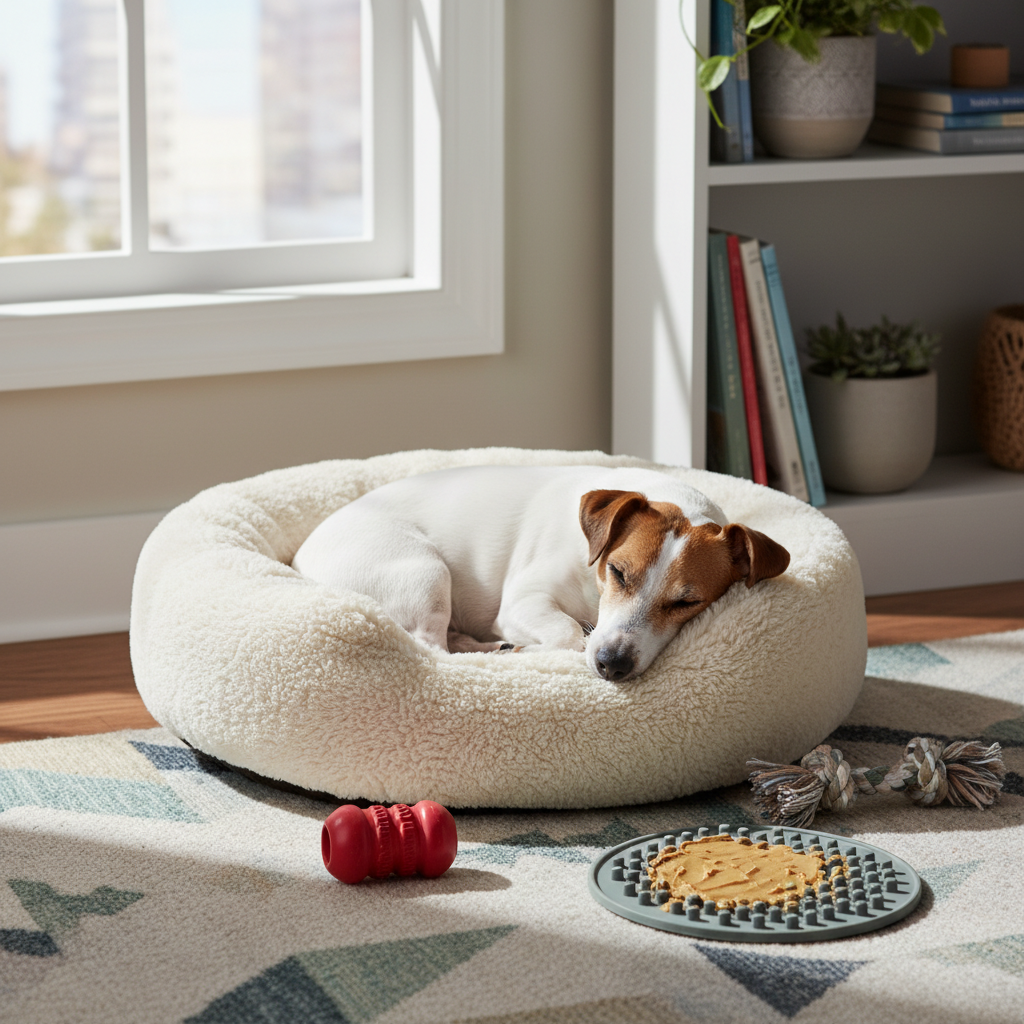
Designate a specific area in your home, such as a dog bed or mat, as the go-to spot for chewing. When you give your dog a high-value edible chew, guide them to this spot. This association helps them understand where appropriate chewing happens. Over time, when they feel the urge to chew, they will be more likely to seek out their designated zone and the appropriate toys located there.
Addressing Underlying Anxiety as a Trigger
Addressing Underlying Anxiety as a Trigger
If you suspect your dog’s chewing is rooted in anxiety, simply managing the environment and providing toys will not solve the problem. You must address the source of their emotional distress. Anxiety-based chewing is often more frantic and intense, and may be accompanied by other signs like whining, pacing, excessive barking, or having accidents in the house.
Recognizing Separation Anxiety
Separation anxiety is a common trigger for destructive behavior near exit points. If the damage consistently occurs when you are away, this is a strong indicator. True separation anxiety is a panic disorder, and your dog is not acting out of anger or spite. They are genuinely distressed by your absence.
- Create a Safe Space: Ensure their crate or designated room is a sanctuary, not a punishment. Provide comfortable bedding, safe toys, and perhaps an item with your scent.
- Practice Calm Departures and Arrivals: Avoid overly emotional goodbyes and greetings. Keep your actions low-key to reduce the significance of your comings and goings.
- Desensitization: Gradually accustom your dog to being alone. Start with very short periods (even just 30 seconds) and slowly increase the duration as they remain calm. Using a pet camera can help you monitor their stress levels.
Building Confidence and Security
A confident dog is less likely to feel anxious. Confidence-building exercises can help your dog feel more secure in their environment.
- Predictable Routines: Dogs thrive on routine. Consistent times for feeding, walking, and playing can reduce general anxiety by making their world more predictable.
- Positive Reinforcement Training: Mastering new cues and tricks builds a dog’s confidence and strengthens your bond.
- Calming Aids: For moderate anxiety, calming supplements, pheromone diffusers (like Adaptil), or anxiety wraps (like a ThunderShirt) can be beneficial. Discuss these options with your veterinarian.
For severe cases of anxiety, professional help is crucial. Consult a Certified Applied Animal Behaviorist (CAAB), a veterinary behaviorist (DACVB), or a certified professional dog trainer (CPDT-KA) who specializes in anxiety. They can create a tailored behavior modification plan, which may, in some cases, include medication prescribed by your veterinarian to help manage the dog’s panic and allow training to be effective.
Common Mistakes Pet Owners Make (And How to Avoid Them)
Common Mistakes Pet Owners Make (And How to Avoid Them)
Even with the best intentions, pet owners can inadvertently sabotage their training efforts. Being aware of these common pitfalls can help you stay on the right track and achieve lasting success.
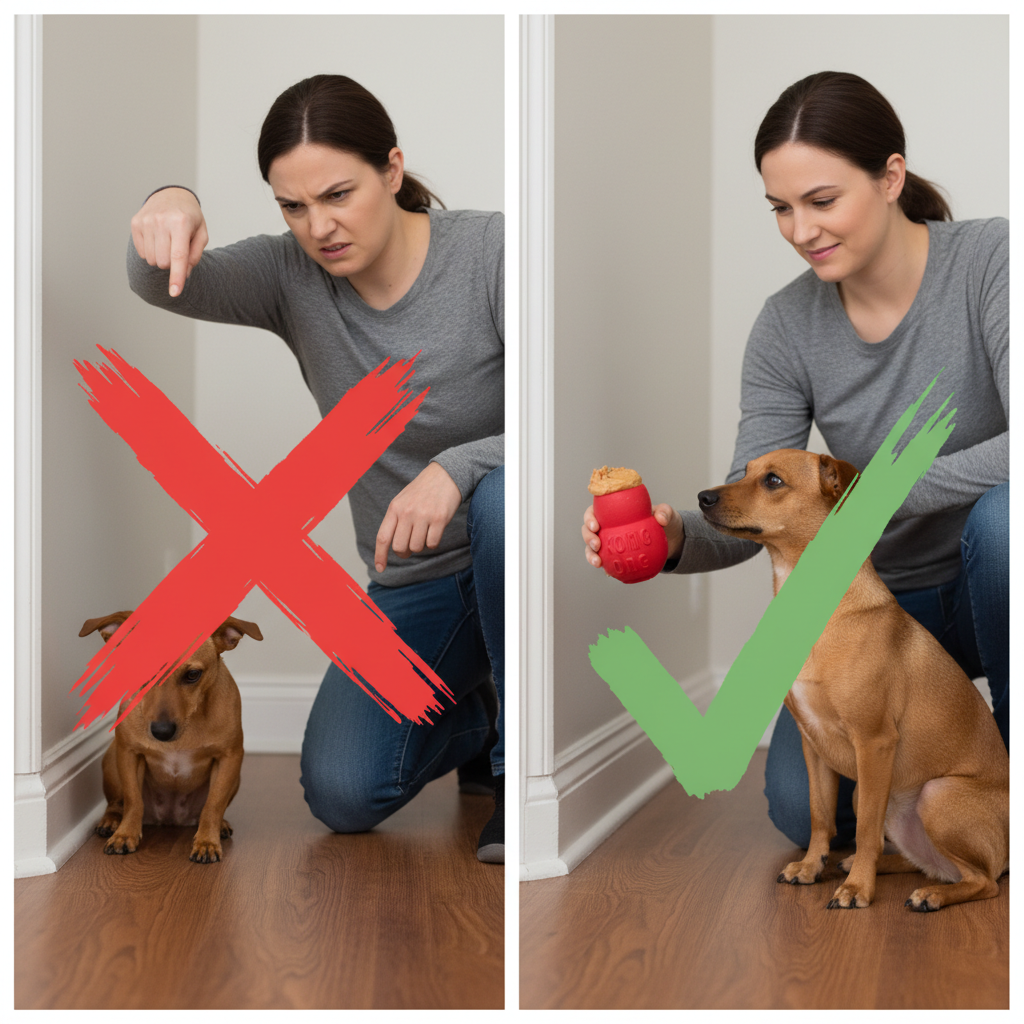
1. Using Punishment Instead of Redirection
Punishing a dog for chewing—whether by yelling, scolding, or using physical corrections—is counterproductive. It can create fear and anxiety, which may actually increase stress-related chewing. Furthermore, it doesn’t teach the dog the correct behavior. The dog only learns that it’s unsafe to chew when you are present, leading them to engage in the behavior secretly. Avoid this by: Focusing exclusively on positive reinforcement and redirection. Manage the environment so they can’t make mistakes, and reward them heavily when they choose the right thing to chew.
2. Inconsistency Among Household Members
If one person is diligently redirecting the dog while another ignores the behavior or uses punishment, the dog will receive mixed signals and become confused. This inconsistency undermines all training efforts. Avoid this by: Holding a household meeting to ensure everyone understands and agrees to follow the 4-step training protocol. Write down the rules and post them on the refrigerator if necessary. Consistency is non-negotiable.
3. Providing the Wrong Kinds of Chew Toys
Not all chew toys are created equal. Giving a puppy a soft plush toy and expecting it to satisfy their need to gnaw on hard wood is unrealistic. Similarly, giving a known power-chewer a toy they can destroy in minutes can be dangerous. Avoid this by: Observing your dog’s ‘chewsonality.’ Do they like to shred, gnaw, or lick? Provide a variety of textures and durability levels and see what they gravitate towards. Always choose toys appropriate for your dog’s size and chew strength.
4. Ignoring the Dog’s Needs for Stimulation
Many owners assume a quick walk is enough exercise. For most dogs, especially young or high-energy breeds, it isn’t. Failing to meet a dog’s mental and physical needs is the most common reason for training plans to fail. The chewing is a symptom of a larger problem: boredom. Avoid this by: Committing to a daily enrichment schedule. Treat mental and physical exercise with the same importance as feeding. A fulfilled dog is far less likely to seek out destructive outlets.
Conclusion
Stopping your dog from destroying baseboards is a process that requires patience, consistency, and a deep understanding of canine behavior. It’s a journey that transforms you from a frustrated homeowner into a proactive and empathetic trainer. By correctly identifying the root cause, diligently managing your dog’s environment, and implementing a positive, reward-based training protocol, you are not just fixing a behavioral problem—you are meeting your dog’s fundamental needs for physical activity, mental engagement, and emotional security.
Remember the core principles: manage to prevent mistakes, enrich their lives to eliminate boredom, and redirect to teach appropriate choices. Celebrate the small victories and don’t be discouraged by setbacks. Your commitment will not only preserve the beauty of your home but will also forge a more profound, trusting, and respectful bond with your beloved canine companion.