Save Your Dinner! How to End Counter Surfing Theft for Good

The scene is all too familiar for many dog owners. You turn your back for a single moment, only to pivot back and find your perfectly prepared sandwich, a cooling steak, or an entire loaf of bread has vanished from the kitchen counter. In its place, you see a few tell-tale crumbs and a dog who is either looking exceptionally pleased with itself or attempting to look impossibly innocent. This behavior, known as counter surfing, is more than just a frustrating habit—it can be dangerous for your pet and disruptive to your home. Many owners feel they’ve tried everything, from scolding to elaborate barricades, with little success. The key, however, is not to combat the symptom, but to understand and address the root cause.
Counter surfing is not an act of defiance or spite. It is a natural, instinctual behavior driven by a dog’s powerful sense of smell and opportunistic scavenging instincts. Every successful raid powerfully reinforces the behavior, making it a difficult habit to break. This guide will provide a professional, step-by-step approach to ending counter surfing for good. We will move beyond simple corrections and implement a robust, three-pronged strategy: meticulous environmental management, proactive positive reinforcement training, and fulfilling canine enrichment. By addressing the ‘why’ behind the behavior and teaching your dog what you want them to do instead, you can restore peace to your kitchen and ensure your dinner stays on your plate.
The Canine Psychology of Counter Surfing

Before we can effectively modify a behavior, we must first understand its origins. A dog who counter surfs is not a ‘bad dog’; it is simply a dog acting on powerful, deeply ingrained instincts. Understanding these motivations is the first step toward creating a successful training plan based on empathy and science, not frustration.
The Power of Scent
A dog’s primary sense for exploring the world is its nose. Canines possess up to 300 million olfactory receptors in their noses, compared to about six million in humans. The part of their brain devoted to analyzing smells is, proportionally, 40 times greater than ours. When you are cooking, the delicious aromas wafting from your kitchen counter are not just pleasant—they are an irresistible siren call to your dog’s brain, signaling a potential high-value food source. The dog is not trying to steal your dinner; it is following a biological imperative to investigate a compelling scent.
The Jackpot Effect: The Power of Intermittent Reinforcement
Perhaps the single most significant factor that solidifies counter surfing is the principle of intermittent reinforcement. Think of it like a slot machine. A gambler pulls the lever over and over, receiving a payout only occasionally. That unpredictable reward is precisely what makes the behavior so addictive and resistant to extinction. A dog who successfully steals food from the counter—even just once—has hit the jackpot. The memory of that delicious reward (a piece of chicken, a lick of butter) is so powerful that it encourages them to keep trying, again and again, just in case they get lucky. Every subsequent successful attempt, no matter how infrequent, resets the clock and strengthens the habit, making it exponentially harder to extinguish.
Opportunity and Natural Instincts
At their core, dogs are opportunistic scavengers. In the wild, their ancestors survived by seeking out and capitalizing on any available food source. This instinct has not been erased by domestication. An unattended counter laden with food is, from a dog’s perspective, a perfectly logical and efficient place to find a meal. They are not breaking a moral code; they are seizing an opportunity that their instincts tell them is too good to pass up. Recognizing this allows us to shift our perspective from one of anger to one of proactive management.
Step 1: Managing the Environment to Prevent Rehearsal
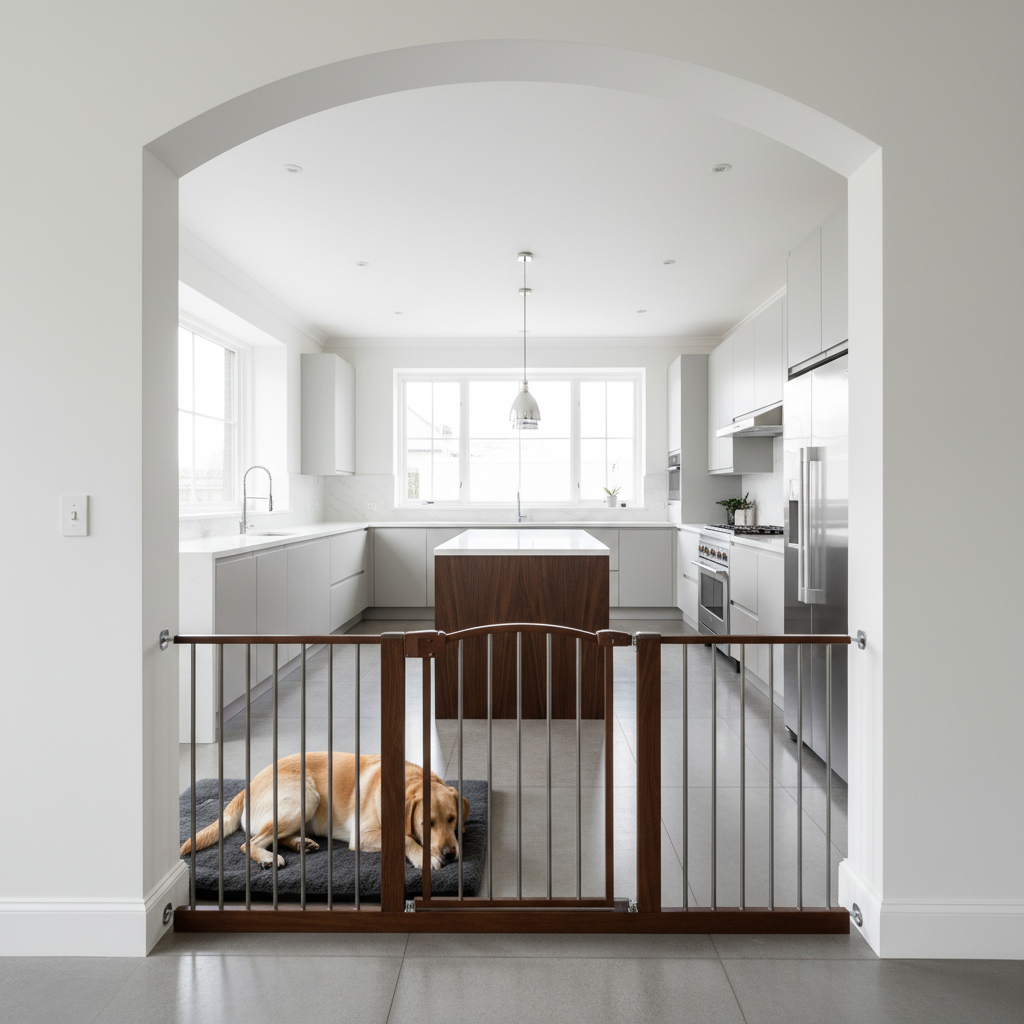
The most critical and immediate step in stopping counter surfing is management. Every time your dog practices the behavior, the habit becomes more entrenched. Management is not a punishment; it is a necessary strategy to prevent the reinforcement of an undesirable behavior while you work on training a desirable one. The goal is to make counter surfing impossible.
Create a Fort Knox Kitchen
Your first line of defense is to make the environment foolproof. This requires vigilance, especially in the beginning, but it is the foundation upon which all successful training is built.
- Clear the Counters: This is non-negotiable. Do not leave any food out on the counters, ever. This includes bread in a bag, a bowl of fruit, or a stick of butter in a dish. If there is nothing to steal, the motivation to jump up is significantly reduced.
- Push Items Back: If you must have non-food items on the counter (like a canister of utensils or a knife block), push them to the very back against the wall. This makes it much harder for a curious nose to accidentally knock something valuable or dangerous over.
- Secure Your Trash: The garbage can is a treasure trove of scents and potential rewards. Invest in a heavy-duty can with a locking lid or store it inside a pantry or cabinet with a childproof latch.
- Clean Up Immediately: Wipe down counters and tables thoroughly after meal prep and eating to remove tempting crumbs and lingering scents. Sweep or vacuum the floor to eliminate fallen morsels that can encourage scavenging behavior in the kitchen.
Restrict Access When Unsupervised
If you cannot supervise your dog, they should not have access to the kitchen. This is crucial for preventing them from practicing the behavior when you are not there to intervene. Consider these options:
- Baby Gates: A sturdy, pressure-mounted baby gate is an excellent tool for blocking off the kitchen entrance.
- Closed Doors: If your kitchen has a door, use it. This is the simplest solution.
- Crate Training: A crate can be a safe and comfortable den for your dog, especially useful for short periods when you are unable to supervise them directly, such as when bringing in groceries.
Expert Tip: Management is not a forever solution on its own, but it is a permanent part of the overall strategy. A well-managed environment removes the element of chance and sets your dog up for success, allowing your training efforts to take hold without being undermined by accidental reinforcement.
Step 2: Building Impulse Control with Positive Reinforcement
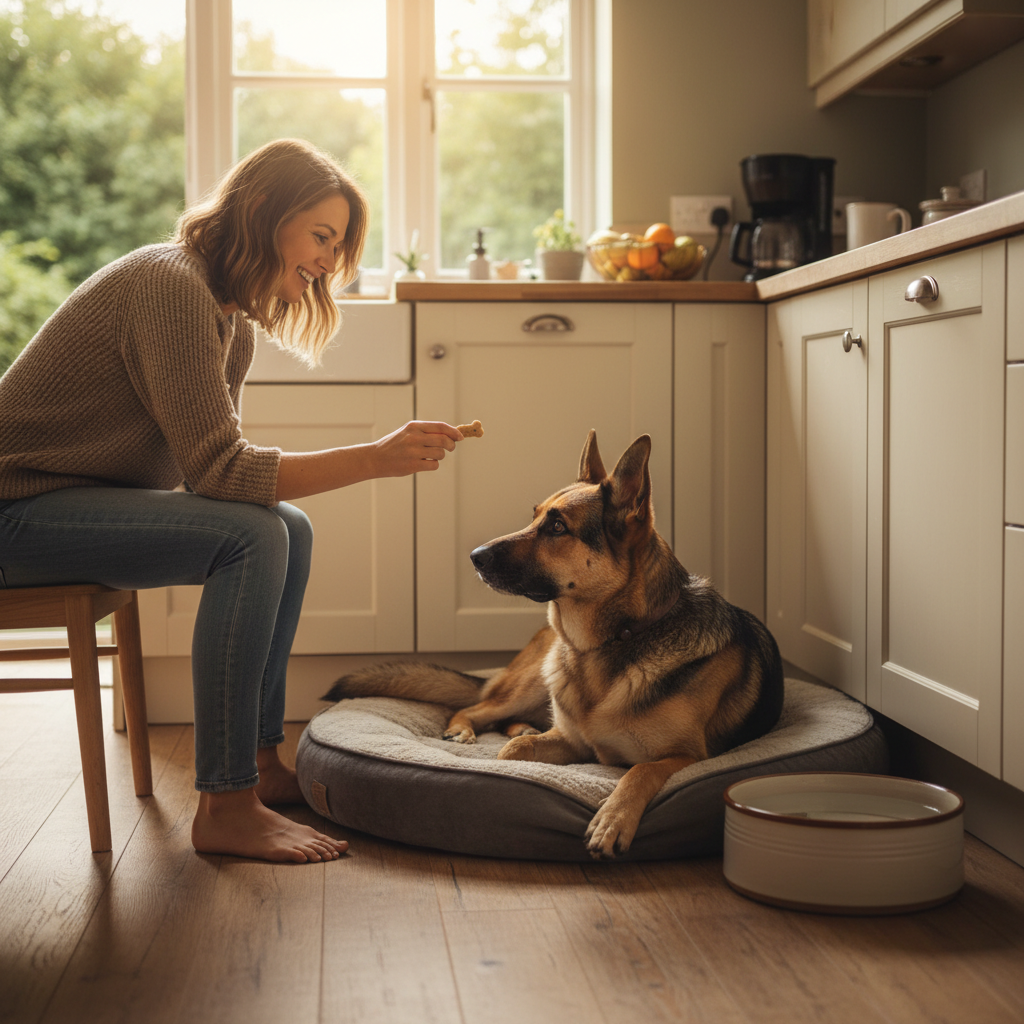
While management prevents the behavior, training teaches your dog what you want them to do instead. The goal is to make behaviors that are incompatible with counter surfing—such as lying calmly on a mat—more rewarding than investigating the counters. We will focus on two key commands that build impulse control and create a default behavior for the kitchen.
The ‘Leave It’ Command
‘Leave It’ is a potentially life-saving cue that teaches your dog to ignore a tempting item. It must be taught systematically and with high-value rewards.
- Start Easy: Place a boring, low-value piece of kibble in your closed fist. Let your dog sniff and lick your hand. The moment they pull their nose away, even for a second, say “Yes!” and give them a high-value treat from your other hand. The treat in your fist is never the reward.
- Add the Cue: Once your dog is reliably backing away from your fist, add the verbal cue “Leave It” just before they start to investigate.
- Increase Difficulty: Progress to placing the low-value item on the floor, covered by your hand. When they ignore it, reward them. Then, remove your hand but be ready to cover the item if they lunge for it.
- Generalize the Behavior: Practice ‘Leave It’ with various objects and in different locations, gradually increasing the temptation. The goal is for your dog to automatically look at you for their reward when they hear the cue, rather than going for the forbidden item.
The ‘Go to Place’ Command
This command gives your dog a specific job to do in the kitchen, which is far more effective than just telling them “No.” Their ‘place’ should be a comfortable dog bed or mat located in the kitchen but away from the main food prep area.
- Make the ‘Place’ Valuable: Lure your dog onto the mat with a treat. When all four paws are on it, say “Yes!” and reward them with several small, high-value treats, one after another. This builds a strong positive association with the mat.
- Add Duration: Gradually increase the amount of time you ask them to stay on the mat before rewarding them. Start with just a few seconds and build up slowly.
- Add Distance: Begin tossing the lure treat onto the mat from a short distance away, saying “Go to your place.” Reward them generously once they are on it.
- Practice During Meal Prep: The ultimate goal is for your dog to lie calmly on their mat while you cook. Periodically toss them a treat for staying there. This teaches them that calm behavior on their mat is far more profitable than sniffing around the counters.
Important: Never use the ‘place’ or crate as a punishment. It must always be a positive, rewarding location. Your dog should want to go there because it’s where good things happen.
Step 3: Fulfilling Your Dog’s Needs to Reduce Motivation
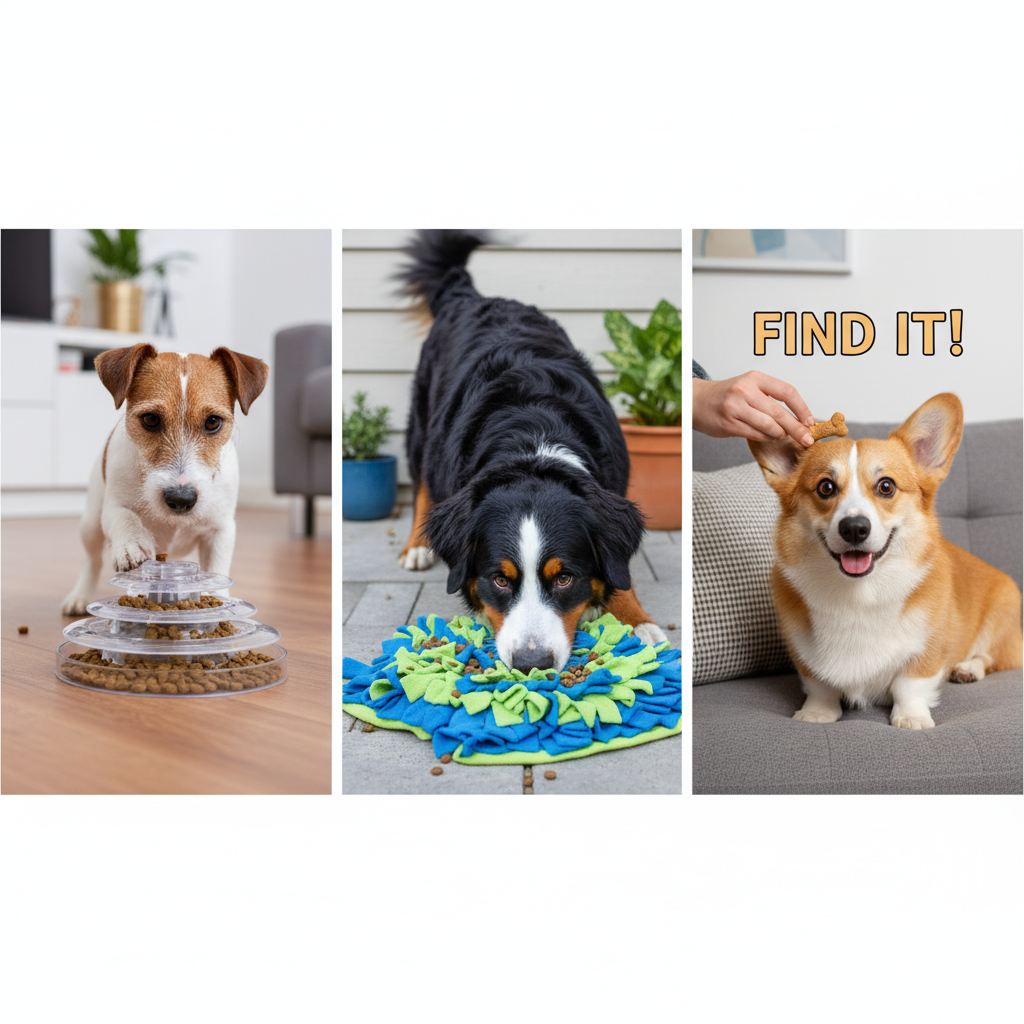
A bored, under-exercised dog is a dog looking for a job. If you don’t provide them with one, they will invent their own—and counter surfing is a very rewarding self-employed position. Meeting your dog’s physical and mental needs is not just an add-on; it is a fundamental part of the solution that reduces their motivation to seek out illicit snacks.
Physical Exercise
A tired dog is a well-behaved dog. Ensure your dog is receiving an appropriate amount of physical exercise for their age, breed, and health. This goes beyond a simple leash walk around the block. It means engaging in activities that allow them to truly exert themselves.
- Brisk Walks or Jogs: Structured walks where they can sniff and explore are great, but also incorporate periods of faster-paced movement.
- Off-Leash Play: If you have access to a secure area and your dog has a reliable recall, games of fetch or frisbee are excellent ways to burn energy.
- Swimming: A low-impact, high-energy activity that is great for many dogs.
Mental Enrichment
Mental stimulation can be just as tiring, if not more so, than physical exercise. These activities satisfy your dog’s natural instincts to forage, problem-solve, and use their brain, making them less likely to engage in destructive or nuisance behaviors like counter surfing.
Here are some examples of enrichment activities suitable for various canine energy levels:
| Activity Type | Low-Energy Dogs | High-Energy Dogs |
|---|---|---|
| Food Puzzles | Snuffle mats, slow feeder bowls, basic puzzle toys. | Complex, multi-step puzzle toys, frozen Kongs stuffed with food. |
| Scent Work | ‘Find the Treat’ games inside the house. Hide treats under cups or in a cardboard box. | Formal nose work classes, hiding scents/treats outdoors in the yard. |
| Training | Short, 5-minute sessions to practice basic cues like ‘Sit’ and ‘Stay’. | Learning complex tricks, agility training, advanced obedience. |
| Chewing | Dental chews, softer rubber toys. | Durable rubber chews, natural chews like bully sticks (supervised). |
By feeding your dog their meals from puzzle toys instead of a bowl, you are immediately providing 15-30 minutes of mental work twice a day. This small change can have a profound impact on their overall behavior by satisfying their need to forage in a safe and appropriate way.
What to Do When Things Go Wrong: Troubleshooting and Common Mistakes
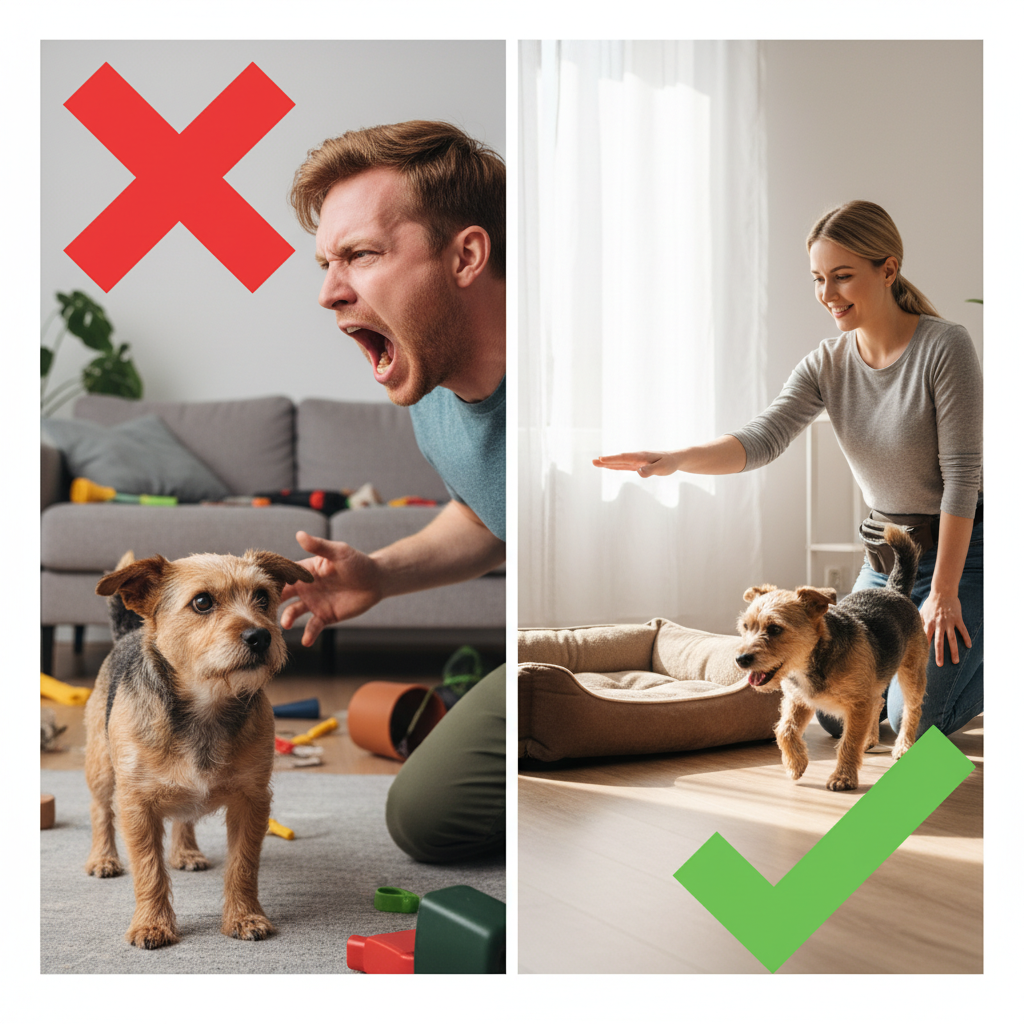
Even with the best management and training plan, mistakes can happen. How you react in the moment, and the common pitfalls you avoid, can make all the difference between success and ongoing frustration.
If You Catch Them in the Act
The goal is to interrupt the behavior without creating fear or anxiety. Yelling, screaming, or using physical punishment is counterproductive. Your dog will not connect the punishment with the act of stealing food; they will connect it with your presence. This creates a dog who is afraid of you and simply becomes sneakier about counter surfing when you aren’t looking.
Instead, use a calm, neutral interrupter. A simple, firm “Off” or a sudden but not scary noise (like a single clap) can work. The moment their paws hit the floor, redirect them to their ‘place’ or another appropriate behavior. If they go to their mat, reward them for that choice. You are not rewarding the counter surfing; you are rewarding the act of complying with your redirection.
Common Mistakes to Avoid
- Inconsistency: Everyone in the household must be on the same page. If one person leaves food on the counter or allows the dog to get away with jumping up, it will undermine everyone else’s efforts. Hold a family meeting to ensure the rules are clear and followed by all.
- Relying on Punishment: Avoid using aversive tools like shaker cans, spray bottles, or electronic mats. While these may stop the behavior in the short term, they do not teach the dog what to do instead. They create fear and anxiety around the kitchen, which can lead to other, more severe behavior problems. The goal is to build a dog’s confidence and ability to make good choices, not to make them afraid of a specific area of the house.
- Expecting Too Much, Too Soon: Counter surfing is a self-rewarding behavior that is often practiced for a long time. It will not be solved overnight. Be patient and celebrate small victories, like your dog choosing to lie on their mat for two minutes while you unload the dishwasher. Consistency over time is what yields lasting results.
Conclusion
Ending counter surfing is not about finding a single magic trick; it’s about implementing a holistic and consistent strategy. By combining diligent Management to prevent the behavior, proactive Training to teach better alternatives, and fulfilling Enrichment to address the underlying motivations, you create a powerful system for change. Remember that you are working against a strong natural instinct that has likely been reinforced in the past. Patience, consistency, and a positive approach are your greatest tools.
By putting in the work, you will not only save your dinner but also strengthen the bond with your dog, building a relationship based on clear communication and mutual trust. A peaceful kitchen and a well-behaved companion are well within your reach.