Prey Drive Control: How to Stop Your Dog From Hunting Birds on Leash

Walking your dog should be a relaxing experience for both of you. However, for owners of dogs with a high prey drive, a simple walk can feel like a constant battle. The sudden lunge at a flock of pigeons, the intense, unwavering stare at a squirrel, the frantic pulling towards any small, fast-moving creature—these are common frustrations rooted in a deeply ingrained, natural instinct. While prey drive is a normal part of being a dog, it becomes problematic and even dangerous when it cannot be controlled, especially in urban or suburban environments.
As a canine specialist, I understand the challenge this presents. It’s not a matter of your dog being ‘bad’ or disobedient; it’s about their genetics and instincts taking over. The key to harmony isn’t to eliminate this drive, which is impossible, but to manage, redirect, and control it. This guide will provide you with a professional, step-by-step framework to regain control of your walks. We will delve into the psychology behind the prey drive, equip you with the right tools and management strategies, and walk you through foundational and advanced training exercises. By following these protocols with patience and consistency, you can teach your dog to coexist peacefully with wildlife and transform your stressful walks into the enjoyable bonding time they were meant to be.
Understanding the Canine Prey Drive: The ‘Why’ Behind the Chase
Understanding the Canine Prey Drive: The ‘Why’ Behind the Chase
Before we can modify a behavior, we must first understand its origin. Prey drive is the instinctual impulse in carnivores to pursue and capture prey. This drive is not born from hunger alone; it is a genetically hardwired behavior that has ensured survival for millennia. For our domestic dogs, this instinct manifests in varying degrees, largely influenced by breed history. A Beagle bred to track rabbits will have a different trigger than a Border Collie bred to herd sheep, but the underlying sequence of behaviors is the same.
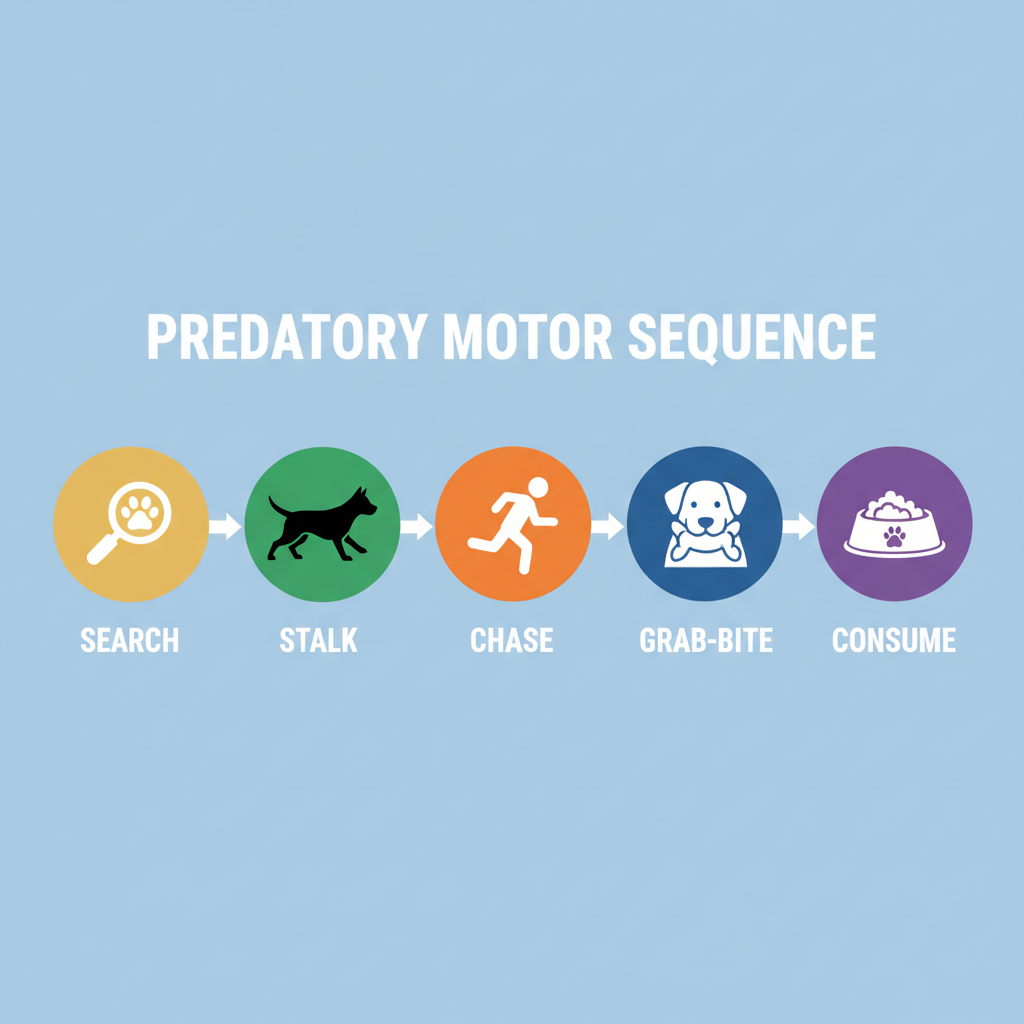
The Predatory Motor Sequence
Experts break down the prey drive into a series of distinct steps. Not all dogs will exhibit every step, and the intensity can vary. Understanding this sequence helps you recognize the behavior before it escalates into a full-blown chase.
- Search/Orient: The dog actively scans the environment for potential prey, using its eyes, ears, and nose.
- Stalk: Once a target is located, the dog may freeze, lower its body, and creep forward slowly. This is the classic ‘pointer’ stance.
- Chase: The explosive burst of speed to close the distance with the prey. This phase is highly self-reinforcing; the chase itself is often the reward.
- Grab-Bite/Dissect: The act of catching the prey. For many dogs playing with toys, this is satisfied by grabbing and shaking a squeaky toy.
- Consume: The final step of the sequence.
For most pet owners, the primary challenge lies in interrupting the sequence before the chase phase begins. Once a dog is in pursuit, their adrenaline is high, and they are far less likely to respond to cues.
Breed-Specific Tendencies
It’s crucial to acknowledge the role of genetics. While any dog can have a prey drive, certain breed groups have been selectively bred for generations to excel at specific parts of the predatory sequence.
- Terriers: Bred to hunt and kill vermin, they often have a very strong ‘grab-bite’ instinct.
- Sighthounds: (e.g., Greyhounds, Whippets) Bred for explosive speed, their drive is triggered powerfully by movement.
- Herding Dogs: (e.g., Border Collies, Australian Shepherds) They utilize the ‘eye-stalk-chase’ part of the sequence but typically have a suppressed ‘bite’ instinct.
- Retrievers: Bred to retrieve downed birds, they have a strong drive to chase and a ‘soft mouth’ to carry things.
Recognizing your dog’s breed heritage provides insight into their behavior and helps you set realistic training goals. The goal is not to punish the instinct but to bring it under your functional control.
Essential Equipment and Proactive Management
Essential Equipment and Proactive Management
Effective training begins with proper equipment and smart management. Management is not a substitute for training, but a crucial component that prevents the dog from practicing and reinforcing the unwanted behavior. Every time your dog gets to lunge at a bird, the behavior becomes stronger. Our first job is to stop that from happening.
Choosing the Right Gear
The tools you use can either help or hinder your progress. The goal is to maximize control and safety without causing pain or discomfort to your dog.
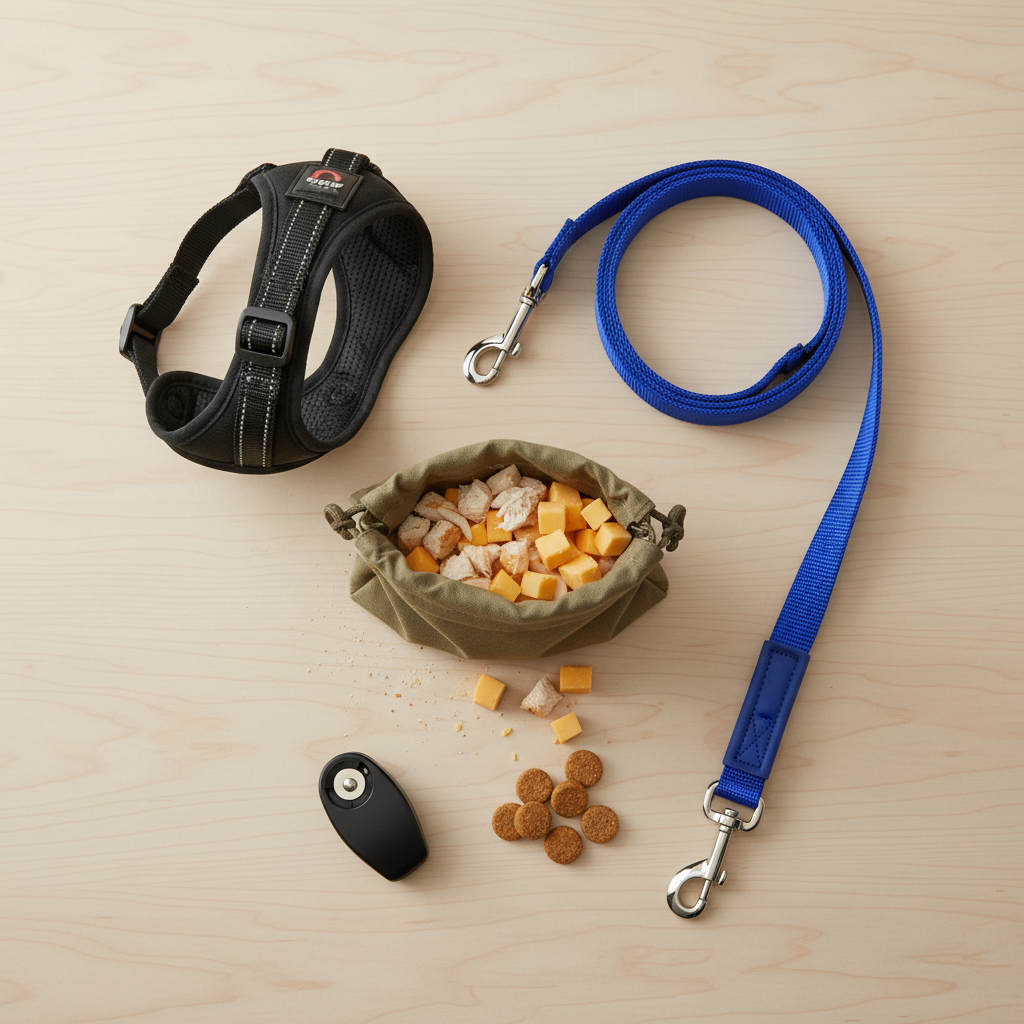
| Equipment Type | Pros | Cons | Best For |
|---|---|---|---|
| Front-Clip Harness | Redirects pulling by turning the dog back towards you. No pressure on the trachea. | May cause gait changes in some dogs; requires proper fitting. | Most dogs, especially strong pullers. The primary recommendation for prey drive management. |
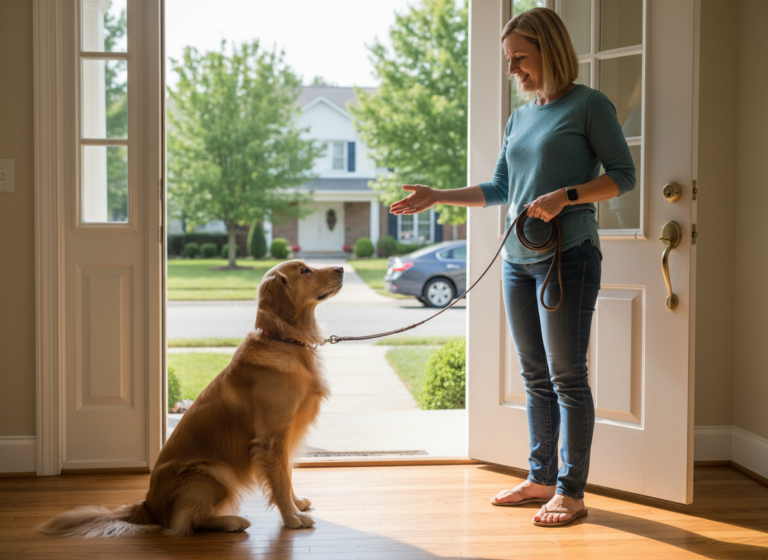
| Standard 6-Foot Leash | Provides good control and clear communication. Durable and reliable. | Requires active handling; not for ‘hands-free’ walking. | All training scenarios. The industry standard for safe and effective leash walking. |
| Head Halter | Offers excellent control over the dog’s head direction (‘where the head goes, the body follows’). | Requires careful introduction and conditioning; can be aversive if used improperly. | Very strong, large dogs where a harness is insufficient, under professional guidance. |
| High-Value Treats | Creates a strong positive association and motivation to focus on the handler. | Must be something the dog truly loves and doesn’t get at other times. | All training sessions where you are competing with high-level distractions. |
Expert Tip: Avoid retractable leashes entirely. They teach dogs to pull, offer almost no control in an emergency, and can cause serious injury. A solid, 6-foot leather or nylon leash is your most important tool.
Management Strategies for Success
Management is about controlling the environment to set your dog up for success.
- Situational Awareness: Be your dog’s lookout. Scan the environment ahead of you for potential triggers. See the birds before your dog does.
- Increase Distance: If you see a trigger, immediately create more distance by crossing the street, turning around, or ducking behind a parked car. Distance is your best friend in the early stages of training.
- Avoid Trigger-Heavy Areas: Initially, avoid walking in parks or near ponds where you know large flocks of birds congregate. Choose quieter routes while you build a foundation of control.
- Time of Day: Walk during times when birds and squirrels are less active, such as mid-day, rather than dawn or dusk.
Building the Foundation: Non-Negotiable Obedience Cues
Building the Foundation: Non-Negotiable Obedience Cues
Before you can expect your dog to ignore a bird mid-chase, they must have a rock-solid understanding of certain foundational cues in a low-distraction environment. These are the building blocks of impulse control and will become the tools you use to communicate with your dog when their instincts are screaming at them to chase.
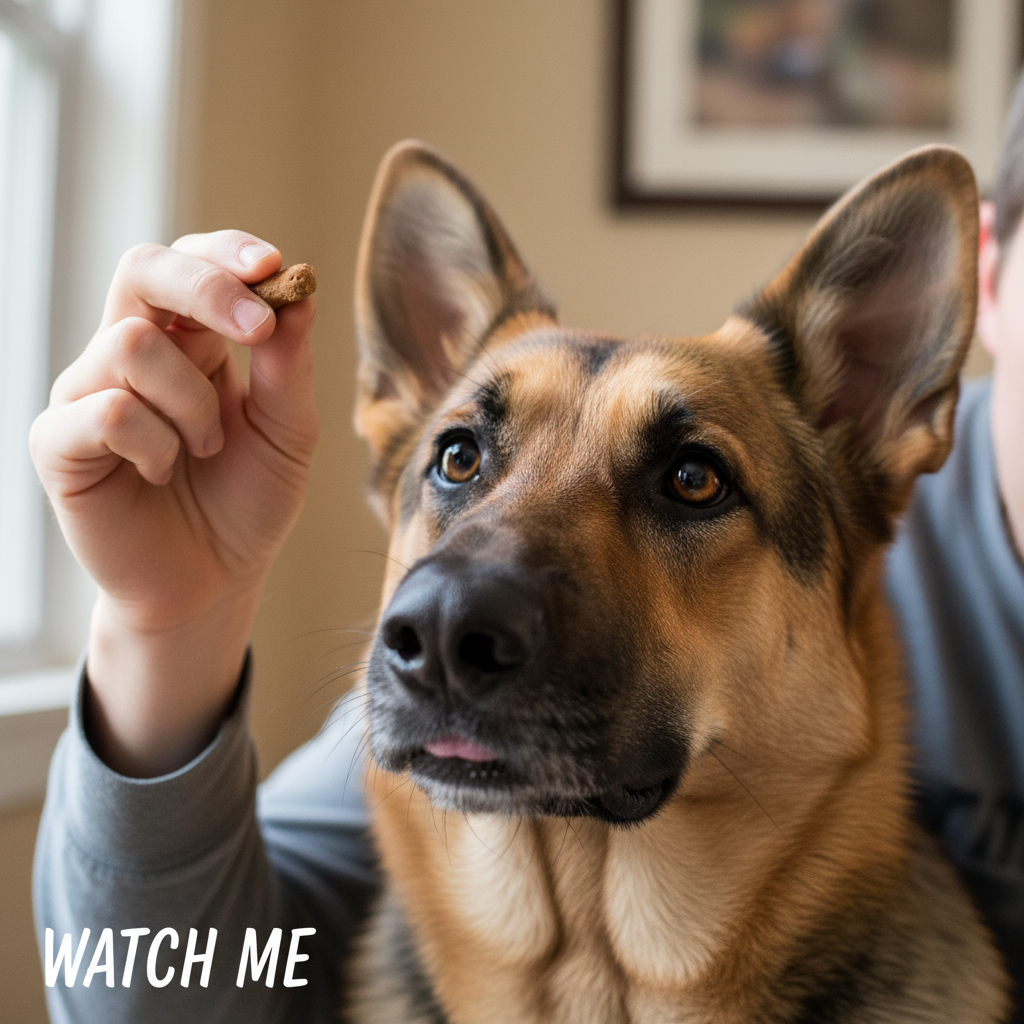
The ‘Watch Me’ Cue
This cue teaches your dog to voluntarily disengage from a distraction and make eye contact with you. It is arguably the most important skill for a dog with a high prey drive.
- Start in a quiet room. Hold a high-value treat up to your eye. The moment your dog’s eyes meet yours, say ‘Yes!’ and give them the treat.
- Repeat this, gradually fading the lure of the treat from your eye. The goal is for the dog to look at your face on the verbal cue ‘Watch Me’ alone.
- Practice in different rooms, then in your backyard, and eventually on quiet streets, slowly increasing the level of distraction. The reward must always be better than the distraction.
The ‘Leave It’ Cue
‘Leave It’ means ‘disengage from that object with your mouth, nose, and eyes, and re-orient to me for a reward.’ It is a cue for impulse control, not just for dropping items.
- Place a low-value treat (like a piece of kibble) on the floor and cover it with your hand. Let your dog sniff and paw at your hand. The moment they back away, even slightly, say ‘Yes!’ and reward them with a high-value treat from your other hand.
- Once reliable, place the kibble on the floor uncovered. Say ‘Leave It.’ If they move towards it, cover it with your foot. When they look away from it and towards you, say ‘Yes!’ and reward them handsomely.
- The key is that the reward for obedience is always better than the item they are leaving alone. Never let them get the ‘Leave It’ item as a reward.
A Bulletproof Recall (‘Come’)
While this guide focuses on on-leash behavior, a strong recall is part of the overall culture of control and safety. A dog who understands that coming to you is the best thing they can possibly do is a dog who is more connected and responsive in all situations.
Important Note: Practice these cues in short, upbeat sessions. Your goal is to build a strong history of reinforcement, making focusing on you more rewarding than engaging with the environment. These skills must be reflexive for your dog before you begin working directly with their triggers.
The Training Protocol: A Step-by-Step Guide to On-Leash Control

The Training Protocol: A Step-by-Step Guide to On-Leash Control
With your management strategies in place and foundational cues established, it’s time to address the problem head-on with a structured training plan. We will use a combination of desensitization and counter-conditioning. In simple terms, we will gradually expose the dog to the trigger (birds) at a distance where they can remain calm (desensitization) and change their emotional response from frantic excitement to calm anticipation of a reward (counter-conditioning).
Step 1: Find the Threshold
Your dog’s threshold is the distance at which they can notice a trigger (a bird) but not yet react to it. At this distance, they might look, their ears might perk up, but they are not pulling, barking, or lunging. They are still ‘under threshold’ and able to think and respond to you. This distance is critical. If you are too close, your dog cannot learn. Start by going to a park and finding this distance—it might be 50 yards, or it might be 100. This is your starting point.
Step 2: Introduce the ‘Look at That’ (LAT) Game
The LAT game, developed by trainer Leslie McDevitt, is transformative for reactive and prey-driven dogs.
- Position yourself with your dog at their threshold distance from the birds.
- Wait for your dog to look at the birds. The very instant they do, use a marker word like ‘Yes!’ or a clicker, and immediately reward them with a very high-value treat. The treat should be delivered to their mouth so they don’t have to look away from you to find it on the ground.
- At first, you are simply marking the act of looking at the trigger. The pattern becomes: Dog sees bird -> Dog gets a fantastic treat.
- After several repetitions, you will notice a change. Your dog will see the bird, and then immediately whip their head back to look at you in anticipation of the reward. This is the magic moment! You have changed the emotional response. The bird is no longer just a trigger to chase, but a predictor of a reward from you.
Step 3: Gradually Decrease the Distance
This process is a marathon, not a sprint. Over many sessions, you can begin to slowly decrease the distance to the trigger. If at any point your dog starts to react (lunge, bark, fixate), you have moved too close, too fast. Simply increase the distance again until they are calm and successful, and work at that distance for a while longer before trying to move closer.
Step 4: Practice Engagement and Disengagement
As your dog becomes more proficient with the LAT game, you can ask for more complex behaviors. Ask for a ‘Watch Me’ after they look at the bird. Practice loose-leash walking patterns at the threshold distance. The goal is to build duration of focus on you, even in the presence of the trigger.
Professional Advice: Keep training sessions short and positive, ideally 5-10 minutes. Ending on a successful repetition is crucial for building confidence in both you and your dog. Overtraining or pushing them over threshold will be counterproductive.
Enrichment: Providing Safe Outlets for Predatory Instincts

Enrichment: Providing Safe Outlets for Predatory Instincts
Managing prey drive isn’t just about saying ‘no.’ It’s also about providing a ‘yes.’ Dogs with high prey drive need safe, appropriate outlets for their natural instincts. Suppressing these instincts entirely can lead to frustration and other behavior problems. By channeling their drive into approved activities, you fulfill their needs, strengthen your bond, and reduce their desire to seek inappropriate outlets like birds on your walks.
The Power of a Flirt Pole
A flirt pole is essentially a giant cat toy for dogs. It consists of a long pole, a rope, and a lure or toy at the end. It allows you to simulate the chase in a controlled environment.
- How to Use It: Drag the lure on the ground in varying directions, encouraging your dog to chase. Let them ‘catch’ it periodically as a reward.
- Incorporate Obedience: This is a golden opportunity to practice impulse control. Ask your dog for a ‘Sit’ or ‘Leave It’ before a chase begins. This teaches them that their access to the highly reinforcing activity is controlled by you and requires them to think first.
- Safety: Always use a flirt pole in a safe, fenced area. Keep sessions short (5-10 minutes) as it is a high-impact activity.
Nose Work and Scent Games
Nose work engages the ‘search’ portion of the predatory sequence. It is mentally exhausting for dogs and builds focus and confidence. You don’t need fancy equipment to start.
- ‘Find It’ Game: Start by tossing a treat on the floor and saying ‘Find It!’. Gradually make the hides more difficult—under a rug, behind a chair leg.
- Scent Boxes: Hide a high-value, smelly treat in one of several cardboard boxes and encourage your dog to use their nose, not their eyes, to find it.
Structured Tug-of-War
Tug can be an excellent outlet for the ‘grab-bite’ part of the sequence, but it must be played with rules. The dog must have a solid ‘Drop It’ cue. The game should start and end on your terms, reinforcing your control over reinforcing activities.
Key Takeaway: A tired dog is a good dog, but a mentally fulfilled dog is even better. By providing these enrichment activities, you are speaking your dog’s language and meeting their core needs, which will make them a more balanced and trainable companion on your walks.
Troubleshooting and When to Call a Professional

Troubleshooting and When to Call a Professional
Training is rarely a linear process. You will have good days and bad days. Understanding common pitfalls can help you stay on track, and knowing when to ask for help is a sign of a responsible owner.
Common Training Mistakes
- Working Over Threshold: This is the most common mistake. If your dog is reacting, they are not learning. You must increase the distance from the trigger until they are calm. There is no shortcut for this.
- Treat Value is Too Low: Your dog’s kibble is not going to compete with a live bird. You need to use ‘high-value’ currency: boiled chicken, cheese, freeze-dried liver, or whatever your dog finds irresistible and only gets during training.
- Inconsistent Reinforcement: If you sometimes let your dog pull and other times you don’t, you are creating a ‘slot machine’ effect, which makes the behavior stronger. Consistency from all family members is key.
- Poor Timing: Your marker word (‘Yes!’) or click must be precise. It should happen the exact moment your dog performs the desired behavior (e.g., looking at the bird calmly). If your timing is late, you may be rewarding the wrong thing.
When Your Dog ‘Stacks’ Triggers
Sometimes, a dog can handle one trigger, but multiple triggers ‘stack’ on top of each other, pushing them over threshold. For example, your dog might be fine seeing a bird, but if a loud truck goes by at the same time, the combined stress causes a reaction. Be mindful of the entire environment, not just the obvious trigger.
Seeking Professional Help
While this guide provides a solid framework, some cases are more complex and require professional intervention. It’s time to contact a certified professional if:
- You are not seeing any progress after several weeks of consistent training.
- Your dog’s reaction is so severe that you cannot find a safe threshold distance.
- The behavior is getting worse or escalating to aggression.
- You feel overwhelmed, frustrated, or unsafe.
Look for a credentialed professional, such as a Certified Professional Dog Trainer (CPDT-KA), a Pat Miller Certified Trainer (PMCT), or a board-certified Veterinary Behaviorist (DACVB) for severe cases. These professionals can provide a customized training plan and in-person guidance to ensure the safety and success of both you and your dog.
Conclusion
Regaining control over your dog’s prey drive is a journey of patience, consistency, and understanding. It requires you to be more than just a walker; you must become your dog’s observant guide, proactive manager, and engaging teacher. Remember that the goal is not to extinguish a natural, hardwired instinct, but to bring it under your mutual control, strengthening the partnership you share. By understanding the ‘why’ behind the chase, using the right equipment, building a solid foundation of obedience, and implementing a structured training plan, you can transform chaotic walks into calm, connected experiences.
Celebrate the small victories—the moment your dog looks at a bird and then immediately looks back at you is a monumental achievement. Provide them with safe, enriching outlets for their instincts, and don’t hesitate to seek professional guidance if you feel stuck. With dedication, you can build a relationship with your dog based on trust and clear communication, allowing you both to enjoy the world together, peacefully and confidently.