My Dog Attacked the Roomba! How to Stop Robot Vacuum Terror Instantly
The sight of a robot vacuum efficiently gliding across the floor is a modern convenience many pet owners cherish. However, this convenience can quickly turn into chaos when your canine companion decides the automated cleaner is an invading monster. If you’ve witnessed your dog barking, lunging at, or attacking your Roomba, you are not alone. This behavior, while alarming, is a common reaction rooted in a dog’s natural instincts and perception of the world. It’s not a sign of a ‘bad dog,’ but rather a deep-seated fear or predatory response to a strange, noisy, and unpredictably moving object in their territory.
Understanding the ‘why’ behind this behavior is the first critical step toward resolving it. Dogs may see the vacuum as mechanical prey, a territorial intruder, or simply a terrifyingly loud monster. Their reaction is a form of communication, telling you they are stressed, fearful, or overstimulated. Punishing this reaction will only amplify their anxiety. Instead, a systematic approach involving management, desensitization, and counter-conditioning is required. This guide will provide you with a professional, step-by-step protocol to help your dog overcome their fear and learn to coexist peacefully with your robotic helper, ensuring both a clean home and a happy, secure pet.
Understanding the Root Cause: Why Dogs Target Robot Vacuums
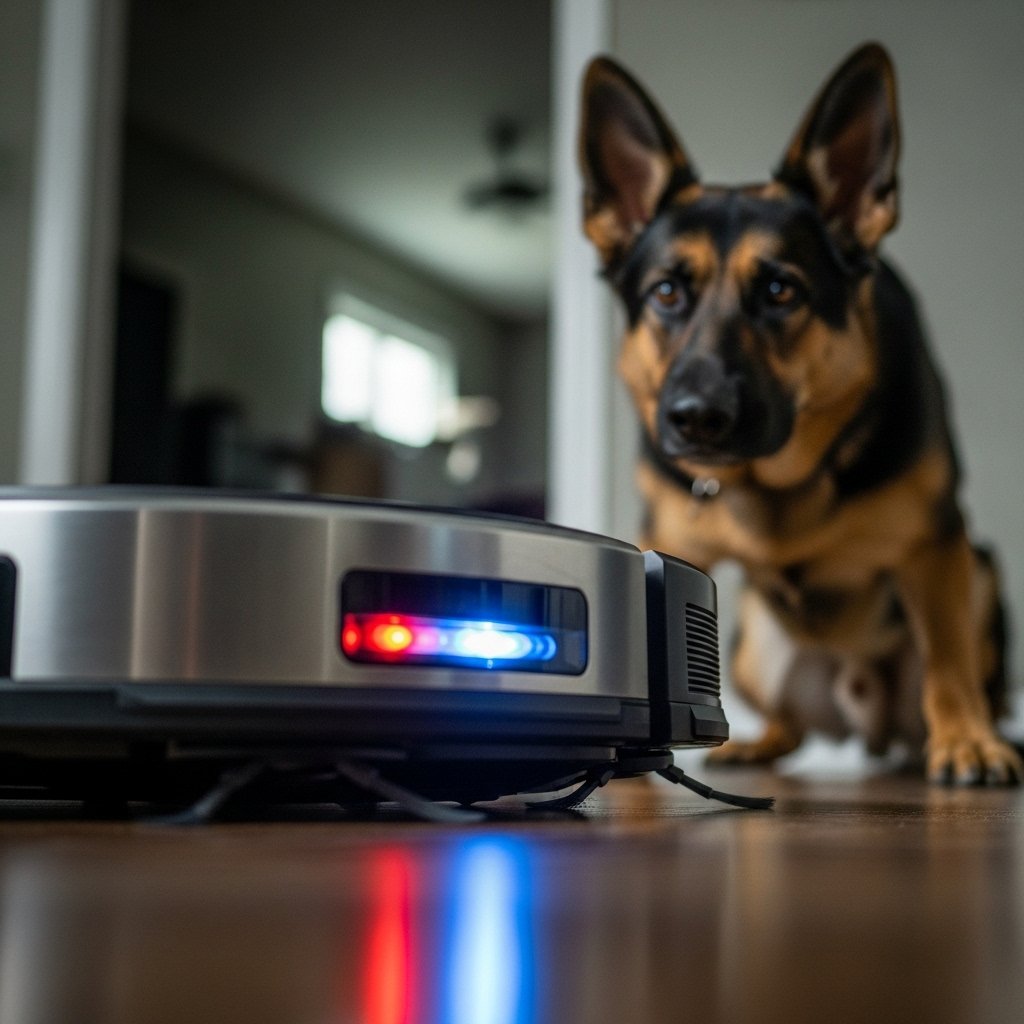
Before we can modify a behavior, we must understand its origin. A dog’s aggression or fear towards a robot vacuum is rarely malicious; it’s almost always driven by instinct and emotion. By identifying the specific trigger for your dog, you can tailor your training approach for maximum effectiveness.
Key Psychological Triggers
- Predatory Drift: The small, scurrying, and unpredictable movement of a robot vacuum can trigger a dog’s innate prey drive. To your dog, the device isn’t cleaning the floor—it’s acting like a wounded animal, a rodent, or another small creature that needs to be chased, cornered, and ‘neutralized.’ This is especially common in herding breeds and terriers.
- Fear and Neophobia: Neophobia, or the fear of new things, is a powerful survival instinct. The vacuum is an alien object. It makes strange whirring and beeping sounds, moves on its own, and doesn’t smell like anything familiar. This combination can be deeply unsettling, causing a dog to react defensively to neutralize the perceived threat.
- Territorial Guarding: Dogs are inherently territorial. A robot vacuum moving freely through their space can be seen as a bold intruder. The dog’s aggressive display is an attempt to protect its home, its resources, and its family from this unknown challenger.
- Negative Past Associations: If your dog has ever been startled by the vacuum starting unexpectedly, bumped by it while resting, or has a general sensitivity to loud noises (like a traditional vacuum), it may have already formed a negative association. The robot vacuum simply inherits this pre-existing anxiety.
Expert Insight: It is crucial to view the behavior not as disobedience, but as a symptom of underlying fear or instinct. Your role is to become a calm leader who can teach your dog that the machine is irrelevant and non-threatening.
Phase 1: Management and Essential Preparation
Effective training begins with a solid foundation. Before you even start the desensitization process, you must manage the environment to prevent further negative encounters. Each time your dog practices the unwanted behavior (attacking the vacuum), the habit becomes more ingrained. The goal of this phase is to halt the problem behavior completely while you gather your tools and prepare for formal training.
Immediate Management Strategies
- Create Separation: The simplest solution is to ensure your dog and the vacuum are never active in the same room at the same time. Run the vacuum while you are on a walk, when the dog is securely in the backyard, or while they are crated in a separate, quiet room with a favorite chew toy.
- Utilize Virtual Barriers: Most modern robot vacuums come with apps that allow you to set ‘no-go zones’ or virtual walls. Use this technology to block off your dog’s favorite resting areas, their bed, or the room they are currently in.
- Secure the Docking Station: Ensure the charging base is in a location your dog cannot easily access. The vacuum’s sudden activation as it leaves the dock can be a major trigger.
Gathering Your Training Toolkit
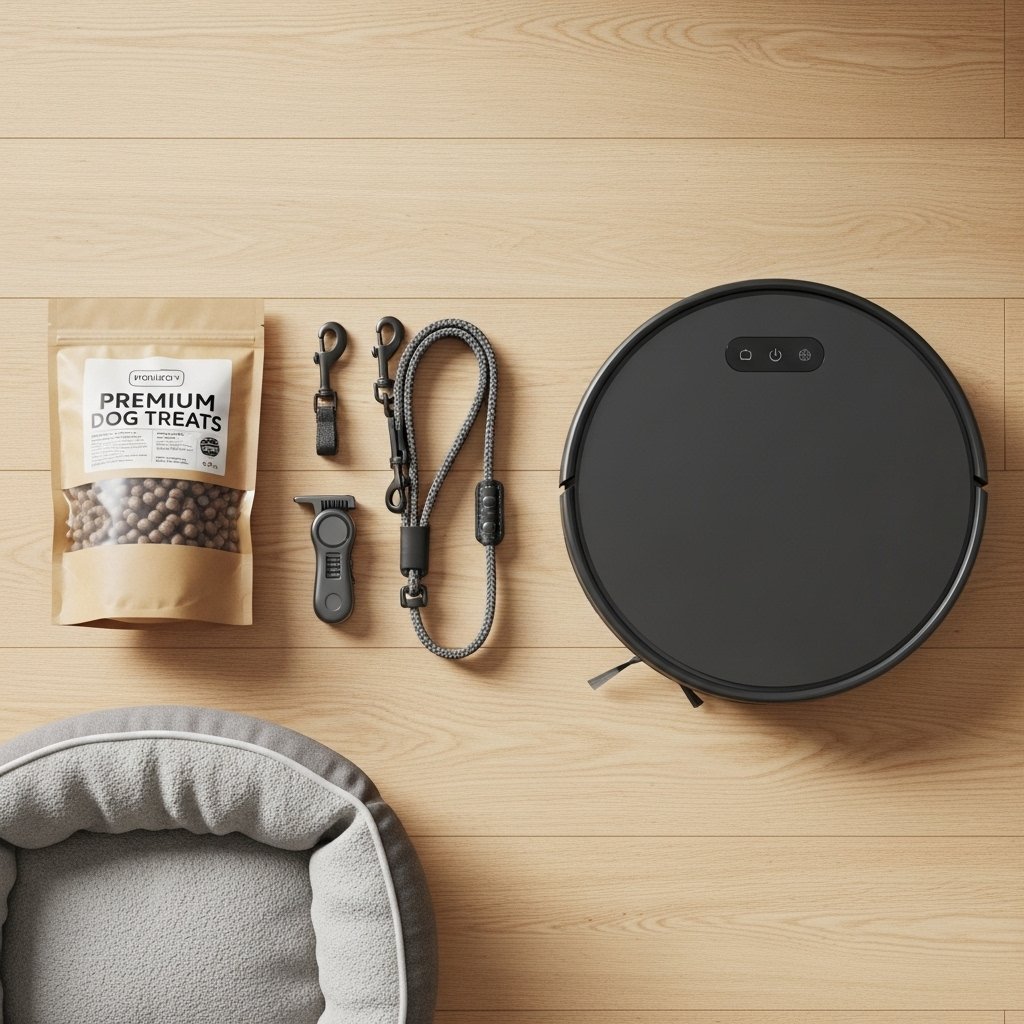
To successfully recondition your dog’s response, you will need the right tools. Prepare these items before you begin the next phase:
| Tool | Purpose and Description |
|---|---|
| High-Value Treats | These are not your dog’s regular kibble. Think small pieces of boiled chicken, cheese, hot dogs, or commercial training treats that your dog finds irresistible. The goal is to create a powerfully positive association. |
| Clicker (Optional) | A clicker is a valuable tool for marking the precise moment your dog performs the desired behavior (e.g., looking at the vacuum calmly). The ‘click’ is followed immediately by a treat. |
| Leash and Harness/Collar | A standard 6-foot leash will help you maintain control and keep a safe distance between your dog and the vacuum during training sessions. |
| A Comfortable Mat or Bed | This gives your dog a designated ‘safe spot’ to settle on during training, helping to promote calm behavior. |
Phase 2: The Step-by-Step Desensitization and Counter-Conditioning Protocol
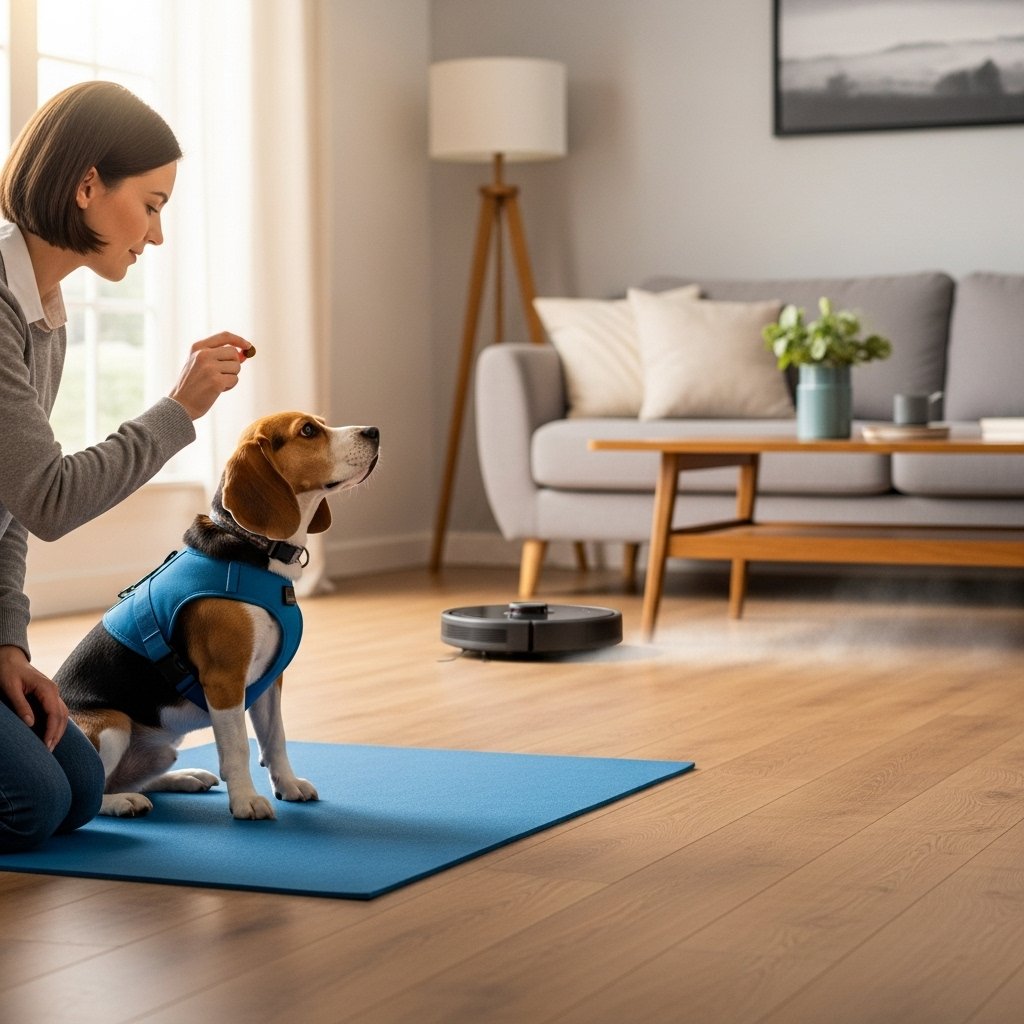
This is the core of the training process. The goal is twofold: desensitization (making the vacuum less scary by exposing your dog to it in a controlled, gradual way) and counter-conditioning (changing your dog’s emotional response from fear to happy anticipation). Go slowly and never push your dog past their comfort level. Each session should be short (5-10 minutes) and end on a positive note.
- Step 1: The Stationary Object. With the robot vacuum completely turned off, place it in the middle of a room. Let your dog enter the room on a leash. Any time your dog looks at the vacuum, calmly sniffs it, or shows any non-reactive curiosity, click (if using) and give them a high-value treat. Do not lure them closer; let them choose to investigate. Repeat until your dog is relaxed in the presence of the silent object.
- Step 2: Introducing Sound. Place your dog in a comfortable room with a closed door. Go to an adjacent room with the vacuum and turn it on. While the vacuum is running in the other room, give your dog a steady stream of high-value treats or a food-stuffed toy. The goal is to associate the sound of the vacuum with something wonderful. Turn the vacuum off, and the treats stop. Repeat this several times.
- Step 3: Sound and Sight (No Movement). Place the vacuum in the corner of a room, blocked by furniture so it cannot move. With your dog on a leash at a significant distance (across the room), turn the vacuum on using a remote or app. The moment it turns on, start feeding your dog a rapid-fire succession of amazing treats. The moment it turns off, the treats stop. The vacuum’s noise should predict the arrival of food.
- Step 4: Controlled, Brief Movement. This is a critical step. With your dog at a safe distance on a leash, have the vacuum move forward just one or two feet and then stop. The instant it moves, give your dog a treat. As it stops, the treating stops. The goal is to teach your dog that the movement of the machine makes good things happen. Keep the movements very short and predictable.
- Step 5: Increasing Duration and Distance. Gradually increase the amount of time the vacuum moves. Let it travel for 5 seconds, then 10, and so on, all while you are rewarding your dog for calm behavior. Simultaneously, slowly decrease the distance between your dog and the machine, always watching your dog’s body language for signs of stress (lip licking, yawning, whale eye). If you see stress, you’ve moved too fast; go back to the previous step.
- Step 6: Generalization. Once your dog can calmly observe the vacuum running its full cycle from a stationary position (e.g., their mat), you can begin to generalize. Have them hold a ‘stay’ while the vacuum works in different parts of the room and eventually in other rooms while they can still see it. Continue to reward them intermittently for their calm demeanor.
Troubleshooting Common Mistakes and When to Seek a Professional
The path to peaceful coexistence between dog and robot is not always linear. Setbacks can happen, and it’s important to recognize common pitfalls to avoid derailing your progress. Patience is the most valuable asset in this process.
Common Training Errors to Avoid
- Moving Too Quickly: This is the most common mistake. Owners are eager for results and push their dog past its threshold. If your dog reacts (barks, lunges), you have progressed too fast. Simply go back to the last step where your dog was successful and work there for a few more sessions before trying to advance again.
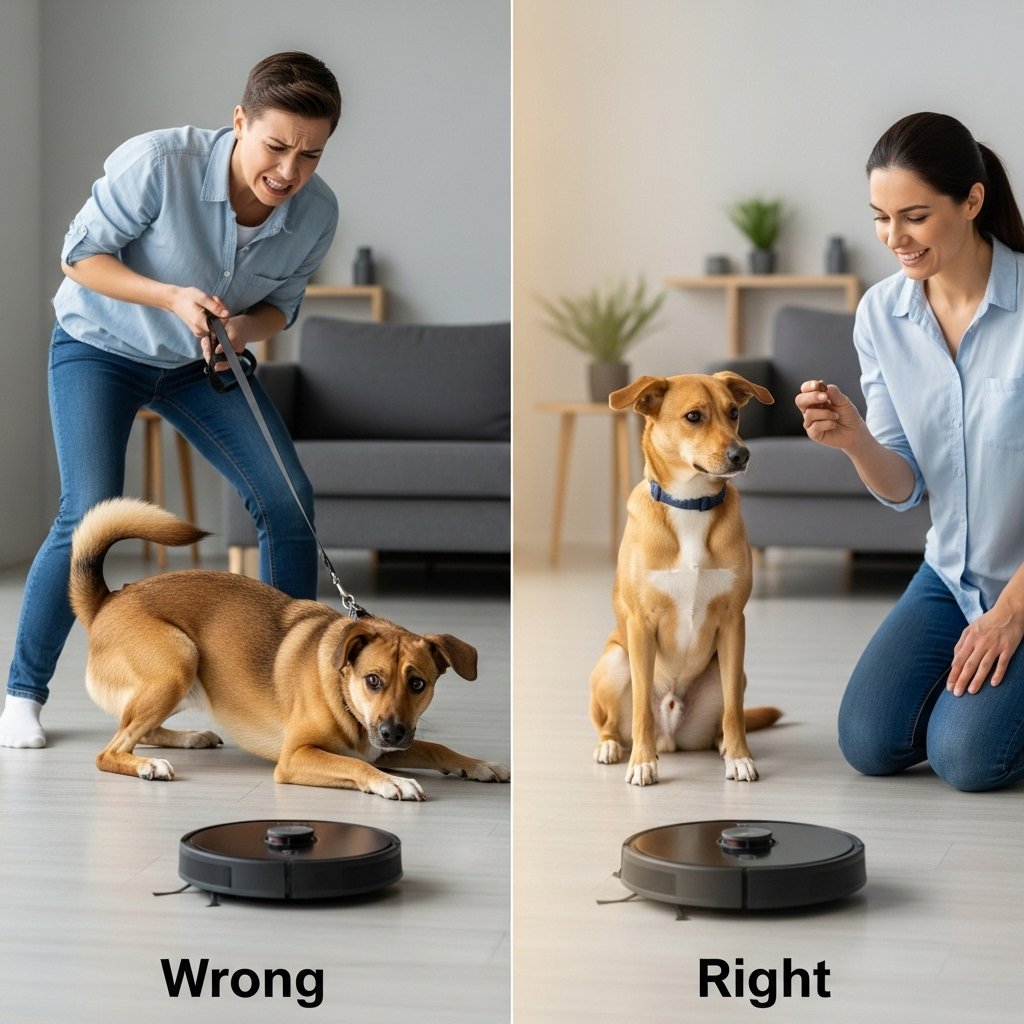
- Forcing Interaction: Never drag your dog toward the vacuum or force them to be near it. This will only validate their fear that the object is dangerous. All interaction should be voluntary, with the dog ‘choosing’ to be brave because it leads to rewards.
- Punishing the Reaction: Yelling, using a shock collar, or otherwise punishing your dog for being afraid will shatter their trust in you and intensify their anxiety. It teaches them that the vacuum’s presence leads to scary things happening, which is the opposite of your goal.
- Using Low-Value Rewards: Your dog’s daily kibble is unlikely to be motivating enough to override a strong fear or prey drive. You must use treats that are special and exciting to create a strong positive emotional shift.
Professional Tip: If your dog’s reaction is intensely aggressive, if they redirect their aggression towards you or other pets, or if you see no progress after several weeks of consistent training, it is time to consult a professional. A Certified Applied Animal Behaviorist (CAAB) or a board-certified veterinary behaviorist (DACVB) can provide a tailored plan and ensure everyone’s safety.
A professional can help diagnose if the issue is a simple fear or part of a larger anxiety disorder or high prey drive that requires more intensive intervention. Investing in professional guidance is an investment in your dog’s long-term well-being and your home’s safety.
Conclusion
Transforming your dog’s relationship with your robot vacuum is a journey of patience, understanding, and consistent positive reinforcement. By recognizing the instinctual drivers behind their fear or aggression, you can move from a place of frustration to one of empathy and effective training. The key is to manage the environment to prevent the rehearsal of bad behavior while systematically changing your dog’s emotional response through the desensitization and counter-conditioning protocol outlined above.
Remember to celebrate small victories and always end training sessions on a positive note. Your goal is not to make your dog love the vacuum, but to teach them that it is a neutral, irrelevant part of the environment that predicts wonderful things, like their favorite treats. With time and dedication, the whir of the robot vacuum can become just another background noise in a peaceful, clean, and happy home that you share with your well-adjusted canine companion.