Keep Your Dog Out Of The Kitchen Without Ugly Baby Gates
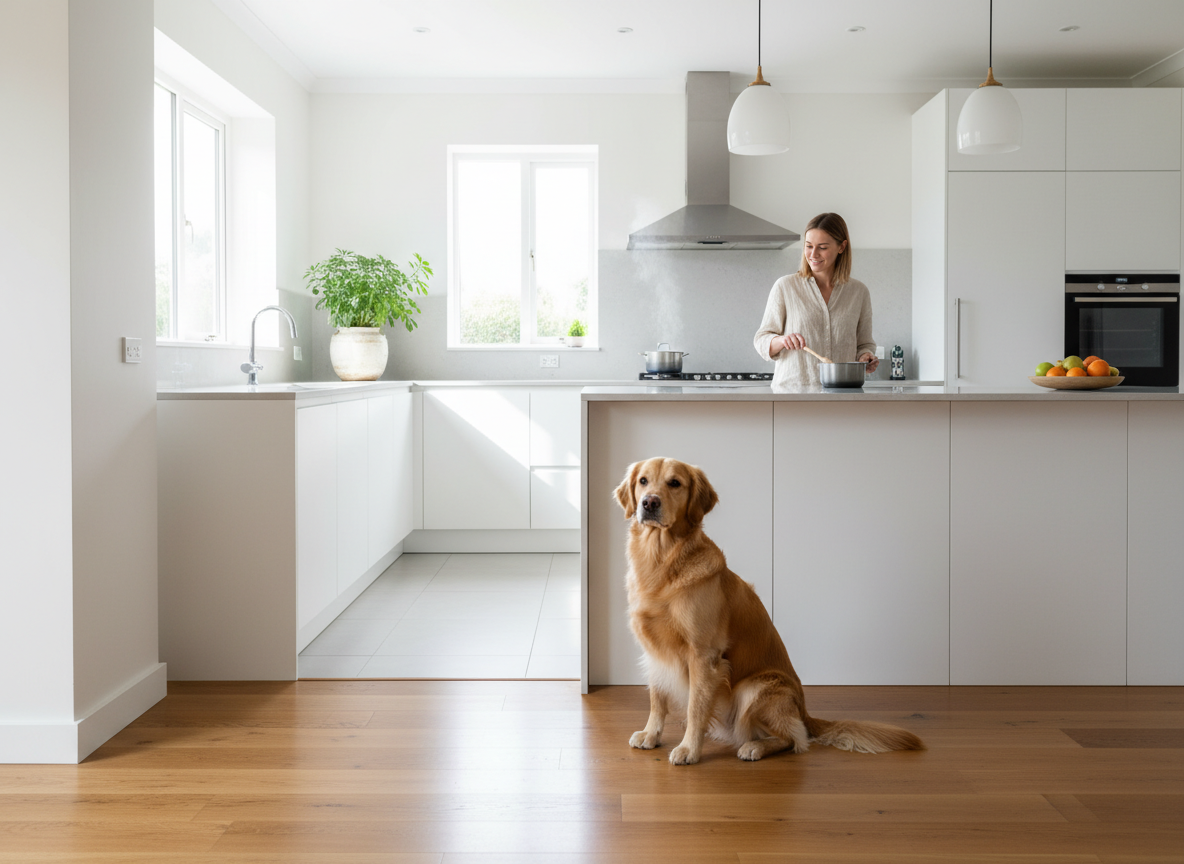
The kitchen is often the heart of the home—a place of enticing aromas, bustling activity, and, unfortunately, a magnet for our canine companions. While having your dog nearby is enjoyable, their presence underfoot can pose significant risks, from tripping hazards to the potential for them to ingest dropped foods that may be toxic. The common solution? A clunky, often unsightly, plastic baby gate that disrupts your home’s aesthetic and becomes a daily obstacle. Fortunately, there is a more elegant and effective solution. Through consistent, positive reinforcement training, you can teach your dog to respect an invisible boundary, granting you a safe, dog-free cooking space without sacrificing your home’s style. This guide will provide a comprehensive, step-by-step approach to establishing this crucial boundary, fostering a well-behaved dog and a more harmonious household.
Why Your Dog Loves the Kitchen: Understanding the Root Behavior
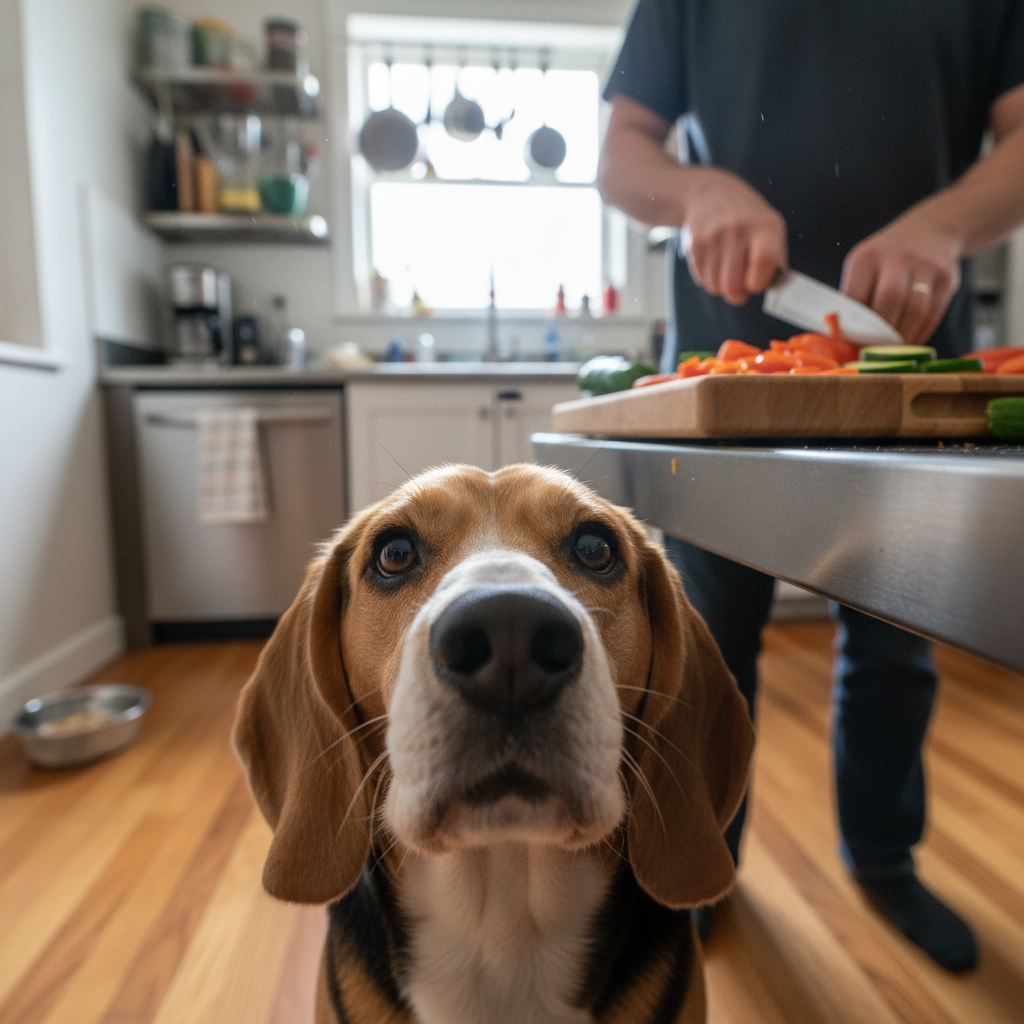
Before diving into training, it is crucial to understand why the kitchen is such an irresistible space for your dog. A dog’s behavior is driven by powerful instincts and learned associations. By recognizing these motivators, you can better address the behavior at its source. The kitchen is a sensory goldmine for a dog, a place where their most powerful sense—smell—is constantly rewarded.
The Power of Scent and Taste
The primary draw is, unequivocally, food. The sizzling of bacon, the roasting of chicken, the chopping of vegetables—each activity releases a complex bouquet of aromas that promises a potential reward. More importantly, this promise is often fulfilled. An accidentally dropped piece of cheese or a carelessly discarded scrap creates a powerful intermittent reinforcement schedule. Your dog learns that if they linger long enough, something delicious might just fall from the sky. This is akin to a slot machine; the unpredictable nature of the reward makes the behavior of waiting and watching even more compelling.
The Kitchen as a Social Hub
Beyond food, the kitchen is often a center of family activity. It’s where people congregate, converse, and prepare meals together. Dogs are inherently social animals that thrive on being part of the pack. By being in the kitchen, your dog is not just looking for food; they are seeking inclusion, attention, and interaction. They want to be where their people are. Pushing them out without providing an alternative can feel like social isolation, which can increase their determination to get back in.
Understanding that your dog’s presence in the kitchen is a combination of seeking food rewards and social connection is the first step. Our training goal is not to punish these desires, but to redirect them to a more appropriate location.
The Foundation: Mastering ‘Stay’ and ‘Place’ Before You Begin
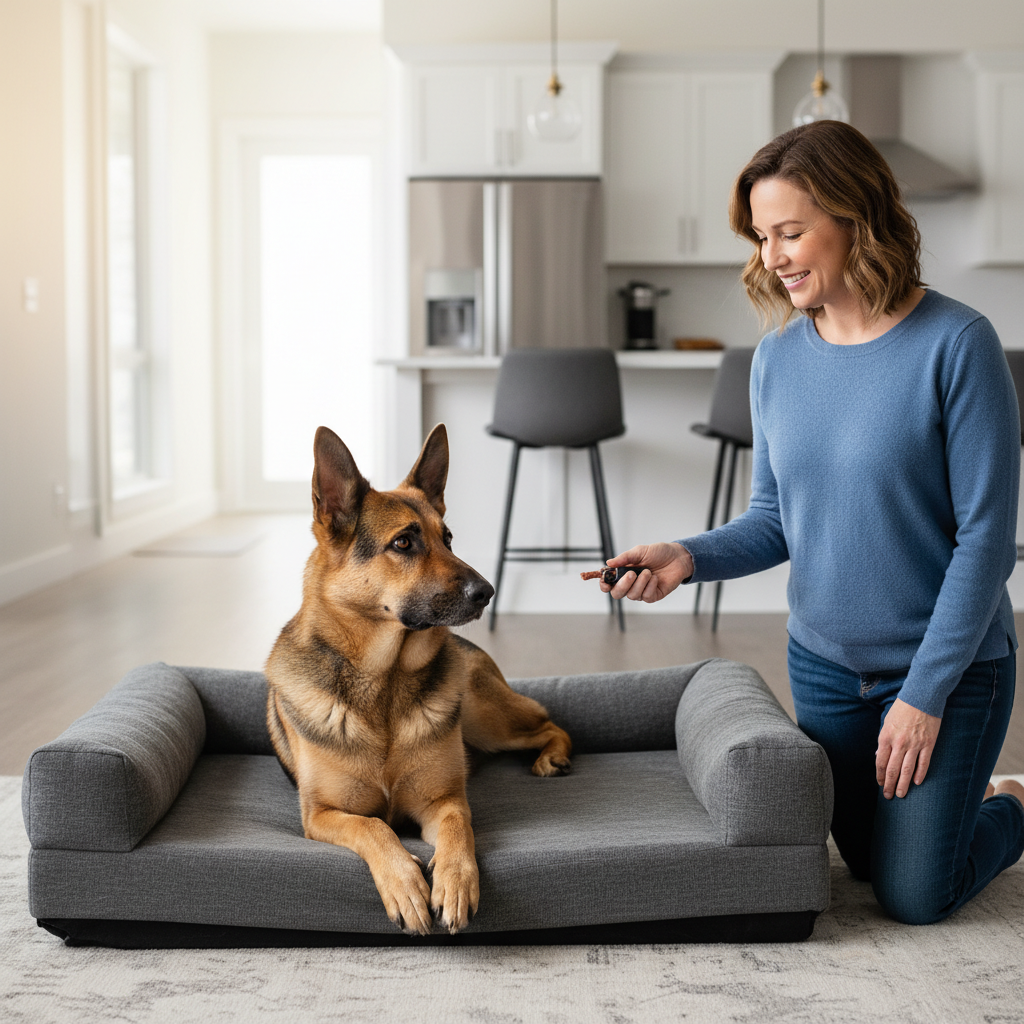
Successful boundary training does not happen in a vacuum. It is built upon a foundation of basic obedience. Before you can teach your dog where they can’t go, you must be able to clearly communicate where they should be. Two commands are absolutely essential for this process: a rock-solid ‘Stay’ and a reliable ‘Place’ command.
The ‘Stay’ Command: The Art of Stillness
The ‘Stay’ command teaches your dog self-control. It is the fundamental building block for any task that requires your dog to hold a position. To refine this command for boundary training:
- Start Small: Ask your dog to sit or lie down. Give the verbal cue ‘Stay’ with a clear hand signal (like a flat palm facing the dog). Wait only one or two seconds before saying your release word (e.g., ‘Okay!’ or ‘Free!’) and rewarding them with a treat and praise.
- Increase Duration: Gradually extend the time you ask them to stay, working in 5-second increments. Only reward them if they hold the position until you release them. If they break the stay, calmly reset them in the original position and try again for a shorter duration.
- Add Distance: Once they can stay for 30 seconds while you are next to them, start adding distance. Take one step back, pause, then return to them, release, and reward. Slowly increase the distance over many training sessions.
- Introduce Distractions: Practice the ‘Stay’ command with low-level distractions, like another person walking by at a distance or a toy squeaking in another room. This builds the reliability needed for a busy kitchen environment.
The ‘Place’ Command: Designating a Safe Zone
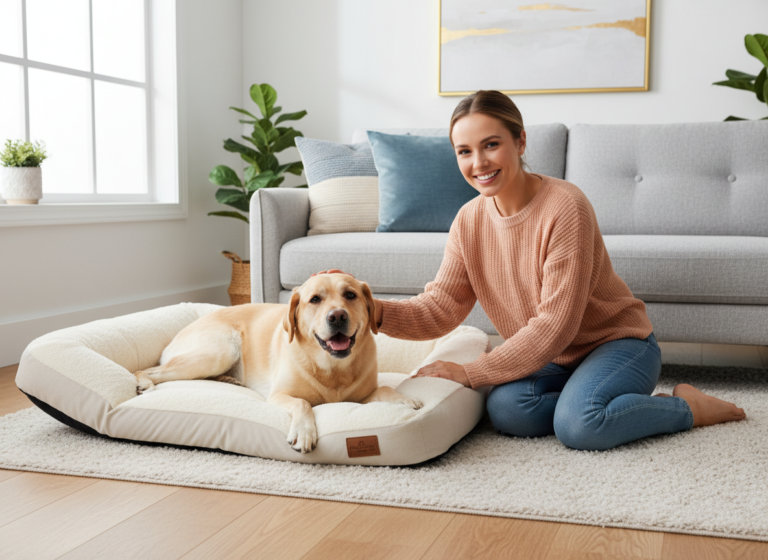
The ‘Place’ command is your ultimate tool. It gives your dog a specific, comfortable, and rewarding job to do. Their ‘place’—a dog bed, a mat, or a specific rug—will become their default station just outside the kitchen. This isn’t a punishment; it’s their special spot.
- Make the Place Valuable: Start by tossing high-value treats onto the bed or mat. When your dog steps onto it to get the treat, say ‘Yes!’ and praise them. Let them leave and repeat. They will quickly associate the ‘place’ with rewards.
- Introduce the Cue: As your dog begins to anticipate the game, start using the verbal cue ‘Place’ just as they are about to step onto the mat.
- Build Duration: Once your dog is happily going to their place, start building duration using the same principles as the ‘Stay’ command. Send them to their place and reward them for staying there, gradually increasing the time.
- Practice from a Distance: Eventually, you should be able to send your dog to their ‘place’ from across the room. This is the skill you will use when you see them approaching the kitchen.
Step-by-Step Guide: Establishing an Invisible Kitchen Boundary
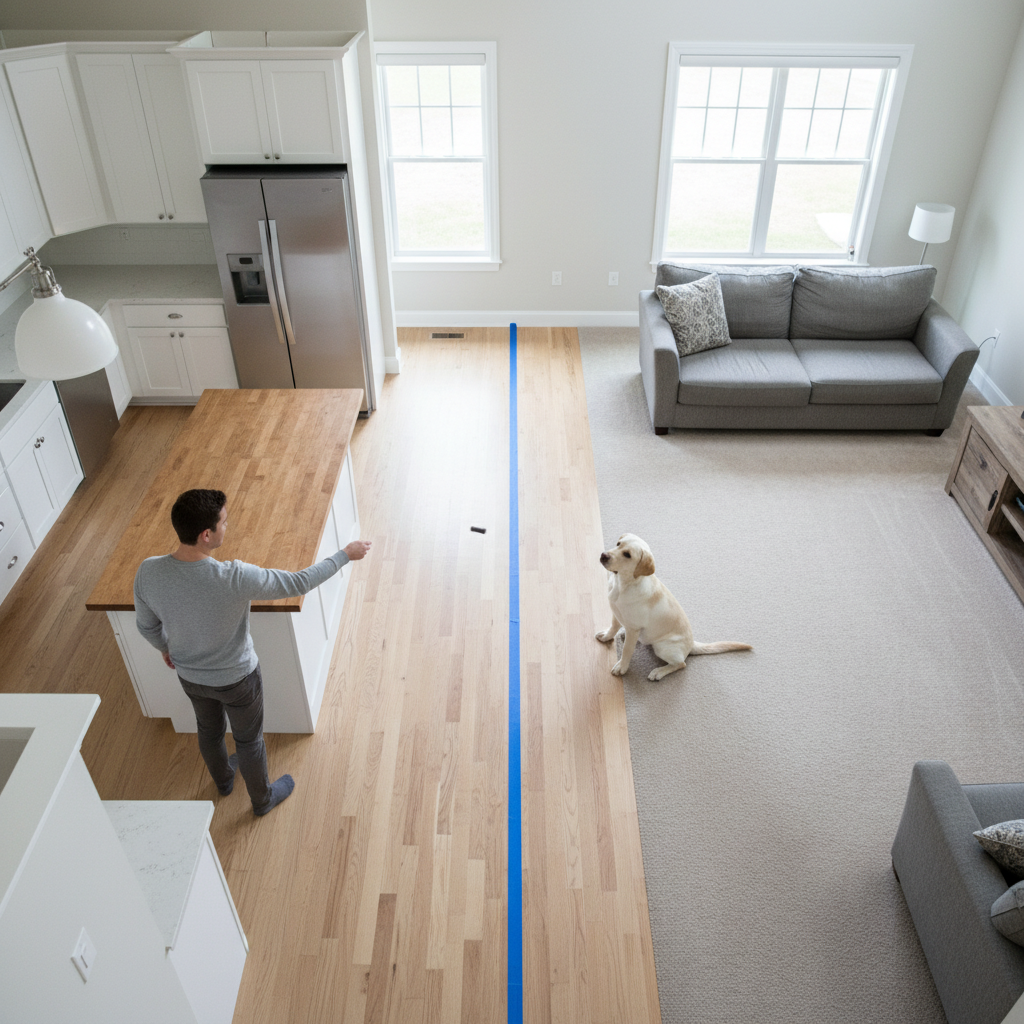
With your foundational commands solid, you can now begin to teach the specific kitchen boundary. This process requires patience, consistency, and a supply of high-value treats your dog truly loves. The goal is to make staying out of the kitchen your dog’s own brilliant idea.
- Define a Clear, Visual Boundary: In the beginning, the invisible line needs to be visible. Use a strip of painter’s tape, a rolled-up towel, or even a row of shoes to create a clear line across the kitchen threshold. This gives your dog a tangible marker to understand.
- Introduce the Concept with Luring: With your dog on a leash, walk them towards the kitchen. As you approach the line, stop. The moment your dog hesitates or pauses at the line, mark the behavior with an enthusiastic ‘Yes!’ and give them a treat. The reward happens on the ‘safe’ side of the line, not in the kitchen.
- Guide and Redirect, Don’t Punish: If your dog steps over the line, use a neutral, attention-getting sound like ‘Oops!’ or ‘Ah-ah!’ and use the leash to gently guide them back over the line. Do not scold or pull them harshly. The goal is to communicate information, not to intimidate. Once they are back on the correct side, ask for a simple command like ‘Sit’ and reward them to end on a positive note.
- Reward the Choice to Stay Out: The magic happens when the dog makes the choice independently. Stand on the kitchen side of the line. Toss a treat onto the floor just on the ‘safe’ side. When your dog eats it, they are being rewarded for being in the correct spot. Wait for them to look at you. If they remain outside the line, toss another treat. You are rewarding them for the decision not to enter.
- Incorporate the ‘Place’ Command: As your dog begins to understand the boundary, start integrating your ‘Place’ command. When you are going to be working in the kitchen for an extended period, proactively send your dog to their mat. Periodically walk over and reward them with a small treat or praise for remaining there. This teaches them what to do instead of just what not to do.
- Add the 3 D’s: Duration, Distance, and Distraction: Once your dog reliably stops at the line, begin to increase the challenge. Increase Duration by waiting longer between rewards. Increase Distance by moving deeper into the kitchen. And finally, add Distractions. Drop a piece of kibble (a low-value ‘mistake’) on the kitchen floor. If your dog holds their position outside the boundary, give them a super high-value reward (like chicken or cheese). They learn that ignoring the temptation leads to a better outcome.
- Fade the Visual Cue: After many successful repetitions over several days or weeks, the behavior should be reliable. Now, you can remove the physical line on the floor. The boundary is now invisible. Continue to randomly reinforce your dog for respecting the space to ensure the behavior remains strong.
Elegant Alternatives: When You Need a Physical Barrier
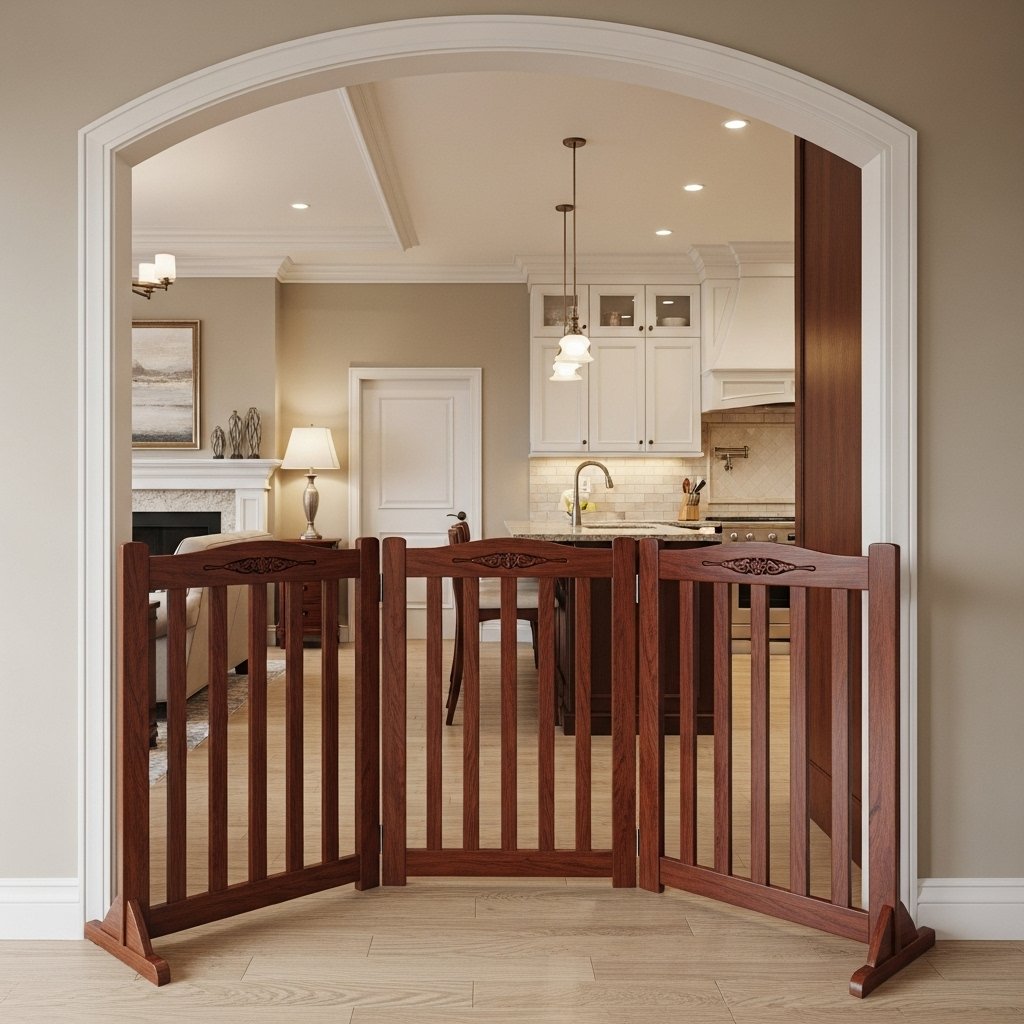
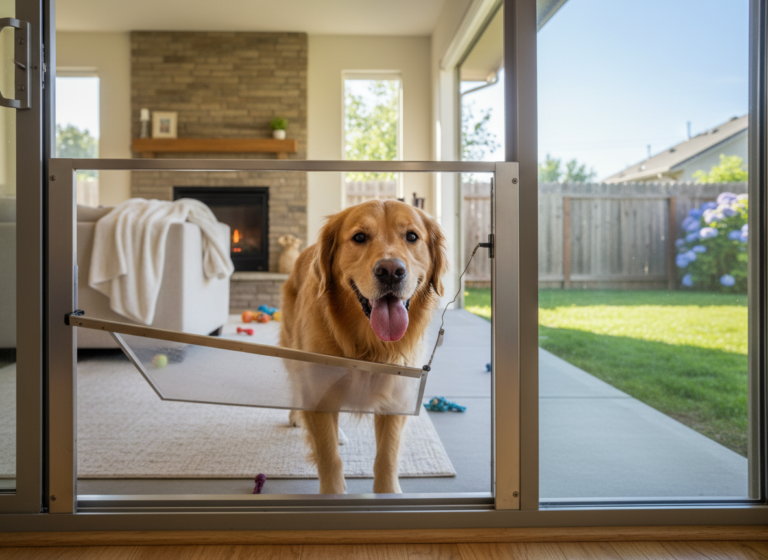
While training is the ideal long-term solution, there are times when a physical barrier provides necessary peace of mind and safety. This is especially true for young puppies who haven’t completed their training, newly adopted rescue dogs with unknown histories, or during high-stakes situations like hosting a large dinner party. The good news is you don’t have to resort to the standard-issue plastic baby gate. The market for pet products has evolved, offering solutions that blend seamlessly with your home decor.
Considering Your Needs
When choosing a gate, consider your dog’s size, temperament, and your home’s layout. A small, calm dog may only need a low, freestanding barrier, while a large, determined dog will require a more robust, pressure-mounted or hardware-mounted gate. Here is a comparison of stylish options:
| Barrier Type | Pros | Cons | Best For |
|---|---|---|---|
| Stylish Freestanding Gate | Highly portable, decorative designs in wood or metal, no installation required. | Less secure for large or determined jumpers/pushers. | Low-traffic areas, well-behaved dogs, or creating soft boundaries in open-plan homes. |
| Modern Pressure-Mounted Gate | Very secure without drilling, many minimalist designs available, often feature walk-through doors. | Bottom bar can be a trip hazard, requires specific doorway dimensions. | High-traffic doorways where a secure but temporary solution is needed. |
| Architectural or Built-in Gate | The most secure and aesthetically pleasing option, can be a permanent feature like a pocket door or Dutch door. | Most expensive option, requires professional installation and planning. | New home constructions or major renovations for a fully integrated, permanent solution. |
| Decorative Pet Pen/Fence | Versatile, can be configured in different shapes, can block off large or irregular openings. | Can be bulky, may not match decor as well as a dedicated gate. | Blocking off open-concept spaces or protecting specific items like a Christmas tree. |
Expert Tip: When selecting a gate, always check the spacing between the bars. It should be narrow enough to prevent your dog’s head from getting stuck. For gates with walk-through doors, look for one that can swing in both directions and has an auto-close or stay-open feature for convenience.
Conclusion
Reclaiming your kitchen from your canine companion does not require a battle of wills or a compromise on your home’s aesthetic. By investing time in positive, consistent training, you are building more than just an invisible line on the floor; you are strengthening communication, trust, and your bond with your dog. The process of teaching a boundary, founded on essential commands like ‘Stay’ and ‘Place,’ empowers your dog to make good choices and provides them with a clear understanding of household rules. This method replaces constant correction with peaceful coexistence. While stylish physical barriers serve as excellent management tools when needed, the ultimate goal is a well-behaved dog who respects the kitchen space out of training, not just because of a temporary obstacle. With patience and dedication, you can achieve a safe, harmonious, and beautifully gate-free kitchen for everyone in your family, both two-legged and four-legged.