Is Your Dog Aggressive Toward Mirrors? How to Stop Reflection Reactivity
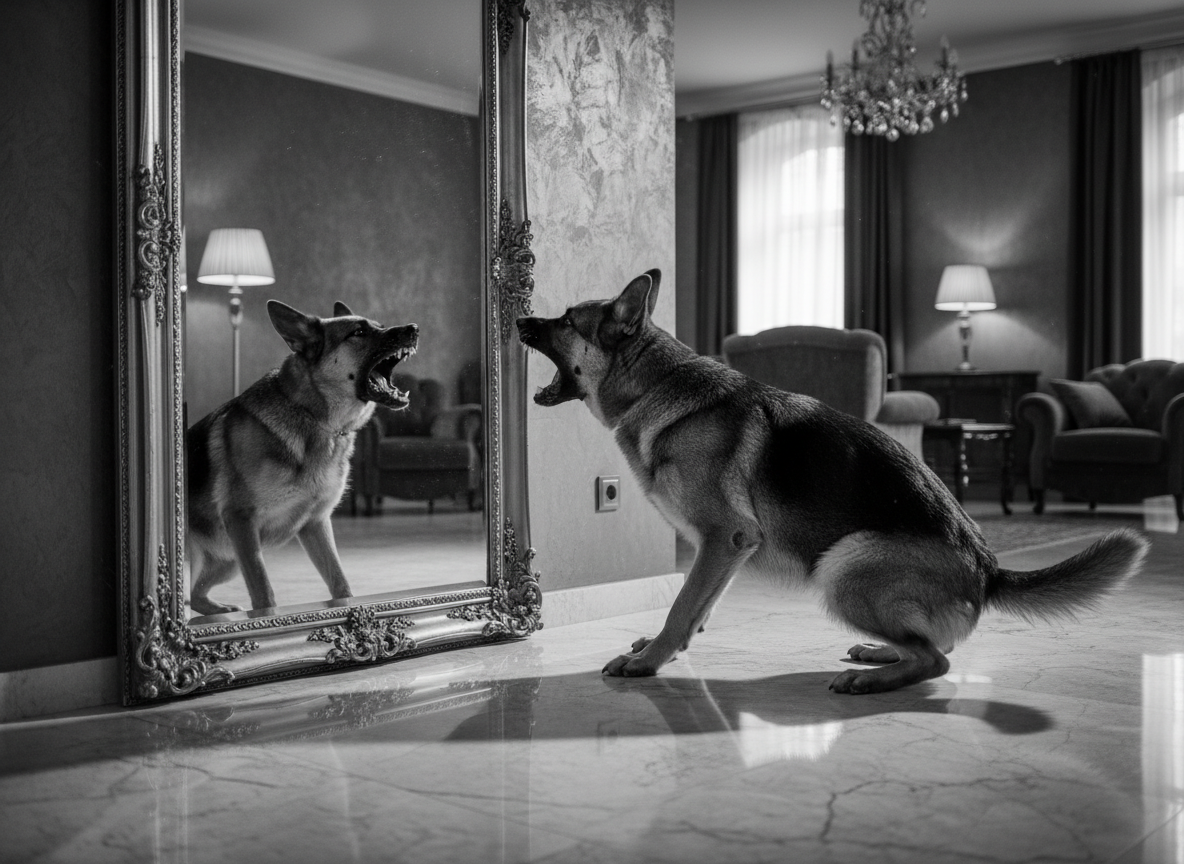
Observing your dog barking, growling, or lunging at a mirror can be a perplexing and unsettling experience. One moment, your home is peaceful; the next, your canine companion is locked in a seemingly aggressive battle with an identical, silent foe. This behavior, often termed reflection reactivity, is more common than many pet owners realize. While it may appear as unprovoked aggression, it stems from a complex mix of confusion, territorial instinct, and a fundamental misunderstanding of what a reflection is.
For a dog, the image in the mirror is not ‘self’ but ‘other.’ They see a dog that looks, moves, and acts just like them but has no scent and makes no sound. This sensory discrepancy can trigger a range of responses, from playful curiosity in puppies to fear, anxiety, or territorial displays in adult dogs. Understanding the root cause of this behavior is the first critical step toward resolving it.
This comprehensive guide will provide you with the expert knowledge and actionable strategies needed to address your dog’s mirror reactivity. We will delve into the psychology behind the behavior and present a structured, step-by-step training plan based on the proven principles of desensitization and counter-conditioning. Our goal is to help you transform your dog’s reaction from one of stress and agitation to one of calm neutrality, restoring peace to your home and confidence in your dog.
Decoding the Reflection: Why Dogs React to Mirrors

Before we can modify a behavior, we must first understand its origin. A dog’s reaction to a mirror is not a sign of vanity or foolishness; it is a direct result of their cognitive and sensory processing. Unlike humans, great apes, and a few other species, dogs do not typically pass the ‘mirror test’—a measure of self-awareness. They do not recognize the reflection as their own.
The ‘Intruder’ in the Glass
When your dog sees its reflection, its brain processes the image as another, unfamiliar dog. This ‘intruder’ has suddenly appeared within their territory—your home—without any of the usual warning signs, such as sound or scent. This can be incredibly startling and trigger a variety of instinctual responses:
- Territorial Defense: The most common reaction is a territorial one. The dog perceives a threat and feels compelled to defend its space. The barking, growling, and lunging are attempts to intimidate the other dog and make it leave.
- Fear and Anxiety: For more timid or anxious dogs, the sudden appearance of a strange dog can be frightening. The reaction might be defensive aggression, born out of fear. The dog is trying to create distance between itself and the perceived threat.
- Social Confusion: The reflected ‘dog’ perfectly mimics your dog’s every move. When your dog postures aggressively, the reflection does too. This can escalate the situation, as your dog’s attempts to establish dominance or challenge the intruder are met with an identical challenge.
- Play-Bows and Excitement: In some dogs, particularly puppies and adolescents, the reaction may be one of play. They may bow, paw at the mirror, or bark excitedly, inviting the ‘other dog’ to engage. This is less concerning but still stems from the same lack of self-recognition.
The Critical Missing Piece: Scent
Scent is a primary sense for canines, integral to identification and communication. The dog in the mirror has no smell. This lack of olfactory information is deeply confusing. Your dog sees a dog, sees it behaving like a dog, but cannot gather any of the crucial scent-based data it relies on to assess another animal’s gender, health, mood, or intentions. This sensory void can increase stress and contribute to a more intense or unpredictable reaction.
Expert Insight: It is crucial to reframe the behavior. Your dog is not being ‘bad’ or ‘silly.’ It is reacting logically based on the information its senses are providing. The problem is that the information is incomplete and misleading.
A Step-by-Step Guide to Resolving Mirror Reactivity
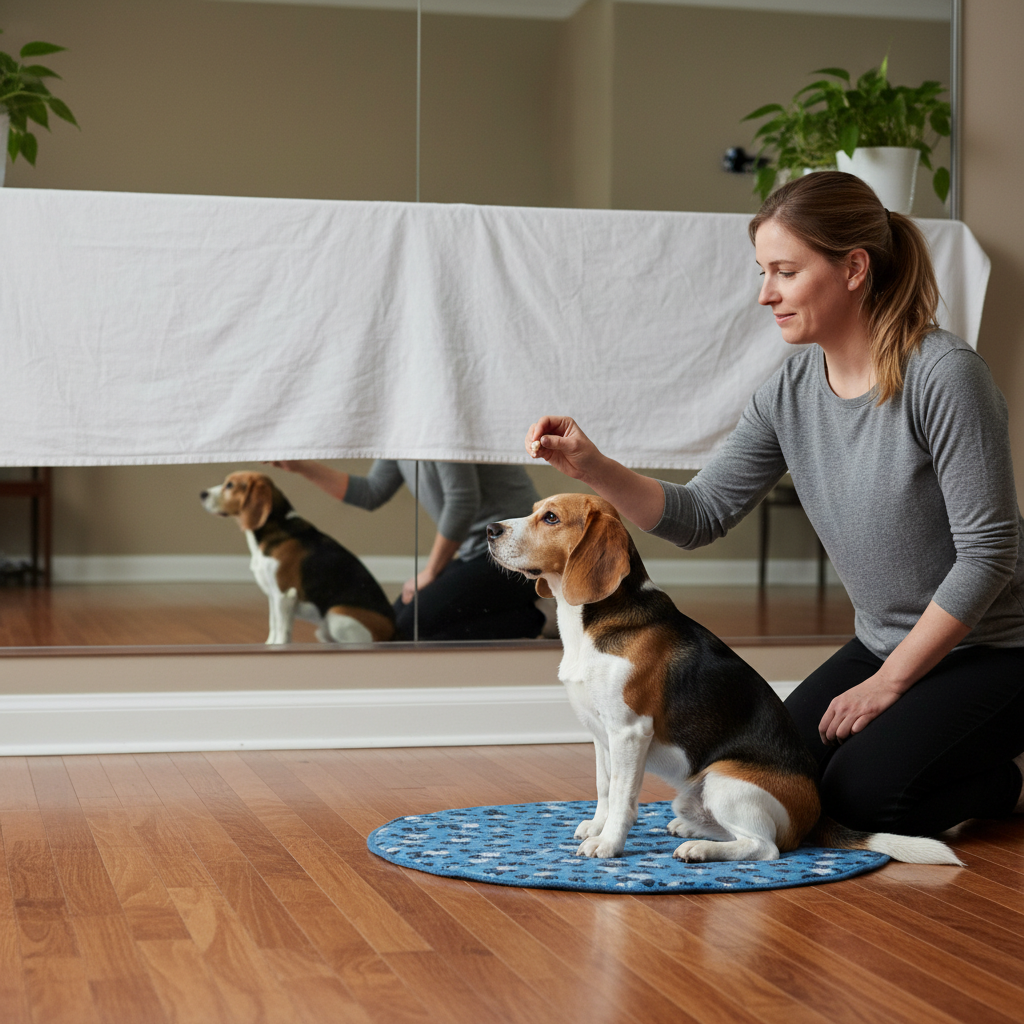
Addressing reflection reactivity requires a systematic approach rooted in behavior modification. The goal is two-fold: to prevent the dog from practicing the unwanted behavior (management) and to change its underlying emotional response to the reflection (training). This process uses desensitization and counter-conditioning (DSCC) to gradually build a new, positive association.
Step 1: Immediate Management
The first and most critical step is to stop the rehearsal of the behavior. Every time your dog reacts to the mirror, the neural pathways for that reaction are strengthened. You must immediately manage the environment. Use opaque window film, a decorative screen, a blanket, or even a piece of cardboard to cover the problematic mirror(s) completely. If possible, temporarily remove smaller mirrors. This management phase is not a long-term solution but a necessary pause that allows you to start training with a calm dog.
Step 2: Strengthen Foundational Skills
Before reintroducing the mirror, ensure your dog has a solid grasp of key attention and redirection cues. These are your tools for communication during training sessions. Practice the following in a quiet environment, away from any mirrors:
- ‘Look at Me’ or ‘Watch Me’: Teach your dog to make eye contact with you on cue. This is invaluable for breaking their focus on a trigger.
- ‘Leave It’: This command tells your dog to disengage from an object or stimulus.
- ‘Go to Mat’: A place command gives your dog a specific, safe place to go and settle down.
Step 3: Systematic Desensitization and Counter-Conditioning (DSCC)
This is the core of the training process. You will reintroduce the mirror in a controlled, gradual way, always staying ‘sub-threshold’—at a level your dog can handle without reacting. You will need very high-value treats (e.g., small pieces of cooked chicken, cheese, or freeze-dried liver).
- Start at a Distance: Position yourself and your leashed dog far enough away from the covered mirror that your dog is relaxed. This might be across the room.
- Partial Reveal: Uncover a very small section of the mirror, perhaps just a few inches at the bottom. The moment your dog notices or looks at the sliver of reflection, mark the behavior with a ‘Yes!’ or a clicker, and immediately deliver a high-value treat.
- Look and Treat: The goal is to teach this sequence: Dog looks at reflection -> Dog gets a fantastic treat. The reflection starts to predict the treat.
- Cover and Reset: After a few successful repetitions (keep sessions to just 1-2 minutes), cover the mirror completely and end the session on a positive note.
Step 4: Gradually Decrease Distance and Increase Exposure
Over many short training sessions, you will slowly close the gap. If at any point your dog stiffens, stares, or shows any sign of arousal, you have moved too fast. Increase the distance again to a point where they were last successful and work from there. As your dog remains calm, you can also begin to uncover more of the mirror’s surface, always pairing any glance at the reflection with a high-value reward. The progression is key—do not rush. This phase can take days or weeks, depending on the individual dog.
Troubleshooting: Common Pitfalls and How to Avoid Them
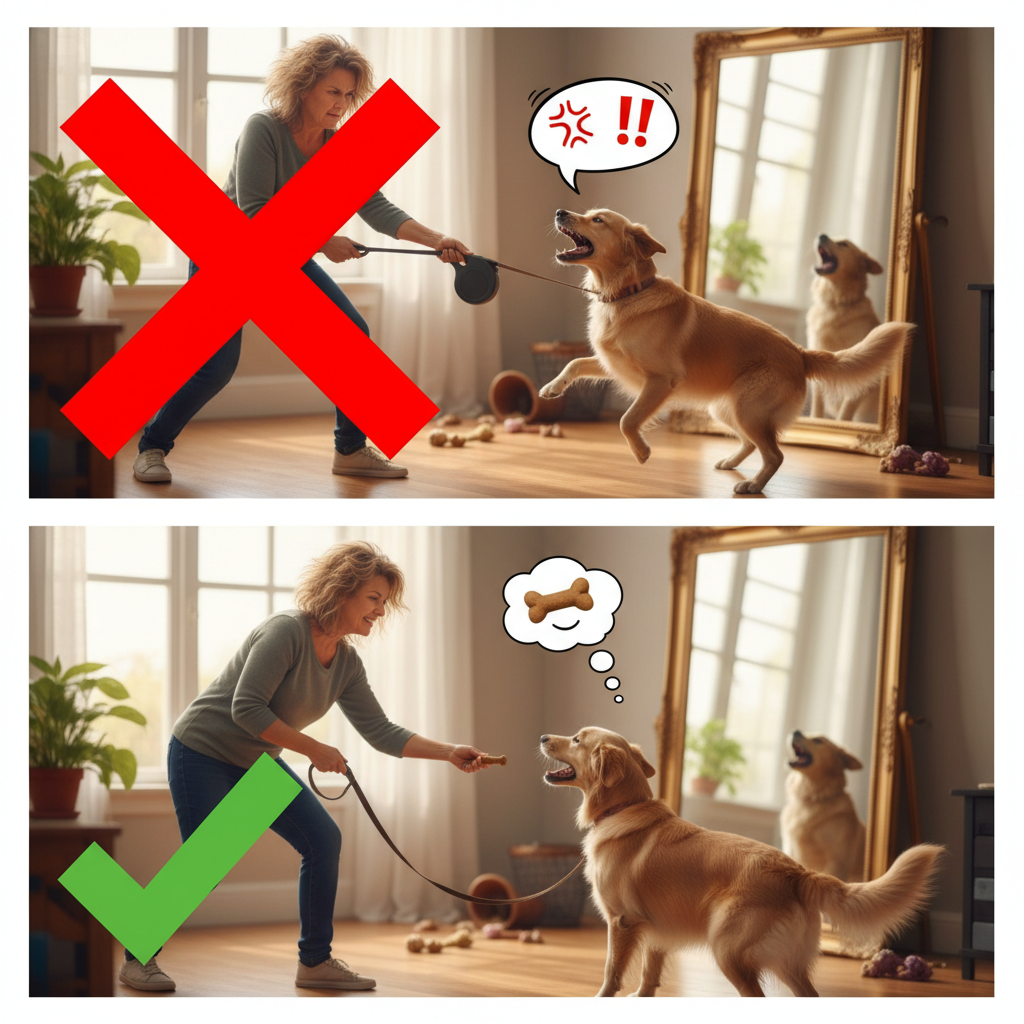
The path to resolving reflection reactivity is not always linear. Setbacks can occur, but understanding common mistakes can help you stay on track and ensure your training is effective and humane.
Mistake 1: Punishing the Reaction
Using verbal scolding, leash corrections, or any form of punishment when your dog reacts to the mirror is counterproductive. The dog is reacting out of fear, confusion, or territorial instinct. Punishment will only add more anxiety and fear to the situation, potentially worsening the reactivity and damaging your bond with your dog. It teaches the dog that the presence of the ‘intruder’ leads to negative consequences from you.
Mistake 2: Moving Too Quickly
Enthusiasm to solve the problem can lead owners to rush the DSCC process. If your dog begins to react (bark, lunge, growl), you have exceeded its threshold. You are no longer in a training situation; you are in a reaction situation. Do not try to ‘work through it.’ Calmly lead your dog away, give it time to settle, and make a note to start your next session at an easier level (e.g., greater distance, less mirror exposed).
Mistake 3: Inconsistent Training Sessions
Consistency is paramount in behavior modification. Short, frequent sessions (e.g., 2-5 minutes, a few times a day) are far more effective than one long, stressful session per week. Inconsistency can confuse the dog and slow down the process of building a new positive association with the mirror.
Mistake 4: Using Low-Value Rewards
Counter-conditioning requires changing a dog’s emotional state. To do this, the reward must be more compelling than the trigger. Your dog’s everyday kibble is unlikely to be motivating enough to override an instinctual fear or territorial response. You must use ‘high-value’ treats that your dog finds irresistible and reserves for training.
| Common Pitfall | Effective Solution |
|---|---|
| Punishing the dog for barking. | Calmly remove the dog from the situation. Focus on management and positive reinforcement. |
| Pushing the dog past its threshold. | Immediately increase distance from the mirror. End the session on a successful repetition at an easier level. |
| Training only once or twice a week. | Commit to several short, positive sessions daily to build momentum and strengthen the new association. |
| Using kibble as a reward. | Switch to high-value treats like freeze-dried meat, cheese, or boiled chicken to create a strong positive association. |
When to Consult a Certified Professional

While many cases of mirror reactivity can be managed and resolved with a dedicated at-home training plan, some situations warrant professional intervention. Recognizing when you need help is a sign of responsible pet ownership and can prevent the behavior from escalating.
It is important to understand that severe reactivity, even towards a reflection, can sometimes be a symptom of a broader, underlying issue such as generalized anxiety, lack of socialization, or a low tolerance for environmental novelty. A professional can help you see the bigger picture.
Signs You Should Seek Professional Guidance
Consider contacting a certified professional if you observe any of the following:
- Escalating Intensity: The reactivity is getting worse despite your management and training efforts. The barking is more frantic, the lunging is more forceful, or the dog takes longer to calm down.
- Redirected Aggression: This is a critical red flag. The dog becomes so over-aroused by the reflection that it redirects its frustration or aggression onto a nearby person or another pet. This can include nipping, biting, or fighting.
- Pervasive Anxiety: The dog’s anxiety about the mirror begins to affect its overall quality of life. It may start avoiding certain rooms, seem constantly on edge, or be unable to settle down in the house.
- Lack of Progress: You have been consistently following the training plan for several weeks with little to no improvement. A professional can help troubleshoot your technique and tailor a plan more specific to your dog’s needs.
- You Feel Overwhelmed: It is perfectly valid to seek help if you feel stressed, frustrated, or unsure of how to proceed. A good trainer or behaviorist provides coaching and support for the human end of the leash as well.
Finding the Right Professional
When seeking help, look for professionals with credentials that verify their knowledge and commitment to humane, science-based methods. Good options include:
- Certified Professional Dog Trainer (CPDT-KA/KSA): These trainers have passed a comprehensive exam and must adhere to a code of ethics.
- Veterinary Behaviorist (DACVB): A DACVB is a veterinarian who has undergone extensive, specialized training in animal behavior. They can diagnose and treat complex behavior problems and can prescribe medication if necessary.
- Certified Applied Animal Behaviorist (CAAB): These are professionals with advanced degrees in animal behavior.
A Note on Safety: If your dog’s reactivity includes any form of redirected aggression, your first priority is safety. Use baby gates, crates, and leashes to manage the environment and prevent incidents while you seek professional help.
Conclusion
Confronting your dog’s reactivity to mirrors is a journey of patience, understanding, and consistent training. By recognizing that the behavior stems from confusion rather than malice, you can approach the problem with empathy. The solution lies not in punishment, but in carefully changing your dog’s perception of its own reflection. Through diligent management and the systematic application of desensitization and counter-conditioning, you can teach your dog that the ‘intruder’ in the glass is no cause for alarm.
Remember to celebrate small victories, keep training sessions short and positive, and never hesitate to seek professional guidance if you feel the challenge is beyond your scope. Ultimately, resolving reflection reactivity does more than just quiet the barking; it deepens the bond of trust between you and your dog, building a more confident and secure companion for years to come.