Is Your Dog Aggressive At The Groomer? Here’s How To Fix It
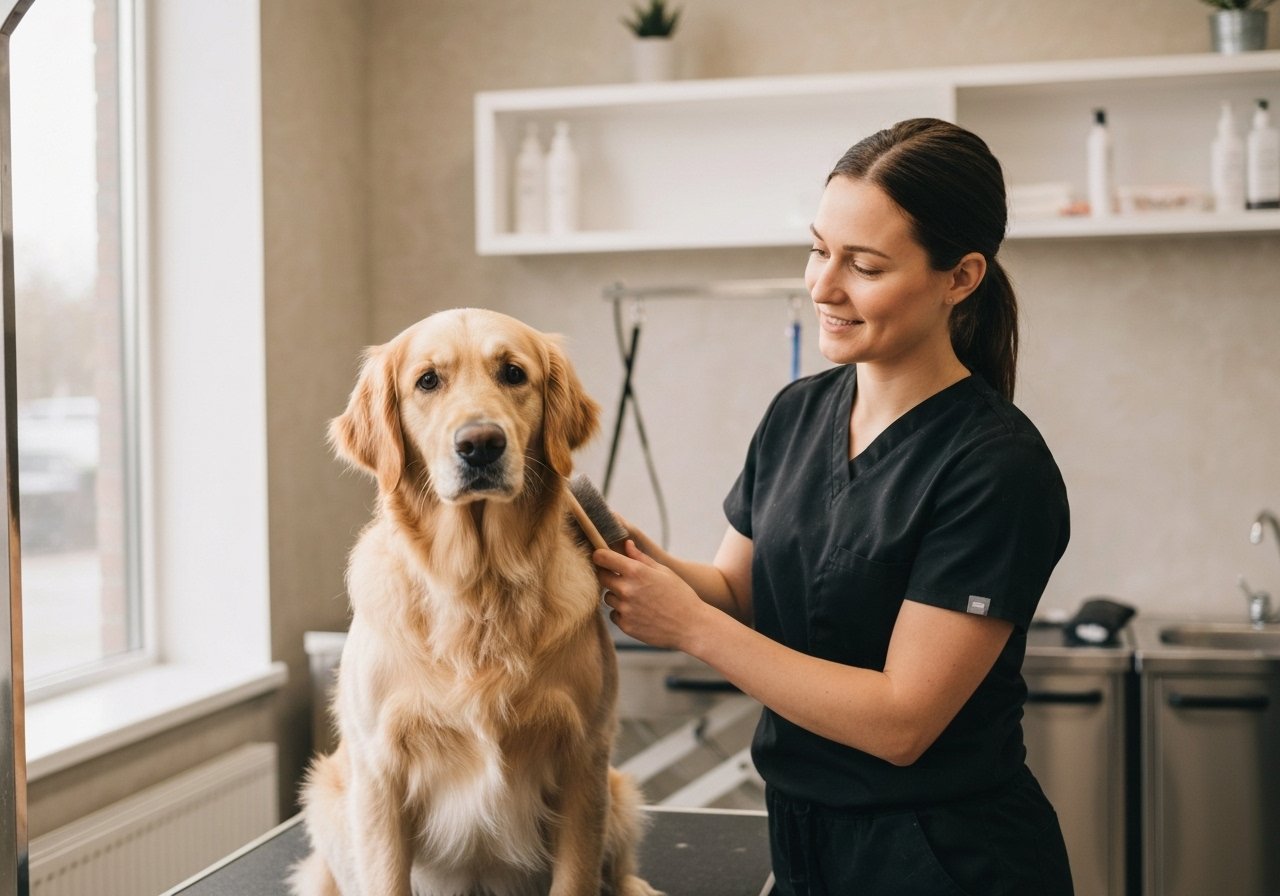
For many pet owners, a trip to the groomer is a routine part of their dog’s care. But for some, it’s a source of immense stress and anxiety, not just for the dog, but for the owner as well. Witnessing your beloved companion growl, snap, or struggle can be heartbreaking and alarming. If you’ve ever asked, ‘Why is my dog aggressive at the groomer?’ you are not alone. This behavior, while challenging, is often misunderstood. It’s rarely a sign of a ‘bad dog’ but rather a complex emotional response rooted in fear, pain, or anxiety.
Understanding the underlying cause of this aggression is the first critical step toward resolving it. This guide is designed to provide you with a clear, professional framework for addressing grooming-related aggression. We will move beyond simple management and delve into proven behavioral modification techniques, empowering you to build your dog’s confidence and change their emotional response to grooming. By following a structured approach involving desensitization, counter-conditioning, and a partnership with the right professionals, you can transform grooming from a dreaded event into a tolerable, and even positive, experience for your dog.
Understanding the Root Cause: Why Dogs Display Aggression During Grooming
Aggression is a form of communication. When a dog growls, snarls, or snaps during grooming, it is sending a clear message: ‘I am uncomfortable, and I need this situation to stop.’ To effectively change the behavior, we must first decipher the message. The aggression is almost always a symptom of a deeper issue. Ignoring the cause and focusing only on suppressing the behavior can worsen the underlying anxiety and damage the trust between you, your dog, and the groomer.
Common Triggers for Grooming Aggression
Several factors can contribute to a dog’s negative reaction to grooming. Often, it is a combination of these elements.
- Fear and Anxiety: Grooming salons are a symphony of sensory overload. The loud noises of dryers, the smell of unfamiliar dogs and shampoos, the strange feeling of clippers vibrating, and the presence of unknown people and dogs can be overwhelming. For a dog that hasn’t been properly socialized to these stimuli, the experience can be terrifying.
- Pain or Discomfort: An underlying medical condition is a frequent and often overlooked cause of sudden aggression. Arthritis, an ear infection, a skin condition, or a cracked nail can make the pressure of brushing or handling intensely painful. A dog may also have severely matted fur, which pulls painfully on the skin when brushed or clipped. They learn to associate grooming with pain and react defensively to prevent it.
- Negative Past Experiences: A single bad experience can create a lasting negative association. Perhaps a previous groomer was too rough, accidentally quicked a nail, or used harsh restraint. The dog remembers this trauma and anticipates its recurrence in any similar environment.
- Lack of Socialization and Handling: Puppies that are not accustomed to being handled from a young age may find the touching required during grooming to be invasive and threatening. Being touched on sensitive areas like paws, ears, and the tail can be particularly stressful if it’s not a familiar sensation.
- Feeling Trapped or Restrained: The grooming loop, the raised table, and being held firmly can trigger a panic response in many dogs. This feeling of being unable to escape a stressful situation can cause them to resort to aggression as their only means of control.
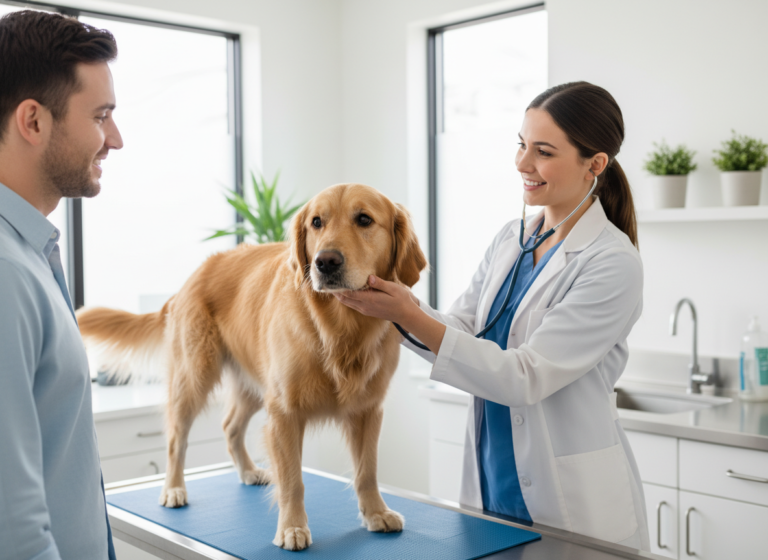
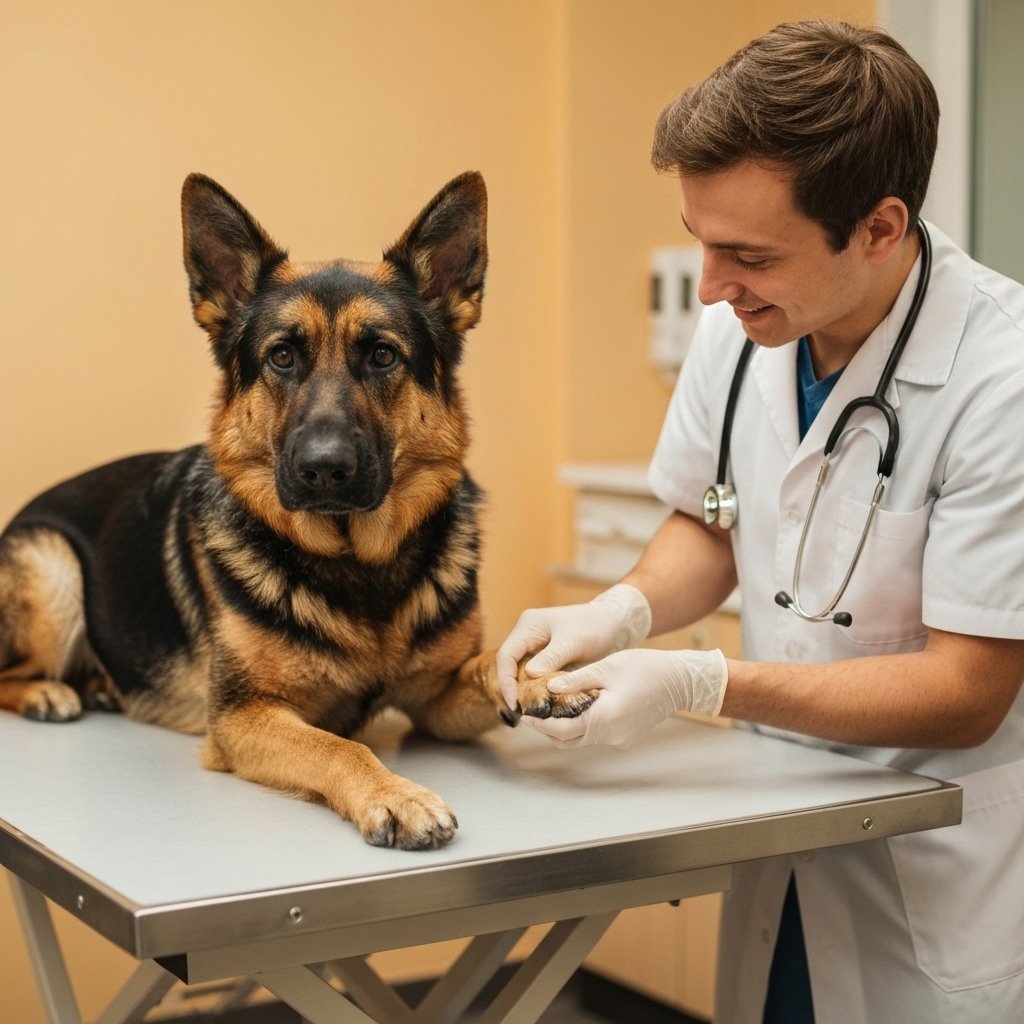
Expert Tip: Before beginning any behavioral modification plan, it is imperative to schedule a thorough examination with your veterinarian. Ruling out pain is the most important first step in addressing any new or worsening aggression.
Step 1: Building a Foundation of Trust with At-Home Desensitization
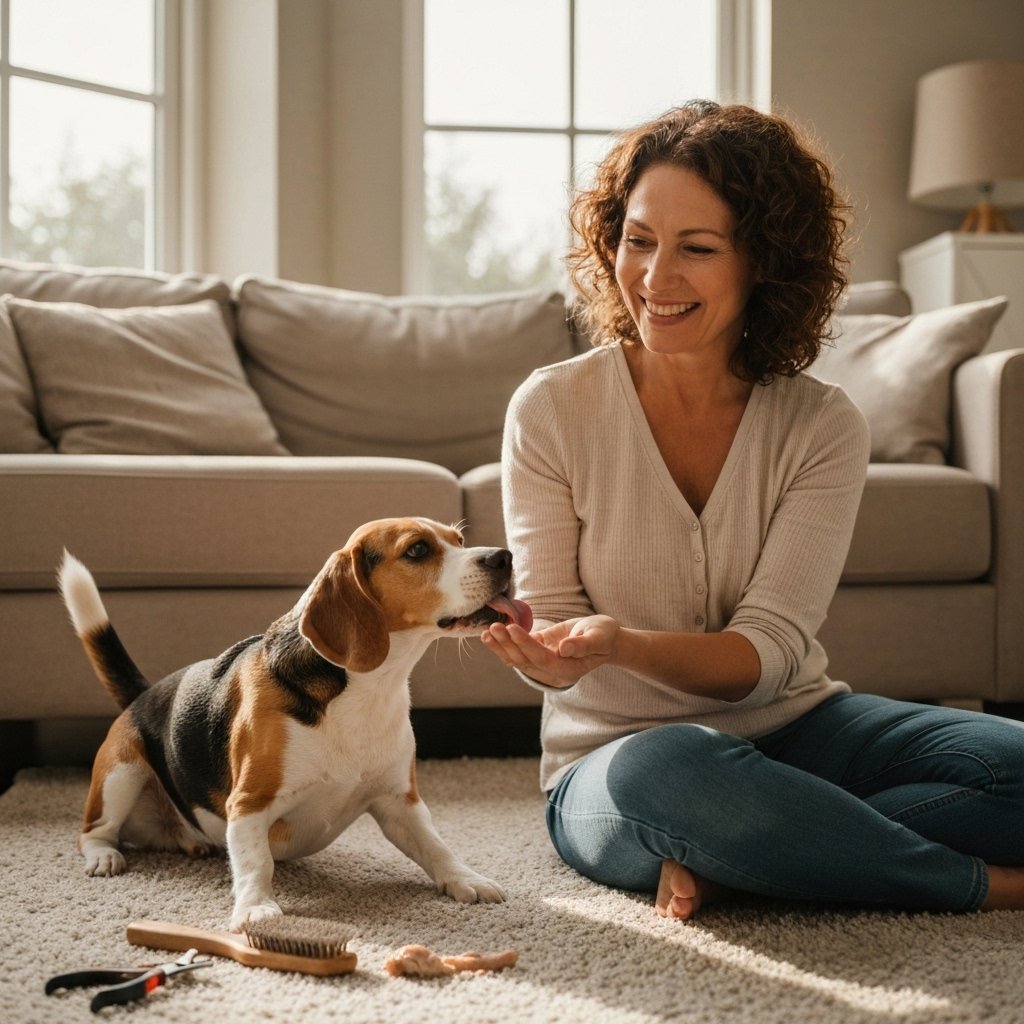
The foundation for successful grooming is built at home, in a safe and controlled environment where your dog feels secure. The goal is to slowly change your dog’s emotional response to grooming tools and handling from fear to neutrality or even enjoyment. This process is called desensitization (gradual exposure to the scary thing) and counter-conditioning (pairing the scary thing with something wonderful, like high-value treats).
Phase 1: Cooperative Handling Exercises
Start by getting your dog comfortable with being touched all over, completely separate from any grooming tools. Keep sessions short—just one to two minutes at a time—and always end on a positive note.
- Touch and Treat: Gently touch a less sensitive area, like your dog’s shoulder. The instant you touch, give a high-value treat (e.g., a small piece of chicken, cheese, or freeze-dried liver). Remove your hand as they finish the treat. Repeat several times.
- Gradual Progression: Slowly work your way toward more sensitive areas. Touch their ear for a split second, then treat. Touch a paw, then treat. Hold the paw for one second, then treat. If your dog shows any signs of stress (pulling away, lip licking, yawning), you have moved too fast. Go back to a step where they were comfortable.
Phase 2: Introducing the Tools
Once your dog is comfortable with handling, you can introduce the tools. The tools themselves should become predictors of good things.
- Sight: Place a brush or nail clippers on the floor. Every time your dog looks at or sniffs the tool, praise them and give them a treat. Do not try to use the tool yet.
- Sound: For electric clippers, the noise is often the scariest part. Turn the clippers on in another room while feeding your dog their dinner. Gradually, over many sessions, bring the clippers closer. The goal is for the sound to become background noise. You can also turn them on, give a treat, and turn them off. The sound starts, a treat appears, the sound stops.
- Touch: Once the sight and sound are no longer scary, you can move to touch. Use the back of the clippers (while they are off) to briefly touch your dog’s body, then give a treat. For a brush, touch them with it for one stroke, then treat.
Patience is Paramount: This process can take weeks or even months. Rushing will only set your dog back. Watch your dog’s body language closely and celebrate small victories. The goal is not to complete a full groom but to build a positive association.
Step 2: Equipping Yourself with the Right Tools and Techniques
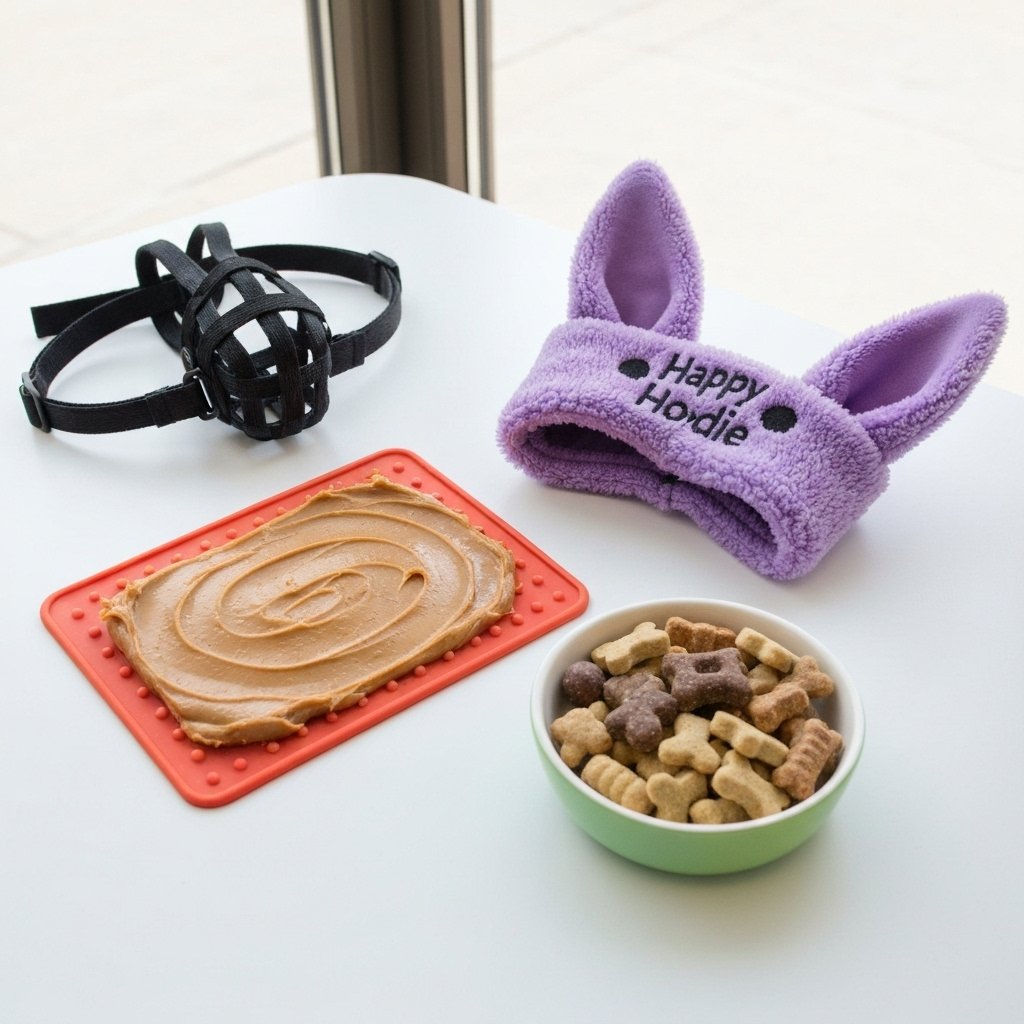
Using the right equipment can significantly reduce stress for both you and your dog. These tools are not about restraint but about creating a safer, more comfortable environment that promotes calmness. It’s also critical to manage the environment to set your dog up for success.
Helpful Grooming Aids
- Lick Mats and Food Puzzles: Spreading peanut butter, cream cheese, or wet dog food on a lick mat can provide a welcome and calming distraction. The act of licking is naturally soothing for dogs.
- Non-Slip Surfaces: Grooming tables and bathtubs can be slippery and unnerving. Always use a non-slip bath mat to help your dog feel more stable and secure on their feet.
- ‘Happy Hoodie’: This is a soft, expandable fabric band that fits over a dog’s ears. It helps muffle the loud noise of dryers and can have a calming, swaddling effect for some anxious dogs.
- Appropriate Muzzles: A muzzle is a safety tool, not a punishment. For dogs that may bite out of fear, a properly fitted basket muzzle is essential. It allows the dog to pant, drink, and take treats while preventing bites. Avoid cloth or grooming muzzles that hold the mouth shut, as these can be dangerous and increase panic.
Comparing Muzzle Types for Safety
| Muzzle Type | Description | Pros | Cons |
|---|---|---|---|
| Basket Muzzle | A cage-like muzzle made of plastic, rubber, or wire. | Allows dog to pant, drink, and take treats. Best option for safety during training. | Can look intimidating. Requires careful fitting. |
| Cloth/Nylon Muzzle | A fabric sleeve that wraps around the dog’s snout. | Inexpensive and easy to put on. | Restricts panting, which is dangerous. Can increase panic. Should only be used for very brief emergencies. |
| Grooming Muzzle | Often made of nylon, specifically designed to hold the mouth closed. | Prevents all biting. | Not recommended. Extremely stressful, prevents panting, and does not address the underlying fear. |
Environmental Management
Your technique is just as important as your tools. Keep sessions extremely short, especially in the beginning. Aim for five minutes of successful, positive interaction rather than thirty minutes of struggle. End the session before your dog gets stressed. Use a calm, quiet voice and avoid tense energy, as your dog will mirror your emotional state. Ensure the room is quiet and free from other distractions like other pets or children.
Step 3: Partnering with a Fear-Free or Cooperative Care Groomer
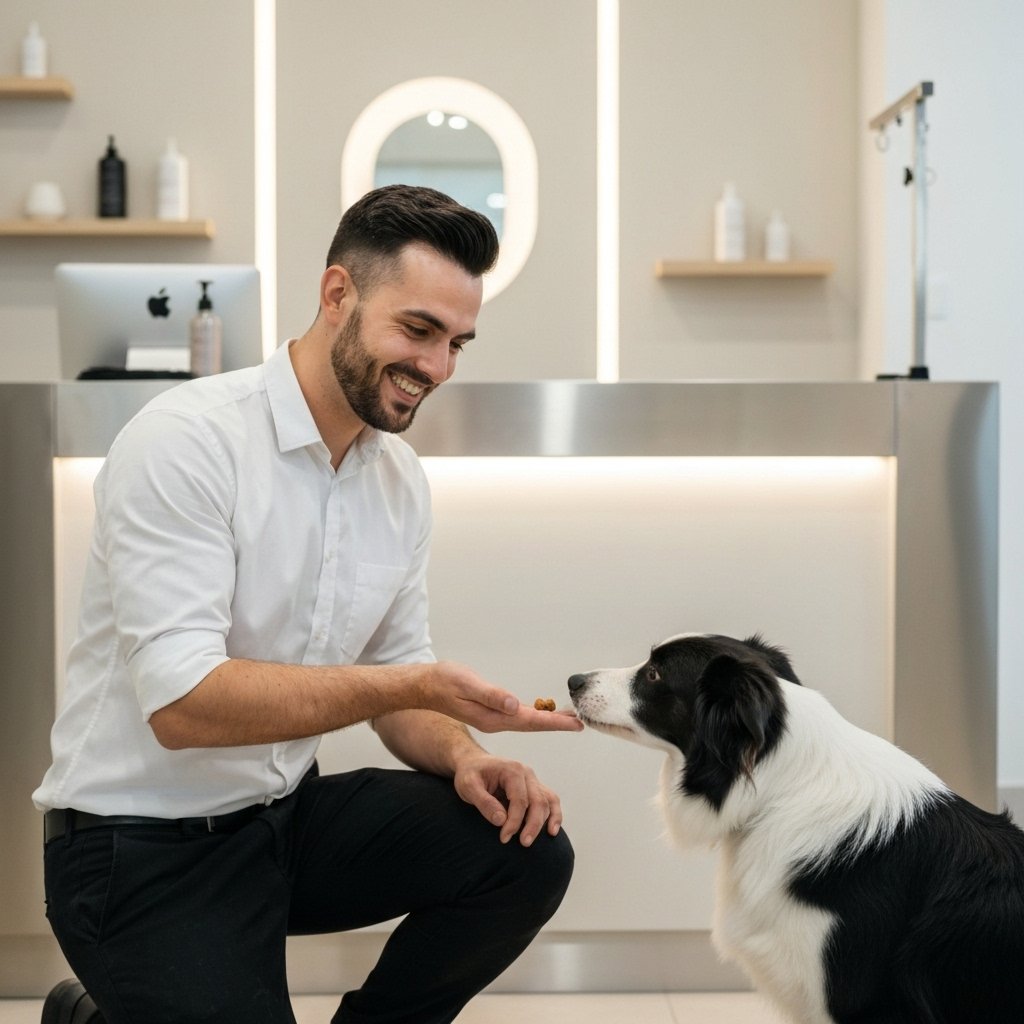
While at-home conditioning is vital, most owners will still need the services of a professional groomer. However, not all groomers are equipped to handle fearful or aggressive dogs. Finding the right professional is a critical part of the solution and can make the difference between progress and regression.
What to Look For in a Groomer
Your goal is to find a groomer who prioritizes your dog’s emotional well-being over speed or aesthetics. These professionals often have specialized training in low-stress handling and animal behavior.
- Certifications: Look for groomers who are certified as Fear Free® Professionals or have training in cooperative care. These certifications indicate a commitment to modern, science-based, and humane handling techniques.
- Willingness to Communicate: A great groomer will want to talk to you in detail about your dog’s history, triggers, and the work you’ve been doing at home. They should be a partner in your dog’s training plan.
- One-on-One Appointments: Ask if they offer one-on-one appointments. A busy, loud salon with many other dogs can be extremely overstimulating. A quiet environment with a single groomer can dramatically reduce stress.
- Transparency: The groomer should be comfortable with you observing (if possible and not a distraction to your dog) and should be open about the tools and techniques they use. They should never use harsh corrections, scruffing, or alpha rolls.
The Initial ‘Meet and Greet’
The first visit to a new groomer shouldn’t involve any grooming at all. It should be a short, positive ‘meet and greet’ or a ‘happy visit’.
- Explore the Salon: Allow your dog to sniff around the salon on a loose leash.
- Positive Association: Have the groomer offer your dog some very high-value treats without any pressure or handling. The goal is for your dog to associate the person and the place with wonderful things.
- Step on the Scale: The groomer might ask your dog to step on the scale and then reward them. This is a simple, non-invasive way to build a positive interaction.
- Leave on a High Note: Keep the visit under 10 minutes and leave while your dog is still happy and relaxed.
This gradual introduction helps build trust with the new professional and makes the first actual grooming appointment far less intimidating for your dog. It may take several ‘happy visits’ before your dog is ready for a grooming procedure.
Troubleshooting and Advanced Help: When to Consult a Professional
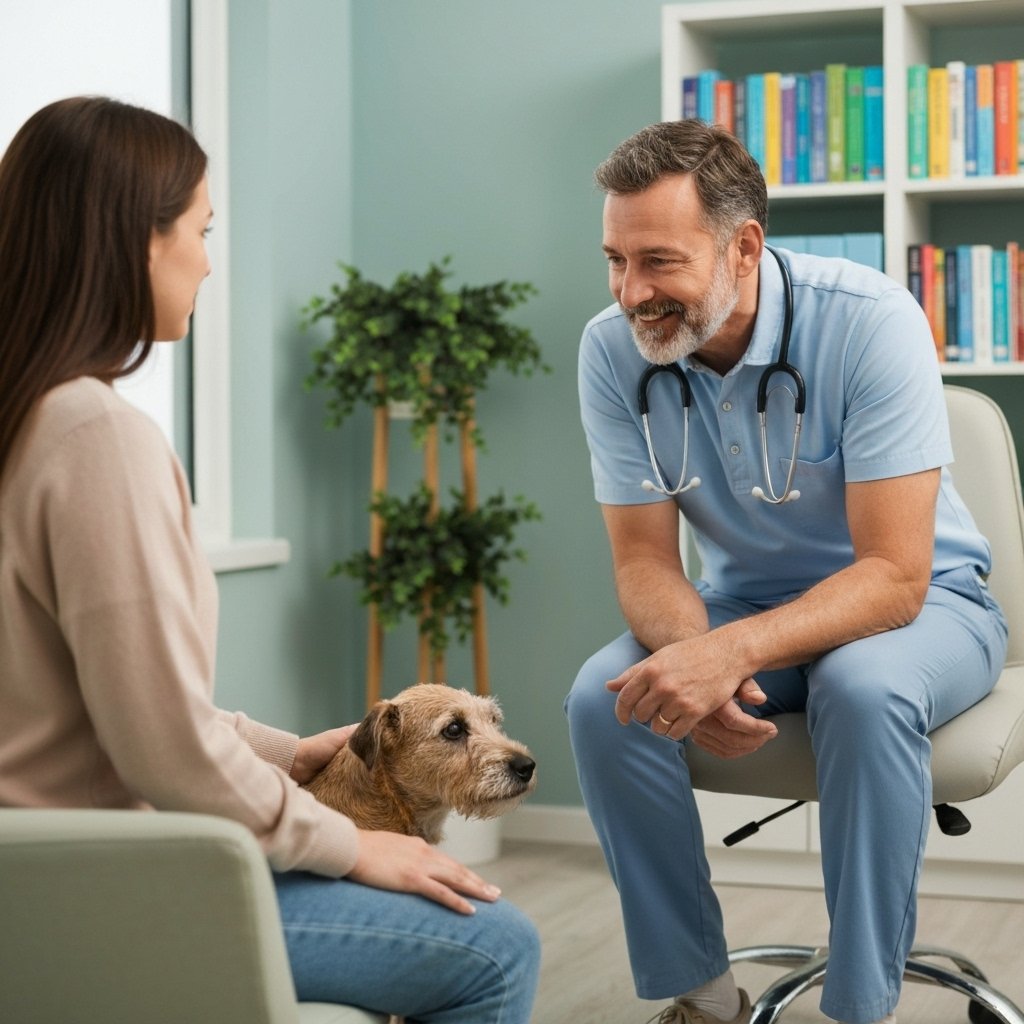
Even with diligent at-home training and a wonderful groomer, some dogs may continue to struggle significantly. Aggression is a serious safety concern, and it’s important to recognize when you need to escalate your approach and bring in a certified expert.
When At-Home Efforts Aren’t Enough
It’s time to seek professional help if you notice any of the following:
- No Improvement: You’ve been consistently working on desensitization for several weeks with little to no progress.
- Escalating Aggression: The dog’s reactions (growling, snapping) are becoming more intense or happening more quickly, with less warning.
- High Risk of Injury: You feel that you, the groomer, or your dog are at a genuine risk of being injured during any grooming attempt.
- Extreme Fear: Your dog is showing signs of severe anxiety, such as trembling, shutting down, or trying desperately to escape, even during basic handling exercises at home.
Finding the Right Professional
Not all trainers are created equal. It is crucial to find a professional who uses modern, positive reinforcement-based methods. Look for the following credentials:
- Certified Professional Dog Trainer (CPDT-KA/KSA): This certification requires hundreds of hours of experience and passing a rigorous exam on learning theory, ethology, and training techniques.
- Veterinary Behaviorist (DACVB): This is a veterinarian who has undergone several years of additional, specialized residency training in animal behavior. They can diagnose and treat complex behavioral issues and are licensed to prescribe anti-anxiety medications if necessary.
- Fear Free® Certified Professional: These professionals have been trained specifically in reducing fear, anxiety, and stress in animals during care.
A Note on Medication: For some dogs with severe anxiety, behavioral medication prescribed by a veterinarian or veterinary behaviorist can be a game-changer. These medications are not ‘happy pills’ or sedatives that simply mask the problem. Instead, they work to lower the dog’s baseline anxiety to a level where they can learn and absorb the behavioral modification training you are implementing. This can be an essential tool for making grooming a safe and humane possibility.
Working with a professional doesn’t mean you have failed. It means you are a responsible owner dedicated to your dog’s well-being and committed to finding the most effective and humane solution for a complex problem.
Conclusion
Addressing aggression at the groomer is a journey that requires patience, empathy, and a consistent, positive approach. Remember that your dog’s behavior is a communication of distress, not an act of defiance. By first ruling out pain with your veterinarian, you can then focus on the behavioral roots of the issue. The process of desensitization and counter-conditioning at home is the cornerstone of building a new, positive association with handling and grooming tools.
Partnering with a certified, low-stress groomer who prioritizes your dog’s emotional state is just as crucial as the work you do at home. This partnership ensures that your training efforts are supported, not undone. And if the challenge feels overwhelming, do not hesitate to enlist the help of a certified dog trainer or veterinary behaviorist. Their expertise can provide the tailored guidance and support needed for more severe cases.
Ultimately, transforming the grooming experience is about rebuilding trust and teaching your dog that they are safe. Every small step forward—a paw held without pulling back, a calm reaction to the sound of clippers—is a victory. With time and dedication, you can help your dog overcome their fear and make essential grooming a safe and manageable part of their life.