How To Train Your Dog To Stay Calm On A Paddleboard (Before You Fall In)

Paddleboarding offers a unique blend of tranquility and physical activity, allowing you to glide across the water and connect with nature. Sharing this experience with a canine companion can elevate it from a solo hobby to an unforgettable bonding adventure. However, the idyllic image of you and your dog peacefully navigating the water can quickly turn into a chaotic, wet ordeal without proper preparation. A dog that is anxious, overly excited, or untrained on a paddleboard is not only a distraction but a significant safety risk for both of you.
The key to success lies not in hope, but in methodical, patient training. A stand-up paddleboard (SUP) is an unstable and unfamiliar environment for a dog. Their natural instincts may lead them to jump, pace, or bark, any of which can easily capsize the board. Therefore, teaching your dog to remain calm, stay in a designated spot, and trust the board is a non-negotiable prerequisite.
This comprehensive guide is designed to provide you with a professional, step-by-step methodology for training your dog to be a confident and reliable paddleboarding partner. We will cover everything from selecting the right safety gear to mastering on-land commands and gradually introducing your dog to the water. By following these structured phases, you will build your dog’s confidence, strengthen your bond, and ensure your adventures on the water are safe, serene, and enjoyable for years to come.
Essential Gear and Safety Preparations
Foundations for Success: Gearing Up for Safety and Comfort
Before you even think about placing a paw on a paddleboard, a thorough preparation of equipment is paramount. The right gear not only ensures the physical safety of your dog but also contributes significantly to their comfort and confidence, which is the cornerstone of successful training. Rushing this stage can lead to negative experiences that are difficult to overcome. Here is a detailed breakdown of the essential equipment and safety considerations.
Canine Personal Flotation Device (PFD)
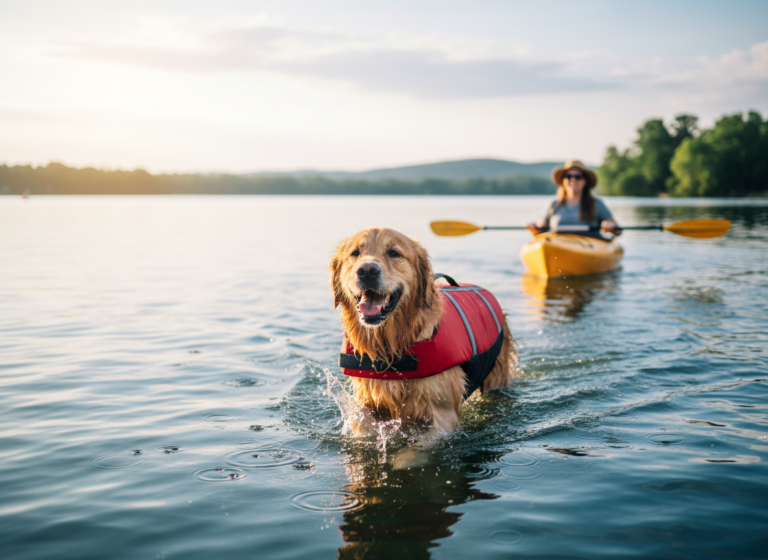
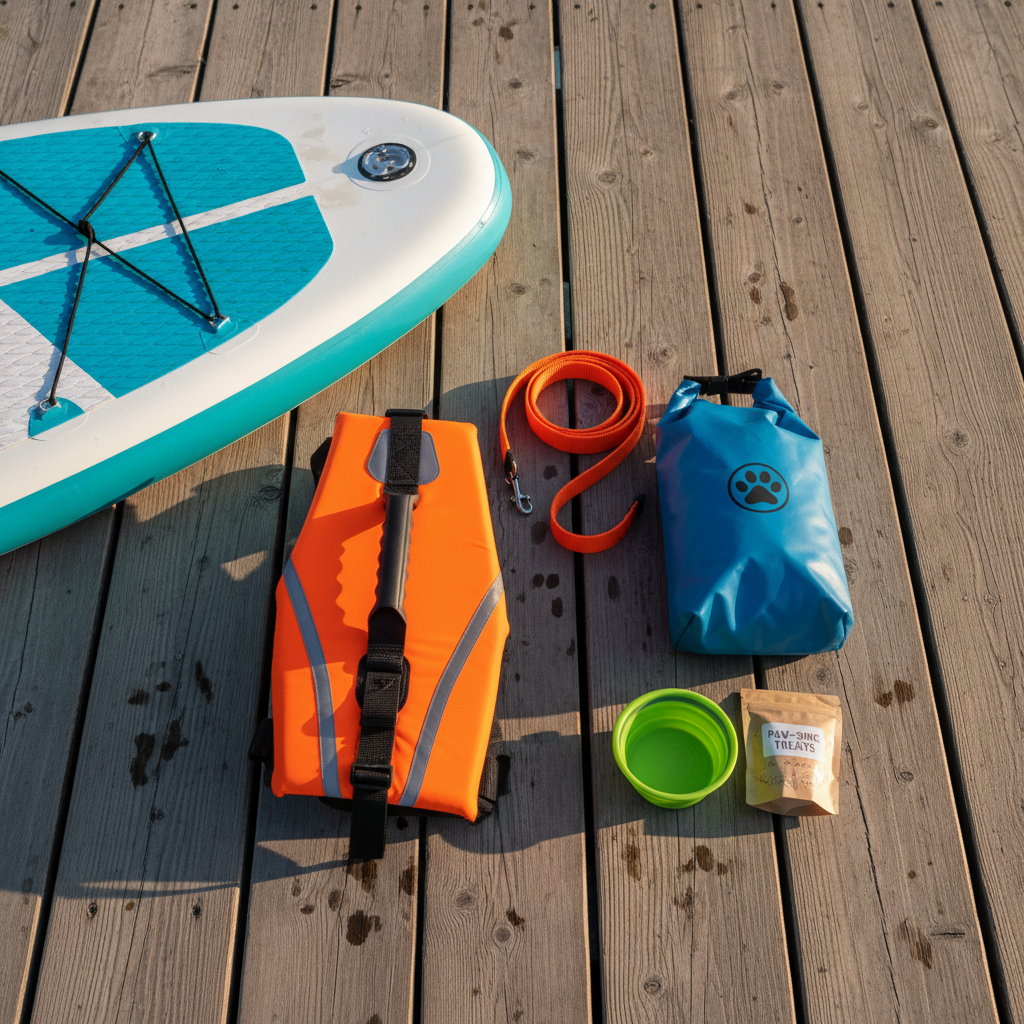
This is the single most important piece of equipment and is non-negotiable, regardless of your dog’s swimming ability. Even strong swimmers can become disoriented, fatigued, or panic if they fall into the water unexpectedly, especially in cold water or currents.
- Proper Fit: A dog PFD should be snug but not restrictive. It should allow for a full range of motion in the legs and neck. When fitted correctly, you should be able to slip two fingers between the vest and your dog’s body.
- Key Features: Look for a PFD with a durable, easy-to-grab handle on the back. This handle is critical for safely lifting your dog out of the water and back onto the board. Bright colors and reflective strips are also essential for visibility.
- Acclimation: Have your dog wear the PFD around the house for short periods before you go near the water. Reward them with treats and praise to create a positive association with the vest.
The Right Paddleboard
While you may be able to train a dog on any board, some are far better suited for the task. Stability is your primary concern.
- Type and Size: A wider, longer, and thicker board will offer more surface area and volume, translating to greater stability. All-around or touring boards are generally better than racing or surf-style SUPs. Inflatable SUPs are often an excellent choice as they tend to be more stable and their deck pads provide more grip than many hard boards.
- Deck Pad: A non-slip surface is crucial for your dog’s footing. Look for a board with a large, comfortable deck pad. If your board’s grip is insufficient, you can purchase additional traction pads designed for dogs and apply them to the front of your board.
Additional Must-Have Items
- Waterproof Pouch or Dry Bag: To keep your phone, keys, and high-value dog treats safe and dry.
- High-Value Treats: Small, easy-to-swallow treats that your dog absolutely loves. These are for rewarding calm behavior during training.
- Water and Collapsible Bowl: Paddling is exercise, and dogs can get dehydrated quickly, especially on a sunny day.
- Dog-Friendly Sunscreen: For dogs with short fur, pink skin, or light-colored noses, a vet-approved sunscreen can prevent sunburn.
- First-Aid Kit: A basic pet first-aid kit is always a good idea for any outdoor excursion.
Remember, safety is not a single action but a continuous process. Always check the weather forecast, be aware of water conditions, and never paddle in conditions beyond your skill level, especially with your dog on board.
Phase One: Mastering On-Land Acclimation
Creating a Positive Association on Solid Ground
The journey to calm paddleboarding begins long before you reach the water’s edge. This foundational phase is entirely land-based and focuses on making the paddleboard a positive, predictable, and rewarding place for your dog. The goal is to build a strong reinforcement history with the board itself, so your dog sees it as a fun and safe ‘island.’ Skipping this step is the most common mistake owners make.
Introducing the Board
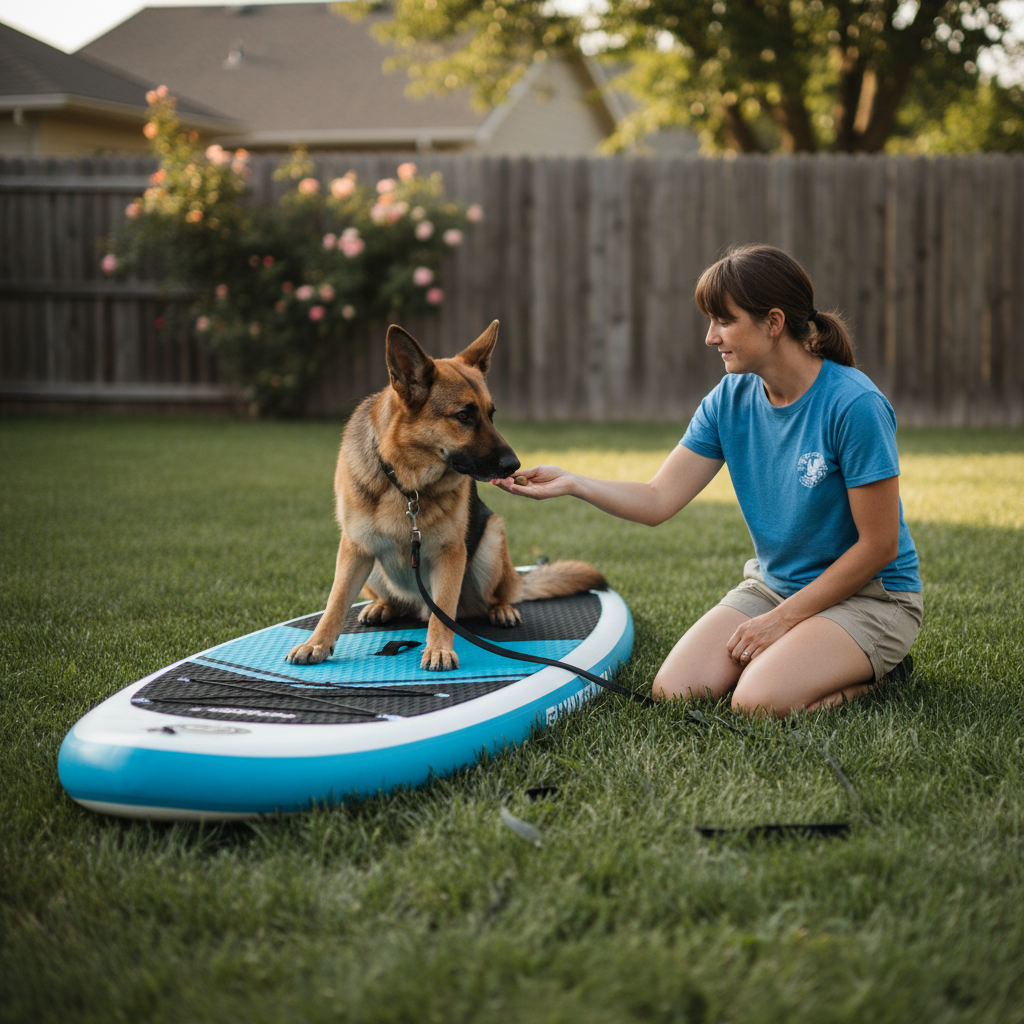
Place the paddleboard in a familiar, neutral area like your backyard or living room. Let your dog investigate it on their own terms. Do not force them onto it. Reward any curiosity—a sniff, a touch with their nose, or placing a paw on the board—with praise and a high-value treat. Keep these initial sessions short and positive, ending before your dog loses interest.
Teaching the ‘Place’ Command
The ‘place’ command is your primary tool for managing your dog on the board. It teaches them to go to a specific spot and stay there until released.
- Luring: With the board on the ground, use a treat to lure your dog into the desired position on the board (usually sitting or lying down on the front deck pad). As soon as they are in position, say your command word (‘Place,’ ‘Board,’ or ‘Spot’) and give them the treat and praise.
- Building Duration: Gradually increase the amount of time you ask them to stay on the board before receiving a reward. Start with just a few seconds and slowly work your way up to a minute or more.
- Adding a Release Cue: Teach a release word like ‘Okay’ or ‘Free.’ When you say the release cue, toss a treat away from the board to encourage them to get off. This teaches them not to jump off until they are given permission.
Simulating Instability
A paddleboard on water is wobbly. You must introduce this sensation in a controlled manner on land.
- Pillows or Cushions: Place the board on several sturdy pillows or cushions to create a slight wobble.
- Practice Commands: Repeat the ‘place’ command exercises on the now unstable board. Your dog may be hesitant at first. Use lots of encouragement and high-value rewards for their bravery. Keep sessions very short.
- Owner on Board: Once your dog is comfortable with the wobble, practice getting on the board yourself while they are in their ‘place.’ Sit or kneel behind them, rewarding them for staying calm as you shift your weight.
The goal of this phase is to make the paddleboard the best place in the world. Every interaction should be filled with positive reinforcement. Patience here will pay immense dividends on the water.
Phase Two: Introducing Water and Wobble
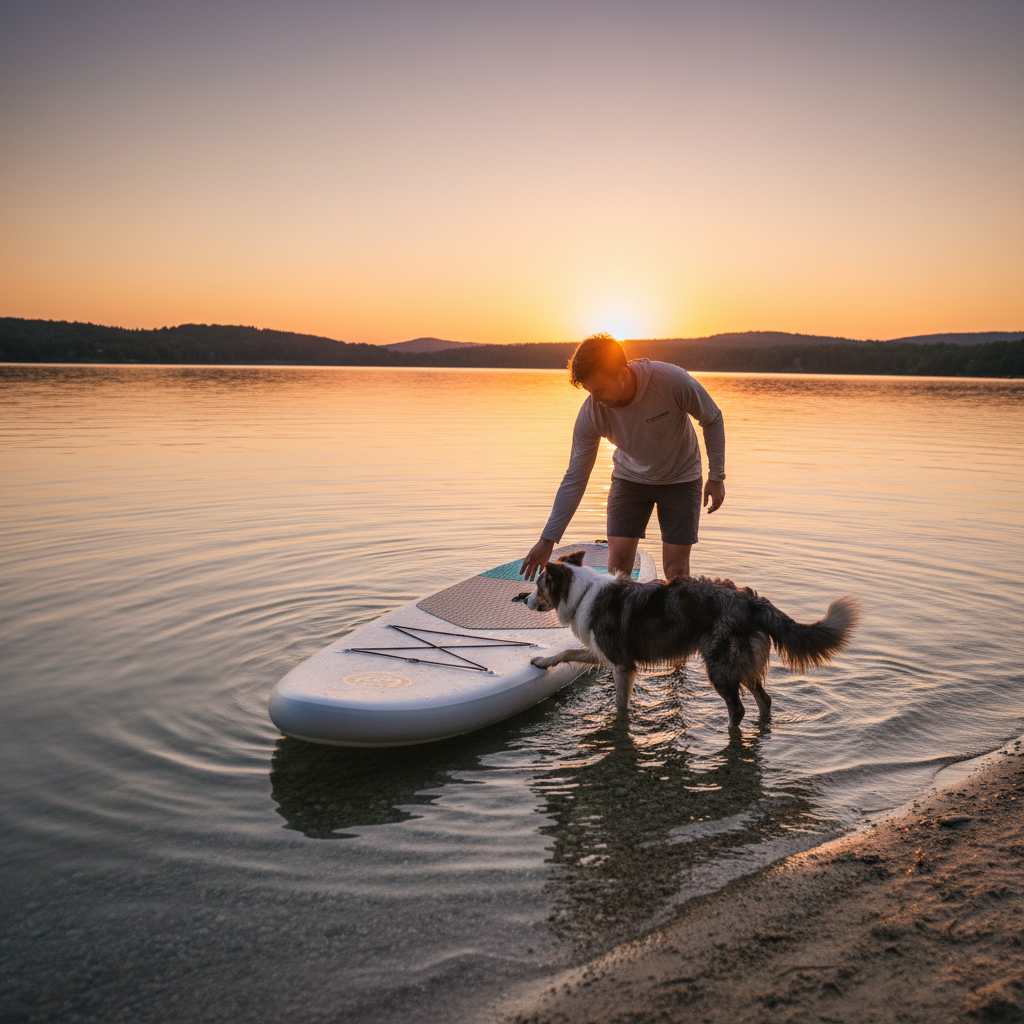
From Shoreline to Stability: The First Water Encounters
Once your dog has mastered on-land training and views the board as a positive object, it is time to move to the water. This phase is about a gradual introduction to the new environment and the unique sensation of floating. The key is to work in very shallow, calm water where you can maintain complete control.
Choosing the Right Location
Select a launch spot with the following characteristics:
- Calm Water: A small, quiet lake, a calm bay, or a slow-moving river with no boat traffic is ideal. Avoid areas with waves, strong currents, or distractions.
- Shallow Entry: Find a spot where the water is only a few inches deep. You want to be able to stand comfortably next to the board.
- Quiet Environment: Choose a time and place with minimal distractions like other dogs, people, or wildlife.
The Initial Introduction
- Board in the Water: First, place the board in the shallow water and hold it steady, letting it float. Let your dog get used to seeing it on the water. Reward them for calm observation.
- Asking to Board: While you hold the board securely so it cannot move, use your ‘place’ command to ask your dog to get on. You may need to use a treat to lure them the first few times. The board should be stable, either resting on the ground underwater or held firmly by you.
- Reward, Reward, Reward: Once your dog is on the board, deliver a jackpot of treats and praise. They are combining two major training elements: the board and the water. This is a significant step.
- Practice and Release: Ask for a short ‘stay,’ then give your release cue. Let them get off the board into the shallow water. Repeat this process several times, keeping it fun and positive.
Introducing Movement
After your dog is confidently getting on and off the board in the shallows, you can introduce a gentle wobble.
- Gentle Rocking: With your dog on the board in their ‘place,’ use your hands to gently rock the board from side to side. Give them treats and praise for remaining calm. Start with tiny movements and gradually increase the motion as their confidence grows.
- Getting On Yourself: Once they are comfortable with the rocking, practice getting on the board behind them. Start by putting one knee on, then the other, and finally sitting or kneeling. Your movements should be slow and deliberate. Reward your dog for holding their position throughout this process.
This entire phase should be conducted with you in the water, standing next to the board. Do not attempt to paddle away from shore yet. The goal is purely to build comfort with the sensation of floating and instability in a safe, controlled setting.
Phase Three: The First Voyage and Building Duration

Launching and Learning to Glide Together
With a solid foundation of on-land and shallow-water training, you and your dog are now ready for your first real paddle. This phase focuses on leaving the shore, maintaining calmness while in motion, and gradually increasing the duration of your trips. The emphasis remains on control, positive reinforcement, and ending each session on a high note.
The Launch Sequence
A smooth launch is critical to starting the session calmly. Practice this sequence until it becomes second nature.
- Position the Board: Place your board in the water so the fin is clear of the bottom, but the board is still stable and easy to access.
- Dog First: Command your dog into their ‘place’ on the board. Reward them for waiting patiently.
- Owner Boards: Enter the board behind your dog, moving into a kneeling position. Your movements should be slow and deliberate to minimize wobble.
- Push Off and Paddle: Once you are both settled, use your hands or paddle to push away from the shore. Begin paddling from your knees. Standing up can be introduced later once your dog is a seasoned pro.
The First Short Trip
Your initial voyages should be extremely short. The goal is not distance, but duration of calm behavior.
- Stay Close to Shore: For the first several trips, paddle parallel to the shoreline, just a short distance out. This provides a psychological safety net for both you and your dog.
- Duration: Aim for just 5-10 minutes on the water. It is far better to have a successful 5-minute trip than a stressful 20-minute one.
- Reinforce Calmness: Periodically praise your dog in a calm, quiet voice for holding their position. You can offer a treat, but do so in a way that doesn’t cause them to break their ‘stay.’
- The Turn: Turning the board introduces a new sensation. Make your first turns wide and slow, praising your dog for remaining stable.
Extending Your Adventures
As your dog demonstrates consistent calm behavior, you can gradually increase the length of your paddles. Pay close attention to your dog’s body language. Signs of stress can include panting (when not hot), yawning, lip licking, or restlessness. If you see these signs, it’s time to head back to shore for a positive end to the session.
The objective is to teach your dog that the board is a place of relaxation and travel, not a launchpad for swimming. Consistently enforce the ‘place’ command and the ‘release’ cue. If your dog jumps off without permission, calmly guide them back to shore and re-launch, ending the session shortly after to reinforce that the fun happens on the board.
Troubleshooting Common Paddleboarding Problems

Navigating Challenges: A Trainer’s Guide to Problem-Solving
Even with meticulous training, you may encounter challenges on the water. Understanding how to address these common issues with patience and proper technique is crucial for long-term success. The key is to view every problem as a training opportunity, not a failure.
Problem: Dog Jumps Off the Board
This is the most common and potentially dangerous issue. It often stems from over-excitement, a desire to swim, or anxiety.
- The Solution: Do not make it a game. If your dog jumps off, do not immediately let them back on while you are in deep water. Instead, calmly guide them and the board back to the nearest shore. Have them get back on the board using the ‘place’ command, reward the action, and then end the session. This teaches them that jumping off ends the fun paddle. Reinforce your on-land ‘place’ and ‘release cue’ training to solidify the rules.
Problem: Excessive Movement or Pacing
A dog that constantly shifts weight, paces, or tries to walk on the rails is a recipe for a capsize.
- The Solution: This indicates the dog’s ‘place’ command is not yet solid enough for this level of distraction. Return to the previous training phase. Shorten your trips and increase the frequency of rewards for staying still. Practice on a wobbly surface on land to build their core stability and confidence. A high-quality, grippy deck pad can also make a significant difference.
Problem: Barking at Other Boats, Birds, or People
Nuisance barking can ruin the serene experience and may signal over-arousal or anxiety.
- The Solution: This is a desensitization and counter-conditioning issue. Start by paddling at a great distance from known triggers. The moment your dog sees a trigger but before they bark, reward them for being quiet. Gradually decrease the distance over many sessions. If they do bark, increase the distance again until they can remain calm, and then reward. You are teaching them that quiet observation is more rewarding than barking.
Problem: Refusal to Get On the Board
If a dog that was previously willing to board suddenly refuses, it’s often due to a past negative experience (like falling in) or a lack of confidence.
- The Solution: Go back to the beginning. Re-introduce the board on land and make it an incredibly positive place with games and high-value treats. Move back to the shallow water introduction phase. Do not force them. Your job is to rebuild their confidence at their pace. Identify what might have caused the fear and work to create a new, positive association.
Troubleshooting is an extension of training. Always remain calm and patient. Yelling at or punishing a dog will only increase their anxiety and create a negative association with the water and the paddleboard. Go back to basics and reinforce the behaviors you want to see.
Conclusion
Transforming your dog into a calm and confident paddleboarding partner is a deeply rewarding process that extends far beyond a simple outdoor activity. It is an exercise in communication, trust, and mutual respect. By diligently following the structured phases—from selecting the right safety gear and mastering on-land commands to gradually introducing the water and troubleshooting challenges with patience—you build a reliable foundation for countless safe and enjoyable adventures.
Remember that every dog learns at a different pace. There is no set timeline for this training. The most critical components are your consistency, your patience, and your unwavering commitment to positive reinforcement. Celebrate small victories and never push your dog beyond their comfort level. The goal is not merely to get your dog on a board, but to cultivate a companion who genuinely enjoys sharing the serene experience of gliding across the water with you.
By investing this time and effort, you are not just learning a new skill together; you are strengthening the bond you share with your dog in a profound way. The calm waters, shared silence, and synchronized partnership that await are well worth the dedicated training it takes to get there. Now, gear up, stay patient, and get ready to create memories that will last a lifetime.