How to Teach Your Dog to “Whisper” (The Cutest Trick Ever)
The bond we share with our canine companions is often built on communication, understanding, and shared moments of joy. While basic obedience commands like ‘Sit’ and ‘Stay’ are foundational, teaching fun and unique tricks can elevate that relationship to a new level. Among the most charming and impressive tricks is the ‘whisper’ command. It’s not only an adorable party trick but also a practical tool for managing your dog’s vocalizations. Imagine being able to quiet a full-throated bark into a gentle murmur with a simple cue—it’s both possible and surprisingly straightforward with the right approach.
As a canine specialist with years of experience in behavior and training, I’ve seen firsthand how positive reinforcement can unlock a dog’s potential. This comprehensive guide will walk you through the precise, step-by-step process of teaching the ‘whisper’ command. We will break down the prerequisites, detail each training phase, troubleshoot common hurdles, and explore advanced applications. By following these professional techniques, you can add this delightful skill to your dog’s repertoire, strengthening your communication and impressing friends and family along the way.
Prerequisites: Setting the Stage for Success
Prerequisites: Setting the Stage for Success
Before you can teach a dog to whisper, you must first have a reliable way to elicit a vocalization on cue. The ‘whisper’ is essentially a shaped, lower-volume version of a bark. Therefore, the single most important prerequisite for this trick is a solid ‘Speak’ or ‘Bark’ command. If your dog doesn’t already bark on cue, teaching that command must be your first priority. You cannot ask for a quieter sound if you cannot first ask for the sound itself.
Essential Tools and Environment
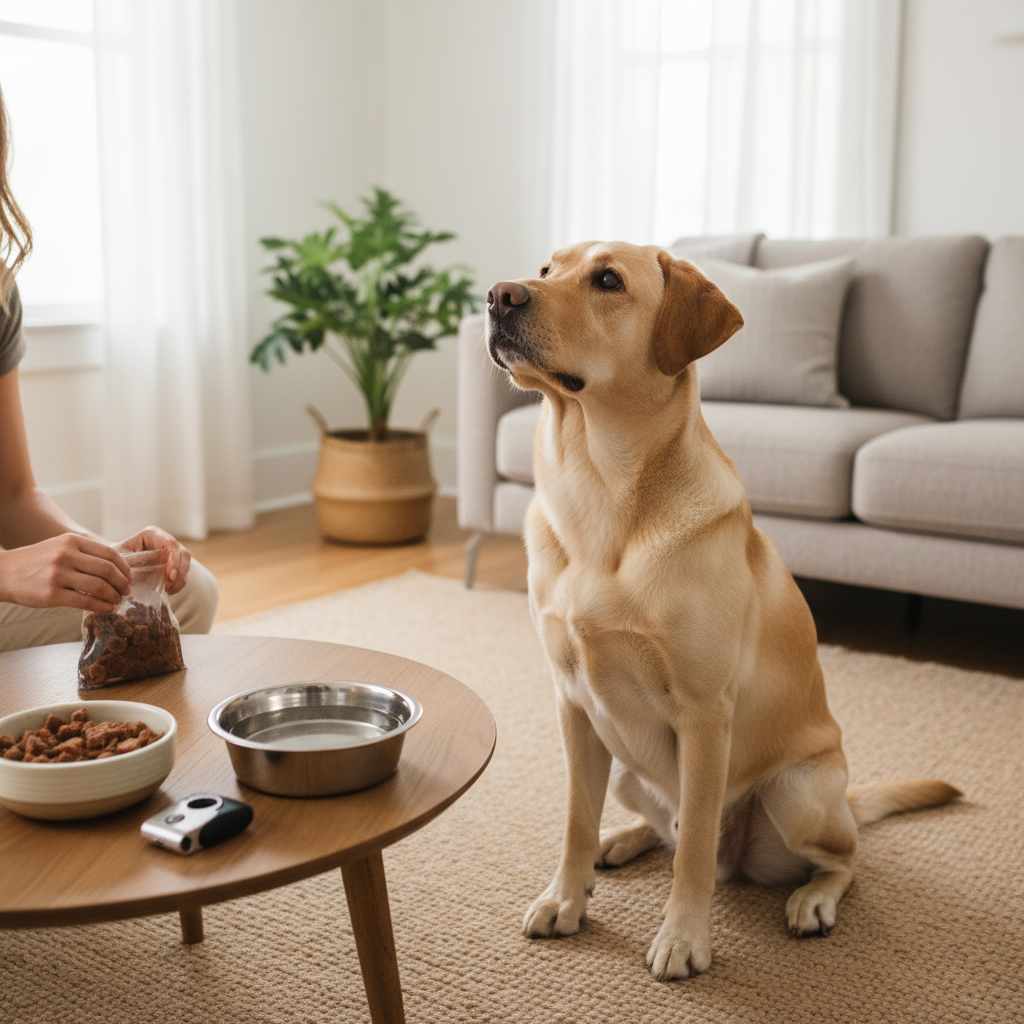
Successful training sessions are built on preparation. Gather the following items before you begin to ensure a smooth and effective process:
- High-Value Treats: These should be small, soft, and exceptionally motivating for your dog—something more exciting than their regular kibble. Think tiny pieces of cooked chicken, cheese, or commercial training treats they love.
- A Clicker (Optional but Recommended): A clicker is a powerful tool for marking the exact moment your dog performs the correct behavior. This precision timing can significantly speed up the learning process. If you’re not using a clicker, a consistent verbal marker like a sharp “Yes!” will also work.
- A Quiet Training Environment: Choose a space free from distractions like other pets, loud noises, or excessive foot traffic. A calm setting allows your dog to focus entirely on you and the task at hand.
- Patience and a Positive Attitude: This is perhaps the most crucial tool. Shaping behavior takes time, and your dog will learn best from a calm, patient, and encouraging trainer.
The Right Mindset: Short and Sweet Sessions
Dogs, like humans, have limited attention spans. For optimal learning and retention, keep your training sessions short—around 5 to 10 minutes at most. It is far more effective to conduct two or three short sessions throughout the day than one long, grueling one. Always aim to end each session on a high note, with a successful repetition that earns your dog a big reward. This positive conclusion keeps them eager and excited for the next lesson.
The Step-by-Step Guide to Teaching the ‘Whisper’ Command
The Step-by-Step Guide to Teaching the ‘Whisper’ Command
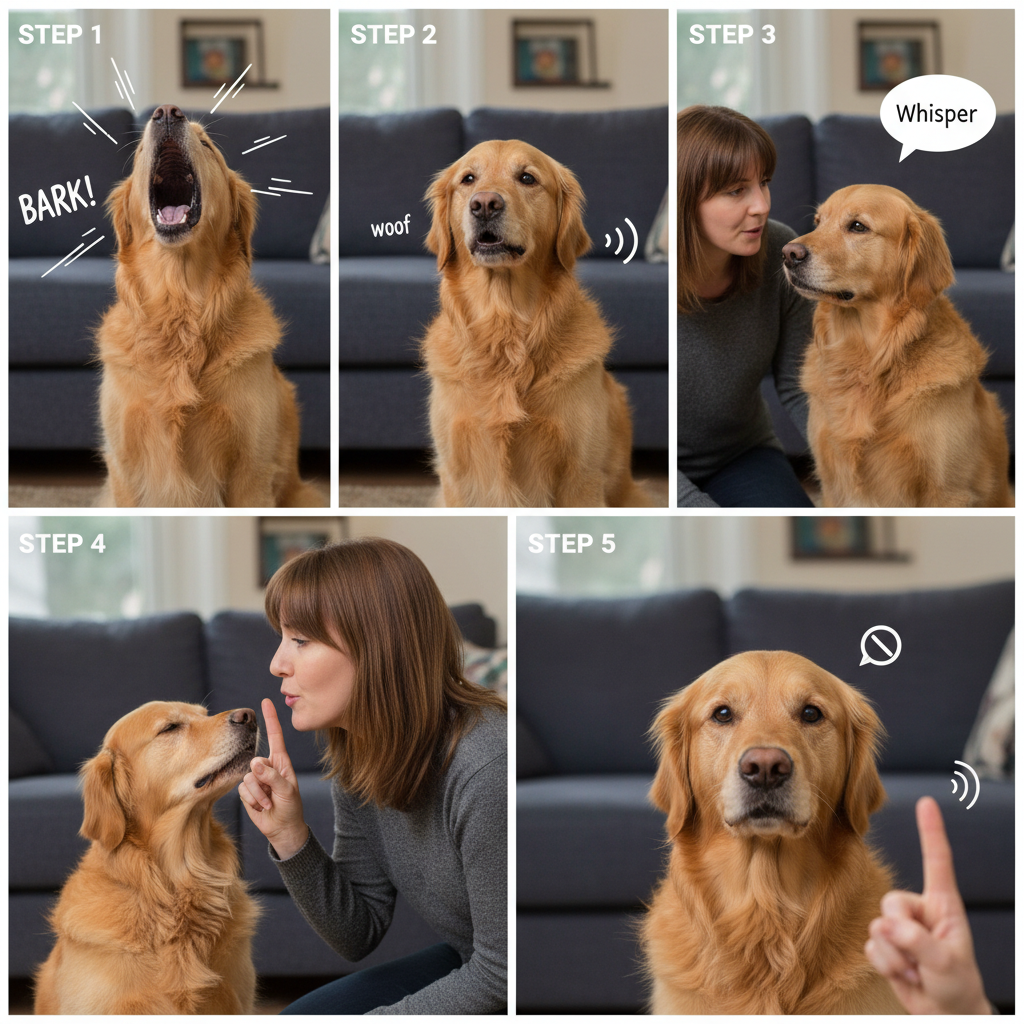
This process relies on the training principle of shaping, where you reward successive approximations of the final desired behavior. We will start with a full bark and gradually reward only the quieter versions until we achieve a ‘whisper’.
-
Step 1: Capture the Quieter Sounds
Begin by asking your dog for the behavior they already know: cue them to ‘Speak’. Let them bark once or twice. Now, pay close attention. The goal is to mark and reward any sound that is not a full-volume bark. As they get excited, they might offer a variety of sounds. The moment you hear a lower-volume woof, a grumble, a huff, or even the quiet intake of breath before a bark, immediately click (or say “Yes!”) and give them a treat. At this stage, you are simply communicating, ‘That quieter sound is what I want’. Ignore the loud barks completely—no treat, no attention.
-
Step 2: Raise the Criteria Gradually
Once your dog starts to understand that quieter sounds earn rewards, they will begin to offer them more frequently. Now, it’s time to be slightly more selective. Start rewarding only the soft ‘woofs’ and ignore the grumbles or huffs. This is called ‘raising the criteria’. You are refining the behavior, guiding your dog toward the specific ‘whisper’ sound. This step requires patience. If your dog gets frustrated and reverts to loud barking, you may have raised the criteria too quickly. Simply go back to rewarding any quieter sound for a few repetitions before trying again.
-
Step 3: Introduce the Verbal Cue ‘Whisper’
When your dog is reliably offering a quiet bark in anticipation of a reward, it’s time to put a name to the action. Just as your dog is about to make the quiet sound, say your new verbal cue, ‘Whisper’, in a soft, quiet tone. Your tone of voice can help influence their volume. Immediately after they perform the quiet bark, click/mark and reward. Repeat this process multiple times. The sequence is: say ‘Whisper’ -> dog makes quiet sound -> click/mark -> reward.
-
Step 4: Add a Hand Signal
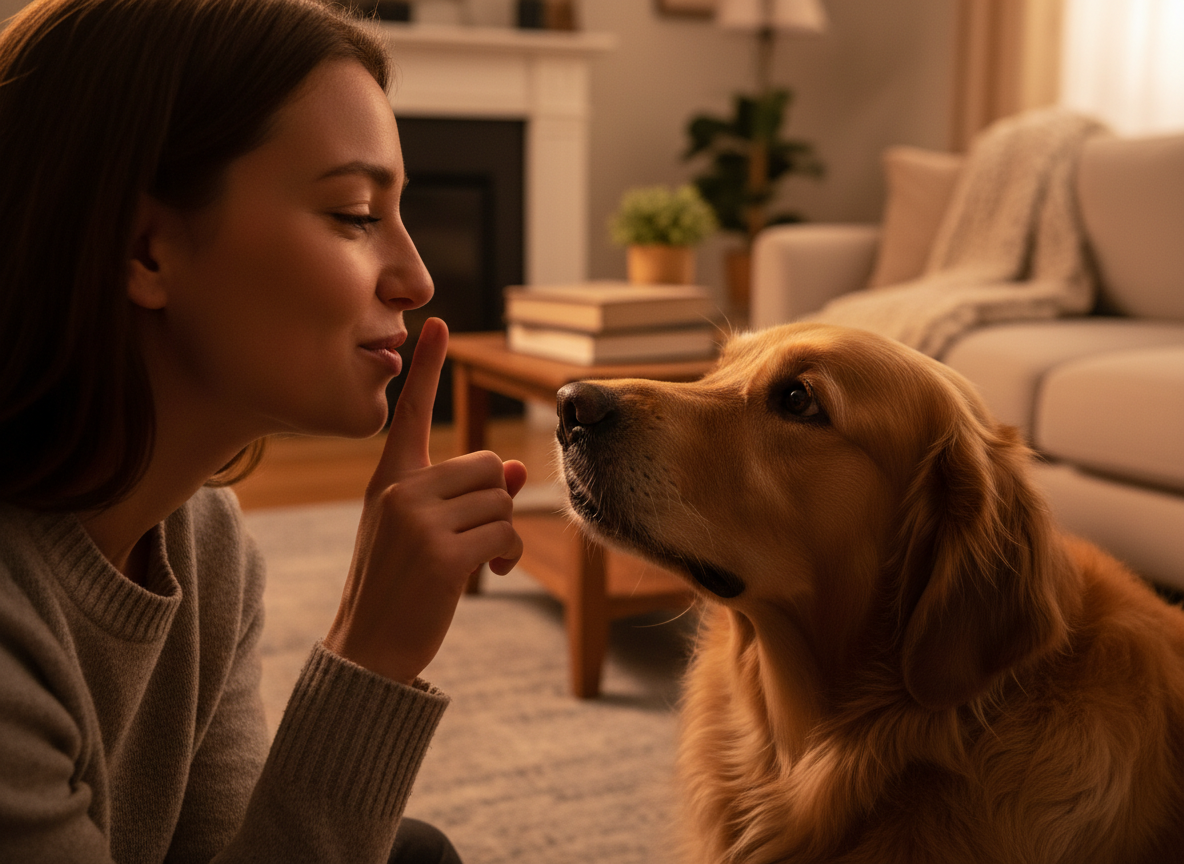
Pairing a verbal cue with a hand signal makes your command more versatile. A common and intuitive signal for ‘whisper’ is to raise a single finger to your lips, like the universal ‘shhh’ gesture. Start by giving the hand signal just before you say the verbal cue ‘Whisper’. Soon, your dog will associate the hand signal with the action. The sequence becomes: give hand signal -> say ‘Whisper’ -> dog makes quiet sound -> click/mark -> reward. Eventually, you can fade the verbal cue and have the dog respond to the hand signal alone.
-
Step 5: Fade the Initial ‘Speak’ Cue
Your ultimate goal is for your dog to respond directly to the ‘Whisper’ cue without needing to be prompted with ‘Speak’ first. Once the ‘Whisper’ cue is well-established, start your training sessions by giving the ‘Whisper’ cue directly. If they succeed, give them a jackpot—a handful of treats—to signify a major breakthrough. If they seem confused, you can take a step back and prompt with ‘Speak’ once or twice to get the momentum going, but quickly return to cueing ‘Whisper’ directly. With practice, the initial ‘Speak’ cue will become unnecessary.
Troubleshooting Common Challenges
Troubleshooting Common Challenges
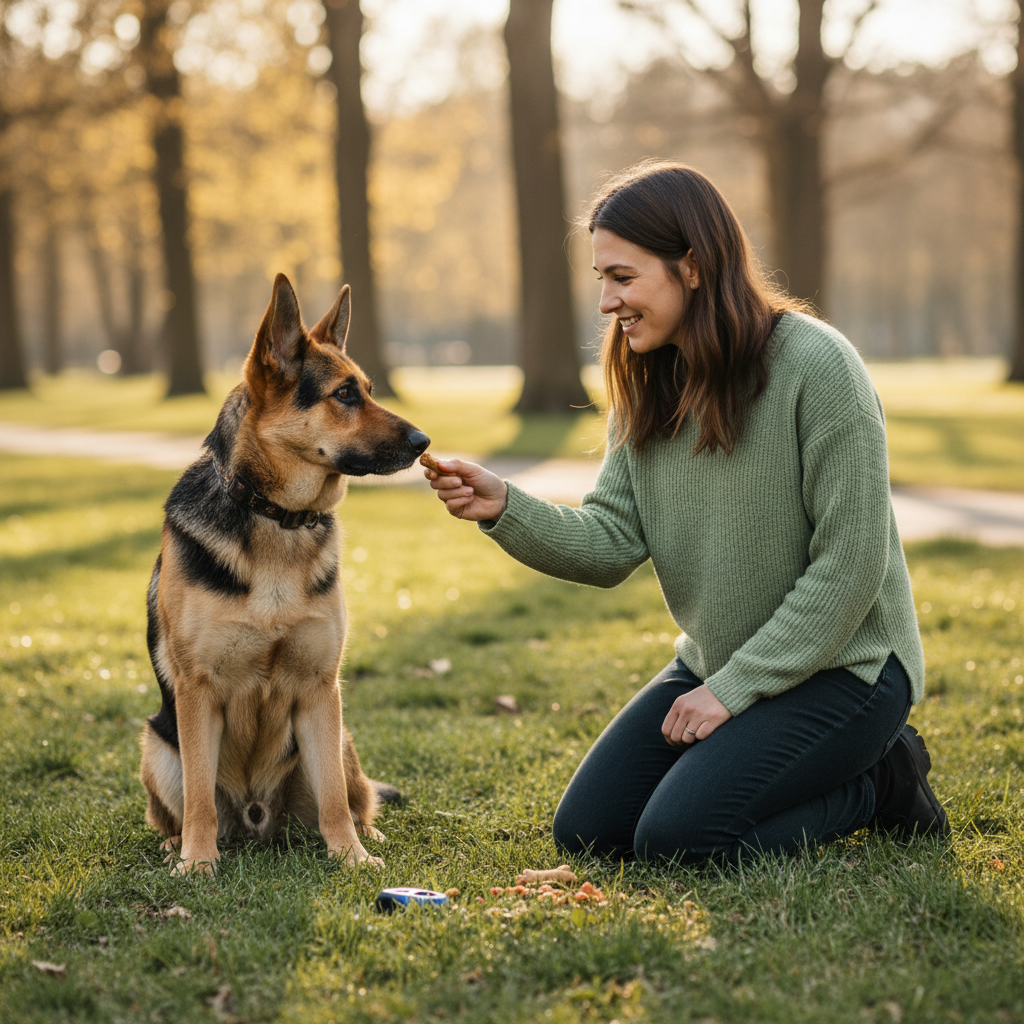
Even with a clear plan, you might encounter some bumps in the road. Here’s how to navigate the most common challenges with a professional approach.
Challenge: My Dog Only Barks Loudly and Doesn’t Offer Quieter Sounds
This is a very common issue, especially with highly vocal or excitable dogs. The key is to adjust your timing and criteria. Instead of waiting for a fully formed quiet bark, try to capture the moments in between the barks. Is there a split-second of quiet? A breath? A low grumble as they gear up for another bark? Mark and reward that tiny moment. You may also try capturing their first sleepy ‘woof’ in the morning or the low rumble they make when they see a squirrel. The principle is to find any vocalization that isn’t at full volume and build from there. It requires keen observation and quick marking.
Challenge: My Dog Gets Frustrated, Anxious, or Shuts Down
Frustration is a clear sign that the training session has gone on too long, the criteria for reward is too high, or the dog simply doesn’t understand what’s being asked. If you see signs of stress (yawning, lip licking, looking away), end the session immediately on a positive note. Ask for a simple command they know well, like ‘Sit’, reward them generously for it, and then end with some play or petting. In the next session, lower your expectations. Go back to the previous step where they were successful and work there for a while before trying to advance again.
Challenge: The ‘Whisper’ Gets Louder Over Time
This is known as ‘behavior drift’. Sometimes, a once-precise behavior can get sloppy. If your dog’s whisper is turning back into a bark, it’s time for a quick tune-up. Simply revert to your shaping plan. For a few sessions, only reward the very quietest attempts. Ignore the medium-volume barks that you may have started accepting. This ‘re-calibrates’ the behavior and reminds your dog of the precise criteria for the ‘whisper’ command. Maintaining a high standard for the trick will keep it sharp and impressive.
Advanced Training: Proofing and Practical Applications
Advanced Training: Proofing and Practical Applications
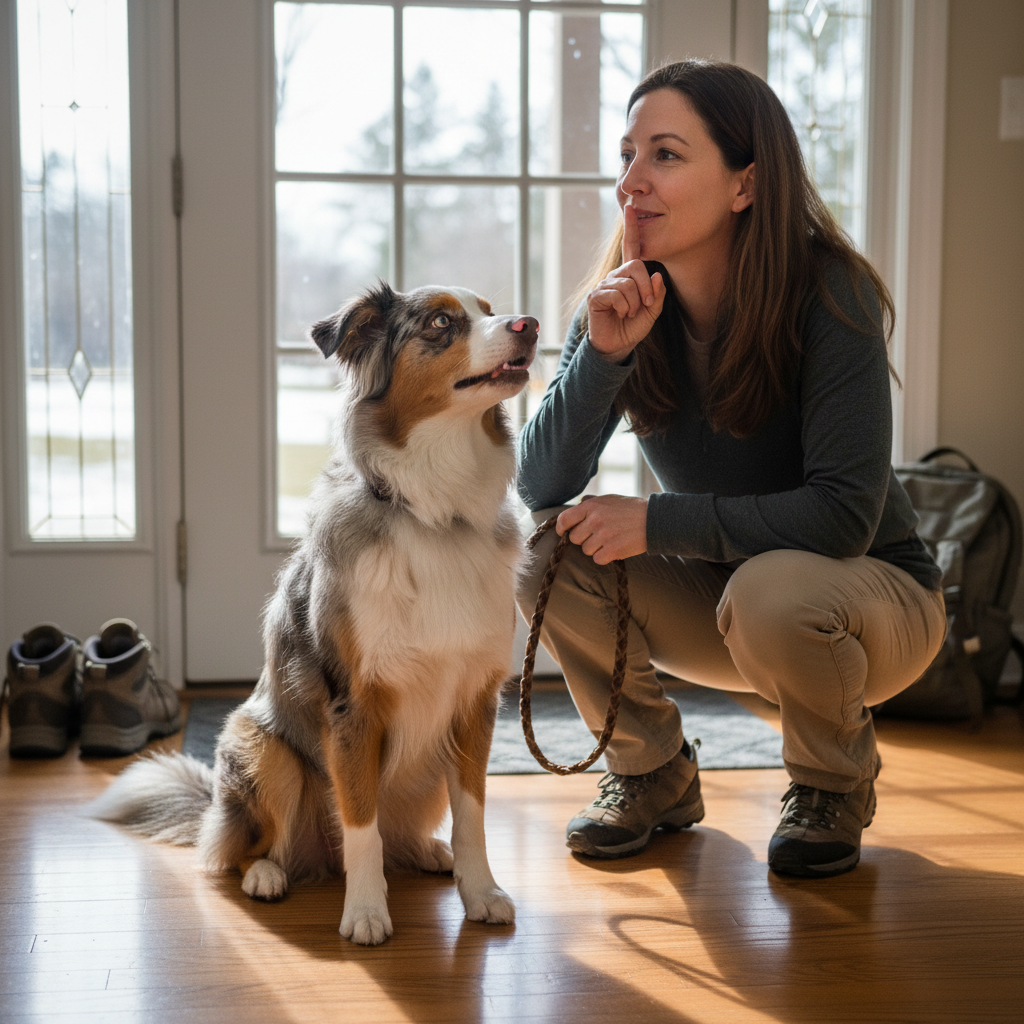
Once your dog has mastered the ‘whisper’ command in a quiet room, the next step is to ‘proof’ the behavior. Proofing is the process of teaching your dog to perform a command reliably in various environments and under different levels of distraction. This generalization is what makes a trick truly solid.
Proofing the ‘Whisper’ Command
Start by incrementally increasing the level of distraction. Follow these general stages:
- Different Rooms: Practice in the kitchen, the hallway, and the bedroom.
- Your Yard: Move the training outside to your backyard, where new smells and sounds provide a mild level of distraction.
- Low-Distraction Public Areas: Try practicing in a quiet park during an off-peak hour or on a calm street.
- Increasing Distractions: Gradually work towards asking for a ‘whisper’ when another dog is at a distance or when a family member enters the room.
Remember to adjust your reward rate. In a new, distracting environment, you may need to reward more frequently for success to keep your dog engaged.
Practical Uses for the Whisper Command
Beyond being a cute trick, the ‘whisper’ command has several practical benefits for managing your dog’s vocal behavior. It provides an alternative, incompatible behavior to frantic, loud barking.
Expert Tip: The ‘whisper’ command can be a powerful tool for demand barking. If your dog barks loudly to ask for food or to go outside, you can redirect them by asking for a ‘whisper’ instead. You then reward the quiet vocalization by giving them what they wanted. This teaches them a more polite way to communicate their needs.
Consider these scenarios:
- The Doorbell: Many dogs erupt into loud barking when the doorbell rings. You can train your dog to offer a ‘whisper’ instead, acknowledging the visitor without the deafening noise.
- Excitement Barking: When you grab the leash for a walk or a toy for playtime, you can preempt excitement barking by cueing a ‘whisper’.
- Alert Barking: If your dog barks at sounds outside, you can acknowledge their alert with ‘Thank you’, and then ask for a ‘whisper’ to de-escalate the situation.
By integrating the ‘whisper’ command into daily life, you transform it from a simple trick into a sophisticated communication tool that enhances the peace and quiet of your home.
Conclusion
Teaching your dog to ‘whisper’ is a rewarding journey that goes far beyond the novelty of a clever trick. It is an exercise in clear communication, patience, and positive reinforcement—the very cornerstones of a strong human-canine bond. By starting with a solid ‘Speak’ command, carefully shaping the behavior through successive approximation, and patiently troubleshooting any challenges, you can successfully teach this charming and useful command.
Remember to keep your training sessions short, positive, and tailored to your dog’s pace. The true value of this command is realized when you proof it in different environments and apply it to real-world situations, transforming loud, disruptive barking into a controlled, quiet form of communication. Embrace the process, celebrate the small victories, and enjoy the delightful results of your dedicated training efforts. You’ll not only have a dog that can perform one of the cutest tricks ever but also a more attentive, engaged, and well-mannered companion.