Herding Without Sheep: The Ultimate Beginner’s Guide to Treibball for Urban Dogs
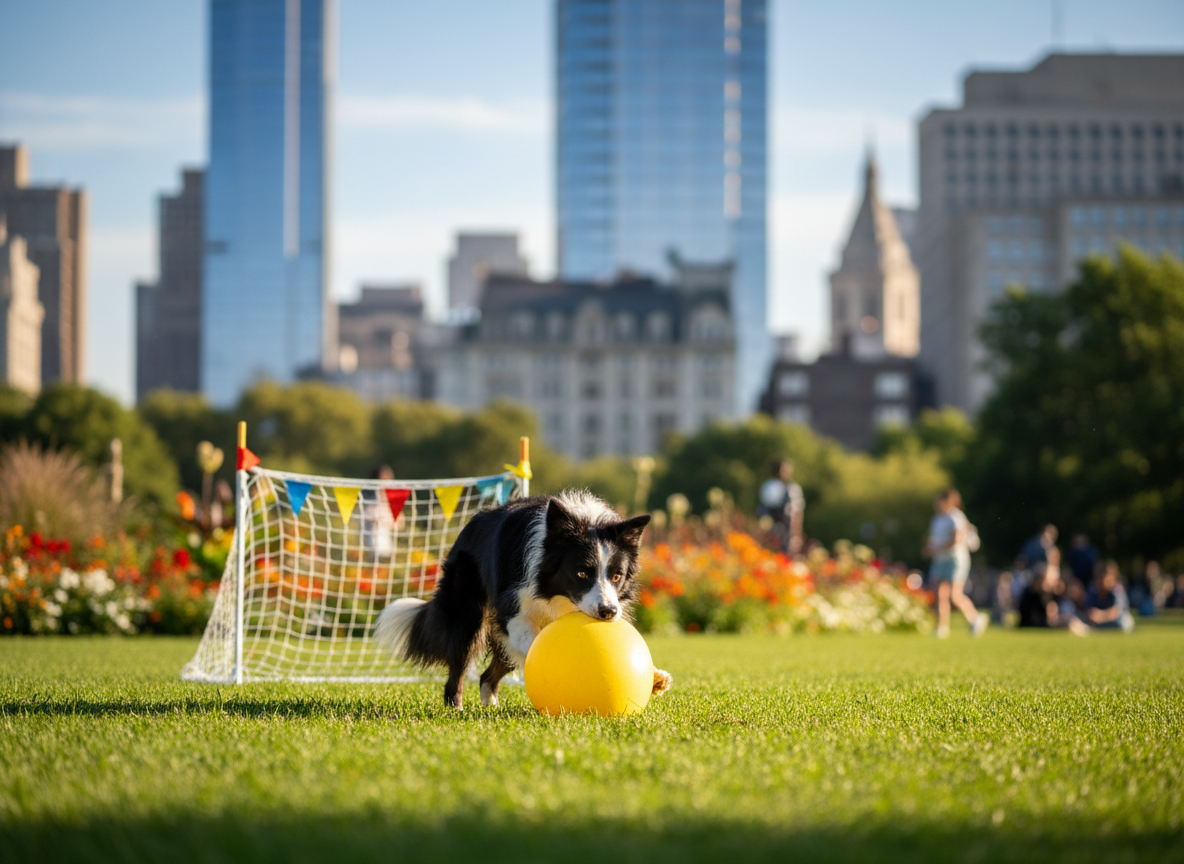
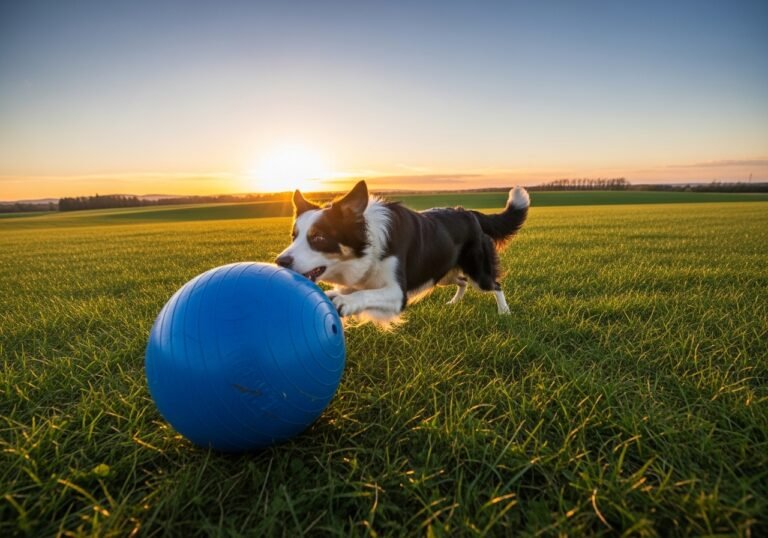
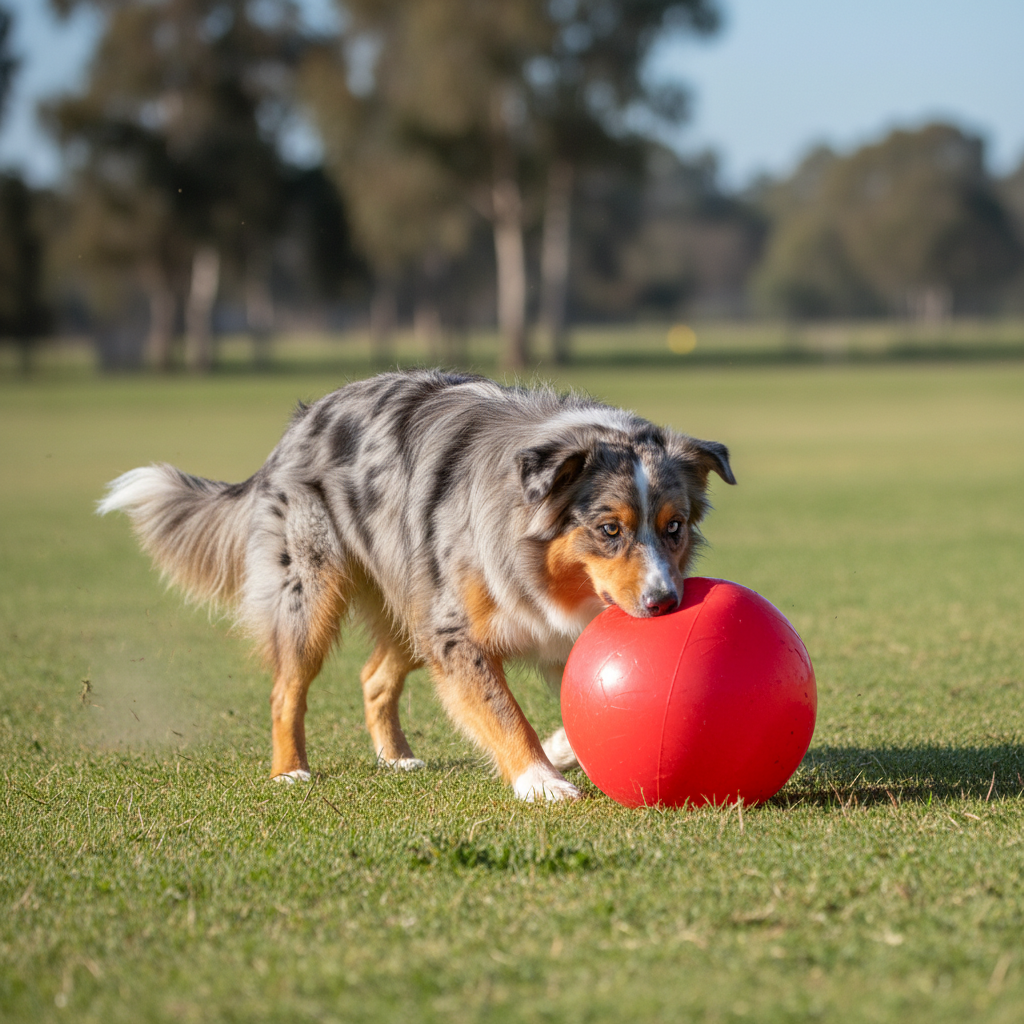
For countless herding breeds living in urban environments, the instinct to gather, drive, and control movement remains a powerful, often unmet, need. This innate drive, when unchanneled, can manifest in undesirable behaviors like nipping at heels, chasing cars, or anxiously circling family members. Enter Treibball (pronounced try-ball), a dynamic and engaging dog sport that provides the perfect outlet. German for ‘drive ball,’ Treibball is a positive-reinforcement activity where a dog, guided by its handler’s cues, ‘herds’ large exercise balls into a goal.
This sport is more than just a game; it’s a sophisticated form of communication and teamwork that strengthens the bond between you and your dog. It offers low-impact physical exercise, crucial mental stimulation, and a safe way to satisfy those deep-seated herding instincts. Whether you own a Border Collie in a high-rise apartment or an Australian Shepherd with a small backyard, Treibball offers a fulfilling job for your canine companion. This guide will provide you with a comprehensive, step-by-step framework to transform your energetic urban dog into a focused and confident Treibball partner.
Gearing Up for Treibball: Essential Equipment
Gearing Up for Treibball: Essential Equipment
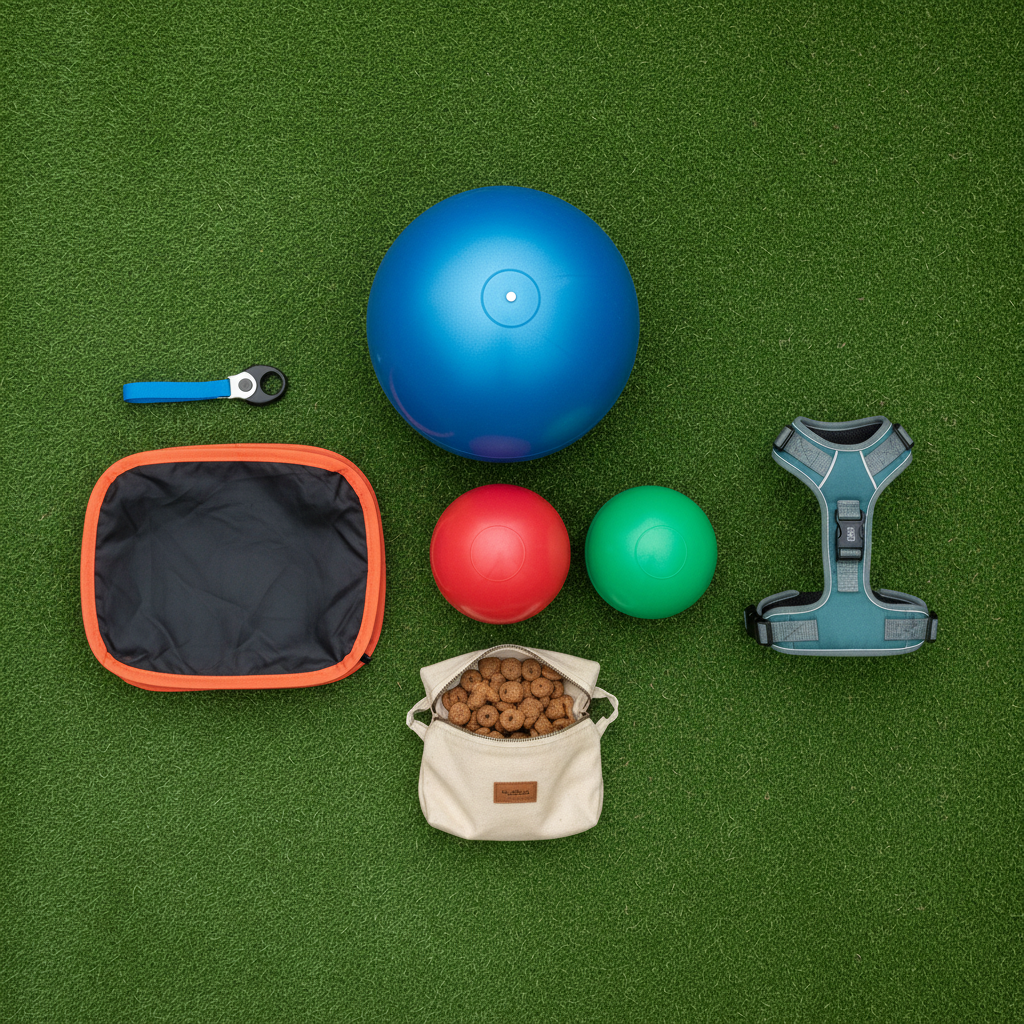
Before you begin your Treibball journey, gathering the correct equipment is essential for setting you and your dog up for success. The right tools ensure safety, facilitate clear communication, and make the training process more efficient and enjoyable. Unlike sports that require extensive or expensive gear, Treibball is relatively accessible. Here is a detailed breakdown of the necessary items:
- Exercise Balls: These are the ‘sheep’ of Treibball. You will need several, typically the large, inflatable yoga or fitness balls. It’s crucial to select the right size. As a general rule, the ball’s height should be at or slightly above your dog’s shoulder height. This encourages pushing with the nose and forehead rather than biting. Having balls of various sizes can be useful as you progress. Start with one, but aim to acquire more as your dog’s skills develop. Durability is key, so look for anti-burst models.
- The Goal: You need a designated target for your dog to push the balls into. A standard portable soccer goal is ideal, but you can easily create your own with two cones, poles, or even garden stakes. The goal should be wide enough to be inviting and not intimidating, typically about 8 to 10 feet across.
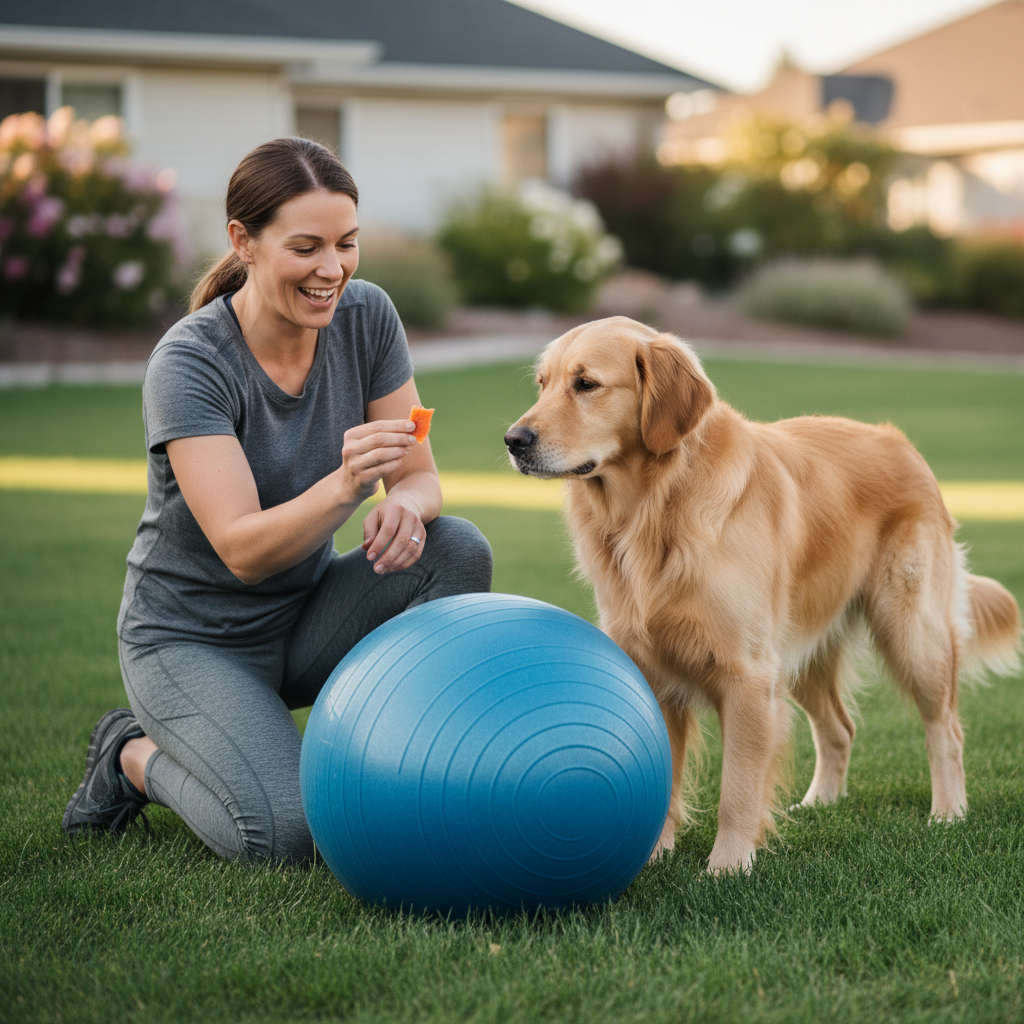
- High-Value Treats: Treibball is built on a foundation of positive reinforcement. You’ll need a generous supply of highly motivating treats to reward your dog’s efforts. These should be small, soft, and something your dog absolutely loves but doesn’t get every day. Think small pieces of cooked chicken, cheese, or specialized training treats.
- Clicker (Recommended): A clicker is an invaluable tool for precision. It allows you to ‘mark’ the exact moment your dog performs the correct behavior—like nosing the ball forward—with a distinct sound, which is then followed by a reward. This clarity accelerates learning significantly.
- A Safe, Fenced-In Training Area: Safety is paramount. Your training space should be securely fenced to prevent your dog from running off after a wayward ball. A flat, grassy area like a backyard or a quiet park is perfect. A clear space of at least 50×50 feet will give you ample room to work.
- Non-Restrictive Harness: While not strictly mandatory, a well-fitting Y-shaped harness is recommended over a collar. It allows for free movement of the shoulders and neck and prevents any pressure on the trachea if you need to gently guide your dog with a leash.
Laying the Groundwork: Prerequisite Foundation Skills

Laying the Groundwork: Prerequisite Foundation Skills
Treibball is a complex sport that layers multiple behaviors into a seamless performance. Attempting to start with pushing balls into a goal without first establishing a solid foundation is a recipe for frustration for both you and your dog. Mastering these prerequisite skills will make the core Treibball training smoother, faster, and far more enjoyable. Dedicate time to perfecting these behaviors before you even introduce the primary game.
Nose Targeting (‘Touch’)
This is the most critical foundation skill. The goal is to teach your dog to touch an object with its nose on cue. This behavior becomes the ‘push’ that moves the ball. Start by presenting your open palm to your dog. The moment their nose touches it, click and treat. Once reliable, give it a verbal cue like ‘Touch.’ Gradually transition from your hand to a target stick, and eventually to other objects, which will prepare them for targeting the large ball.
The ‘Go Out’ Command
In Treibball, you need to be able to send your dog away from you to get behind a ball. This is often counterintuitive for dogs who are trained to stay close. Start by placing a visible target (like a small mat or plate) a few feet away. Use a cue like ‘Go Out’ or ‘Go Mat’ and reward the dog for moving to the target. Gradually increase the distance until your dog can confidently run 30-50 feet away from you to the target on cue.
Positional Stays (‘Stay’ and ‘Wait’)
Impulse control is non-negotiable. Your dog must be able to hold a ‘stay’ or ‘wait’ position while you move around or set up the balls. This prevents them from breaking formation and chasing the balls prematurely. Practice both sit-stays and down-stays with increasing duration and distractions. A solid ‘wait’ command at doorways or before meals also reinforces this crucial self-control.
Directional Cues
As you advance, you’ll need to direct your dog around the ‘field’ and behind specific balls. Teaching basic directional cues is essential. You can start by teaching ‘left’ and ‘right’ turns or use traditional herding cues like ‘Gee’ (right) and ‘Haw’ (left). A simple way to train this is to toss a treat a few feet to one side, say the cue (‘Gee’), and let them get it. Repeat on both sides until the dog begins to anticipate the direction based on the word alone.
Solid Recall (‘Come’)
A reliable recall is a fundamental safety and control skill for any dog owner, but it’s especially important in a stimulating environment like a Treibball field. Your dog must come back to you immediately when called, regardless of the allure of the giant, rollable ‘sheep’. Practice recall in various environments with increasing levels of distraction to ensure it’s proofed.
The Heart of the Game: Step-by-Step Treibball Training
The Heart of the Game: Step-by-Step Treibball Training
With your equipment ready and foundation skills established, it’s time to combine them into the exciting game of Treibball. This process should be broken down into small, manageable steps. Remember to keep sessions short, positive, and end on a successful note to keep your dog motivated and eager to play.
- Step 1: Positive Association with the Ball. The large ball can be intimidating to some dogs. Your first goal is to ensure your dog sees it as a fun, rewarding object. Place a deflated or partially inflated ball in your training area. Let your dog investigate it at their own pace. Click and treat for any interaction: sniffing it, looking at it, or touching it. Don’t force interaction. Over a few sessions, gradually inflate the ball fully as your dog’s confidence grows.
- Step 2: Transferring the Nose Target to the Ball. Now, use your ‘Touch’ cue. Hold your hand or a target stick against the ball and ask your dog to target it. Once they are confidently touching the target on the ball, remove the target and cue ‘Touch’ directed at the ball itself. Click and treat for any nose contact with the ball.
- Step 3: Shaping the ‘Push’. This is where the magic happens. Start to delay your click slightly. Instead of clicking for a simple touch, wait for a touch that has a little more pressure behind it—enough to make the ball wiggle or move slightly. This is called ‘shaping.’ Only reward these stronger nose bumps. Your dog will quickly learn that pushing the ball earns the reward. Keep this fun, like a game of ‘make the ball move.’
- Step 4: Introducing Direction. Stand in front of the ball and encourage your dog to push it towards you. At first, reward any push that comes in your general direction. As your dog understands the game, become more specific, only rewarding pushes that send the ball directly to your feet. You are now the ‘goal.’
- Step 5: Adding the Goal and Distance. Set up your goal and position yourself within it. Place the ball just a few feet out and encourage your dog to push it to you in the goal. Once they are successful, gradually start adding distance. Use your ‘Go Out’ command to send your dog to a spot behind the ball, then give your cue to push it towards the goal. This is the core gameplay loop of Treibball.
- Step 6: Working with Multiple Balls. After your dog has mastered pushing a single ball into the goal from various distances, you can introduce a second ball. Place them a few feet apart and direct your dog to ‘herd’ one, then the other. The ultimate beginner’s goal is to set up three balls in a triangle formation (like in billiards) and have your dog systematically push all three into the goal.
Expert Tip: Patience is your greatest asset. Every dog learns at a different pace. If your dog gets stuck on a step, simply go back to the previous, mastered step for a few repetitions to rebuild confidence before trying again.
Troubleshooting Common Treibball Challenges
Troubleshooting Common Treibball Challenges
Even with careful training, you’re likely to encounter a few bumps along the road. Understanding common challenges and how to address them will keep you from getting discouraged and help your dog overcome hurdles. Below is a table outlining frequent issues and their professional solutions.
| Common Problem | Underlying Cause | Solution Strategy |
|---|---|---|
| Dog is Biting or Pawing the Ball | Over-arousal, frustration, or not understanding that the nose is the correct tool. It can also be a natural instinct for some breeds. | Immediately stop the session if biting occurs. Go back to foundation nose targeting on a stationary object. Reward only nose touches. Ensure the ball is fully inflated, making it harder to bite. For persistent biters, you may need a harder, more durable ball. |
| Dog Loses Focus or Gets Distracted | Session is too long, the environment is too distracting, or the reward is not motivating enough. | Keep training sessions short and high-energy (5-10 minutes is plenty). Train in a quiet, low-distraction environment initially. Increase the value of your treats—use something irresistible. Always end the session on a high note of success. |
| Dog is Fearful of the Ball | The ball’s size, movement, or novelty can be intimidating for cautious or sensitive dogs. | Go back to Step 1: Positive Association. Leave a deflated ball in your dog’s space and reward any curiosity. Play with the ball yourself to show it’s not a threat. Use a smaller, less intimidating ball to start and gradually work up in size. Never force interaction. |
| Pushing Lacks Power or Confidence | The dog may be unsure of what is being asked or may be physically hesitant to push hard. | Use shaping to build confidence. Reward any forward movement, no matter how small. Cheer your dog on enthusiastically! You can also try a slightly lighter or smaller ball temporarily to make moving it easier and more rewarding. |
| Dog Goes for the Wrong Ball | When working with multiple balls, the dog may get confused or simply go for the closest or most exciting one. | This is a proofing issue for your directional cues. Work on sending the dog to specific targets (cones, mats) to sharpen their understanding of ‘left’ and ‘right.’ When training with two balls, start with them very far apart and gradually move them closer as the dog’s skill improves. |
Conclusion
Treibball is far more than a simple pastime; it is a powerful tool for communication, enrichment, and relationship-building. For the urban dog, it provides a desperately needed outlet for instinctual behaviors that modern city life often suppresses. The focus required for the sport builds impulse control, the physical activity promotes a healthy body, and the mental challenge can prevent boredom and the destructive behaviors that often accompany it. Most importantly, the process of learning and playing Treibball together builds a remarkable partnership between dog and handler, one based on trust, clear communication, and shared joy.
The journey from a novice to a skilled Treibball team requires patience, consistency, and a positive attitude. Celebrate the small victories, work through challenges with understanding, and always remember that the primary goal is to have fun with your canine companion. By embracing this unique sport, you are not just teaching your dog a new game—you are providing them with a fulfilling ‘job’ that speaks to their very nature, creating a happier, more balanced, and more confident urban dog.