Help! My Dog Shakes Uncontrollably When The Smoke Detector Beeps
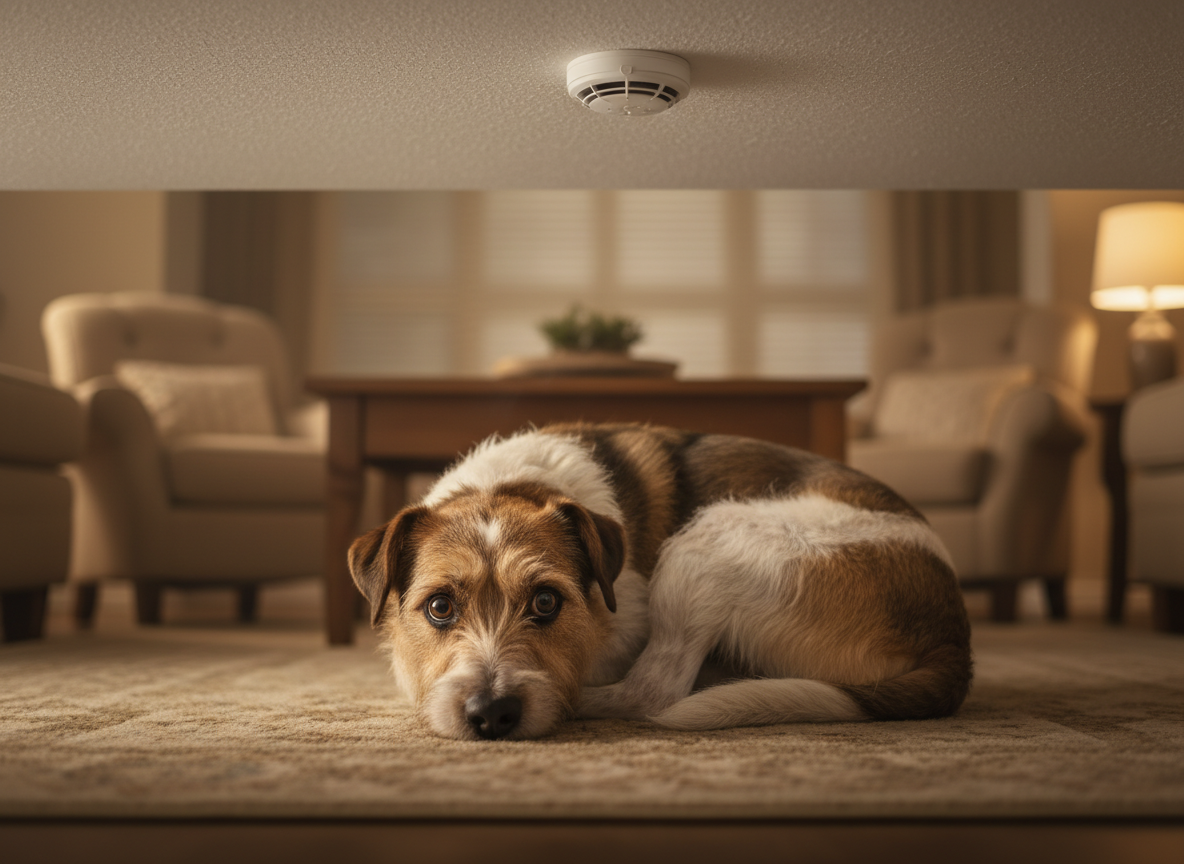
The sudden, piercing shriek of a smoke detector is designed to grab human attention, but for our canine companions, it can be a source of profound terror. Witnessing your dog shake uncontrollably during an alarm is a deeply distressing experience for any pet owner. This is not a simple case of being startled; it’s often a manifestation of a genuine noise phobia, a severe anxiety response to a specific sound. A dog’s hearing is exponentially more sensitive than ours, making the high-frequency, high-decibel alarm an overwhelming sensory assault.
This behavior is more than just an inconvenience; it’s a window into your dog’s state of mind, indicating significant fear and stress. Understanding the root of this reaction is the first step toward helping them. This article will serve as your authoritative guide, providing a clear, actionable plan to manage the immediate crisis, rule out underlying health concerns, and systematically retrain your dog’s emotional response through proven behavioral modification techniques. Our goal is to transform their panic into peaceful confidence, ensuring the safety and well-being of every member of your household.
Decoding the Fear: Why Smoke Detector Beeps Trigger Panic in Dogs
Understanding the Canine Auditory Experience
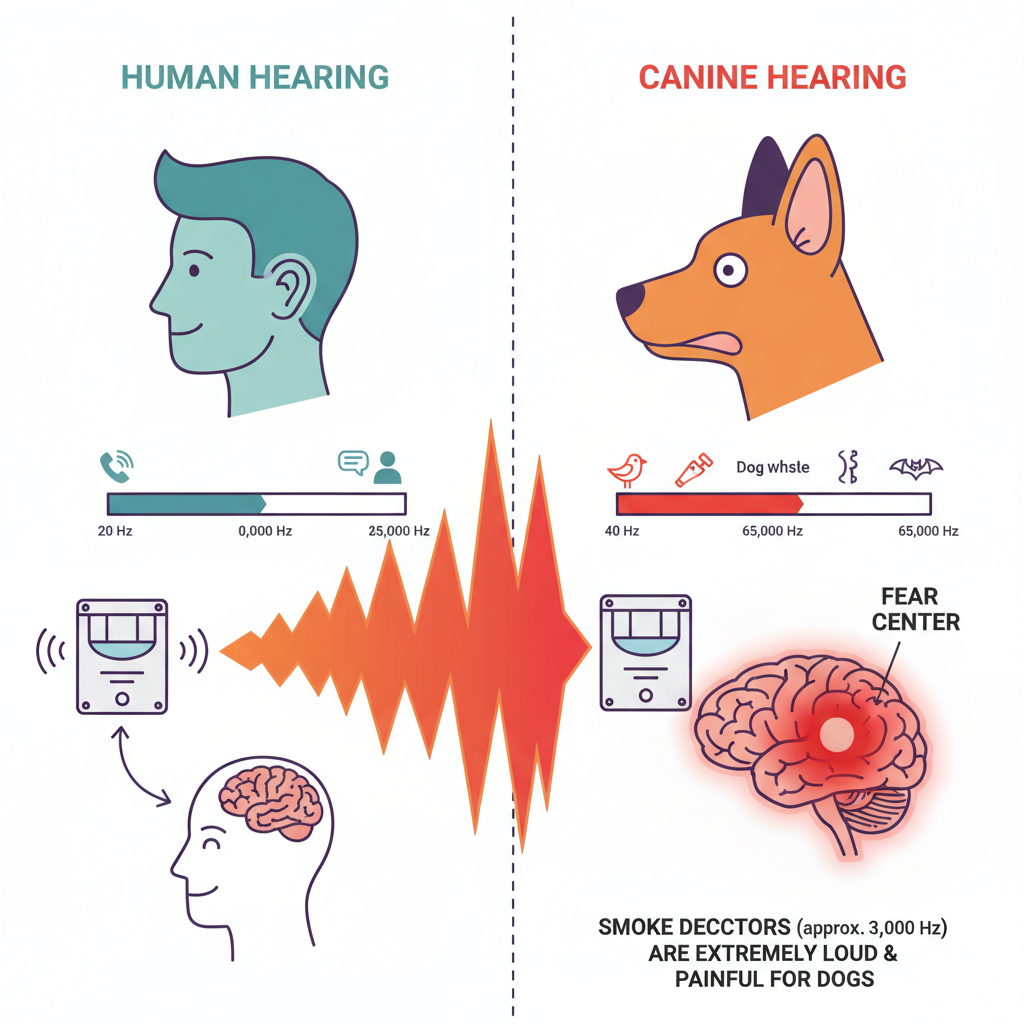
To comprehend your dog’s reaction, we must first appreciate the world of sound as they experience it. Dogs can hear a much wider range of frequencies than humans, extending far into the ultrasonic spectrum. While humans typically hear frequencies between 20 Hz and 20,000 Hz (20 kHz), dogs can hear up to 45,000-65,000 Hz. More importantly, smoke detectors emit their alarm at a frequency of around 3,100 Hz and a volume of at least 85 decibels (dB) at 10 feet. For a dog’s sensitive ears, this combination of high frequency and intense volume is not just loud—it’s physically painful and profoundly disorienting.
The Nature of the Threat Signal
The sound itself is engineered to be jarring. It is sudden, repetitive, and lacks any environmental context your dog can process. In the wild, sudden loud noises signal imminent danger—a predator, a falling tree, a natural disaster. The smoke alarm activates this primal instinct, but because the source is a small plastic disc on the ceiling, the dog cannot identify a threat to fight or flee from. This creates a state of helpless anxiety. Furthermore, dogs are incredibly attuned to human emotions. When an alarm goes off, we naturally become stressed or panicked. Your dog observes your tense body language and anxious energy, which validates their own fear and escalates their response. The alarm doesn’t just sound like danger; it feels like danger because their trusted human leader is also alarmed.
How Fear Develops into Phobia
A single, intensely negative experience with a smoke alarm—such as a real fire event or even a burnt dinner setting it off while the dog was home alone—can be enough to create a lasting phobia. A phobia is an irrational and overwhelming fear. The dog’s brain creates a powerful association: beep = terrifying experience. Subsequently, any similar sound, or even the low-battery ‘chirp,’ can trigger the same panic response. The shaking you observe is an involuntary physiological reaction to a surge of adrenaline and cortisol, the body’s stress hormones. It is a physical manifestation of extreme fear.
Immediate Response Protocol: How to Comfort Your Dog During an Alarm
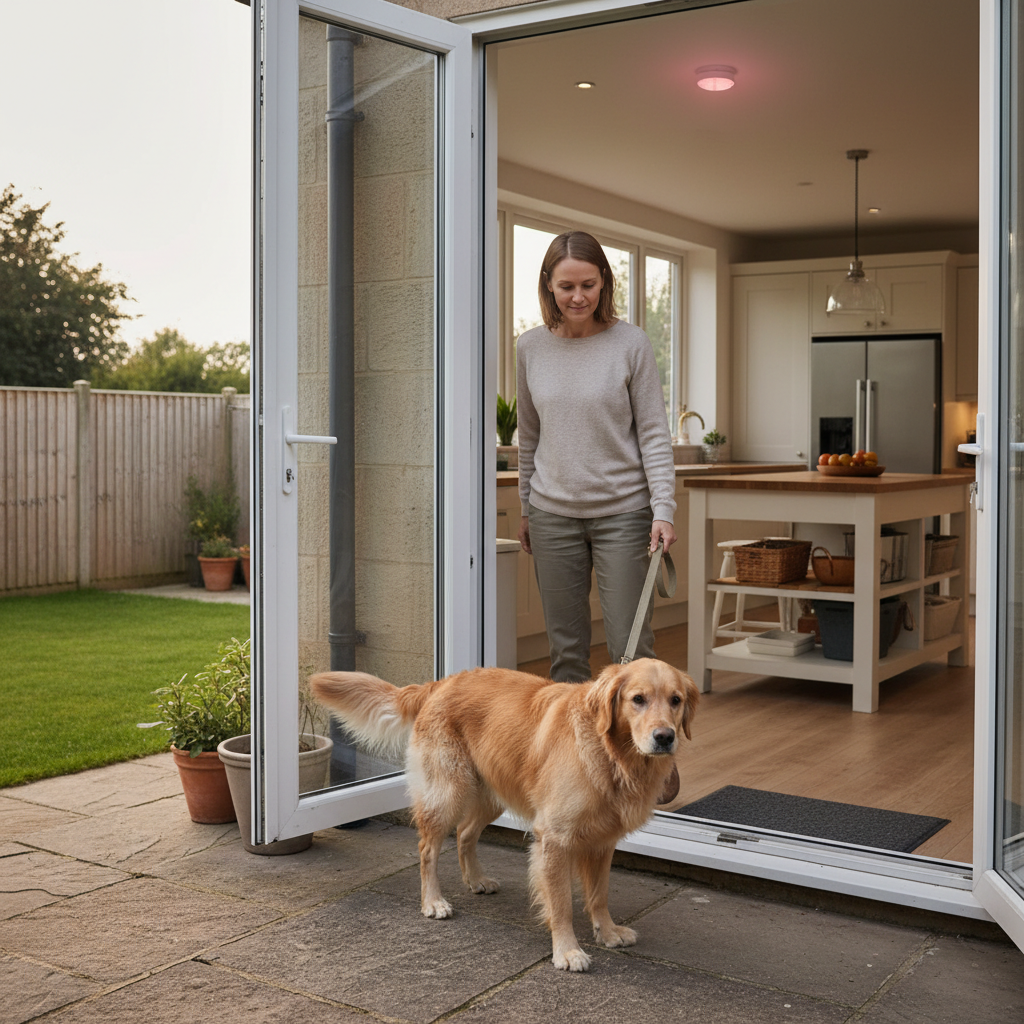
When an alarm is actively sounding, your primary goal is to de-escalate the situation and provide a sense of security. Your calm and decisive leadership is critical. Panicking alongside your dog will only amplify their terror.
Step-by-Step Emergency Management
- Remain Calm and Act Purposefully: Your dog looks to you for cues. Speak in a low, calm voice and move deliberately. Avoid frantic movements or high-pitched, reassuring phrases like “You’re okay! You’re okay!” which your dog will interpret as panic.
- Remove Your Dog from the Sound: Immediately lead your dog on a leash to the quietest and most distant part of the house, such as a basement or a garage. If it is safe to do so, taking them outside into a secure yard is an excellent option to remove them from the acoustic environment entirely.
- Retreat to a ‘Safe Haven’: Guide them to their designated safe space—a crate covered with a heavy blanket, a walk-in closet, or an interior bathroom. This space should already be associated with positive things. If you don’t have one established, any small, enclosed space can help provide a sense of den-like security.
- Apply Gentle Pressure: If your dog tolerates it, use long, slow, firm strokes along the length of their body. This type of massage can be calming. Alternatively, using a pre-existing anxiety wrap, like a ThunderShirt, can provide comforting, constant pressure.
- Do Not Coddle or Over-Reassure: While it’s tempting to scoop up and hug a shaking dog, this can sometimes be interpreted as rewarding the fearful behavior or trapping them when they feel a need to flee. Be a calm, reassuring presence rather than a frantic comforter.
- Offer a High-Value Distraction (After the Fact): Once the alarm has stopped and your dog is in their safe space, you can offer a very high-value chew item, like a frozen Kong filled with peanut butter. This can help redirect their focus and create a more positive association with the aftermath of the event.
A Step-by-Step Guide to Desensitization and Counter-Conditioning

The long-term solution to noise phobia is a gradual training process called desensitization and counter-conditioning (DSCC). The goal is to slowly reintroduce the feared sound at a level that does not produce anxiety, while simultaneously pairing it with something the dog loves. This methodically changes their emotional response from fear to positive anticipation.
This process requires significant patience and consistency. Rushing the steps will undermine your progress. Keep sessions short—no more than 5-10 minutes per day—and always end on a positive note.
Step 1: Assemble Your Training Kit
Before you begin, you will need specific tools to control the learning environment:
- A Sound Recording: Find a high-quality recording of a smoke alarm beep on a website like YouTube or a sound effects library. Do NOT use your actual smoke detector for this training.
- A Playback Device with Volume Control: A smartphone connected to a Bluetooth speaker is ideal, as it allows for very fine control over the volume and lets you place the speaker separately from yourself.
- Extremely High-Value Treats: These should be special rewards reserved only for this training. Think small pieces of cooked chicken, steak, cheese, or commercial training treats your dog adores.
Step 2: Establish the Threshold
Your first task is to find the volume at which your dog can hear the sound without reacting fearfully. This is their ‘sub-threshold’ level. Start with the volume on your device at zero. Place the speaker in a different room and play the sound, gradually increasing the volume one increment at a time. Watch your dog’s body language closely for subtle signs of awareness, such as an ear twitch or a head tilt. The moment you see this awareness without any signs of anxiety (panting, pacing, trembling), you have found your starting volume.
Step 3: Implement Counter-Conditioning
This is the core of the training protocol:
- Play the Sound Briefly: Play the beep for just one or two seconds at the established sub-threshold volume.
- Mark and Reward: The instant the sound stops, say “Yes!” in a happy tone and immediately give your dog a high-value treat. The sequence is critical: Sound ends, then treat appears.
- Reset and Repeat: Wait 30-60 seconds and repeat the process 5-10 times per session.
Step 4: Gradually Increase the Intensity
Once your dog is comfortable and happily anticipating a treat upon hearing the low-volume beep, you can begin to slowly increase the challenge. Make only one change at a time:
- Increase Volume: Raise the volume by a single increment. If the dog shows any anxiety, you have gone too far. Return to the previous volume for a few sessions before trying again.
- Increase Duration: Once they are comfortable with a louder volume, start increasing the duration of the beep from 2 seconds to 3, then to 4, always followed by a reward.
- Decrease Distance: Move the speaker slightly closer to your training area.
Over many weeks or months, you will gradually work your way up to playing the sound at a significant volume in the same room without inducing a fear response. The dog’s conditioned emotional response will have changed from “That sound is terrifying!” to “That sound means chicken is coming!”
Supportive Therapies and When to Consult a Professional

While DSCC is the gold standard for treating phobias, certain supportive therapies can enhance your training and help manage your dog’s overall anxiety levels. For severe cases, professional intervention is essential.
Management Tools and Calming Aids
These tools can help your dog feel more secure during training and in everyday life, but they are not a substitute for behavioral modification.
| Therapy/Tool | Mechanism of Action | Best Use Case |
|---|---|---|
| Anxiety Vests (e.g., ThunderShirt) | Applies gentle, constant, and calming pressure to the dog’s torso, similar to swaddling an infant. | During thunderstorms, fireworks, or initial stages of DSCC training to provide background calming. |
| Pheromone Diffusers (e.g., Adaptil) | Releases a synthetic copy of the Dog Appeasing Pheromone, which mother dogs emit to calm their puppies. | Continuous use in the home to lower baseline anxiety levels and create a more secure environment. |
| Nutraceuticals & Supplements | Contain ingredients like L-Theanine, L-Tryptophan, or herbal blends (valerian, chamomile) that can promote calmness. | As a daily supplement to support behavioral training, but only after consulting with a veterinarian. |
| White Noise Machines | Can help mask low-level trigger sounds, such as the low-battery ‘chirp’ of a smoke detector. | To be used in the dog’s primary resting area to prevent startling from intermittent, quiet sounds. |
When to Seek Professional Help
It is crucial to recognize when a problem is too severe to manage on your own. You should seek professional guidance if:
- Your dog’s shaking is accompanied by other extreme behaviors like loss of bladder/bowel control, destructive behavior, or attempts to escape that could lead to injury.
- Despite consistent training, you are making no progress or the fear is worsening.
- The dog’s anxiety is generalized and impacts their quality of life on a daily basis.
Start with your primary veterinarian to rule out any underlying medical conditions that could be contributing to the behavior. They can then refer you to the appropriate professional:
- A Certified Professional Dog Trainer (CPDT-KA): Can provide hands-on guidance for your DSCC protocol.
- A Certified Applied Animal Behaviorist (CAAB) or a Veterinary Behaviorist (DACVB): These specialists have advanced education in animal behavior. A veterinary behaviorist can also prescribe anti-anxiety medication, which can be an invaluable tool to reduce a dog’s anxiety enough for behavioral modification to be effective. Medication is not a cure, but it can make learning possible for a dog whose fear is too profound to overcome with training alone.
Conclusion
Confronting your dog’s intense fear of the smoke detector is a journey that requires empathy, patience, and a methodical approach. The uncontrollable shaking you’ve witnessed is a genuine panic attack, rooted in the overwhelming nature of the sound and a conditioned fear response. By understanding the auditory world your dog inhabits, you can better appreciate the source of their distress.
Your path forward is two-fold. In the short term, focus on calm, effective management during an alarm to provide immediate safety and security. For the long term, commit to the process of desensitization and counter-conditioning. This proven technique, supported by management tools and a secure home environment, can fundamentally change your dog’s perception of the alarm from a terrifying threat to a neutral, or even positive, predictor of good things.
Remember to always rule out underlying medical issues with your veterinarian and never hesitate to enlist the help of a certified professional for severe cases. Your commitment to this process is the greatest comfort you can offer, empowering your canine companion to overcome their fear and restoring a sense of peace and safety to your home.