Help! My Dog Is Terrified of Stairs (3 Simple Steps to Fix It)

Watching your canine companion, who normally follows you everywhere, suddenly plant their paws and refuse to go up or down a set of stairs can be both baffling and concerning. You might feel frustrated, confused, or worried that something is seriously wrong. Rest assured, you are not alone. A fear of stairs is a common issue in dogs of all ages, from young puppies still learning about the world to senior dogs facing new physical limitations. This fear doesn’t mean your dog is being stubborn; it’s a genuine emotional response that requires your patience, understanding, and guidance.
The key to resolving this challenge lies not in force or coercion, but in building confidence and changing your dog’s perception of the stairs from a scary obstacle into a normal part of the home. In this comprehensive guide, we will first explore the potential reasons behind this phobia and then walk you through a proven, three-step training plan rooted in positive reinforcement. With consistency and a positive attitude, you can help your dog conquer their fear and navigate your home with confidence once again.
Understanding the Root of the Fear: Why Are Stairs So Scary?
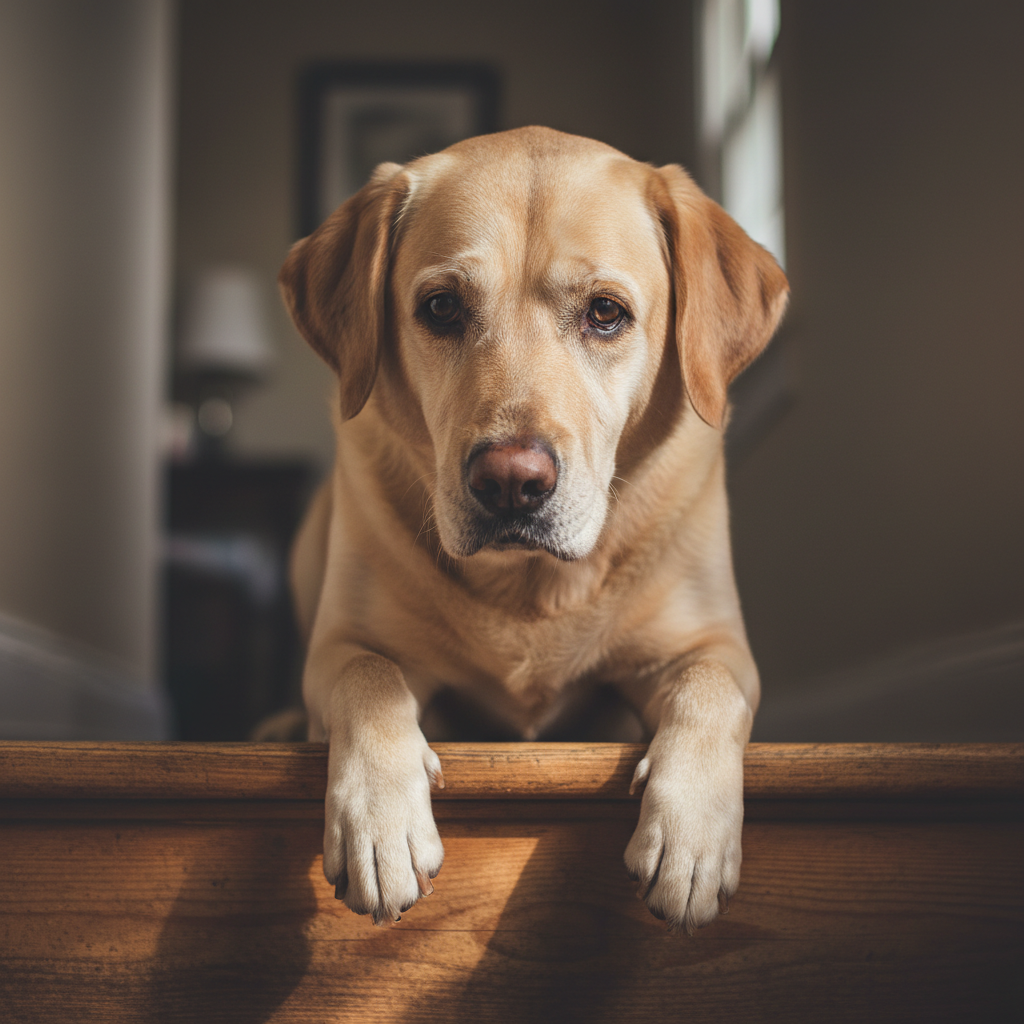
Before beginning any training, it’s crucial to understand why your dog might be afraid of stairs. The fear is rarely arbitrary; it almost always stems from a specific underlying cause. Identifying the potential root of the problem will help you approach the situation with greater empathy and effectiveness.
Potential Causes of Stair Phobia
- Lack of Early Exposure: Puppies go through a critical socialization period (typically 3 to 16 weeks of age). If a puppy wasn’t exposed to stairs during this time, they may perceive them as a strange and intimidating object later in life.
- A Negative Past Experience: A single traumatic event can create a lasting fear. Your dog may have slipped, tumbled, or caught a nail on the stairs. Even being startled by a loud noise while on the staircase can create a negative association.
- Physical Pain or Discomfort: This is one of the most critical factors to consider, especially if the fear appears suddenly in an adult or senior dog. Conditions like arthritis, hip dysplasia, elbow dysplasia, or back problems (such as IVDD) can make the act of climbing or descending stairs painful. Your dog’s refusal might be a form of self-preservation.
- Vision Problems: As dogs age, their eyesight can decline. Conditions like cataracts or progressive retinal atrophy can affect depth perception, making it difficult for them to judge the height and depth of each step. This uncertainty can be terrifying.
- The Nature of the Stairs: From a dog’s perspective, not all stairs are created equal. Slippery surfaces (like hardwood or tile), open risers (the gaps between steps), and dark or narrow stairwells can all be inherently frightening.
When to See a Veterinarian
Before you label the issue as purely behavioral, a thorough check-up with your veterinarian is essential. Pain is a powerful motivator for avoidance. A vet can perform a physical examination to check for signs of orthopedic issues, joint pain, or vision impairment. Ruling out a medical cause is the most important first step in your plan.
Preparation is Key: Setting Up for Success
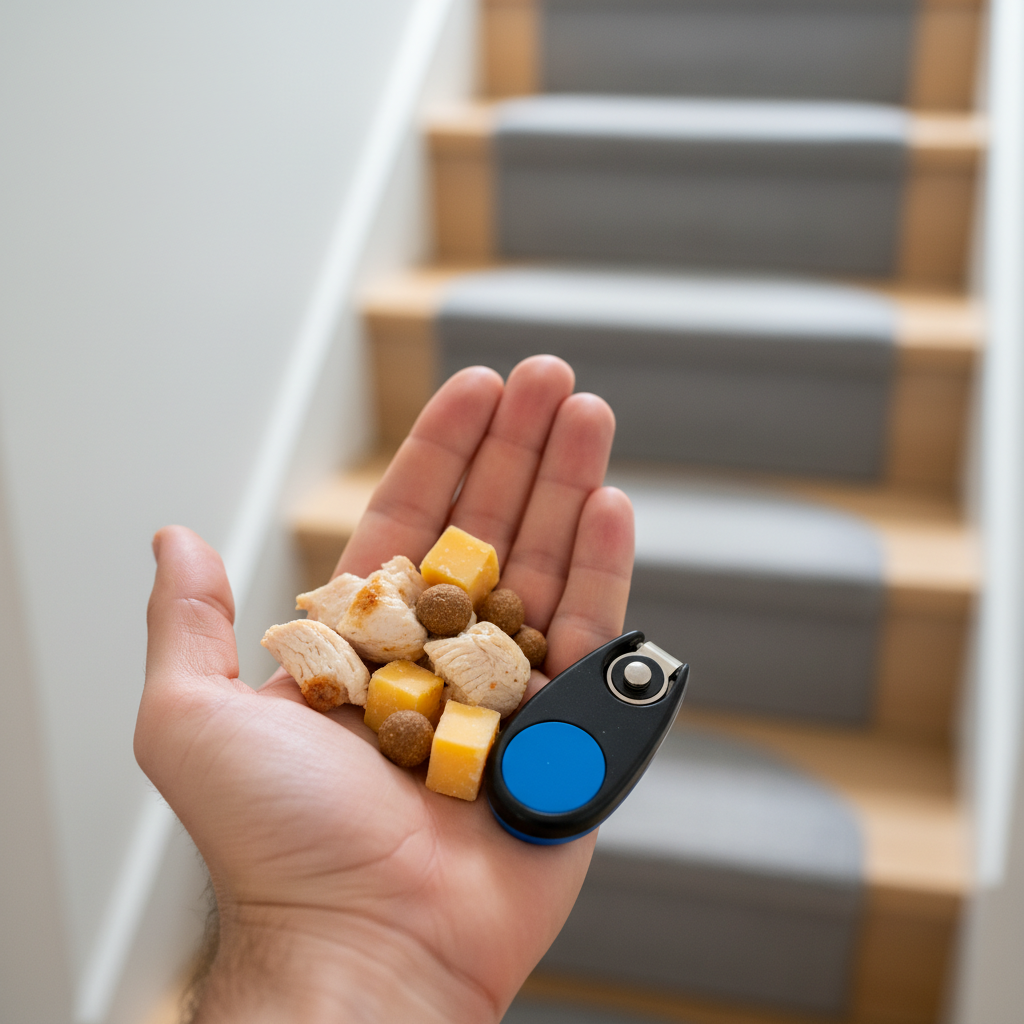
Once any medical concerns have been ruled out, you can focus on behavioral modification. Success in training is built on a foundation of solid preparation. This involves creating a safe environment and gathering the right tools to make the learning process as positive and stress-free as possible for your dog.
Make the Environment Safer
Your first task is to assess the staircase itself and make it less intimidating. Simple modifications can make a world of difference to a nervous dog.
- Improve Traction: If you have hardwood, laminate, or tile stairs, they are likely too slippery for your dog to feel secure. Add non-slip carpet treads, a full carpet runner, or even non-slip bath mats to provide secure footing.
- Increase Visibility: A dark or poorly lit stairwell can be spooky. Ensure the area is well-lit, perhaps by adding a nightlight or upgrading the overhead light fixture.
- Address Open Risers: The gaps in open-riser staircases can be very frightening, as dogs can see the drop below. If possible, temporarily block these gaps with cardboard or plywood to create the illusion of a solid staircase.
Gather Your Training Tools
This training method relies on positive reinforcement, so you’ll need the right motivators. Here’s what to have on hand:
- High-Value Treats: Standard kibble probably won’t be motivating enough. You need something special that your dog absolutely loves. Think small, soft, and smelly, such as tiny pieces of cooked chicken, cheese, hot dogs, or commercial training treats.
- A Favorite Toy: For some dogs, a beloved toy like a tug rope or fetch ball can be even more motivating than food.
- Patience and a Positive Attitude: This is your most important tool. Your dog is highly attuned to your emotional state. If you become frustrated or anxious, they will sense it, and their own anxiety will increase. Stay calm, patient, and encouraging throughout the process.
Step 1: Building Positive Associations with the Stair Area

The first step in our training plan has nothing to do with climbing stairs. The initial goal is to change your dog’s entire emotional response to being near the staircase. We need to replace feelings of fear and anxiety with feelings of happiness and relaxation through a process called counter-conditioning.
Begin by finding a distance from the stairs where your dog is completely comfortable and relaxed. This might be across the room or even just inside the doorway. From this ‘safe spot,’ engage in activities your dog loves. Play a gentle game of fetch, have a cuddle session, or simply sit on the floor and hand-feed them their dinner, piece by piece. The only rule is that good things happen when the stairs are in sight.
Over several short sessions (no more than 5-10 minutes each), gradually decrease the distance between your activity area and the stairs. For example, if you started 15 feet away, move to 12 feet, then 10 feet. The key is to move at your dog’s pace. Watch their body language closely for signs of stress, such as lip licking, yawning, or a tucked tail. If you see any of these signals, you’ve moved too quickly. Simply increase the distance again to a point where they were last comfortable and end the session on a positive note.
The goal of this step is zero pressure. Your dog should not be asked to interact with the stairs in any way. You are simply teaching them that the space around the stairs is a wonderful place where they get treats, praise, and playtime.
Step 2: Making the First Step a Destination
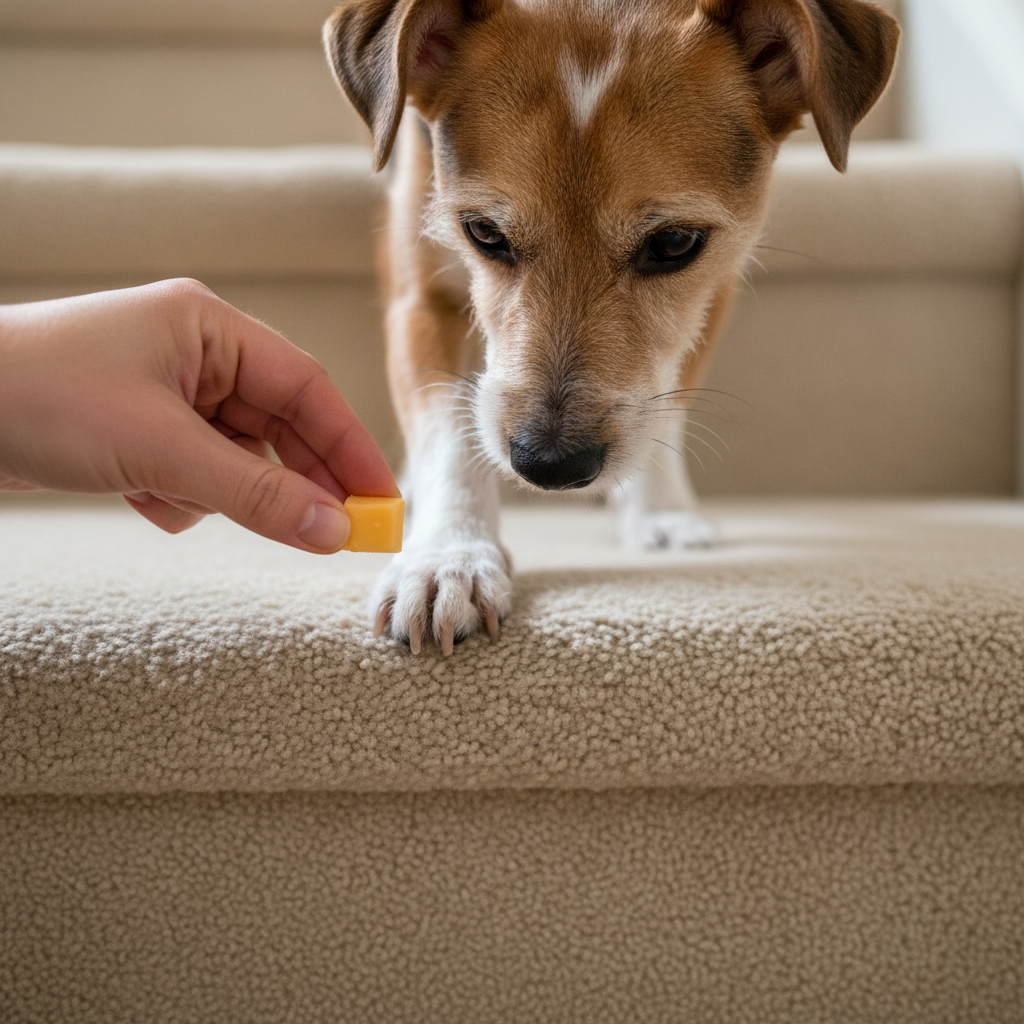
Once your dog can happily relax near the base of the stairs, you can move on to the second step: interacting with the very first step. Our goal is to make this single step a fun and rewarding destination, not an obstacle to be overcome.
Sit on the floor near the bottom step and, using a high-value treat, lure your dog closer. Don’t ask for any specific action yet. Simply reward them for showing any curiosity towards the step. If they sniff it, say “Yes!” in a happy tone and give them a treat. If they touch it with their nose, reward them. We are using a technique called ‘shaping,’ where we reward small approximations of the final desired behavior.
Next, try to encourage a paw touch. Place a treat directly on the surface of the first step. If your dog puts a paw up to get the treat, offer lots of praise and another bonus treat from your hand. If they just stretch their neck to get it, that’s okay too; try placing it slightly further back on the step next time. Repeat this process until your dog is confidently placing one or two paws on the step to get their reward. The moment they achieve this, end the session. Always aim to finish on a high note of success, leaving them wanting more.
Remember to keep these sessions extremely short—just a minute or two is plenty. Multiple short, successful sessions throughout the day are far more effective than one long, frustrating one.
Step 3: Ascending and Descending with Confidence
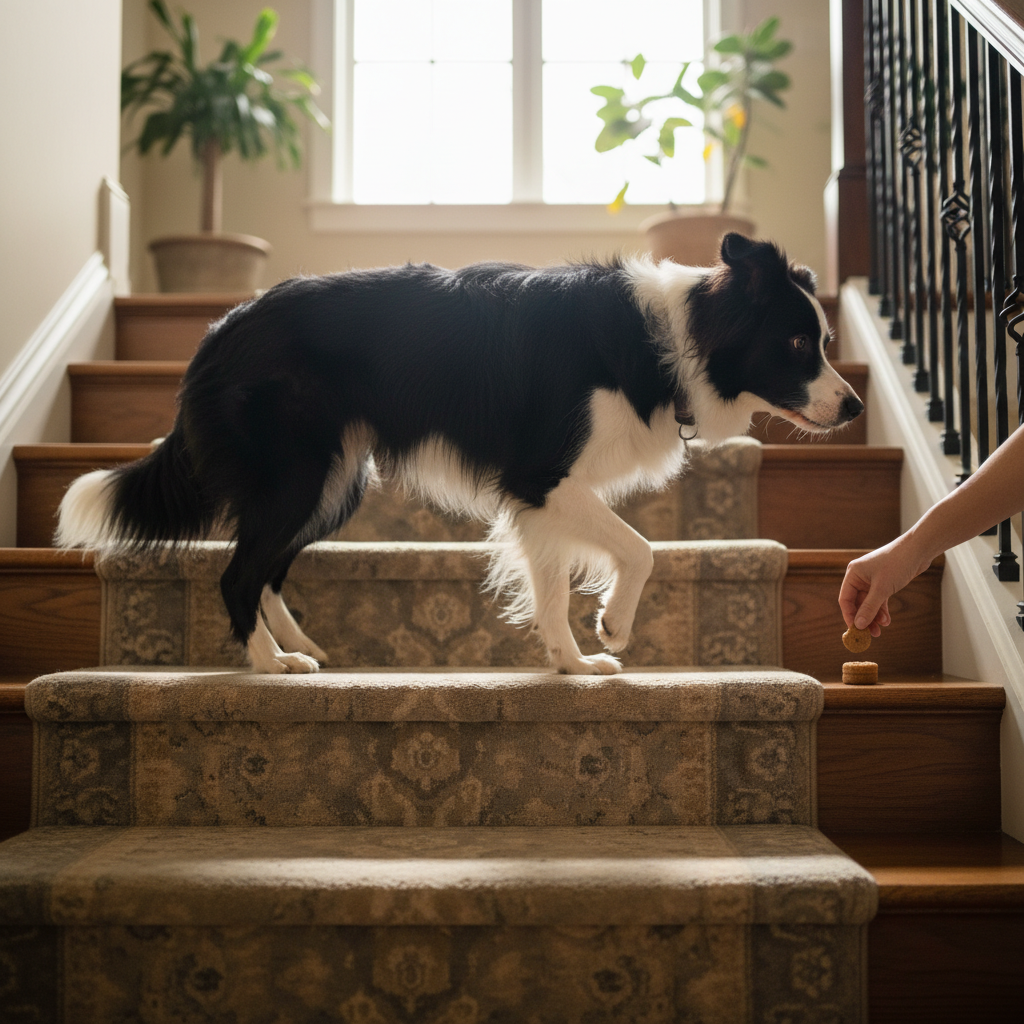
When your dog is confidently and eagerly placing their paws on the first step, you’re ready for the final step: conquering the entire staircase. This step is about building on the previous momentum, one step at a time.
Going Up
Start by placing a treat on the first step, as you did before. As your dog steps up to get it, immediately place another treat on the second step. This creates a ‘treat trail’ that encourages forward and upward movement. Lure them up one step at a time. Only go as high as your dog is comfortable. For the first session, maybe you only conquer two or three steps. That’s a huge victory! End the session there, lead them back down (or carry them if they are small and truly uncomfortable descending), and celebrate.
As your dog’s confidence grows, you can start placing treats on every other step, and eventually, just one jackpot reward at the very top. Always accompany them, walking alongside them and offering quiet verbal encouragement.
Coming Down
For many dogs, descending is more frightening than ascending due to the angle and the pull of gravity. You may need to train this separately using the same principles. Start from the top, sit on the top step with your dog, and place a treat on the step just below. Reward them for reaching down to get it. Then, lure them down to that step and place a treat on the next one. Go slowly, one step at a time. Ensure the surface has excellent grip, as the fear of slipping is most pronounced when going down.
With consistent practice, your dog will learn that stairs are just a pathway to rewards and to being with you. Eventually, you can fade the treat lures and simply reward them with praise or a single treat when they reach the top or bottom.
Troubleshooting and Common Mistakes to Avoid
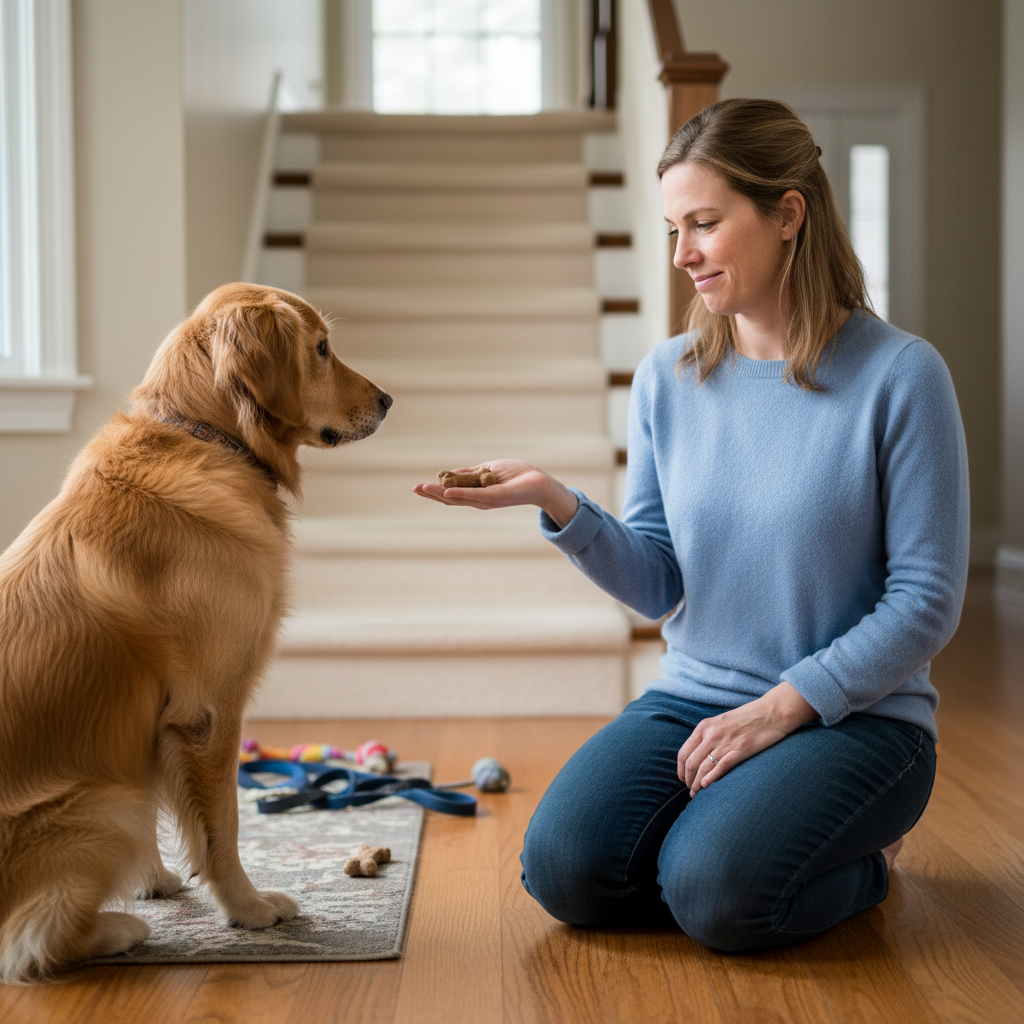
The training path is not always linear. It’s common to encounter setbacks or plateaus. Understanding how to troubleshoot these issues and avoid common pitfalls will keep you and your dog on the path to success.
What to Do If Your Dog Regresses
If your dog suddenly seems fearful again after making progress, don’t panic. This is normal. It usually means you’ve pushed a little too far, too fast. The solution is simple: go back to the last step where they were 100% confident and successful. Spend a few sessions reinforcing that step before trying to move forward again. Regression is not failure; it’s feedback.
Common Mistakes to Avoid
Steering clear of these common errors will prevent you from accidentally reinforcing your dog’s fear.
- Using Force or a Leash: Never, ever drag or pull your dog up or down the stairs on a leash. This is terrifying for them and will only confirm their belief that stairs are a dangerous and unpleasant place. It completely undermines the trust you are trying to build.
- Training for Too Long: Fearful dogs have a low threshold for stress. Keep your training sessions very short (1-5 minutes) and always end on a positive, successful repetition. This builds their confidence and keeps them engaged for the next session.
- Losing Your Patience: Your dog can read your body language and tone of voice. If you get frustrated, they will become more anxious. If you feel your patience wearing thin, it’s better to end the session calmly and try again later.
- Ignoring Signs of Stress: Learn to recognize your dog’s subtle stress signals. These include yawning when not tired, excessive lip licking, showing the whites of their eyes (‘whale eye’), and a low or tucked tail. Seeing these signs is your cue to back off and reduce the pressure.
When to Call a Professional
While this three-step method is highly effective for many dogs, severe phobias or cases linked to underlying anxiety may require expert help. If you are not making any progress, if your dog’s fear is getting worse, or if they are showing any signs of aggression, it’s time to consult a professional. Look for a Certified Professional Dog Trainer (CPDT-KA), a Certified Applied Animal Behaviorist (CAAB), or a board-certified Veterinary Behaviorist (DACVB) for guidance.
Conclusion
Helping your dog overcome a fear of stairs is a journey that requires more than just treats and technique; it requires deep patience, empathy, and a commitment to rebuilding your dog’s confidence at their own pace. By methodically following the three key steps—building a positive association with the stair area, making the first step a rewarding destination, and then confidently conquering the ascent and descent—you provide your dog with a clear, stress-free path to success. Always remember to rule out underlying medical issues first and to keep your training sessions short, positive, and free of pressure.
This process is not just about solving a logistical problem in your home. It is a powerful opportunity to deepen the bond of trust between you and your canine companion. By showing them you are a safe, patient leader who will help them navigate scary situations, you are strengthening your relationship in a profound way. Celebrate every small victory, and soon you’ll see your once-fearful friend confidently trotting up and down the stairs beside you.