Groomer Secrets: Get Your Dog to LOVE the High-Velocity Dryer
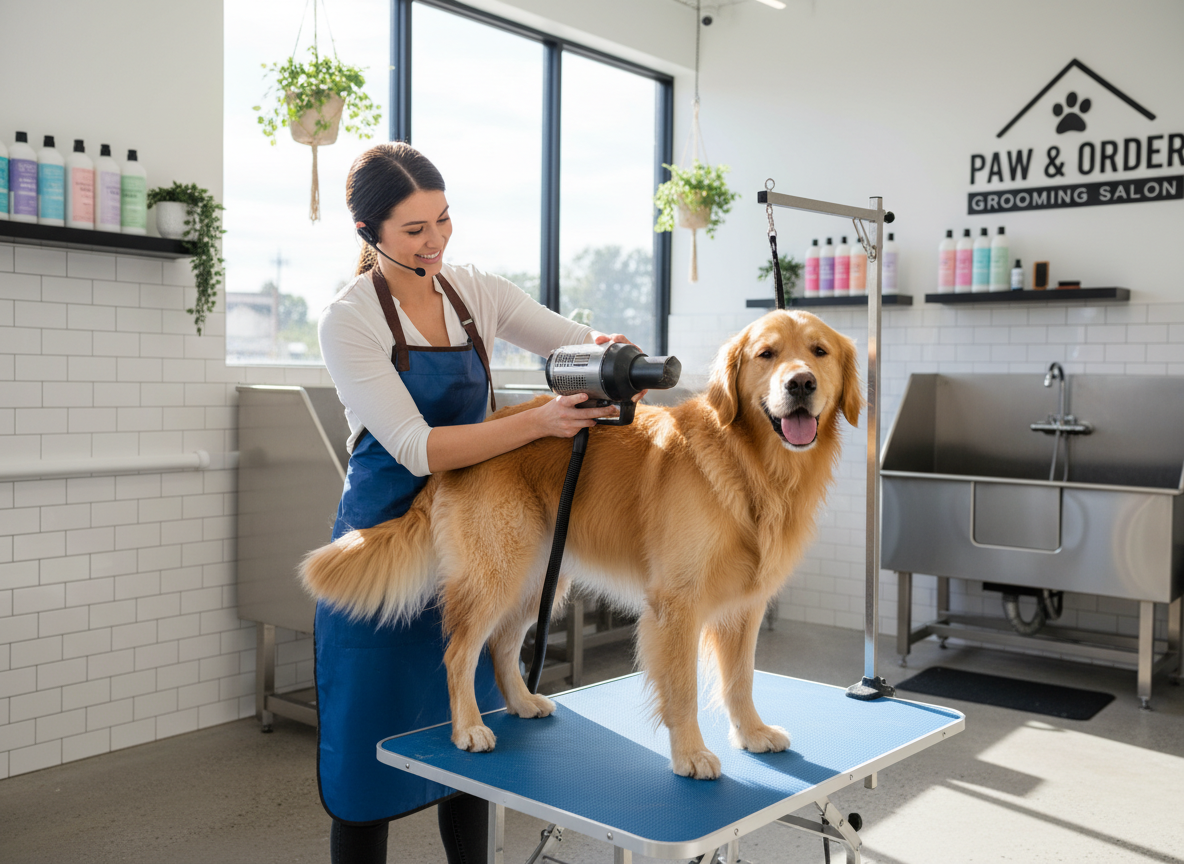
The sudden, powerful roar of a high-velocity dryer can be one of the most stressful experiences for a dog during grooming. For many pet owners, the struggle to dry their dog after a bath is a familiar one, often ending in a wet house and a stressed-out companion. This intense fear isn’t an act of defiance; it’s a genuine reaction to a sensory overload of loud noise and strange, powerful sensations. However, what professional groomers know is that this fear can be overcome. With the right techniques, you can not only get your dog to tolerate the dryer but to actually accept it as a calm, normal part of their routine.
This guide will walk you through the exact step-by-step desensitization and counter-conditioning protocol used by experts. We will delve into the psychology behind your dog’s fear and provide a clear, actionable plan to replace anxiety with positive associations. By approaching this challenge with patience and understanding, you can transform a dreaded task into a powerful trust-building exercise, strengthening the bond you share with your dog while achieving a professional-quality groom at home.
Understanding the Fear: Why the High-Velocity Dryer is So Intimidating
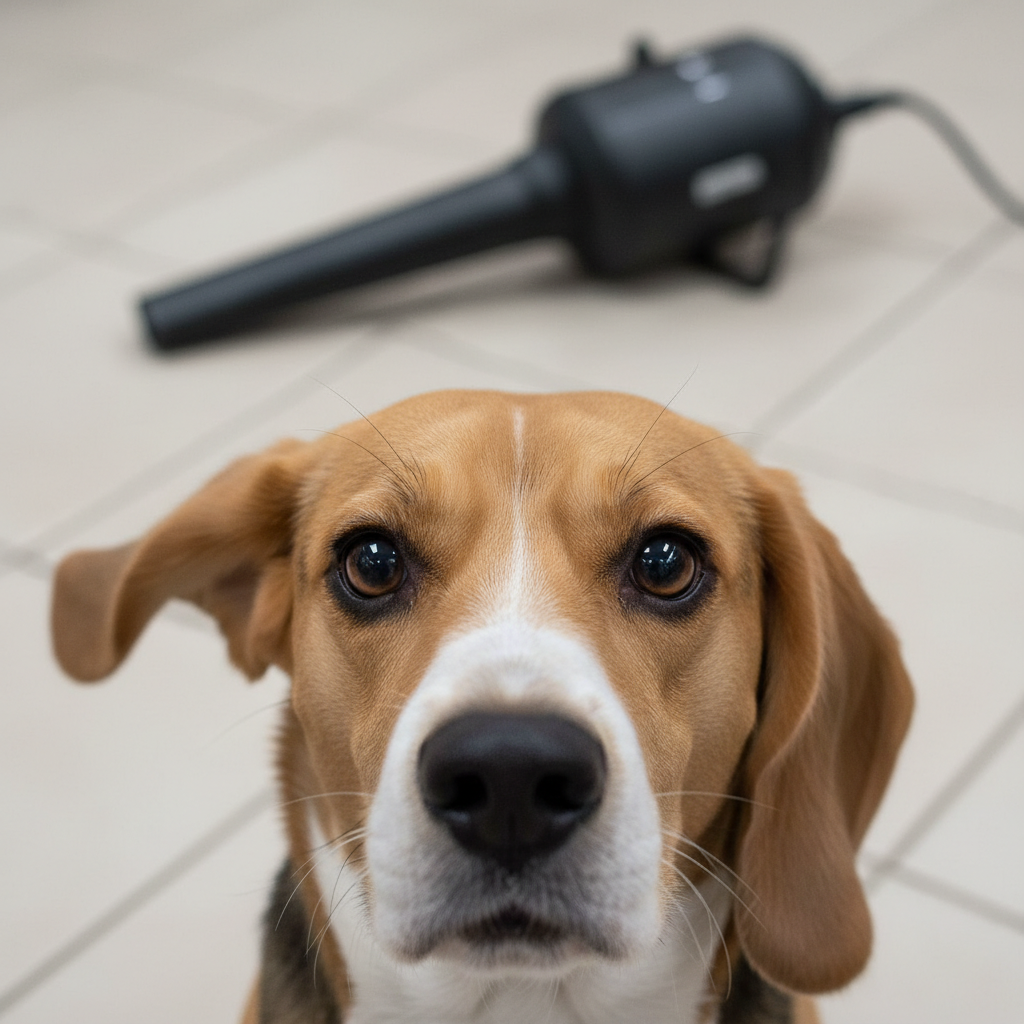
Before we can solve the problem, we must first understand it from a canine perspective. A dog’s reaction to the high-velocity dryer is not arbitrary; it’s rooted in their sensitive biology and past experiences. To them, this machine can feel like a genuine threat, triggering a fight-or-flight response.
The Overwhelming Sound
A dog’s sense of hearing is exponentially more sensitive than ours. They can detect a wider range of frequencies and hear sounds at much greater distances. A high-velocity dryer can operate at 80 decibels or more, which is comparable to a lawnmower or a busy city street. For a dog, this sound isn’t just loud—it’s an all-encompassing roar that can be physically uncomfortable and disorienting. The high-pitched whine of the motor can be particularly grating on their sensitive ears, making it impossible to relax.
The Unnatural Sensation
Unlike the gentle warmth of a human hairdryer, a high-velocity dryer works by blasting water off the coat with force. This intense, concentrated stream of air is an alien sensation for a dog. It can feel jarring and invasive, especially on sensitive areas like the ears, face, and paws. If a dog has never experienced this before, the sudden, powerful pressure can be interpreted as a threat, causing them to panic and try to escape.
Negative Past Associations
For many dogs, the dryer is the final, unpleasant step in a grooming process they may already find stressful. If their previous encounters with bathing and drying involved being held down, rushed, or handled impatiently, they will build a powerful negative association. The mere sight or sound of the dryer can become a trigger, signaling that an unpleasant experience is about to happen. Breaking this cycle requires creating a new set of positive memories to overwrite the old, fearful ones.
Preparing for Success: Your Essential Toolkit
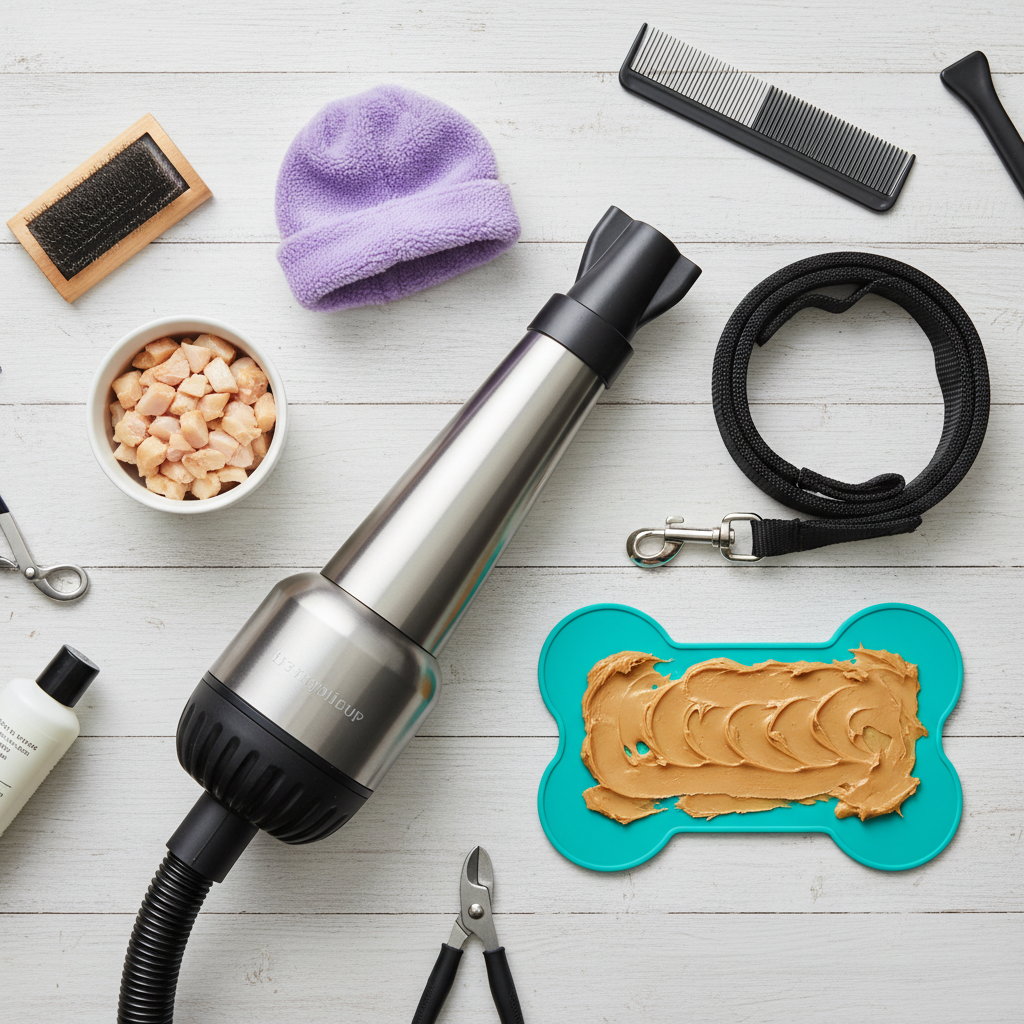
Successful training begins with proper preparation. Having the right tools on hand not only makes the process more effective but also ensures your dog’s safety and comfort. Before you begin your first session, gather the following items to set the stage for a positive experience.
- High-Velocity Dryer with Adjustable Settings: This is non-negotiable. You must have a dryer with variable speed and heat controls. Starting on the lowest possible setting is the cornerstone of this entire process. A single-speed, overpowering dryer will make desensitization nearly impossible.
- High-Value Treats: Standard kibble won’t be enough to counteract a significant fear. You need special, highly motivating rewards. Think small, soft, and smelly: boiled chicken, small pieces of cheese, freeze-dried liver, or commercial training treats.
- A Secure, Non-Slip Surface: A professional grooming table with an arm and loop is ideal for keeping your dog safe and stationary. If you don’t have one, a sturdy table or countertop with a non-slip bath mat can work, provided you have a way to safely tether your dog to prevent falls.
- Ear Protection: Protecting your dog’s sensitive hearing is crucial. A ‘Happy Hoodie’ is a soft, expandable fabric tube that fits over the dog’s head and ears, muffling sound significantly. Alternatively, you can gently place cotton balls in the ears (not too deep!) to help reduce the noise.
- Lick Mat or Puzzle Toy: These tools are excellent for creating a lasting positive association. Smear a lick mat with peanut butter (xylitol-free) or dog-safe yogurt and let your dog work on it while the dryer is running in the background.
- Patience and a Positive Mindset: This is the most important tool of all. Your dog will feed off your energy. If you are stressed, anxious, or frustrated, they will be too. Commit to the process, celebrate small victories, and always end each session on a positive note.
The Step-by-Step Desensitization Protocol: From Fear to Acceptance
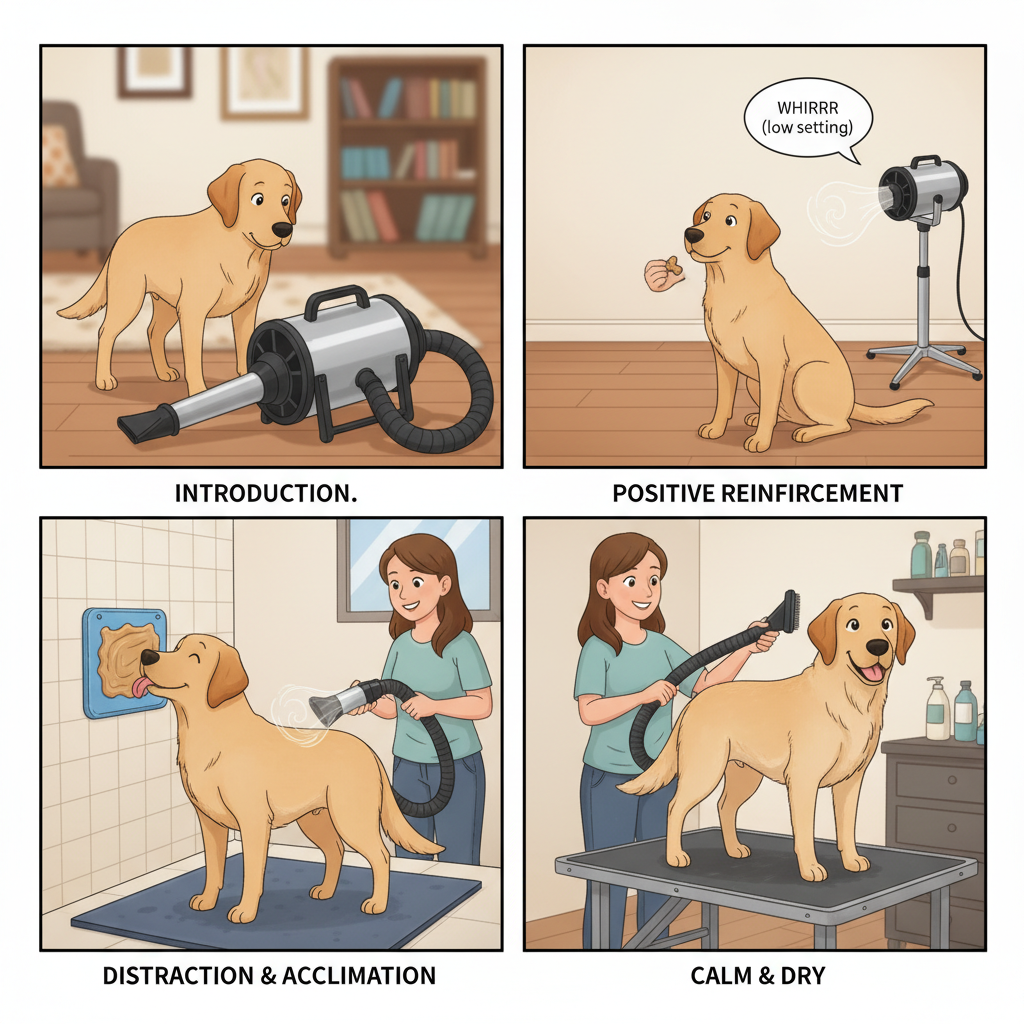
This protocol is designed to be slow, methodical, and always guided by your dog’s comfort level. Each phase may take several sessions over days or even weeks. The golden rule is to never proceed to the next step until your dog is completely calm and comfortable with the current one. Keep sessions short—5 to 10 minutes at most—to maintain a positive attitude and prevent fatigue.
Phase 1: Introduction to the Object (Dryer Off)
The goal here is simple: teach your dog that the dryer’s presence is not a threat. Place the turned-off dryer on the floor in a neutral room. Let your dog approach and investigate it at their own pace. When they sniff it, look at it, or show any calm curiosity, praise them and give them a high-value treat. Do not force interaction. Repeat this for several short sessions until the dryer is just another boring object in the room.
Phase 2: Creating a Positive Association (Dryer Still Off)
Now, we actively build a positive connection. Sit on the floor with the dryer. Touch the dryer yourself, then immediately give your dog a treat. Pick up the hose or nozzle, and give a treat. The sequence is always: interact with dryer, then reward dog. This teaches them that good things happen when you touch the machine. You can also start feeding your dog their meals near the silent dryer to normalize its presence.
Phase 3: Introducing Sound (Lowest Setting, Greatest Distance)
This is a critical step. With your dog at a comfortable distance (across the room is a good start), turn the dryer on its absolute lowest setting for just one second, then immediately turn it off. Toss a handful of high-value treats on the floor. This is called a ‘treat party’. The scary sound is immediately followed by a wonderful surprise. Repeat this several times. Over many sessions, you can gradually increase the duration from one second to three, then five, always following with a reward. Using a lick mat during this phase can be extremely effective.
Phase 4: Introducing Airflow (Lowest Setting)
Once your dog is calm with the sound from a distance, you can begin introducing the sensation of air. With the dryer on its lowest setting, point the nozzle away from your dog and let them feel the ambient airflow. Reward their calm behavior. Next, briefly direct the air onto your own hand or leg before quickly touching their back or rump (less sensitive areas) with the airflow for only a moment. Immediately reward. Keep the nozzle moving and the exposure extremely brief. The goal is to show them the sensation is not harmful.
Phase 5: Gradual Progression and Integration
This final phase involves slowly bringing all the elements together. Gradually decrease the distance between the dog and the dryer during the ‘sound’ phase. Slowly increase the power setting, one small increment at a time, always watching your dog’s body language. If they show stress, you have moved too fast; go back to the previous step where they were successful. Begin using the dryer for its intended purpose after a bath, but start by drying just one small, non-sensitive patch on their back for 10-15 seconds. Then, stop, reward them, and finish the job with a towel. Each grooming session, you can attempt to dry a slightly larger area. This methodical, success-oriented approach builds a foundation of trust that will last a lifetime.
Decoding Canine Communication: When to Push and When to Pause
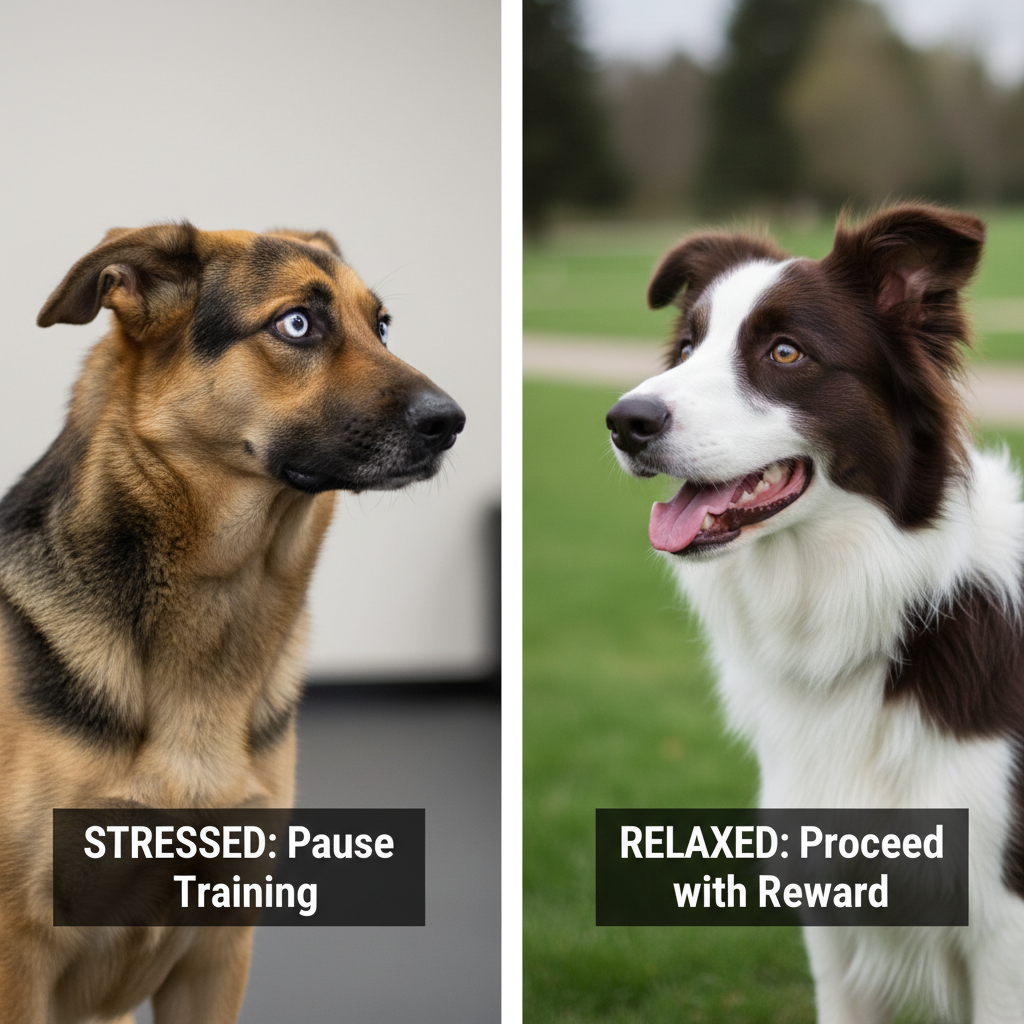
Your dog is constantly communicating with you through their body language. Learning to read these signals is the most important skill for successful and humane training. It tells you when your dog is comfortable and ready to proceed, and more importantly, when they are becoming stressed and you need to stop. Pushing a dog past their threshold—the point where they become overwhelmed—will erase your progress and deepen their fear.
Your dog’s comfort dictates the pace of training. Never force the process; forcing creates fear, while patience builds trust and a reliable partnership.
Pay close attention to these subtle cues. A calm dog is receptive to learning, while a stressed dog is in a state of survival and cannot process the training session positively. Use the following table as a guide to interpret your dog’s emotional state during the desensitization process.
| Signs of Stress (Pause and Go Back a Step) | Signs of Comfort (Continue and Reward) |
|---|---|
| Lip licking or nose licking | Relaxed, soft mouth (may be slightly open) |
| Yawning when not tired | Soft, relaxed eyes; normal blinking |
| ‘Whale eye’ (showing the whites of the eyes) | Neutral or wagging tail with a relaxed body posture |
| Panting when not hot or thirsty | Willingly and gently taking treats |
| Tucked tail | Leaning into you or showing relaxed interest |
| Pinned-back ears | Ears in a neutral, natural position |
| Freezing or becoming suddenly still | Loose, wiggly body movements |
| Frantically trying to move away or escape | Engaging with lick mat or puzzle toy |
Troubleshooting: Navigating Common Roadblocks
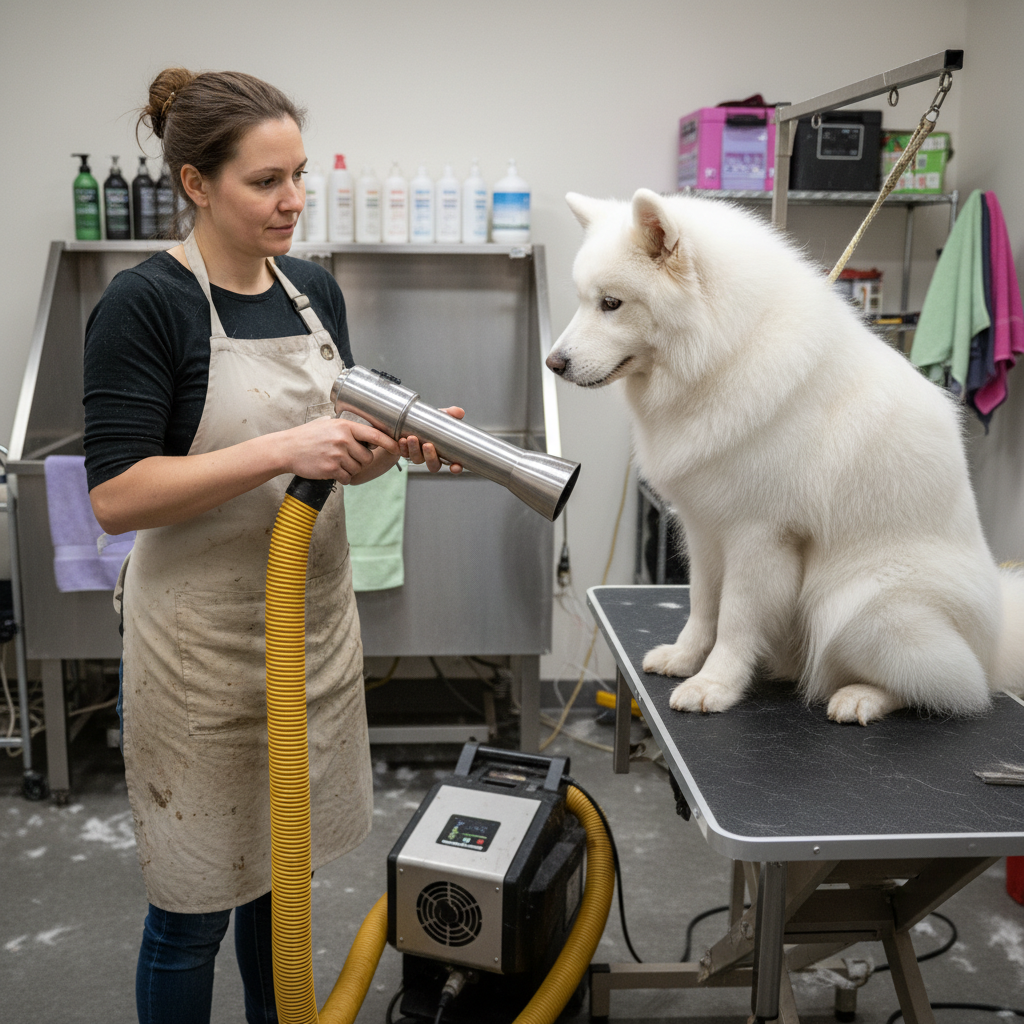
Even with the best plan, you may encounter challenges. This is a normal part of the training process. The key is to address these issues with patience and a strategic adjustment, rather than frustration. Here are solutions to some of the most common roadblocks.
Challenge: ‘My dog panics at the sound, no matter the distance.’
Solution: The sound is the primary trigger. You need to desensitize to the sound even more gradually. Try recording the sound of the dryer on your phone. Play it back at the lowest possible volume while feeding your dog a special meal. Over many days, slowly increase the volume. You can also try muffling the actual dryer by placing it in another room with the door closed, letting only a faint noise through while you do treat sessions. The goal is to find a volume level your dog can tolerate and slowly build from there.
Challenge: ‘My dog is fine with the sound, but hates the feeling of the air.’
Solution: This is an issue with the sensation. Go back to Phase 4 and break it down further. Start with the dryer on, but the nozzle pointed completely away, so there is only indirect, gentle airflow in the room. Reward this. Then, progress to directing the airflow onto the floor near your dog, then onto their bed. Only after they are comfortable with that should you try to direct it at their body from a great distance, for only a split second. Make the sensation so subtle at first that it’s barely noticeable.
Challenge: ‘He tolerates his body being dried, but freaks out near his paws, tail, or face.’
Solution: This is very common as these are highly sensitive areas. You have two options. First, you can repeat the entire desensitization process specifically for these body parts, using even higher value treats and shorter sessions. Second, you can practice ‘cooperative grooming’. This may mean using the high-velocity dryer for the main body and then switching to a quieter, less powerful human hairdryer (on a cool setting) or a highly absorbent towel for the sensitive spots. Success is not about forcing the dog to accept everything; it’s about finding a compromise that works for both of you and keeps the experience positive.
Conclusion
Teaching your dog to love, or at least calmly accept, the high-velocity dryer is a journey of patience, observation, and partnership. It is far more than a simple grooming task; it is a profound exercise in building trust and communication with your canine companion. By consistently applying the principles of positive reinforcement and respecting your dog’s emotional thresholds, you are not just working towards a dry coat—you are investing in a stronger, healthier relationship.
Remember the core tenets of this process: go slow, break down the challenge into manageable steps, and always end on a positive note. Every calm moment your dog spends in the presence of the dryer is a victory worth celebrating. Over time, the intimidating roar will fade into the background, replaced by an association of tasty rewards, gentle handling, and the security of a trusted handler. With these professional secrets now in your hands, you have the power to transform grooming from a source of dread into a peaceful and productive part of your life together.