Embarrassing Walks? Stop Jumping on Strangers Instantly

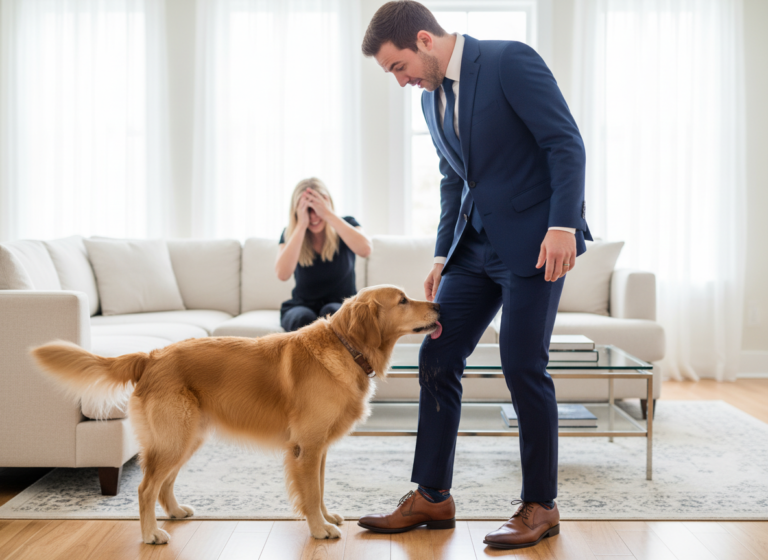
The scenario is all too familiar for many dog owners: you’re enjoying a pleasant walk when you spot someone approaching. Your heart rate quickens, not with excitement, but with dread. You brace yourself as your friendly, lovable dog transforms into a four-legged pogo stick, launching themselves at the unsuspecting stranger. The apologies, the tangled leash, the feeling of embarrassment—it can turn a relaxing stroll into a stressful ordeal. If this sounds like your daily reality, you are not alone, and there is a solution.
Jumping is often a misunderstood behavior. It’s rarely born from aggression; instead, it’s typically an overzealous, socially awkward attempt at a greeting. Your dog is simply saying ‘hello’ in the most enthusiastic way they know how. The challenge, and our goal, is to teach them a more appropriate, polite way to express that excitement. This guide will provide a comprehensive, step-by-step protocol rooted in modern, positive reinforcement techniques. We will move beyond simply stopping the jump and focus on building a foundation of self-control and reliable obedience, transforming your embarrassing walks into moments of pride and connection with your canine companion.
Why Your Dog Jumps on Strangers: Decoding the Behavior

Before we can correct a behavior, we must first understand its origin. A dog that jumps on people is not being ‘bad’ or ‘dominant’; they are communicating. By decoding the ‘why’ behind the jump, we can address the root cause rather than just suppressing the symptom. This understanding is the critical first step in our training journey.
The Overly Enthusiastic Greeting
For most dogs, especially young and energetic ones, jumping is a primary form of greeting. In the canine world, dogs often greet each other face-to-face. Jumping up is their attempt to get closer to a human’s face to say hello. They are expressing pure, unadulterated joy and excitement at the prospect of a new interaction. It’s a social call, albeit a clumsy one by human standards.
A Learned Behavior Through Accidental Reinforcement
Consider how people have reacted to your dog’s jumping in the past. Even a negative reaction, like pushing the dog down and shouting ‘No!’, is still a form of attention. For a dog craving interaction, any attention can be reinforcing. If strangers have ever laughed, patted your dog mid-jump, or engaged in any way, they have inadvertently rewarded the behavior. The dog quickly learns: Jumping = Attention and Interaction. Our goal is to break this cycle and teach them that Calmness = Attention and Interaction.
Boredom and Pent-Up Energy
A dog that is not receiving enough physical exercise or mental stimulation is more likely to exhibit unruly behaviors like jumping. The excitement of seeing a new person provides a massive outlet for all that stored energy. A walk might be the most exciting part of their day, and their inability to contain that energy manifests as jumping. Ensuring your dog has appropriate outlets for their energy through exercise, puzzle toys, and training can significantly lower the intensity of their greetings.
Expert Insight: Remember, you are not correcting a ‘bad’ dog. You are teaching a socially inexperienced dog the polite ‘language’ of human interaction. Patience and empathy are your most powerful tools.
Gearing Up for Success: Essential Training Equipment

Effective training begins with having the right tools. The goal of this equipment is not to punish or physically force your dog into submission, but to provide you with better management, control, and communication. Using the correct gear sets both you and your dog up for success and ensures training sessions are safe, productive, and positive.
The Right Harness and Leash Combination
The equipment connected to your dog is your primary line of communication on a walk. Choosing wisely is paramount.
- Front-Clip Harness: Unlike traditional collars that can cause choking or tracheal damage when a dog pulls or lunges, a front-clip harness is a game-changer. When the leash is attached to a ring on the dog’s chest, any forward-pulling motion gently redirects their body back towards you. This discourages pulling and gives you significantly more control without causing pain or discomfort.
- Standard 6-Foot Leash: A simple, sturdy 6-foot leash made of leather or nylon is the professional standard. It provides enough room for your dog to explore comfortably but is short enough to allow for quick, effective management. Avoid retractable leashes. They teach dogs to pull and offer almost no control in sudden situations, making them dangerous for this type of training.
High-Value Rewards
To change a behavior, you must offer something more appealing than the reward the dog gets from the behavior itself. In this case, you need a treat that is more exciting than the thrill of jumping on a new person.
- What are High-Value Treats? These are not your dog’s everyday kibble. Think small, soft, smelly, and delicious morsels like boiled chicken, small pieces of cheese, commercial training treats, or freeze-dried liver. The ‘smellier,’ the better, as it will hold your dog’s attention more effectively.
- Treat Pouch: Fumbling in your pockets for treats is inefficient and can cause you to miss the crucial moment to reward good behavior. A simple treat pouch that clips to your belt or waistband allows for instant access, ensuring you can deliver a reward the second your dog makes the right choice.
The ‘Four on the Floor’ Method: Your Step-by-Step Training Protocol
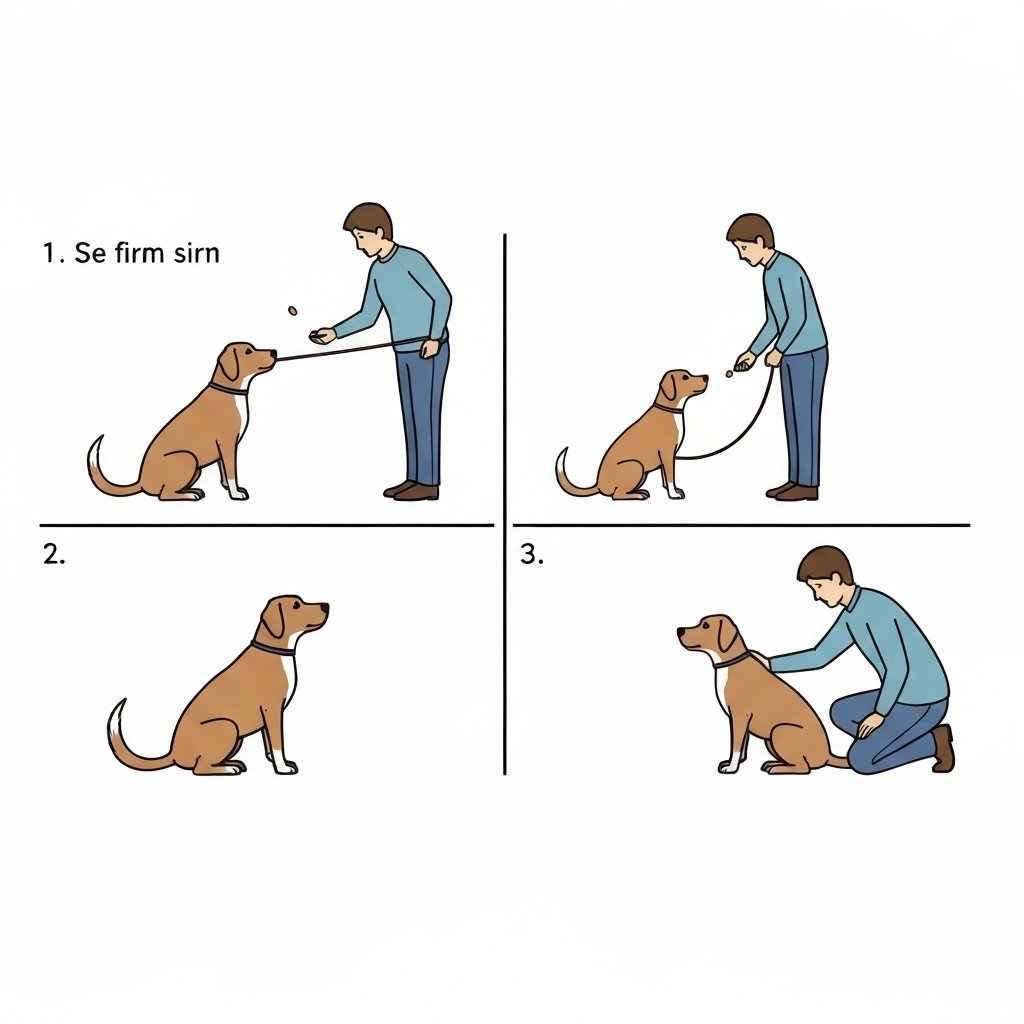
This is the core of our training program. The ‘Four on the Floor’ method is a systematic process that teaches your dog an alternative, incompatible behavior to jumping. Instead of jumping up, they will learn that keeping all four paws on the ground is what earns them the attention they crave. This requires consistency, patience, and a controlled setup to begin.
Step 1: Master the Alternative Behavior at Home
Before you can ask for a behavior in a distracting environment, your dog must be an expert at it in a quiet one. The best alternative to jumping is a solid ‘Sit’.
Practice ‘Sit’ in short, fun sessions throughout the day in your home and yard. Reward generously for fast, enthusiastic sits. You want this behavior to be an automatic, default response.
Step 2: The Controlled Setup
You cannot effectively train in the middle of a real-world, unpredictable encounter. You must control the variables. Enlist a patient friend, family member, or neighbor to act as the ‘stranger’. Instruct them on their role beforehand: they must completely ignore the dog if it jumps (no talking, no touching, no eye contact) and only offer calm praise when the dog is sitting.
Step 3: Finding the Threshold
With your dog on their harness and leash, stand on the sidewalk or in your front yard. Have your helper ‘stranger’ start walking towards you from a distance. Watch your dog’s body language closely. The ‘threshold’ is the exact distance at which your dog notices the person and begins to show excitement (e.g., ears forward, tense body, whining) but has not yet started jumping or lunging. This is your training zone.
Step 4: The Engage-Disengage Game
When you reach the threshold, stop. The moment your dog looks at the approaching person, say ‘Yes!’ and reward them with a high-value treat. The goal is to reward them for simply noticing the person calmly. After they eat the treat, they will likely look back at the person. Repeat. You are teaching your dog that the sight of a person predicts a delicious treat from you, making you more interesting than the stranger.
Step 5: Asking for the ‘Sit’
As your helper gets a little closer (but still outside the jumping zone), ask your dog for a ‘Sit’. Because you’ve practiced this extensively, they should comply. The moment their rear hits the ground, reward them lavishly. If they are too excited to sit, you are too close to the stranger. Simply increase the distance and try again. Do not proceed until you get a calm sit.
Step 6: The Polite Greeting
Once your dog can hold a sit as the stranger approaches, allow the stranger to come closer. Their reward for sitting is that the person will now greet them. The stranger should approach and offer a calm pat under the chin, speaking in a low voice. The instant the dog’s paws leave the ground to jump, the stranger must immediately and silently turn and walk away. This is a non-negotiable rule. The dog learns that jumping makes the fun person disappear, while sitting makes them appear. Repeat this process in short, successful increments.
Proofing the Behavior: From Quiet Streets to Busy Parks
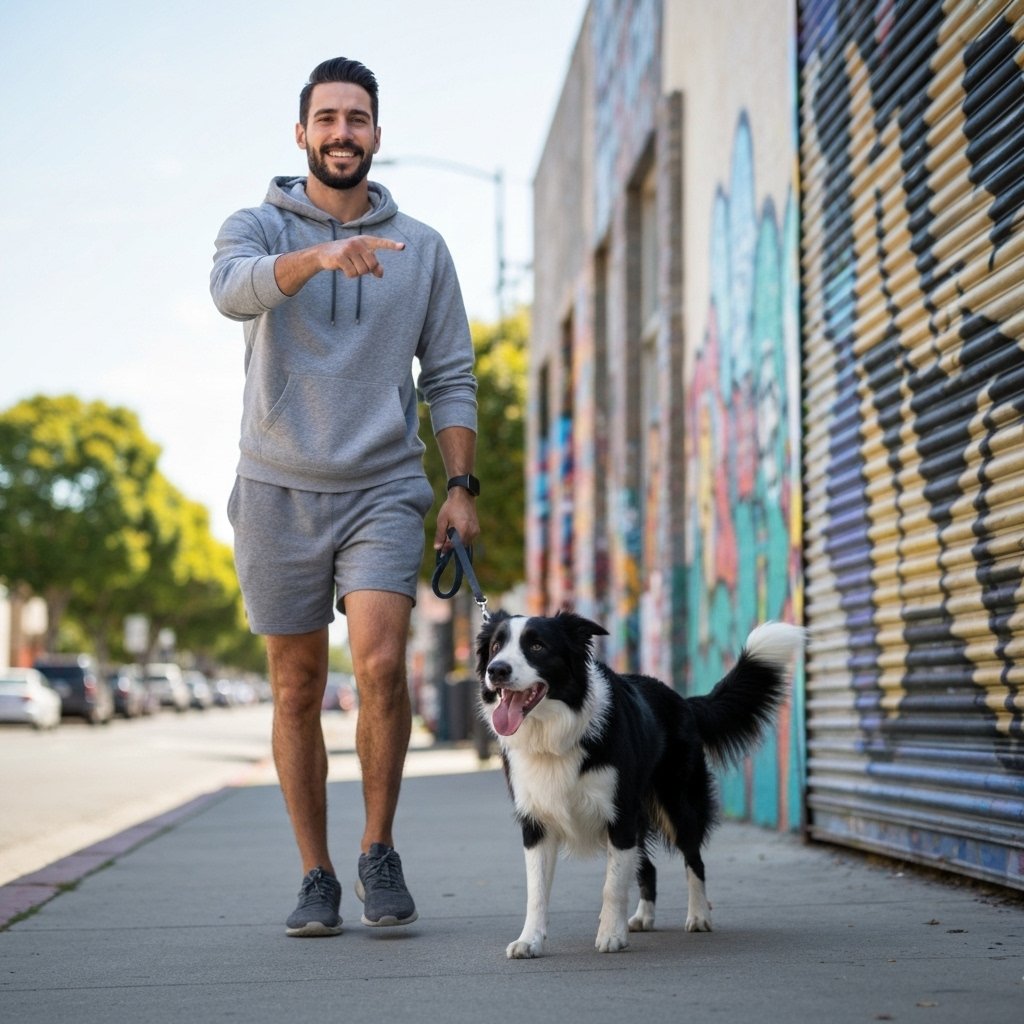
Once your dog has mastered polite greetings in a controlled setup, it’s time to ‘proof’ the behavior. Proofing is the process of generalizing a learned skill to different environments and with varying levels of distraction. A dog who can sit politely for a planned visitor may still struggle when surprised by a jogger. This phase is about building reliability in the real world.
Gradually Increasing the Challenge
The key to successful proofing is gradual progression. Do not go from practicing in your driveway directly to a crowded farmer’s market. Each step should only be slightly more challenging than the last. A sample progression might look like this:
- Your quiet residential street during a low-traffic time.
- A slightly busier street with more pedestrians.
- The sidewalk outside of a local park, at a distance from the main entrance.
- Closer to the park entrance, where people are coming and going.
- A pet-friendly outdoor shopping area during a non-peak hour.
If at any stage your dog begins to fail consistently, simply take a step back to the previous level of difficulty where they were successful and practice there a bit more before trying to advance again.
The ‘Emergency U-Turn’
You need a foolproof escape plan for situations that are too overwhelming. The ‘Emergency U-Turn’ is a simple maneuver that allows you to quickly create distance. When you see a trigger that you know your dog isn’t ready for, cheerfully say ‘This way!’ and immediately turn 180 degrees and walk briskly in the opposite direction. Give your dog a treat once you are moving away together. This is not a punishment; it’s a management technique that prevents your dog from practicing the unwanted jumping behavior and teaches them to follow your lead.
Using the Environment as a Training Tool
Don’t just avoid distractions; use them. Find a bench a safe distance from a busy path. Sit with your dog and play the ‘Engage-Disengage’ game. Every time a person or dog walks by and your dog looks at them, then looks back at you, reward them. You are teaching them that even in a highly distracting environment, focusing on you is the most rewarding thing they can do. This builds incredible attention and strengthens your bond, making you the center of their universe, even when the world is exciting.
Troubleshooting Common Training Hurdles
Even with the best plan, training is rarely a straight line. Setbacks are normal, but understanding how to navigate them is what separates frustration from success. Here are some of the most common hurdles owners face and how to overcome them.
‘My dog is just too excited to listen!’
This is almost always a sign that you are working ‘over threshold.’ You are too close to the distraction, and your dog’s brain is too flooded with excitement to process commands. The solution is simple: create more distance. If your dog can’t sit when a person is 10 feet away, try from 20 or 30 feet. Find the distance where your dog can succeed, and work there. Also, evaluate your treats. Kibble won’t cut it. You need exceptionally high-value rewards to compete with the excitement of a new person.
‘Well-Meaning Strangers Sabotage Our Training.’
This is a major challenge. People who say ‘Oh, I don’t mind!’ as your dog jumps all over them are unintentionally rewarding the behavior. You must become your dog’s advocate. Be proactive and polite. As someone approaches, put your hand up in a friendly ‘stop’ gesture and say with a smile, ‘We’re training, so please ignore him unless he’s sitting!’ This communicates your needs clearly and politely. Most people are happy to help when they know what to do.
‘It’s not working ‘instantly’ like the title promised!’
The desire for a quick fix is understandable, but dog training is a process of changing ingrained habits. ‘Instantly’ refers to the application of the technique—the moment the dog jumps, the reward (the person) instantly vanishes. The lasting results, however, come from consistent repetition. Every time you prevent a jump or reward a sit, you are strengthening a new neural pathway in your dog’s brain. Be patient and celebrate small victories. Progress is not always linear, but consistency will always win.
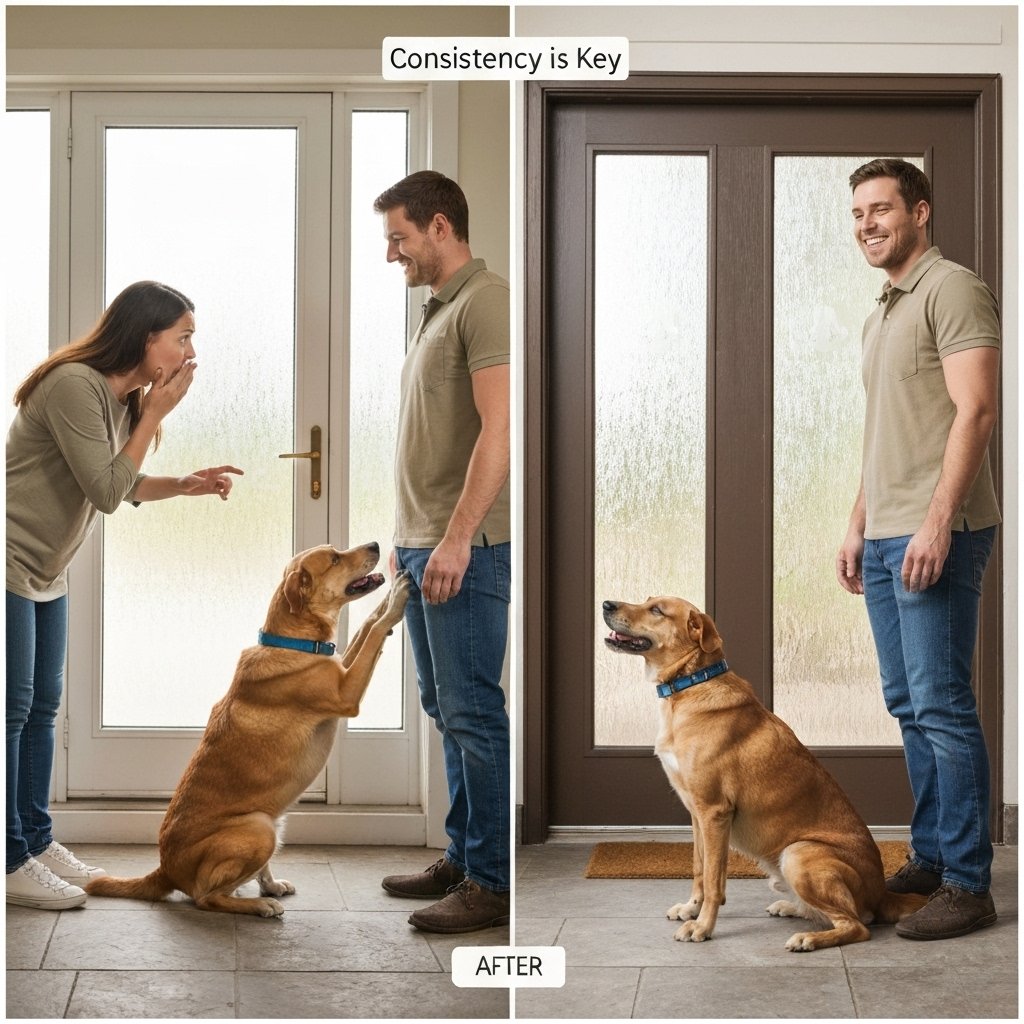
Inconsistency Among Family Members
If one person in the household is following the training plan, but another allows the dog to jump, the dog will receive confusing mixed messages, and the training will fail. It is critical that everyone who interacts with the dog is on the same page. Hold a family meeting, explain the rules clearly, and stress the importance of 100% consistency. The rule is simple: attention is given only when four paws are on the floor.
Conclusion
Transforming your dog’s frantic jumping into polite greetings is more than just a matter of convenience; it’s a profound act of communication and leadership. By investing the time to understand your dog’s motivations and consistently applying these positive training methods, you are not just eliminating an embarrassing habit. You are building a deeper bond based on mutual respect and clear communication. You are teaching your dog the essential life skill of self-control, which will benefit them in all aspects of their life.
Remember the core principles: manage the environment to prevent failure, teach and heavily reward an alternative behavior like ‘Sit,’ and be a patient, consistent leader. Every successful greeting, no matter how small, is a victory. The peaceful, enjoyable walks you’ve been dreaming of are not a distant fantasy; they are an achievable reality. With dedication and the right approach, you can step out your front door with confidence, proud of the well-mannered, happy companion by your side.