Drills & Hammers: Calming a Dog Terrified of Renovation Noise
The excitement of a home renovation—the promise of a new kitchen, an updated bathroom, or a finished basement—is often overshadowed by the reality of the process: noise, dust, and disruption. For pet owners, this disruption extends to our canine companions, who can find the cacophony of drills, saws, and hammers profoundly terrifying. A dog’s fear of loud noises is not just a minor inconvenience; it is a genuine state of distress known as noise phobia or noise aversion, which can have significant impacts on their well-being. Their world, once predictable and safe, is suddenly filled with threatening sounds they cannot understand or escape.
This guide is designed to provide you with a professional, authoritative framework for understanding, managing, and mitigating your dog’s fear of renovation noise. We will move beyond simple tips and delve into the behavioral science behind noise phobia, offering a structured, step-by-step approach to help your dog cope. From proactive preparation before the first hammer swings to long-term behavioral modification techniques and in-the-moment management strategies, you will gain the tools necessary to transform your home renovation from a period of terror into a manageable experience for your beloved pet. Your role as a calm, confident leader is paramount, and this article will empower you to fulfill that role effectively.
Understanding Canine Noise Phobia: Why Renovation Sounds are So Terrifying
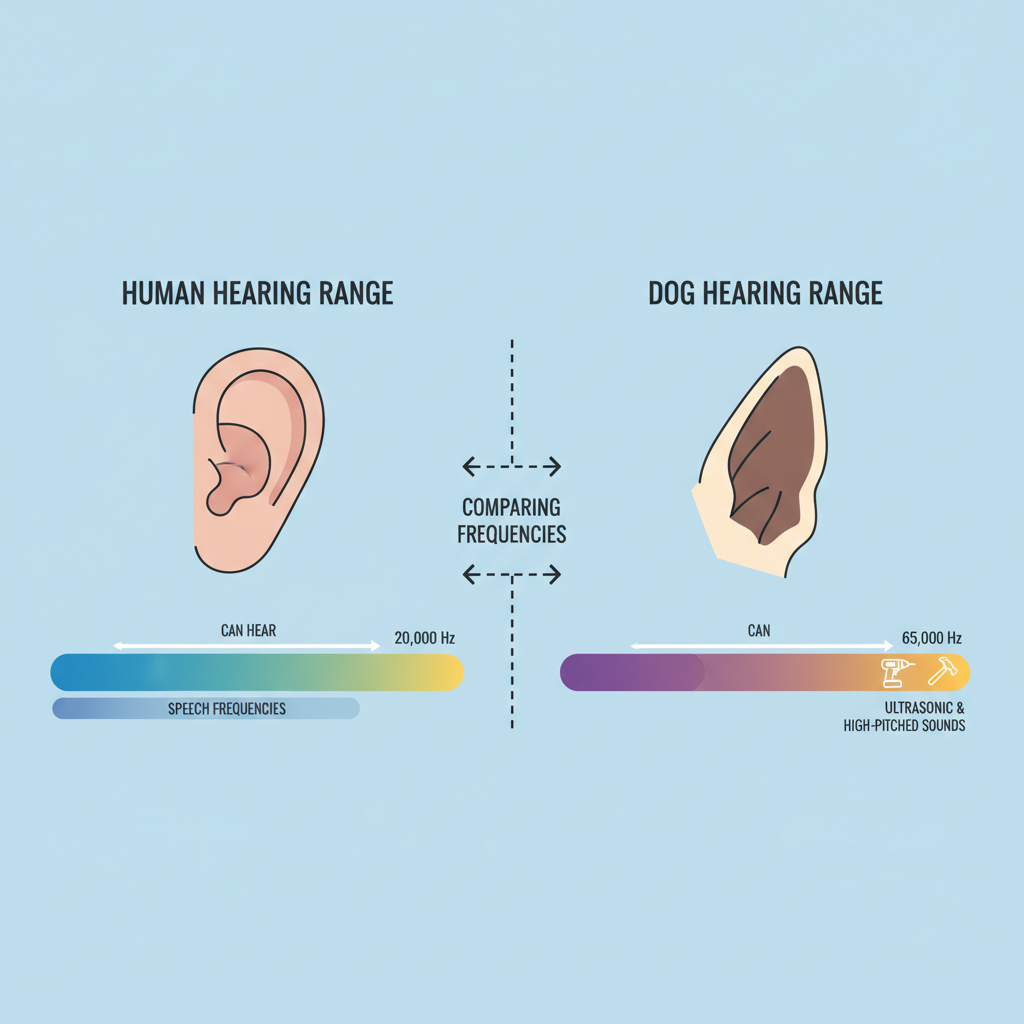
To effectively address your dog’s fear, it is essential to first understand the root cause of their anxiety. Dogs experience the world through their senses in a profoundly different way than humans do, particularly when it comes to hearing. Their auditory acuity is far superior to ours, allowing them to detect a wider range of frequencies and hear sounds at four times the distance. This evolutionary advantage, which helps them detect prey or predators, becomes a significant disadvantage in a modern home filled with the high-frequency whine of a power drill or the sharp, percussive bang of a hammer.
The Science of a Dog’s Hearing
A dog can hear frequencies up to 65,000 Hz, whereas the human range tops out at around 20,000 Hz. Many power tools operate within this higher frequency range, creating sounds that are not just loud but potentially painful or intensely irritating to a dog’s sensitive ears. Furthermore, the sounds are unpredictable. Unlike a thunderstorm that may be preceded by changes in barometric pressure and scent, the sudden roar of a circular saw offers no warning, triggering a dog’s startle response and flooding their system with stress hormones like cortisol and adrenaline.
Fear vs. Phobia: A Critical Distinction
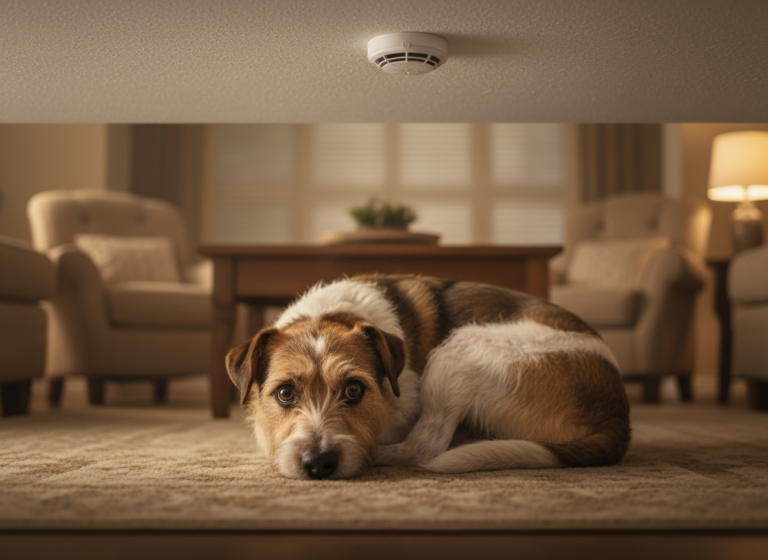
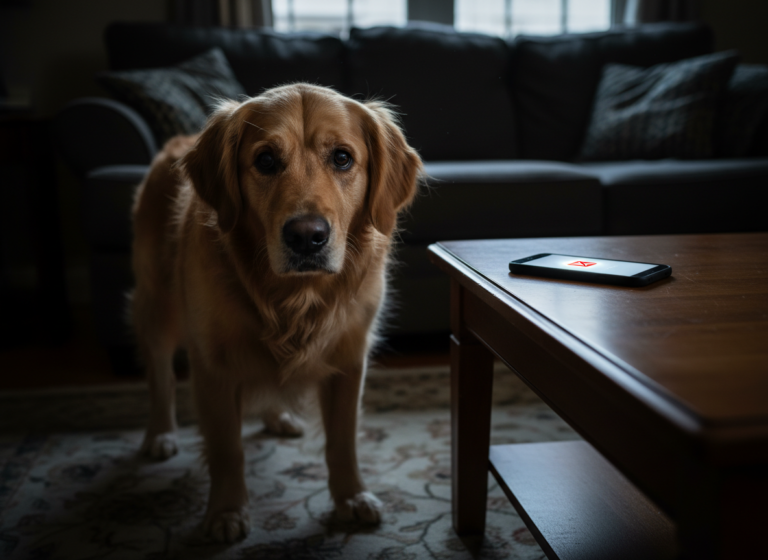
It is important to distinguish between a rational fear and a true phobia. A momentary startle or cautiousness around a new sound is a normal, adaptive fear response. A phobia, however, is an intense, persistent, and irrational fear that is disproportionate to the actual threat. For a dog with noise phobia, a drill is not just a loud tool; it is perceived as an imminent, life-threatening danger. This can lead to a range of behaviors, including:
- Hiding: Seeking refuge in closets, under beds, or in bathrooms.
- Trembling: Uncontrollable shaking or shivering.
- Panting and Pacing: Signs of severe anxiety and an inability to settle.
- Destructive Behavior: Chewing on furniture, door frames, or drywall in an attempt to escape.
- Excessive Vocalization: Barking, whining, or howling.
- Inappropriate Elimination: Urinating or defecating inside the house due to overwhelming stress.
Recognizing these signs as manifestations of a genuine phobia, rather than ‘bad behavior,’ is the first step toward compassionate and effective intervention.
Proactive Preparation: Creating a Sanctuary Before Construction Begins
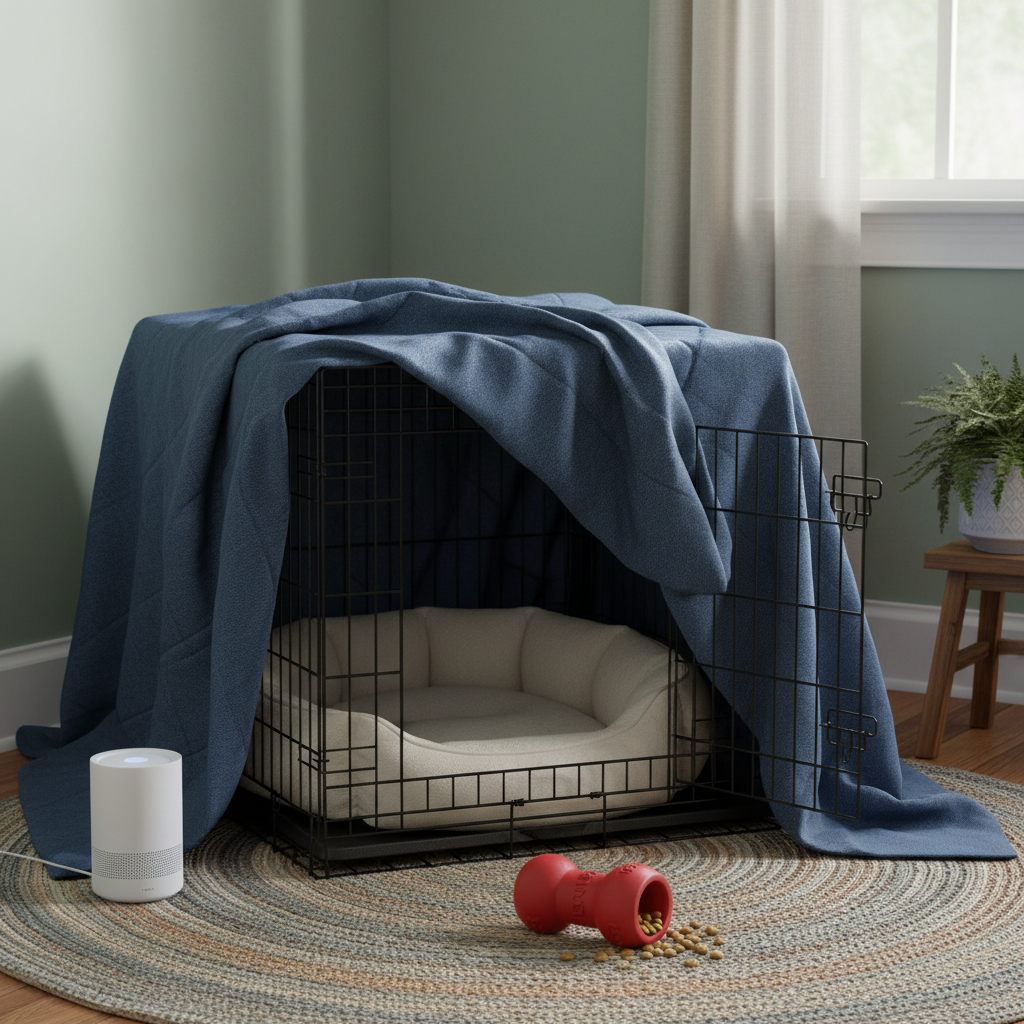
The most effective way to manage your dog’s anxiety is to be proactive. Waiting until the demolition crew arrives is too late; the foundation for a calm environment must be laid well in advance. The primary goal is to create a ‘safe haven’—a designated area in your home where your dog feels secure and is insulated as much as possible from the auditory and physical disruption.
Designing the Safe Haven
Choose a room or space that is the furthest away from the primary renovation zone. A basement, a guest bedroom, or a large walk-in closet can work well. This space should become a positive, comforting sanctuary for your dog. Equip it with the following:
- A Crate or Den: If your dog is crate-trained, their crate is the perfect centerpiece. Cover it with a heavy blanket or sound-dampening cover to create a dark, cozy den.
- Comfortable Bedding: Use their favorite bed and blankets that carry their scent.
- White Noise: A white noise machine is one of the most powerful tools for masking external sounds. You can also use a box fan or play calming classical music specifically designed for dogs.
- Pheromone Diffusers: Products like Adaptil release a synthetic version of the calming pheromone mother dogs emit. Plug one in near the safe haven a week before construction starts.
- High-Value Enrichment: Stock the area with engaging, long-lasting puzzle toys, frozen Kongs stuffed with peanut butter or yogurt, or durable chews. This creates a positive association with the space and provides a mental outlet for stress.
Introduce your dog to this safe haven long before the renovation begins. Feed them their meals there, play calm games, and encourage them to nap in the space so they view it as their personal retreat.
Expert Tip: Soundproof the room as much as possible. Place draft stoppers under doors, hang heavy blankets over windows, and use rugs on hard floors to absorb sound vibrations. Every layer of sound dampening helps reduce the intensity of the noise.
The Core Technique: A Step-by-Step Guide to Desensitization and Counter-Conditioning (DSCC)
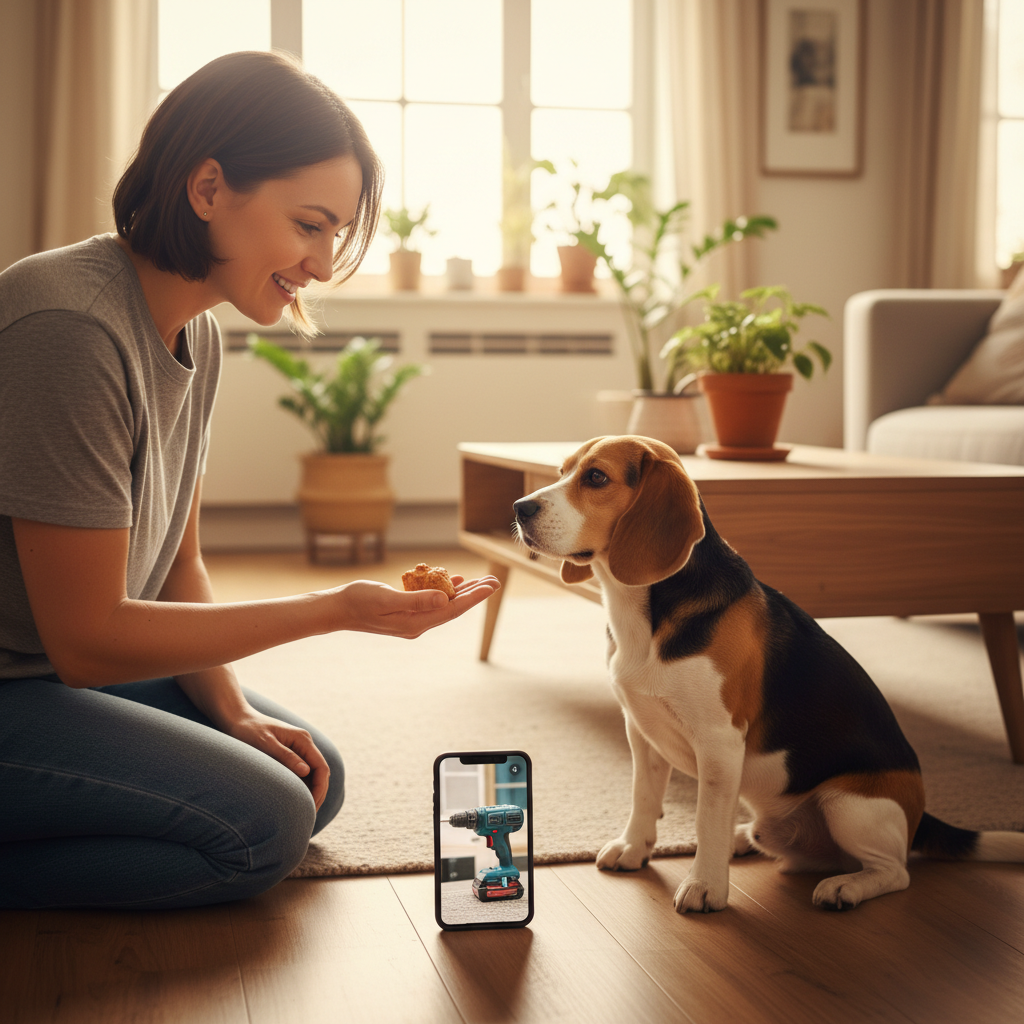
While management strategies are crucial for coping during the renovation, the long-term solution for noise phobia is behavioral modification. The gold-standard technique is Desensitization and Counter-Conditioning (DSCC). Desensitization involves gradual exposure to the scary stimulus (the noise) at a level that does not provoke fear, while counter-conditioning works to change the dog’s emotional response from fear to anticipation of something positive.
This process requires patience and cannot be rushed. Each session should be short (5-10 minutes) and always end on a positive note. You will need a smartphone or computer to play recorded construction sounds and a supply of extremely high-value treats (e.g., small pieces of boiled chicken, cheese, or hot dogs).
Step 1: Find the Threshold
Begin by playing a recording of renovation sounds (you can find these on YouTube) at the lowest possible volume—so low that your dog notices it but does not react with fear. This is their ‘threshold.’ If they show any signs of stress (lip licking, yawning, wide eyes), the volume is too high.
Step 2: Change the Association
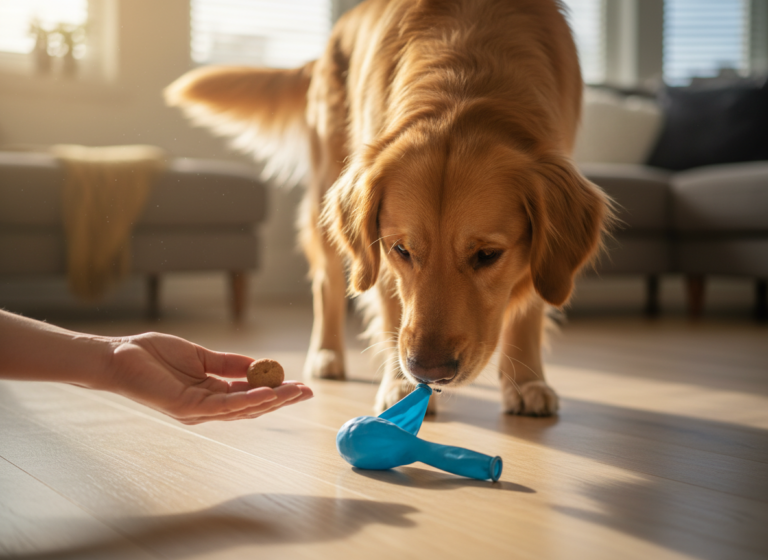
Once you’ve found the starting volume, begin counter-conditioning. As soon as you press play, start feeding your dog a steady stream of high-value treats. The moment you stop the sound, the treats stop. The sequence is critical: Sound starts, then treats appear. Sound stops, then treats disappear. This teaches the dog that the sound predicts the arrival of something wonderful.
Step 3: Gradual Progression
Over many sessions and many days, you can slowly increase the volume. The key is to proceed at your dog’s pace. If you increase the volume and see a stress signal, you’ve gone too fast. Return to the previous volume where they were successful for a few more sessions before trying again. Below is a sample progression plan, but remember that your dog’s progress will be unique.
| Session Block (3-5 sessions per block) | Volume Level | Dog’s Behavior Goal |
|---|---|---|
| Block 1 | Level 1/10 (Barely audible) | Dog remains completely relaxed, happily takes treats. |
| Block 2 | Level 2/10 | Dog may orient toward the sound but immediately looks to you for a treat. No stress signals. |
| Block 3 | Level 3/10 | Dog shows no concern for the sound, focusing entirely on the treats/game. |
| Block 4 | Level 4/10 | Continue observing for any signs of anxiety. Remain at this level until the dog is consistently comfortable. |
This methodical process rewires your dog’s brain, helping them build a new, positive association with sounds that once caused terror.
In-the-Moment Management: Surviving Demolition Day

Even with the best preparation and training, the sheer intensity of a live renovation can be overwhelming for a noise-sensitive dog. On the loudest days—particularly during demolition or when multiple power tools are in use—DSCC training is not appropriate. The goal on these days is not to train, but to manage the environment and protect your dog from traumatic exposure.
Option 1: Off-Site Relocation (The Best Choice)
The ideal solution for intensely loud days is to remove your dog from the environment entirely. Consider these options:
- Doggy Daycare: A well-vetted daycare provides socialization and exercise in a safe, construction-free zone.
- Pet Sitter or Friend’s House: Ask a trusted friend, family member, or professional pet sitter to care for your dog at their home.
- Boarding: For multi-day projects, a reputable boarding facility can be a good option.
Option 2: At-Home Management (If Relocation Isn’t Possible)
If your dog must remain at home, you need a robust management plan. This is when the pre-planned safe haven becomes critical.
- Secure the Dog in their Sanctuary: An hour before workers arrive, take your dog for a long walk to burn off energy. Then, settle them in their safe haven with a high-value, long-lasting chew (like a frozen Kong) and turn on the white noise machine to its highest comfortable level.
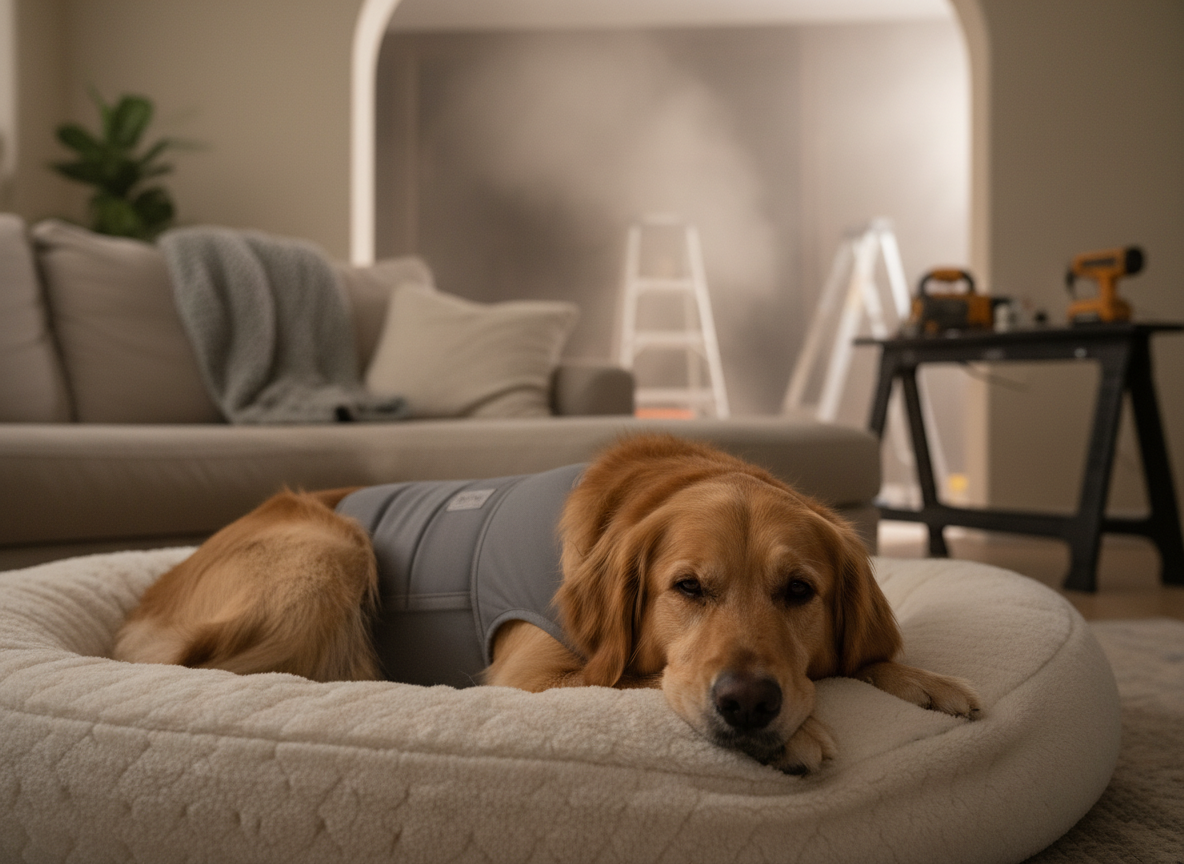
- Use Calming Aids: This is the time to use an anxiety wrap (like a ThunderShirt), which applies gentle, constant pressure that can have a calming effect. Ensure the wrap is introduced positively before it’s needed in a high-stress situation.
- Consult Your Veterinarian About Medication: For dogs with severe phobias, management alone may not be enough. Speak with your veterinarian or a veterinary behaviorist about situational anti-anxiety medication (like Sileo or Trazodone). These medications are not sedatives; they work by reducing anxiety so the dog can cope with the stressful event without becoming traumatized. This is a medical decision and requires professional guidance.
Important Safety Note: Never leave your dog to ‘cry it out’ or ‘get used to it.’ This approach, known as flooding, can severely worsen the phobia and damage the trust between you and your dog. Your primary job is to ensure they feel safe.
Recognizing Stress Signals and Knowing When to Call a Professional

A crucial part of helping your dog is learning to speak their language. Dogs communicate their emotional state primarily through body language. Being able to recognize subtle signs of stress allows you to intervene before their anxiety escalates into a full-blown panic attack. During DSCC sessions or on renovation days, watch for these common indicators:
Canine Stress Signals Checklist
- Panting: When not hot or thirsty.
- Lip Licking or Nose Licking: Quick flicks of the tongue.
- Yawning: When not tired.
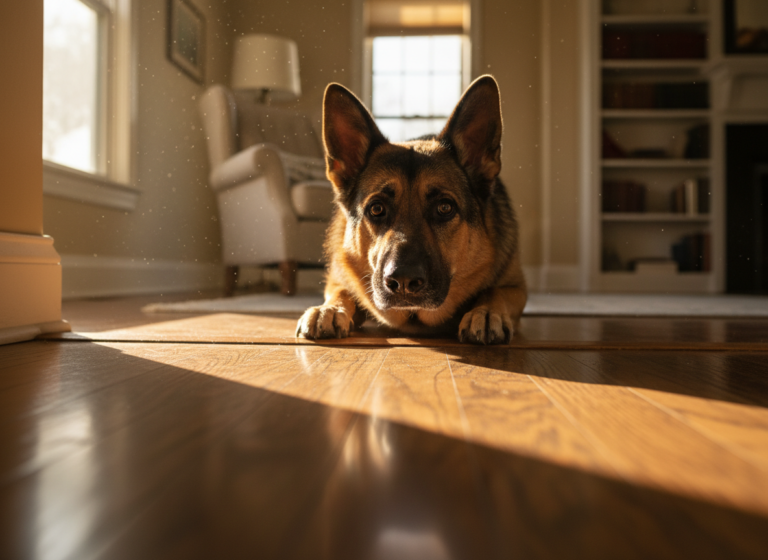
- Whale Eye: Showing the whites of their eyes.
- Pinned-Back Ears: Ears held flat against the head.
- Tucked Tail: Tail held low or between the legs.
- Hypervigilance: Constantly scanning the environment, unable to settle.
- Freezing: Becoming suddenly still and rigid.
- Displacement Behaviors: Sudden, intense scratching or sniffing the ground out of context.
- Refusing Food: A highly stressed dog will often refuse even their favorite treats.
If you notice these signals, it means your dog is ‘over threshold’—their brain is too overwhelmed with anxiety to learn. You must stop the training session or remove them from the situation immediately to a quieter place where they can decompress.
When to Seek Professional Help
While the strategies in this guide are effective for many dogs, some cases of noise phobia are so severe that they require professional intervention. It is a sign of responsible pet ownership to recognize when you need help. You should consult a professional if:
- Your dog’s anxiety is not improving with your efforts.
- Your dog is at risk of injuring themselves (e.g., breaking teeth on a crate, jumping through a window).
- The anxiety is leading to aggression out of fear.
- Your dog’s quality of life is significantly compromised.
Look for a qualified expert, such as a Veterinary Behaviorist (DACVB), a Certified Applied Animal Behaviorist (CAAB), or a Certified Professional Dog Trainer (CPDT-KA) with specific experience in anxiety and phobias. These professionals can provide a tailored behavior modification plan and work with your veterinarian on appropriate anti-anxiety medications if needed.
Conclusion
Navigating a home renovation is a challenge, and doing so with a noise-phobic dog adds a significant layer of complexity and emotional weight. However, by shifting your perspective from simply ‘dealing with the problem’ to proactively ‘supporting your dog,’ you can make a profound difference in their experience. The key pillars of success are preparation, training, and management. By creating a safe sanctuary, you give your dog a predictable refuge from the chaos. Through patient and consistent desensitization and counter-conditioning, you can fundamentally change their emotional response to scary sounds in the long term. And with smart, in-the-moment management strategies, you can protect them from the overwhelming stress of the loudest days.
Remember to be your dog’s advocate. Communicate with your construction crew about your dog’s needs, and do not hesitate to seek professional help from your veterinarian or a certified behavior expert if the fear is too great to manage alone. Your patience, understanding, and proactive efforts are the most powerful tools you have to help your best friend feel secure while you build a better home for you both to share.