Don’t Spook Your Pup: How to Train Your Dog to Love Costumes
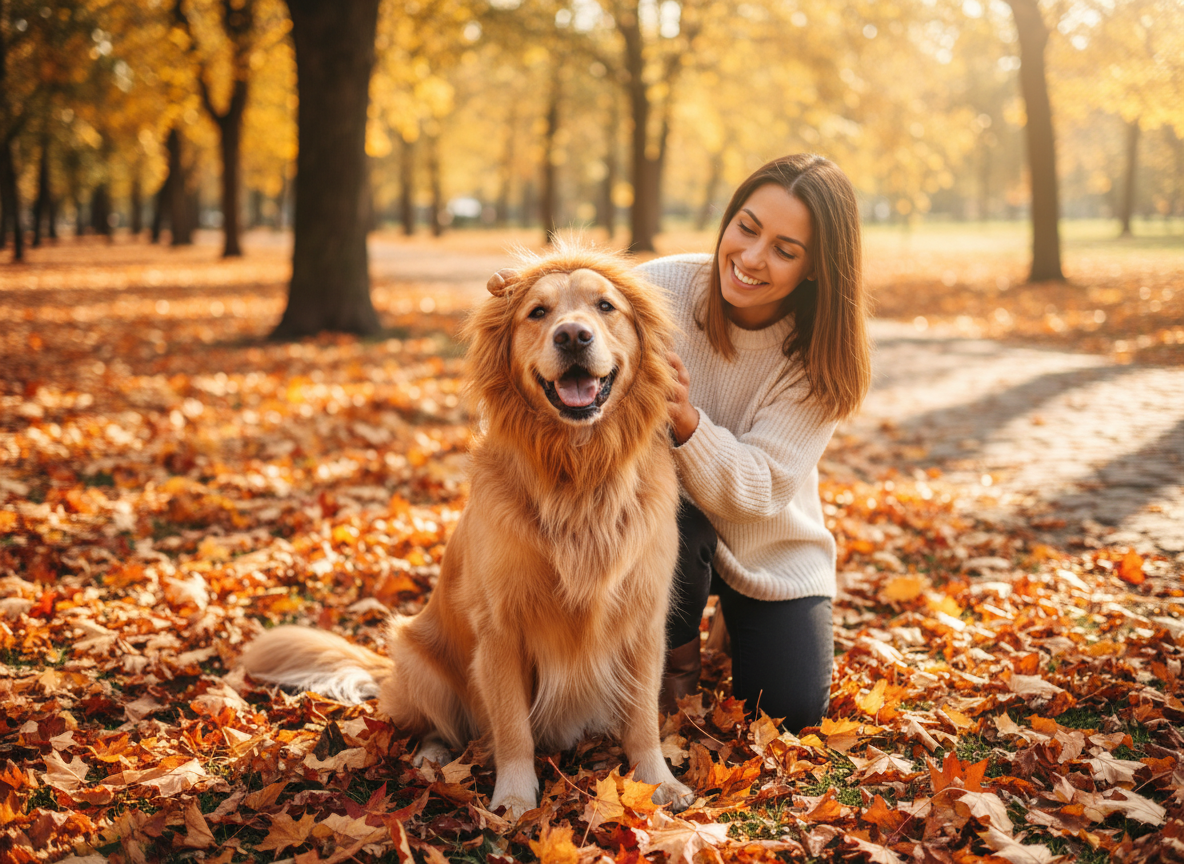
Dressing up our canine companions for holidays, parties, or just a fun photo session has become a popular way for pet owners to celebrate and share their joy. However, from a dog’s perspective, a strange new garment can be confusing, restrictive, and even frightening. Forcing a costume onto an unprepared dog can lead to significant stress, anxiety, and a negative association that can be difficult to overcome. This is not just about comfort; it’s about safety and trust. An anxious dog is more likely to bolt, hide, or even react defensively.
As a canine specialist, my primary goal is to foster a strong, positive bond between pets and their owners. This guide is designed to do just that by transforming the costume experience from a potential source of fear into a fun, rewarding bonding activity. We will move beyond simply putting a costume on your dog and instead focus on teaching your dog to accept and even enjoy the process. By using proven positive reinforcement techniques, understanding your dog’s unique communication signals, and proceeding with patience, you can ensure that any dress-up occasion is a happy and safe one for everyone involved. This comprehensive approach prioritizes your dog’s emotional well-being above all else, setting the foundation for a lifetime of trust and cooperation.
Foundation First: Understanding Canine Body Language and Costume Stress
Before you even purchase a costume, it is imperative to become fluent in your dog’s native language: body language. Dogs communicate their emotional state primarily through subtle and overt physical cues. Ignoring or misinterpreting these signals is the most common reason costume-wearing goes awry. Recognizing the early signs of stress allows you to pause, reassess, and support your dog before their anxiety escalates into fear.
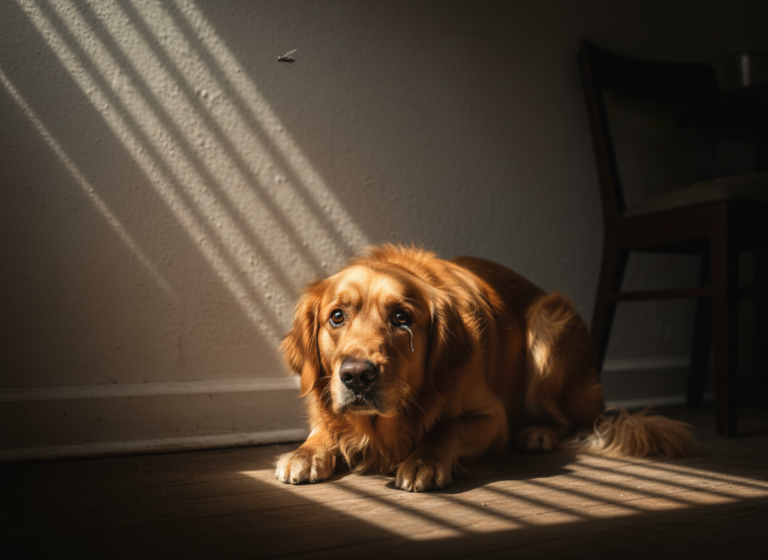
A comfortable, happy dog has a relaxed body posture, a soft gaze, and may have a gently wagging tail. Conversely, a stressed dog will exhibit a variety of signals. It is your responsibility as a diligent pet owner to watch for these indicators throughout the training process.
Key Stress Signals to Watch For:
- Lip Licking or Yawning: When not tired or hungry, these are classic appeasement gestures that signal discomfort.
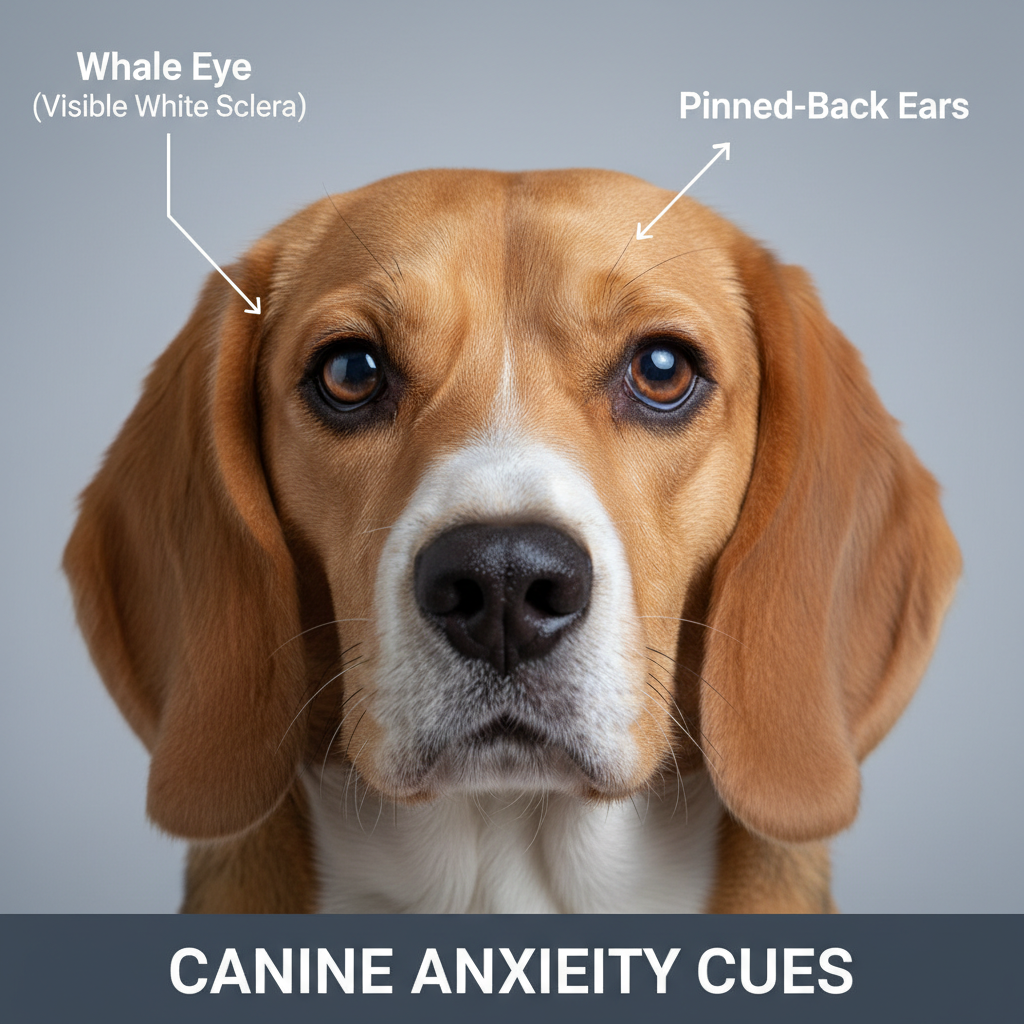
- Whale Eye: This is when you can see the whites of your dog’s eyes in a crescent shape. It indicates anxiety and that the dog feels threatened.
- Pinned-Back Ears: While ear position varies by breed, ears held flat against the head are a common sign of fear.
- Tucked Tail: A tail tucked between the legs is a clear indicator of fear or submission.
- Freezing or Sudden Stillness: A dog that becomes rigid and still is often processing a stressful situation and deciding its next move. This is not a sign of calmness.
- Panting or Drooling: Excessive panting when not hot or thirsty, along with drooling, can be a physiological response to stress.
- Shaking or Trembling: If the environment isn’t cold, shaking is a significant sign of fear.
- Avoidance: Turning the head away, trying to walk away, or hiding are all ways a dog communicates its desire to escape the situation.
Expert Tip: Never punish a dog for showing signs of stress. These signals are their only way of communicating discomfort. Acknowledging and responding to them by removing the stressor builds trust and strengthens your bond.
Understanding these signals is non-negotiable. They are your dog’s voice. By listening, you can ensure the entire costume training process remains a positive and empowering experience, rather than a frightening one.
Gathering Your Tools for Success
Proper preparation is key to a smooth and effective training plan. Setting up your environment and having the right tools on hand before you begin will allow you to focus entirely on your dog and their reactions. The goal is to create a positive, low-pressure atmosphere where your dog feels safe and is set up for success.
Essential Supplies:
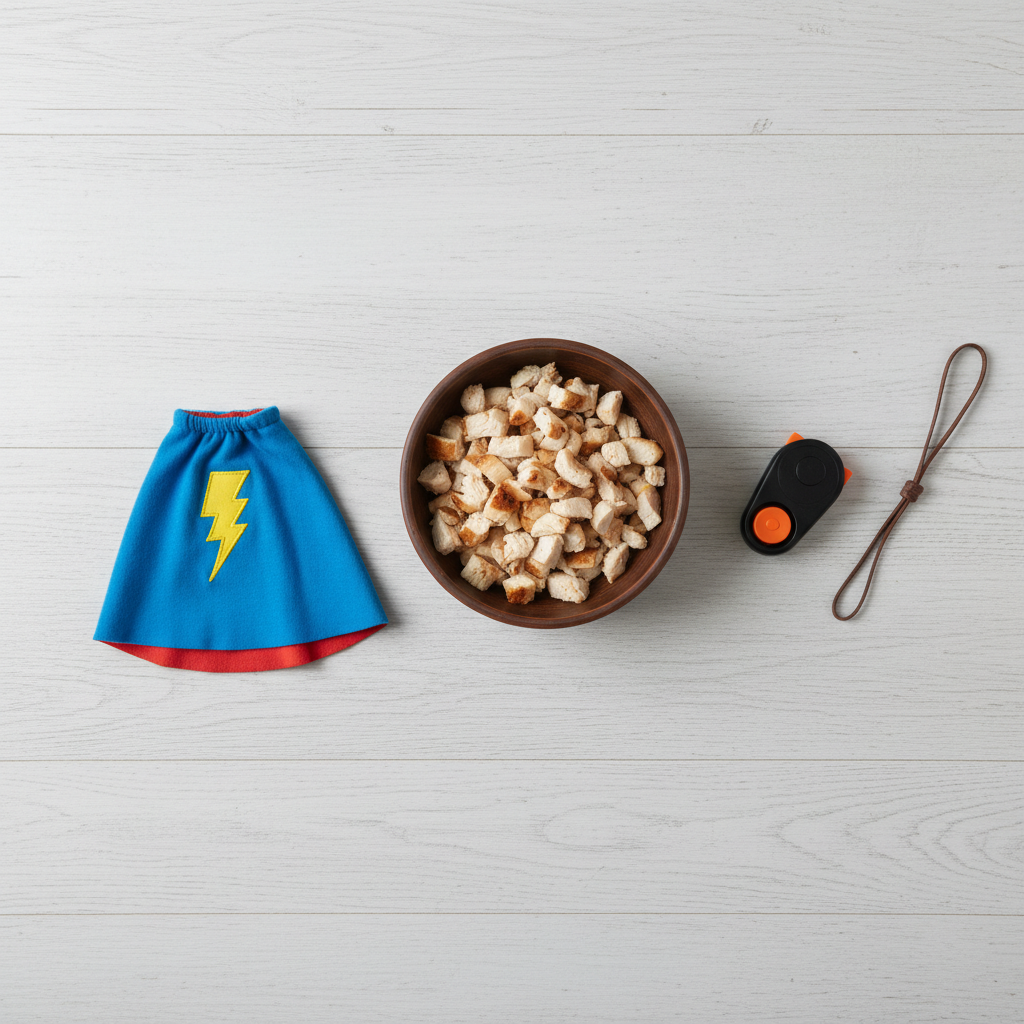
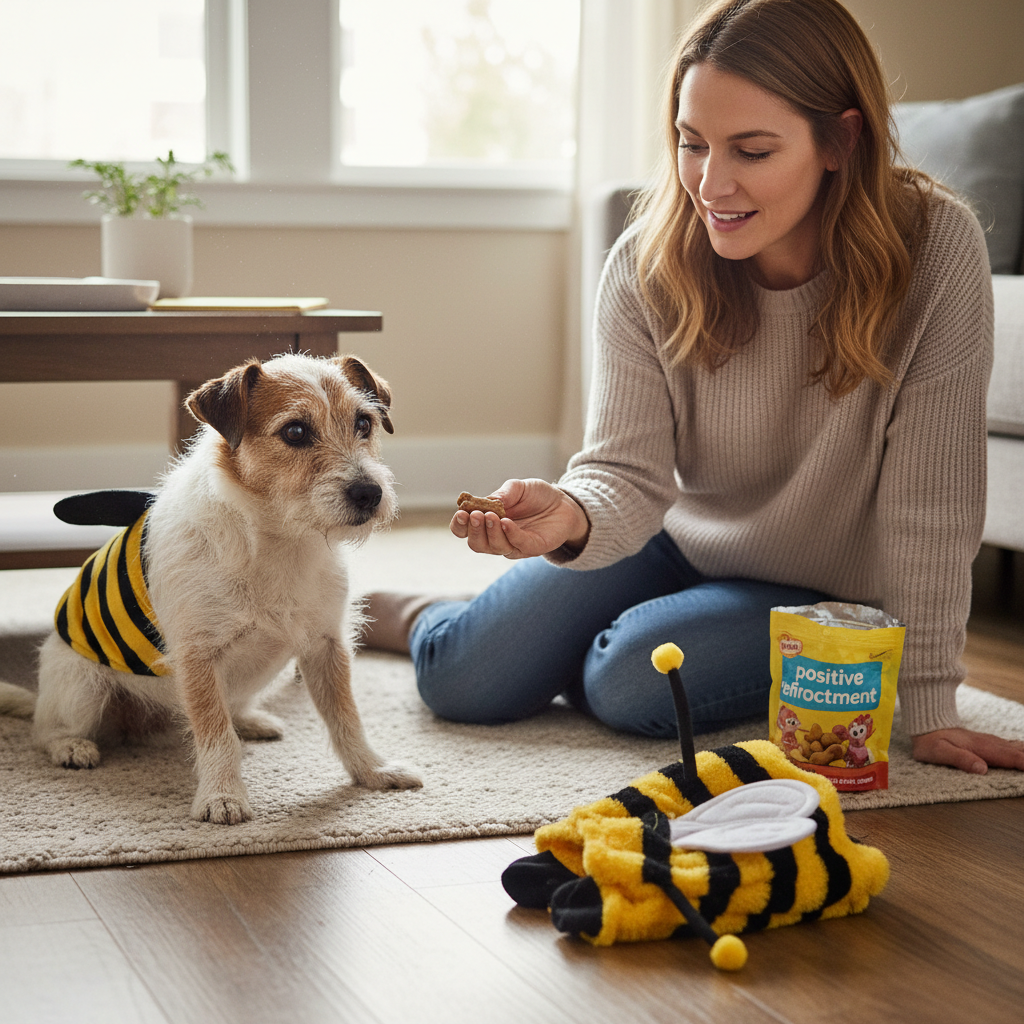
- High-Value Treats: These are not your dog’s everyday kibble. Think small, pea-sized pieces of boiled chicken, cheese, hot dogs, or commercial training treats that your dog absolutely loves. The reward must be enticing enough to create a strong positive association with the costume.
- A Safe and Comfortable Costume: This is perhaps the most critical element. Not all costumes are created equal. When selecting one, prioritize safety and comfort over aesthetics.
- A Quiet, Familiar Space: Choose a room in your house where your dog feels most relaxed, away from loud noises, foot traffic, and other distractions.
How to Choose the Right Costume:
When selecting a costume, consider the following criteria to ensure your dog’s safety and comfort:
| Feature | What to Look For | What to Avoid |
|---|---|---|
| Fit and Mobility | The costume should be snug enough not to slip, but loose enough to allow full range of motion. Your dog must be able to walk, sit, lie down, and relieve themselves without restriction. | Anything too tight around the neck, legs, or chest. Costumes that cover the paws or hinder movement. |
| Material | Soft, lightweight, and breathable fabrics. | Heavy, itchy, or noisy materials (like crinkly plastic) that can be irritating or frightening. |
| Attachments | Securely sewn-on pieces. Simple designs are often best. | Small, dangling, or easily chewed-off parts that could become choking hazards (e.g., buttons, bells, loose ribbons). |
| Senses | The design must not cover your dog’s eyes, ears, nose, or mouth. Their vision and hearing should be completely unobstructed. | Masks, tight hoods, or anything that could interfere with your dog’s ability to perceive their environment. |
Start with something simple, like a decorative bandana or a small cape, before moving on to more complex outfits. The simpler the item, the higher your chance of initial success.
The Step-by-Step Guide to Costume Acclimation
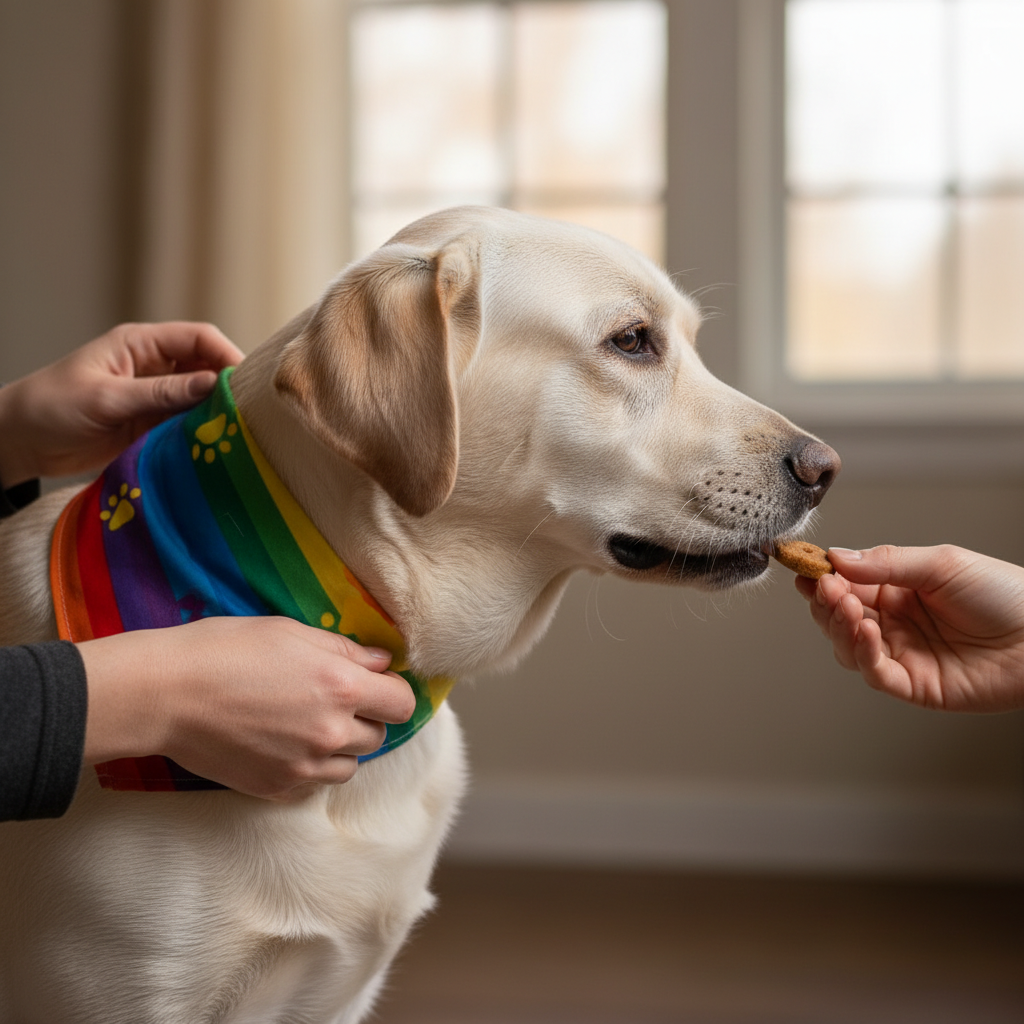
This process is built on the principles of desensitization (gradual exposure to the stimulus at a level that does not provoke fear) and counter-conditioning (changing the dog’s emotional response from negative to positive). Patience is paramount. Each step may take several sessions over multiple days. Never rush your dog; watch their body language and only proceed when they are completely comfortable.
-
Step 1: Introducing the Costume’s Scent and Sight
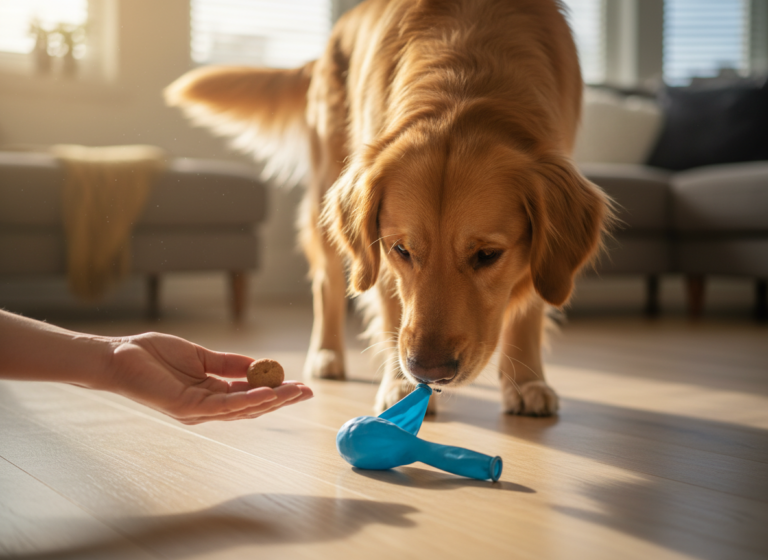
The first interaction should be completely hands-off and positive. Place the folded costume on the floor in your training space. Let your dog approach and investigate it on their own terms. When they sniff or look at the costume, mark the behavior with a verbal ‘Yes!’ or a clicker, and immediately give them a high-value treat. Repeat this several times. The goal is simple: Costume on the floor = delicious treats appear. Do this for a few minutes, then put the costume away. End the session on a positive note.
-
Step 2: Creating Positive Tactile Association
Once your dog is relaxed with the costume nearby, hold it in your hand. Let them sniff it. As they do, give them a treat. Then, gently touch the costume to their back for just a second, then treat. Remove the costume. Repeat. The sequence is: touch with costume, treat, remove costume. Keep these interactions brief and positive. If your dog shows any avoidance, you’ve moved too fast. Go back to the previous step.
-
Step 3: Draping the Costume
Now, briefly drape a part of the costume over your dog’s back for 2-3 seconds. While it’s on them, feed them a continuous stream of tiny treats (a ‘treat-stream’). Then, calmly remove the costume and stop the treats. The lesson for your dog becomes: Costume on my back = amazing treat party. Costume off = treat party ends. This makes the costume’s presence highly desirable. Repeat this several times, gradually increasing the duration by a few seconds each time, as long as your dog remains relaxed and happy.
-
Step 4: Securing a Single Strap
If the costume has straps (e.g., around the chest or belly), this is the next hurdle. Start with the loosest possible fastening. Gently place the costume on your dog’s back and loosely secure one strap. Treat-stream continuously while the strap is fastened for a few seconds. Then, unfasten the strap, remove the costume, and stop the treats. Practice with each strap individually before attempting to fasten more than one at a time.
-
Step 5: Full Costume, Short Duration
Once your dog is comfortable with all straps being fastened loosely, you can put the full costume on. The first few times, it should be for no more than 15-30 seconds. During this time, engage them in a fun activity. Toss a few treats on the floor for them to find, or ask for a simple cue they know well, like ‘sit’. This distracts them and associates the costume with fun activities, not just with being still and getting treats. Immediately after, remove the costume and give them lots of praise.
Throughout this entire process, your calm and cheerful demeanor is critical. Your dog will take cues from your emotional state. If you are relaxed and happy, they are more likely to be as well.
Advanced Training: Building Duration and Adding Movement
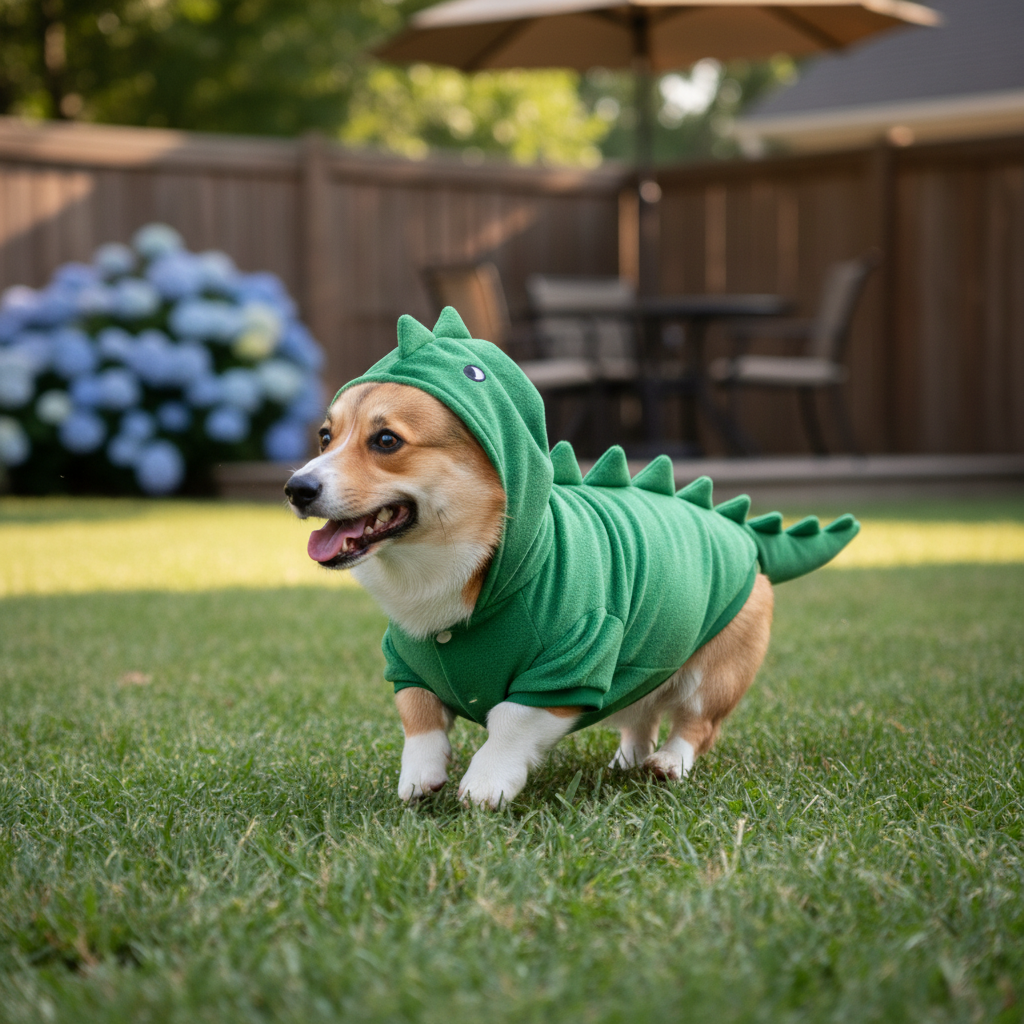
Once your dog can comfortably wear the costume for short periods while stationary, the next phase is to build their tolerance for longer durations and normal movement. This stage solidifies the training and prepares them for a real-world scenario like a Halloween party or a neighborhood walk.
Gradually Increasing Wear Time
This follows the same principle as the initial training: slow, gradual progression. Start by having your dog wear the costume for one minute while you engage in a calm, positive activity like gentle petting or practicing simple commands. After the minute is up, remove the costume and give them a jackpot reward (a handful of treats or a favorite toy).
Over several sessions, slowly increase the time. Go from one minute to two, then to five, and so on. A good progression might look like this:
- Session 1: 1 minute
- Session 2: 2 minutes
- Session 3: 4 minutes
- Session 4: 7 minutes
- Session 5: 10 minutes
If at any point your dog shows signs of stress—like starting to scratch at the costume or trying to rub it off—you have increased the duration too quickly. In the next session, revert to the last duration where they were fully successful and proceed more slowly from there.
Incorporating Movement and Distractions
A dog standing still in a costume is very different from a dog trying to walk, run, and play. It’s crucial to help them understand that they can still be a dog while dressed up.
- Indoor Movement: With the costume on, encourage your dog to walk a few steps by tossing a treat a short distance away. Praise them enthusiastically when they move. Keep the session short and fun. Practice walking around the room.
- Playtime: Engage in a short, gentle game of tug or fetch while they are in costume. This helps them associate the outfit with their favorite activities and teaches them that their movement is not restricted.
- Introducing Outdoor Environments: Once your dog is confident moving around indoors, take them for a short walk in a quiet area like your backyard. The new sights and smells will be a distraction, so keep the initial outdoor sessions very brief.
- Generalization: Finally, practice in slightly more distracting environments, such as a walk down your quiet street. This helps the dog generalize the positive experience to different locations.
Safety First: Always supervise a dog in a costume. Never leave them unattended, as they could get tangled, overheat, or chew off and ingest a piece of the outfit. For outdoor excursions, ensure the costume does not interfere with the proper fit and function of their collar/harness and leash.
Troubleshooting Common Issues and Mistakes to Avoid
Even with the most careful training plan, you may encounter setbacks. This is normal. The key is to address these issues with patience and a clear strategy. It’s equally important to be aware of common mistakes that can inadvertently undermine your training efforts.
Common Training Mistakes
- Rushing the Process: This is the most frequent error. Owners get excited and try to go from introduction to full costume in a single day. This almost always backfires, creating fear instead of acceptance. Training must happen at the dog’s pace.
- Forcing the Costume On: Never hold your dog down or physically force them into an outfit. This is terrifying for the animal and severely damages the trust between you. All interactions must be voluntary and positive.
- Laughing at Your Dog’s Distress: While you may find a dog’s confused reaction amusing, laughter can be perceived as a strange and unsettling sound to a stressed animal. Your dog may interpret this as being mocked, which increases their anxiety. Maintain a calm, reassuring tone.
- Forgetting to Check for Physical Discomfort: Sometimes a dog’s resistance isn’t behavioral but is due to physical discomfort. The costume might be pinching, chafing, or restricting them in a way you haven’t noticed. Always do a thorough check.
- Using a Costume as Punishment: This should be obvious, but costumes should never be used to shame or punish a dog. The goal is a shared, enjoyable activity.
Troubleshooting Guide
If you encounter a specific problem, consult the table below for a potential cause and a constructive solution.
| Problem | Potential Cause | Solution |
|---|---|---|
| Dog runs away when they see the costume. | The initial association was not positive enough, or a previous step was rushed. The costume predicts pressure or stress. | Go back to Step 1. Place the costume on the floor and do nothing but toss high-value treats near it. Rebuild the ‘costume = good things’ association from scratch without any pressure to wear it. |
| Dog freezes and won’t move while wearing it. | The dog feels insecure or physically restricted. This is a common stress response. | Go back to a simpler piece of the costume (e.g., just the cape, not the hood). Encourage micro-movements by tossing a treat just out of reach. Praise heavily for any weight shift or step. Keep sessions extremely short. |
| Dog tries to bite or chew the costume. | This can be a sign of irritation, anxiety, or simply that the dog thinks it’s a toy. | Ensure the fit is comfortable and not chafing. If it’s an anxiety response, shorten the duration of wear time. If it’s playful, redirect their attention with a favorite toy or a quick training cue. Do not let them rehearse the behavior of chewing the costume. |
| Dog is fine indoors but panics outside. | The dog is ‘trigger stacking’. The stress of the new outdoor environment combined with the costume is too much to handle at once. | Master wearing the costume indoors until it is completely boring. Then, introduce the outdoors in very small, controlled steps. Start by just opening the door for a few seconds, then stepping onto the porch, before attempting a walk. |
Conclusion
Successfully training your dog to enjoy wearing a costume is a testament to your patience, understanding, and the strength of your bond. It is an exercise in communication and trust, far more than it is about the outfit itself. Remember that the ultimate goal is not just a cute photograph, but a happy, confident, and comfortable companion who trusts you to introduce them to new experiences safely.
Always prioritize your dog’s well-being. If, after patient and consistent training, your dog continues to show significant signs of stress, it is vital to respect their boundaries. Not every dog will enjoy wearing a costume, and that is perfectly acceptable. A festive bandana or a decorated collar can be a wonderful and comfortable alternative that still allows them to be part of the celebration without causing undue anxiety.
By following these steps, listening to your dog’s body language, and always leading with positive reinforcement, you can make dressing up a fun and rewarding activity that you both can enjoy. The trust you build during this process will extend far beyond holidays and photo ops, strengthening every aspect of your relationship for years to come.