Crate Training Nightmares? How to Get Your Puppy to Sleep Through the Night
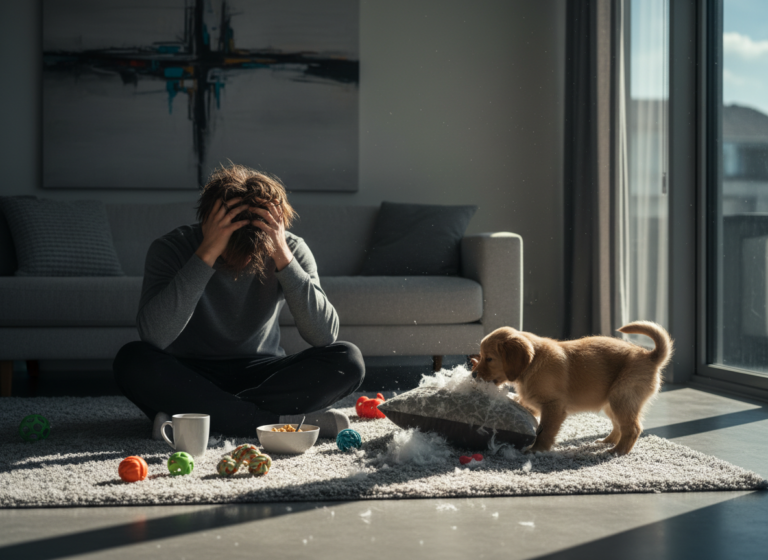
The first few weeks with a new puppy are a whirlwind of joy, cuddles, and teeth sharp enough to pierce steel. They are also, for many, a period of profound sleep deprivation. The persistent, heart-wrenching cries from the crate at 2 a.m. can test the patience of the most dedicated owner, leading to frustration and doubt. You may find yourself wondering if you’ve made a mistake, or if your puppy will ever learn to settle. Rest assured, what you are experiencing is common, and more importantly, it is solvable.
As a canine behavior consultant, I’ve guided countless owners through this exact challenge. The key is to shift your perspective. The crate is not a cage or a punishment; it is your puppy’s future safe space, their personal den. Teaching them to embrace it is one of the most valuable skills you can impart for their long-term security and your peace of mind. This guide will provide a clear, authoritative, step-by-step protocol to transform your crate training nightmares into peaceful nights. We will move beyond simple tips and delve into the behavioral science behind why puppies cry and how to address the root cause, not just the symptom.
Understanding the Root of Nighttime Crying

Understanding the Root of Nighttime Crying
Before you can solve the problem, you must understand its origin. A puppy crying in a crate is not being intentionally difficult or manipulative; they are communicating a genuine need or distress based on deeply ingrained instincts. For the first eight to twelve weeks of their life, sleeping alone was not only foreign, it was dangerous. They relied on the warmth, scent, and security of their mother and littermates for survival.
Suddenly, they are in a new environment with strange sights, sounds, and smells, and they are expected to sleep in isolation. Their crying is a survival mechanism—a distress call designed to bring their family back. Several factors contribute to this nighttime vocalization:
- Innate Fear of Isolation: This is the most significant factor. Being alone is evolutionarily unsafe for a young canine. Their cries are an attempt to reconnect with their pack (which is now you).
- The Need to Eliminate: A young puppy’s bladder is small and lacks full muscular control. The rule of thumb is that a puppy can typically hold their bladder for their age in months plus one hour. A ten-week-old puppy (2.5 months) cannot be expected to hold it for an eight-hour stretch. Their whines are often a legitimate signal that they need to go out.
- Boredom or Excess Energy: If a puppy has not received adequate physical and mental stimulation during the day, they may arrive at bedtime with a surplus of energy. Their crate then becomes a place of frustration rather than rest.
- Environmental Discomfort: The crate might be too hot, too cold, or the bedding might be uncomfortable. The environment outside the crate could also be a factor—unfamiliar noises can be frightening.
It is crucial to learn to differentiate between types of vocalizations. A sharp, urgent, or increasingly frantic whine often signals a genuine need, like the need for a potty break. In contrast, a rhythmic, monotonous, or demanding bark-whine combination can often be a protest against confinement. Recognizing the difference is a skill that develops with observation and is fundamental to responding correctly.
Preparing the Crate and Environment for Success
Preparing the Crate and Environment for Success
Success in crate training is not accidental; it is engineered. The physical setup of the crate and its surrounding environment plays a monumental role in your puppy’s acceptance of it. Your goal is to create a sanctuary, not a prison.
Choosing the Right Crate
The size of the crate is paramount. It should be large enough for your puppy to comfortably stand up, turn around, and lie down fully stretched out. However, it should not be so large that they can designate one end as a toilet and the other as a sleeping area. This defeats the purpose of leveraging their natural instinct not to soil their den. Many wire crates come with a divider panel, which is an excellent tool for adjusting the usable space as your puppy grows.
Creating a Comfortable Den
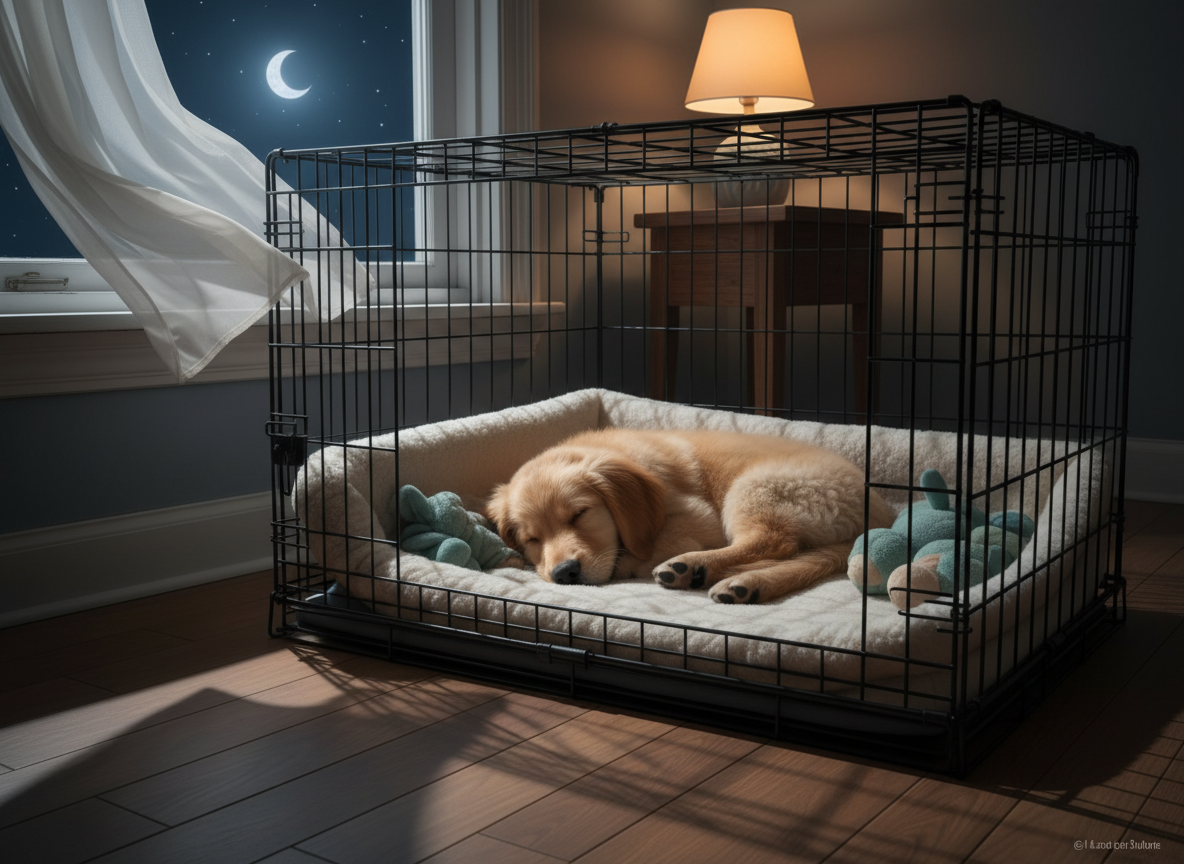
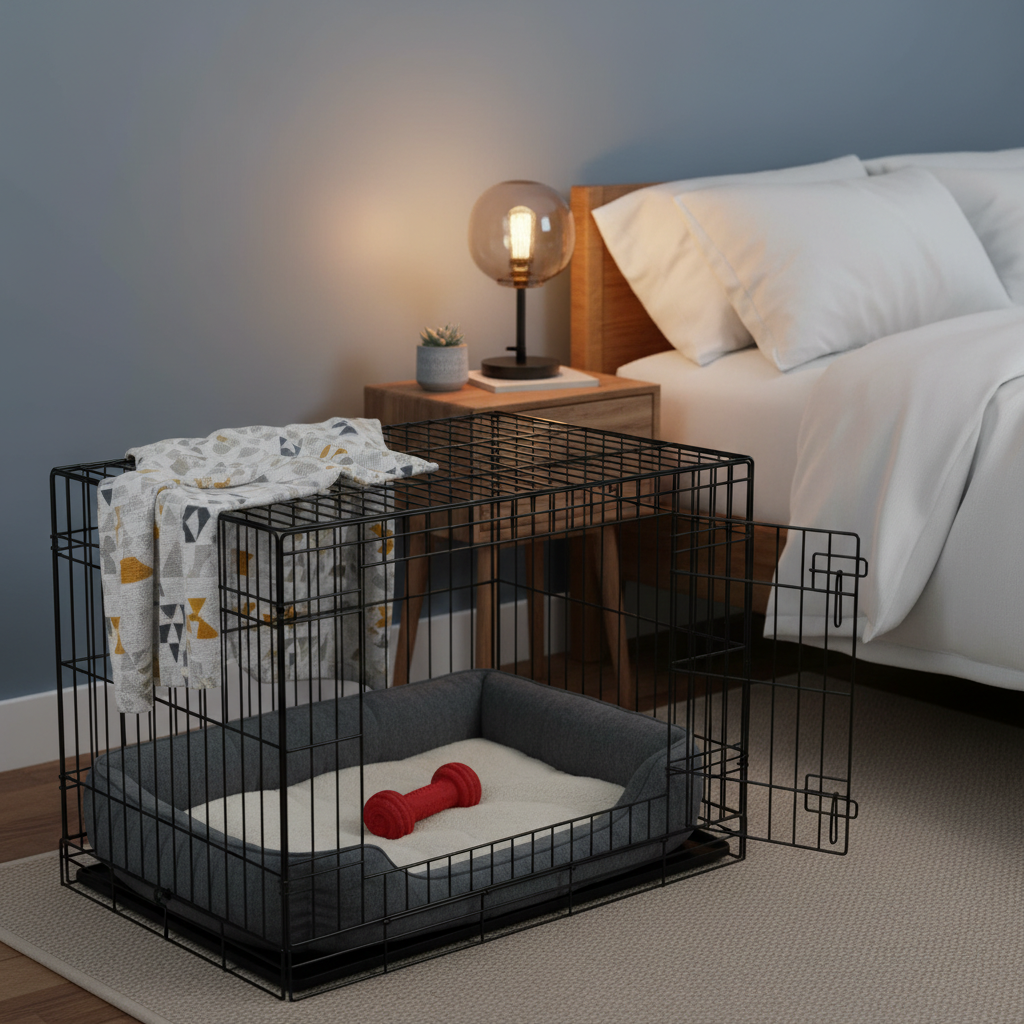
Make the crate the most comfortable spot in the house. Provide soft, durable, and easily washable bedding. For puppies prone to chewing, choose chew-resistant mats. Covering the crate with a blanket or a fitted cover on three sides can significantly enhance the den-like atmosphere, reducing visual stimuli and creating a sense of security. Always ensure there is adequate ventilation. Include one or two safe, durable chew toys, such as a hard rubber toy, to give your puppy an appropriate outlet if they wake up and feel restless.
Strategic Crate Placement
For the first several weeks, and potentially months, the crate should be in your bedroom. Placing it next to your bed allows your puppy to hear your breathing, smell your scent, and feel your presence, which drastically reduces their anxiety about being alone. This proximity also has a practical benefit: you will be able to hear them when they stir for a legitimate potty break, allowing you to respond quickly and prevent accidents. You can even let your fingers dangle near the crate for reassurance during the first few nights. Resisting the urge to place the crate in a distant laundry room is one of the most impactful decisions you can make for early success.
The Step-by-Step Protocol for Nighttime Crate Training
The Step-by-Step Protocol for Nighttime Crate Training
Consistency and routine are the pillars of this process. Puppies thrive on predictability. The following protocol, when executed with patience, will establish a clear and positive bedtime routine that your puppy can understand and rely on.
- Establish a Strict Pre-Bedtime Ritual. About an hour before you intend to put your puppy to bed, begin a wind-down routine. All exciting games like fetch or tug-of-war should cease. Engage in calm activities like gentle petting or practicing ‘sit’ and ‘down’. Remove access to food and water about 60-90 minutes before bedtime to minimize the need for midnight potty breaks. The final step is always a ‘business’ trip outside. Take your puppy on a leash to their designated potty spot. Use a consistent verbal cue like ‘go potty’. Wait patiently for them to eliminate, and when they do, offer calm praise. This trip is not for sniffing or playing; it is strictly functional.
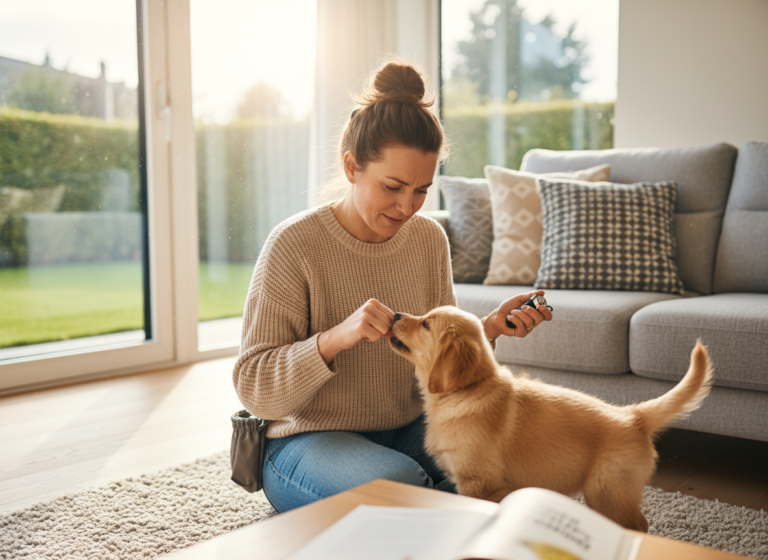
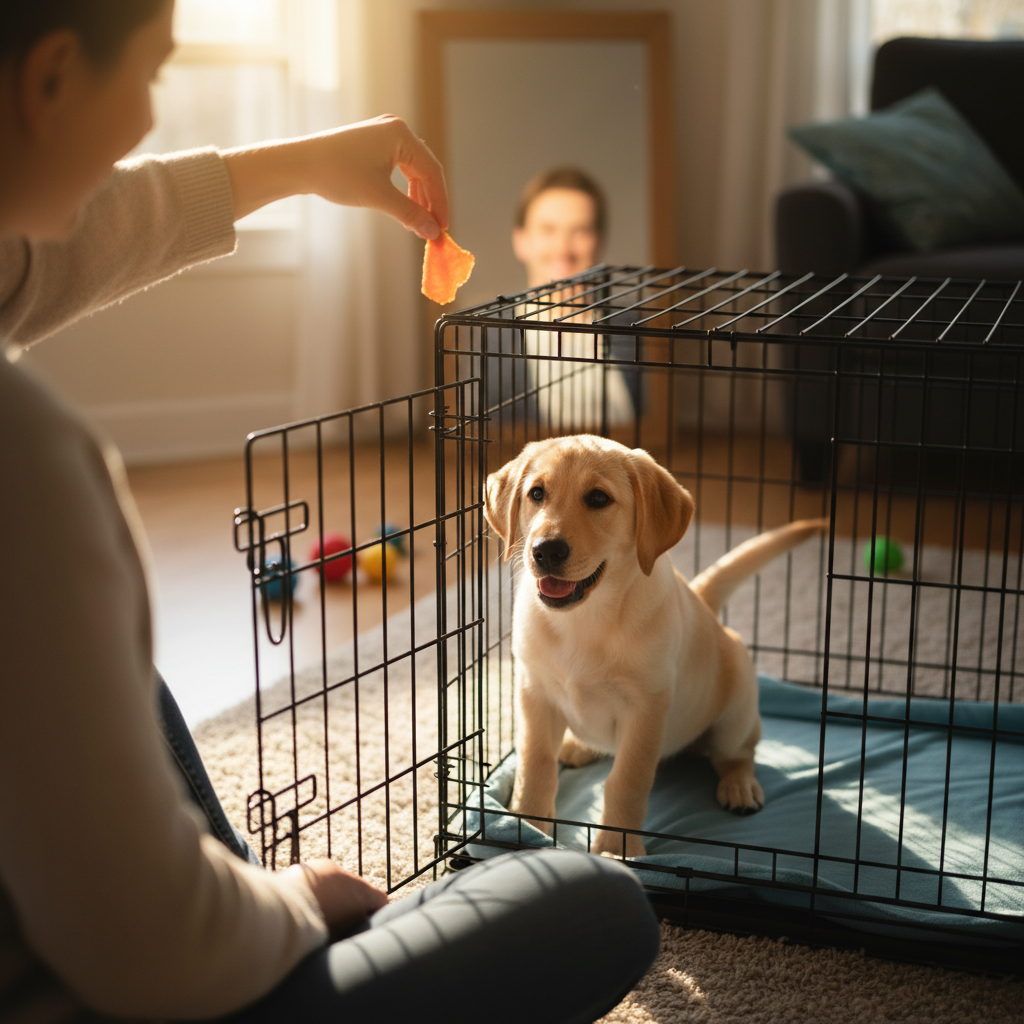
- Make Crate Entry a Positive Event. Never force your puppy into the crate. Lure them in with a high-value treat that they only get at bedtime. Toss the treat to the back of the crate. As they go in to get it, use a clear verbal cue like ‘Crate’ or ‘Bed’. Once they are inside, give them another treat and close the door calmly. Offer quiet, soothing praise.
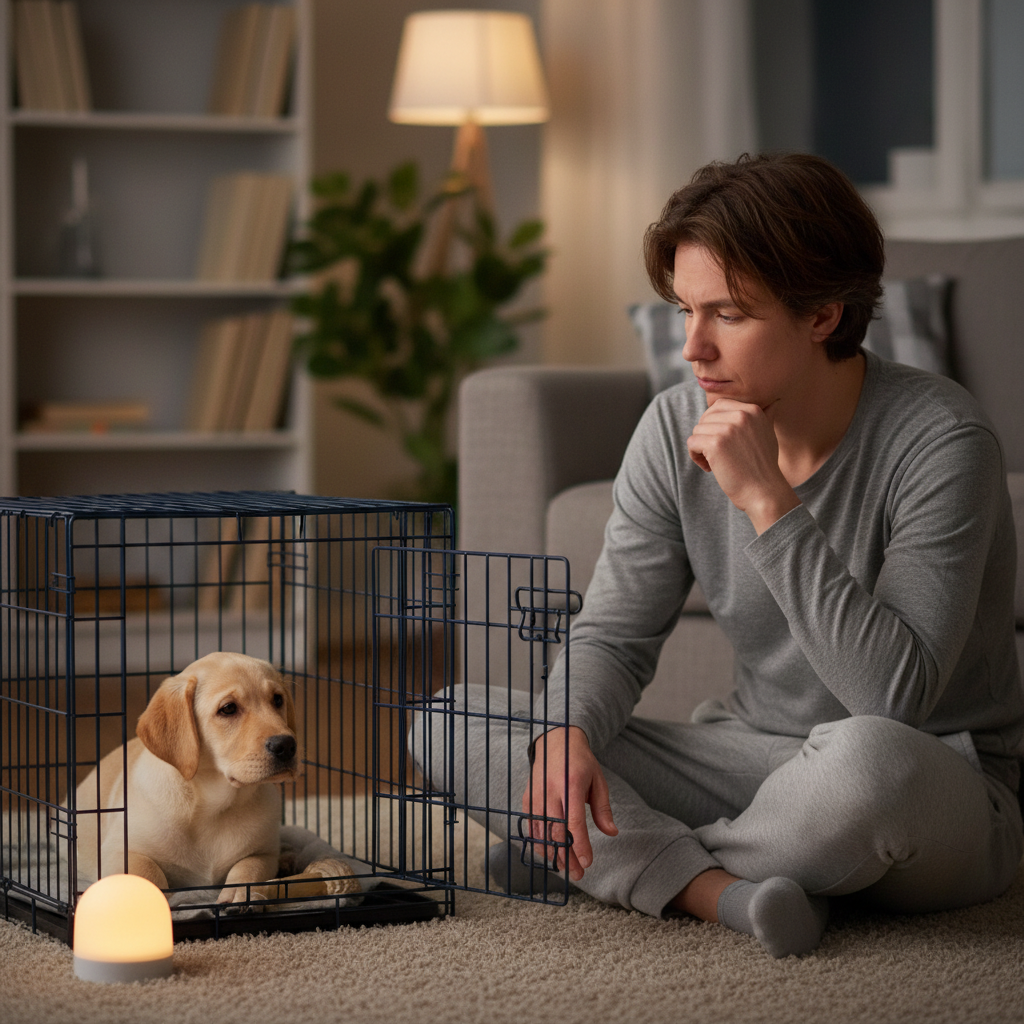
- Manage the First Few Nights with Empathy. Expect some protest. Whining or crying is normal as your puppy adjusts. For the first few nights, if they cry, you can offer quiet verbal reassurance (‘It’s okay, settle down’) and place your fingers by the crate. Do not open the door. The goal is to comfort them without rewarding the crying. If the crying is frantic or escalates, and you are certain it’s not a potty need, you may need to sit by the crate until they calm down before moving back to your bed.
- Execute Midnight Potty Breaks Like a Machine. When you hear your puppy stir or whine in the middle of the night—and you will—you must determine if it’s a potty need. If it has been more than 2-3 hours for a very young puppy, assume it is. Your response should be boring and robotic. Without speaking or making eye contact, clip on the leash, carry them or walk them directly to their potty spot. Give your potty cue. As soon as they finish, return them directly to the crate. Give a small treat for re-entry and close the door. No cuddling, no playing, no talking. This teaches them that nighttime awakenings are for elimination only, not for social time.
- Learn to Ignore Protest Whining. This is the most difficult step for owners. Once you are confident your puppy’s needs have been met (they have an empty bladder/bowels, they are comfortable, and they are not in pain), you must ignore attention-seeking or protest whining. If you open the door every time they cry, you teach them a powerful lesson: crying works. This creates a cycle that is very difficult to break. It may get worse before it gets better—a phenomenon known as an ‘extinction burst’—but consistency is the only way through.
- Create a Calm Morning Exit. Do not rush to the crate the second your alarm goes off, especially if the puppy is whining or barking. Wait for a moment of quiet, even if it’s just a few seconds of silence between barks. Only then should you calmly approach the crate and open the door. This reinforces that calm, quiet behavior is what earns them freedom. The first thing you do is take them straight outside for a potty break.
Troubleshooting Common Nighttime Crate Issues
Troubleshooting Common Nighttime Crate Issues
Even with a perfect protocol, you may encounter setbacks. Understanding how to address these common issues is key to staying on track and not losing confidence in the process.
‘My Puppy Cries for Hours!’
Prolonged, intense crying can be distressing. First, ensure all needs are met. If the crying persists, you must differentiate between protest and true panic. A panicked puppy is not trying to manipulate you; they are experiencing a phobic-level response. Signs of panic include frantic clawing or biting at the crate, excessive drooling, uncontrolled elimination, and the potential for self-injury. This is a behavioral emergency. If you observe these signs, you should not let the puppy ‘cry it out’. You will need to pause nighttime crating and work with a certified behaviorist to build a much more gradual desensitization plan. For simple, albeit loud, protest crying, consistency remains your best tool. Ensure the puppy is getting enough exercise and mental stimulation during the day to be truly tired at night.
‘My Puppy is Soiling the Crate.’
This is a significant issue as it undermines the puppy’s natural denning instinct. The most common causes are:
- The crate is too large. Use the divider to restrict space.
- You are waiting too long between potty breaks. A puppy’s bladder capacity is limited. You may need to set an alarm to take them out proactively before they have a chance to have an accident.
- A medical issue. A urinary tract infection (UTI) can cause frequent, uncontrollable urination. If soiling is sudden or frequent despite a proper schedule, a veterinary visit is essential.
- Improper cleaning. You must use an enzymatic cleaner designed to eliminate pet odors. Standard cleaners may remove the stain, but if any odor molecules remain, your puppy will be drawn to soil that spot again.
‘My Puppy Hates the Crate and Refuses to Go In.’
This indicates a negative association with the crate. It is critical that the crate is never used for punishment. To reverse this aversion, you must make the crate the source of all good things. Start feeding your puppy all their meals inside the crate with the door open. Throughout the day, randomly toss high-value treats into the crate for them to find. Play crate games where you reward them for voluntarily going in and out. This daytime work is non-negotiable if you want to build a positive association for nighttime.
The Crucial Link Between Daytime Routine and Nighttime Sleep
The Crucial Link Between Daytime Routine and Nighttime Sleep
What happens between 8 a.m. and 8 p.m. directly dictates what happens between 8 p.m. and 8 a.m. A puppy that is bored and under-stimulated all day will have a reservoir of pent-up energy that will inevitably surface at night. Conversely, an over-stimulated and overtired puppy will be too wired to settle. The goal is a balanced day that meets all of your puppy’s needs.
Appropriate Physical Exercise
Exercise is vital, but it must be appropriate for a growing puppy. Long, strenuous runs are damaging to developing joints. Instead, focus on several short, vigorous play sessions throughout the day. A good guideline is five minutes of structured exercise per month of age, twice a day. A three-month-old puppy, for example, would benefit from two 15-minute sessions of play, such as chasing a ball in a fenced yard or a gentle walk.
Essential Mental Enrichment
Mental exercise can be even more tiring than physical exercise. Tiring out your puppy’s brain is a powerful tool for promoting restful sleep. Incorporate these activities into your daily routine:
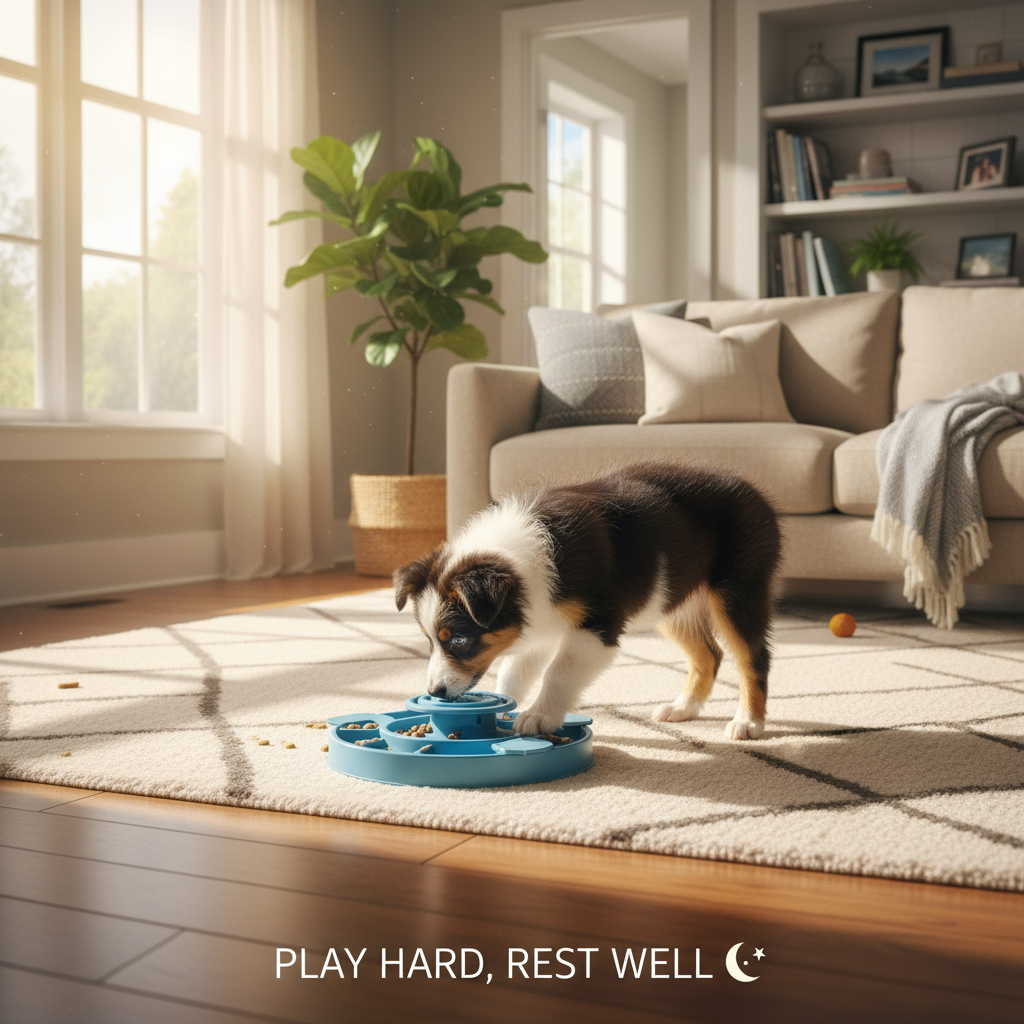
- Puzzle Toys: Toys that require the puppy to lick, paw, or problem-solve to get food are excellent for mental stimulation.
- Training Sessions: Two or three short (5-10 minute) training sessions per day to work on basic cues like ‘sit’, ‘stay’, and ‘come’ engage their mind and strengthen your bond.
- Scent Work Games: Hiding treats around a room and encouraging your puppy to ‘find it’ taps into their natural instincts and is incredibly mentally taxing.
Structured Crate Naps
Just like human toddlers, puppies can become overtired and ‘cranky’. An overtired puppy will struggle to self-soothe and fall asleep at night. Enforcing naps in the crate during the day is a critical but often overlooked component of crate training. A young puppy typically needs 18-20 hours of sleep per day. A good schedule is one hour of activity followed by two hours of nap time in the crate. This not only ensures they are well-rested but also builds a strong positive association with the crate as a place for calm and rest, not just nighttime confinement.
Conclusion
Navigating the challenges of nighttime crate training requires a blend of behavioral understanding, unwavering consistency, and profound patience. It is a process, not an overnight fix. There will be nights of progress followed by nights of regression. This is normal. The goal is not perfection, but a consistent upward trend. By viewing the crate as a sanctuary, establishing a predictable routine, meeting your puppy’s physical and mental needs during the day, and responding to their nighttime calls with purpose and calm, you are laying the foundation for a lifetime of security and confidence for your dog.
Remember, you are teaching your puppy a fundamental life skill. The peaceful nights and the well-adjusted adult dog that result from this early effort are invaluable. Stay the course, trust the process, and soon the sound of nighttime whining will be replaced by the quiet, steady breathing of a puppy sleeping soundly in their safe and comfortable den.