Corgi Ankle Bites? How To Stop The Herding Instinct Without Ruining Their Spirit
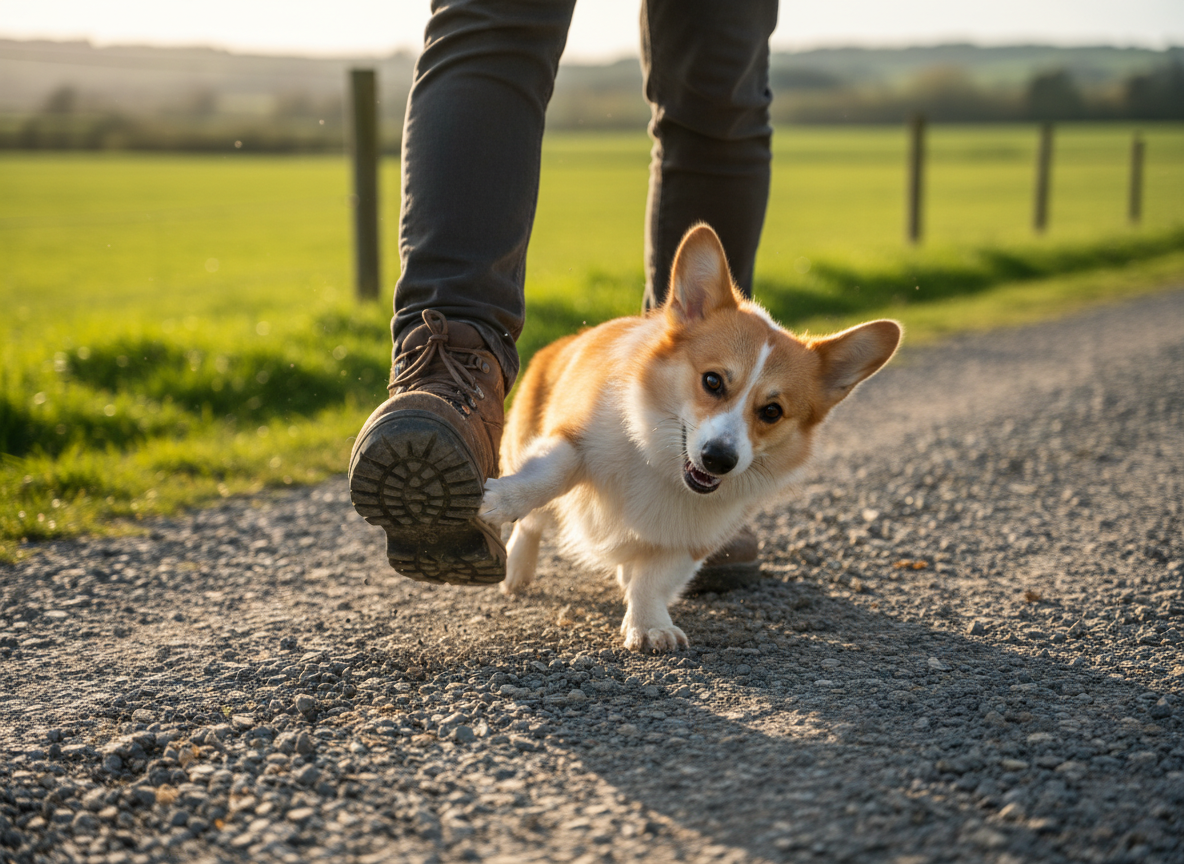
The Pembroke Welsh Corgi, with its distinctive long body, short legs, and spirited personality, has captured the hearts of dog lovers worldwide. These intelligent and affectionate companions bring immense joy to their families. However, many new Corgi owners are often surprised, and sometimes alarmed, by a peculiar and persistent behavior: ankle-biting. That sharp little nip at your heels as you walk across the room can be both startling and frustrating. It’s a behavior that, if left unaddressed, can become a significant nuisance.
Before you label your Corgi as aggressive or naughty, it is crucial to understand the origin of this behavior. This isn’t malice; it’s instinct. Corgis were bred for centuries in the rugged hills of Wales to be premier cattle-herding dogs. Their low stature allowed them to duck under the kicks of cows, and their method for moving the herd was to nip at their heels. This genetic blueprint is still powerfully active in your modern-day companion. They aren’t trying to hurt you; they are trying to herd you.
The challenge, and the purpose of this comprehensive guide, is to address this instinctual behavior in a way that respects your dog’s heritage while establishing clear boundaries for life in a human home. Our goal is not to crush their spirit or punish them for being a Corgi. Instead, we will provide you with a step-by-step, positive-reinforcement-based plan to manage, redirect, and channel that incredible herding drive into appropriate and fun activities. By understanding the ‘why’ behind the nip, you can effectively teach the ‘what to do instead,’ strengthening your bond and creating a well-behaved, happy member of the family.
Understanding the Herding Instinct: Why Your Corgi Nips at Ankles
The ‘Why’ Behind the Nip: A Look into the Corgi’s Heritage
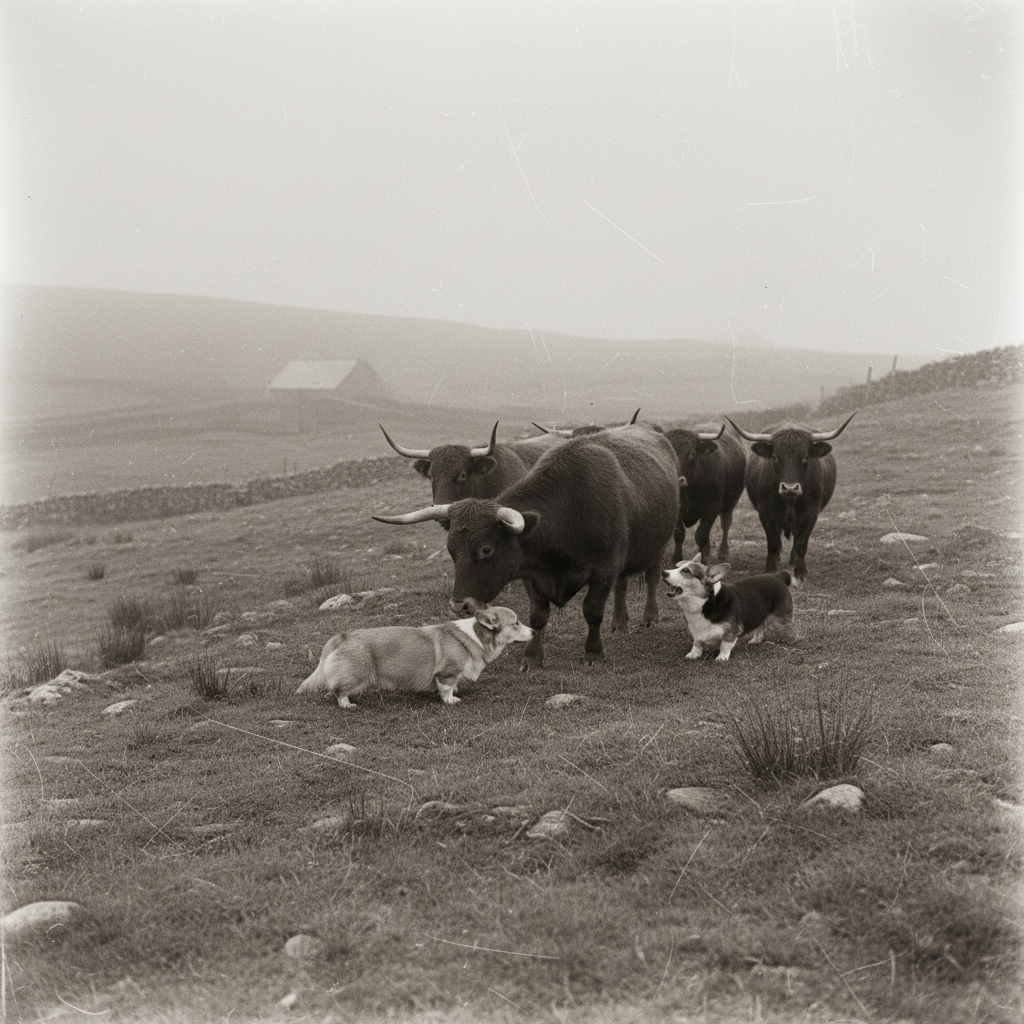
To effectively address your Corgi’s ankle-biting, we must first travel back in time to the pastures of Wales. Both the Pembroke and Cardigan Welsh Corgi were developed as indispensable farmhands, specifically for driving cattle. Unlike sheep-herding dogs that often guide from a distance, Corgis are ‘heelers.’ Their job was to stay low to the ground and nip at the heels (the hocks) of cattle to keep them moving. This was not a gentle nudge; it had to be firm enough to motivate a 1,500-pound animal. This instinct is a core part of their genetic makeup—it’s as natural to a Corgi as retrieving is to a Labrador or pointing is to a Pointer.
Instinct vs. Aggression: A Critical Distinction
It is vital for owners to distinguish between this herding behavior and true aggression. Herding nips are typically quick, calculated, and not intended to cause serious injury. You might notice the behavior intensifies when there is movement, such as children running, someone walking quickly, or even the vacuum cleaner moving across the floor. Your Corgi’s brain interprets this motion as something that needs to be controlled or ‘herded.’ In contrast, aggressive biting is often accompanied by other warning signs such as deep growling, stiff body posture, raised hackles, and a prolonged, hard bite. Understanding that you’re dealing with a deeply ingrained instinct, rather than a behavioral problem rooted in aggression, is the first step toward a compassionate and effective training solution. Punishing the instinct will only create confusion and anxiety; channeling it is the key to success.
Expert Tip: Observe the context. If the nipping happens almost exclusively during movement and is directed at heels or ankles, you are almost certainly witnessing a herding instinct. Recognizing this allows you to shift your mindset from ‘punishment’ to ‘management and redirection.’
Preparing for Success: Essential Tools and Mindset
Setting the Stage for Effective Training
Before you begin actively training, it’s essential to prepare your environment and your mindset. Successful dog training is as much about preparation as it is about execution. By having the right tools on hand and adopting the correct mental approach, you set both you and your Corgi up for a positive outcome. The goal is to make the right choice the easiest choice for your dog.
Physical Tools for Management and Redirection
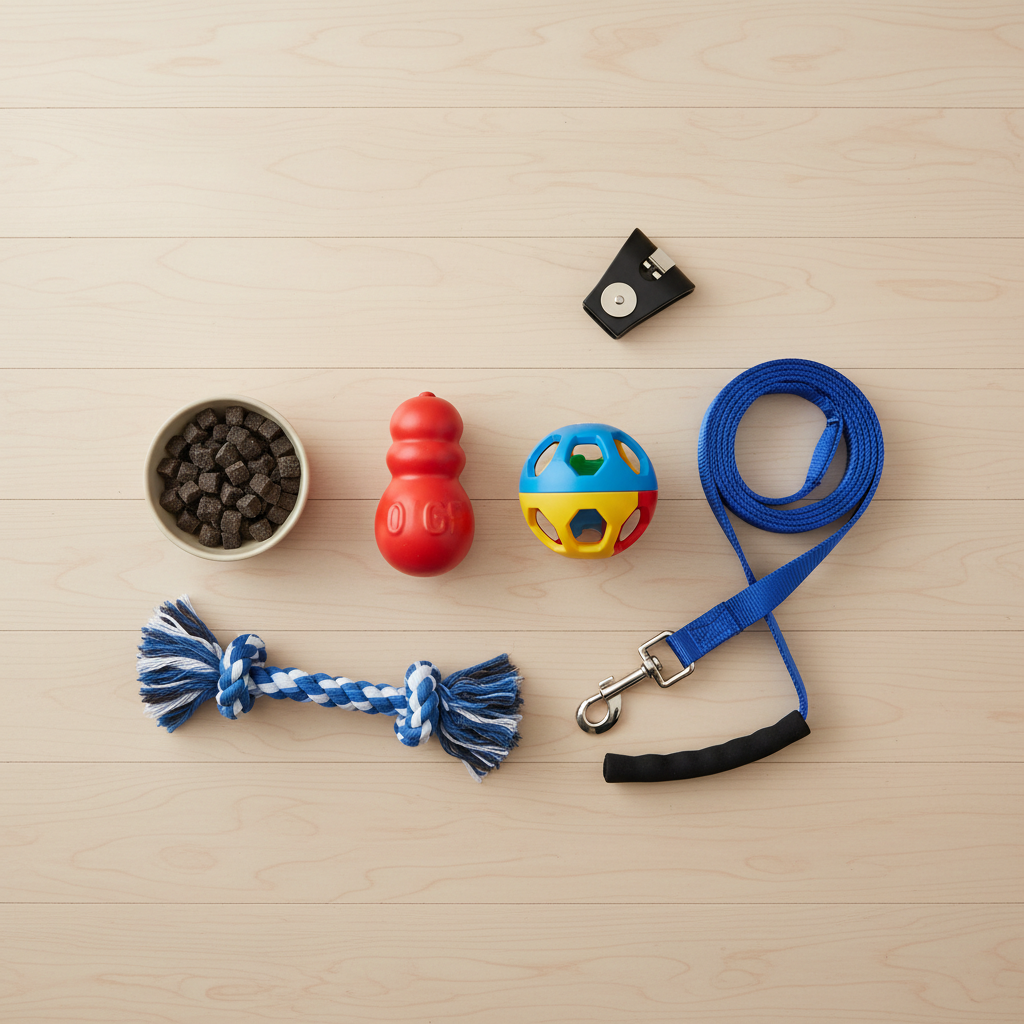
Having these items readily available will make the training process smoother and more consistent. Keep them in multiple rooms where the nipping is most likely to occur.
- High-Value Chew Toys: These are not the toys your dog idly chews on. These should be special, durable toys like rubber treat-dispensing toys (e.g., Kongs), puzzle toys, or sturdy rope toys that are only used for redirection.
- High-Value Treats: Small, soft, and incredibly tasty treats (like small pieces of chicken, cheese, or commercial training treats) are necessary to reward your Corgi for making the right choice, such as choosing a toy over your ankle.
- Baby Gates or Exercise Pens: Management is a critical component of preventing the rehearsal of unwanted behaviors. Gates can help create a safe space for your Corgi when you cannot actively supervise them, preventing nipping incidents before they happen.
- A Leash: Keeping a light leash on your Corgi, even indoors (under supervision only), can help you gently guide them away from a ‘herding’ situation without a physical struggle.
The Trainer’s Mindset: Patience, Consistency, and Positivity
Your attitude is the most important tool in your arsenal. Remember, you are working against centuries of genetic programming. This behavior will not disappear overnight.
- Patience: There will be good days and bad days. Understand that progress is not always linear. Stay calm and patient, especially when you feel frustrated.
- Consistency: Every single person in the household must be on the same page. If one person allows nipping while another corrects it, the Corgi will become confused, and the training will fail. Consistency is the bedrock of clear communication with your dog.
- Positive Reinforcement: We are focusing on teaching your Corgi what to do instead of simply punishing what not to do. This approach builds a stronger bond, fosters a love of learning, and avoids the potential fallout of punishment-based methods, such as fear and anxiety.
The Four-Step Redirection Method: A Practical Guide
A Step-by-Step Plan to Stop Ankle Biting
This four-step method is designed to be a clear, actionable process. It combines proactive management with reactive training to effectively address ankle-nipping. Remember to implement these steps consistently for the best results.
-
Step 1: Management and Prevention
The easiest way to stop an unwanted behavior is to prevent it from happening in the first place. Every time your Corgi successfully nips an ankle, the behavior is reinforced. Use baby gates to section off parts of the house during high-traffic times. If children are running and playing, have your Corgi in a separate, safe area with an engaging puzzle toy. By managing the environment, you reduce the number of opportunities for your dog to practice the nipping behavior.
-
Step 2: The ‘Stop the Game’ Technique
When a nip does occur, you must teach your Corgi that nipping human skin immediately stops all fun and interaction. The moment you feel their teeth on your skin or clothing, let out a sharp, high-pitched ‘Ouch!’ or ‘Yip!’. Do not scream or sound angry, just surprised. Immediately freeze all movement. Become as boring as a tree. If the puppy disengages, wait a second, then calmly praise and offer a toy. If they persist, calmly stand up and walk out of the room or place them behind a baby gate for a brief (30-60 second) time-out. This teaches them that nipping makes their favorite person disappear.
-
Step 3: Redirect to an Appropriate Outlet
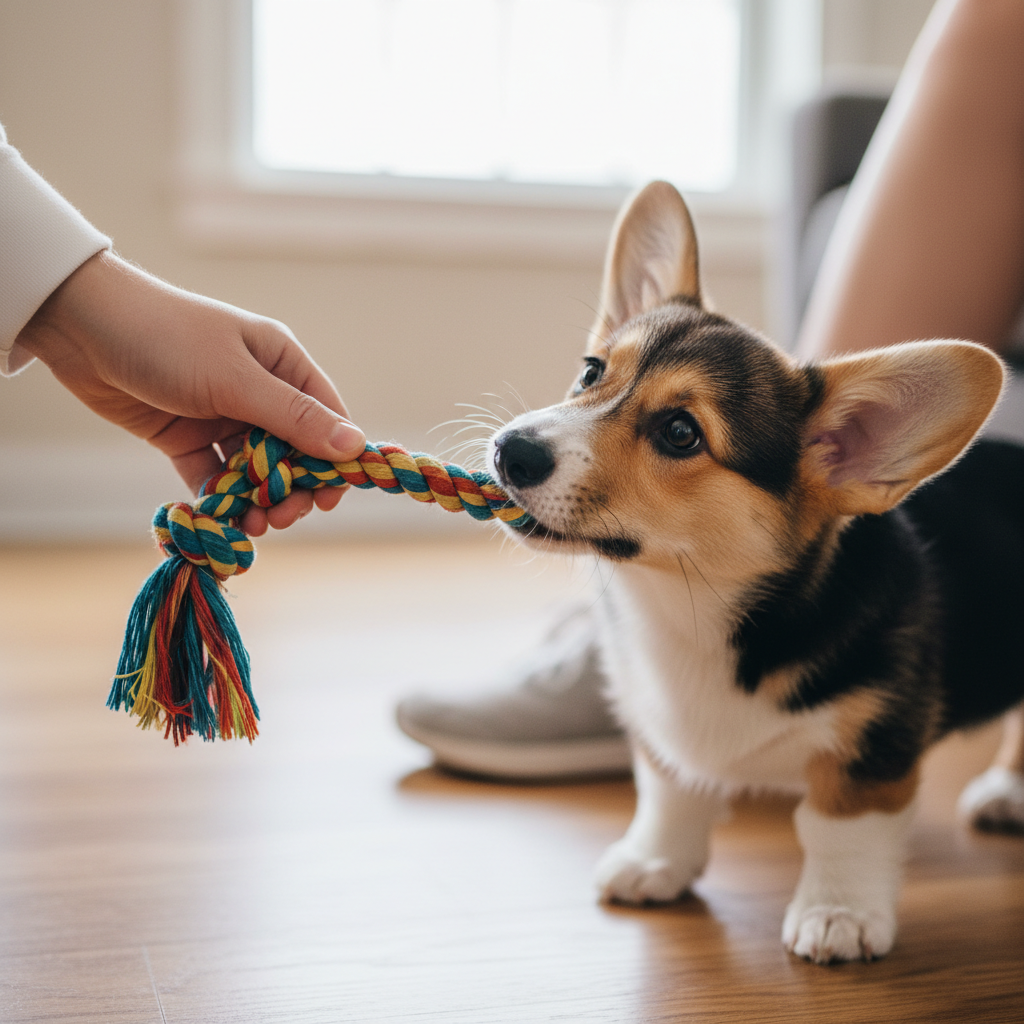
This is the most critical step. You must show your Corgi what you want them to do instead. Always have an appropriate toy ready. When you see your Corgi gearing up to nip—they might crouch, their eyes might fixate on your feet—preempt the behavior. Wiggle the toy, make it exciting, and encourage them to bite and play with the toy instead of your ankle. If they nip you first, use the ‘Stop the Game’ technique, and once they’ve disengaged, immediately offer the appropriate toy to redirect their energy. This channels their need to bite onto an acceptable object.
-
Step 4: Reinforce and Reward Calm Behavior
Actively look for and reward the behaviors you want to see more of. If you are walking around and your Corgi is walking calmly beside you or lying down instead of trying to herd you, calmly praise them and drop a high-value treat. You can also teach an incompatible behavior, like ‘Sit’ or ‘Place.’ Ask for a ‘Sit’ as someone walks by. When they comply, they cannot simultaneously be nipping an ankle. Rewarding this calm, alternative behavior heavily will teach them that good things happen when they keep their teeth to themselves.
Beyond Redirection: Channeling the Herding Drive Positively

Fulfilling Your Corgi’s Instinctual Needs
Simply stopping the ankle-biting is only half the battle. To truly have a happy, well-adjusted Corgi, you must provide healthy and appropriate outlets for their incredible intelligence and drive. A bored Corgi is a mischievous Corgi. Channeling their herding instinct into positive activities not only prevents problem behaviors but also strengthens your bond and celebrates the breed for what it is. This is how you address the behavior without ‘ruining their spirit.’
Canine Sports and Activities
Enrolling your Corgi in a dog sport can be a fantastic way to provide physical and mental stimulation. These activities are designed to work your dog’s brain and body in a structured, positive way.
| Activity | Description | Benefit for Corgis |
|---|---|---|
| Treibball (Urban Herding) | A sport where dogs ‘herd’ large inflatable balls into a goal. | Directly simulates the act of herding in a fun, safe environment that doesn’t involve livestock or ankles. |
| Agility | An obstacle course race where you guide your dog through tunnels, jumps, and weave poles. | Builds confidence, improves off-leash obedience, and burns significant physical and mental energy. |
| Nose Work | A detection-style sport that trains dogs to find specific scents. | Engages their powerful sense of smell and provides intense mental stimulation, which can be just as tiring as physical exercise. |
Enrichment at Home
You don’t have to compete to keep your Corgi fulfilled. Incorporate simple enrichment activities into your daily routine.
- Puzzle Feeders and Food Toys: Make your Corgi work for their meals. This mimics the problem-solving aspects of their ancestral work and prevents boredom.
- Structured Games of Fetch and Tug: These games, when played with rules (like ‘drop it’), can be a great outlet for their energy and prey drive. Tug can be especially satisfying for their need to bite and hold.
- Learning New Tricks: Corgis are highly intelligent and love to learn. A 10-15 minute trick training session can be incredibly rewarding and mentally taxing for them, satisfying their need to ‘work’ with you.
Troubleshooting Common Corgi Training Challenges

Navigating Bumps in the Road
Even with the best plan, training can sometimes hit a plateau. It’s important to anticipate common challenges and know how to address them. Consistency and a willingness to adjust your approach are key to long-term success.
Common Mistake 1: Inconsistency Among Family Members
The Problem: One person follows the training plan perfectly, while another lets the puppy nip their hands or ankles during play. This sends mixed signals to the Corgi, who cannot understand why the rules change depending on the person.
The Solution: Hold a family meeting. Explain to everyone, including older children, why consistency is crucial. The rules must be the same for everyone: ‘Teeth on human skin or clothing are never okay.’ Everyone must use the same ‘Ouch!’ and redirection technique. Post the rules on the refrigerator if necessary to keep everyone on track.
Common Mistake 2: Using Physical Punishment or Harsh Scolding
The Problem: An owner becomes frustrated and resorts to yelling, tapping the dog on the nose, or other forms of physical punishment. This approach is counterproductive. It can damage your bond with your Corgi, create fear and anxiety, and may even escalate the biting as a defensive reaction.
The Solution: If you feel yourself getting frustrated, it’s time for a break. Put your Corgi in their crate or a safe, puppy-proofed room with a chew toy and step away. Remind yourself that this is a natural instinct, not disobedience. Recommit to the positive reinforcement plan, which builds trust and cooperation.
When to Seek Professional Help
If you have been consistent with your training for several weeks and see little to no improvement, or if the nipping seems to be escalating or showing signs of actual aggression (as described in the first section), it is time to consult a professional. Look for a Certified Professional Dog Trainer (CPDT-KA) or a veterinary behaviorist. These experts can provide a personalized assessment and training plan for you and your Corgi. It’s not a sign of failure; it’s a sign of responsible pet ownership to know when to ask for expert guidance.
Key Takeaway: Training is a journey, not a destination. Be prepared to be patient, consistent, and always positive. If you’re struggling, professional help is a valuable resource that can get you back on the right track.
Conclusion
Living with a Corgi means embracing the vibrant, intelligent, and instinct-driven dog that they are. The tendency to nip at ankles is not a flaw in their character but a beautiful, albeit inconvenient, echo of their working heritage. By understanding that this behavior stems from a deep-seated herding instinct, you can approach training with empathy and intelligence rather than frustration.
The journey to a nip-free home is paved with consistency, patience, and positive reinforcement. The four-step method—Manage, Stop the Game, Redirect, and Reinforce Calm—provides a clear and effective framework. It teaches your Corgi the house rules without punishing them for their natural tendencies. Remember, the ultimate goal extends beyond simply stopping an unwanted behavior. It’s about fulfilling your Corgi’s needs by channeling their energy and drive into positive outlets like dog sports and daily enrichment. This holistic approach ensures you are not just correcting your dog, but are also nurturing their spirit.
By committing to this compassionate training process, you will do more than solve a simple ankle-biting problem. You will build a relationship with your Corgi based on mutual respect and clear communication, ensuring a lifetime of joyful companionship with your spirited, short-legged herder.