Boredom Busters: Best Games for Dogs Wearing the Cone of Shame
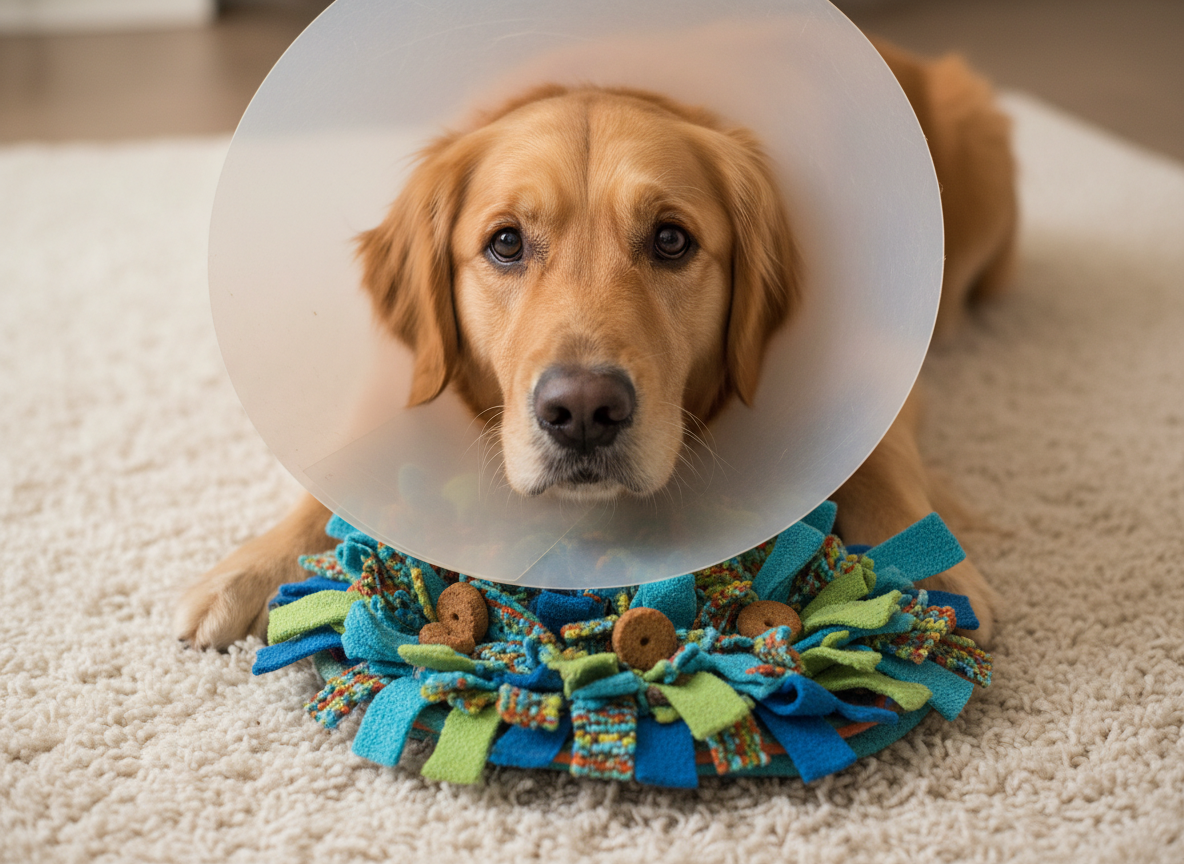
The Elizabethan collar, more commonly known as the “cone of shame,” is a necessary medical device for preventing a dog from licking or chewing at a wound, incision, or irritated skin. While it plays a critical role in a safe and speedy recovery, it can also be a significant source of stress, confusion, and profound boredom for your canine companion. Their vision is limited, their movement is clumsy, and their usual outlets for energy and play are suddenly off-limits. This period of confinement can lead to frustration and anxiety, potentially hindering their healing process.
As canine specialists, we understand that a dog’s mental health is intrinsically linked to their physical recovery. Providing safe and appropriate mental stimulation is not just about keeping them entertained; it’s a crucial component of their overall care. Engaging their brain helps reduce stress, prevents the development of problem behaviors born from boredom, and strengthens the bond between you and your pet during a challenging time. This guide provides a comprehensive overview of the best cone-friendly games and activities to help your dog navigate their recovery with a wagging tail.
Why Mental Stimulation is Crucial During Recovery
Understanding the ‘Cone of Shame’ Challenge
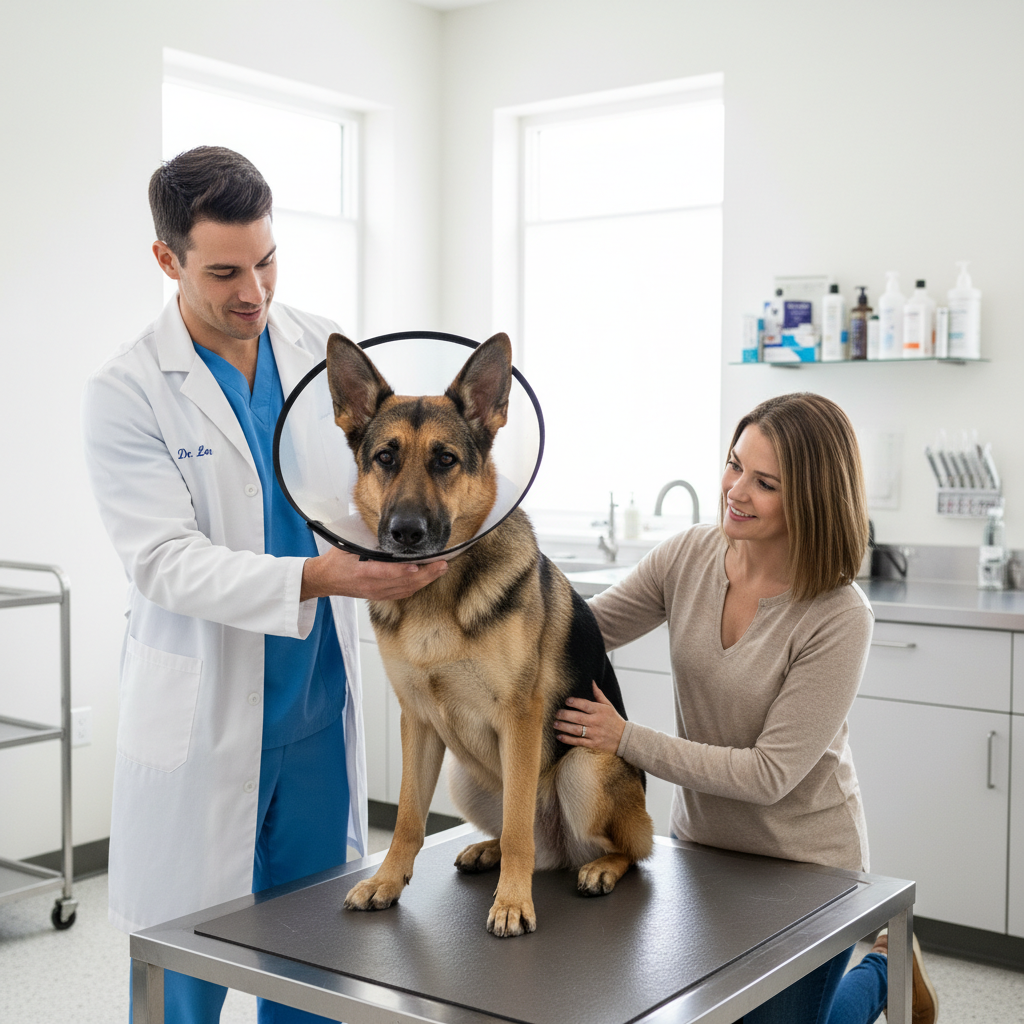
Before diving into the games, it’s essential to understand why the recovery period is so challenging for a dog. A cone obstructs peripheral vision, can amplify sounds, and makes navigating familiar spaces a new and difficult task. This sensory disruption, combined with restricted physical activity, creates a perfect storm for mental fatigue and anxiety. A bored dog is more likely to become fixated on their incision or injury, attempt to remove the cone, or develop other undesirable behaviors like excessive barking or whining.
Mental exercise provides a much-needed outlet for their cognitive energy. When a dog is focused on a puzzle or a scent game, they are less likely to be focused on their discomfort or the frustrating cone. This redirection of energy serves several key purposes:
- Reduces Stress: Problem-solving activities, like working on a food puzzle, can release calming endorphins.
- Prevents Destructive Behavior: A mentally tired dog is a well-behaved dog. Channeling their energy into approved activities prevents them from finding their own, often destructive, entertainment.
- Strengthens Your Bond: Engaging in gentle, one-on-one activities reinforces your role as their provider and protector, building trust during a vulnerable period.
- Promotes Rest: Just as physical exercise tires a dog out, so does a good brain workout. This can encourage them to rest more, which is vital for healing.
Expert Tip: Remember that your dog takes cues from you. If you treat the cone as a negative, stressful object, your dog will likely feel more anxious. Approach this period with patience, positivity, and plenty of gentle encouragement.
Nose Work and Scent Games: Engaging Their Strongest Sense

Harnessing the Power of Scent
A dog’s most powerful sense is their nose, and fortunately, the cone does little to impede it. Scent-based games are a fantastic way to provide enrichment without requiring much physical movement. They are mentally taxing in the best way possible and allow your dog to engage in a natural, instinctual behavior. Here are some simple yet highly effective nose work games.
The Snuffle Mat
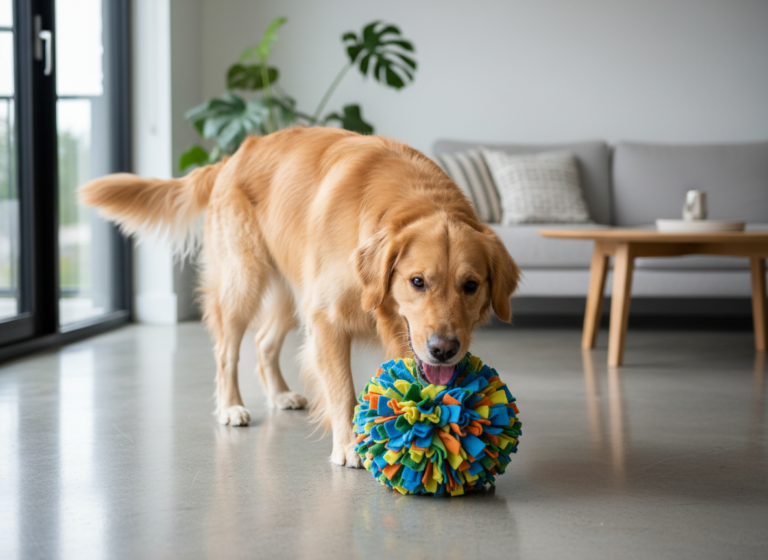
A snuffle mat is a fabric mat with many fleece strips tied to it, designed for hiding dry food or treats. Your dog must use their nose to push through the strips and find the rewards. It encourages slow feeding and is an excellent stationary activity.
The ‘Find It’ Game
This is a classic that can be easily adapted. Start simple, especially if your dog is new to the game.
- Have your dog in a ‘stay’ position (or have someone gently hold them).
- Let them watch you place a high-value treat a few feet away.
- Release them with a cue like “Find it!”.
- As they succeed, you can gradually increase the difficulty by hiding treats just around a corner or behind the leg of a chair, ensuring the path is clear for their cone.
Shell Game
Use three plastic cups or containers. Place a treat under one while your dog watches, shuffle them around slowly, and then encourage your dog to indicate which cup hides the treat by nosing or pawing at it. This game is fantastic for focus and problem-solving.
Safety Note: Always play scent games on a non-slip surface like a rug or carpet to prevent your dog from slipping if they get overly excited. Ensure the area is free of obstacles they might bump into with their cone.
Brain Teasers: Stationary Puzzles and Food-Dispensing Toys
Puzzles That Promote Calm
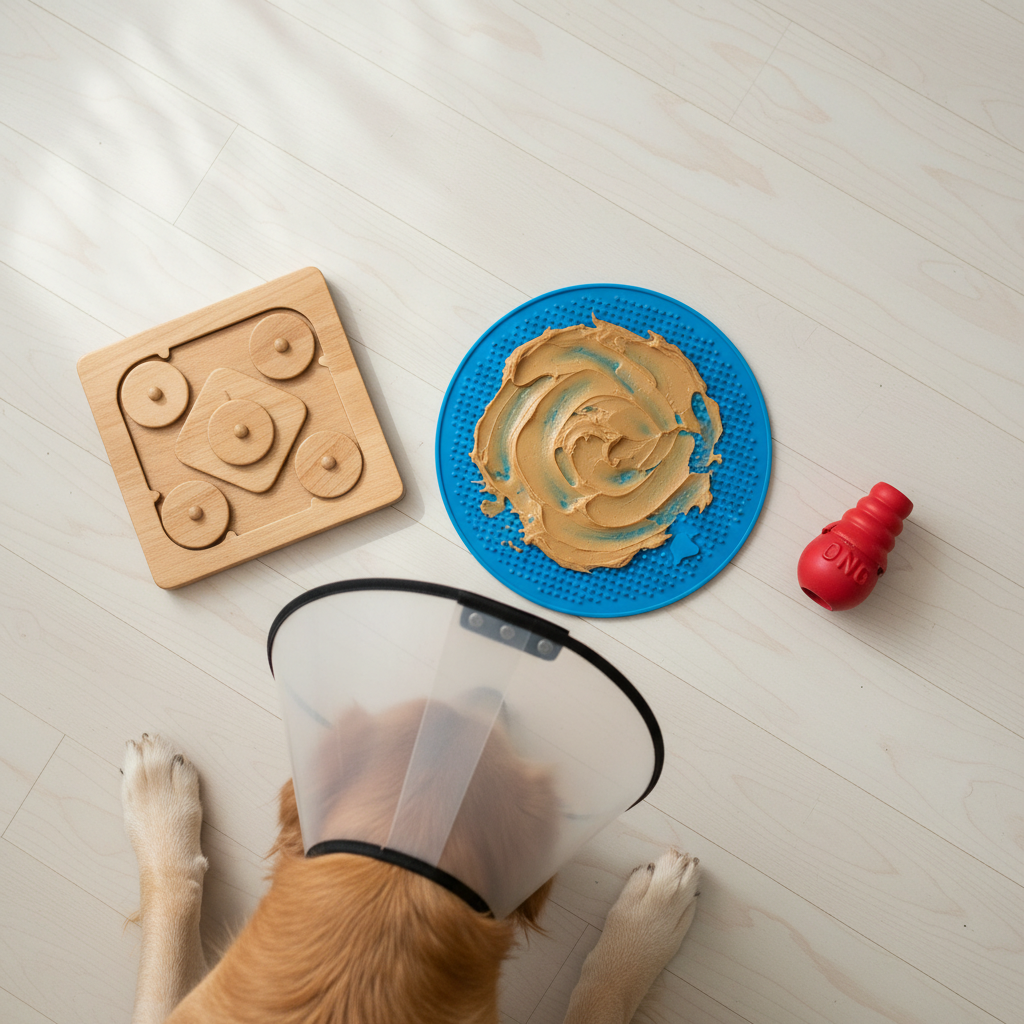
Stationary puzzles are a cornerstone of recovery-period enrichment. They require brainpower but very little body movement. The act of licking, in particular, is a self-soothing behavior for dogs, making toys like lick mats incredibly beneficial for reducing anxiety.
Lick Mats and Stuffable Toys
Smear a lick mat with a dog-safe substance like plain yogurt, pumpkin puree, or wet dog food and freeze it for a longer-lasting challenge. Classic stuffable rubber toys (like those from KONG) can be filled with a similar mixture or your dog’s kibble soaked in a bit of water and then frozen. This provides a long-lasting, calming activity that can keep them occupied for a significant amount of time.
Stationary Puzzle Boards
Choose puzzle boards that are low to the ground and don’t have tall, complex parts that could trap a cone. Look for puzzles with simple sliding components or lids that can be lifted. You must supervise your dog closely with these toys to ensure they don’t get frustrated or stuck. Start with a beginner-level puzzle to build their confidence.
When selecting a toy, consider the size and shape of both your dog and their cone. The goal is to challenge their brain, not create a frustrating physical impasse. The following table compares some popular options:
| Toy Type | Primary Benefit | Best For | Supervision Level |
|---|---|---|---|
| Lick Mat | Calming, anxiety reduction, long-lasting treat | Anxious dogs, slow feeding | Low (once accustomed) |
| Stuffable Rubber Toy (e.g., KONG) | Durable, mentally engaging, encourages chewing | Most dogs, power chewers (with appropriate durability) | Moderate |
| Beginner Puzzle Board | Problem-solving skills, builds confidence | Dogs new to puzzles, requires focus | High (initially) |
| Snuffle Mat | Encourages natural foraging instinct | All dogs, especially scent-hounds | Moderate |
Gentle Training and Quiet Connection
Reinforcing Bonds and Basic Cues
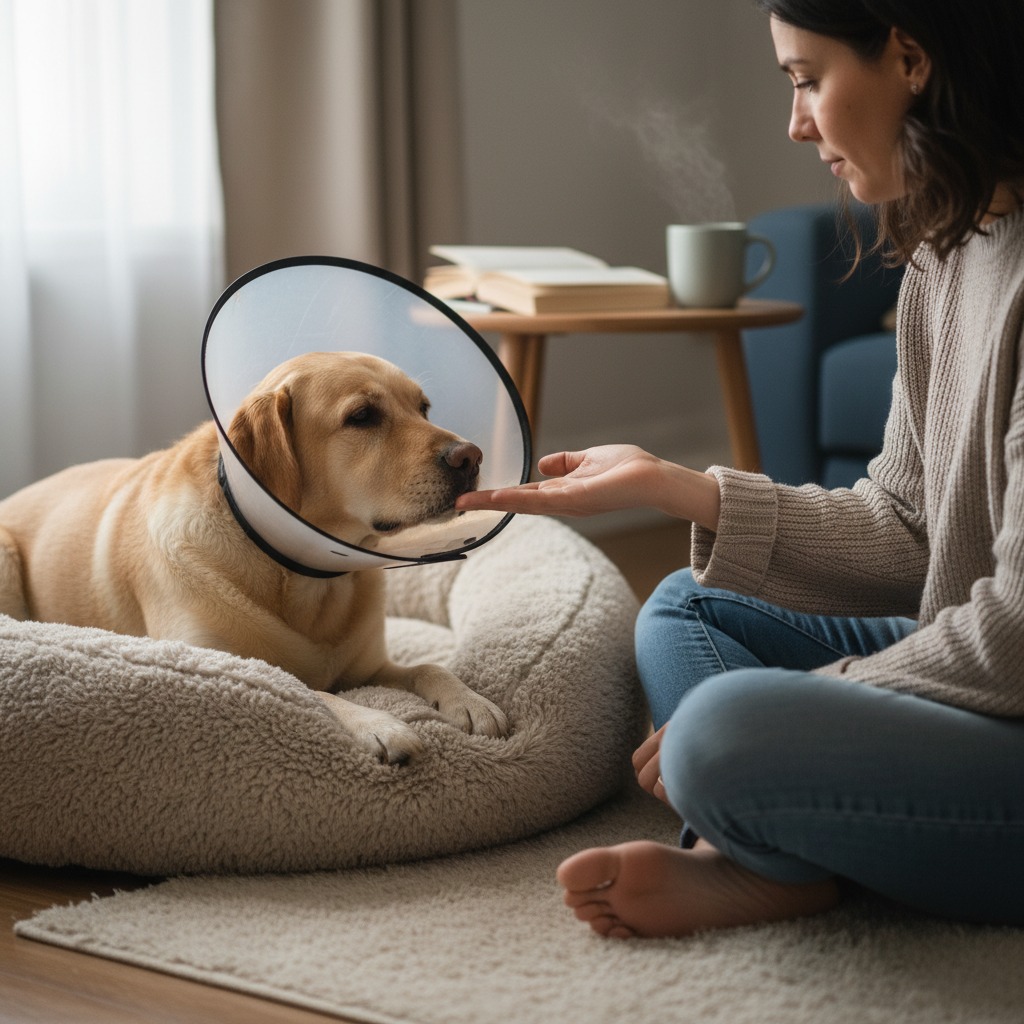
Your dog’s recovery is an excellent opportunity to work on calm, stationary training exercises. These sessions provide mental stimulation and reinforce your bond when they need reassurance the most. Keep sessions short (5-10 minutes) and always end on a positive note.
Teach a ‘Settle’ or ‘Place’ Cue
Teaching your dog to go to their bed or a specific mat and lie down calmly is an invaluable life skill, and it’s perfect for a recovering dog. Use positive reinforcement with treats and praise to reward them for staying in their designated spot.
Practice ‘Touch’ and ‘Watch Me’
The ‘touch’ cue (having your dog touch their nose to your hand) requires no movement other than their head and neck. It’s a great way to redirect their focus. Similarly, ‘watch me’ builds engagement and helps them focus on you rather than on their surroundings or discomfort.
Muffin Tin Game
For a simple DIY puzzle, place a few treats in a muffin tin and cover them with tennis balls or other dog-safe toys. Your dog has to figure out how to remove the balls to get to the treats. Ensure the balls are large enough that they cannot be swallowed.
The Importance of Quiet Time
Never underestimate the power of simply being present. Spend time sitting with your dog, offering gentle pets (avoiding the head/cone area if it’s sensitive), and speaking in a calm, soothing voice. This co-regulation helps lower their stress levels and reassures them that everything is okay. This quiet connection is a form of mental enrichment in itself.
Safety Protocols: Cone-Friendly Playtime Rules
Adapting the Environment for Safe Play
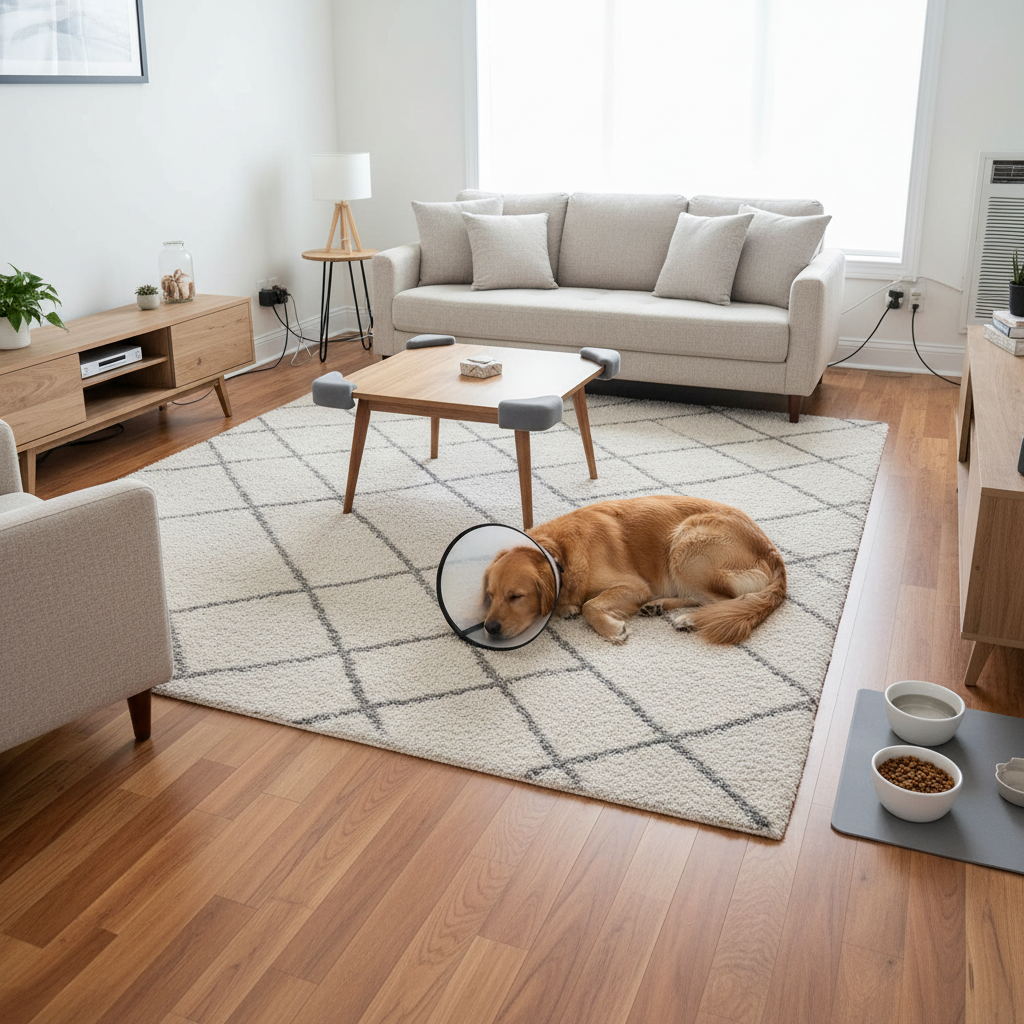
Safety must be your top priority when your dog is wearing a cone. Their altered perception and mobility make them more prone to accidents. Before introducing any new game or toy, you must adapt their environment and establish clear rules for playtime.
- Constant Supervision is Non-Negotiable: Never leave your dog unattended with a new puzzle toy. They could get a jaw or a part of the cone stuck, or they might break off and ingest a piece of the toy. Observe how they interact with the toy to ensure they can use it safely and without excessive frustration.
- Cone-Proof the Play Area: Your dog will be clumsier than usual. Create a safe, open space for these activities. Block off stairs, cover sharp furniture corners, and remove any fragile items from their path. Ensure there are no small gaps between furniture where the cone could get wedged.
- Choose Appropriate Toys: Select toys made from durable, non-toxic materials. Ensure they are the correct size for your dog and do not have small, chewable parts that could become a choking hazard. All puzzles and toys should be easy to clean to maintain hygiene around the surgical site.
- Monitor for Frustration: Watch your dog’s body language. If a game is too difficult, it can cause more stress. Signs of frustration include whining, frantic pawing, or giving up entirely. If you notice this, make the game easier or switch to a different activity. The goal is enrichment, not a stressful test.
- Keep It Low-Impact: All activities should be grounded. Absolutely no jumping, running, or rough play should be permitted during the recovery period. Consult your veterinarian about the specific activity restrictions for your dog’s condition.
Conclusion
Navigating the recovery period with a dog in a cone requires patience, creativity, and empathy. While the ‘cone of shame’ may limit their physical world, it doesn’t have to mean an end to all fun and engagement. By focusing on activities that stimulate their powerful sense of smell, challenge their minds with stationary puzzles, and reinforce your bond through gentle training, you can transform a stressful time into a period of quiet connection and healing.
Remember, providing for your dog’s mental health is a vital part of your responsibility as a pet owner, especially when they are vulnerable. By implementing these boredom-busting strategies, you are not just passing the time; you are actively contributing to a happier, healthier, and less stressful recovery for your beloved companion. Here’s to a speedy recovery and the day the cone comes off for good!