Bored of Basic Sit? Why Rally Obedience is the Ultimate Bonding Sport for You
As dedicated pet owners, we invest countless hours teaching our dogs foundational commands: sit, stay, come, down. While essential for safety and good manners, the endless repetition can sometimes lead to a plateau in both our dog’s engagement and our own enthusiasm. If you find yourself and your canine companion feeling uninspired by the basics, it’s time to discover a sport that revitalizes training and deepens your connection: Rally Obedience.
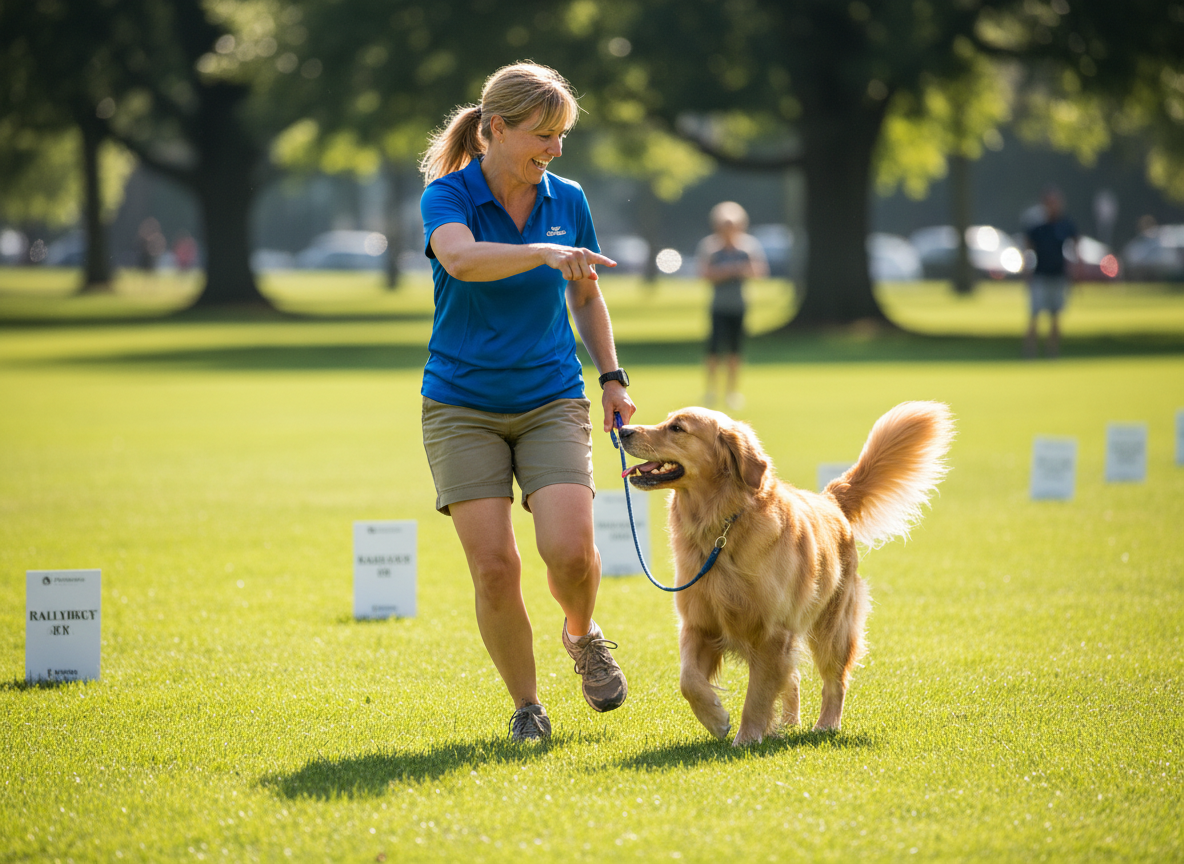
Often described as a perfect blend of traditional obedience and agility, Rally is a team sport where you and your dog navigate a course of numbered signs. Each sign provides instructions for a specific skill or sequence. Unlike the formal, silent precision of traditional obedience, Rally encourages communication and enthusiasm. It’s less about perfect form and more about teamwork, creating a positive, confidence-building experience for dogs and handlers of all levels. This article will serve as your comprehensive guide to understanding why Rally is more than just a sport—it’s a powerful tool for building an extraordinary partnership with your dog.
What is Rally Obedience? The Core Concepts Explained
What is Rally Obedience? The Core Concepts Explained
At its heart, Rally Obedience, often called Rally-O, is a sport designed to be an enjoyable and accessible entry point into the world of canine performance events. It was created to foster a positive working relationship between dog and handler, emphasizing teamwork over rigid precision. Let’s break down the fundamental components that make Rally a unique and rewarding activity.
The Course and Signs
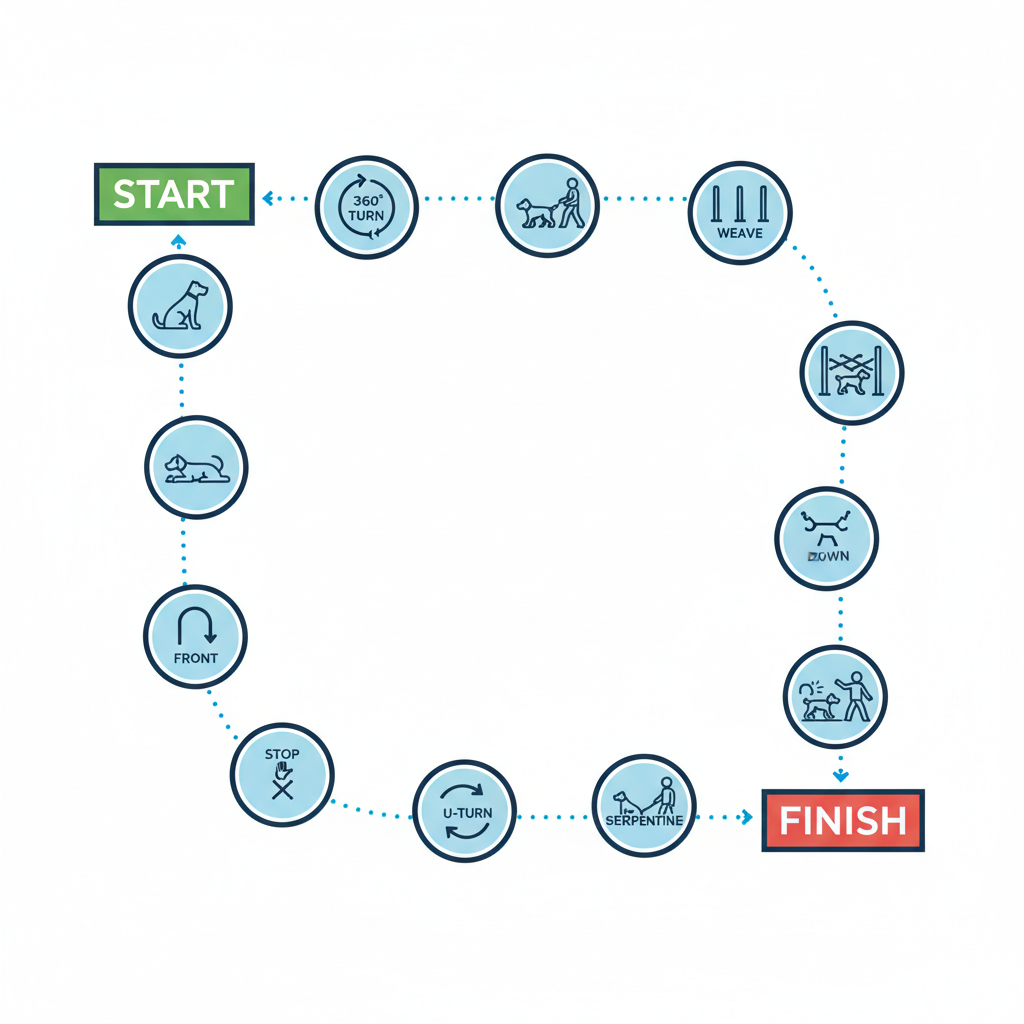
A Rally course consists of a series of stations, each marked with a numbered sign. A typical course may have anywhere from 10 to 20 signs, depending on the skill level. Handlers and their dogs move through the course at their own pace, following the signs in numerical order. Each sign illustrates a specific exercise the team must perform. These exercises are based on standard obedience skills but are linked together in a fluid, continuous performance.
Examples of exercises on a Novice level course might include:
- Right Turn / Left Turn: Simple changes of direction while the dog maintains a heel position.
- Sit / Down / Stand: The dog performs the command while the handler pauses beside them.
- 360-Degree Turn: The handler and dog perform a full circle together.
- Spiral: The team navigates a set of cones in a spiral pattern, first inward and then outward.
The Key Differences from Traditional Obedience
While both sports share a foundation of control and teamwork, Rally distinguishes itself in several key ways. Understanding these differences is crucial to appreciating its appeal.
| Feature | Rally Obedience | Traditional Obedience |
|---|---|---|
| Communication | Handlers are encouraged to talk to, praise, and signal their dogs throughout the course. Unlimited communication is a hallmark of the sport. | Communication is highly restricted. Handlers typically give commands only when instructed by a judge and cannot offer praise during the performance. |
| Pacing | The course is performed at a brisk, natural pace. The team moves continuously from one sign to the next. | Exercises are performed individually as directed by a judge, with significant pauses between each component. The pace is very deliberate and formal. |
| Atmosphere | The environment is relaxed, supportive, and fun. The goal is to have a positive experience together. | The atmosphere is much more formal and serious, with an emphasis on precision and perfection. |
| Scoring | Scoring starts with a perfect 100 points, with points deducted for errors. The focus is on the overall teamwork and willingness of the dog. | Scoring is also based on deductions from a perfect score, but the standards for precision in heeling, fronts, and finishes are far more stringent. |
Expert Tip: The most significant shift for handlers new to Rally is learning to use their voice. Constant encouragement not only helps guide your dog but also builds their confidence and makes the entire experience more enjoyable for both of you.
Essential Foundation Skills: Preparing Your Canine Partner
Essential Foundation Skills: Preparing Your Canine Partner
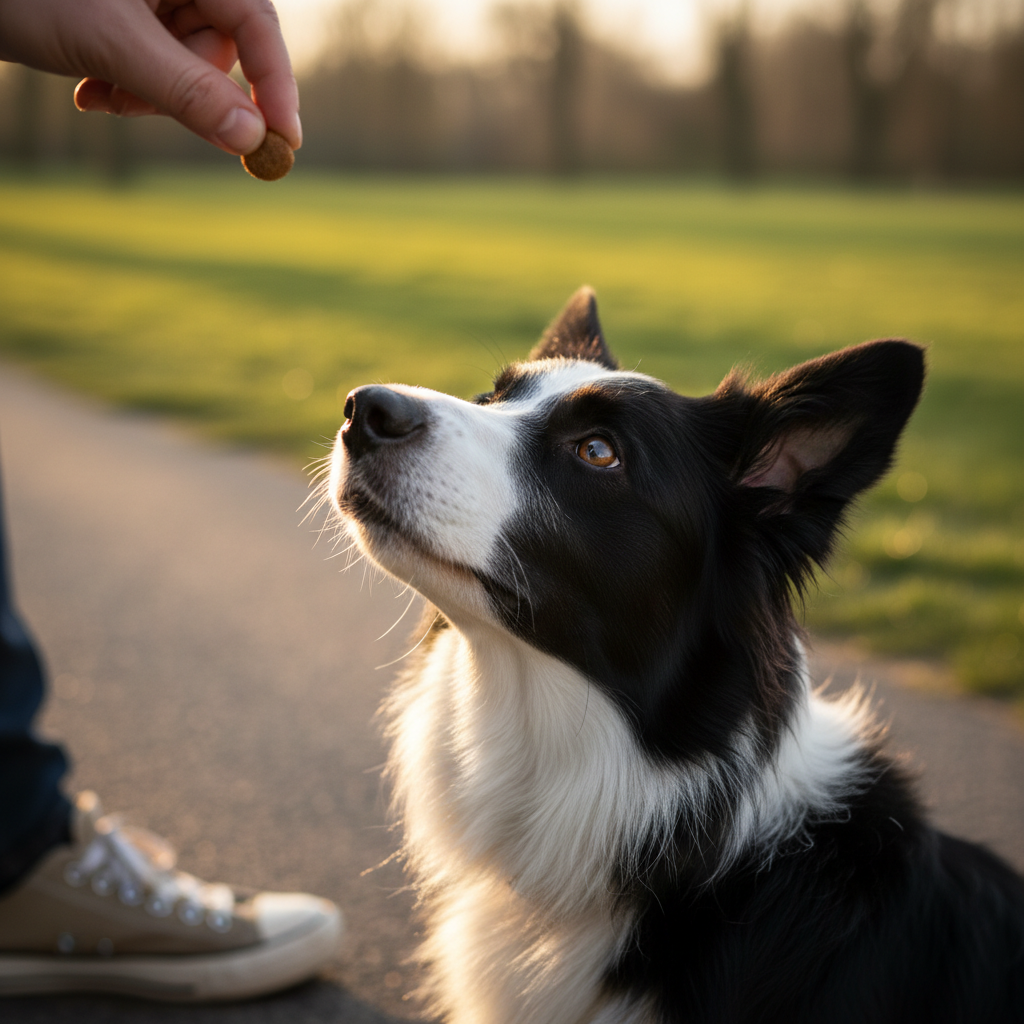
Before stepping into a Rally ring, it’s essential to ensure your dog has a solid grasp of some core obedience skills. Rally builds upon these fundamentals, weaving them into new and exciting combinations. Mastering these prerequisites will make your transition into the sport smooth, successful, and stress-free for your canine teammate.
Prerequisite Behaviors for Success
Think of these skills as the alphabet of Rally; without them, you cannot form the words and sentences that make up a course. Focus on making these behaviors reliable in various environments before introducing the complexity of Rally signs.
- Loose-Leash Walking / Heeling: The majority of a Rally course is spent moving from sign to sign. Your dog should be able to walk politely on a loose leash at your left side without forging ahead, lagging behind, or sniffing excessively. A formal ‘heel’ position is the goal, but a comfortable, attentive loose-leash walk is a fantastic starting point.
- Basic Positions (Sit, Down, Stand): Your dog must be able to perform these three positions promptly on a verbal cue or hand signal. In Rally, you’ll be asked to have your dog perform these actions while you are standing still, and sometimes while you are in motion.
- A Reliable Stay: While long, out-of-sight stays are not a feature of beginner Rally, your dog will need to hold a sit or down position for a few seconds while you perform an action, such as walking a circle around them.
- Focus and Engagement: Perhaps the most critical skill is your dog’s ability to focus on you, even with mild distractions. Practice ‘watch me’ or ‘look’ cues to build engagement. This connection is the glue that holds your performance together.
Building a Positive Training Mindset
Beyond the physical behaviors, preparing for Rally involves cultivating the right mindset. This sport is a celebration of your partnership. Use positive reinforcement techniques—such as treats, toys, and praise—to build a strong history of reward for these foundation skills. Your dog should associate training with fun and rewarding experiences. Avoid using punishment or harsh corrections, as this can damage your dog’s confidence and willingness to work with you, which is the very essence of Rally.
Training Takeaway: Don’t rush this stage. A few extra weeks spent solidifying a reliable ‘sit-stay’ or a focused ‘heel’ will pay immense dividends when you begin linking behaviors together on a course. A strong foundation prevents future frustration.
Getting Started: Your First Steps into the Rally Ring
Getting Started: Your First Steps into the Rally Ring
With a solid foundation in place, you and your dog are ready to embark on your Rally journey. The initial steps are about learning the language of the signs and building the stamina to perform a sequence of exercises. This is where the real fun begins.
Finding a Class or Instructor
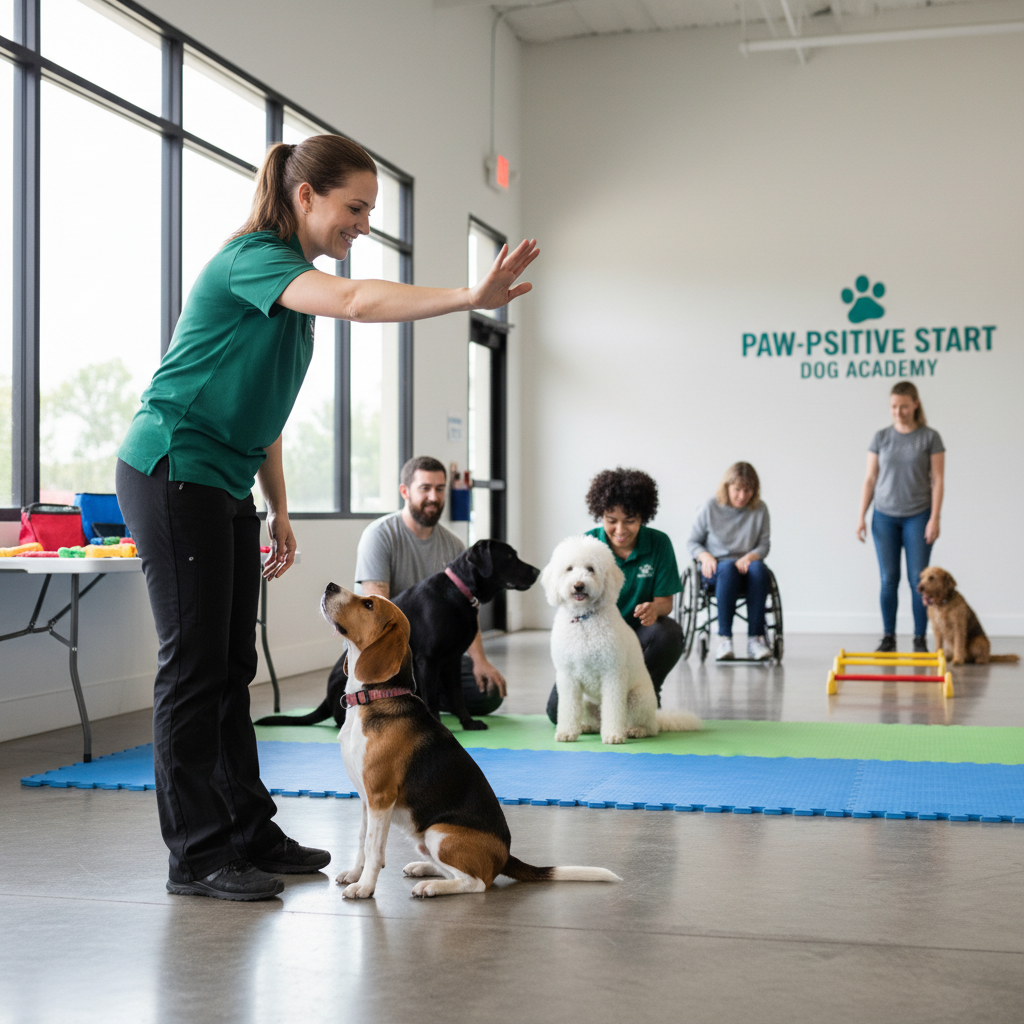
While it’s possible to learn from books and online videos, there is no substitute for the guidance of an experienced instructor. A good instructor can provide immediate feedback on your handling, help you troubleshoot issues with your dog, and create a supportive learning environment.
- Local Dog Training Clubs: Many kennel clubs or community dog training facilities offer introductory Rally classes. These are often the most affordable and accessible options.
- Certified Professional Trainers: Look for trainers with certifications (e.g., CPDT-KA, KPA-CTP) who specialize in dog sports and positive reinforcement methods.
- Online Resources: Organizations like the American Kennel Club (AKC) and the World Cynosport Rally have resources on their websites to help you find local clubs and events.
What to Expect in a Beginner Class
Your first class will likely focus on introducing you and your dog to the basic signs and symbols. You’ll practice individual exercises and then begin stringing two or three signs together into short sequences. The instructor will guide you on proper footwork, how to cue your dog effectively, and how to use praise to keep your dog motivated. It’s a low-pressure environment designed for learning and building confidence.
Practicing at Home
You don’t need a full set of equipment to practice effectively. You can print out signs from the internet or even make your own on paper plates. Set up short courses of 3-5 signs in your living room or backyard. Keep practice sessions short and upbeat—5 to 10 minutes once or twice a day is more effective than a single, long, grueling session. The goal is to end each session with your dog feeling successful and eager for more.
Expert Tip: When practicing, focus on one or two new signs per session. Start by ‘walking’ the course yourself without your dog to learn the pattern. Then, guide your dog through slowly, using treats to lure them into the correct positions if needed. Gradually fade the lures as your dog begins to understand the exercises.
Navigating the Course: Understanding Rally Signs and Sequences
Navigating the Course: Understanding Rally Signs and Sequences
The core of Rally is interpreting the signs and executing them as a fluid team. As you advance, the signs become more complex and the sequences longer. Understanding the logic behind the signs is key to navigating any course with confidence.
Deconstructing the Signs
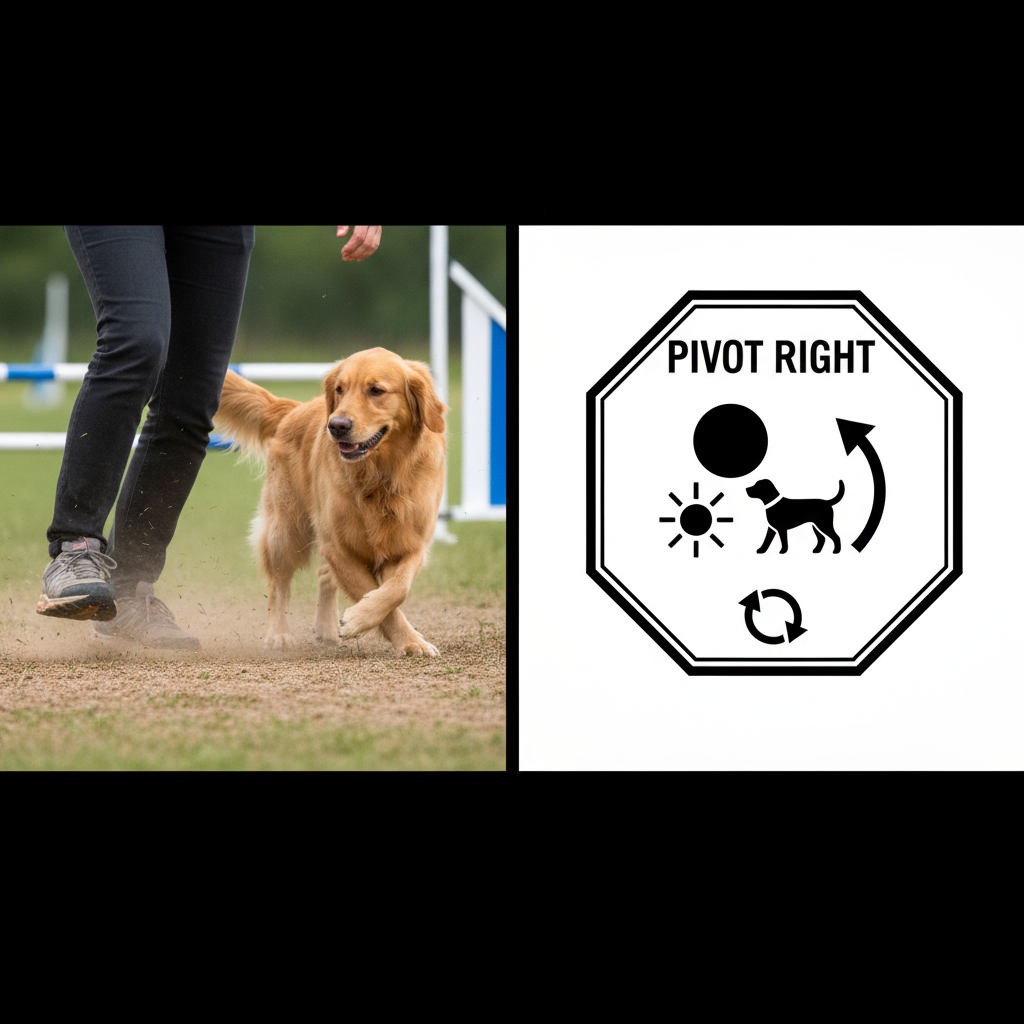
Rally signs are designed to be clear and intuitive. They use simple graphics and text to convey the required action. The signs are color-coded by class level, but the symbols remain consistent. For example, a cone always indicates a weaving or circling maneuver, and a paw print often indicates where the dog should be.
Common Novice-Level Signs
The Novice level is where every team begins. It is performed entirely on-leash and focuses on foundational skills. Here are a few examples of signs you’ll encounter:
| Sign Name | Description of Action | Handler Tip |
|---|---|---|
| Halt – Sit | Handler and dog approach the sign, halt, and the dog sits in heel position. | Give your ‘sit’ cue just as you stop moving. Don’t wait for your feet to be fully planted. |
| 360 Degree Right Turn | The team makes a full 360-degree circle to the right while moving forward. | Keep your dog close. Use your body language and left hand (if needed) to guide your dog around the turn with you. |
| Serpentine Weave Once | The team weaves through a set of four cones. | Focus on your path and your dog will follow. Look ahead to the end of the cones, not down at your feet. |
| Call Front – Finish Right | Handler cues the dog to stay, walks forward, turns to face the dog, calls the dog to a ‘front’ position (sitting in front of and facing the handler), and then sends the dog to heel position around the right side. | Make the ‘front’ position highly rewarding. This is a multi-step exercise, so practice each component separately first. |
The Art of the Walk-Through
Before competing, handlers are given time to walk the course without their dogs. This ‘walk-through’ is your opportunity to plan your strategy. You’ll identify where you need to slow down, where you can pick up the pace, and how you’ll cue your dog for each exercise. This mental preparation is just as important as the physical training. During the walk-through, visualize your dog by your side, and practice your footwork and hand signals.
As you progress to higher levels (Intermediate, Advanced, Excellent, Master), the exercises become more challenging, requiring off-leash work, jumps, and more complex combinations of behaviors. However, the foundation of clear communication and teamwork established at the Novice level remains the key to success.
Beyond Ribbons: The Lifelong Benefits of Rally Obedience
Beyond Ribbons: The Lifelong Benefits of Rally Obedience
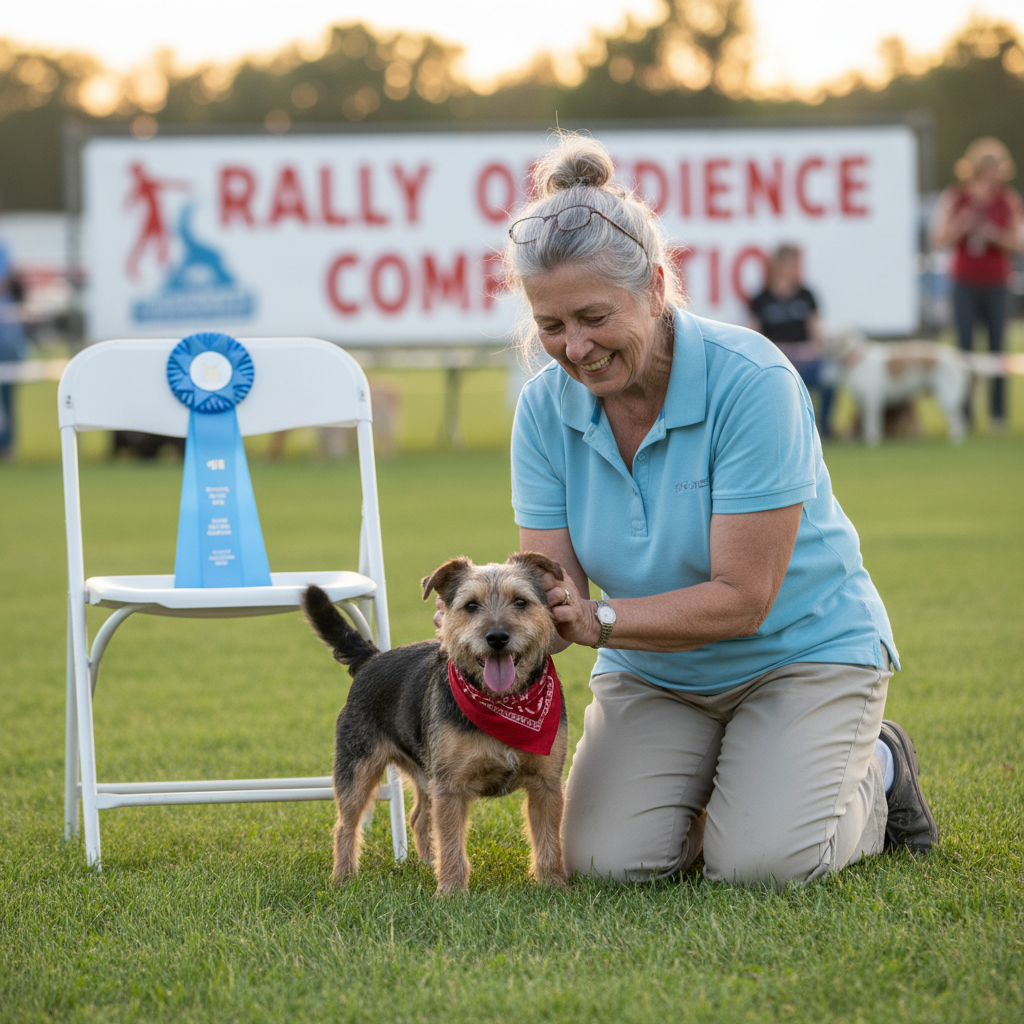
While earning titles and ribbons can be a thrilling part of the journey, the true rewards of Rally Obedience extend far beyond the competition ring. The sport is a powerful tool for enhancing nearly every aspect of your relationship with your dog and improving their overall well-being.
Strengthening the Human-Canine Bond
Rally is, at its core, a communication exercise. To succeed, you must learn to read your dog’s body language, and your dog must learn to trust your cues. This process of working together toward a common goal builds a foundation of mutual understanding and respect that translates directly into your daily life. The focused time you spend training becomes quality time that strengthens your bond in a profound way.
Providing Critical Mental Stimulation
Many canine behavior problems stem from boredom. Dogs are intelligent animals that need mental challenges to stay happy and healthy. Rally provides an incredible mental workout. It requires a dog to think, to focus, and to process a series of cues in a distracting environment. A 10-minute Rally practice session can be more tiring for a dog than a 30-minute walk, leading to a calmer, more content companion at home.
Building Confidence in Timid Dogs
For a shy or anxious dog, the predictable structure and positive atmosphere of Rally can be transformative. The sport is broken down into small, achievable steps. Every successfully completed sign is a victory that builds the dog’s confidence. The constant positive feedback from the handler helps the dog learn that new situations can be fun and rewarding, not scary. This newfound confidence often carries over into other areas of the dog’s life.
Improving General Obedience and Manners
The skills you practice for Rally—attentive heeling, prompt responses to cues, and focus around distractions—are the same skills that make for a well-behaved pet in the real world. A dog that can heel through a complex Rally course can certainly walk politely through a busy park. A dog that can hold a ‘sit-stay’ while you walk around them in the ring can also hold a ‘sit-stay’ when you answer the front door. Rally makes advanced obedience practical and fun.
Owner’s Perspective: Many handlers report that after starting Rally, their dogs become more attentive and responsive in all situations. The sport teaches your dog the valuable skill of how to learn and to see you as a source of fun and guidance.
Conclusion
If you’re searching for a way to move beyond the basics and inject a new level of excitement and purpose into your training, Rally Obedience offers a perfect solution. It’s more than just a sequence of commands; it’s a conversation between you and your dog, a dance of teamwork and communication. It challenges your dog mentally, builds confidence, sharpens obedience skills, and, most importantly, fortifies the bond you share in a way that few other activities can.
Whether your goal is to compete for titles or simply to find a fun and engaging new hobby to enjoy with your best friend, Rally provides a welcoming and rewarding path. So, step off the beaten path of endless ‘sits’ and ‘stays.’ Explore the dynamic world of Rally Obedience and discover the ultimate bonding sport for you and your dog.