
Demand Barking: Why Ignoring It Isn’t Working (And What To Do Instead)

As a canine specialist, one of the most common and exasperating issues I help owners tackle is demand barking. It’s that insistent, sharp, and often high-pitched bark that says, ‘I want something, and I want it NOW.’ The conventional wisdom has long been to simply ignore it. The theory is that if the behavior isn’t rewarded, it will eventually disappear. However, countless pet owners can attest that this strategy often backfires spectacularly, leading to more intense barking and heightened frustration for everyone involved. The reality is that ignoring demand barking is a nuanced process that, if done incorrectly, can inadvertently strengthen the very behavior you’re trying to eliminate.
This article will delve into the psychology behind demand barking and explain the behavioral science principles—like intermittent reinforcement and extinction bursts—that make ‘just ignoring it’ an ineffective and often counterproductive approach. More importantly, we will provide a clear, authoritative, and actionable step-by-step guide on what to do instead. By focusing on proactive management and teaching your dog a more appropriate way to communicate its needs, you can replace a frustrating habit with a peaceful and positive interaction, strengthening your bond in the process.
The Reinforcement Trap: Why Ignoring Demand Barking Fails
Understanding the Behavioral Science
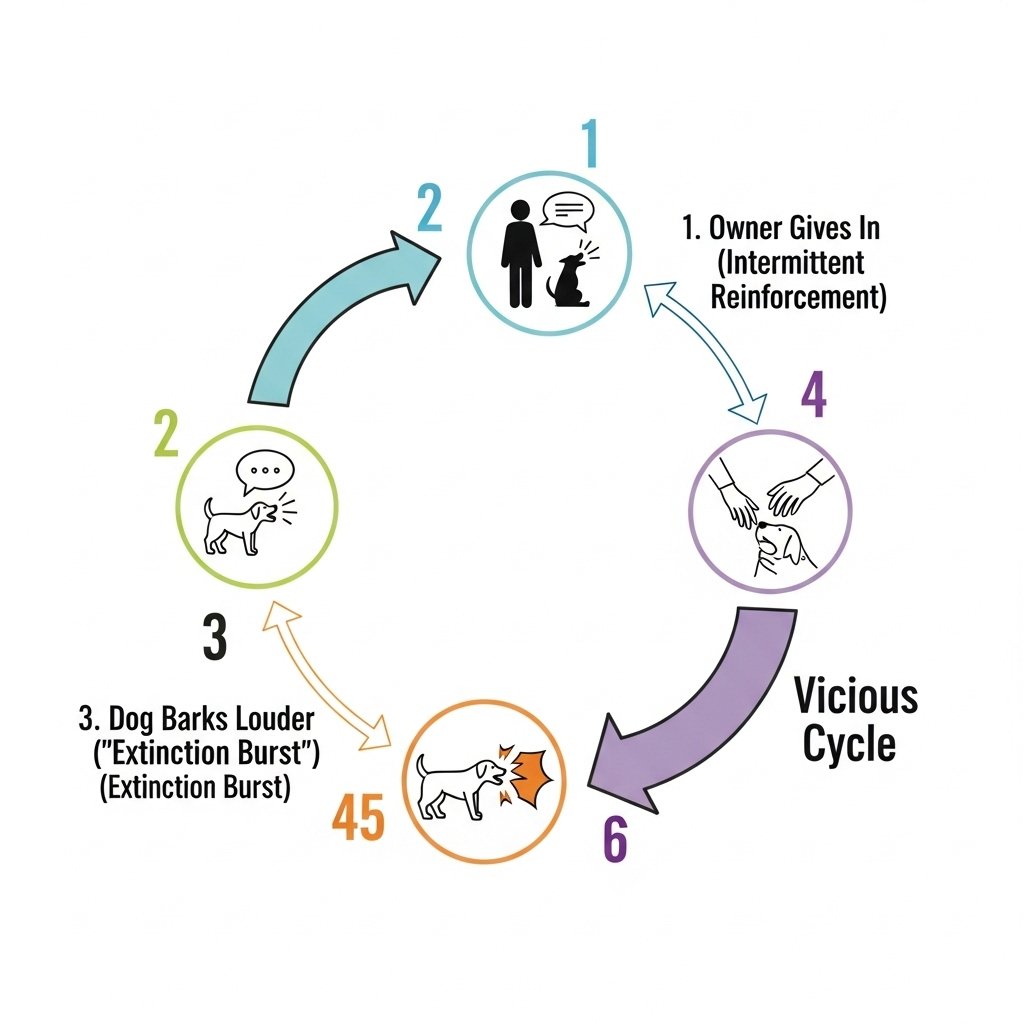
To effectively address demand barking, we must first understand why ignoring it so often fails. The answer lies in a behavioral principle known as intermittent reinforcement. Imagine a slot machine. You pull the lever and don’t win every time, but the possibility that the next pull could result in a jackpot keeps you playing. Your dog’s demand barking operates on the same principle.
When you decide to ignore the barking, your dog, who has likely been rewarded for this behavior in the past (even accidentally), doesn’t immediately give up. Instead, they escalate. The barking gets louder, more frequent, or more frantic. This is called an extinction burst. It’s a last-ditch effort to make the previously successful strategy work. Most owners can endure the initial barking, but it’s during this intense extinction burst that their resolve breaks. They finally give in—offering the toy, the treat, or the attention—just to get a moment of peace.
In doing so, they have not taught the dog that barking doesn’t work. They have taught the dog a far more powerful lesson: ‘If I bark long enough and loud enough, I will eventually get what I want.’ This creates an incredibly strong, persistent behavior that is highly resistant to extinction. You have, in effect, become a human slot machine for your dog.
The Vicious Cycle of Demand Barking
- Trigger: The dog wants something (e.g., dinner, to play, your attention).
- Behavior: The dog initiates demand barking.
- Initial Response: The owner attempts to ignore the barking.
- Extinction Burst: The dog’s barking intensifies in volume and frequency.
- Reinforcement: The owner, unable to tolerate the escalated barking, gives in.
- Learning: The dog learns that persistent, intense barking is the key to success.
Expert Takeaway: True extinction requires 100% consistency. Giving in just once during an extinction burst reinforces the escalated behavior, making your problem significantly worse in the long run.
Step 1: Identify Triggers and Manage the Environment

Effective training is proactive, not reactive. Before you can change your dog’s behavior, you must become a detective and understand what triggers it. Managing the environment to prevent the barking from starting is the first and most critical step in your new training plan. By preventing the rehearsal of the unwanted behavior, you make it easier to teach a new, desirable one.
Become a Behavioral Detective
For the next few days, keep a log. Note every time your dog demand barks. What happened immediately before? Who was present? What time was it? You will likely see patterns emerge. Common triggers include:
- Meal Times: Barking while you prepare their food.
- Play Time: Nudging you with a toy and barking when you don’t respond.
- Attention Seeking: Barking when you are on the phone, working on the computer, or talking to someone else.
- Access to Furniture: Barking to be let up on the couch or bed.
- Leash/Walk Time: Barking as you prepare to go for a walk.
Proactive Management Strategies
Once you identify the triggers, you can manage the environment to set your dog up for success. The goal is to fulfill your dog’s needs before they feel the need to demand bark.
| Common Trigger | Proactive Management Strategy |
|---|---|
| Barking during your meal prep | Give your dog a high-value chew or a food-puzzle toy in their bed before you start cooking. |
| Barking when you are on the phone | Anticipate important calls. Crate your dog with a special toy or practice the ‘place’ command before you dial. |
| Barking to go outside | Put potty breaks on a consistent schedule so they expect them at certain times, reducing the need to ‘ask.’ |
| Barking with a toy | Schedule dedicated, interactive play sessions. When play time is over, put the ‘demand’ toys away. |
Management is not a permanent solution, but it is a crucial part of the training process. It stops the reinforcement cycle and creates a calmer state of mind in your dog, making them more receptive to learning the new skills you are about to teach.
Step 2: Teach and Reward an Incompatible Behavior

You cannot simply remove a behavior; you must replace it with something else. The core of this strategy is to teach your dog a ‘default’ polite behavior that is physically and functionally incompatible with demand barking. For example, a dog cannot bark while holding a toy in its mouth, nor can it bark manically while lying calmly on its mat.
Choosing an Incompatible Behavior
Select a simple behavior that you can easily cue and reward. The best options are calm, stationary behaviors. Good choices include:
- Sit: A simple, foundational command.
- Down: A more relaxed position that is harder to bark from.
- Go to Place/Mat: This is an excellent choice as it teaches the dog to go to a designated spot and settle.
- A Quiet ‘Hold’: Teaching the dog to hold a specific toy gently in its mouth.
Training the New Behavior
It is critical to teach this new skill in a calm, low-distraction environment, completely separate from the moments when your dog is demand barking. Use positive reinforcement to build a strong association with the new behavior.
- Charge the Behavior: Using high-value treats, lure and reward your dog for performing the chosen behavior (e.g., going to their mat). Use a clear marker word like ‘Yes!’ or a clicker the instant they succeed, followed by the reward. Keep sessions short and fun (2-5 minutes).
- Add the Cue: Once the dog is reliably offering the behavior, add a verbal cue like ‘Place’ or ‘Sit.’ Say the cue just before the dog performs the action.
- Build Duration: Gradually increase the amount of time you expect the dog to hold the position before rewarding. Start with one second, then three, then five, and so on. This teaches impulse control.
- Practice in Different Contexts: Once the behavior is strong in a quiet room, start practicing in different areas of the house to generalize the skill.
Expert Tip: The goal is to make this new, polite behavior so rewarding and automatic that the dog chooses to offer it instead of barking. This is a shift from the dog thinking, ‘How do I make them give me what I want?’ to ‘What can I do to earn what I want?’
Step 3: Putting It All Together – The ‘Quiet’ Protocol
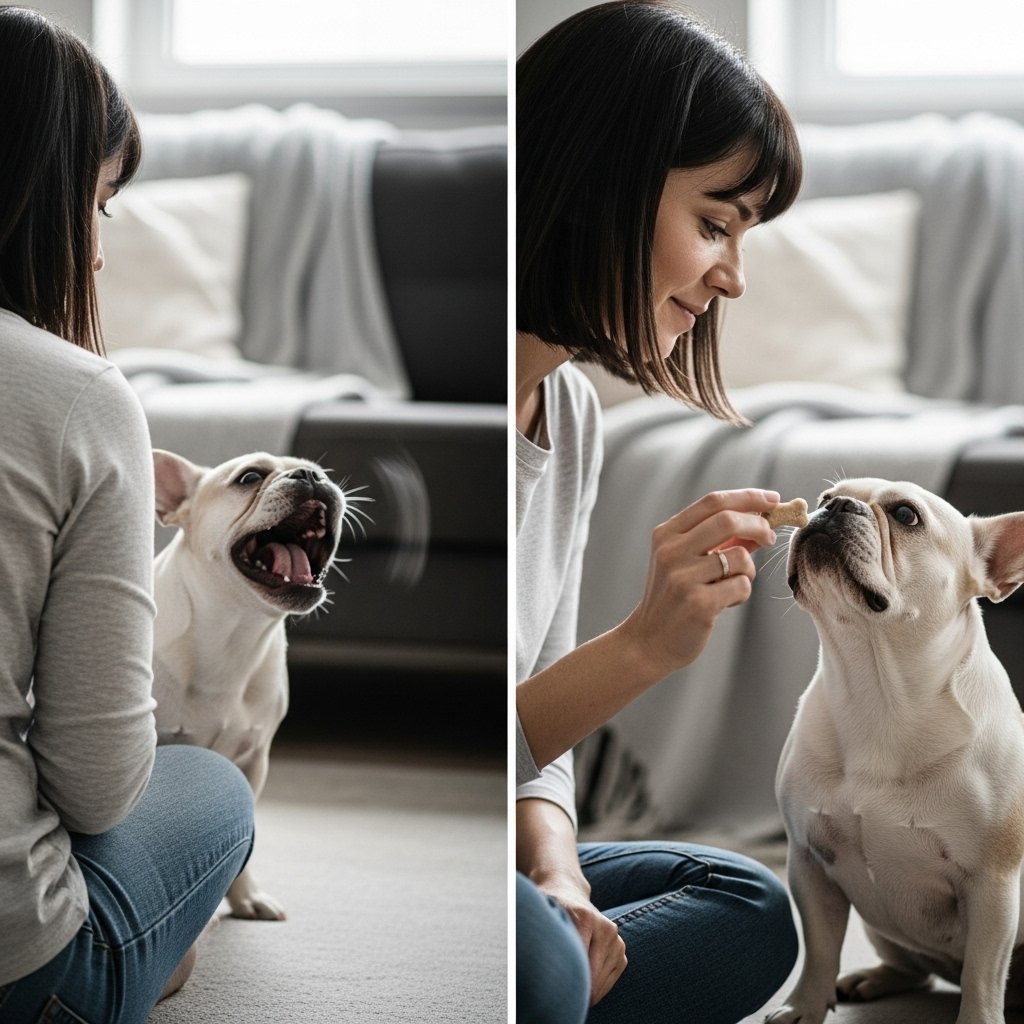
Once your dog has a strong understanding of the alternative behavior, it’s time to apply it when demand barking occurs. This protocol requires patience and precise timing. The goal is to teach your dog a clear sequence: Barking makes the good stuff go away, while quiet makes it come back.
The Two-Second Rule: Removing Attention
When your dog begins to demand bark, you must immediately and silently remove all forms of reinforcement. This means:
- No Eye Contact: Avert your gaze completely.
- No Talking: Do not say ‘No,’ ‘Quiet,’ or ‘Shush.’ To your dog, any verbal engagement can be a form of attention.
- No Touching: Do not push the dog away.
- Turn Away: The most effective method is to physically turn your back on the dog or, if necessary, calmly walk out of the room.
The key is to do this for a very short period—just two to three seconds is often enough to break the dog’s focus. You are not giving them a lengthy ‘time out’; you are simply creating a clear consequence for the barking.
Capturing the Moment of Quiet
The instant the barking stops and your dog is quiet—even for a split second to take a breath—you must immediately mark that moment. Turn back around, make eye contact, and calmly praise them. This is the most critical part of the process. You are marking and rewarding the absence of barking.
Cue the Alternative Behavior
Immediately after marking the quiet, cue the incompatible behavior you taught in Step 2. Say ‘Sit’ or ‘Go to your place.’ When your dog complies, provide a calm but high-value reward (a small treat or gentle praise). This completes the lesson: the dog learns that the sequence of ‘Be Quiet’ -> ‘Perform Polite Behavior’ is what earns the reward, not the initial barking.
| Dog’s Action | Your Reaction | The Lesson for the Dog |
|---|---|---|
| Starts demand barking | Instantly and silently turn your back. | ‘My barking makes my human disengage.’ |
| Pauses barking (is quiet) | Immediately turn back and give calm praise. | ‘Oh, being quiet brings my human back!’ |
| You cue ‘Sit’ and the dog complies | Reward with a treat. | ‘Sitting politely is how I get what I want.’ |
Consistency from every member of the household is non-negotiable for this protocol to succeed. One person giving in can undermine weeks of training.
Conclusion
Overcoming demand barking is not about winning a battle of wills; it’s about building a better system of communication. The outdated advice to simply ignore the behavior is a passive approach that often fails because it doesn’t account for the power of intermittent reinforcement and fails to show your dog what you want them to do instead. By shifting your strategy from reactive ignoring to proactive training, you change the entire dynamic.
The three-step process—Manage the environment, Teach an incompatible behavior, and consistently Implement the ‘Quiet’ protocol—provides a clear, effective path forward. It empowers your dog to make better choices by teaching them that polite behaviors are far more rewarding than demanding barks. While this process requires patience and unwavering consistency, the result is a quieter home and, more importantly, a deeper, more respectful bond between you and your canine companion. You are not just stopping a bark; you are starting a more meaningful conversation.