Is He Mad Or Happy? How To Decode Your Dog’s Weird Grumbles
As a canine specialist, one of the most common points of confusion I address with pet owners is the mystery of the “grumble.” Is that low, guttural sound a sign of impending aggression or a deep-seated expression of pure bliss? The ambiguity can be unsettling. A dog’s grumble is not a simple, one-dimensional sound; it is a complex and nuanced form of communication that can signify a wide range of emotions, from contentment to serious discomfort. Mistaking a warning for affection can lead to broken trust, while misinterpreting a happy rumble as anger can cause you to miss a beautiful bonding moment.
This comprehensive guide is designed to empower you, the dedicated pet owner, to become a fluent interpreter of your dog’s vocalizations. We will move beyond simple guesswork and delve into the science and subtlety of canine communication. By learning to analyze the type of grumble in conjunction with your dog’s body language and the surrounding context, you will gain the confidence to accurately decode these messages. Understanding your dog is the foundation of a strong, trusting relationship, and learning their unique language is one of the most profound ways to strengthen that bond.
The Spectrum of Grumbles: From Pleasure to Protest
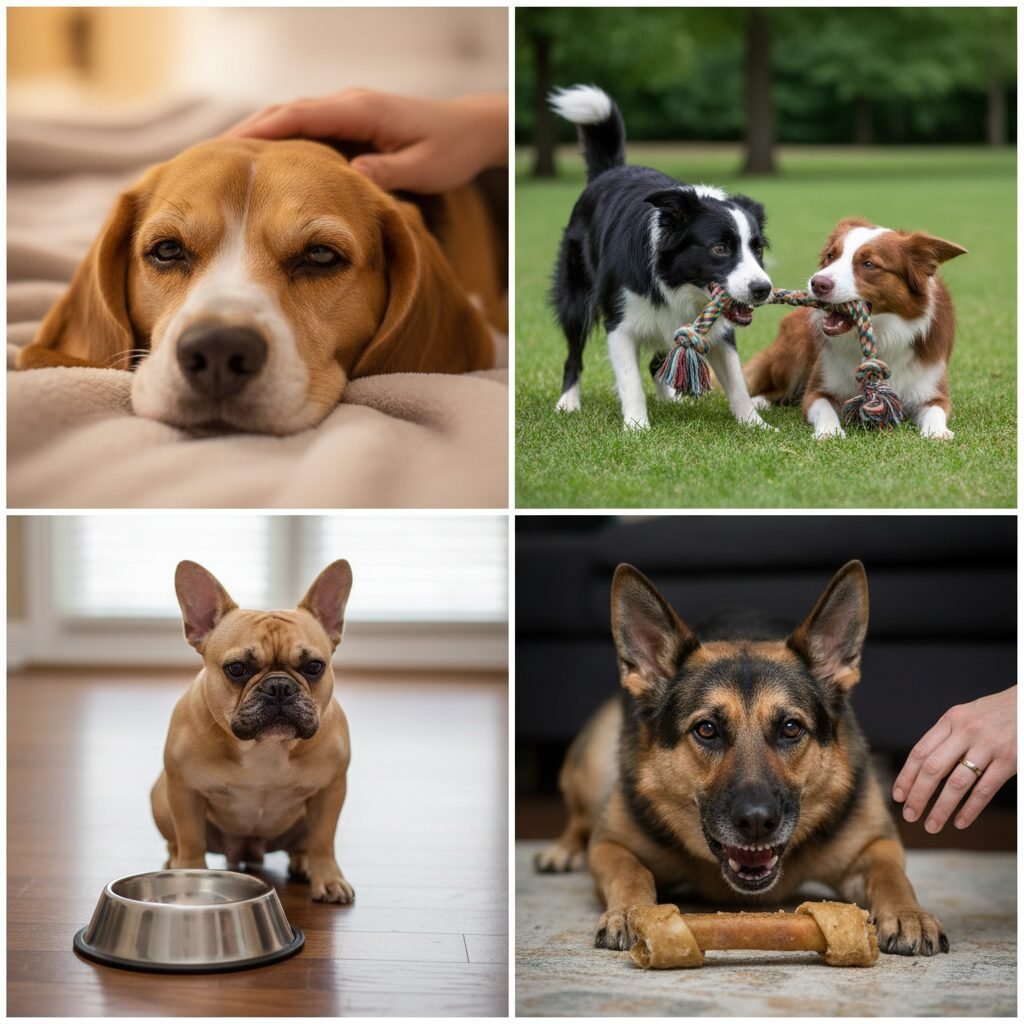
Not all grumbles are created equal. This vocalization exists on a broad spectrum, and the first step in decoding it is to recognize its different forms. While every dog is an individual, most grumbles fall into several key categories, each tied to a specific emotional state and context.
The Contentment Rumble
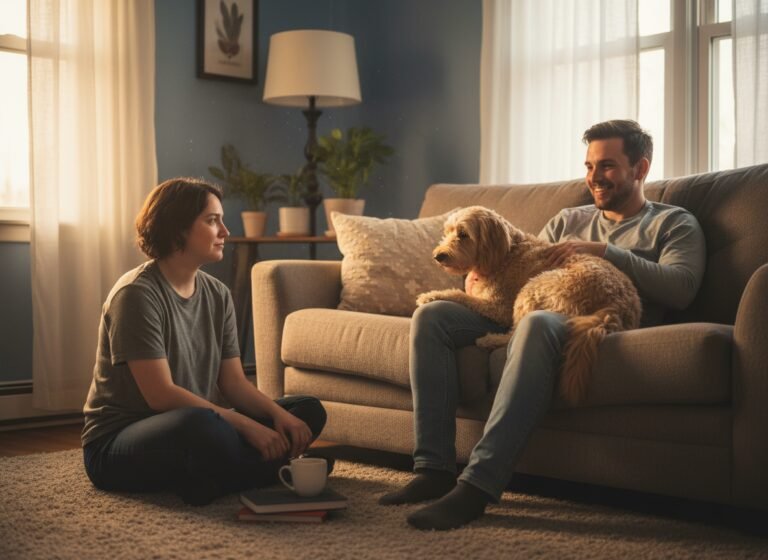
This is the sound every dog owner loves to hear. Often described as a low, throaty, purr-like vibration, the contentment rumble is a sign of deep relaxation and happiness. It typically occurs during quiet, affectionate moments, such as when you are petting your dog in their favorite spot, during a belly rub, or as they are settling down to sleep near you. This sound is your dog’s way of saying, “This feels wonderful, please don’t stop.” It is usually accompanied by very relaxed body language, such as a loose posture, soft eyes, and perhaps a slow, gentle tail wag.
The Play Grumble
During a spirited game of tug-of-war or a wrestling match, you may hear more energetic, throaty grumbles. These play grumbles can sometimes sound surprisingly ferocious, causing inexperienced owners to worry. However, they are a normal and healthy part of canine play. These vocalizations are a way for dogs to express excitement and engagement in the game. Look for accompanying play signals, such as play bows (front end down, back end up), bouncy movements, a relaxed, open mouth, and even “play sneezes,” which dogs use to signal that their behavior is all in good fun.
The Frustration Grumble
This is a shorter, more abrupt sound, almost like an audible huff or a disgruntled sigh. A frustration grumble occurs when a dog is annoyed, impatient, or thwarted from getting something it wants. You might hear it when you’re taking too long to prepare their dinner, when a toy rolls under the couch just out of reach, or when you stop a game before they are ready. It’s a low-level complaint, a canine expression of exasperation. While not aggressive, it’s a clear signal of their current emotional state.
The Warning Grumble
This is the most critical grumble to understand. A warning grumble is a step down from a full-fledged growl but carries a similar message: “I am uncomfortable. Stop what you are doing, or I may escalate my response.” This sound is typically lower in pitch and more monotonous than other grumbles. It signals that a dog’s threshold is being approached or crossed. You might hear this if you get too close to their food bowl, try to take away a high-value item, or touch a sensitive or painful area on their body. Heeding this warning is paramount to preventing a bite and maintaining trust.
Reading the Full Picture: Decoding Accompanying Body Language
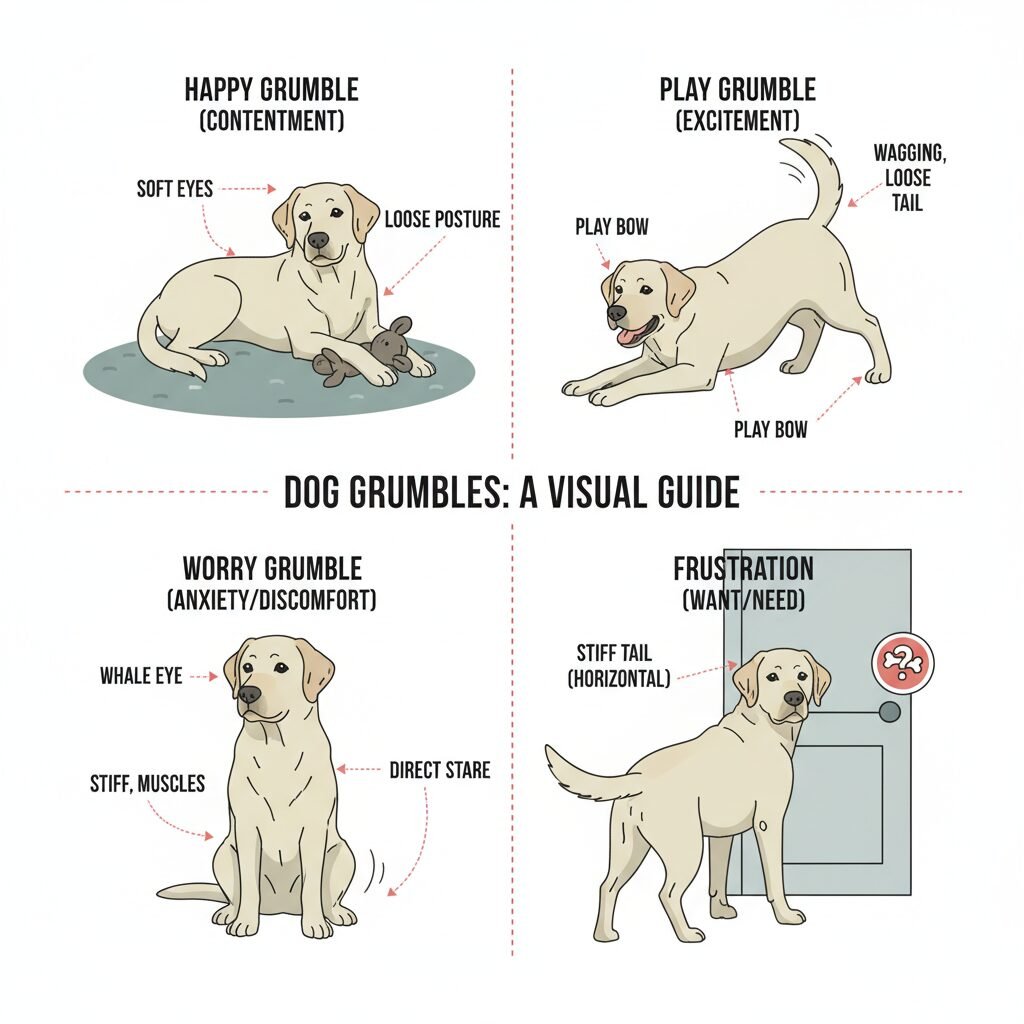
A grumble rarely occurs in a vacuum. To truly understand its meaning, you must observe the symphony of non-vocal cues your dog provides simultaneously. Body language is the definitive guide that adds context and clarity to the sound. By learning to read these signals, you can differentiate between a happy rumble and a serious warning with confidence.
Think of it as collecting evidence. The sound is one piece of the puzzle, but the posture, tail, ears, eyes, and mouth tell the rest of the story. A dog’s body is incredibly expressive, and paying close attention to these details will prevent misinterpretation.
To help you become an expert observer, the following table breaks down the typical body language associated with each type of grumble. Use it as a field guide to better understand your dog’s communications.
| Body Language Cue | Contentment Rumble | Play Grumble | Frustration Grumble | Warning Grumble |
|---|---|---|---|---|
| Overall Posture | Loose, relaxed, “soft” body; may be lying down or leaning into you. | Bouncy, wiggly, exaggerated movements; may include play bows. | Neutral to slightly tense; may be staring intently at the object of desire. | Stiff, rigid, frozen; body weight may be shifted forward or back. |
| Tail | Still and relaxed, or a slow, sweeping wag. | High, rapid, flagging wag; may be a full-body wiggle. | May be still or giving short, tight wags. | Held high and stiff, possibly with a slow, deliberate wag; or tucked. |
| Eyes | Soft, squinty, relaxed gaze; may be closed. | Bright, wide, and engaged; “smiling” eyes. | Hard stare focused on the source of frustration. | Hard, direct stare; may show “whale eye” (whites of the eyes visible). |
| Mouth | Closed or slightly open, relaxed lips. | Open, relaxed “smile”; may be panting from exertion. | Mouth closed, lips may be pushed forward slightly. | Mouth closed, lips pulled back (lip curl); may show teeth. |
| Ears | In a neutral, relaxed position. | Alert and engaged, moving with the action. | Forward and focused. | Pinned back against the head or pricked forward tensely. |
Expert Tip: Always assess the entire dog, from the tip of the nose to the tip of the tail. A single signal, like a wagging tail, can be misleading. A stiff, high wag is very different from a loose, full-body wiggle. Context and clustering of signals are key.
The Crucial Role of Context in Interpretation
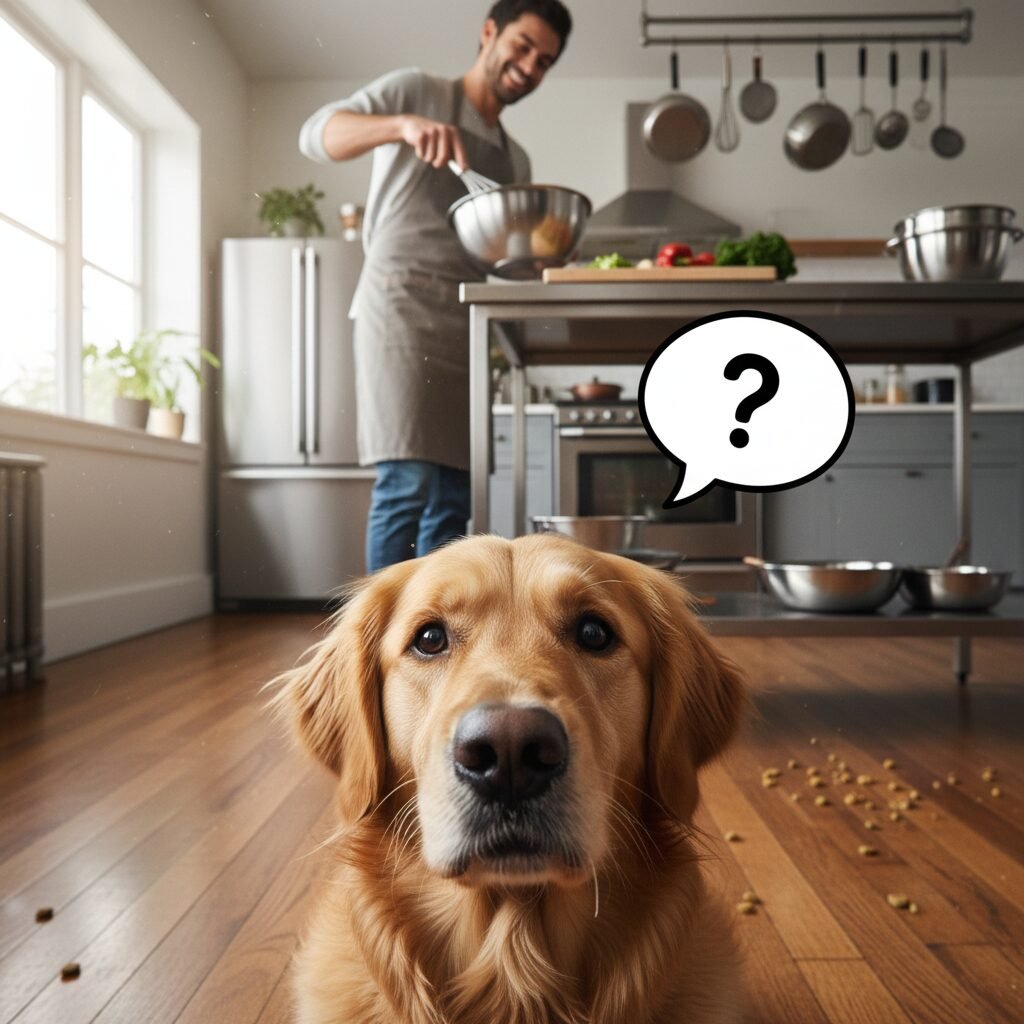
Once you’ve identified the type of grumble and analyzed the accompanying body language, the final piece of the puzzle is context. The situation in which the grumble occurs provides the overarching framework for your interpretation. Asking “What is happening right now?” is often the fastest way to understand your dog’s motivation.
Evaluating the Environment and Activity
Consider the immediate circumstances. A grumble during a cuddle session on the couch has an entirely different meaning than a grumble when a stranger enters your home. Below are common scenarios and their likely interpretations:
- During Petting/Affection: If your dog is relaxed and you are stroking them, a low rumble is almost certainly a sign of pleasure. They are enjoying the physical contact and expressing contentment.
- During Playtime: Energetic grumbles during a game of tug or chase are expressions of excitement. As long as the body language remains loose and bouncy, this is healthy play communication.
- Near Resources: If the grumble occurs when you approach your dog’s food bowl, bed, or a favorite toy, it is likely a warning. This is a form of resource guarding, and the grumble is a request for space. It’s your dog saying, “This is mine, please back off.”
- In Response to a Person or Animal: When a new person, a child, or another dog approaches, a grumble is often a sign of fear, anxiety, or uncertainty. The dog is communicating its discomfort with the social pressure and asking the approaching party to stop.
- When Being Handled or Groomed: A grumble during nail trims, brushing, or a veterinary exam is a clear signal of discomfort or pain. The dog is telling you that the handling is unpleasant or hurtful and that it wants the procedure to end.
When the Message is Unclear
Sometimes, the context can be ambiguous. Your dog might grumble when you simply walk past them while they’re resting. In these cases, err on the side of caution. Assume the grumble is a request for space. Don’t force an interaction. Instead, observe from a distance. Are they just sleepy and startled, or are they showing other signs of stress like lip licking or yawning? Becoming a careful observer of these subtle moments will fine-tune your decoding skills immensely.
How to Respond: Building Trust Through Understanding
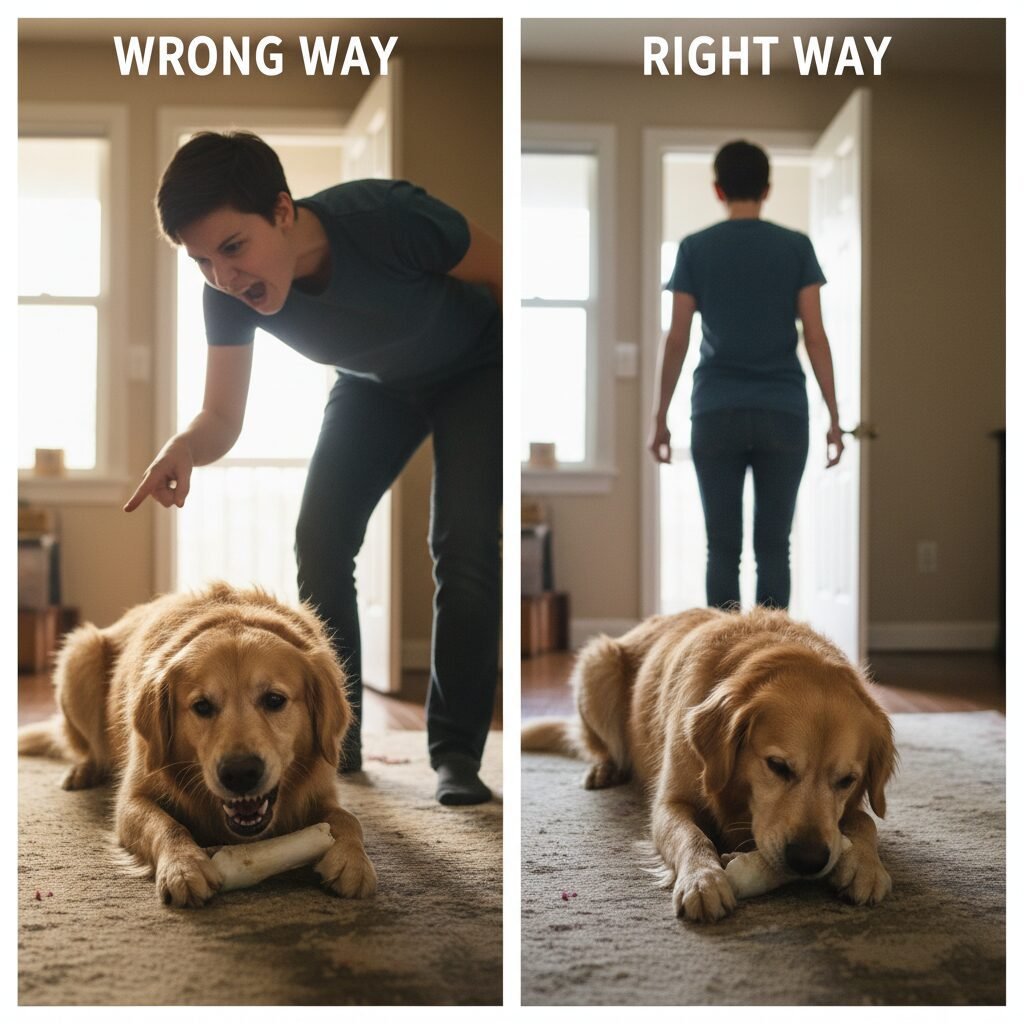
Your reaction to your dog’s grumble is just as important as your ability to interpret it. Your response teaches your dog whether their communication is effective and respected, which is the cornerstone of a trusting relationship. Punishing a grumble is one of the most detrimental mistakes an owner can make.
Responding to Positive Grumbles
When you hear a contentment rumble or a play grumble, the response is simple: embrace it! Acknowledge their happiness. You can speak to them in a soft, happy tone, continue the petting they are enjoying, or remain enthusiastically engaged in the game. This positive reinforcement shows them that you understand and appreciate their communication, strengthening your bond.
Responding to Frustration Grumbles
When faced with a huff of frustration, take a moment to assess the situation. Is the dog frustrated for a legitimate reason? Perhaps you can help them get the toy from under the sofa. If they are being impatient for dinner, this is a teachable moment for impulse control. You can ignore the grumble and wait for a moment of calm before providing the food. This teaches them that impatience is not effective, while calm behavior is rewarded.
Responding to Warning Grumbles
This is the most critical response to get right. Never, ever punish a warning grumble. A grumble is not aggression; it is communication designed to prevent aggression. It is your dog’s polite—or at least, initial—request for a change in the situation. By punishing the grumble, you are essentially telling your dog, “Do not warn me next time.” A dog that has been punished for grumbling may learn to skip the warning and go straight to a snap or bite.
The correct response is to:
- Stop what you are doing immediately. If you were reaching for their toy, pull your hand back. If you were petting them, stop.
- Increase distance. Calmly take a step back to relieve the pressure you were putting on them.
- Assess the trigger. Make a mental note of what caused the grumble. Was it the toy? A specific spot on their body?
- Manage the environment. In the future, work to avoid triggering the response. If the dog guards toys, teach a “drop it” cue with positive reinforcement rather than taking things by force.
If warning grumbles are frequent, or if they are escalating to growling or snapping, it is imperative to seek help from a certified professional dog trainer or a veterinary behaviorist. They can help you address the underlying cause of the anxiety or fear safely and effectively.
Conclusion
Your dog’s grumbles are not random, meaningless noises. They are a rich and vital part of their language, offering you a direct window into their emotional world. By moving beyond a simple “mad or happy” diagnosis, you can begin to appreciate the full spectrum of their feelings—from the blissful rumble of a belly rub to the anxious grumble that asks for space. The key lies in a holistic approach: listening to the sound, observing the body language, and considering the context.
Embracing the role of a patient and attentive listener will do more than just prevent misunderstandings or potential conflict. It will transform your relationship. When your dog learns that you hear and respect their communications, their trust in you deepens. This journey of understanding is ongoing, but it is one of the most rewarding aspects of sharing your life with a canine companion. Listen closely; your dog is talking to you.