Turn Your Boring Walk Into A Workout With Urban Dog Parkour
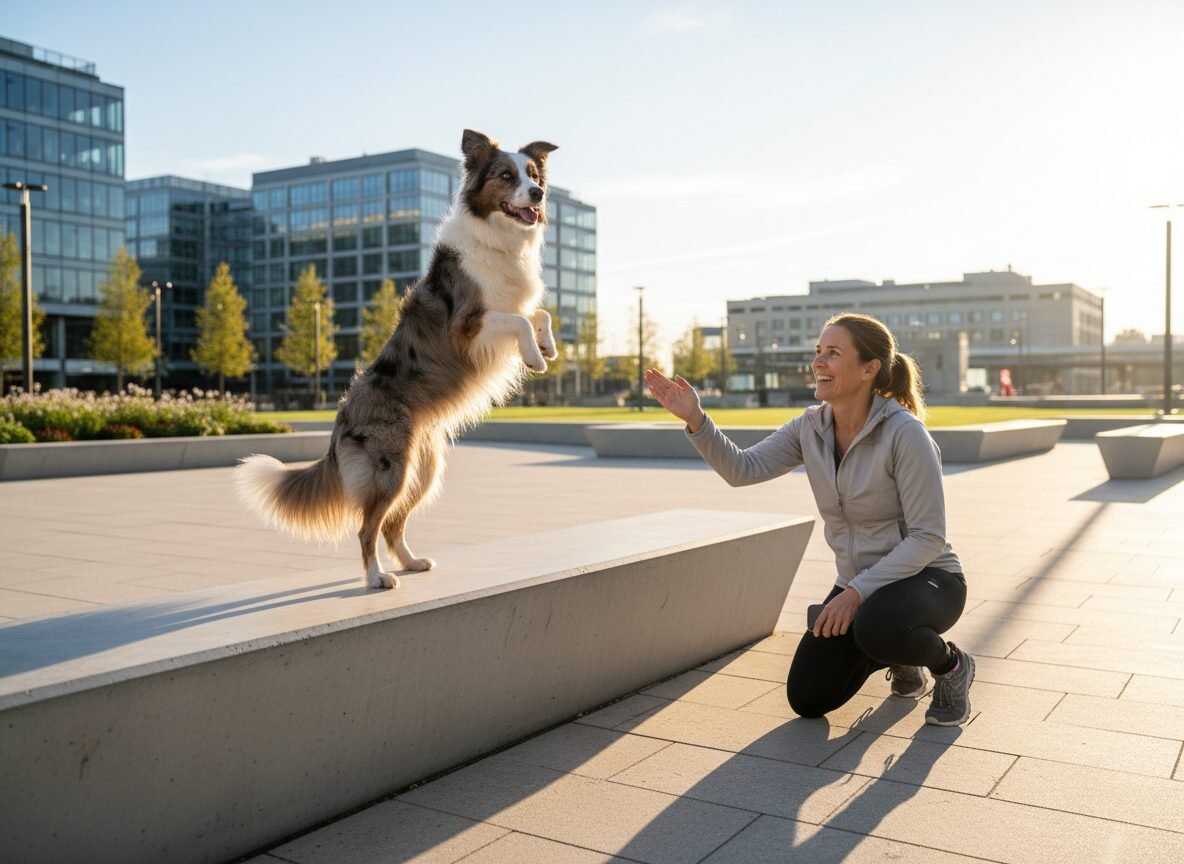
Does your daily dog walk feel more like a chore than a cherished activity? You tread the same familiar pavement, your dog sniffs the same fire hydrant, and you both return home feeling uninspired. While essential, these routine strolls often fall short of providing the comprehensive stimulation a modern canine needs. But what if you could unlock an adventure hidden in plain sight, turning your mundane urban landscape into a dynamic gymnasium for your dog? Welcome to the world of urban dog parkour.
Often called ‘barkour,’ this growing activity is far more than just teaching a dog tricks. It’s a holistic training philosophy that utilizes everyday objects—benches, low walls, stairs, and planters—as equipment for physical and mental exercise. It’s about teaching your dog to interact with their environment in a safe, controlled, and confident manner. By integrating simple parkour exercises into your walks, you can dramatically increase the value of your time outdoors, targeting muscle groups, improving balance, and sharpening focus. This guide will provide a comprehensive, safety-first framework for transforming your boring walk into a powerful bonding and conditioning workout.
What is Urban Dog Parkour and Why Should You Try It?
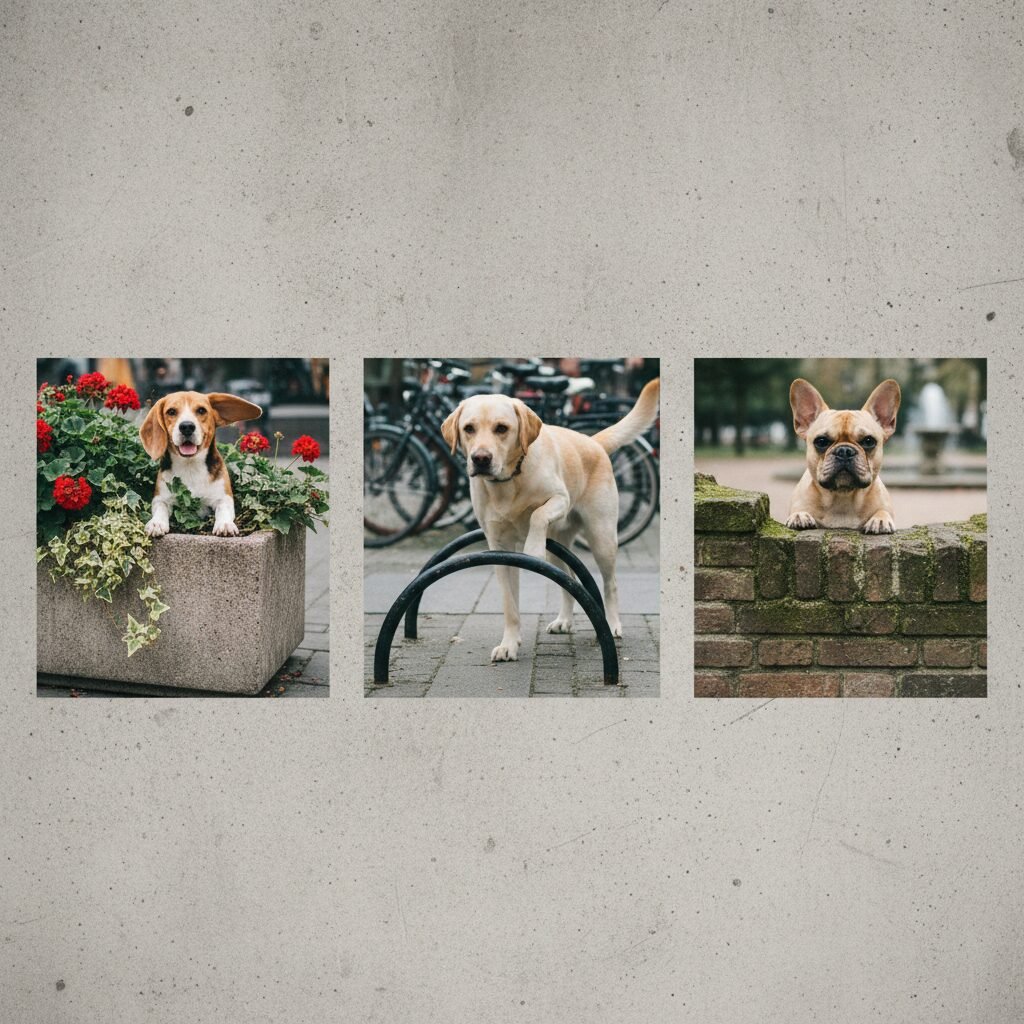
Urban dog parkour is the practice of navigating the urban environment by creatively and safely moving over, under, around, and through obstacles. Unlike competitive dog sports like agility, which use standardized equipment in a controlled ring, urban parkour leverages the existing architecture of your neighborhood. The goal isn’t speed or precision for points; it’s about mindful movement, body awareness, and problem-solving.
At its core, parkour for dogs is a low-impact activity that can be adapted to any dog’s fitness level, age, and size. A senior dog might practice stepping onto a curb with two paws, while a younger, more athletic dog might learn to walk the length of a low, wide retaining wall. The key is personalization and safety. The benefits extend far beyond simple physical exertion.
The Holistic Benefits of ‘Barkour’
- Enhanced Physical Fitness: Standard walks primarily work the body in one plane of motion—forward. Parkour introduces variety, asking dogs to step up, balance, and shift their weight. This builds core strength, improves proprioception (the sense of where the body is in space), and develops stabilizer muscles that are often neglected, helping to injury-proof your dog’s body.
- Increased Mental Stimulation: A dog that is only walked on a leash without challenges can become bored. Parkour requires a dog to think. ‘How do I get all four paws onto that surface?’ ‘How do I balance on this narrow ledge?’ This problem-solving provides crucial mental enrichment, which can reduce boredom-related behaviors like chewing or excessive barking at home.
- Confidence Building: For timid or anxious dogs, mastering a small environmental challenge can be a massive confidence booster. Successfully navigating an obstacle, with your guidance and praise, teaches a dog that they are capable and that new things aren’t necessarily scary. This confidence can translate to other areas of their life.
- A Deeper Bond: Parkour is not something a dog does alone; it’s a team activity. It requires clear communication, trust, and mutual respect between you and your dog. You become your dog’s spotter, guide, and cheerleader. This shared experience of overcoming challenges together strengthens your relationship in a profound way.
Safety First: The Golden Rules of Urban Parkour
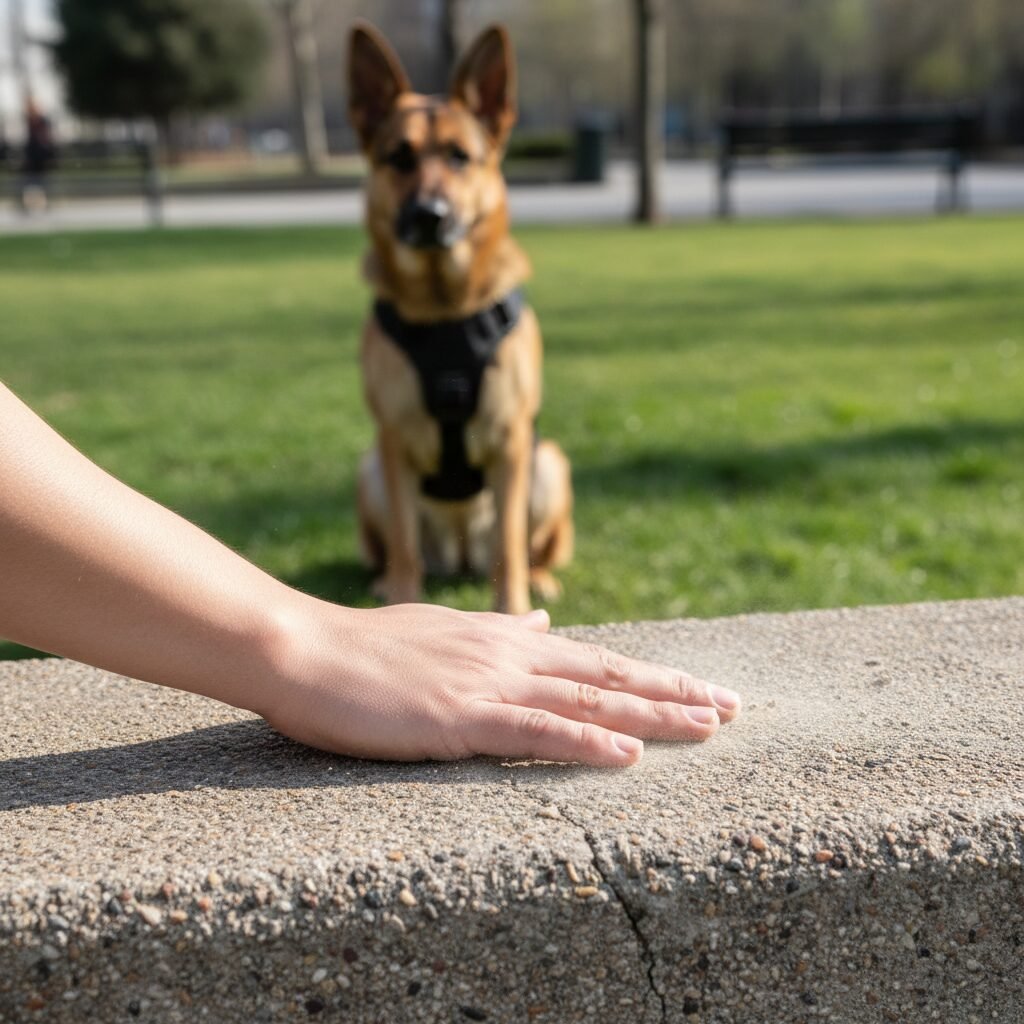
Before you let your dog leap onto the nearest bench, it is imperative to understand that safety is the bedrock of this activity. Urban parkour is about building a dog up, not breaking them down. Adhering to strict safety protocols ensures the experience remains positive and injury-free. Rushing into complex movements without considering the risks can lead to joint damage, paw injuries, or a loss of confidence.
Rule 1: Obtain Veterinary Clearance
Not every dog is a candidate for parkour. Before starting any new fitness regimen, consult your veterinarian. This is especially critical for:
- Puppies: Dogs under 12-18 months (depending on the breed) have open growth plates in their bones. Repetitive impact or high-impact jumping can cause permanent damage. Stick to exercises that are low to the ground.
- Senior Dogs: Older dogs may have arthritis or decreased mobility. Parkour can be beneficial for maintaining strength, but it must be low-impact and gentle.
- Dogs with Pre-existing Conditions: Dogs with hip dysplasia, elbow dysplasia, back problems, or other orthopedic issues require a carefully tailored plan from a vet or a certified canine rehabilitation professional.
Rule 2: Master the ‘Three-Point’ Rule
A core tenet of safe parkour is to avoid high-impact landings. A dog should never be encouraged to jump down from a height greater than their own shoulder height. Furthermore, when interacting with an obstacle, always strive to have three paws on a surface at any given time for maximum stability. Teach your dog to climb up and, more importantly, to climb down from objects rather than leaping.
Rule 3: Always Perform Surface and Environment Checks
The urban environment is unpredictable. Before asking your dog to interact with any object, you must perform a thorough check:
- Stability: Push on the object. Is it wobbly? Can it support your dog’s weight? Avoid things like trash cans or flimsy planters.
- Texture: Is the surface too slippery (e.g., wet metal) or too abrasive (e.g., rough, sharp concrete)?
- Temperature: In summer, metal and dark surfaces can become dangerously hot and burn paw pads. In winter, they can be icy.
- Debris: Scan for broken glass, sharp metal edges, or other hazards.
Rule 4: Use Appropriate and Safe Equipment
The right gear is non-negotiable for safety.
A well-fitting Y-shaped harness is the gold standard for dog parkour. It allows for a full range of motion in the shoulders and distributes pressure evenly across the chest, unlike collars, which can damage the trachea, or restrictive harnesses that can alter a dog’s natural gait.
Pair the harness with a standard 4 to 6-foot leash made of leather or biothane. Never use a retractable leash. They offer no control, can snap, and can cause serious injury if the dog suddenly moves or falls.
Rule 5: Listen to Your Dog
Your dog is your training partner, not a piece of equipment. Learn to read their body language. If they show hesitation, stress signals (lip licking, yawning, whale eye), or physical fatigue, it’s time to stop. Parkour should always be a voluntary and enjoyable activity. Forcing a dog will only build fear and resentment.
Building the Foundation: Essential Pre-Parkour Skills
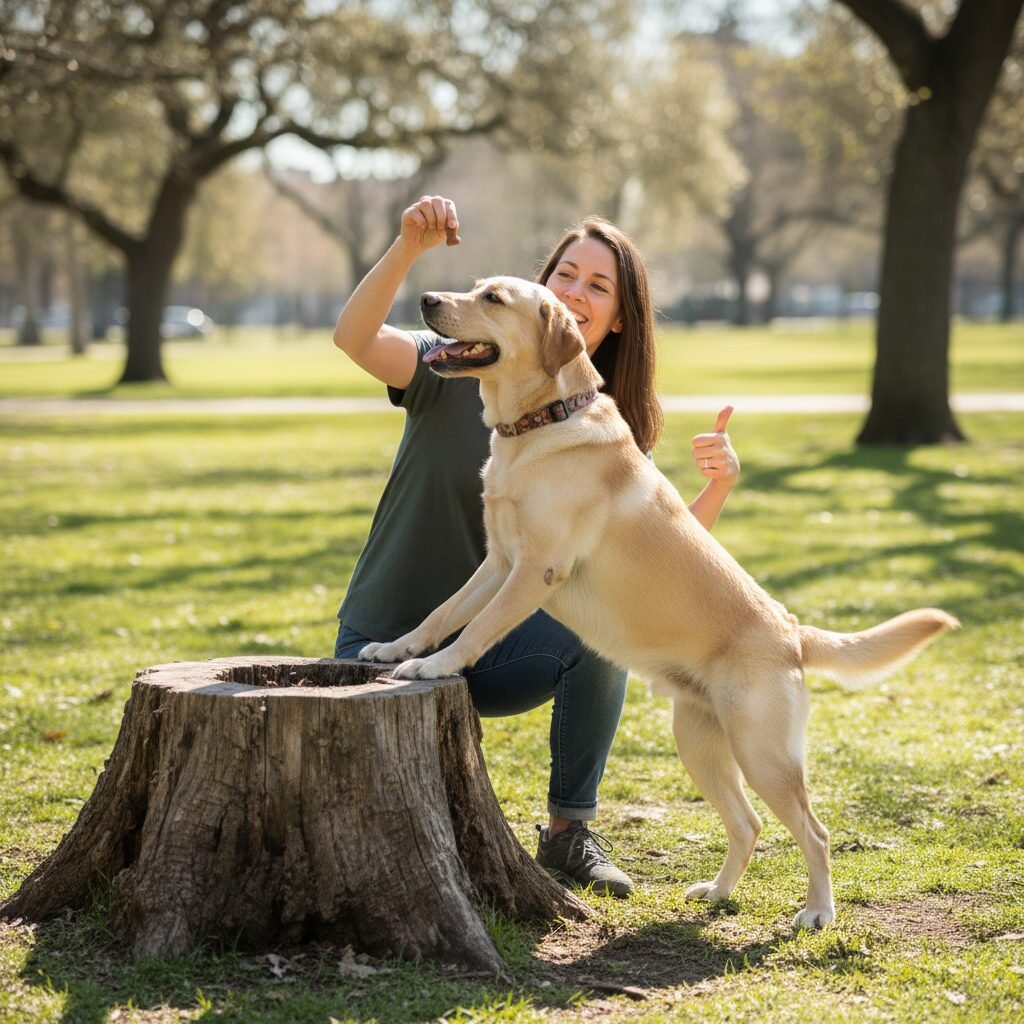
Jumping straight into complex parkour moves without a solid foundation is like trying to build a house on sand. Before you even think about balancing on a bench, your dog needs a baseline of obedience, body awareness, and trust. These foundational skills are the building blocks for every parkour exercise and ensure your training sessions are safe, productive, and fun.
Skill 1: The Rock-Solid ‘Stay’
A reliable ‘stay’ or ‘wait’ command is paramount. You will need your dog to hold a position while you assess an obstacle or get into position to spot them. It prevents them from rushing into an unsafe situation. Practice this command in various low-distraction environments first, gradually increasing the duration and distance before introducing it near parkour objects.
Skill 2: ‘Paws Up’ – The Gateway Behavior
This is arguably the most important foundational move. It teaches the dog to target an object with their front paws and is the basis for more advanced maneuvers.
- Start with a low, stable object like a thick book or a curb.
- Lure your dog towards it with a high-value treat. When their front paws touch the object, mark the behavior with a ‘Yes!’ or a clicker, and reward them.
- Give the behavior a name, like ‘Paws Up’ or ‘Place.’
- Practice on various objects of different heights and textures (always checking for safety first), building your dog’s confidence in placing their paws on new surfaces.
Skill 3: Proprioception and Body Awareness
Many dogs, especially those who only walk on flat surfaces, don’t have a great sense of where their back feet are. You can build this awareness with simple exercises at home or in a safe area.
- Cavaletti: Lay several broomsticks or PVC pipes on the ground about one dog-length apart. Encourage your dog to walk through them slowly. This forces them to think about where they are placing each foot.
- Texture Box: Create a low box and fill it with safe, varied materials like plastic bottles (lids removed), smooth stones, or packing paper for your dog to walk through.
- Backing Up: Teaching a dog to walk backward a few steps is a fantastic way to build rear-end awareness.
Skill 4: The ‘Off’ or ‘Break’ Cue
Just as important as getting onto an object is teaching a dog how to get off safely. An ‘Off’ cue signals to the dog that the exercise is over and they should return to the ground with all four paws. This prevents them from impulsively jumping off. Practice by luring them off a low object and rewarding them once all four paws are on the ground.
Your First Urban Parkour Moves: A Step-by-Step Guide
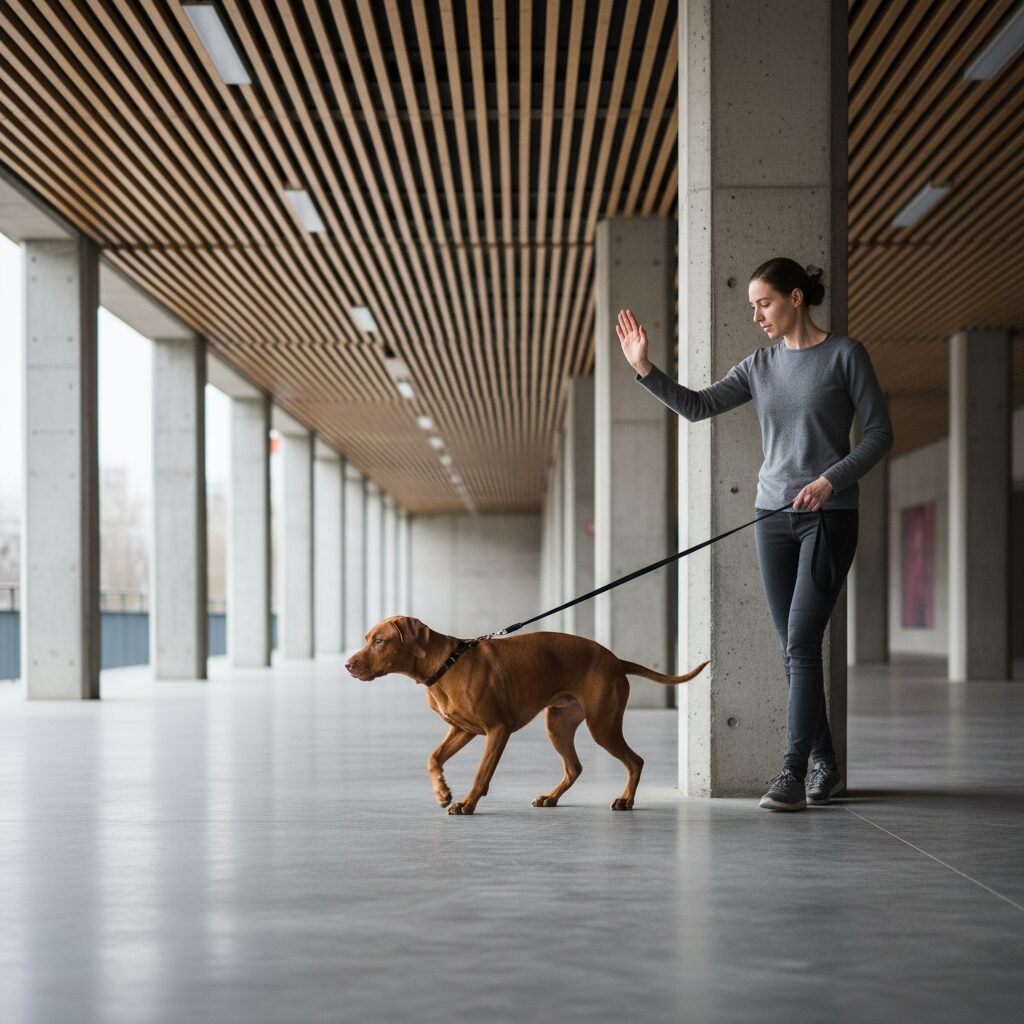
With a solid foundation and a safety-first mindset, you are ready to introduce some basic parkour movements into your walk. Remember to start slow and keep sessions short and positive. Use high-value treats and plenty of verbal praise to make it a rewarding experience. Choose a quiet area with minimal distractions for your first few attempts.
Move 1: The Two Paws On (Paws Up)
This is the application of your foundational ‘Paws Up’ skill on various urban objects.
- Find a low, stable object like a curb, a low step, or the base of a sturdy statue.
- Perform your safety check on the object.
- Use your ‘Paws Up’ cue to ask your dog to place their front two paws on the object.
- Mark and reward the moment they do. Keep the duration short—just a second or two at first.
- Give your ‘Off’ cue and reward them for returning to the ground.
Move 2: The Four Paws On
This move asks for more commitment and body awareness from your dog.
- Choose an object that is low and wide enough for your dog to stand on comfortably with all four paws (e.g., a large, stable electrical box, a wide tree stump, or a low, flat-topped boulder).
- Start by asking for ‘Two Paws On.’
- From there, use a treat to lure their head and body forward, encouraging them to bring their back feet up onto the object as well.
- The moment all four paws are on the surface, mark and deliver a jackpot of treats.
- Lure them off safely; do not let them jump.
Move 3: The Bench Balance
This helps improve balance and coordination. Only use low, wide benches for this exercise.
- Lead your dog to one end of the bench and ask for ‘Four Paws On.’
- Once they are stable, hold a treat in front of their nose and slowly walk backward along the length of the bench, encouraging them to follow you.
- Keep your hand on their harness for stability if needed.
- Reward every few steps to keep them engaged.
- Safely guide them off the other end.
Move 4: The Pillar Weave
This is a great mental exercise that also encourages flexible body movement.
- Find a series of objects like light posts, trees, or pillars that are spaced far enough apart for your dog to walk between comfortably.
- With your dog on a loose leash, simply walk in a zig-zag pattern around the objects, encouraging your dog to follow.
- Use a treat to lure them around each pillar if they are confused at first.
- Make it a fun, flowing game rather than a rigid obedience exercise.
Structuring Your Parkour Walk: From Warm-Up to Cool-Down
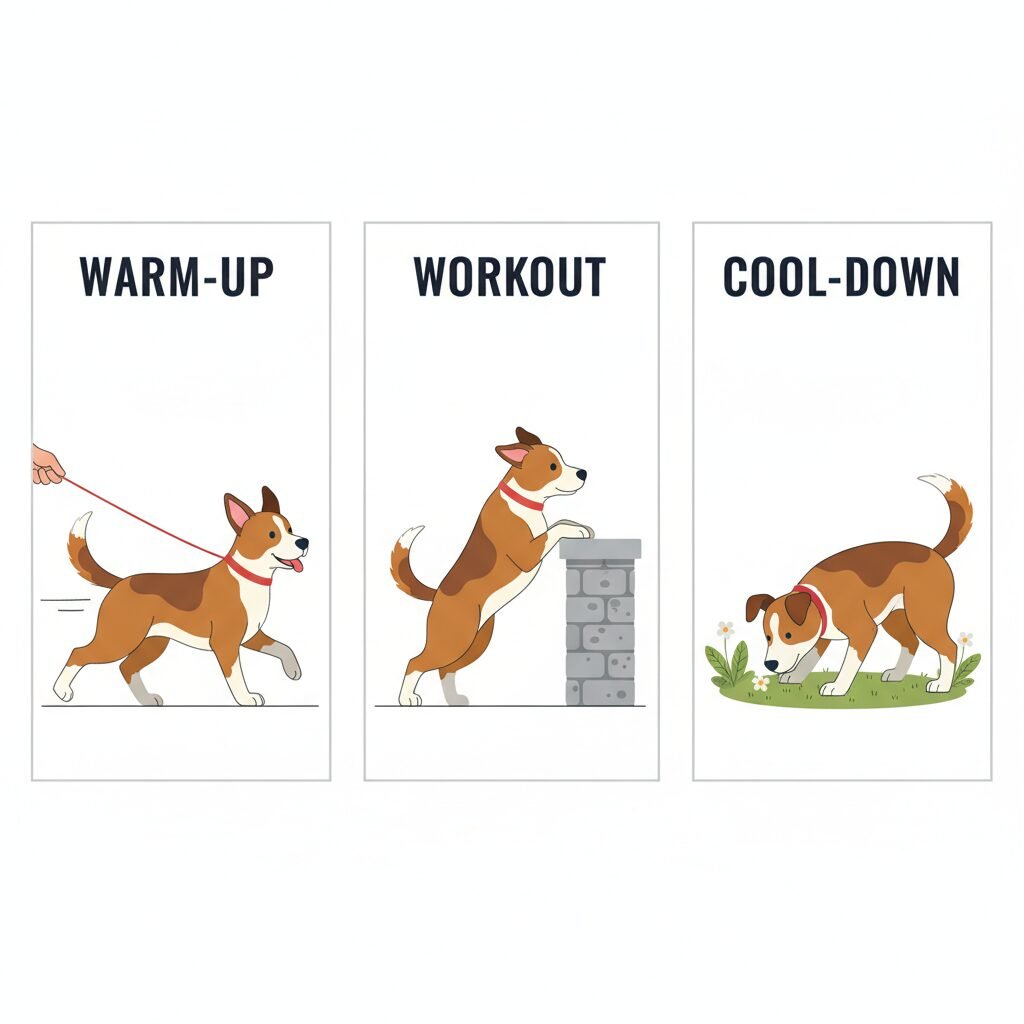
Integrating parkour into your walk shouldn’t be random. A structured approach ensures your dog is physically prepared for the activity and has time to recover afterward, minimizing the risk of injury and maximizing the benefits. Think of it like a human workout: you wouldn’t jump straight into heavy lifting without warming up first. A well-structured parkour session can fit easily into a 30-40 minute walk.
The Three Phases of a Parkour Workout
A balanced session should always include these three distinct phases. The ‘Work’ phase should be kept relatively short, especially for beginners, to avoid mental and physical fatigue.
| Phase | Duration | Activity | Purpose |
|---|---|---|---|
| 1. Warm-Up | 5-10 Minutes | Start with a brisk walk or light trot on a loose leash. Avoid intense sniffing or stopping. | To increase blood flow to the muscles, raise the heart rate gradually, and prepare the body for more complex movements. |
| 2. The ‘Work’ Phase | 10-15 Minutes | Introduce 2-4 different parkour exercises. Focus on quality of movement, not quantity or speed. Alternate between physically demanding moves (e.g., Four Paws On) and mentally focused ones (e.g., Pillar Weave). | To build strength, balance, confidence, and mental focus. This is the core of the workout. |
| 3. Cool-Down | 5-10 Minutes | Slow your pace to a leisurely stroll. Allow your dog to sniff freely. You can also do some simple, gentle stretches if your dog is comfortable with them. | To gradually lower the heart rate, allow muscles to recover, and provide a calming transition from a state of high arousal back to a state of rest. |
Sample Beginner Routine
Here is an example of how you could structure a walk for a dog new to parkour:
- Minutes 0-5 (Warm-Up): Brisk walk away from your home to get the muscles moving.
- Minutes 5-10 (Work): Find a low curb. Practice five repetitions of ‘Two Paws On’ and ‘Off’. Reward generously.
- Minutes 10-15 (Travel): Continue your walk at a normal pace to the next ‘station,’ like a park.
- Minutes 15-20 (Work): Find a low, wide bench. Practice two repetitions of the ‘Bench Balance,’ walking the full length. Follow up with a fun game of ‘Pillar Weave’ around nearby trees.
- Minutes 20-30 (Cool-Down): Let the leash go loose and meander through the grass, allowing for plenty of sniffing. Walk slowly back towards home.
By structuring your walks this way, you create a predictable and safe routine that signals to your dog when it’s time to work and when it’s time to relax, turning every outing into a purposeful adventure.
Conclusion
Urban dog parkour is a powerful tool for enriching your dog’s life. It transforms the familiar and mundane into a landscape of opportunity for growth, connection, and joy. By moving beyond the simple forward march of a traditional walk, you engage your dog’s body and mind in ways that build a resilient, confident, and well-adjusted companion. Remember that the journey into parkour is a marathon, not a sprint. The foundation of this practice is built on the pillars of safety, patience, and a deep understanding of your dog’s individual needs and limits. Always prioritize your dog’s well-being over the completion of any single exercise. Start small, celebrate every tiny success, and listen to what your canine partner is telling you. In doing so, you will not only build a fitter, smarter dog, but you will also forge a bond of trust and communication that is the true reward of this incredible activity.