Stop Your Dog From Attacking UPS & FedEx Trucks For Good
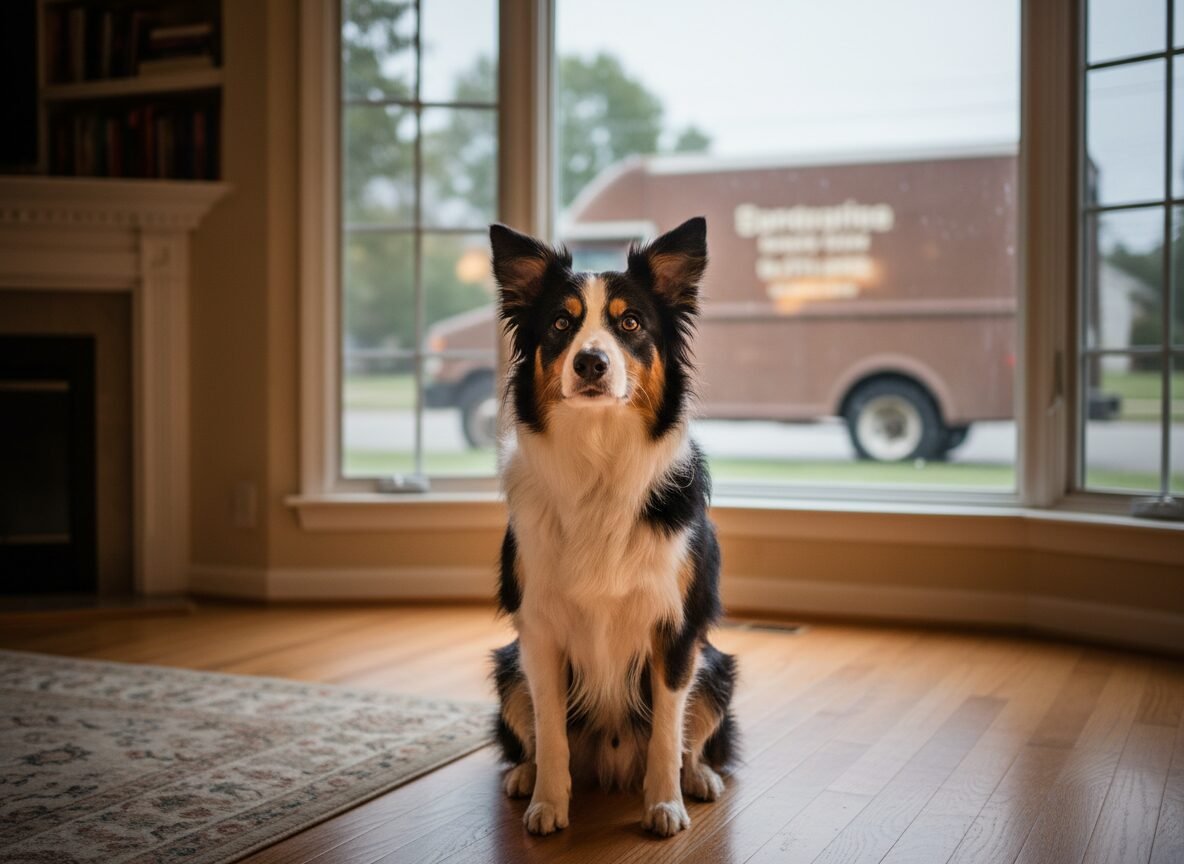
The familiar rumble of a UPS or FedEx truck can be a source of dread for many dog owners. What for us signifies an anticipated package, for our canine companions, can trigger an intense, explosive reaction of barking, lunging, and aggressive displays. This behavior is not only stressful for you and the delivery driver, but it is also incredibly dangerous for your dog. An open door or a broken leash could lead to a tragic accident.
Understanding this behavior is the first step toward resolving it. It’s rarely born from pure malice. Instead, it’s a complex cocktail of instinct, fear, and learned responses. Your dog may be acting on powerful territorial instincts, viewing the large, loud truck and the unfamiliar person as a significant threat to their home. For others, it’s a fear-based reaction to the startling noises and imposing size of the vehicle. This is often compounded by barrier frustration—the agitation that builds when a dog is prevented by a window, door, or fence from reaching the perceived intruder.
This guide provides a comprehensive, humane, and effective framework for changing your dog’s emotional response to delivery vehicles. We will move beyond simply managing the problem and work towards building a new, positive association, ensuring lasting peace and safety for everyone involved.
We will delve into immediate safety protocols, foundational training exercises, and a step-by-step desensitization and counter-conditioning plan. With patience, consistency, and the right techniques, you can transform this daily disruption into a calm non-event.
Understanding the Root Cause: Why Delivery Trucks Trigger Aggression
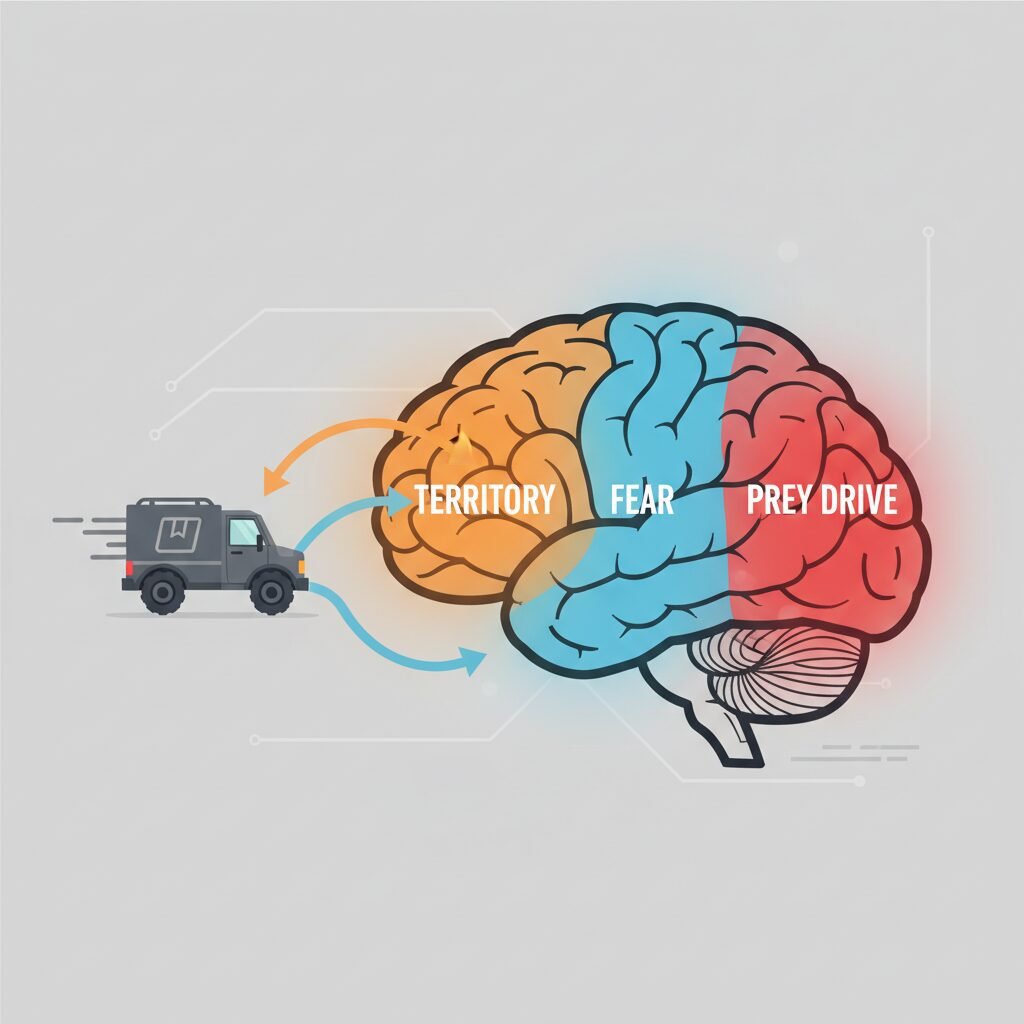
To effectively modify a behavior, we must first understand its origin. A dog’s aggression towards delivery trucks is not a simple act of naughtiness; it’s a deeply ingrained reaction driven by powerful motivators. Identifying the primary driver behind your dog’s behavior is critical for tailoring your training approach.
Territorial Defense
Dogs are inherently territorial creatures. Their home and the surrounding area are their domain, and they are genetically programmed to defend it from perceived threats. From your dog’s perspective, a large, loud truck rumbling to a stop directly in front of your home is a major invasion. A stranger then proceeds to exit the vehicle and approach the front door, the very heart of their territory. This sequence of events can trigger a powerful protective instinct, manifesting as aggressive barking, growling, and lunging. Each time the truck leaves after they bark, the dog’s behavior is reinforced; in their mind, their aggressive display successfully drove the threat away.
Fear-Based Reactivity
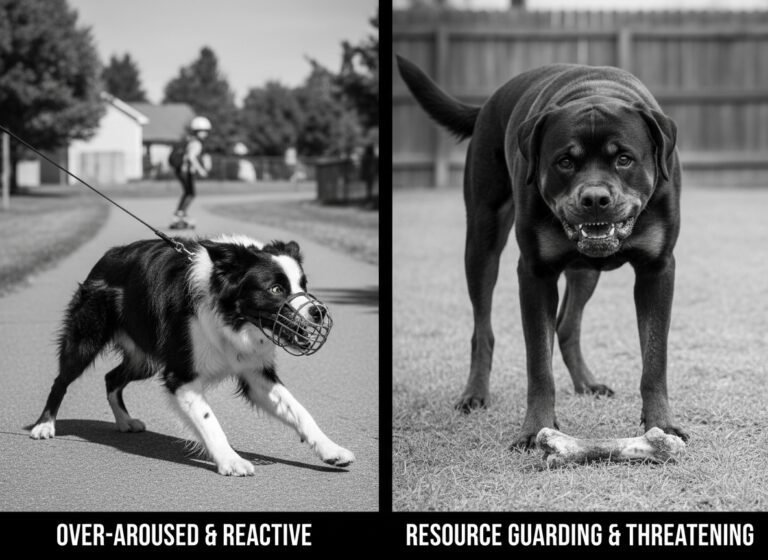
Fear is another significant factor. Delivery trucks are large, noisy, and unpredictable. The sudden screech of air brakes, the slamming of doors, and the engine’s deep rumble can be terrifying for a sensitive dog. When a dog is fearful, it enters a ‘fight or flight’ state. Since fleeing is often not an option (especially when inside the home), the dog may choose to ‘fight’ by putting on an aggressive display to make the scary thing go away. This is not true aggression but a defensive reaction from an animal that feels threatened and cornered.
Predatory Chase Instinct
For some breeds, particularly herding or sighthound types, the rapid movement of the truck can trigger their innate predatory drive. The desire to chase a large, fast-moving object is a hard-wired instinct. While it may look like aggression, the motivation is the thrill of the chase. This is particularly dangerous if the dog is not securely contained, as they may ignore all commands in pursuit of the ‘prey’.
Barrier Frustration and Redirected Excitement
Sometimes, the intensity of the reaction is amplified by a physical barrier like a window, fence, or leash. The dog’s inability to get to the truck builds immense frustration, which boils over into a frenzy of barking and lunging. This is known as barrier frustration. In other cases, a dog may simply be over-excited by the arrival, and without a proper outlet for that energy, it gets redirected into what appears to be aggressive behavior.
Phase 1: Immediate Management and Safety Protocols
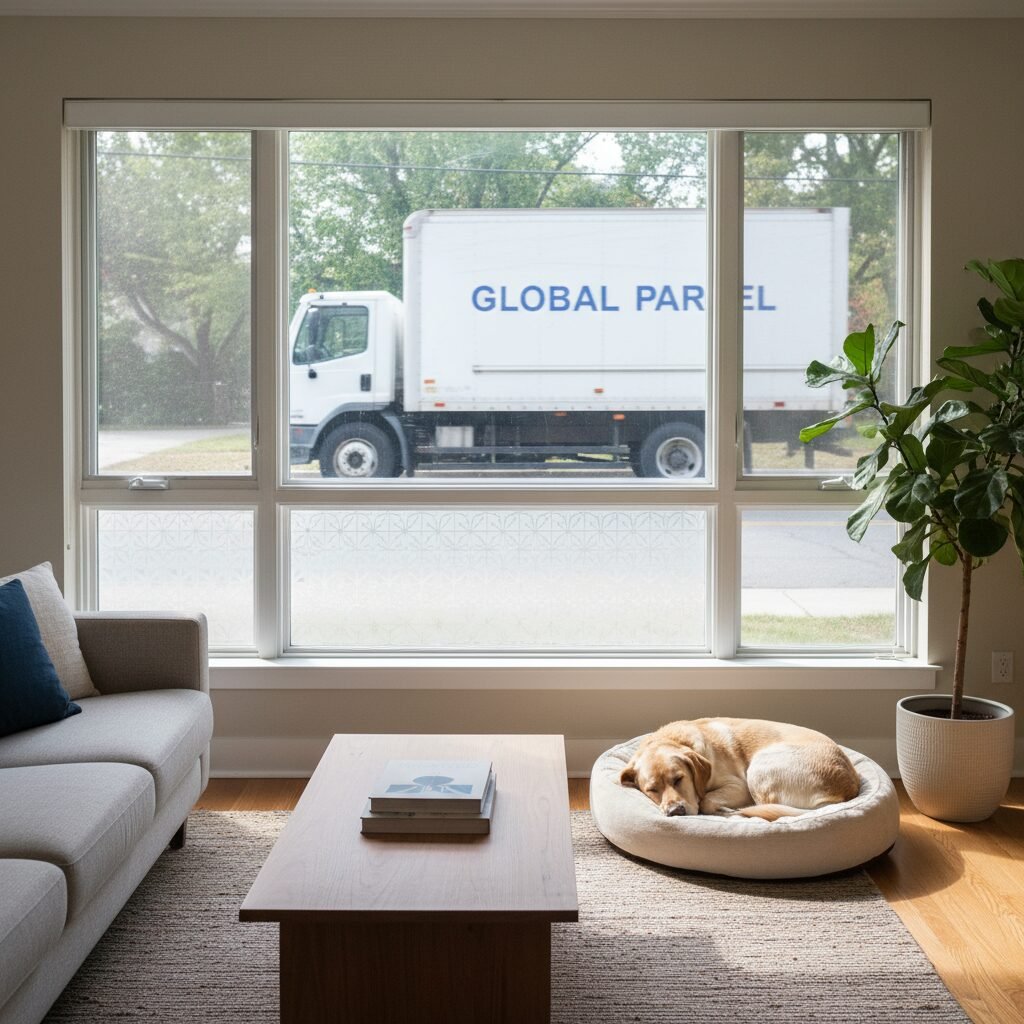
Before you can begin any meaningful training, you must implement management strategies. Management is about preventing the dog from rehearsing the unwanted behavior. Every time your dog lunges at a truck, the behavior becomes more ingrained and harder to change. The goal of this phase is to create a safe and controlled environment where training can eventually take place.
Control the Environment
Your first priority is to prevent your dog from seeing the trigger. This may involve simple changes to your home environment:
- Window Management: Apply translucent privacy film to the bottom half of windows that face the street. This lets in light but obscures the view of passing vehicles.
- Limit Access: Use baby gates or close doors to prevent your dog from having unsupervised access to the front rooms of the house.
- Sound Masking: Play music or use a white noise machine during peak delivery times to help muffle the sound of approaching trucks.
Secure Outdoor Areas
If your dog has access to a yard, ensure it is completely secure. Regularly check fences for any weak spots, holes, or areas where a determined dog could escape. Never leave a reactive dog unattended in the yard, as the constant exposure to triggers without your guidance will only worsen the problem.
Leash Protocols
A leash is a safety tool, not a solution for reactivity. Follow these strict protocols:
- No Front Door Greetings: Never open the front door to sign for a package with your dog loose. Leash your dog and have them in a sit-stay in another room, or secure them in their crate before answering the door.
- Use Appropriate Equipment: For walks, use a secure, well-fitting harness (such as a front-clip harness for better control) and a standard 6-foot leash. Avoid retractable leashes, which offer little control and can snap under pressure.
Expert Tip: Place a sign on your front door for delivery drivers, such as: ‘Please leave packages on the porch. Do not knock or ring bell. Dog in training.’ This can prevent many surprise encounters.
Phase 2: The Step-by-Step Training Plan
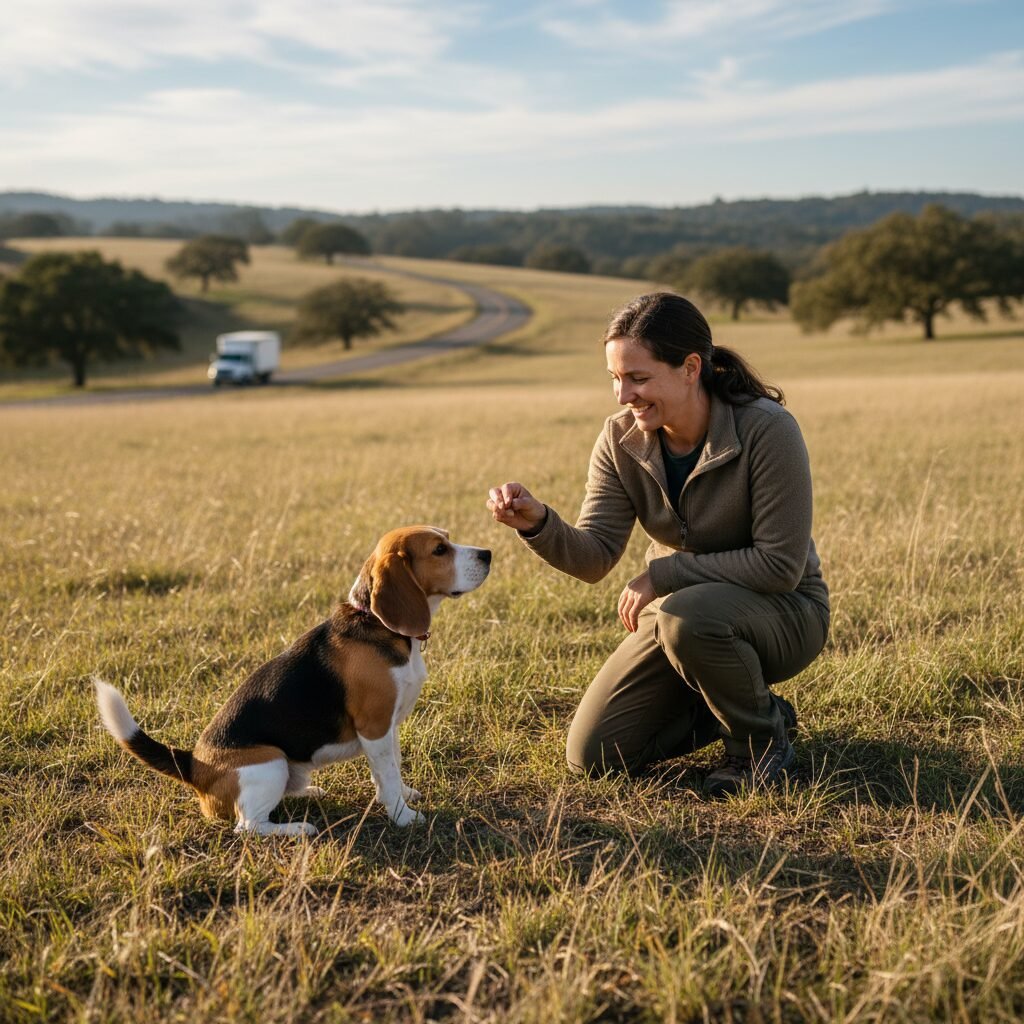
With management in place, you can now begin the process of changing your dog’s emotional response. This is done through a combination of desensitization (making the scary thing less scary) and counter-conditioning (changing the association from negative to positive). You will need high-value treats—something your dog absolutely loves, like small pieces of chicken, cheese, or freeze-dried liver.
Step 1: Foundational Skills Inside the Home
Before working with the actual truck, build some foundational skills in a quiet environment.
- ‘Look at That’ (LAT): This game teaches your dog to look at a trigger and then immediately look back at you for a reward. Start with a neutral object in your home. The moment your dog looks at it, say ‘Yes!’ and reward them. The goal is to create an automatic reflex: see something interesting -> look back at the owner.
- ‘Find It’: This is a simple scatter-feeding game. Say ‘Find it!’ and toss a handful of high-value treats on the floor. This encourages sniffing, which is a naturally calming activity for dogs, and can be used to redirect your dog’s attention during a stressful moment.
Step 2: Controlled Sound Exposure
Find high-quality recordings of truck sounds online (engines, air brakes, doors shutting). Play these sounds at a very low volume while your dog is relaxed. As soon as the sound plays, toss them a handful of delicious treats. The sound should predict that something wonderful is about to happen. Keep sessions short (1-2 minutes) and gradually increase the volume over many days and weeks, only as long as your dog remains calm and comfortable.
Step 3: Desensitization at a Distance
This is the most crucial step. Find a location where you can see a delivery route from a great distance—so far away that your dog notices the truck but does not react (this is called being ‘under threshold’). This might be at the end of your street, in a park, or even from an upper-story window. The moment your dog sees the truck, start feeding them a steady stream of high-value treats. The second the truck is out of sight, the treats stop. The truck’s appearance must predict the amazing treats. If your dog reacts (barks, lunges), you are too close. Increase the distance and try again.
Step 4: Gradually Decreasing Distance
Over many training sessions, you will slowly decrease the distance between you and the trucks. This process cannot be rushed. A single bad experience where the dog reacts can set your training back significantly. Progress might be measured in feet per week. Always watch your dog’s body language for signs of stress (stiff body, hard stare, closed mouth) and be prepared to increase the distance if they are struggling.
Phase 3: Advanced Training and Real-World Application
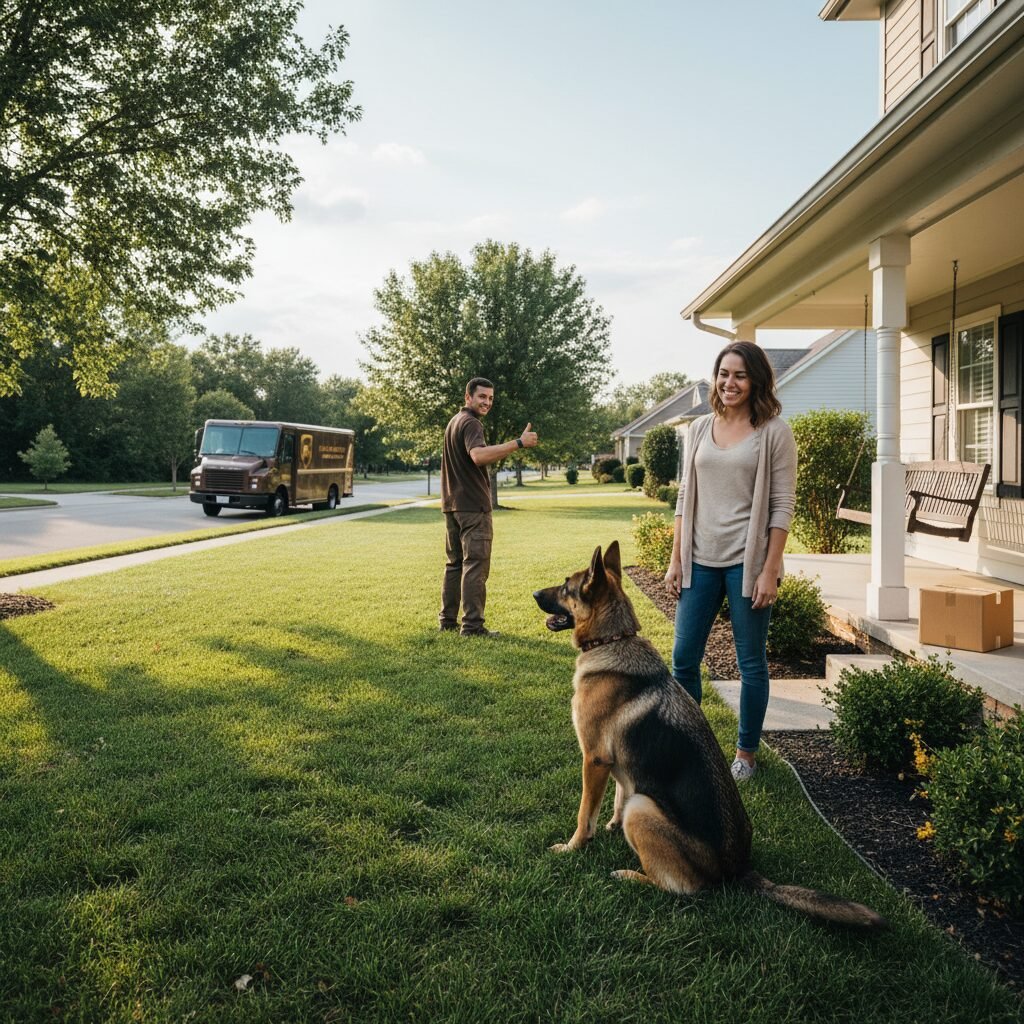
Once your dog can calmly observe delivery trucks from a moderate distance without reacting, you can move on to more advanced scenarios. The goal of this phase is to ‘proof’ the behavior, ensuring it holds up under the pressure of real-world situations.
Simulating the Delivery
Enlist a friend to help you simulate a delivery. Have them drive to your house in their car (a less intense trigger than a truck) while you and your dog are outside at a safe distance. Practice your LAT game and reward your dog for calm behavior as your friend gets out of the car and walks towards the house (without approaching you).
As your dog succeeds, you can increase the difficulty:
- Have your friend carry a box.
- Have them approach the porch.
- Eventually, graduate to having your friend drive a larger vehicle if possible, like an SUV or van.
Working with Real Deliveries
When you feel your dog is ready, you can start working with actual deliveries, but with careful management. When you know a package is arriving, have your dog on a leash with you in the front yard, far from the road. As the truck arrives, perform your training routine: mark and reward for looking at the truck, scatter treats on the ground to keep them occupied, and create a positive experience. Your goal is to keep them under threshold and focused on you, not the driver.
It is crucial to never allow the delivery driver to interact with your dog during this process. Their job is to deliver packages safely, not participate in your training. Your responsibility is to maintain a safe distance and control of your dog at all times.
Generalizing the Behavior
Practice these skills in different environments. Take your dog to a commercial area or a park near a busy road where they can observe various large vehicles from a safe distance. The more positive experiences your dog has seeing trucks in different contexts, the more robust their new, calm response will be.
Common Mistakes to Avoid During Training
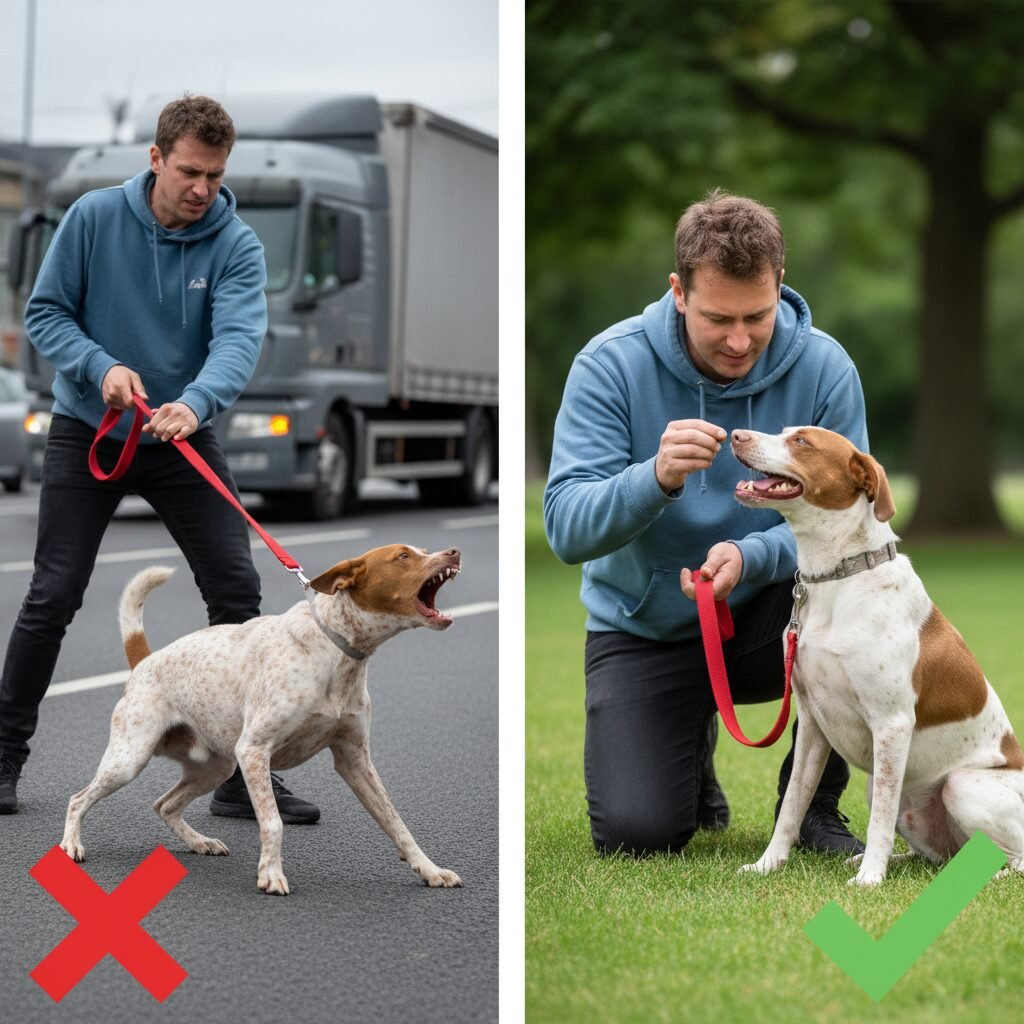
The path to modifying a complex behavior like truck reactivity is filled with potential pitfalls. Being aware of these common mistakes can save you time and frustration, and ensure your training remains effective and humane.
Using Punishment or Aversives
It can be tempting to yell ‘No!’, jerk the leash, or use aversives like shock collars or prong collars to stop the barking. This is the most damaging mistake you can make. Punishment does not address the underlying emotion (fear or territorialism). It often suppresses the warning signs (like growling) and can increase anxiety and aggression, making the dog even more reactive over time. It erodes the trust between you and your dog, which is the foundation of all successful training.
Moving Too Quickly
Enthusiasm is great, but impatience is the enemy of desensitization. Many owners see a little progress and immediately try to close the distance to the truck too fast. This results in the dog going over their threshold and having a reaction, which reinforces the old behavior and undoes your hard work. Training must proceed at the dog’s pace, not yours. Slower is always faster in the long run.
Inconsistent Training
Training sessions need to be short but frequent. A 15-minute session once a week will have little impact. Aim for multiple 2-5 minute sessions throughout the day. Furthermore, management must be 100% consistent. If you manage the dog’s environment perfectly on weekdays but let them rush the window and bark at the Amazon truck on Sunday, you are sending mixed signals and undermining your efforts.
Misreading Canine Body Language
A dog that is quiet is not necessarily calm. It is vital to learn to recognize subtle signs of stress before they escalate into a full-blown reaction. These can include:
- Lip licking
- Yawning when not tired
- A ‘whale eye’ (showing the whites of the eyes)
- A stiff, frozen posture
- A tightly closed mouth
- Ears pinned back
If you see these signs, you are likely too close to the trigger. Calmly increase your distance until your dog’s body language loosens and they can relax again.
Conclusion
Changing your dog’s aggressive response to delivery trucks is a marathon, not a sprint. It requires a deep understanding of your dog’s motivations, a commitment to consistent management, and a great deal of patience during the training process. By focusing on changing your dog’s underlying emotional state from fear or anxiety to one of calm confidence, you are not just stopping a behavior—you are building a stronger, more trusting relationship.
Remember the core principles: prevent the rehearsal of the behavior through diligent management, and slowly build positive associations using desensitization and counter-conditioning. Celebrate the small victories and don’t be discouraged by setbacks, which are a normal part of any behavior modification plan.
If you feel overwhelmed, or if your dog’s behavior is particularly intense or poses a significant safety risk, do not hesitate to seek professional help. A certified canine behavior consultant or a veterinary behaviorist can provide a tailored plan and expert guidance to ensure the safety and success of your training journey.