Is He Smiling or Snarling? Decoding the Submissive Grin
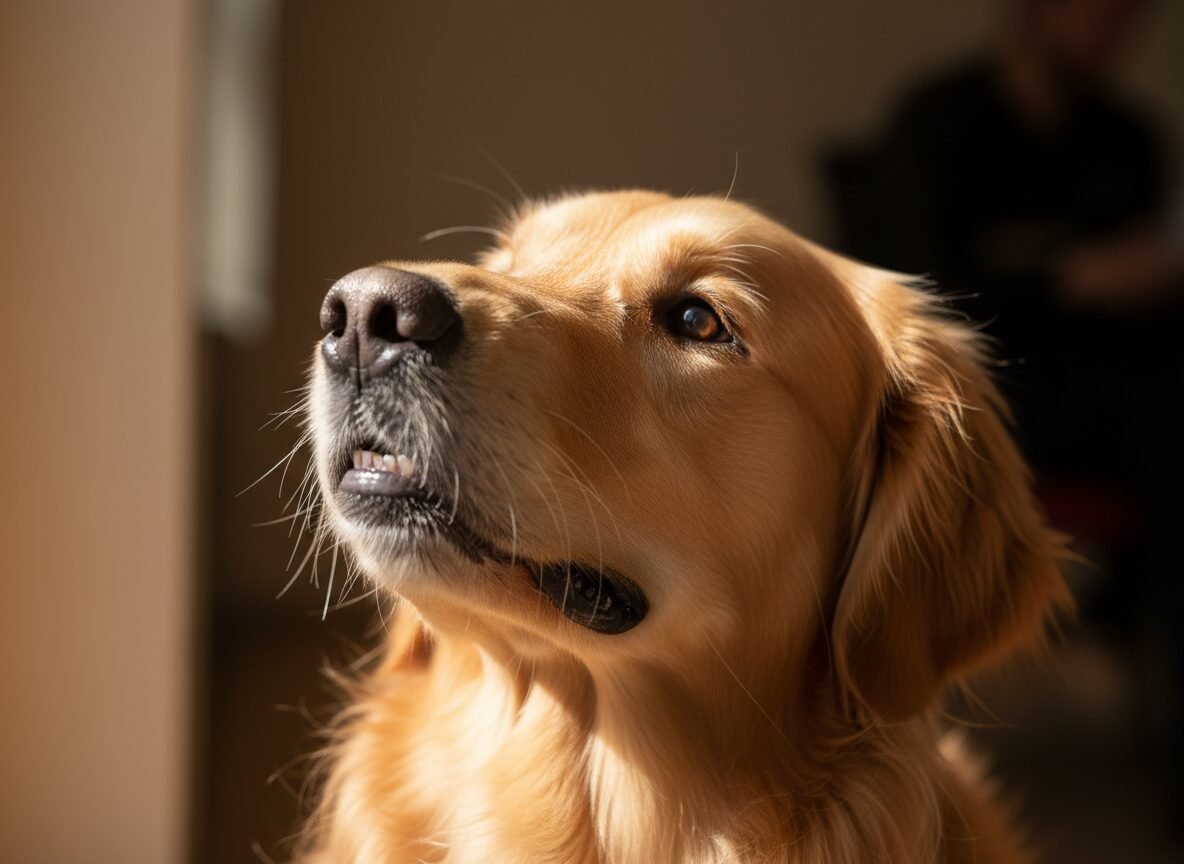
As a pet owner, you pride yourself on understanding your canine companion. You know the meaning of a wagging tail, a playful bow, and a soft whimper. But what about the expression that stops many owners in their tracks: the baring of teeth that looks alarmingly like a snarl, yet feels entirely different? This is the submissive grin, one of the most complex and frequently misinterpreted signals in the canine communication repertoire. Is it a sign of impending aggression, or is it your dog’s attempt at a ‘smile’?
This guide is designed to eliminate that uncertainty. Misinterpreting this crucial signal can lead to confusion, fear, and a breakdown in the trust between you and your dog. By understanding the distinct physical cues, the underlying psychological drivers, and the appropriate way to respond, you can transform a moment of doubt into an opportunity for deeper connection. We will deconstruct the submissive grin, compare it directly with an aggressive snarl, and provide you with the authoritative knowledge needed to read your dog’s intentions with confidence and clarity.
Anatomy of a Grin: Identifying the Key Physical Traits
What Exactly is a Submissive Grin?
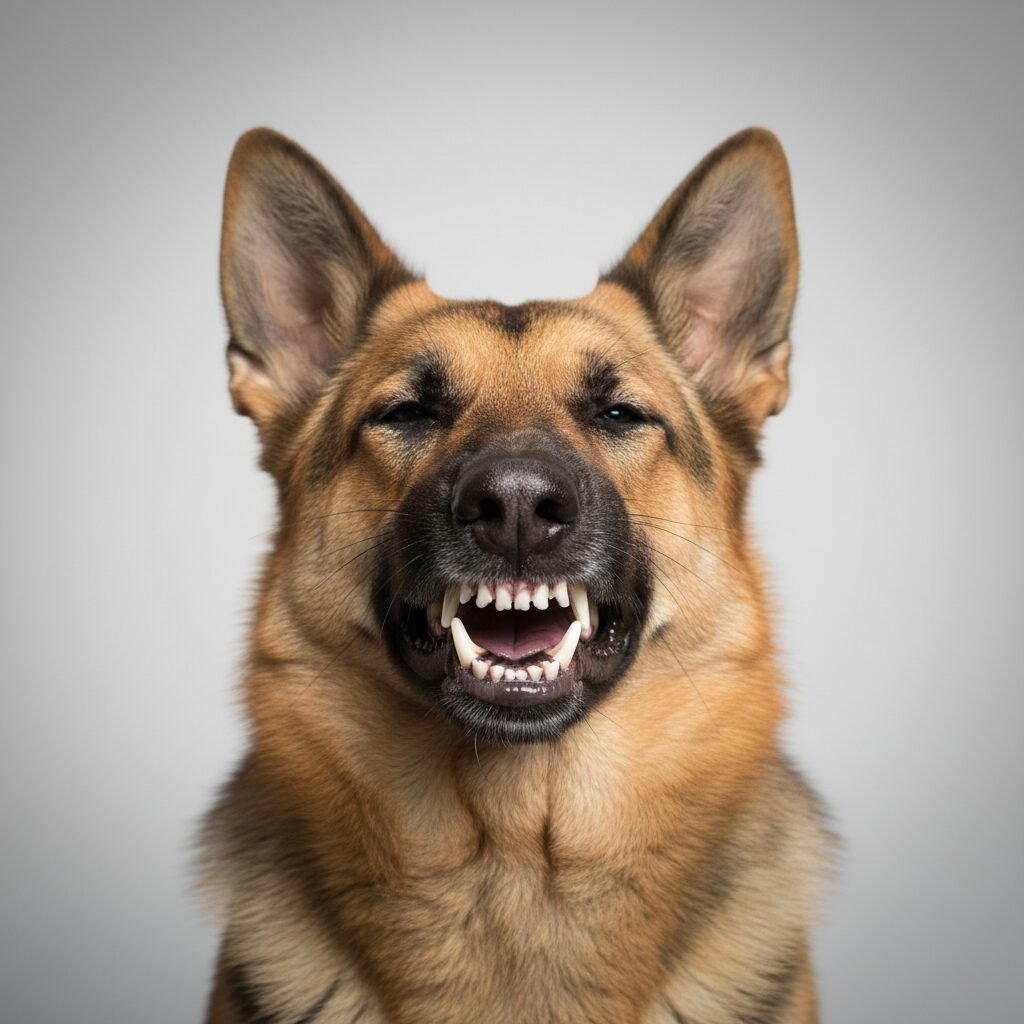
A submissive grin, also known in animal behavior circles as an appeasement gesture, is a specialized facial expression a dog uses to signal deference, non-aggression, and respect. It is a social tool intended to pacify a higher-ranking individual—whether that’s another dog or a human—and avoid conflict. Unlike a true smile which conveys simple happiness, a submissive grin is a complex blend of emotions, often including respect, slight anxiety, and a desire to please.
To accurately identify it, you must look beyond the teeth and observe the dog’s entire body. The context of the situation is equally critical. Is the dog greeting you at the door? Is it being gently reprimanded? These scenarios are common triggers for the behavior.
Hallmarks of a Submissive Grin:
- Lip Retraction: The most prominent feature is the vertical retraction of the lips, primarily exposing the front teeth (incisors and canines). This is often described as a ‘full-face’ grin.
- Soft Eyes: The dog’s eyes will be soft, perhaps squinting slightly. The gaze is often averted, or the dog may make brief eye contact before looking away. This is a key sign of deference. Hard, direct staring is absent.
- Lowered Head and Body: The dog’s head is typically lowered, and the overall body posture is low and non-threatening. They may crouch slightly or even roll over to expose their belly.
- Ear Position: The ears are usually pulled back and held flat against the head. This is a universal sign of appeasement in canines.
- Tail Wag: The tail may be wagging, but it’s often a low, sweeping wag, not the high, stiff wag associated with arousal or aggression. Sometimes the entire rear end will wiggle with the tail.
- Vocalization: The submissive grin is almost always silent. If there is any noise, it might be a soft whine or a gentle sneeze, which can also be a sign of de-escalation.
Expert Tip: Always assess the ‘whole dog.’ A single body part, like the mouth, never tells the full story. A submissive grin is a package of gestures that collectively say, ‘I am not a threat, and I respect your authority.’
Grin vs. Snarl: A Critical Comparison
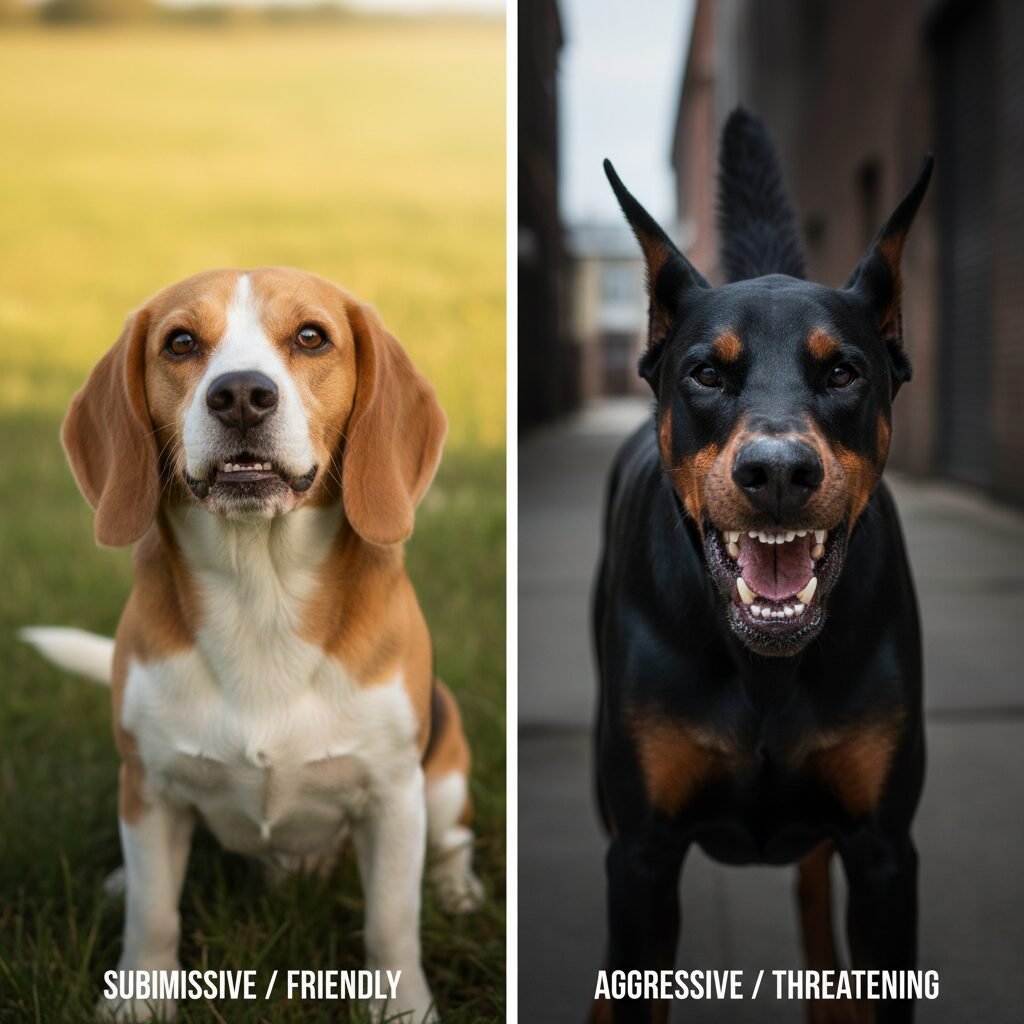
The Decisive Difference: Reading the Intent
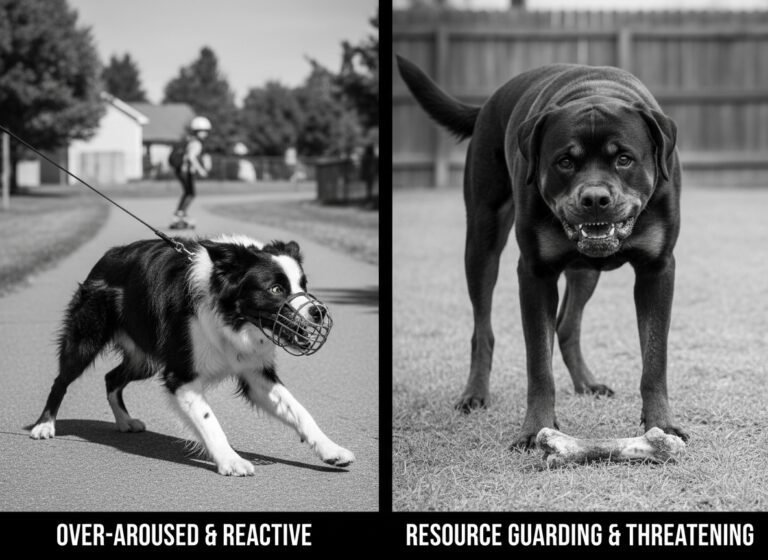
The danger of misinterpretation lies in confusing the submissive grin with an aggressive snarl. While both involve showing teeth, their meanings are polar opposites. A snarl is a warning—a clear signal to back off. A submissive grin is an invitation—a signal to de-escalate and engage peacefully. Responding to a grin with fear or punishment can confuse your dog, while ignoring a snarl can lead to a dangerous situation. Understanding the contrasting signals is paramount for safety and a healthy relationship.
Let’s break down the differences in a clear, comparative format.
| Body Language Cue | Submissive Grin (Appeasement) | Aggressive Snarl (Threat) |
|---|---|---|
| Mouth & Muzzle | Lips pulled back vertically, exposing front teeth. Muzzle is smooth. Corners of the mouth are pulled back. | Lips pulled up horizontally, exposing canines and premolars. Muzzle is wrinkled and tense (a ‘snarl-wrinkle’). |
| Eyes | Soft, squinty, or ‘whale eye’ (showing whites). Gaze is averted or involves quick, fleeting glances. | Hard, direct, and unblinking stare. Pupils may be dilated. |
| Ears | Pulled back and flat against the head. | Pricked forward and tense, or pinned back tightly in fear-aggression. |
| Body Posture | Lowered, loose, and wiggly. May be crouching or leaning away. Weight is on the back feet. | Stiff, rigid, and tense. Body is often leaning forward with weight on the front feet. Hackles may be raised. |
| Tail | Held low, often with a wide, sweeping wag. May be tucked between the legs. | Held high and rigid. May be wagging stiffly and rapidly at the tip (‘flagging’). |
| Vocalization | Typically silent. May be accompanied by a soft whine or sneeze. | Accompanied by a low growl, guttural bark, or audible snarl. |
As the table illustrates, the differences are profound when you know what to look for. The snarl is a symphony of tension, forwardness, and warning. Every part of the dog’s body is tight and ready for action. The submissive grin, in contrast, is an orchestra of softness, deference, and release. The body is loose and low, designed to appear as small and non-confrontational as possible.
The Psychology Behind the ‘Smile’: Why Dogs Do It
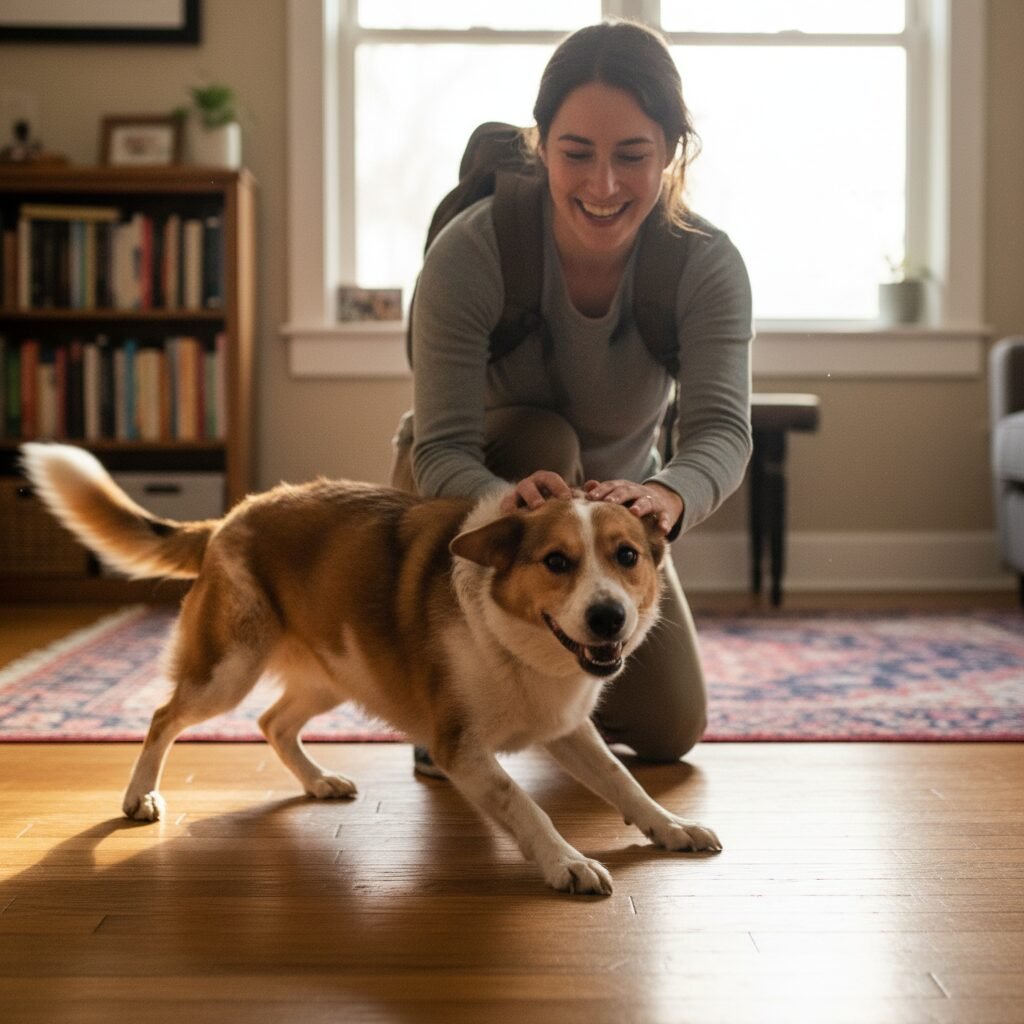
Exploring the Motivations for a Submissive Grin
Understanding what a submissive grin looks like is only half the battle; understanding why it happens provides deeper insight into your dog’s emotional state and social intelligence. This behavior is not random; it is a highly evolved communication strategy rooted in canine social structures.
Primary Motivations Include:
- Appeasement and Deference: This is the most common reason. In a dog’s world, clear social hierarchies prevent constant conflict. A lower-ranking dog will use a submissive grin to show a higher-ranking dog (or person) that they acknowledge their status and pose no challenge. This is often seen when you return home or approach your dog in a way it might perceive as confrontational (e.g., leaning over it).
- A Sign of Excitement: Some dogs incorporate the grin into their greeting rituals, combining the appeasement gesture with pure excitement. This ‘happy grin’ is often accompanied by full-body wiggles, tail wags, and sometimes even little yips or sneezes. They are so overjoyed to see you that they use this powerful social signal to manage their own high energy.
- Response to Scolding: If you are scolding your dog, it may offer a submissive grin. This is not defiance or mockery. It is your dog’s way of saying, ‘I understand you are unhappy, I am not a threat, and I would like this conflict to end.’ Punishing a dog for this can be incredibly damaging, as you are essentially punishing it for trying to communicate peacefully.
- Learned Behavior: Dogs are incredibly perceptive. If a dog grins and gets a positive, happy reaction from its owner (who thinks it’s a cute ‘smile’), the dog will learn to repeat the behavior to elicit that same positive response. In this way, it can evolve from an innate gesture into a deliberate, learned trick to earn affection or attention.
Behavioral Insight: The submissive grin is a testament to a dog’s social sophistication. It demonstrates an ability to read social cues, a desire to maintain harmony, and a deep-seated instinct to communicate intent clearly to avoid physical conflict.
How to Respond: A Guide for Owners
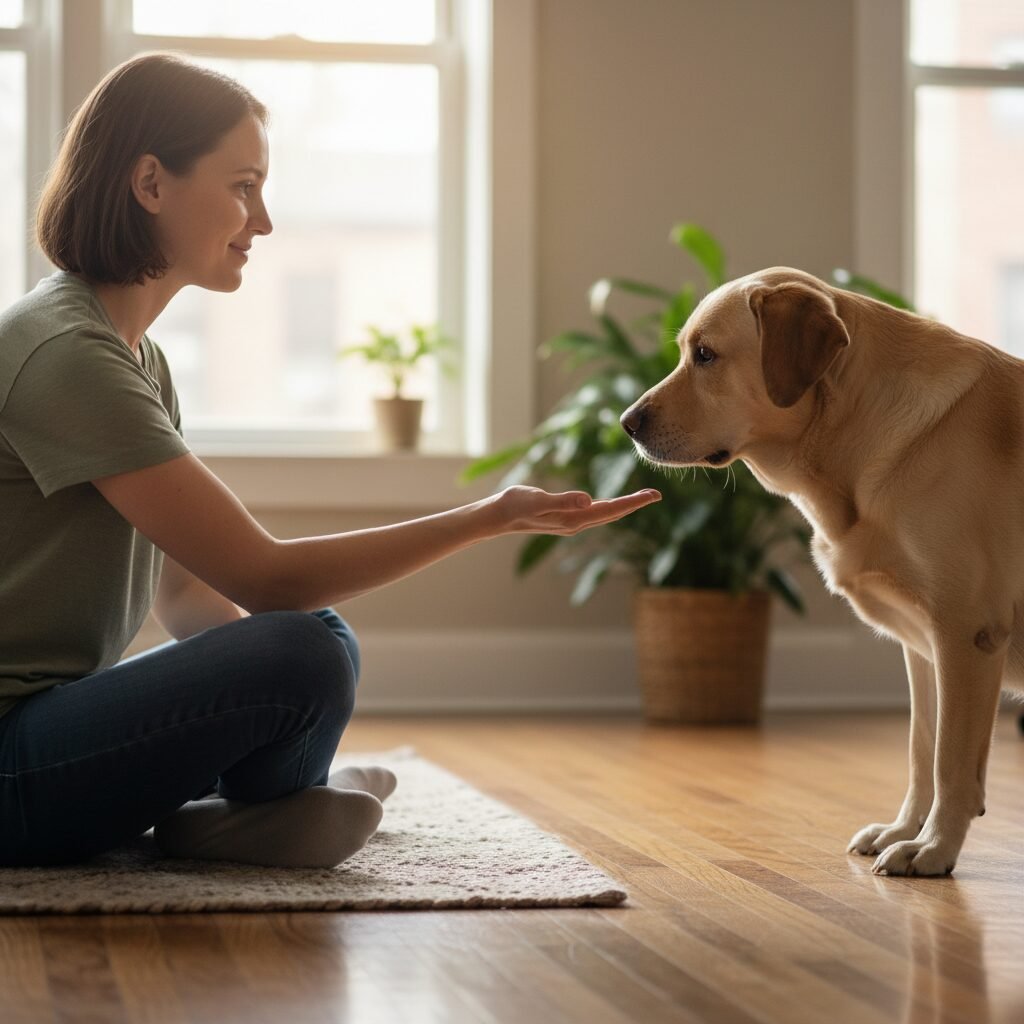
Your Reaction Matters: Reinforcing Trust and Communication
Your response to your dog’s submissive grin is a critical moment in your relationship. Reacting incorrectly can create confusion and anxiety, while reacting appropriately strengthens your bond and validates your dog’s communication efforts.
The Do’s and Don’ts of Responding:
- DO Stay Calm and Positive: Your dog is trying to be polite and non-confrontational. Your energy should match this. Speak in a soft, happy tone of voice. Avoid loud noises or sudden movements that could startle them.
- DO Avert Your Gaze and Turn Sideways: In canine language, direct eye contact and a squared-up posture can be seen as confrontational. By briefly averting your gaze and turning your body slightly to the side, you are reciprocating their peaceful gesture. This tells them ‘I understand, and I am not a threat either.’
- DO Offer Gentle, Non-Threatening Affection: If you know the dog well and are certain it’s a friendly gesture, you can offer a gentle pat on the chest or side. Avoid patting the top of the head, which can be perceived as intimidating by a dog in a submissive state.
- DON’T Punish or Scold the Dog: This is the most crucial rule. Never punish a dog for offering a submissive grin, especially during a correction. They are actively trying to tell you they submit to your authority. Punishing this can lead to a dog who feels it has no options left to de-escalate a situation, which can increase the likelihood of fear-based aggression in the future.
- DON’T Laugh or Over-Excite the Dog: While it can look amusing, laughing loudly or getting overly excited can add confusing energy to the situation. A calm, reassuring response is always best.
When to Be Concerned
While a submissive grin is typically benign, if it is accompanied by other signs of extreme stress—such as trembling, excessive yawning, lip licking, or a tucked tail—it may indicate your dog is in a state of high anxiety. In these cases, it’s important to identify and remove the stressor. If this behavior is frequent and seems rooted in fear rather than polite greeting, it may be beneficial to consult with a certified professional dog trainer or a veterinary behaviorist to address the underlying anxiety.
Conclusion
The submissive grin is a profound piece of the intricate puzzle that is canine communication. It is a far cry from a snarl, serving not as a threat, but as a bridge for social harmony. By learning to look past the teeth and read the full story told by your dog’s eyes, ears, and body, you move from being a simple owner to a truly fluent interpreter of their language. Recognizing this gesture for what it is—an act of deference, respect, and a desire for peace—allows you to respond with the empathy and understanding your loyal companion deserves. Embracing this knowledge doesn’t just prevent misunderstandings; it actively builds a stronger, more trusting, and more deeply connected bond between you and your dog.