Stop Bribing! Why “Catching” Behavior Works Better Than Treats

Does this sound familiar? You ask your dog to sit. He stares at you blankly. You ask again, a little louder. Nothing. Finally, you reach for the treat jar, and like magic, his rear hits the floor. This common scenario highlights a critical distinction in dog training: the difference between a reward and a bribe. While treats are an invaluable tool in positive reinforcement, their misuse can create a dog who only works when he sees the paycheck upfront. This is the trap of bribing—a transactional relationship that undermines reliability and true understanding.
This article will guide you away from the pitfalls of treat dependency and introduce a more sophisticated, effective, and bond-building technique known as “catching” or “capturing” behavior. We will explore the subtle but significant psychological damage of bribing and provide a clear, step-by-step framework for teaching your dog to offer good behaviors willingly. By shifting your approach from a reactive “treat dispenser” to a proactive observer, you will cultivate a thinking partner who is eager to please, not just to get paid. Prepare to transform your training and deepen your connection with your canine companion.
The Lure of the Bribe: Understanding the Downside of Treat Dependency
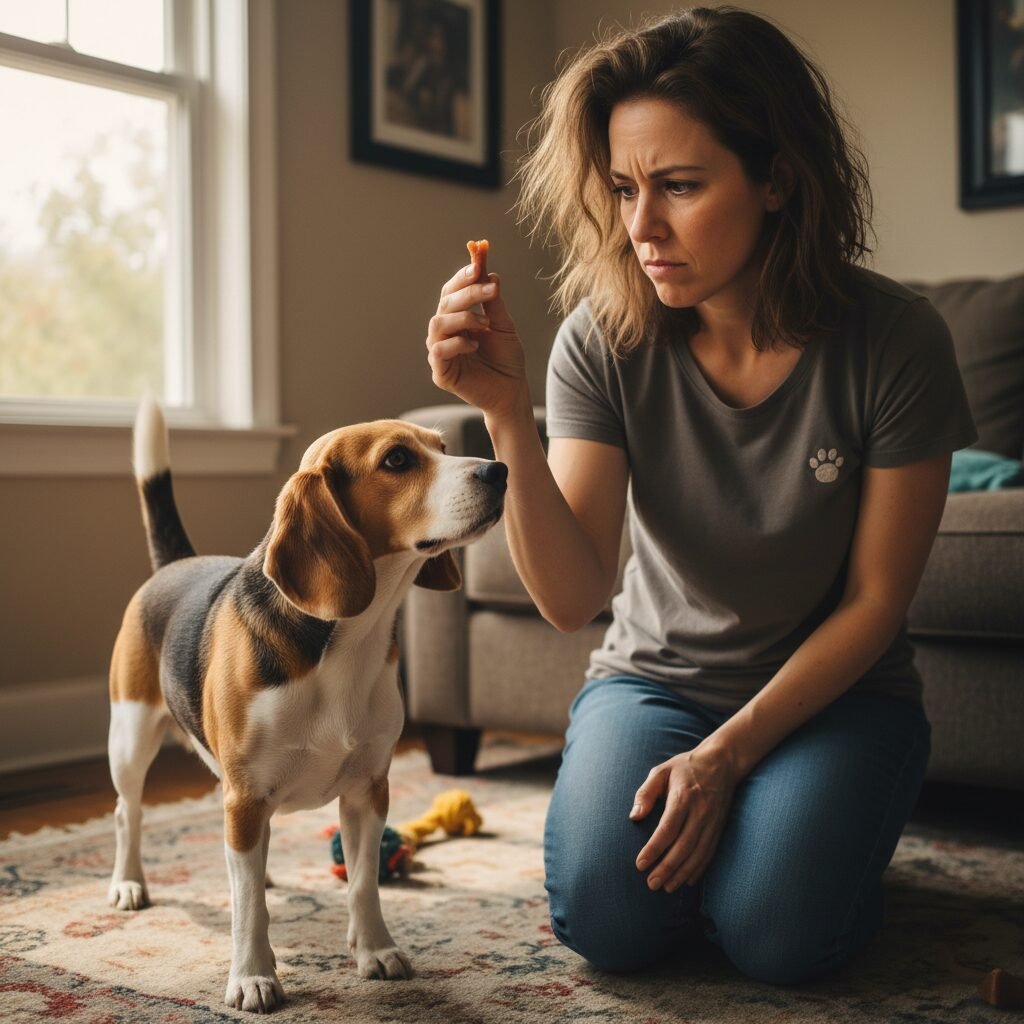
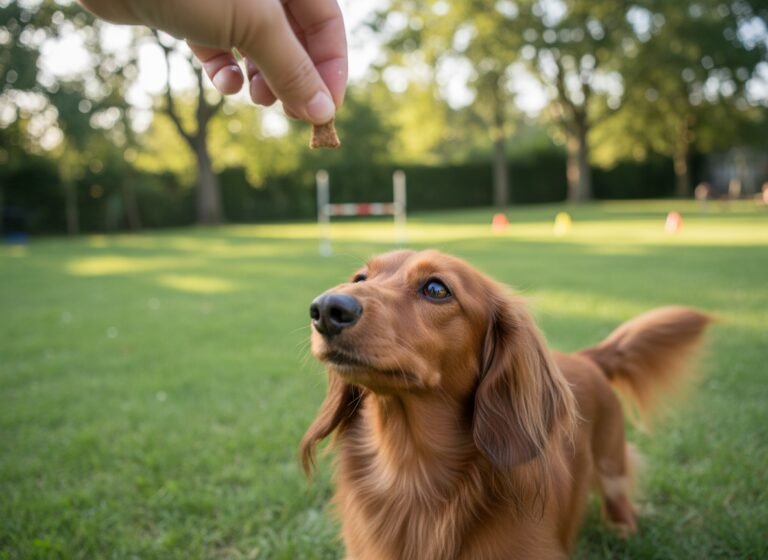
In the world of dog training, terminology matters. A lure is used to guide a dog into a position, a reward is given after a behavior is completed correctly, but a bribe is shown beforehand to entice the dog to perform. While luring has its place when teaching a brand-new skill, relying on it long-term morphs it into a bribe, creating a dog who is functionally deaf until food appears. This dependency creates several significant problems that can stall and even reverse your training progress.
When the Treat Becomes the Cue
The primary issue with consistent bribing is that the treat itself, not your verbal command, becomes the cue for the behavior. The dog learns a chain of events: Owner shows treat -> I perform action -> I get treat. If you remove the first step, the chain is broken. The dog isn’t being stubborn; it simply hasn’t learned to respond to the verbal cue alone. This is why a dog who sits perfectly in the kitchen for a cookie might seem to ignore you completely at the park, where distractions are high and your empty hands offer no incentive.
Erosion of Intrinsic Motivation
Effective training should build a dog’s desire to work with you. Bribing does the opposite—it fosters a purely transactional mindset. The motivation becomes external (the food) rather than internal (the desire to please, the enjoyment of the activity, the bond with the owner). This can lead to a frustrating dynamic where the dog is constantly evaluating, “What’s in it for me?” instead of seeing you as a team leader. True partnership is built on communication and mutual respect, not a constant negotiation for snacks.
Expert Tip: A well-timed reward reinforces a decision the dog has already made. A bribe influences the decision before it happens, cheapening the value of your verbal cues and your relationship.
| Training Tool | When to Use It | Potential Pitfall |
|---|---|---|
| Lure | Teaching a new physical movement (e.g., guiding a puppy into a ‘down’). | If not faded quickly (within a few repetitions), it becomes a bribe. |
| Reward | Immediately after a correctly performed behavior on cue. | Inconsistent timing can accidentally reward the wrong behavior. |
| Bribe | Showing the treat to get the dog to perform a known command. | Creates treat dependency and teaches the dog to ignore cues from empty hands. |
The Art of ‘Catching’: What It Is and Why It Works
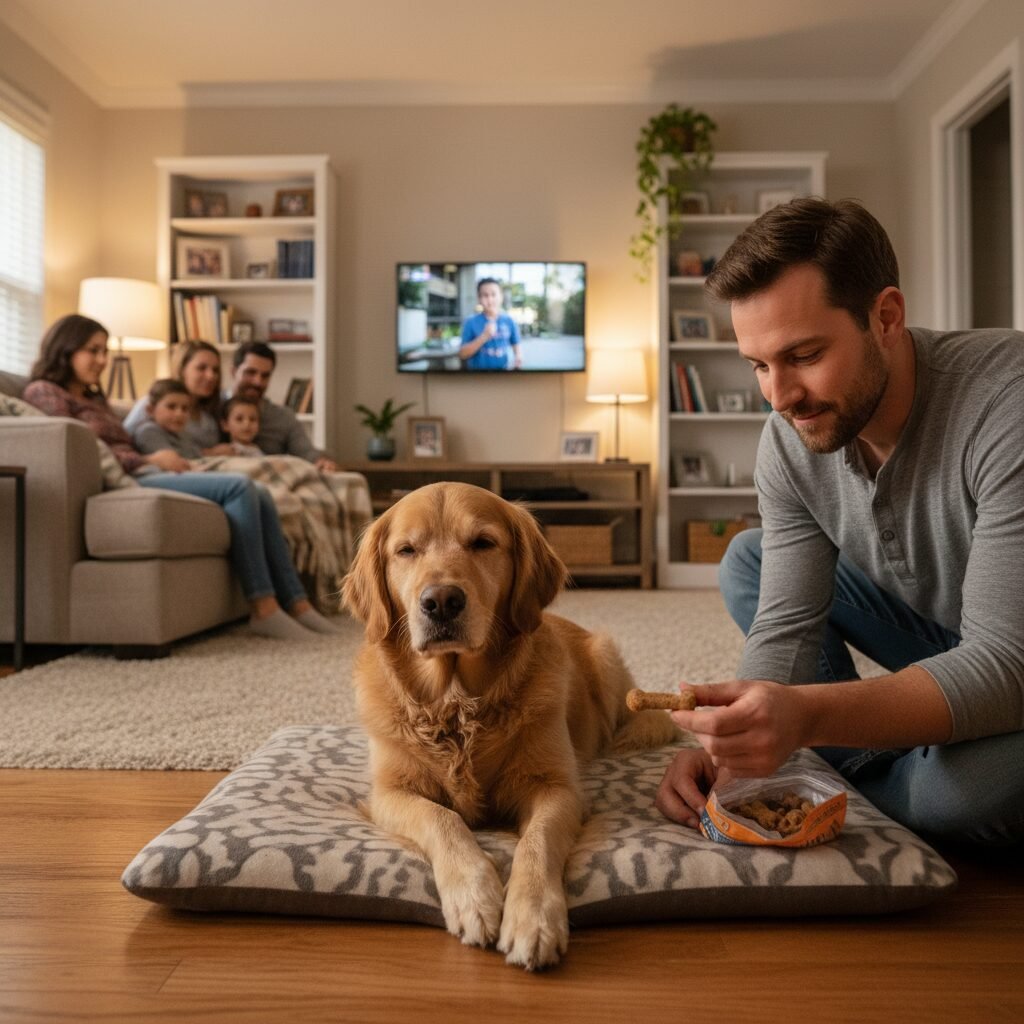
“Catching” behavior, also known as capturing, is a beautifully simple yet profoundly powerful training concept. It is the art of observing your dog and, at the precise moment they offer a desirable behavior on their own, marking that behavior and delivering a reward. You aren’t asking for anything; you are simply waiting for your dog to make a good choice and then reinforcing that choice. This shifts the entire training paradigm from a top-down directive to a collaborative game where the dog actively tries to figure out what you like.
The Psychology of Choice
The power of catching lies in its foundation in operant conditioning. When a dog voluntarily performs an action—like choosing to lie down on its bed instead of begging at the table—and that action is immediately followed by a positive consequence (a marker word and a treat), the likelihood of that behavior occurring again skyrockets. The dog learns, “When I choose to do this, good things happen!” This is fundamentally different from being lured or bribed, as the initial decision originates with the dog. Behaviors learned this way are stronger, more resilient, and more likely to be performed even without the promise of a reward every time.
Benefits of a ‘Catching’ Mindset
Adopting this method yields incredible benefits beyond just a well-behaved dog:
- It builds a thinking dog: Instead of passively waiting for instructions, a dog trained with capturing learns to problem-solve and proactively offer behaviors they know have been rewarded in the past.
- It strengthens your bond: This method requires you to become a keen observer of your dog’s good qualities. You start noticing and appreciating the small, positive choices they make throughout the day, which strengthens your connection.
- It makes good behavior the default: By consistently reinforcing calmness, politeness, and other desirable states, these behaviors become the dog’s default habit. A calm settle becomes as natural as breathing.
- It gives value to non-food rewards: Because the reward comes as a happy surprise, you can begin to mix in praise, petting, or a favorite toy, teaching your dog that many forms of positive interaction with you are valuable.
A Practical Guide: How to Start ‘Catching’ Good Behavior
Transitioning from a briber to a catcher requires a mental shift and a bit of preparation. The goal is to be ready to reinforce good choices at any moment. This step-by-step guide will set you up for success.
Step 1: Prepare Your Tools
Your setup should be discreet. The element of surprise is key. You’ll need:
- A Marker Signal: This can be a clicker or a short, consistent verbal marker like “Yes!” or “Good.” The marker’s job is to pinpoint the exact moment the correct behavior occurs, bridging the gap between the action and the reward.
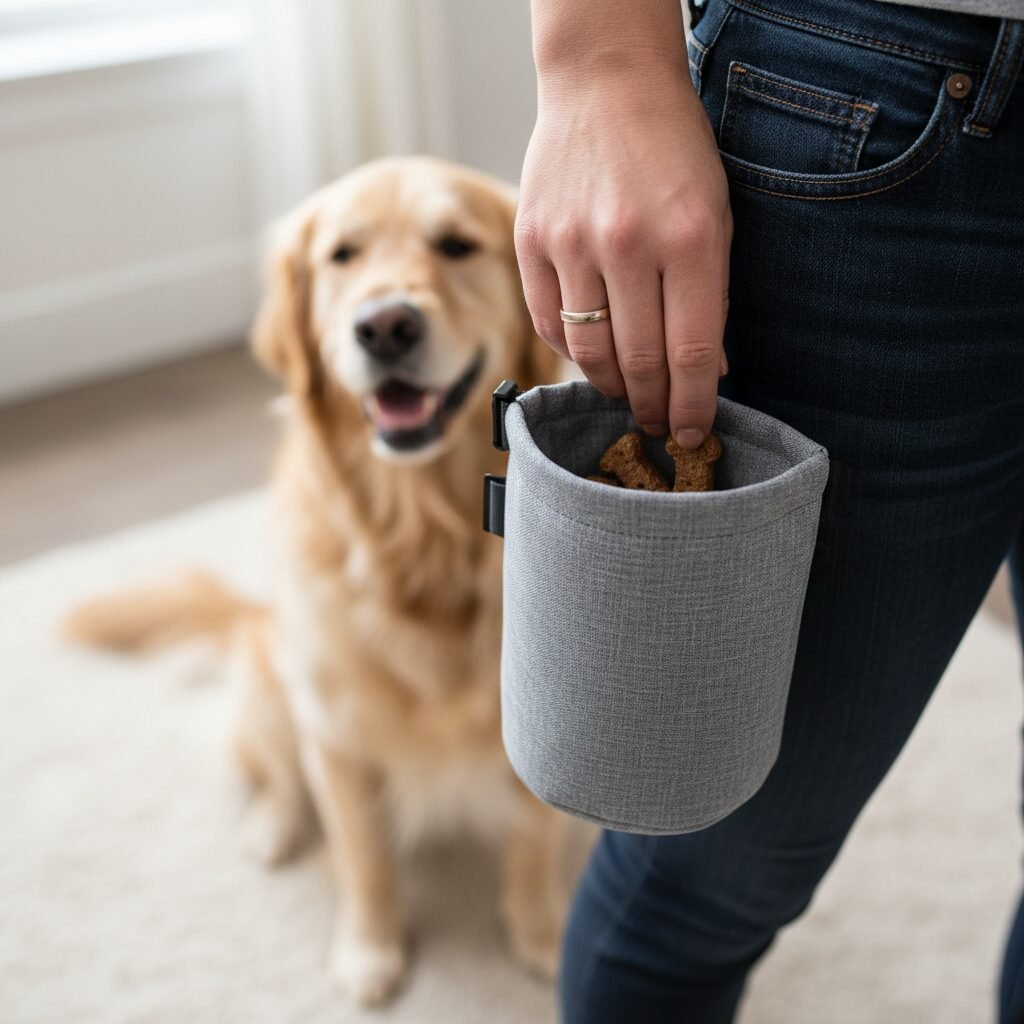
- High-Value Reinforcers: Use small, pea-sized, delicious treats that your dog loves. They should be easy to swallow quickly. Keep them in a treat pouch or in your pockets, never in your hand. The reward must appear like magic after the marker, not before the behavior.
Step 2: Choose Your Target Behaviors
Don’t try to catch everything at once. Start with one or two simple, high-frequency behaviors. Your goal is to find natural opportunities for reinforcement throughout the day. Good starting points include:
- Four paws on the floor when you come home.
- A voluntary sit while you prepare their dinner.
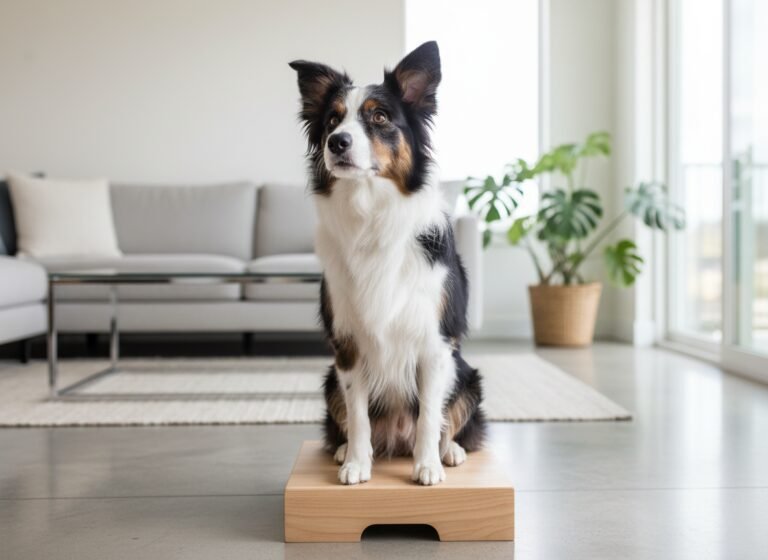
- Lying down on their bed or a mat instead of being underfoot.
- Glancing at you on a walk (checking in).
- Choosing to pick up a toy instead of chewing on the furniture.
Step 3: The ‘Catching’ Process in Action
This is where you put theory into practice. Follow these steps precisely for the best results.
- Live Your Life: Go about your daily routine. The most authentic behaviors happen when your dog isn’t in “training mode.”
- Observe Discreetly: Keep an eye on your dog. Your posture should be relaxed and natural.
- Mark the Moment: The instant you see your dog perform one of your target behaviors, use your marker. Click or say “Yes!” with a positive tone. Your timing here is critical. Mark the choice, not the aftermath.
- Reward After the Mark: Immediately after the marker sound, reach into your pouch or pocket, retrieve a treat, and deliver it to your dog. You can place it on the floor or give it to them directly.
- Stay Calm: Avoid excessive praise or excitement right away. The marker and the treat are the information. The less drama you add, the more your dog will focus on what they did to earn the reward.
Step 4: Fading the Food and Generalizing
Once your dog is reliably offering a behavior, you can move to a variable schedule of reinforcement. This means you don’t reward every single instance. You might mark and reward three sits in a row, then just mark and praise the fourth, then reward the next two. This is the same psychological principle that makes slot machines so addictive and makes the behavior extremely durable. You can also begin substituting food with “life rewards”—a happy “Good boy!”, a scratch behind the ears, or an invitation to play fetch can be just as powerful once the behavior is established.
Common Mistakes and Troubleshooting Your ‘Catching’ Technique
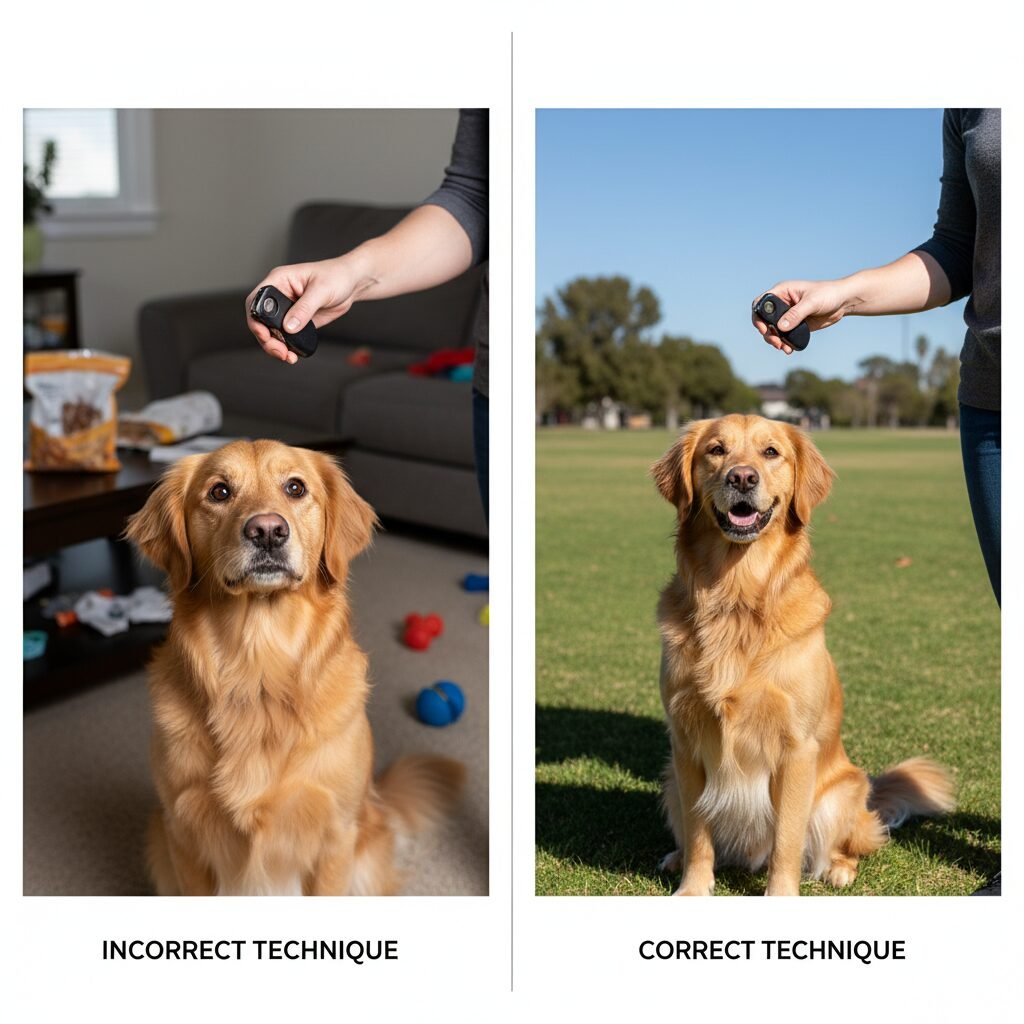
While capturing is a straightforward concept, a few common errors can hinder your progress. Being aware of these pitfalls will help you refine your technique and communicate more clearly with your dog.
Common Mistakes to Avoid
- Mistake: Poor Timing. The marker must happen at the exact apex of the behavior. If you are catching a ‘sit’, you must mark the instant your dog’s rear touches the ground. Marking too early or too late will confuse your dog about what, specifically, earned them the reward.
- Mistake: Showing the Treat First. If your hand goes to your treat pouch before you mark the behavior, your dog will notice. This quickly turns the interaction back into a bribe, as the dog learns that your hand movement predicts a treat, and they will wait for that new cue. The sequence must always be: Behavior -> Mark -> Reward.
- Mistake: Poisoning the Cue. In the context of capturing, you are not using a cue or command. A common error is to see the dog about to lie down and say “Down.” This is not capturing. The goal is to let the dog make the choice independently. Once a behavior is reliably captured and offered, you can then add a verbal cue to it later.
- Mistake: Being a Statue. You don’t have to stand around waiting for good behavior to happen. Set up the environment for success. If you want to capture a calm settle on a mat, make the mat the most comfortable spot in the room. If you want to capture quiet behavior in the crate, make the crate a wonderful place to be.
Troubleshooting Guide
What if you’re running into problems? Here are some solutions to common challenges.
Conclusion
The journey from bribing a dog to catching their good behavior is a transformative one. It requires patience, keen observation, and a shift in perspective. By putting away the obvious lure and instead focusing on reinforcing the wonderful choices your dog makes every day, you move beyond the limitations of a transactional relationship. You are no longer just an instructor demanding compliance; you become a partner who acknowledges and appreciates your dog’s efforts to navigate the human world.
This method doesn’t just build a dog who sits, stays, or comes when called. It builds a dog who actively seeks ways to engage with you, who offers polite behaviors by default, and whose motivation comes from a deep-seated understanding of what pleases you. The result is more than just reliability; it’s a relationship built on a foundation of clear communication, mutual respect, and a shared joy in success. Start ‘catching’ today, and watch your dog blossom into the thinking, well-behaved companion you’ve always wanted.